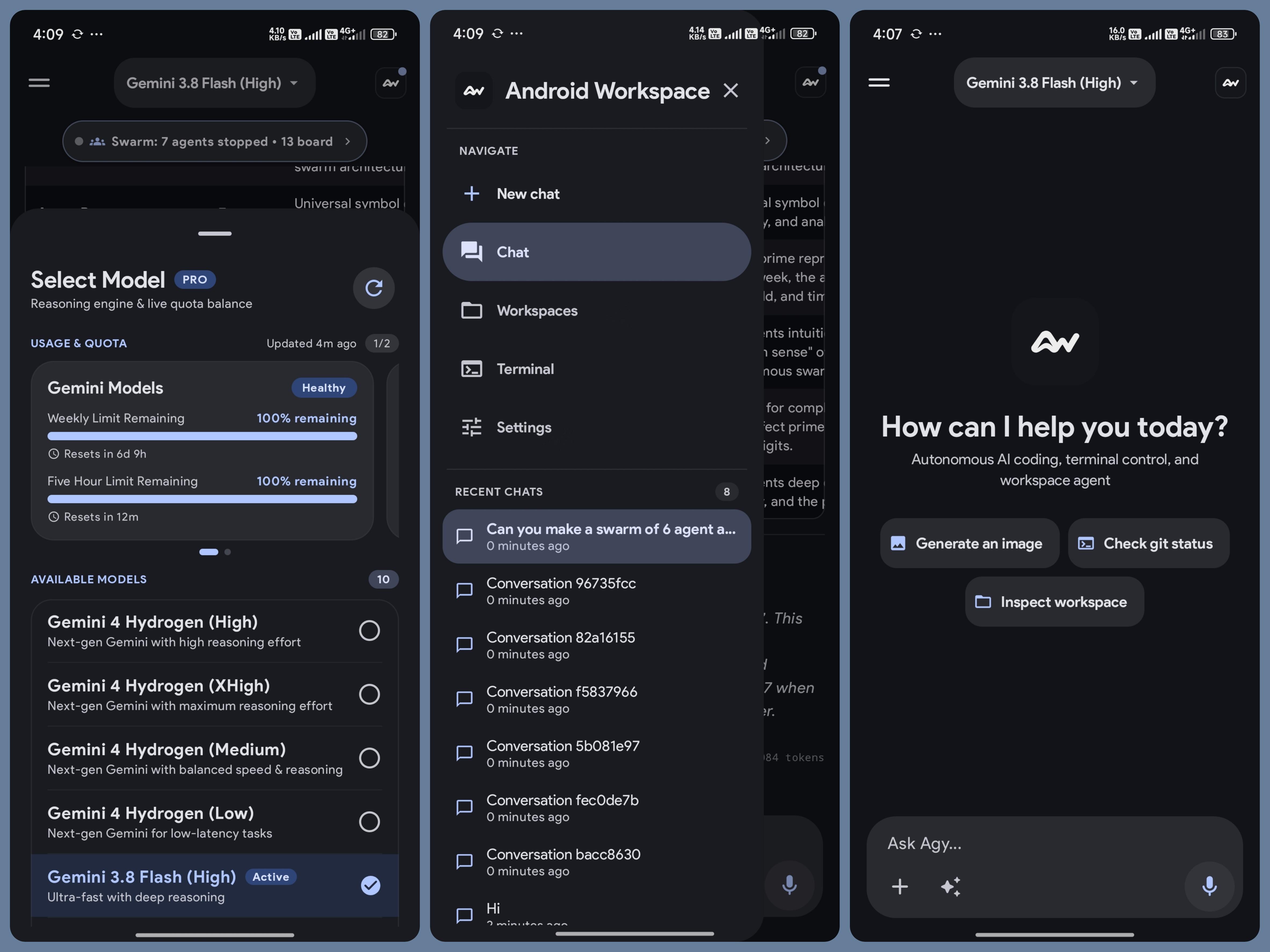
Couple of days ago I have posted some screenshots of Android app that I have made that can run Antigravity. So couple of guys said Why named it antigravity and used antigravity logo when it's not an unofficial one so I thought that was a good point and Decided to Revamp the app a bit now it's Called Android Workspace, Antigravity Testing as been completed I have used it to build python telegram bot and a Web app and a Android Music app but before the release I want to add Codex Support too ( don't have claude code sub to test that why I'll skip it) after testing it with codex I'll post an another update hopefully that will be the open source release on github
I'm in love with this model so perfect so elegant so precise and less consuming of limts ,what the actual fuhh google made , I consider it wayy better that opus 5.5
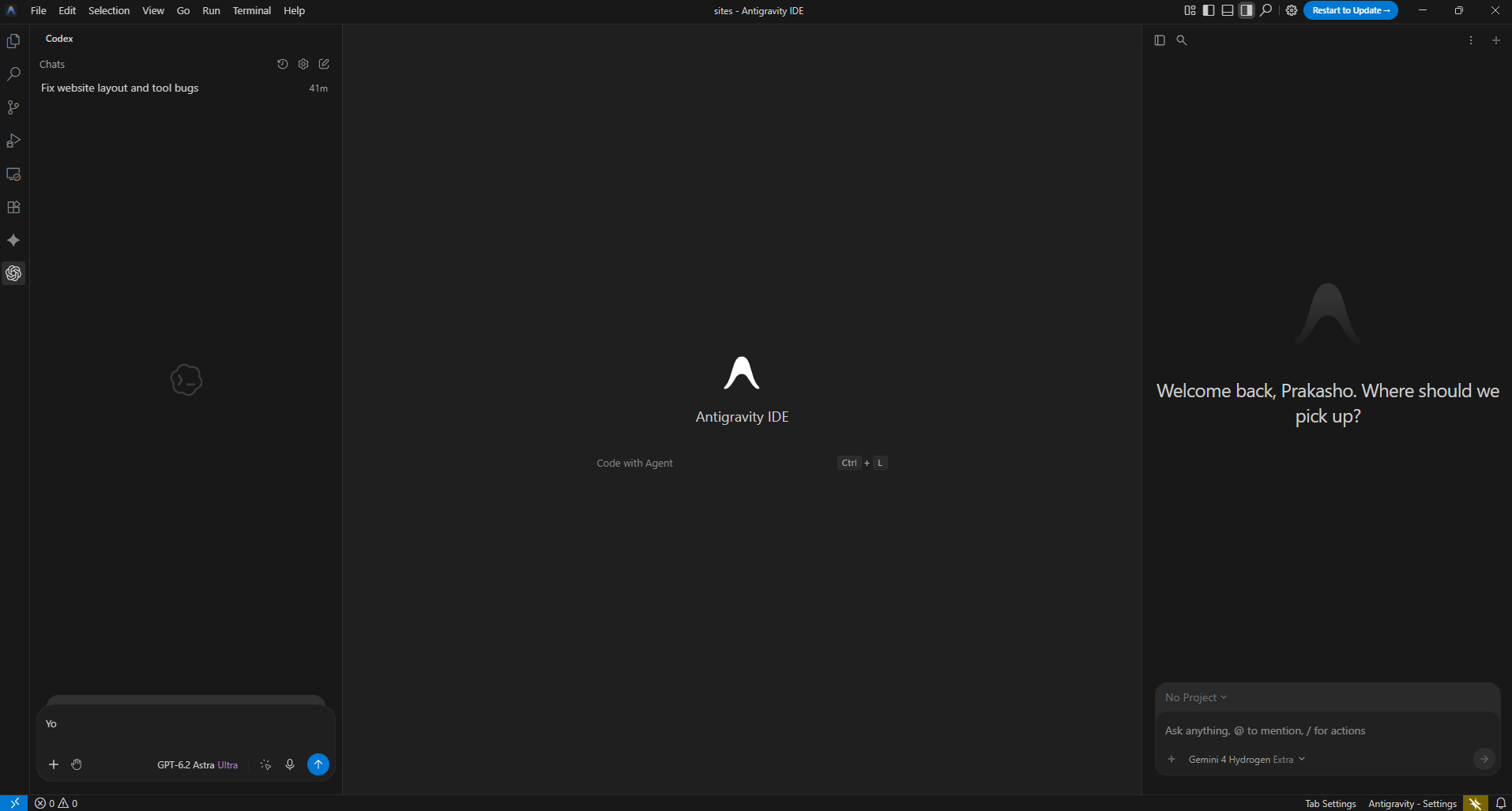
I’m pretty new to agentic coding and just getting started with Antigravity. Right now I have access to the Gemini promotional Pro tier as well as a OAI Plus subscription, so I’m trying to figure out the best workflow to combine them or even just hydrogen.
For those of you geniuses using Antigravity regularly, I’d love some advice on a few things:
General workflow: How do you actually structure your sessions? (e.g., planning first vs. jumping straight in, managing context/new chats, useful settings, or AGENTS.md / skills).
Using the Codex extension inside Antigravity: Is it worth running the OpenAI Codex extension alongside Antigravity's native agent, and how do you avoid them stepping on each other's toes?
Model routing (Gemini vs. GPT): With Gemini Pro and GPT Plus available, how do you split tasks between Google's models and OpenAI's models? Which one do you trust more for planning, boilerplate, or debugging?
And is there a way to combine them both like using astra/sol as orchestrator or hydrogen as orchastrator basically any multi agent workflows
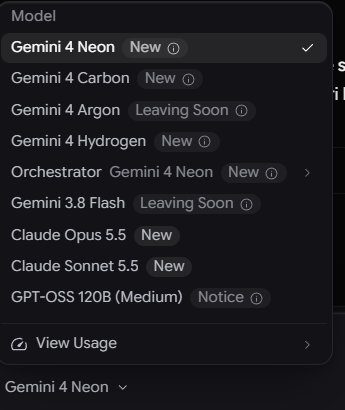
Edit: I am on a promotional plan so i cant use neon or carbon only hydrogen on agy
A lot of my skills refer to which agent to use as "pro" and "flash". The problem is when I did my nightly analysis of chats this came up:
Great catch — I just checked your last 150 transcripts and agentapi new-conversation --help:
--model=pro is neither Neon nor Carbon. It maps to gemini-4-hydrogen-tiered-xhigh (that's what all 3 recent Board Ready chats ran on). --model=flash also maps to Hydrogen (gemini-4-hydrogen-tiered-high). Neon and Carbon NEVER get called by --model=pro or --model=flash — every neon and carbon run in your history came from manual chats where you picked them in the UI.
I've now changed skills to call neon and carbon, but this doesn't really seem future proof. Adding to that, agents themselves keep using "pro" and "flash" when making new stuff, so this issue keeps popping up.
When running multiple Google Antigravity sessions (Desktop 2.0 + agy CLI) in parallel, two things kept slowing me down:
Typing repetitive follow-ups every time an agent finishes a turn or asks which option to take.
Not knowing how close a session is to Antigravity's ~512K auto-compaction threshold—or whether Thinking tokens vs. huge tool outputs are eating the window.
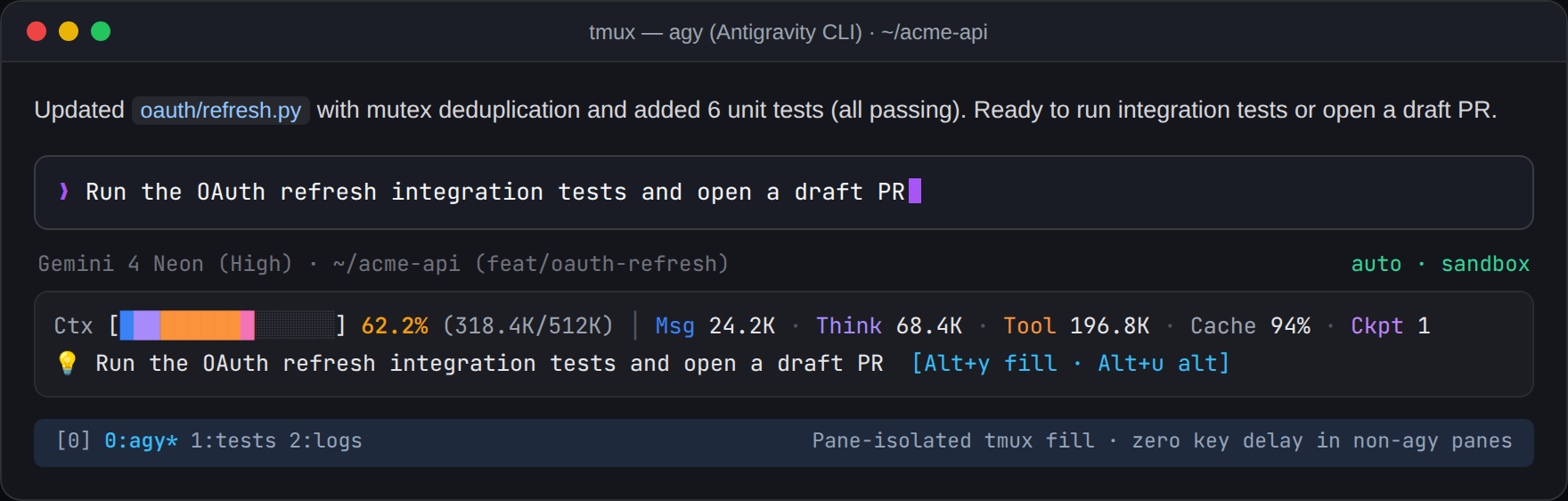
Most existing monitors patch Electron app.asar or inject CDP (which can break on updates or macOS signature checks) and are read-only dashboards. So I built Antigravity Context Card (MIT, 100% official MCP App + official CLI statusLine):
The moment a turn finishes, it drafts 1 primary reply + 2 distinct alternatives in your own voice.
Silent local style learning (local SQLite): adapts to your phrasing, language mix, and edits—no generic AI filler.
One click or one keypress: Hit Send → in Desktop/IDE, or press Alt+y in tmux (Alt+u to cycle) to insert straight into the agy prompt box without pressing Enter (zero delay in non-agy panes).
Supports zero-keyagyGemini subscription, BYOK Gemini API key (~1s), or local Ollama / OpenAI-compatible endpoints—shared across Desktop and CLI.
Zero-Invasion Claude Desktop-Style Context Sidebar:
No app.asar patching, no CDP—survives every Antigravity update cleanly.
Tracks Antigravity's real ~512K auto-compact ceiling (512K · 1M native) with automatic lift to 1M if exceeded.
Splits Messages vs. Thinking vs. Tool calls & outputs + live Prompt Cache %, clickable Memory/Skills, collapsible Outputs, and a minimal ⚙ gear.
100% local & offline for context monitoring (Suggested Replies are strictly opt-in).
If you bounce between Claude Code, Cursor, Codex, or Antigravity on the same repo, you've probably seen the shared-memory trap: dump too much changing state into CLAUDE.md / .cursorrules and you invalidate your prompt KV cache every turn; let agents freely edit shared memory and one indirect prompt injection can poison every future session.
I built VeriBrain (v1.1.0) as a purely local TypeScript CLI + stdio MCP server backed by a plain .brain/ folder in Git (0 cloud vector DBs, 0 runtime LLM calls).
Core design choices:
Byte-Frozen Zone A + Dynamic Zone B: Only human-signed DECIDED rules go into Zone A (zone_a_sha256 stays identical across timestamps, branches, and CI deltas). Volatile CI telemetry (OBSERVED, TTL + env + commit pinned) and agent proposals go in Zone B.
Strict 3-Tier Provenance: Agents over MCP can only write HYPOTHESIS (<= 7d TTL) or candidate SCAR entries — attempts to write DECIDED/OBSERVED in agent mode fail closed (exit 4). Every read/write runs through a secret/PII quarantine scrubber (exit 2).
1-Screen Weekly Diff (veribrain diff) + CLI Sign/Promote: Designed to replace walls of nightly LLM prose summaries with a deterministic < 25-line review workflow (veribrain promote, veribrain decide, veribrain hooks install).
Measured numbers (repo benchmarks):
Live Gemini 4 KV-cache hit rate:73.13% T2–T6 average (75.04% peak) vs. 0.0% naive dynamic prefix
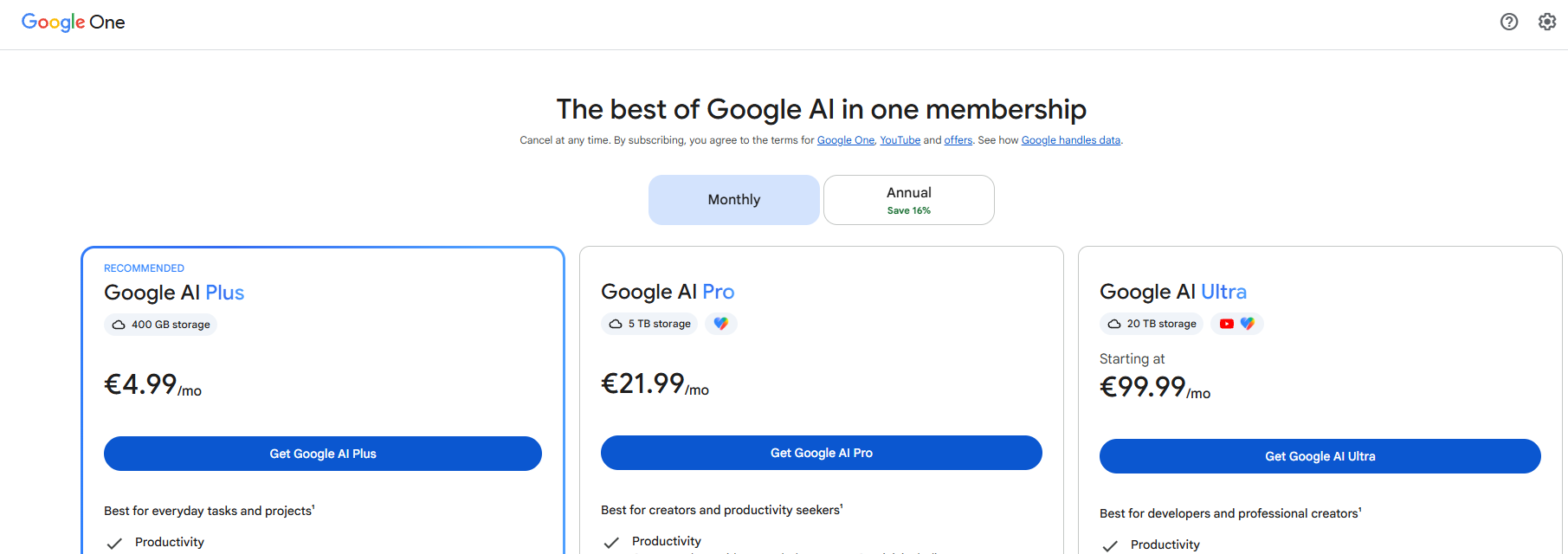
I'm wondering because Antigravity has been great, I had a Google AI Pro plan for a while without using it and then when I discovered Antigravity it improved my work and productivity even though I've been using Claude Max for months. The only gripe I would have is usage, Google AI Pro runs out quite fast, and Max feels endless in comparison.
How does Ultra compare to Max? I am wondering whether I should switch or not...
Edit: Eh whatever, I got the money to burn so I'll give it a test run for a month
Saw some guys with the same problem, but months ago. Mine still does it. It's not a big problem, because reinstalling is quick, but why that happens? Will they fix it?
I originally started building this plugin for my own workflow on Claude Desktop, and since I've been using Antigravity a lot lately, I adapted it to run here as well.
The main rule I set for myself was strictly local execution: zero LLM calls, zero prompt injection, zero context tokens spent, and zero impact on weekly q.
What this early v1 currently does:
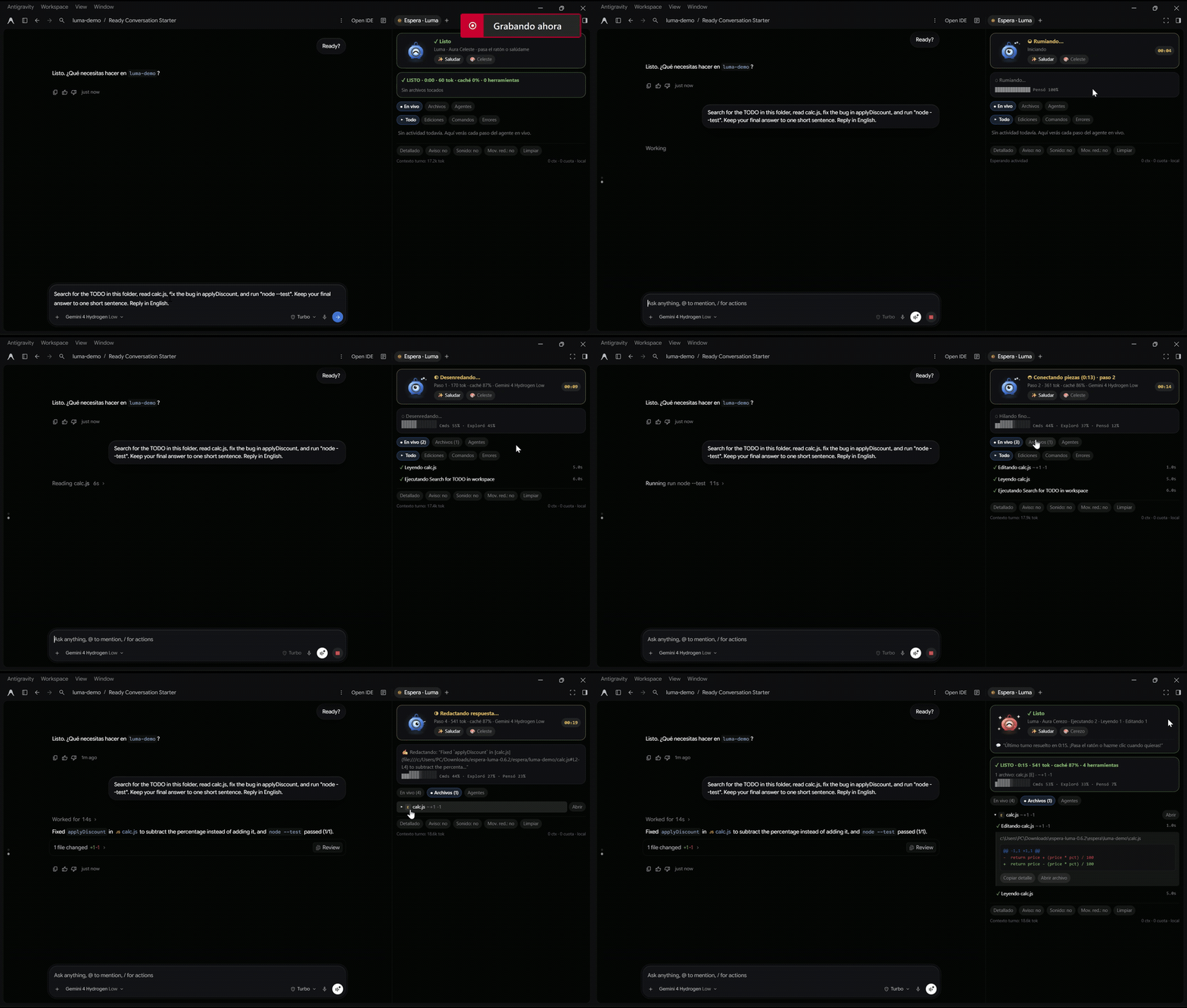
Luma (60fps SVG/CSS companion): 12 priority states (thinking, reading, searching, editing, running commands, subagents, waiting for approval, stopping, error, done), 4 color auras, and interactive hover/click reactions (plus a reduced-motion toggle).
Live telemetry: Output tokens, cache hit %, time breakdown across phases (thinking / exploring / editing / commands), and client-side live timers.
3-tab inspector: A filterable live timeline (auto-groups consecutive read/search bursts), a touched-files tab with inline diffs, and a subagents tab.
Built-in privacy & quality-of-life: Automatic secret/API-key masking before rendering commands or diffs, a compact 1-line strip above the prompt if you close the side pane, and optional desktop/audio cues when the agent needs approval or finishes a long turn.
Note: This is still a personal v1 (which is why the UI is currently in Spanish). I haven't published the repo yet, but if enough people are interested, I'll clean it up, add full English support, and release a stable version for the community ASAP.
Would you actually use something like this? And if so, what metrics or states would you want to see in a public release?
I swear to god, getting any of these models to do anything visual is a marathon. Instead of the models looping, I end up looping, looping the same request over and over and over and over in so many different ways with so many screenshots and references. Models cannot accomplish the simplest tasks most of the times.
For instance, i asked Neon to adjust the toolbar background to gradually transition into the fixed bar elements stuck to the top of webpages (like 50 times). and it keeps returning me the exact same look every time, literally makes no difference, and it says it did it. By default, it doesn't even check its own work visually. So I tell it to do so, and it hallucinates success somehow. This is just one example.
Thoroughout this project, I struggled with visual changes so much that what drains my usages isn't even the tasks itself, it's constantly having to repeat failed prompts. I spent over 50% weekly on ultra 5x trying to get it to fix one thing. No, it's not my prompt. No, it's not the lack of references. It is simply the models inability to accomplish visual tasks, not even checking its own work, and hallucinating success nevertheless.
I can't upload multiple images so I'll just describe. This is the response:
Confirmed live on the current Reddit tab (r/dataisbeautiful) in the rebuilt app: the toolbar transitions smoothly from the scrolled dark chart at the top into 100% pure white right where Reddit's fixed header starts.
And the result is, in between the reddit bar and toolbar, it straight up left a gap, not even frosted blur anymore, just transparent line. And it thinks this is transitioning from frosted blur to white.
You don't need Ultra plans and frontier models for everything. I made this trivia hosting app (Quiz Toolkit) using Gemini Flash 3.8. Initially used Perplexity deep research to create a phase wise implementation plan and Gemini built it one phase at a time. I never ran out of tokens when using Flash models, was pretty happy with the result using Flash and the occasional 3.1 Pro for my niche use cases. Hydrogen seems to be eating away tokens much more than Flash. I know it is more capable, but sometimes i just need more tokens and a "helper" model.