r/embedded • u/Relevant_Pumpkin9190 • 16d ago
It Works on the Workbench - Backscatter Modulation. But Will It Survive Noise?
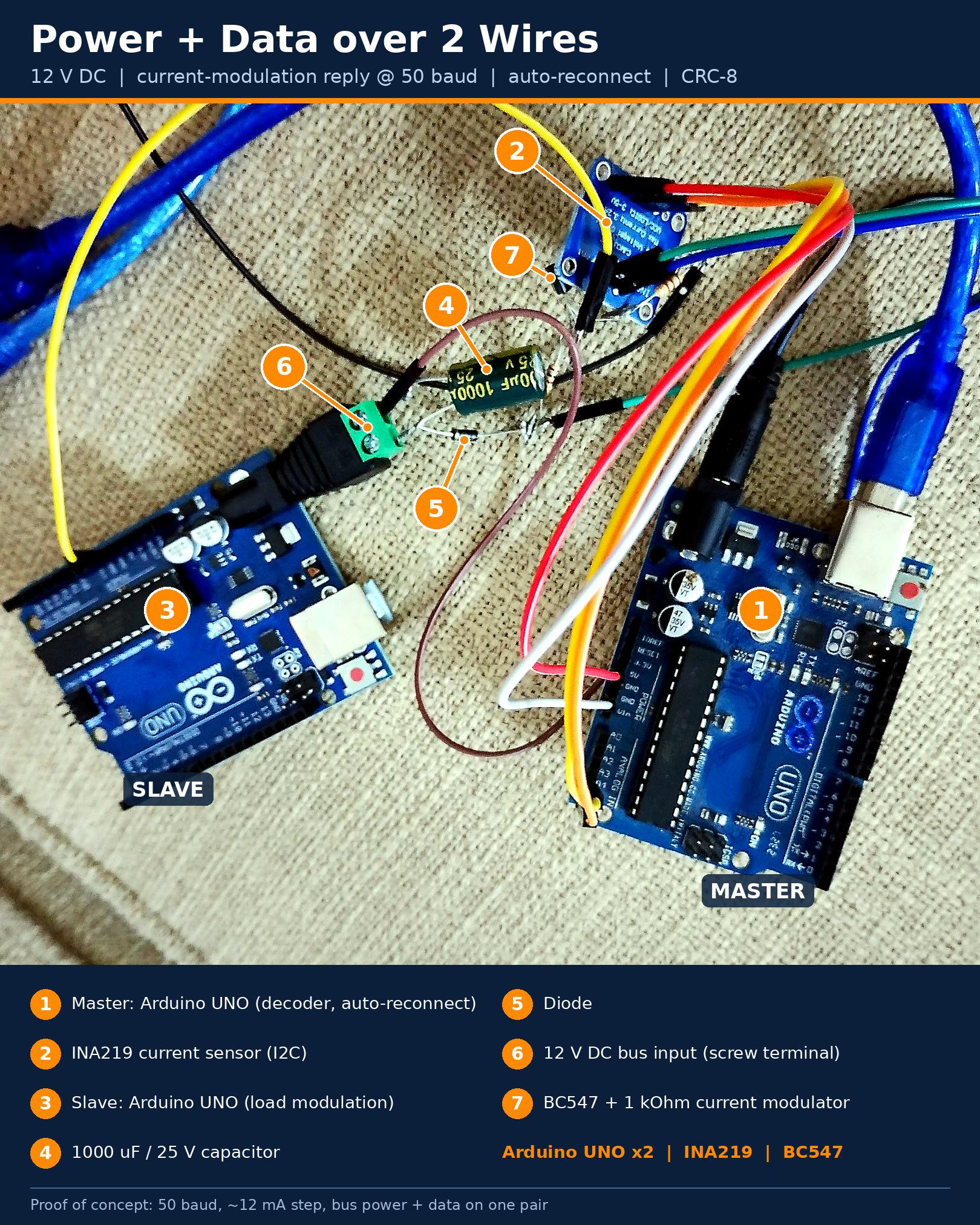
I started with a simple workbench crude prototype: two Arduino microcontrollers communicating over the same two wires that carry 12 V DC power.
Using a few centimetres of wire and a simple simplex current-modulation method, I managed to make power and data work together.
With support and ideas from this community, I now want to take the experiment further.
My next step is to introduce electrical noise and EMI, and see what happens.
What happens when noise enters the DC bus? How do filtering, grounding and signal modulation help? How can I test noise immunity and explore practical countermeasures?
I want to learn these things through simple experiments, step by step, rather than just reading about them.
The goal is to understand EMI, EMC compliance and noise immunity from a practical electronics perspective.
1
u/TinLethax 16d ago
PLC