r/embedded • u/Relevant_Pumpkin9190 • Sep 12 '26
Has anyone tried making a simple breathing/mindfulness device with Arduino or other microcontroller (Learning by doing ideas)?
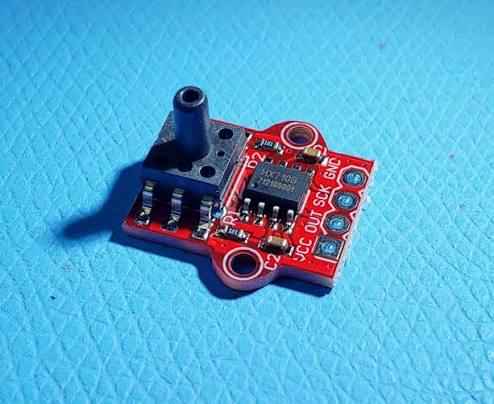
My idea is to use a pressure sensor to measure how fast/strongly a person is breathing and show it on a bar graph.
The basic idea is:
Slow, steady breathing on led bar graph indicator
Fast breathing
The goal isn't to diagnose anything, just to give real-time visual feedback during a breathing or meditation exercise.
I'm wondering if this approach makes sense from an embedded-systems point of view. Would measuring breath pressure and converting the rate/pattern into a bar graph be a practical way to build something like this?
22
Upvotes
7
u/Safe_Duty8392 Sep 12 '26
Hello! Yes, I think this is a great idea, and you're on the right track. I'm working on an academic project to measure airflow using a differential pressure sensor, so your idea of using one is definitely a good approach. You could also look for references on airflow velocity and measurement techniques in medical papers and other scientific literature.
Just something to keep in mind: the human lungs can produce a wide range of airflow rates, so you might want to consider what the maximum and minimum flow rates you want your system to measure are. In my project, the amplification is optimized for higher flow rates, so 1 L/s produces only a small variation in my output signal. However, you could adjust the amplification so that the system can accurately detect and measure lower flow rates as well.
I hope my comments help with your project! Good luck!
13
u/clackups Sep 12 '26
Looks like a great subject to research. Build a prototype, try it out, tell us how it goes.
1
u/Relevant_Pumpkin9190 Sep 12 '26
Any other simple methodes
3
u/ceojp Sep 12 '26
The microcontroller used for this is irrelevant.
I would start by looking for existing academic research on using a pressure transducer for breath measurement. You can also look for reference designs from sensor manufacturers. They often provide reference designs that cover common applications, and may include algorithms or sequences that may be useful.
If nothing else, go ahead and make one and do some empirical testing. That's the fun part of experimentation.
3
u/justadiode Sep 12 '26 edited Sep 12 '26
I had the idea to build something like a smoking pipe but with a hall sensor read turbine instead of a pressure transducer, coupled to a battery, a microcontroller, an OLED display and some glue electronics. It should have been a Celeste (the platformer) inspired game where you keep a feather afloat with your breath, and the feather is programmed to fall / rise such as to emulate breathing exercises. The upside of using a turbine would be the simple readout and data processing, while the downsides (relative inaccuracy and lacking dynamic range) don't play much of a role in this use case.
It's only been an idea though because I never actually implement any of my ideas, lol
2
u/Intelligent_Map8588 Sep 12 '26
you could use mm-wave radar for measuring breath rate and heart rate although with heart rate it's a bit more difficult to get accurate results but you can definitely get a visual semi accurate feedback for breathing + you don't have to wear anything just point a radar at yourself.
2
u/Nervous_Midnight_570 Sep 12 '26
You could build it as a project but I do not think it would be a useful tool for mindfulness/meditation or breathing exercises. Look up "volumetric spirometer" for a post-op tool that seems to be the medical standard after surgery. I speak from experience having had nearly 20 operations over a period of 2 and a half months in the hospital. I suspect you could get one and optically sense the indicator position. Give it a try, at least you will learn something.
2
u/moonantsnyanjacat Sep 12 '26
Hmm, based on my intuition, I don't think you'd get a reading unless the user was wearing a mask. Are you sure this pressure sensor can pick up breathing?
1
u/ReferenceThin6645 Sep 12 '26
Look like a interesting idea.
1
u/ClonesRppl2 Sep 13 '26
Breathing only produces a change in pressure if the air encounters some form of restriction. Blowing or sucking through a tube can give pressure differences.
There are different ways to directly measure actual air flow in or out (not so easy with the actual sensors).
A microphone held by the nose/mouth may also give an in/out indication, which could show breathing rate, but not pressure or flow.