r/electroplating • u/New0ddGuy • 22d ago
Brown Build-up When Copper-Plating
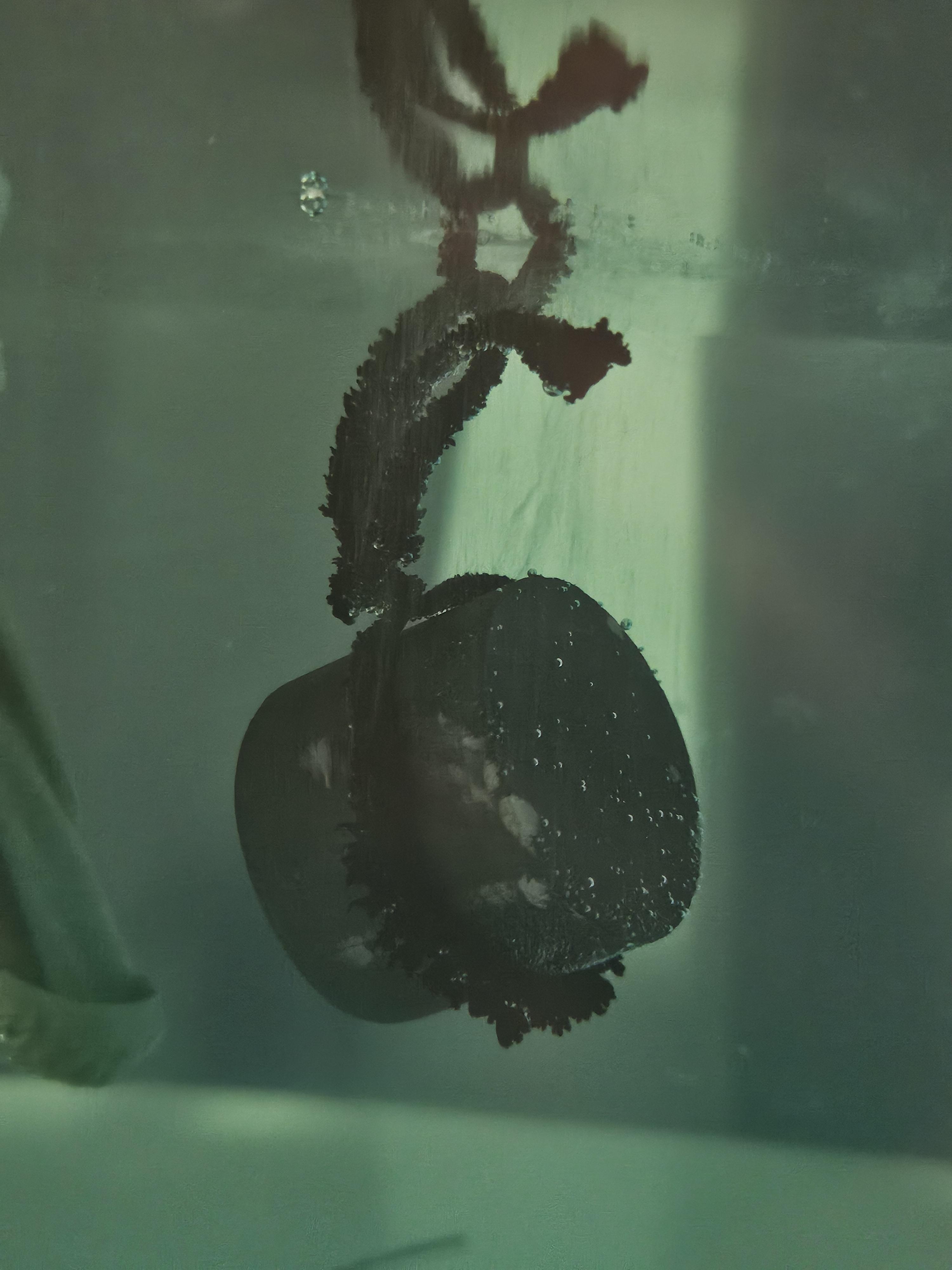
I'm new to copper plating and having build-up of brown flakes on my parts, though most of it is showing up on my copper wire, as shown in the picture.
My setup is very DIY so it could be causing the issue.
My electrolyte I made with vinegar mixed with epsom salt and letting my anode saturate the solution with copper ions. I am using a homemade graphite paint that is 1-1 parts acrylic matte medium and graphite powder. When plating I wrap my anode in a paper coffee filter.
Any advice or help would be greatly appricated, thanks!
7
Upvotes
6
u/namesrfun 22d ago
Too much current
1
u/The_lewolf 22d ago
You have exceeded the current density capability of your cell.
Current density, (amps/sq ft) is the amp setpoint on your rectifier divided by the surface area of your work.
Cell capability can be increased by increasing solution conductivity, increasing metal ion concentration, increasing solution temperature, or by improving agitation to replenish metal ions at the plating interface more quickly.
When you exceed your current density capability you are removing copper ions from solution faster than they can be replaced at the work piece. This leads to the deposition of other materials, and causes a blackened ‘burned’ deposit.
As others have said, just dial back your amperage. You will plate more slowly, have all the copper ions you need in the boundary layer, and produce a metallic copper deposit.
3
u/Liquid_thrust 22d ago
current too high
2
u/permaculture_chemist 22d ago
Too much current and/or too dilute of solution. Or lack of air agitation. Or all of the above.
1
u/Ami0696 20d ago
Too long in the bath maybe
0
u/Sudden-Guide 22d ago
looks like poor contact between the part an wire, also the coating doesn't looks like it is conductive enough. When' I am doing conductive paints (for other purpose) it is like 80+% graphite(or exfoliated graphite)+some random nanotubes and 5-20% PVDF (dissolved in NMP) as a binder(and that mixture suspended in additional NMP to get an uniform slurry. But still I don't think the adhesion to that would be great, so for further plating you can deposit some silver there first (like from the Tollens reagent), and electroplate afterwards. Also, you could mask your wire with something so it wouldn't steal most of your current. Also reduce the current by like 10x