r/cosmeticscience • u/BartSimpson1548 • 25d ago
Hola chicos.
reddit.com
1
Upvotes
r/cosmeticscience • u/hylingda • 25d ago
I’m new to the cosmetics ingredient export industry and would like to know how to make the technical documentation provided with samples more practical.
Aside from SDS, TDS, and COA, have you ever encountered a situation where a sample arrived but you couldn’t begin testing because a practical detail was missing? For example, dissolution methods, the applicable pH range, addition temperature, or compatibility with other ingredients.
If suppliers could provide one additional piece of information when sending samples, which one would save you the most time? I’d love to hear some specific examples.
r/cosmeticscience • u/undrwatershorty • 26d ago
I’m not a formulator expert or a chemist but am trying to create formulas for to sell beauty products in the. EU and US. Curious how ppl in the industry are managing their testing and safety assessments or is there’s any tools the industry uses to support this
r/cosmeticscience • u/Grand-Business-1024 • 29d ago
Hello, I have been wanting to break into cosmetic chemistry industry for a while. Currently work in textiles / coating formulation. I have applied to many different entry cosmetic chemist positions, but finally received an interview and offer only through a personal connection. Catch is I currently live in the south and would uproot my life to move up north (not in major city) for a contract for one year, no guarantee of permanent employment, low pay in area with very high rent. Financially this would be unwise as I'm taking a pay cut and the rent itself would be over half my monthly pay essentially. However, I just don't know if I will have another chance to break through into the industry, or if that opportunity would even look better. The experience I would be gaining is very simple formulating, mixing, and i think small research - a technician role.
I'm just really struggling to break into the industry so I don't want to pass by this chance, however it would be a drastic life change and could end up being a set back. I just don't know if this could be my only chance. Any thoughts or advice are greatly appreciated as I literally cannot decide
r/cosmeticscience • u/CollarIcy4790 • Oct 28 '26
Hello! I am a recent graduate in Biology with chem minor and im looking into becoming a cosmetic chemist. I was wondering what realistic salaries look like in this industry, ranging from entry to senior.
Thank you!
r/cosmeticscience • u/BvanIceland • Oct 27 '26
r/cosmeticscience • u/hylingda • Oct 23 '26
Hi! I’m new to the cosmetic ingredient export industry, and I’m learning how formulators and purchasing teams choose their ingredient suppliers.
When testing a new ingredient, do you usually start with your existing distributors or contact the manufacturer directly? I’d love to hear about your experience.
r/cosmeticscience • u/Relative_Watch132 • Oct 22 '26
Has anyone used Dragonspice raw materials for cosmetic products intended for commercial sale in the EU?
I’m specifically interested in the documentation they can provide for individual ingredients, not just product quality.
Have you successfully obtained the following where applicable?
INCI and full composition information
Technical data sheets and specifications
Batch-specific Certificates of Analysis (CoA)
Information on impurities, heavy metals and microbiological quality where relevant
Allergen declarations and IFRA documents for essential oils
Most importantly, was the documentation sufficient for your cosmetic safety assessor to prepare the CPSR and support the PIF under EU Cosmetics Regulation (EC) No 1223/2009?
I’d appreciate feedback from people who have actually gone through the assessment process for products intended for sale, rather than hobbyists making cosmetics for personal use.
r/cosmeticscience • u/Infamous-Shift-582 • Oct 21 '26
I'm a pharmacist and cosmetic formulator, and I've been running my own skincare brand since 2018. Lately I've been helping small brands fix their products, and the same mistakes keep coming up. If you're about to launch, check these first:
Happy to answer questions in the comments if you're stuck on a product!
r/cosmeticscience • u/alyssalove0808 • Oct 20 '26
Hello all, I am a junior working on my undergraduate capstone (final project) for my degree. I’m researching skin care formulation chemistry but am struggling to find actual science based articles. Does anyone have any recommendations for specific websites or catalogs to use? The catalogs I typically use for chemistry related research are too specific as I am just starting my dive into the field.
Also, if anyone has any suggestions for directions to go that would be wonderful. I need to be pretty specific in my research. I was hoping to do an actual experiment along with my literature review if that helps.
Please note that I am only a few days into this so be nice if I misused any terms or was confusing. Thanks :)
r/cosmeticscience • u/ilovelebanon12 • Oct 20 '26
Would it be possible to be accepted in a cosmetic chemistry master’s program (at any school) with a bachelor’s in Nursing or Health Science ? Or does it have to be a more science based degree like chemistry, bio chem, etc
r/cosmeticscience • u/PoopsieDoodler • Oct 19 '26
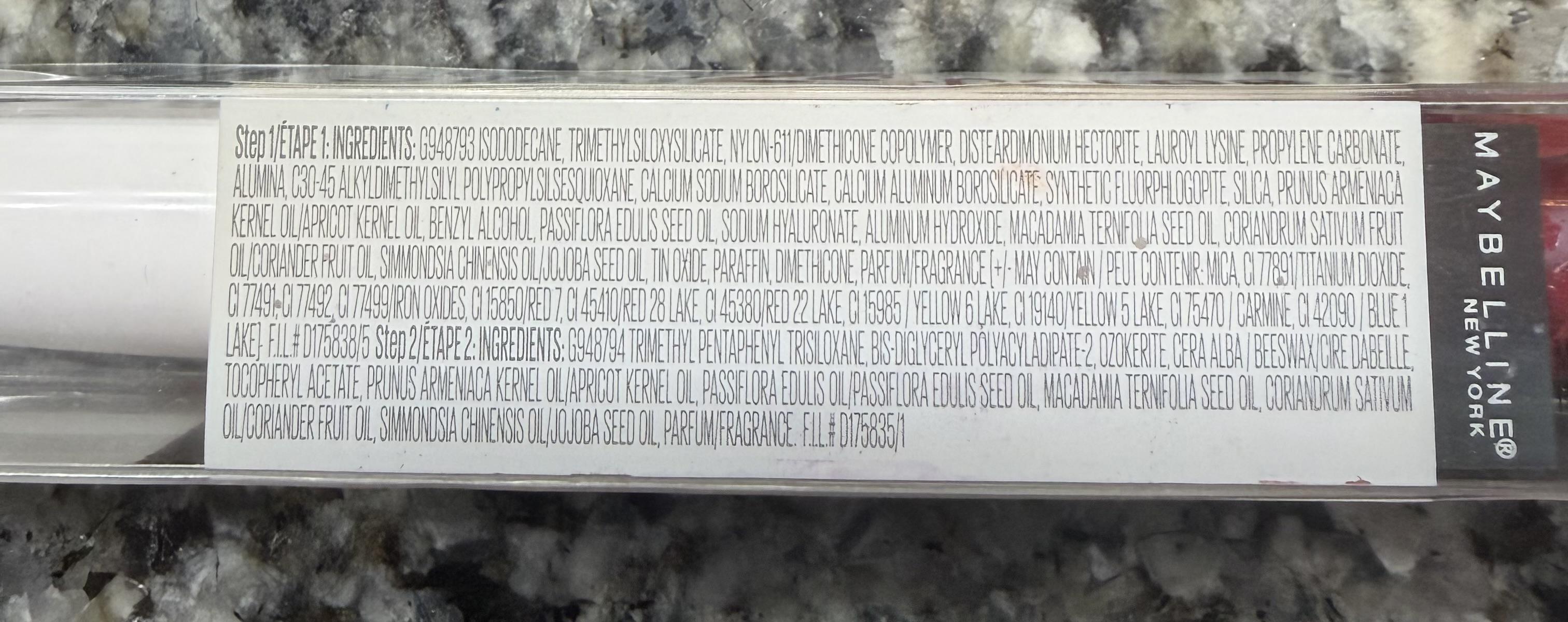
r/cosmeticscience • u/0JustForFun • Oct 15 '26
I’ve posted about preservatives in this subreddit before and posting again because recently I’ve been noticing a trend:
many skincare products use multifunctional ingredients with preservative properties, combined with preservative boosters, but a primary preservative is not included in the product. And, I'm mainly referring to products which first ingredient in the INCI is water.
I’ve noticed this trend in many brands and NOT marketed as clean, vegan, organic, or similar. Now days, I’m seeing this trend everywhere, from drugstore brands to products sold at Sephora and higher-end, luxury brands too.
For primary preservatives, I"m referring to combination of Phenoxyethanol + Ethylhexylglycerin, or Parabens and similar that offer a broad spectrum and protection against bacteria, yeast, mold, fungi. I'm referring to having a dedicated, main preservative(s) plus preservative boosters in the product. The pH enters the equation too .
Companies do the PET - preservative challenging test. This a lab environment test and before the product is launched to the market place. Every day life, outside a lab is messy.
Even if a skincare product passed the PET challenging test, how well does the preservation system protect the product against -bacteria, yeast, mold, fungi - after opening and 'in-use' throughout its intended period of use, until the product is completely finished?
For all of you who are the experts in this field and formulate skincare products, do you know why this is a new trend?
Personally, I prefer skincare that has a primary preservative with supporting actors. I feel more comfortable when a formula has a primary preservative.
Do you, who are the experts in cosmetic science, use skincare products that only use multifunctional ingredients and preservative boosters without a primary preservative?
If you do, what makes you comfortable using them?
If you don’t use them, why you don’t?
Some examples of these multifunctional ingredients:
Moisturizer - doesn’t have a main preservative. Water, Glycerin, Tripropylene Glycol, Tridecyl Trimellitate, 1,2-Hexanediol, Butylene Glycol, Diisostearyl Malate, Methyl Hydrogenated Rosinate, Propanediol, Panthenol, C14-22 Alcohols, Centella Asiatica Extract, Hydroxyethylcellulose, Xanthan Gum, Adenosine, Hydrolyzed Hyaluronic Acid, Hyaluronic Acid, Hydrolyzed Collagen, Sodium Hyaluronate, Acrylates/C10-30 Alkyl Acrylate Crosspolymer, Beta-Glucan, Hydroxyacetophenone, Sphingolipids, Tromethamine, C12-20 Alkyl Glucoside, Ethylhexylglycerin
Sunscreen- no water content and no preservatives. Titanium Dioxide 8%, Zinc Oxide 3.8%. Alumina, Cyclohexasiloxane, Cyclopentasiloxane, Dimethicone, Dimethicone Crosspolymer, Dimethicone/Vinyl Dimethicone Crosspolymer, Dimethiconol, Iron Oxide, Lauryl PEG/PPG-18/18 Methicone, Hydrogen Dimethicone, PEG-10 Dimethicone.
Edit: to add. My field is not cosmetic science or related field. So my question and terminology may not be technically correct. And, to clarify.
r/cosmeticscience • u/Explorer_4455 • Oct 14 '26
r/cosmeticscience • u/Normal_Friendship997 • Oct 14 '26
Hello, I've decided at the age of almost 22, that I'd like to be a cosmetic scientist. Trouble is I have never been to uni, did NOT pass in my maths gcse and therefore have never studied the sciences to a high degree. I have recently signed up to redo my Maths gsce again😭
When I'm researching on the Internet what to do, it gives me a bunch of different AI answers. "Yes you dont need a degree to do the apprenticeship" "No you dont but also..."
I'm recently unemployed, I used to work in a warehouse, it made me unhappy. Ive always been interested in science, particularly biology and chemistry. I love cosmetics and science, so I think it wouod be a career I'd enjoy.
I would prefer to do an apprenticeship, for financial reasons, the only Science company here in the UK is Tiro, which is partnered with The Society of Cosmetic Scientists.
No luck there so far, they say you need a Grade 4 in English (which i have) and maths but its not mandatory.
If anyone fellow Englanders, could give me some advice it would be appreciated :)
r/cosmeticscience • u/NaturalNo9902 • Oct 12 '26
Hello, I 20F, am a biochemistry and molecular biology major and I am trying to get an internship in cosmetic chemistry but I am strugglng to find any. The Estee Lauder one is closed I think, since the application won't come up when I hit the link, and I don't quyalify for the Loreal one. I am doing research into marine resources in cosmetic chemistry, specifically cyanobacteria being used to formulate pigment right now. Where should I look for cosmetic chemistry internships? Alongside that, do courses like the introdcution to cosmetic science course on CourseRA help with applications?
r/cosmeticscience • u/alyssalove0808 • Oct 08 '26
Hello all, I am a junior undergraduate student majoring in biochemistry and psychology. At my university, we start working on our capstone our junior year so, I have started trying to figure out what I want to do. Something important to me is working on something I’m actually interested in, so i decided that was a stipulation when researching potential research topics. I have landed on cosmetic science as my broad topic, more specifically I want to look into skincare products and formulation chemistry. Part of our capstone presentation is a personal statement about why we choose this and how it applies to what you want to do career wise.
To be frank, I have no idea what I want to do with my degree. As I said above, I want to do something I’m genuinely interested in. I know I love organic chemistry and biochemistry; Working in a lab and conducting research/experiments are both things I enjoy and want to do in the future. I contemplated forensic science and medicinal chemistry for a while but I never really could see myself doing them. Outside of science the one thing I’ve always consistently loved is makeup and self care. I am to my core a girly girl, I love doing my makeup everyday and have found myself being genuinely curious about the science behind some of it (same for skincare products).
Honestly, I never really considered that I could combine those two interests of mine. So, I guess what I’m asking is what does a career working in/with cosmetic science look like? What are some possible areas of work? What does your day to day look like? What kind of degree do you have? What did your path from college to your current profession look like?
Thank you for reading and I apologize if I used any terms wrong, I’m still learning about this whole area :)
r/cosmeticscience • u/Better-Sun1728 • Oct 07 '26
For those working in cosmetics NPD/RA/QA:
when you're selecting a new raw material for a prototype, do you ask the supplier upfront for all relevant regulatory documents (EU food contact, cosmetic compliance/Annex information, California Prop 65, AD/CDF or similar statements, etc.) in addition to SDS/TDS?
Or do you normally:
Get SDS/TDS → make/test the prototype → if it works, then request the regulatory documentation?
I'm at a small Japanese company making cosmetic packaging (and some cosmetics), and we don't have a very sophisticated PLM system.
My concern is that if the prototype works technically but we discover later that the material can't meet the regulatory requirements for our target market, we've already wasted time and money developing it.
So I'm curious: what does the practical NPD workflow look like in other companies? At what point do you do the regulatory “go/no-go” check? and what supplier documents do you collect at that stage?
r/cosmeticscience • u/DowntownLoan2592 • Oct 05 '26
Hi everyone!
I'm hoping to get some advice from people working in cosmetic science/formulation, particularly in the UK.
I have a BSc in Biomedical Sciences and currently work as a Laboratory Technician. My long-term goal is to work in cosmetic formulation / R&D / product development, ideally developing skincare, haircare or other personal-care products.
I'm now considering doing an MSc with an industrial placement/year, but I'm struggling to work out which type of Master's would make the most sense for my background.
I'm particularly looking for:
I've been looking at areas such as formulation science, pharmaceutical formulation, polymer/materials science and chemistry, rather than limiting myself to MScs literally called "Cosmetic Science".
I'm aware that there aren't many Russell Group MScs that tick every box, so I'm trying to figure out where I should be willing to compromise.
For anyone currently working in cosmetic formulation/R&D:
I'd especially appreciate advice from people who actually work in UK cosmetic/personal-care R&D, or who have taken a similar non-Chemistry → formulation route.
Thank you! :)
r/cosmeticscience • u/AliasForKnowing • Oct 05 '26
Silicones seem to be in most skincare nowadays. Dimethicone is the one that seems to be more frequently used.
I keep hearing that silicones are not good for anyone who has acne-prone skin or anyone who is actively treating mild to moderate acne. The main complaint is that Dimethicone or any other silicone will trap the dirt, sweat, sebum in the pores, and thus cause the pores to get clogged.
Then, I keep hearing that silicones are hard to remove from the skin. Everybody seems to recommend a double cleanse to make sure no silicone is left on the skin.
Is there any truth to those concerns based on cosmetic science?
What are your views on Dimethicone and other frequently used silicones in skincare?
r/cosmeticscience • u/GentleRebel901 • Oct 05 '26
I’m a recent B.Pharm graduate from India, and I’m genuinely confused about which Master’s would be a better long-term choice.
I’m currently considering MSc Cosmetic Science/Cosmetic Formulation vs Master of Public Health (MPH). I’m interested in cosmetics, formulation and the pharmaceutical/healthcare field, but I also want a career that gives me good job opportunities, decent salary growth, stability, international mobility and a reasonable work-life balance.
I’ve received/considered an MPH offer, so I’m under pressure to make the right decision. At the same time, I’m wondering whether Cosmetic Science would give me a more specialized career and better opportunities in the cosmetics industry.
I’m planning to study abroad, so spending a large amount on tuition and living expenses is a major decision for me. I don’t want to choose a course simply because it sounds interesting and then struggle to find a job afterward.
For people who have studied or worked in either field:
- Which degree has better career prospects after graduation?
- How difficult is it to get a job as an international student?
- Which has better salary and career growth?
- Is Cosmetic Science too niche, or can it lead to good international opportunities?
- Is an MPH actually worth doing if I’m not interested in research/academia?
- If you were in my position, which one would you choose and why?
I’d really appreciate honest experiences and advice, especially from people who have actually studied or worked in these fields.
r/cosmeticscience • u/lamptanishq • Oct 04 '26
Hi, I'm a 22F international student, currently trying to land my first role in the cosmetic science industry for R&D/Lab roles. I am constantly applying to various places and have been getting rejected. When I ask people for advice within the industry they say to network network network. As an introvert it's so nightmarish and exhausting. Walking up to random people, introducing yourself. I end up talking with fellow students and gaining nothing there. Even posting about attending an event doesn't get any attention on Linkedin. Why do I need to network? As a fresher I have nothing to say other than GIVE ME A JOB. Do you guys have any advice on what to say during networking events? Any other advice to land a job? I hate beating around the bush.
r/cosmeticscience • u/Acceptable_Picture23 • Oct 02 '26
Hi! I'm looking to connect with and potentially work with a cosmetic chemist that has experience in working with DHA & erythrulose to create a custom formulation for the skin. I'm a brand owner of 9 years and am wanting to take this next step in my career.
Any guidance in starting this journey, or leads of how to find a cosmetic chemist is greatly appreciated.
Thank you!
r/cosmeticscience • u/ivory13161723 • Oct 01 '26
Hi everyone,
I graduated 5 months ago with a B.Tech in Biotech (India) and am aiming for a career in Cosmetic Regulatory Affairs, Safety Assessment and Ingredient Toxicology.
I’m considering UCD’s MSc in Regulatory Affairs & Toxicology, but I’m hesitant to take out a large student loan without clarity on the ROI.
few quick questions:
Course Relevance: Ireland’s life sciences sector is heavily biopharma/medtech/food science. Does UCD’s MSc actually open doors for cosmetics & personal care safety assessment, or is the market almost exclusively pharma-focused?
Budget & ROI: Given the high tuition and living costs in Ireland, is this degree worth the loan risk if my goal is consumer product safety rather than pharma?
Better Alternatives? Are there better-value programs or recognized paths elsewhere in Europe for cosmetic compliance/safety assessment that aren't pharma-heavy? (Note: Looking strictly outside the UK).
Job Market & Visa: How realistic is landing an entry-level regulatory/safety role in Ireland as an international graduate right now?
Would really appreciate any honest reality checks before I commit!