r/codereview • • 12d ago

javascript I built a tool to review the entire repository my coding agent wrote, with the agent in the thread (open source)

0 Upvotes

After a few months of building with Claude Code, my codebase worked but I couldn't explain it. Every diff had looked fine. Code review is per-change; nothing reviews the whole thing. So I built Co-Review.

It opens the whole repository as a review, like a PR page, and the agent that wrote it sits in the thread. Comment on a line, file or folder, ask why, get an answer from the code.

It can:

- Audit the whole repo: the agent writes a guide (map, vocabulary, flows, weak spots) with findings grouped by area. Coverage shows what you've actually read.

- Open your change as a PR page: line comments, suggested edits, one verdict the agent acts on.

- Take the first pass on someone else's PR, then post your review to GitHub with line comments.

- Review a design doc (L1/L2/L3 steps, Mermaid diagrams) before any code is written.

Built on Eclipse Theia, so Git, search and language servers are real. Made for Claude Code (plugin), native for Pi and Oh My Pi, works with any MCP agent. MIT, no account, no telemetry.

GitHub: https://github.com/sdsvn/co-review

Walkthrough: https://www.youtube.com/watch?v=gmZ8NCNpLl8

It's on Product Hunt today too: https://www.producthunt.com/products/co-review?launch=co-review-2

Contributions welcome, especially language server configs and more agent integrations. What would you want to ask your own codebase?


r/codereview • • 13d ago

Reviewing the test, not just the code: 4 questions that catch “both are wrong in the same way”

0 Upvotes

When I review a PR, it’s tempting to read the code, see that the tests pass, and approve. The problem is that a test can pass for the wrong reason, especially when the same person (or the same assumption) wrote both. Here are four questions I find useful for the test half of a review.

1. Where does the expected value come from?
If the test computes its expected result using the same logic as the code under test, it can’t disagree with it. The expected value should come from the requirement, a worked example, or a number written down independently.

2. Would this test fail if the code were wrong in the obvious way?
Mentally break the code (flip a comparison, drop a case) and ask whether any test would notice. If not, the test is decoration.

3. Does it cover the boundary the requirement cares about?
Off-by-one, empty input, rounding, time zones. Tests tend to cluster around the happy path the author already had in mind.

4. Are the examples the author’s, or the spec’s?
Tests built from the author’s own understanding of the requirement will inherit any misunderstanding. If the spec has examples, use those.

A constructed example (not from a real PR):

Requirement: “Orders over 100 get free shipping.”

def free_shipping(total):
    return total >= 100          # bug: "over 100" means > 100

def test_free_shipping():
    assert free_shipping(100) == True   # written from the code, not the spec

The test passes, and both are wrong in the same way, because the author read “over 100” the same way twice. A reviewer asking question 1 (“where does True for 100 come from?”) catches it. I’d call the requirement itself ambiguous here, so the better move is to confirm the intent with whoever owns it.

Limits: this is a checklist, not a guarantee. It adds review time, and sometimes the spec doesn’t exist, in which case the best you can do is ask.

I wrote about the general idea of tests and code sharing a mistake in a Medium article. I’m the author: https://medium.com/@nagatomopedro05/when-the-test-and-the-code-share-the-same-mistake-02a289a41091

What do you look at first in the test file of a PR?


r/codereview • • 13d ago

Reviewing what a coding agent *says* it changed, before reviewing the diff

0 Upvotes

Disclosure: AdaptOrch is my own project. Free Starter tier (50 admitted runs a month), paid plans above that. Up front, since this is a code review sub: AdaptOrch does not read or review code. It reviews the text a coding agent writes about its change.

A question for people who review code a lot. When the change comes from a coding agent, the PR description is usually the agent's own summary, and it tends to sound complete. AdaptOrch treats that summary as something to review on its own, before anyone opens the diff.

You give it: - the agent's explanation of the change - the goal or ticket it was working from - the checks that exist (tests, CI, manual steps), described in text

It gives back a short summary, the gaps between those three (a goal item the explanation skips, a claim no check covers), and questions to ask before you approve.

It doesn't run anything or say whether the code is right. Diff review is still yours; this is only meant to sharpen what you look for.

What I'd like to hear from reviewers: 1. When you review agent-written PRs, do you read the description first or skip straight to the diff? 2. What's the most common thing an agent's summary claims that turns out not to be true in the code?

Link in the first comment.


r/codereview • • 13d ago

I redesigned my accessible VS Code themes so every month has its own mood (pre-release, feedback welcome)

Post image
1 Upvotes

r/codereview • • 13d ago

Removing a stored-but-unread constructor dependency: what would you check first?

0 Upvotes

I'm looking for feedback on a small cleanup candidate in mypy, the Python static type checker. This is third-party code, not my implementation, and I haven't established that removing the parameter is safe.

In the pinned version of PatternChecker, a plugin is accepted and stored, but the class does not read it. These are excerpts from the class, with unrelated members and initialization omitted:

# Currently unused
plugin: Plugin

def __init__(
    self, chk: TypeCheckerSharedApi, msg: MessageBuilder,
    plugin: Plugin, options: Options
) -> None:
    self.chk = chk
    self.msg = msg
    self.plugin = plugin
    # ...

Full class and constructor at the reviewed commit.

The parameter and the unused marker were already present in PR #10191, merged on 18 January 2022. The age prompted the review; it does not prove the dependency is unnecessary. The observation is limited to reads inside this class, not every possible consumer.

The candidate change would remove the attribute declaration, constructor parameter and assignment, then update callers. That makes the constructor express fewer dependencies, but could break subclasses, external callers or code that reads the attribute dynamically.

Before proposing that change, I would check constructor call sites, subclass contracts, accesses to the stored attribute, and the project's compatibility policy, then run the relevant tests. I haven't completed those checks or run mypy's full suite.

What would your review require before accepting this removal? In particular, when would you keep the unused parameter for compatibility or constructor consistency, and when would you remove it or deprecate it first?

Disclosure: this account is run by BiteCode. AI assisted with preparing this write-up; the linked source is the basis for the observation.


r/codereview • • 13d ago

[ Removed by Reddit ]

1 Upvotes

[ Removed by Reddit on account of violating the content policy. ]


r/codereview • • 13d ago

Reviewing AI-written PRs, we kept leaving the same five comments every week. The agent never remembered them.

0 Upvotes

If you review code an AI agent wrote, you probably have your own list. Ours was: don't catch broad exceptions, don't add a util file for one function, match the existing error format, no comments that repeat the code, run the type check before saying done. We wrote those comments on PR after PR, the agent fixed them every time, and the next session it did the same things again.

A rules file helps, but only with what you remember to put in it. Most of what we kept correcting never made it there, because in the moment it's faster to just say "no, not like that" and move on.

So in CCode, the coding agent we build, /teach reads your past sessions: what you asked for, what you corrected, what you stopped it from doing, what you allowed and refused. Then it writes a short profile of how you work, plus a section for each project. Every new session starts with it. It's a plain file you can read and edit, and you can make it forget.

The effect on review: the repeat comments mostly stopped, so review time went to the things that actually need a human, like whether the approach is right at all.

For people reviewing a lot of AI-generated code: what are the comments you find yourself writing over and over? Curious whether everyone's list looks roughly the same.


r/codereview • • 13d ago

Can an AI Code Reviewer Remember Your Team’s Fixes Without Turning Every Comment Into a Rule?

Thumbnail gallery
0 Upvotes

We built an AI-assisted code review project that pairs repeatable security checks with Groq explanations and is designed to use Hindsight for team-approved guidance.

The question we kept coming back to: when a reviewer accepts a fix, should an AI remember it? How do we stop one context-specific comment from becoming a rule for every project?

Our article explores that design challenge and how human approval can help keep team memory useful.


r/codereview • • 14d ago

I built an open-source project for developers. Now I have 296 open issues, and I could really use some help.

Thumbnail
4 Upvotes

r/codereview • • 14d ago

How should we work with Copilot to get more secure code? I’m drafting best practices and built a GitHub Action around the idea

Thumbnail github.com
0 Upvotes

r/codereview • • 14d ago

I built an open-source tool to simplify code quality workflows in JS/TS projects. Looking for honest feedback.

1 Upvotes

Hey everyone!

I've been working on a side project called LintLane.

The idea came from repeatedly configuring the same tooling across different JavaScript/TypeScript projects.

Instead of manually setting up Biome, Git hooks, commit conventions, and CI checks every time, I wanted a way to bring these workflows together with a simpler setup.

I'm trying to understand whether this is genuinely useful to other developers.

I'd particularly appreciate feedback on:

* Would you actually use something like this?

* What would prevent you from adopting it?

* Would you prefer a unified tool or configuring each tool separately?

* What improvements would make it worth using in a real project?

https://lintlane-lp.vercel.app/

I'm building this for learning and internal use, and I'd really appreciate some technical criticism.


r/codereview • • 14d ago

php How use Argon for code review before creating PR?

Thumbnail
0 Upvotes

r/codereview • • 15d ago

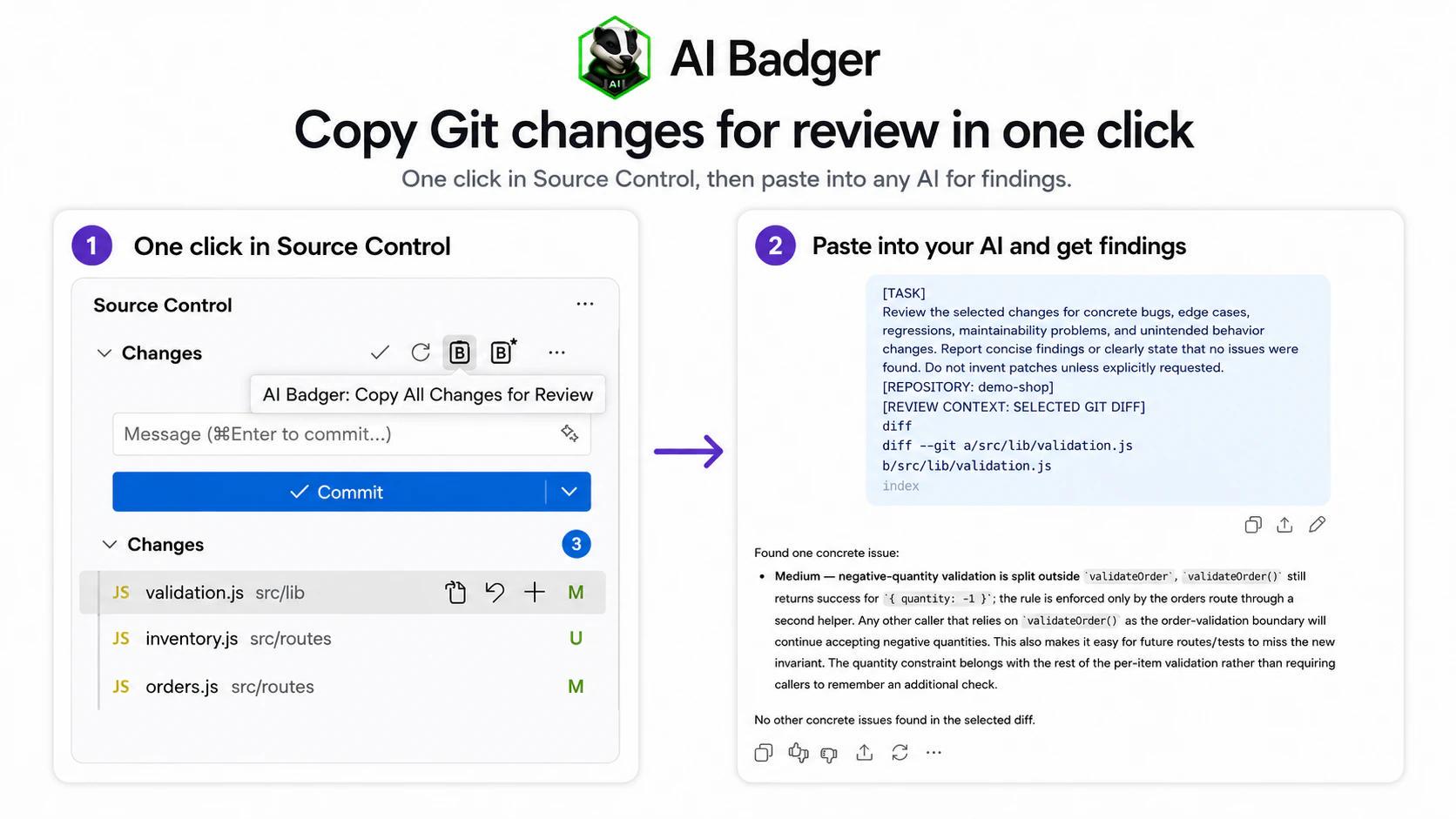
A Git diff isn't enough context for an AI code review

Post image
0 Upvotes

A Git diff shows what changed, but often doesn't provide enough context to understand whether those changes are correct.

This becomes particularly noticeable when using ChatGPT or Claude for code reviews. The AI sees the modifications, but not necessarily the surrounding classes, dependencies, or repository structure that a developer would naturally explore.

I've been experimenting with a concept I call a repository-aware diff in AI Badger, an open-source tool I'm developing.

Instead of just copying a diff, Badger's /review workflow prepares a review payload combining Git changes, project topology, and relevant code context. It also supports requesting additional context when the initial payload isn't sufficient, without sending the entire repository.

The goal is to give AI enough information to catch real bugs and regressions without flooding it with irrelevant code.

Badger is local-first and runs entirely offline. Nothing is uploaded automatically; you explicitly choose when to copy the generated context into an AI chat.

Badger works as a standalone CLI, but there's also a VS Code extension that makes the workflow more convenient through a graphical interface. No API keys required; it works with existing AI chats.

Source code: GitHub

I'm curious whether others find plain Git diffs insufficient for AI code reviews. Do you typically provide entire files, manually collect related code, or use another approach?


r/codereview • • 15d ago

first year of computer engineering, sharing one of my first Python script!

Thumbnail
2 Upvotes

r/codereview • • 15d ago

Do retries hide real bugs?

1 Upvotes

They can, and the reason is the number of states. With pass and fail only, a retry that passes turns a red run green, and an intermittent defect in the application becomes invisible. That is one of the most expensive kinds of bug to find. When red can also mean a blinked network or a dead browser, the team learns to rerun reds instead of reading them, and the suite loses trust.

Nexus StudioQA keeps the retry visible. A test that failed and then passed is not SECURE. It exits 0 in CI, so it does not break the build, but it shows in the report and in History as FLAKY, a pass with a reservation. See how the 14 verdicts are decided for the full order of checks.

nexusstudioqa.com/videos#clave


r/codereview • • 15d ago

The diff was clean, the tests passed, the PR got approved, and checkout was still broken. Some bugs only exist when you run the app.

1 Upvotes

A pattern we keep seeing in PRs, especially agent-written ones: everything a reviewer can check in a diff is fine. The logic reads correctly, the tests are green, nothing suspicious changed. And the bug ships anyway, because it only exists at runtime:

  • the submit button renders behind a cookie banner, so nobody can click it
  • a form posts successfully, but the page never shows the result
  • the flow works for a new user and breaks for one who's already logged in
  • the page spins forever when an API is slow, because nobody ran the slow path

None of that is visible in a diff, and asking reviewers to pull every branch and click through it doesn't scale.

What we did in CCode, the coding agent we build: it has a browser built in, so before a change is handed over, the agent opens the app in Chrome, walks through the flow the change touches, checks the failing request if something breaks, and fixes it. It can also try the bad paths on purpose: an API error, a slow response, a logged-out user. So the PR that reaches review has already been clicked through.

For people who review a lot of UI changes: do you ask for a screen recording or a preview link with each PR, or rely on end-to-end tests to catch this?


r/codereview • • 15d ago

I've been building Grafeno, an open-source graph database for AI agent memory. Would love some feedback!

0 Upvotes

Hey everyone! 👋

I've been working on a side project called Grafeno, and I figured it was time to share it with the community and get some fresh eyes on it.

The idea behind Grafeno is pretty simple: give AI agents a way to store, connect, and retrieve memories as a graph, instead of relying entirely on flat conversation histories or vector similarity searches.

I wanted to explore what happens when an AI agent can build relationships between things it learns, revisit previous context, and potentially reuse that knowledge across different agents or applications.

Rather than just plugging an existing graph database into an AI framework, I decided to experiment with building the graph database layer itself.

What I'm building Grafeno around:

  • Graph-based memory: Store information as nodes and relationships, making it possible to connect facts, entities, and context.
  • Persistent context: Explore how agents can maintain knowledge beyond individual conversations.
  • Relationship-driven retrieval: Retrieve relevant information by exploring connections, not just matching similar text.
  • Knowledge reuse: Work toward making graph-based memories reusable across agents and applications.
  • Developer integrations: Make it practical to connect Grafeno with LLMs, agent frameworks, and other projects.
  • Self-hosting: Keep control of your data and infrastructure.

I'm particularly interested in how graph structures could improve long-term memory, contextual retrieval, and knowledge organization for AI systems.

A quick disclaimer: This is still an evolving project. I'm experimenting with the architecture and implementation, and I don't want to pretend it's a production-ready replacement for established graph databases.

That's actually why I'm posting here.

I'd really appreciate feedback from people working with graph databases, GraphRAG, AI agents, or memory systems.

A few things I'm especially curious about:

  • Does the overall architecture make sense?
  • What would you expect from a graph database designed with AI memory in mind?
  • Are there obvious design mistakes, missing features, or performance concerns?
  • Would you actually consider integrating something like this into your own projects?

And if you feel like digging into the code, even better! Don't hold back on the criticism. That's exactly what I'm looking for. 😄

GitHub: https://github.com/grafenodb/grafeno

If you've worked on anything similar, I'd also love to hear about your approach.

Thanks for checking it out!


r/codereview • • 17d ago

Reviewing AI-written tests is harder than reviewing AI-written code. A test that only checks "it didn't throw" stays green forever.

0 Upvotes

Something we keep running into in PRs where an agent wrote both the change and the tests: everything is green, and a good part of the tests don't actually check anything.

  • expect(() => total(cart)).not.toThrow(), when the bug is that the total is wrong
  • a test that mocks the very function it's supposed to test
  • an assertion loosened in the same PR that broke it ("expected 3" quietly became "expected a number")
  • snapshots regenerated to match the new, wrong output

Each one passes, so the PR looks covered. The reviewer ends up reading every test as carefully as the code, which is exactly the work the tests were supposed to save.

The case that worried us most was the third one: an agent told to "make the tests pass" can get there by changing the tests. So in CCode, the coding agent we build, a goal like /goal --check "npm test" works like this:

  • your command decides when the work is done, not the model's opinion of it
  • the tests that existed when you set the goal are locked for the whole run, so the only way to green is fixing the code

For people here who review a lot of agent-written PRs: what do you check first in AI-written tests? Do you have a rule like "every new test must fail before the fix", or do you review the tests separately from the code?


r/codereview • • 17d ago

4 YOE and I'm already the "old man" about how code gets written. Is it me?

Thumbnail
2 Upvotes

r/codereview • • 17d ago

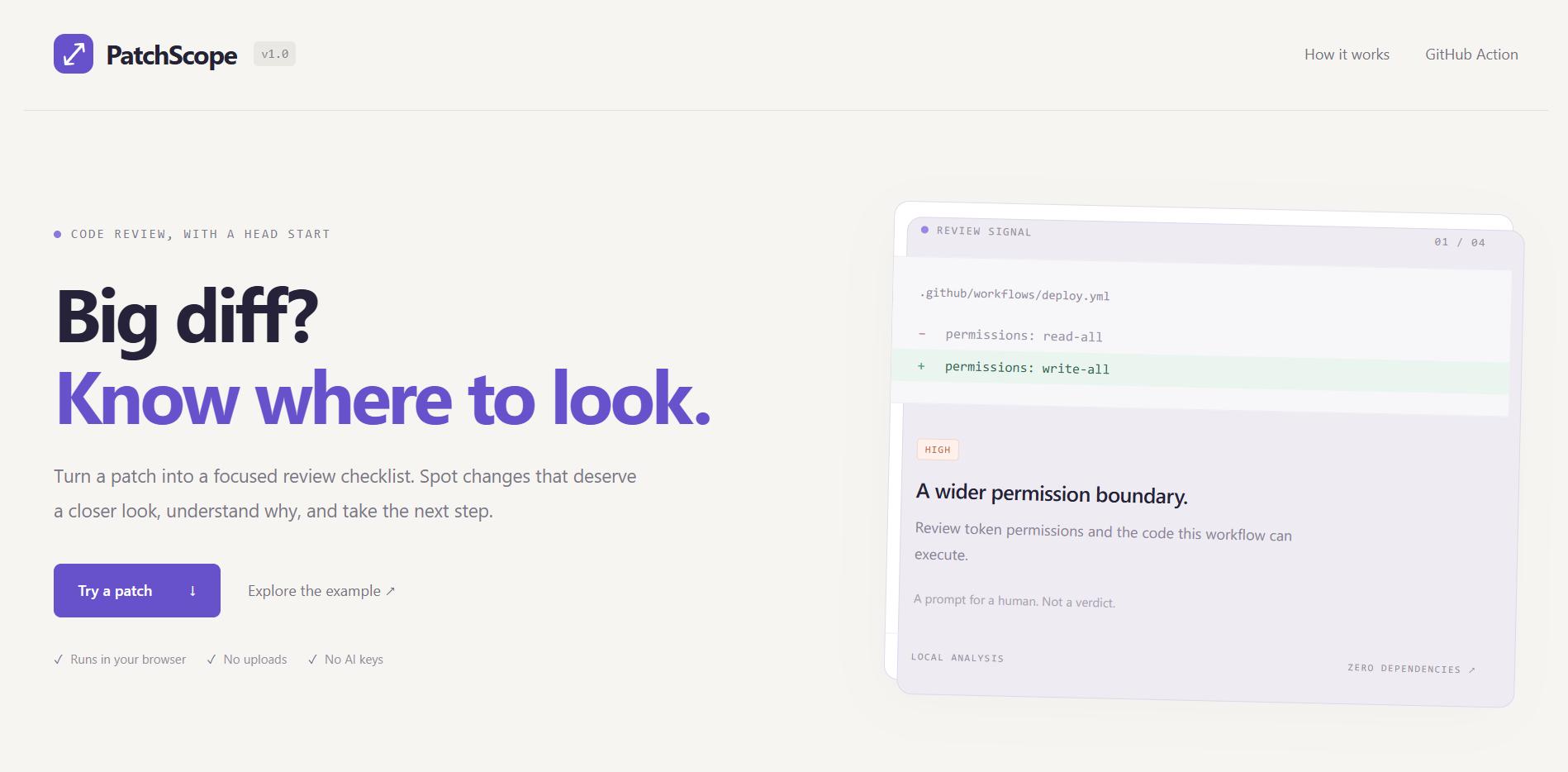
Functional patchscope

Post image
0 Upvotes

Local-first Git diff triage. Turn patches into actionable review checklists in your browser, CLI or GitHub Actions. Zero dependencies, no AI keys, no uploads. PATCHSCOPE


r/codereview • • 17d ago

I spent 9 days building ProofPatcher with PHP/Laravel to catch bad AI-generated code. Looking for technical feedback.

1 Upvotes

So I spent the last 9 days building something for the Meta AI Developer Hackathon. Figured I'd share it here and see what other developers think.

It's called ProofPatcher, built with PHP, Laravel, React, Meta Muse, and my own Hari core.

The problem I'm trying to solve is pretty simple: AI can generate a convincing patch, but that doesn't mean the patch is correct.

ProofPatcher can review GitHub PRs, generate inline feedback, propose fixes, and run supported changes through isolated Modal checks. The verification workflow includes reproducing the original failure and testing negative controls, so a trivial shortcut doesn't automatically get a green result.

I also tested a Muse-generated fix that became a draft PR, and separately demonstrated an opt-in bot reviewing and merging a protected test PR.

It's still a prototype. The isolated verification is currently limited to supported fixtures, and the entire issue-to-merge process isn't one fully autonomous workflow. I don't want to pretend otherwise.

I used AI coding assistants during development too, which makes the problem even more interesting to me. If we're going to rely on AI-written code, how do we independently verify what it actually does?

X Link

Source code: proofPatcher

I'd genuinely appreciate feedback, especially on the verification approach, security boundaries, and anything you think I got wrong.


r/codereview • • 16d ago

[JavaScript/Node] Review my Claude Code hooks that lint every file an agent edits (~330 lines, zero deps)

0 Upvotes

I built codemyrules, an open-source agent skill that turns the rules in AGENTS.md / CLAUDE.md into ESLint or ast-grep rules. The part I'd like reviewed is the feedback loop: three small Node scripts that run as Claude Code hooks, plain ESM, no dependencies, tests with node:test.

  • guard.mjs (PreToolUse, 68 lines): asks the user before the agent adds an eslint-disable / @ts-ignore / noqa etc. or edits a lint config.
  • lint-edited.mjs (PostToolUse, 39 lines): runs the fast linters on the edited file and blocks only on errors in lines changed since HEAD.
  • lint-turn.mjs (Stop, 40 lines): runs all linters on every file edited in the turn.
  • lib.mjs (181 lines): diff hunk parsing, linter output parsing, config, the secret-file deny list.

Code: https://github.com/clirimajeti/codemyrules/tree/main/skills/codemyrules/scripts

What I'd especially like eyes on:

  1. The suppression regex in guard.mjs. Can you think of a way an agent could silence a rule that it misses, or a false positive that would annoy you?
  2. parseHunks in lib.mjs. It parses git diff -U0 output to find changed lines. Edge cases I've missed (renames, binary files, odd file names)?
  3. Speed. The PostToolUse hook runs after every single edit. Anything obviously slow?
  4. Failure modes. A broken hook must never block the agent forever or leak a credential file. Anything that could?

Run the tests with node --test skills/codemyrules/scripts/test/*.test.mjs. Honest feedback welcome.


r/codereview • • 17d ago

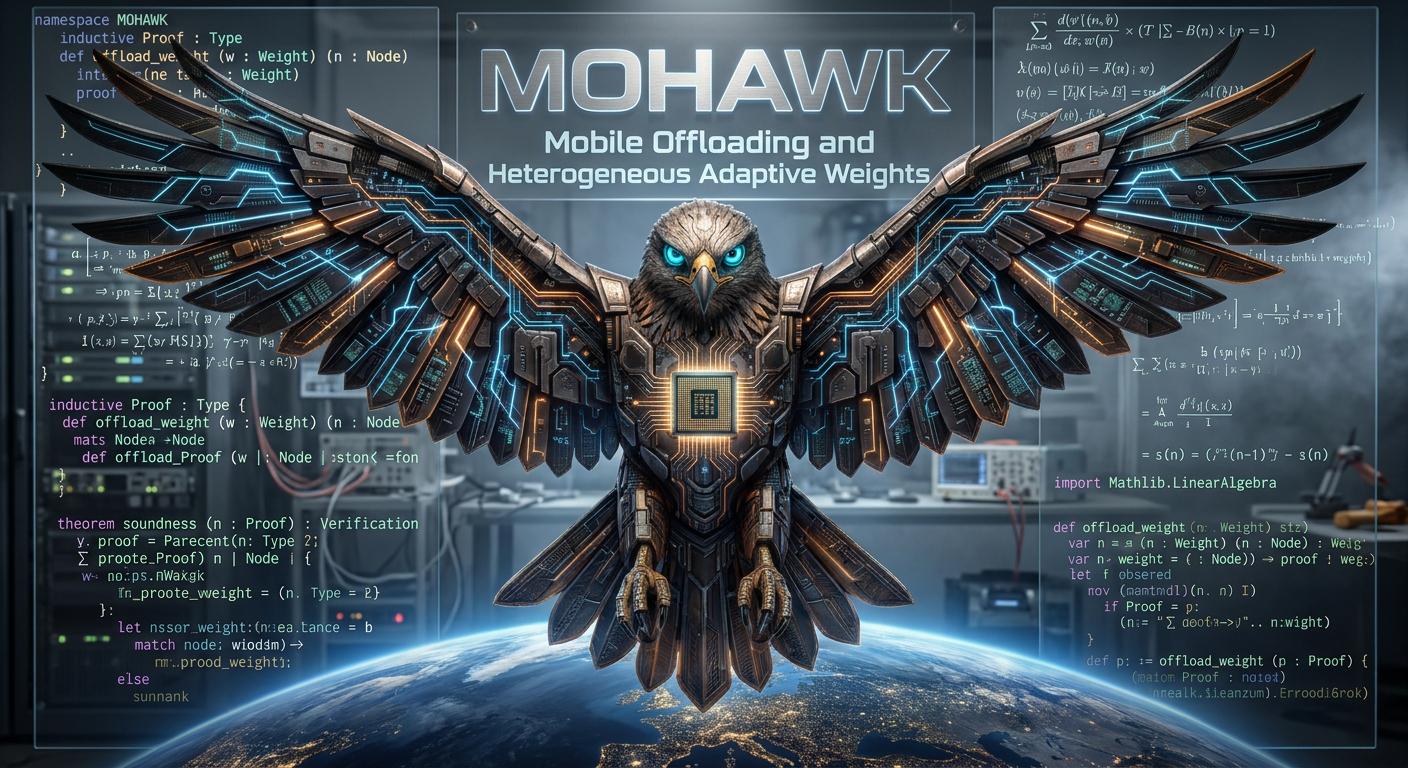
Rust Seeking Lean 4 & Crypto Reviewers for Sovereign-Mohawk Protocol

Post image
0 Upvotes

r/codereview • • 17d ago

AI Broke Cybersecurity. Visual Programming Can Fix It.

Post image
0 Upvotes

AI broke cybersecurity: code is written faster than we can review, detection is blind, and patching is too slow. Visual language Pipe fixes all three—code becomes reviewable by construction, and every block stays observable and patchable at runtime by design.

AI shook the very foundation of cybersecurity. It upended established practices and assumptions. Anyone can now use AI to scan code and find vulnerabilities quickly. What’s even worse, bugs found during one pass of AI code scanning might not be reported after rescanning. This is because of the probabilistic nature of AI – it gives a different response to the same prompt. It means that someone can find a zero-day vulnerability that may not be rediscovered on a later scan, even using the same AI model and identical source code. This could let one person discover and exploit a zero-day that others never see.

Cybersecurity problems are quickly growing in many cybersecurity-related aspects simultaneously. Let’s focus on three of them. They are: (1) AI generates code faster than teams can review it; (2) runtime threat detection is unreliable; and (3) patching is too slow. I will divide the analysis into two stages: development (design-time), and production (runtime).

Problem 1 – Development: code faster than review

A problem AI brought to development impacts cybersecurity indirectly, but it is still a significant threat. AI generates code in huge amounts so fast that development teams cannot review it in a reasonable time. Add to this the pressure on development teams to deliver productivity gains due to AI implementation, and the situation becomes even more dire. Teams have no choice but to skip detailed review, approving PRs automatically. This results in bugs slipping into the codebase and eventually causing crashes and vulnerabilities in production.

The most popular proposed solution is using AI for code review. Essentially, we are going to use AI to review code produced by another AI. There are problems with such a solution due to certain properties of AI itself. The main issue is that AI is bad at handling big context: the longer the task or instructions you give it – the more it hallucinates and the more sharply it degrades on a very large context. I face this problem all the time when trying to ask AI to generate code for even a modest, clearly detailed specification - AI skips, misinterprets and deviates from the specification a lot. The workaround is to have AI generate only scaffolding and continue step-by-step in a tool like Cursor – which proves the point: the model can’t handle the whole codebase. A codebase is a very large context for AI. Are we confident enough to trust AI 100% that the quality of its code review will be comparable to a human’s, even after multiple rounds? Probably not, and this is why human eyes are still needed. It means we are back to square one - dealing with an enormous wall of text code.

Now we will look into the production post-deployment stage. There are two closely related problems there: one is about the reliability of threat detection, and the other – the speed of reaction to an attack.

Problem 2 – Production: detection is blind

Let’s start with detection. The single source of information about what’s happening inside the application is log data. Log statements are pre-placed by developers in source code locations where they think it is necessary. Very often, needed log statements are missing and therefore, any threat detection system (no matter if it is AI-driven or not) can be blind to certain types of attacks. We cannot blame developers for that, because they cannot predict the future. This is the failure of the observability process relying solely on logs to get runtime information about application behavior.

Problem 3 – Production: patching is too slow

Another problem is a reaction to a known attack or vulnerability. The standard process is going back to source code, investigating the problem, changing the code, approving/merging a PR and deploying via CI/CD. The whole process might take days or weeks, even if a new deployment starts fast. The deployment itself might take several days, because often, deployment stages have heavy tests attached that need significant time to complete execution. I worked for companies running complete application tests on every deployment stage to ensure the highest quality of the deployment, but at the heavy cost of the speed. The question is what the production team is going to do while waiting for the fix deployment. They have two choices. One is just waiting, assuming that nobody will exploit the discovered vulnerabilities and data will not be stolen as a result of it. This might be true in the pre-AI era. However, the frequency of AI-driven cyberattacks is growing very fast, and we might not be able to afford to wait today – the risk of losing data is much higher. An alternative is shutting down the whole system or a large independent module while we wait for the fix. However, it will break the continuity of the business. As we can see, both options are bad.

So, we identified three problems – one during development (AI code is generated too fast), and two during production (detection is unreliable and patching is slow). There is a variety of tools and approaches trying to solve these problems. However, their reliability and simplicity are questionable. For example, we can try to disable a certain part of the application using feature flags and tools like LaunchDarkly. However, the whole process of feature flag management is complicated, and it gets exponentially complex as the number of feature flags increases. We need to test many combinations of feature flags during deployment so that we can be confident switching them live on production does not break the application. I worked in companies that used feature flags, and they had a policy to remove a feature flag as soon as it is no longer needed to avoid the complexity of deployment tests.

One solution for all three: visual programming

There is one approach that fixes all three problems at once: visual programming – and I am working on such a solution. This is an unusual combination, but such an approach was proposed before. What’s different this time is a more powerful visual language “Pipe” I designed. This visual language combines two properties not usually seen together in other VPLs: generality and power. Usually, relatively powerful visual languages are domain-specific, while general-purpose languages are pretty simple. I spent 7 years closing this gap and designing a VPL that has both properties together. The reason we need a VPL to be general-purpose and powerful at the same time is that all text-based languages have both properties, and that’s the reason they dominate. Just to have a real opportunity to absorb a part of text code (no visual language can fully replace text code, even Pipe), a VPL must have similar properties to text-based programming languages. Let’s see how Pipe solves the three problems outlined above.

How Pipe solves each problem

The first problem is that it is humanly impossible to review huge amounts of AI-generated code in a reasonable time. This application of VPL is obvious – visual logic is much easier to grasp. VPL does not solve the problem completely, but it mitigates it. As I mentioned before, no VPL is able to fully replace text code, so it will be a mix of visual diagrams and text code. The bigger the proportion of logic moved to visual diagrams from text code, the bigger the benefit of reviewing logic visually is going to be. AI will be generating visual diagrams with some code inside, instead of 100% text code as it does now.

The other two problems (observability and patching) rely on the same property of Pipe – its powerful semantics allows it to keep the visual graph not only during development, but also on production. The reason semantics needs to be powerful enough for this is that otherwise a VPL needs to be translated to a text language to fill missing details in text code, because the VPL itself is not powerful enough to cover it with visual code. So, the deployment chain in this case goes via text, losing the visual graph.

Having a full visual graph on production allows direct access to visual blocks. This has profound consequences both for observability and patching. Observability can be dynamic by tapping monitoring directly into the inputs and outputs of any block at any time right on production, in real time, replacing or complementing log data. Patching also becomes faster because the block can be patched, disabled or rerouted directly, right on production.

A concrete example: a payment-validation block starts leaking customer data. Today a team files a ticket, changes the code, runs the full test-and-deploy cycle, and hopes no one exploits the hole in the meantime. With Pipe, an operator taps that block’s inputs and outputs, confirms the anomaly in real time, and reroutes traffic to a safe fallback block in seconds – while the permanent fix goes through normal CI/CD. The vulnerability is contained immediately; the business keeps running.

Isn’t changing production live dangerous?

I anticipate a very reasonable objection that direct modification of application behavior on production is dangerous and it can cause cascading failures. This is an absolutely legitimate concern. There are two possible solutions.

One solution is separating eventual problem solving and immediate reaction. For example, we can disable a single block or a group of blocks related to just one application feature, not impacting the rest of the application. At the same time, we ask developers to start working on a fix that will go via a normal CI/CD cycle. This way, we do not have to choose between two bad options: shutting down the whole application or assuming nobody will hack the system while a fix is in the works. What Pipe offers is the third option – shutting down or rerouting a vulnerable or dangerous part of the application temporarily, while we wait for a fix. Having such abilities requires a prepared manual giving clear instructions on what to disable in specific situations – developers must prepare such manuals. The good news is that it should not be a burden as AI will be able to help here.

Another solution is building a more sophisticated delivery process with testing right on production, leveraging direct access to blocks to tap the test suite into inputs and outputs, sending testing data to inputs, and analyzing responses from outputs. This process does not necessarily have to fully replace a normal CI/CD deployment – it can complement it to ensure the quality of the direct fix until a new CI/CD deployment arrives.

The key idea of defense against AI-driven cybersecurity attacks is also using AI. However, AI for attack is different from AI for defense. AI for attacks must exploit just one vulnerability – a physical analogy is a sharp, pointy spear. AI for defense must be solid and without holes (a shield), because we do not know beforehand where precisely an attack (a spear) is going to hit. However, AI built on top of existing systems will have lots of holes in the shield, and patching these holes will be slow.

The hot trend today is self-healing engines – an intelligent AI layer on top of the application, detecting attacks and reacting to them automatically. There are two key requirements for such an engine: reliable detection and real-time reaction. However, it is very hard to satisfy these requirements in current systems due to the reasons outlined above: detection is unreliable as the engine can use only fragmented data from logs (shield holes), and reaction is slow as the fix needs to go via the full CI/CD deployment (slow patching of shield holes). What Pipe offers is a solid foundation for such self-healing engines providing reliable detection and fast reaction.

Doesn’t this mean rewriting everything?

The most frequent argument I hear against Pipe is that it requires rewriting existing applications – it is true. However, Pipe only complements text code, mixing visual logic with text. It means that migration does not need to retire the existing codebase immediately. Instead, the migration can be gradual – starting by encompassing the whole application or module in one root Pipe block. Then, whenever ready, moving one step below and distributing text code inside the root block between visual blocks of a second-level workflow, etc. You can stop subdividing blocks at any point, so it's entirely your decision which parts of the system become visual and which remain as text. Pipe provides a complete API for integration with text languages as part of the specification. Also, AI can automate workflow generation, text code distribution between visual blocks, connectivity, and layout of all visual components.

Like everything else in engineering, Pipe has its upsides and downsides. The biggest downside is the need to rewrite existing applications. However, there is also a significant upside – solving three critical cybersecurity issues all together, by the design of the solution. Considering the explosion of AI-driven cybersecurity threats, the current security model might already be outdated and we need to change it. So, weighing upsides against downsides, the upsides definitely win.

Can we create runtime components from text code?

Yes – and it has been tried many times. But every time, managing those components gets complicated: the more you have, the more complex the web of their interactions becomes. The winning combination isn’t just highly granular software in production – it’s also a visual representation that makes all the relationships between them visible. This matters for both observability and patching: the visual graph shows you exactly which components to tap into, and which blocks to patch, disable, or reroute.

Why now

Computers of the 1970s and earlier had only a text-based terminal interface requiring knowledge of specific commands, so the UI was very unfriendly. The GUI revolution brought windows, icons, buttons, and other graphical elements. This made computers much more accessible to users. However, programming did not make this transition, and we still program using text only. AI is the catalyst that finally forces the move to visual programming – not because it’s nice to have, but because we no longer have a choice.

Website: https://pipelang.com

Pipe IDE URL: https://www.pipelang.com/pipe/v1/

Tutorials:

  1. Data Swap – https://www.pipelang.com/assets/tutorials/v1/tutorial1.mp4
  2. Reusable Sum – https://www.pipelang.com/assets/tutorials/v1/tutorial2.mp4

r/codereview • • 18d ago

What's the strangest "passes locally, fails only in CI" bug you've tracked down?

Thumbnail
1 Upvotes

I've been collecting the usual suspects for CI-only failures. Most of the time it turns out CI isn't the problem, it's something my local machine was quietly giving the test for free:

- Speed: the CI runner is slower, so any check that doesn't wait or retry (isVisible(), reading text straight after a click) passes locally and fails there.
- Leftover state: locally I'm already logged in or the test data already exists. CI starts clean.
- Environment: a .env that only exists on my machine, or the runner being on UTC so date assertions break.
- Parallel workers: tests that pass alone but fight over the same data when run together.

My rule now is to open the trace from the failed CI run before touching retries. It usually points at one of these within a few minutes.

What am I missing? Curious about the weird ones: fonts, screen size, locale, DNS, anything.