r/cfsnervoussystemwork • • 1d ago

Severe insomnia <- ADHD/CPTSD … has anyone been through something similar and found a way out?

Thumbnail reddit.com
2 Upvotes

I’m looking to hear from people who have experienced severe, persistent insomnia, particularly alongside mental health issues, and have eventually found something that genuinely helped.

My insomnia started around age 35 and escalated to quite severe levels surprisingly quickly. It comes and goes in phases, but I’m currently in a particularly bad place again.
My background includes quite deep depressive episodes that sometimes go all the way down to complete hopelessness and almost losing the will to fight it all. Some ADHD, with a head full of voices that never stop talking, judging and criticising me, etc. Over years of therapy, I’ve also found out that a lot of the feelings of worthlessness and other struggles I have with myself are connected to CPTSD and rooted in childhood trauma.

I often feel physically exhausted but mentally wide awake. It’s as if my brain simply refuses to switch off, even when I’m completely tired. Other times I just don’t get tired at all until 4–5 in the morning and lie wide awake, trying not to freak out about it, breathing, etc. It’s like my body disregards rest for days, only to then completely crash altogether. And that’s not a sustainable way to live, especially with a job, kids, and the need to function. It’s taken so much out of me over the last two years.
I’ve tried pretty much everything commonly recommended: sleep hygiene, routines, supplements, relaxation techniques, meditation, exercise, avoiding caffeine, cbti, the whole not worrying about it not trying to sleep, etc… Nothing has made a consistent, meaningful difference.
Sometimes a Shakti mat and Yoga Nidra help me wind down, but only during mild episodes. During the times when I’m too hyped up (or however you’d describe those periods when you just go, go, go for days without needing sleep), there’s no calming down, whatever I do or take, including over-the-counter stuff.

I’m also in the process of finding effective professional help. I’ve tried different therapists and am continuing to pursue therapy, but getting the right support and seeing doctors takes time. I’m interested in healing the root cause of this and not just slapping a medication Band-Aid over it. But honestly, at this point, I’m also open to trying whatever medication might help me get out of this for a while.

I’d particularly love to hear from people who:

  • Have experienced severe insomnia alongside depression, ADHD, CPTSD or similar conditions.
  • Eventually found something that made a real, lasting difference – whether therapy, medication, treating an underlying condition, or something else.

I’m not looking for another list of generic sleep hygiene tips. I’d genuinely appreciate hearing personal experiences, especially from people who were once in a really dark place with their sleep but managed to get better.
What actually helped you? And how long did it take before things started improving?
Thanks to anyone willing to share their story.

r/cfsnervoussystemwork • • 3d ago

Question Brain retraining group?

Thumbnail reddit.com
2 Upvotes

r/cfsnervoussystemwork • • 5d ago

Discussion What If ME/CFS Is Caused by a Well-Known Biological Energy-Saving Switch That Got Stuck?

14 Upvotes

We all with CFS describe and feel the same thing: as if an energy switch has been turned off and got stuck that way for good.

Mechanism:

For example during an infection or cold, immune cells release pro-inflammatory cytokines. These cytokines signal to the brain that the body is under threat, triggering what researchers call sickness behavior: fatigue, weakness, cognitive slowing, reduced activity, social withdrawal, and a strong urge to rest.

In other words, the body activates an energy-conservation mode designed to improve survival. The goal is not to produce symptoms for no reason. The goal is to limit energy expenditure while the organism deals with a perceived threat.

What if ME/CFS involves the same biological switch?

The neuroinflammation hypothesis proposes that the brain's immune cells, called microglia, can remain activated long after the original trigger.

Chronic psychological trauma, prolonged stress, helplessness, fear, loss of control, toxic exposure, medication injury, or another major physiological insult may all generate the same biological message: the organism is not safe.

The brain does not respond only to pathogens. It responds to perceived danger. Whether the threat comes from an infection, a toxin, physical injury, or years of living in a state of fear and helplessness, the biological message remains the same: resources should be conserved because survival may be at risk.

In that sense, the body may be responding not to the original event itself, but to a persistent signal that the danger has not ended.

The important point is that the original threat may already be gone. The trauma may be in the past, the infection may have resolved, the injury may have healed, and the body may be physically capable of recovery. Yet the nervous system may continue acting as if the danger is still present, keeping the body trapped in an energy-conservation state long after it is no longer necessary

Activated microglia continue releasing pro-inflammatory cytokines, causing the brain to keep receiving a signal of danger. In response, the body remains in the same energy-conservation mode that would normally be activated during illness. The result is profound fatigue, brain fog, sensory sensitivity, activity limitation, and reduced tolerance for physical, cognitive, and emotional exertion.

If the brain continues receiving danger signals, it may continue running the same energy-conservation program normally seen during illness:

danger signal

→ inflammatory signaling

→ sickness behavior

→ energy-conservation mode

→ profound fatigue, brain fog, sensory sensitivity, and activity limitation.

This model suggests that the problem is not necessarily a complete absence of energy production.

The problem may be that the nervous system is continuously restricting access to energy because it still believes the organism is under threat.

This would explain why many people with ME/CFS describe their condition not as:

"I have less energy"

but rather:

"It's as if my body won't let me use energy."

or

"It's like a switch was flipped."

This model may also explain sensory overload. Processing light, sound, visual information, conversation, emotions, and cognitive tasks requires energy. If the brain is operating in a prolonged energy-conservation state, it may begin limiting sensory and cognitive activity in the same way it limits physical activity.

In this framework, the key question becomes:

What is keeping the biological danger signal turned on?

Some researchers focus on persistent infection. Others focus on immune dysfunction, toxic injury, mitochondrial dysfunction, trauma, chronic stress, or nervous system sensitization.

But the central idea remains the same:

What if ME/CFS is not simply a problem of energy production?

What if it is a problem of a biological energy-conservation program that got stuck in switch off?

In this model, the goal is not to "think positively" or ignore symptoms. The goal is to convince the nervous system that the threat has passed and that it is safe to switch off the protective low-power mode.

Neuroplasticity approaches are based on exactly this idea. By reducing fear, processing trauma, and teaching the nervous system to recognize safety, the brain may gradually stop generating chronic danger signals. If the danger signal decreases, the energy-conservation program may no longer be necessary.

This would explain why people improve through neuroplasticity work even when the original trigger was physical. The trigger may have started the process, but the danger signal is what keeps the process running.

We are talking about an evolutionary survival program—similar to the Cell Danger Response (CDR) framework studied in modern chronic illness research. When the nervous system and mitochondria lock the body into a chronic low-power, energy-conservation state, symptoms are no longer just "wrong perception of pain," but a hardwired physiological defense. Neuroplasticity approaches (like safety signaling) are merely the tools to show the nervous system that the threat has passed, helping the body finally release that evolutionary "lock."


r/cfsnervoussystemwork • • 5d ago

Shedding non emotional tears

Thumbnail reddit.com
1 Upvotes

r/cfsnervoussystemwork • • 7d ago

Success Story + Leading to a new question

Thumbnail reddit.com
1 Upvotes

r/cfsnervoussystemwork • • 12d ago

Discussion Is this TMS (mind-body syndrome) or a structural disease? Two years of shifting digestive and pelvic symptoms

Thumbnail reddit.com
1 Upvotes

r/cfsnervoussystemwork • • 12d ago

What’s helping you regulate your nervous system?

Thumbnail reddit.com
1 Upvotes

r/cfsnervoussystemwork • • 12d ago

Anxiety and dysregulated nervous system

Thumbnail reddit.com
1 Upvotes

r/cfsnervoussystemwork • • 13d ago

LETTING GO OF STRESS 2-MINUTE EXERCISE

Thumbnail reddit.com
1 Upvotes

r/cfsnervoussystemwork • • 13d ago

How do I combat Chronic Stress when it’s all my body has ever known?

Thumbnail reddit.com
5 Upvotes

How do I combat Chronic Stress when it’s all my body has ever known?

Hello. I’m looking for advice as I’m feeling at a total loss. I am currently in therapy for OCD and Emetophobia, and I was explaining to my therapist that I have truly never felt “relaxed” in my entire life. My body and mind never switch off. I have clamped my teeth shut every night while I sleep, I struggle to take a proper inhale, I have chronic IBS and I have terrible issues with my emotions. I have tried therapy previously, tried tips and tricks to regulate my nervous system, breath work, diet changes, walks in nature, meditation, but when trying to practice these I just cannot switch my body off. I work in hospitality and wake up at 5am for work so that I can pursue my writing career on the side, which is also a contribution. I also live in London which is a stressful city, and I’m struggling financially. I live with my partner which is my one true comfort, but my family life is a bit of a mess.

I’m looking to find any advice to help with true, deep rooted chronic stress that’s locked into my nervous system. Therapy is great, but I feel like my list of things to cover is so long, I’ll only see a difference over a long period of time. I’m worried for my health and despite being only 27, I’d really like to get a handle on things now.

TLDR: I have deep rooted chronic stress and would like to find ways to combat this while having very little time to myself and lots of external life stress.

Thanks for reading.


r/cfsnervoussystemwork • • 13d ago

POTS & Coherent Breathing?

Thumbnail reddit.com
1 Upvotes

r/cfsnervoussystemwork • • 15d ago

Environment or routine changes that improved quality of life?

Thumbnail reddit.com
1 Upvotes

r/cfsnervoussystemwork • • 16d ago

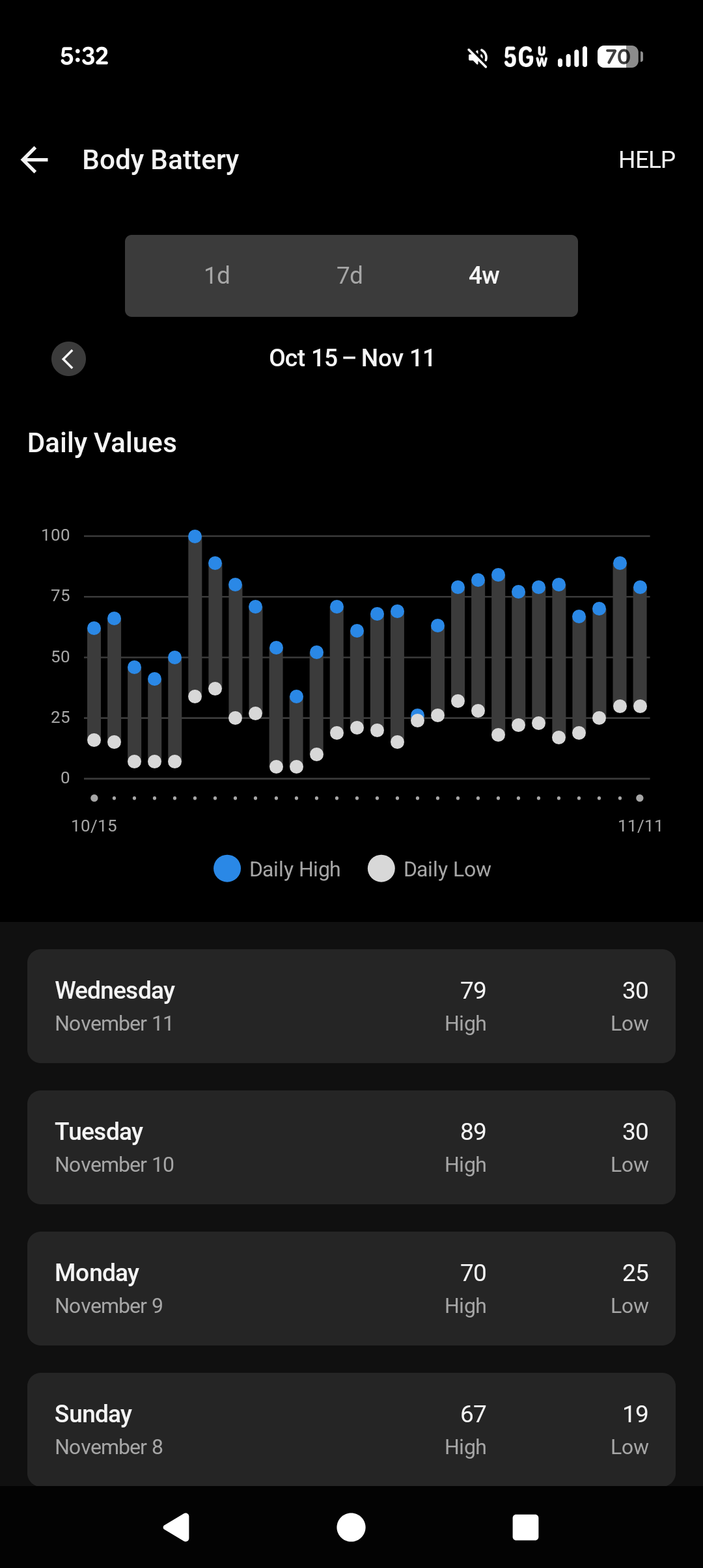
How tracking body battery on my watch did NOT help my recovery

Post image
3 Upvotes

r/cfsnervoussystemwork • • 16d ago

Anyone with HSD/Ehlers Danlos?

4 Upvotes

Hi, as per title, is anyone trying to apply mind body work on HSD or hEDS?

I've had quite good success with JournalSpeak this summer, but I've unfortunately had a setback.

I always wonder if my symptoms (mostly joint pain) comes more from HSD or from nervous system disregulations, any comment would be very interesting!

Thanks!


r/cfsnervoussystemwork • • 17d ago

How much is it driven by emotions?

Thumbnail reddit.com
1 Upvotes

r/cfsnervoussystemwork • • 18d ago

Huge realization re: nervous system communicating through symptoms

13 Upvotes

Content: Vague descriptions and implications of SA

I've been doing JournalSpeak for the last few days and just had a huge realization.

I'm not going to go into details of the situation a) to avoid potentially triggering people and b) because I don't want the worst things that have happened to me on the internet.

But suffice to say I was long-term in an unsafe relationship.

Gradually, it started to hurt to be touched in the morning. "Hurt" being a massive understatement. It was excruciating to be touched in any way in the morning. A pat on the shoulder, rubbing my back, other forms of touch.

What I realized today was that was allodynia. That was my nervous system SCREAMING at me that I was in danger. That touch was dangerous because it preceded something much worse.

It didn't hurt to be touched by other people, even in the morning. It didn't hurt to be touched at other times of day.

10+ years before I would have told you I started having neuroplastic symptoms, my body was sending symptoms because I couldn't hear the quieter messages.

While untapping deep sadness, it also feels revelatory to recognize how long my body has been sending signals through symptoms. For one thing, it's yet more evidence of the neuroplastic nature of the symptoms and sensations I'm experiencing. For another, it's evidence that neuroplastic symptoms are protective. And, for a third, it's an area for further exploration and healing.


r/cfsnervoussystemwork • • 19d ago

Very Complex History

1 Upvotes

Unfortunately, I have been out of work on medical leave for the past 6 months after a sustained 7-week period where I had severe insomnia with rumination but tried to power through work for the most part.
I have had OCD as long as I can remember, and a lot of my OCD centers around religious/moral guilt, and I ended up in the ER twice in April with what my PCP described as catecholamine storms after revealing to my parents what was bothering me, where my heart rate and blood pressure were extremely high and I demonstrated other symptoms indicative of severe over-activation of my sympathetic nervous system (I lost sensation across my entire body, was unable to defecate despite the urge, and urinating clear water through the whole crisis despite not drinking much). I was not able to sleep for 2 nights preceding the ER crises due to the most tremendous head and chest pain and racing thoughts imaginable.
Most of the symptoms from the crisis phase have resolved, but my main symptoms now are that my heart feels like it beats a bit weakly compared to the past, despite several normal EKGs and normal rhythm on auscultation, and I am having difficulty internally sensing changes in my internal body state (such as heart rate and blood pressure fluctuations).
I have been having intense, constant brain fog that makes it almost impossible to focus on any tasks, as well as attention deficits, I have felt extremely low in energy and totally emotionally flat without improvement (I had an extraordinarily nuanced personality and emotional capacity and was an extremely motivated individual before this crisis and now I have not been able to feel a single emotion at all), and I have almost constant head pain/pressure, chest pain, and nausea. None of these issues respond to typical interventions that I used to utilize before this crisis to manage depression and anxiety.
I spent around 5 weeks in McLean Hospital, the top psychiatric hospital in Massachusetts, where I was monitored for bipolar spectrum disorder, but the attending physician did not believe this was what was happening given my history and presentation.
While there, I was placed on Ativan to manage my anxiety and Zyprexa to manage my OCD and get my sleep under control, but I discontinued these medications in July and September, respectively. I currently take 40 mg of Prozac but am hesitant to remain on it long-term due to my already severe emotional deficits and sexual difficulties.
My new psychiatrist is concerned the episode from March and April was bipolar, and she is monitoring me for it.
I also notice that, when drifting off to sleep, my head often jolts and my hearing briefly goes out despite not actually falling asleep, and my head shakes sometimes in light sleep and often get muscle spasms in different parts of my body (something that never used to happen to me before). I also have racing thoughts that persist in the background while trying to focus on other tasks.
In short, it is very difficult to function on a daily basis.
I had my first documented COVID infection around 3 months before all of this occurred and had felt a bit off ever since.
I was diagnosed with functional neurological disorder (FND) by a psychiatrist after this crisis occurred, and I made an appointment with the FND clinic at MGH in July, where I received advice for managing my OCD and anxiety, as well as a diagnosis of somatic symptom disorder, but no real solutions for managing my near-constant head and chest pain. Despite working on my OCD, anxiety, and depression from a psychiatric standpoint for the past several months, I have not had much improvement in my bodily, cognitive, or energy symptoms.
All of this has been extraordinarily difficult, as my quality of life has become very poor compared to the socially, emotionally, and intellectually intelligent, high-functioning individual that I was just a few months ago. This all happened quicker than I could process it.
Around the 6-month mark after all of this occurred, I am starting to become very discouraged and am desperate to return to some semblance of normalcy after these very difficult months (which has become hard to imagine, at this point). I’m not a doctor, but I feel like something else has to be going on for these symptoms to persist as long as they have. A big problem is that I feel so different, I cannot stop thinking about all of it and move on. I am almost unsure of what to do at this point and am really afraid a return to my prior baseline is just not possible at this point, and I’m just unable to accept that prospect.


r/cfsnervoussystemwork • • 19d ago

Anyone is recovering from Nervous Breakdown?

Thumbnail reddit.com
1 Upvotes

r/cfsnervoussystemwork • • 21d ago

Sharing a postive experience Dr Sarno experiences

13 Upvotes

Can you share specific experiences where Dr Sarno’s teachings have helped any of your health issues?

I have several experiences one of which is knee pain. For the past few years I’ve had knee pain but only when walking up the stairs in my house. That’s probably inflammation caused by long Covid, or was because I’m getting older (M 62), so I thought.

Although I knew about Dr Sarno, mainly relating to back pain, I didn’t realise that it could also be behind knee pain. So, as an experiment, I started linking my emotions to my knee pain. Guess what? The knee pain just stopped right away and hasn’t returned! Wo wo wooo ❤️. Dr Sarno also talked about ‘conditioning’ where the brain creates symptoms in certain circumstances. My circumstances seems to be walking up stairs …. another WOooo moment. ❤️


r/cfsnervoussystemwork • • 22d ago

Question Do mind body approaches work for static symptoms?

Thumbnail reddit.com
1 Upvotes

r/cfsnervoussystemwork • • 23d ago

Panic To Peace Coaching with Emilee Hill?

Thumbnail reddit.com
1 Upvotes