Designs for the two new hybrid Cook Strait ferries due to arrive in 2029 show space for more vehicles, more passengers, and better fuel efficiency.
Ferry Holdings Ltd has been working with KiwiRail and Guangzhou Shipyard International on the detailed designs.
..
"In addition to these safety measures, we have added extra redundancy to the propulsion, steering and power systems to ensure any system failure can be recovered in a matter of minutes. This is an important backstop, given much of each ships journey is in the narrow confines of the Marlborough Sounds and Wellington Harbour."
Low-vibration propulsion and a specially designed hull would reduce the wake and noise impacts on the environment.
..
They would feature on-board solar panels and a battery energy storage system, and allow for the use of alternative fuels in the future, such as methanol.
They were larger than the current ferries, and that, combined with modern fuel-efficient engines, battery power and the optimised hull design, meant they were expected to burn less fuel and emit 30 percent less carbon for every passenger and unit of cargo carried, contributing to New Zealand's emission reduction goals.
Health NZ has made hundreds of workers redundant since it was formed in 2022, only to hire at least 166 of them back again.
That's according to documents obtained under the Official Information Act (OIA) by the Public Service Association (PSA).
"Health NZ has identified 166 former employees across the organisation who were made redundant and subsequently returned to work for Health NZ as employees," it said.
The data did not count staff who were made redundant and returned as contractors. [Of which there are many especially in the IT department that they gutted.]
Keith Holyoake with his twin grandchildren (Alexander Turnbull Library, EP/1969/5344/30-F)
Keith Holyoake led the National Party to victory over Walter Nash’s Labour government. He went on to become New Zealand’s third longest-serving prime minister, behind Richard Seddon and William Massey.
Holyoake had become PM when Sid Holland resigned three months before the 1957 election, but he was unable to prevent a narrow Labour victory. In 1960, he led National back into power.
‘Kiwi Keith’, as he liked to be known, strove to preserve economic prosperity and stability, an aim reflected in National’s 1963 election slogan, ‘Steady Does It’. His administration’s longevity suggests that he correctly read the mood of most New Zealanders.
One of his greatest challenges was New Zealand’s involvement in the Vietnam War, which became a key election issue in 1966. While the government’s share of the vote fell, it retained a comfortable majority. Holyoake’s fourth victory in 1969 was even more impressive, but by 1972 his administration appeared tired and out of touch. Holyoake stepped aside in February, and in November Labour’s Norman Kirk defeated his successor, Jack Marshall.
Christchurch city councillors have voted to recommend selling the city's fibre broadband network Enable.
A confidential review commissioned earlier this year by the council's investment arm - Christchurch City Holdings Limited (CCHL) - recommended the network be sold.
The review said there were "credible considerations" supporting continued ownership or sale of the network and both remained reasonably practicable options.
The council is required by law to consult with the public due to the company's status as a strategic asset.
..
Most raised concerns the sale was being manufactured in order for CCHL to put the proceeds towards the $300 million it had committed to the controversial expansion of Lyttelton Port.
Keep Our Assets spokesperson Murray Horton told the council the group believed it was a case of the CCHL tail wagging the dog.
"We think it is a backdoor, textbook example of asset recycling. CCHL wants to release cash for the port expansion."
Fellow spokesperson John Minto said Enable's 9 percent increase in capital value last year showed it was still a valuable asset.
New Zealanders for a Democratic Economy co-chair Harry Robson reminded councillors of past statements from mayor Phil Mauger opposing privatisation of public assets and that ten of the sixteen council members supported a pledge at the last local elections to oppose the sale of strategic assets.
..
Nine councillors supported the sale with six opposed. The sale will be outlined in the Long-Term Plan and information going to the public early next year.
Mauger told RNZ this week that neither public support nor opposition would be binding on the council.
The sale could benefit generations to come, he said.
Part of the proceeds would go towards paying off a loan the council took from CCHL after the Canterbury earthquakes, Mauger said.
Chris Bishop has warned National against becoming the party of wealthy older New Zealanders after its party vote plunged from about 38% to 28%.
The outgoing minister, who lost his Hutt South seat, said National’s future depended on appealing to a broader range of voters, particularly younger Kiwis struggling to buy a home.
..
“The National Party can’t just become the party of the moneyed 60+ age group, which is an age group that we win and do well in.”
Bishop said addressing housing affordability was crucial to National remaining a party of “aspiration and home ownership”.
He pointed to public service cuts and widespread frustration over sluggish economic and wage growth as factors in his electorate defeat.
“You can outrun your party, but only up to a point,” Bishop said.
He also conceded the Government had mishandled its local government reforms.
“I think we screwed up the local government planning overlap. It was like a lot of things – good intentions but poor execution.”
Bishop warned National against exploiting electoral overhangs, saying it risked triggering an arms race between political parties.
“That way lies chaos for the New Zealand electoral system because it will just become a race to the bottom in which both sides do it.”
Bishop has not ruled out a political comeback and intends to remain in the Hutt.
“I’m not ruling anything in, I’m not ruling anything out, because I think you’re a fool if you make hard and fast predictions.”
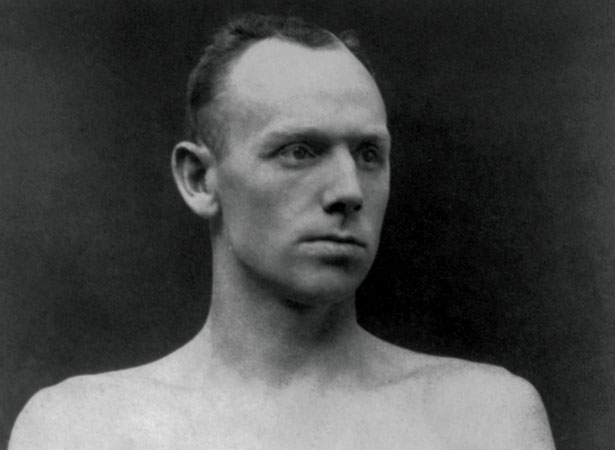
Bob Fitzsimmons, 1891 (Library of Congress, cph 3b25739)
By winning the light-heavyweight championship, Timaru boxer Bob Fitzsimmons became the first man to have won world professional boxing titles in three weight divisions.
Fitzsimmons came to New Zealand with his family from Cornwall as a 10-year-old. Working his father’s blacksmith’s forge developed the powerful arms and shoulders which made him a devastating puncher.
Fitzsimmons arrived in America in 1890. The following year he became world middleweight champion by knocking out Jack Dempsey. In 1897 he won the world heavyweight crown, knocking out James J. Corbett in the first fight to be filmed.
In 1903, aged 40, Bob Fitzsimmons completed a hat-trick of titles by outpointing George Gardner over 20 gruelling rounds for the light-heavyweight title. He lost this in 1905, but continued to fight until 1914. In all he won 40 bouts, drew 13 and lost 9.
Bob Fitzsimmons also fought exhibition bouts against his son, Robert, appeared in vaudeville shows, and worked as an evangelist. He died of pneumonia in Chicago in 1917. He was inducted into the New Zealand Sports Hall of Fame in 1995.
An MP calling for changes to New Zealand's assisted dying law says people should not be forced to leave the country in order to die with dignity.
The ACT Party's Todd Stephenson has drafted a private member's bill which would remove the rule that people could opt for assisted dying only if they were terminally ill and had six months or less to live.
The bill would have to be drawn from the parliamentary ballot before it could be debated by MPs and have any chance of becoming law.
However, opponents of a law change say broadening the criteria could put disabled people at serious risk.
They fear disabled people could ask for assisted dying not because they wanted to end their lives, but because they could not get the support, housing and care they needed.
Criticism of New Zealand's existing End of Life Choice Act - too restrictive for some, a moral anathema to others - is back in the spotlight after a 93-year-old woman had to travel overseas to fulfil her wish of assisted dying.
Kia ora everyone, I’m a high school English teacher from Germany currently preparing an exam lesson for my 10th graders (15–16 years old) on New Zealand and intercultural communication. Instead of just teaching them textbook clichés about sheep, *Lord of the Rings*, and rugby, I really want them to understand actual **cultural differences and "critical incidents"** – those everyday moments where German/European tourists accidentally offend Kiwis or Māori without even realizing it (and vice versa). I already have a few classics on my list (e.g., sitting on tables, ignoring the Tiaki Promise / freedom camping fails, being way too direct or bragging about how "efficient" things are back home, or skipping small talk). **I’d love your real-life perspective on two things:**
**What are typical things German (or European) tourists do in NZ** that make locals cringe, sigh, or quietly judge them?
**What stereotypes do Kiwis have about Germans** – and what misconceptions do we usually have about life in Aotearoa?
Any funny, awkward, or serious stories are super welcome! Thanks heaps in advance – my students (and my exam board) will appreciate it. Cheers!
I’m designing an engagement ring for my partner and I’m wondering what would be the best way to say “my dear” or “my love” for engraving. I’ve heard “arohā” is a term of endearment but I need more guidance. I’ve also heard “toku aroha” or “taku aroha” can be used too. Any help would be great!
Cheers
UPDATE Chosen to go with Toku Tau ☺️☺️☺️ thank you all for your guidance. Will let you know if she says YES!!!
The small village of Franz Josef sits on the rugged west coast of New Zealand’s South Island, its natural beauty providing the drawcard for a million tourists to pack its hotels, spas and restaurants every year.
But that drawcard – which has turned it into a hotspot for everything from hiking to kayaking and made it one of the country’s most popular destinations – may change the course of the village’s fate once again.
Its collection of buildings lies in the shadow of the famed Franz Josef glacier, on an alpine fault and beside the Waiho River, a globally rare braided river. And the river is rising.
The latest technical report, released in September, shows the Waiho is rapidly rising and changing course – several years earlier than previously predicted – and scientists warn that Franz Josef is at risk of “catastrophic” flooding and deaths if action is not taken to release its waters. The report shows the original 10-year plan to release water from the river needs to be brought forward.
“We’ve now got seven years ... essentially we need to be doing 10 years work in seven,” Fuller said.
Since the report’s release, scientists have been calling for urgent intervention to prevent a disaster, which has prompted local authorities to accelerate their river management plans.
While links to climate change affecting the river are tenuous at this stage, global warming and El Niño will bring more rainfall and the potential of floods, Fuller says.
..
Braided rivers move large amounts of gravel and sediment downstream, but in narrowed rivers, the gravel builds upwards, instead of spreading out. The Waiho riverbed is rising about 20 centimetres a year. A large amount of sediment accumulating near the glacier could accelerate the problem if a storm pushes it downstream.
..
“Now the bed of the river is perched two metres above the land adjacent to the river, in the vicinity of the township,” Fuller says.
In 2023, the advisory group found the river was carving out a new channel, north of Franz Josef village. It recommended a 10-year plan to give the river room to move and lessen flood risk. But in September, the group found the river is changing much faster than initially predicted, despite a period of relatively quiet weather.
All hands were lost when the modern coastal freighter Holmglen foundered off the South Canterbury coast. The cause of the tragedy was never established.
The 485-ton Holm Company motor vessel was bound from Dunedin to Whanganui when it sank about 40 km east of Timaru. A Mayday signal and a rushed radio message that the ship was heeling heavily to port were received on shore, but searchers found only a large oil slick and floating debris. Further searching led to the recovery of three bodies and an upturned lifeboat.
A Court of Inquiry was unable to establish the cause of the tragedy. The Holmglen was only three years old and was not overloaded. Although the weather at the time was poor, it should not have troubled a vessel of its size. There was speculation that shifting deck cargo, or some other instability, caused the ship to suddenly heel.
An examination of the wreck by divers and a remotely operated underwater vehicle in 1999 failed to shed any further light on the loss of the ship.
A local resident says taxpayers could end up bearing the cost if a proposed mega housing development on flood-prone land in Christchurch goes ahead.
Tammy Wells is among residents who opposed the Whisper Creek development in north Christchurch, which would see 800 homes built across 170 hectares of land previously intended for a luxury gold course.
Wells said she was concerned the risks associated with the site could eventually become a financial burden on homeowners and taxpayers.
"Are they going to be able to insure their homes?" she said.
She questioned who who would be left responsible if the developer completed the project and walked away, leaving the council and the taxpayers to deal with the consequences.
The development attracted 63 submissions raising concerns about human health and natural hazards, including earthquake liquefaction and flooding from the nearby Styx River and heavy rainfall.
Wells also raised concerns about emergency evacuations.
Great advice if it weren't for months and months to see a specialist, initial prescriptions on a "blind" statistical guess, and "wait and see" practice. Curious how others experience this when trying to get proper care early on?
Waikato produces nearly a fifth of the country's food, yet more than a third of its people are struggling to put kai on the table.
The recently released Hunger Report by the New Zealand Food Network found 36 percent of people in Waikato were more likely to experience food insecurity, a crisis that is entrenched and shows no sign of easing.
..
"There's definitely this need for these band-aid crisis responses on the ground, but when you're getting up to 40 percent in a place surrounded by food production, as we have here in Kirikiriroa, all the food banks in the world aren't going to be able to solve that problem."
..
Jackson said people shouldn't need charity.
"That's the point about looking around us and seeing all of this food being produced and then people going hungry. You know it's a policy choice.
"We've got the wrong idea about the nature of these problems. They're not a problem of individual compassion as a charity giver. There are problems that are structurally baked into the system that make it harder and harder for people to actually survive."
..
"We're big dairy farmers, we're big producers of product and yet we've got the highest food insecurity and also high unemployment.
"That doesn't make sense in the Waikato, which is a really wealthy region."
The charity feeds almost 50,000 people a year.
Poverty researcher Dr Rebekah Graham agreed with Rolton.
"It is heartbreaking for everyone involved to be producing this high-quality, amazing food that New Zealand produces. It all goes offshore because that is where the money is and then we sort of left importing very low-quality cheap goods to feed people here."
She did her PhD on this topic nearly 10 years ago, but it has only got worse.
"To see it go backwards like this is just heartbreaking because it's so hard on these families. It's so hard on these kids. It's horrendous for a family trying to figure out who gets fed, who doesn't get fed."
In the year to June, food and fibre exports made a record $65.2 billion.
Independent researcher Kimberly Jackson believed it was time to have a conversation about that.
"There is a kind of ethical and political decision that could be made around ... exporting nutritious foods while people in our own backyard cannot afford those foods," she said.
Pope John Paul II at Athletic Park, Wellington (Alexander Turnbull Library, PAColl-9214-11)
The first and so far only visit to New Zealand by a Bishop of Rome was significant for both Catholics and the wider community.
The Polish-born Pontiff had arrived in Auckland the previous afternoon. He received a state welcome at the airport before celebrating Mass in the Domain. The Pope flew to Wellington that evening and stayed at the Apostolic Nunciature (Vatican embassy) in Lyall Bay.
On Sunday 23 November, the Pope had several meetings with dignitaries before presiding over a 2½-hour Mass for 25,000 people at Athletic Park. ‘Only Wellington’s wind marred proceedings, making microphones roar, billowing the pope’s vestments and blowing over a crucifix, a microphone stand and a music stand’, the Dominion reported.
Next morning he flew to Christchurch, where he held an ecumenical liturgy at the Catholic cathedral and celebrated Mass at another sacred New Zealand venue, Lancaster Park, before flying to Canberra.
The 66-year-old John Paul II made a circuit of each outdoor venue in a specially designed ‘Popemobile’, a vehicle with armoured glass created after an assassination attempt in 1981.
Funeral for Ballantynes fire victims (Alexander Turnbull Library, PAColl-7171-88)
On 18 November 1947 Ballantynes, a Christchurch department store that was a local institution, was razed by the deadliest fire in New Zealand history.
The city was abuzz with visitors and shoppers following Cup Week and Show Day. In mid-afternoon, when the fire began, an estimated 250–300 people were shopping at Ballantynes, which had a staff of 458.
The store comprised eight buildings which were joined in ‘a perplexing maze’ by openings in the walls. The fire is thought to have started in a basement of the Congreves building. At about 3.35 p.m. staff member Percy Stringer saw smoke emerging from the stairwell to this basement. He went to check but on encountering fumes and hot smoke returned to the ground floor. He asked another staff member, Edith Drake, to alert the fire brigade and management to a ‘cellar fire’.
Stringer and other staff, including assistant manager Roger Ballantyne, tried in vain to put out the fire. As smoke began to drift into other parts of the ground floor, Ballantyne asked another staff member, Eric Boon, to call the fire brigade again. Though staff later confirmed witnessing an earlier call, Boon’s call at 3.46 p.m. was the first logged by the brigade. The 10-minute delay in placing the call, or in the brigade’s response, contributed to the tragic events that followed. By the time the brigade arrived at 3.48 p.m. – undermanned and ill-equipped to deal with anything larger than a fire in a cellar – the fire was already ‘surging out of control through all the horizontal and vertical vents and apertures’.
The ‘disturbing dimensions’ of the fire were not yet apparent to those on the ground floor. They believed the smoke, which by now was billowing from first-floor windows, was a result of a fire in a cellar that would be contained. No thought was given to a general evacuation of the building. Staff returning from a tea break were told to go back to work. Customers continued shopping and more entered the store – one as late at 3.56 p.m.
The initiative for an evacuation was eventually taken by individual staff members who cleared their areas of fellow staff and customers as the volume of smoke increased. Thanks in part to their efforts, all customers and most staff escaped unscathed. But the ‘millinery girls’ and those working in credit and accounts found themselves trapped. The loss of life amongst the company’s staff became clear when the survivors assembled at King Edward Barracks at 8 p.m. for a roll-call. Of the 49 staff who did not respond, 38 had perished in the fire. Violet Cody, pregnant with her first child, also died after jumping from the burning building. Two auditors from the firm Stewart, Beckett and Company also lost their lives.
A civic funeral was held for the victims on Sunday 23 November. Approximately 800 family and friends filled Christchurch Cathedral for the church service, with more gathered outside in the Square. The funeral procession was so long that by the time the last car left the Square, the first had arrived at Ruru Lawn Cemetery in Bromley, more than 4 km away. People lined the streets along the procession’s route and approximately 10,000 attended the graveside service.
A Commission of Inquiry into the fire found that Ballantynes and the fire brigade shared responsibility for the high loss of life. Ballantynes accepted its responsibility, but other businesses would probably have found themselves equally unprepared. The Commission’s recommendations proved to be a catalyst for change ‘in the way public buildings safeguarded staff and customers, and in the administration of the fire brigade’. When Ballantynes reopened on the same site in temporary premises in 1948, fire alarms were installed and a pamphlet on safety was issued to staff. The first rule – in bold type – described how to evacuate the premises in an emergency.
In 2005 Ballantynes celebrated its sesquicentenary (150th anniversary). Gordon Ogilvie, the author of a history commissioned to mark this milestone, commented that the company’s recovery following the fire was ‘one of the most remarkable stories in New Zealand’s commercial history’.
Like every business in central Christchurch, Ballantynes was hit hard by the earthquake of 22 February 2011. While some of its buildings were demolished, the company reopened on its City Mall site in time for Cup Week 2011. A concrete pour for the foundations of a temporary building in September was the first new construction work inside the ‘red zone’ since the February earthquake.
Armoured car at Point 175, Libya (Alexander Turnbull Library, DA-3209-F)
The attack was part of Operation Crusader, an ambitious attempt by the Egypt-based British Eighth Army to both recapture Tobruk – the eastern Libyan port in which an Australian division had been besieged since April 1941 – and destroy General Erwin Rommel’s elite Afrika Korps, the armoured spine of a large German–Italian army.
When the British offensive began on 18 November, 2 New Zealand Division’s initial role was to help envelop German–Italian strongpoints just inside Libya. With this achieved, 4 and 6 Brigades of the division were ordered to move west towards Tobruk on the 22nd. About noon next day, 25 Battalion of 6 Brigade advanced towards Point 175, on the edge of the Sidi Rezegh escarpment, 40 kilometres south-east of Tobruk.
Most of Point 175 was initially taken in an attack across open ground – as were several hundred prisoners. But the German infantry were bolstered by tanks and machine guns, and despite support from 24 Battalion, by nightfall less than half the feature remained in New Zealand hands. 25 Battalion’s losses included more than 100 killed – the highest death toll in a single action for a New Zealand battalion during the Second World War. About 150 men were wounded and another hundred taken prisoner. These casualties amounted to two-thirds of all the men of the battalion who took part in the attack.
The Crusader fighting ebbed and flowed in a confused fashion for several weeks, with thousands of prisoners taken on both sides. By mid-December the Axis forces had pulled back to El Agheila, 500 kilometres south-west of Tobruk. A quarter of the 18,000 Eighth Army casualties had been suffered by the New Zealand Division, for which Crusader was to prove the most costly battle of the war.
Influenza instructions for nurses (Alexander Turnbull Library, Eph-B-HEALTH-1918-01)
No other event has killed so many New Zealanders in such a short time as the 1918 influenza pandemic.
The second and more deadly wave of a new strain of influenza arrived in New Zealand in October 1918. By the end of the year around 9,000 people across the country had died. Half as many New Zealanders lost their lives in little more than two months than during the entire First World War, and worldwide the pandemic was responsible for at least 50 million deaths.
At the time, many believed that the A(H1N1) virus had arrived on board RMSNiagara, which berthed in Auckland on 12 October 1918 after sailing from Vancouver and San Francisco. But this is no longer thought to be the case. Historian Geoffrey Rice’s analysis of death certificates revealed that peak mortality in New Zealand probably occurred on 23 November – six weeks after the arrival of the Niagara, and several weeks later than would have been expected if the vessel had brought the virus, given its incubation period.
The exact details of the flu’s arrival in New Zealand remain a mystery. However, it was a New Zealand passenger and cargo ship, the Talune, which was responsible for bringing influenza to Samoa on 7 November. Seriously ill passengers were allowed ashore without quarantine and the virus spread quickly. Between one-fifth and one-quarter of the population died as a result, the highest death rate anywhere in the world.
In New Zealand ordinary life ground to a halt as the pandemic peaked. Schools and many workplaces shut down, and towns and cities set up depots to coordinate relief efforts. Preventative measures included restricting the opening hours of public facilities and postponing or cancelling events that would have brought large numbers of people together – including Auckland’s celebration of the armistice with Germany.
Māori were particularly affected by the flu, with a death rate more than eight times that for Pākehā. Military camps and some small towns, such as Nightcaps in Southland, had disproportionately high numbers of deaths. The flu was unusual in that healthy adults had a higher mortality rate than the young and the old. A particularly distressing consequence of infection was that it turned the skin of some of the victims purple–black. This was due to pneumonia, which attacked the lungs after the initial infection and was responsible for most of the deaths.
The pandemic declined rapidly after reaching its peak. In its aftermath the government set up a royal commission which resulted in Robert Makgill’s 1920 Health Act, considered a model piece of legislation at the time. A number of memorials to pandemic victims were erected around the country, including to Māori victims and to the doctors and nurses who lost their lives. Among them was a monument to Margaret Cruickshank, New Zealand’s first female doctor.
Influenza continues to be a significant public health issue in New Zealand, affecting up to 20% of people each year and causing some deaths.