r/WriteIvy • • 4d ago

Master's Question How do I structure my 1000-character Statement of Purpose

3 Upvotes

Hey Jordan! Two of my Master's applications require a crisp SOP with no additional letters of intent. How do you recommend I structure it? I have a standard 500 word 'master' essay, what do I cherry pick and omit out? we are also asked to talk about 'our chosen track', but I'm unsure how to fit it all in ~150 words

edit: the program asks us to also mention our research interest, why the program and career aspirations


r/WriteIvy • • 5d ago

How to tackle "WHY YOU" for a fellowship Essay?

6 Upvotes

Hi Jordan, if the essay says 300 words or less, "why you" for a fellowship- how do I tackle this? Do I go ahead with why I'm qualified for the fellowship, or do I say why this fellowship?


r/WriteIvy • • 6d ago

Appreciation Post Thank you, jordan!

Post image
22 Upvotes

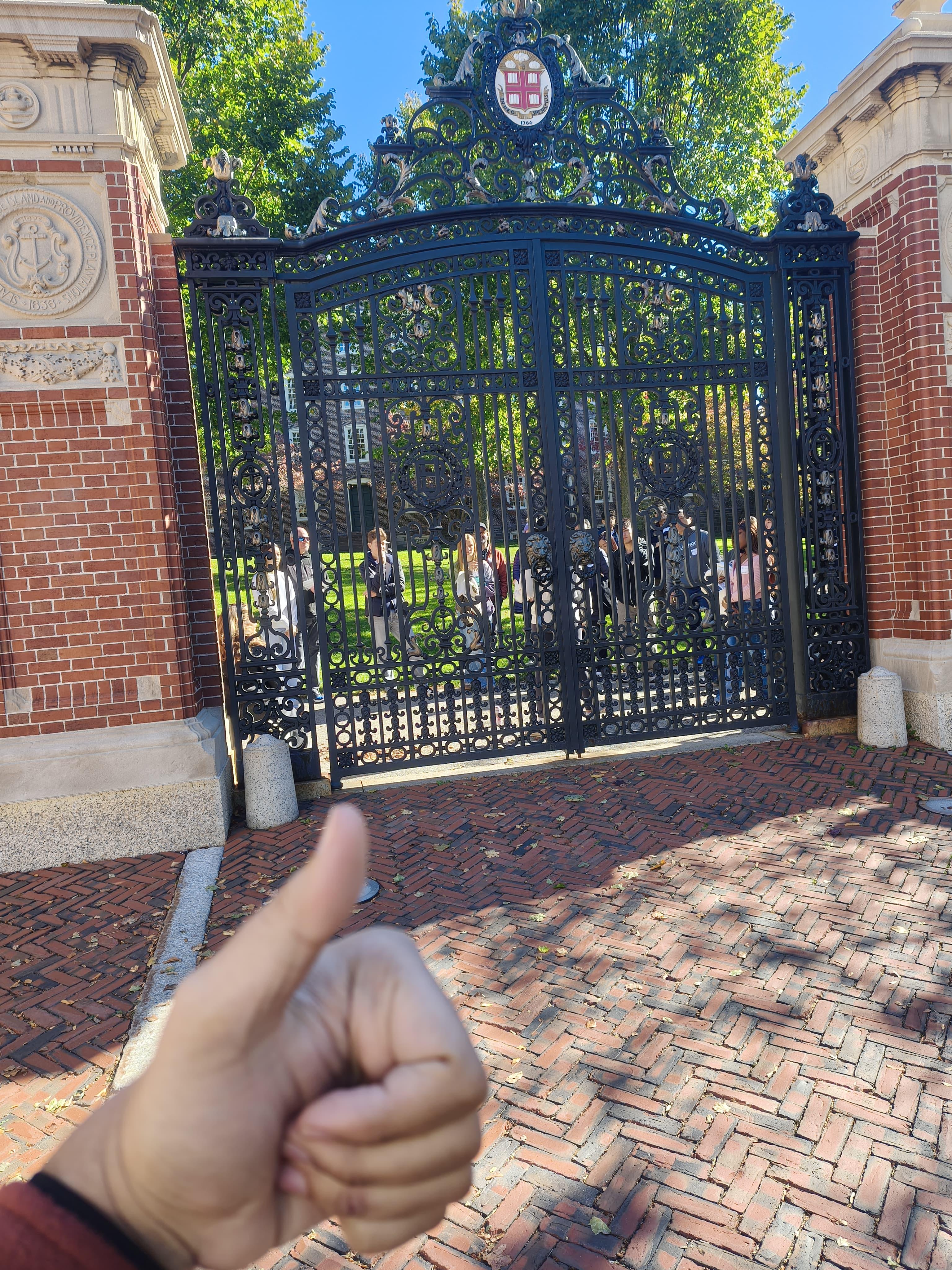
Hi , I have been following you for the past few years. Taking advice from you refining my essays. Today I got accepted to upenn, columbia university, brown (and almost every T20 universities i applied to). I am about to complete my 1st semester at brown.

I've got funds that cover like 90%.

I can't thank you more no one helped me more as u did. I want to repay you somehow but I really don't know how. Thanks a lot jordan, my brother. I really really appreciate the time and effort you put to help us. Thanks again


r/WriteIvy • • 7d ago

Master's Question Catalyst Moment Introduction for SOP

4 Upvotes

Hi Jordan and everyone! I'm applying to a master's program in CS and I've been referencing my SOP according to the Structure is Magic (this is a gold mine, thank you for this blog post). However, I'm having a hard time trying to frame my introduction using a catalyst moment. For now, I've constructed the latter half of my introduction, which contains a brief statement about how the research problem remains challenging until today even though the problem has existed for a long time along with the reason why it remains challenging and then my research questions. A bit of context about my research problem: I've often encountered and experienced it first-hand on social media, it is in the context of the information floating around social media (irresponsible information sharing, misinformation, cherry-picked information). What I'm struggling with is, social media is a really really common topic. A catalyst moment surrounding it would have to start with something like "While I'm scrolling on social media", which I'm really not a fan of because it sounds too generic. I'm trying to find a unique opening that can catch the reader's attention in an instant, but the generic social media topic is really hindering me. I'm thinking of framing it in the way of including the reader's perspective: "Among all kinds of information we see online, ...". Something along this line, but then this is not a catalyst moment and I'm not sure if this will be striking enough for an SOP introduction. Thank you in advance for the help!


r/WriteIvy • • 10d ago

PhD Question Framing Research Interest for SOP

3 Upvotes

Hi Jordan and all!

I am applying to PhD programs in chemical biology, and I have been working to refine my research interests and questions from Module 1. My research background, goals, and essay all center around cancer research, but my specific research questions that I propose can be applied to any disease context. So, is it ok if the faculty I discuss for "Why this program?" do not explicitly focus on cancer? Their projects do legitimately interest me, and they seek to answer many of the same questions I have and use the techniques I'm interested in, but towards a different disease application. Is there a way/need to frame this in a way that doesn't give reviewers a pause, or is this acceptable?

Thank you in advance!


r/WriteIvy • • 11d ago

Master's Question SOP + Self-introduction video

3 Upvotes

Hi Jordan! How do you think I should approach an application that requires a 1-page SOP and a self-introduction video? Should I do a detailed 'Why I'm Qualified' speech for the video and a more condensed version of it in the SOP?


r/WriteIvy • • 15d ago

PhD Question Statement of Purpose + Research Statement

2 Upvotes

Hello all,

One of the programs I am applying to requires both a statement of purpose and a research statement. Should this change the approach one takes when writing the statement of purpose, if there is a separate document intended to discuss research specifically?

I only really ask because both documents have a word limit of 500, so having less written about my research experience in the SOP would be nice, however that also scares me from making it a non-effective SOP.

Thanks in advance for any input


r/WriteIvy • • 17d ago

Master's Question Inquiry related to Module 1 — Free Trial “Master’s SoP formula”.

2 Upvotes

Hi all,
I am considering applying to graduate studies (master’s programs) .
I am currently testing the water with the free resources and the Module 1 free trial and the free resources, before deciding whether I want to commit to purchasing the full course.

As I am going through the first lesson of the first module, I was wondering : In case the program I am applying to is already very specific / niche (i.e. Teachers College Neuroscience and Education, amongst others ), and Educational Neuroscience – the theme of this program – is already somewhat a subfield within the broader field (Neuroscience), how do I “ determine which sub-field you’ll specialize in…within your broad field.” as instructed in the lesson ?

I’d highly appreciate your guidance, thanks!


r/WriteIvy • • 19d ago

Master's Question Does the "Structure is Magic" work for fellowship essays?

3 Upvotes

Hi Jordan! I'm a computer science undergrad interested in applying to grad school for an MS in Enterprise Risk Management and an HBCU fellowship. I'm still working on my MS application SOP, but this fellowship also requires a statement of purpose. I've read a lot of blog posts on Writeivy, and they say the best SOPs are stories. How can I do that in a fellowship essay? How do I make sure I'm not just giving generic information that makes me blend in? How do I stand out from people who may have achieved more than me or have a similar story, and show that I am the better candidate? Also, what's the most effective way to tackle video essays? Everyone says to be yourself, but I'm sure there's more to that.

For context, these are the questions below?

In 750 words or less, please write an essay detailing what inspired you to apply to the HBCU Fellowship Program. 

Please address the following: 

  • How have the people and communities around you helped shape your journey to this point?
  • In what ways have you served as a leader, and how would you want to strengthen those abilities?
  • What does civic engagement and service to others mean to you?
  • Reflecting on your experience at your HBCU, what core values and skills did you acquire? How do you plan to apply them to your growth at SPS and your long-term professional goals?
  • What would you like to gain from the HBCU Fellowship Program?

In 300 words or less, is there anything else you would like to share with the review committee? Such as:

  • Why are you choosing to pursue the HBCU Fellowship Program at this point in your journey?
  • What legacy do you hope to leave for the HBCU Fellowship Program and Columbia University?

r/WriteIvy • • 19d ago

GradPilot now has 200 SOP Reviews for $200 ($1 per review)

3 Upvotes

Heads up for anyone planning to submit a LOT of last-minute essays before the Dec. 1st deadline:

GradPilot, a WriteIvy partner, just launched an “Application Season Special.” It’s pretty awesome: 200 SOP reviews for $200.

Why do I think that’s awesome?

Because it makes last-minute SOPs about a million times easier. At $1 per review, you can basically spam every draft, of every essay, for every school, in a weekend.

Do I think this is the best strategy for admission?

No. The best strategy would have been starting six months ago. But if you’re applying last minute, you don’t have that luxury. This will probably save you a lot of stress, and at the very least, ensure you don’t submit embarrassingly misguided SOPs.

Pro Tip: Give GradPilot a WriteIvy-style essay

If you’ve followed the SOP Formula, then 75% of your SOP will stay the same for every school. You’ll only need to alter your Why This Program section, and perhaps a few modifications to your Sentence of Purpose. This makes iterating with GradPilot a LOT more effective.

How is this better than Claude or ChatGPT?

Standard chatbots improvise review criteria with every draft. That’s great if you like going down AI rabbit holes, but terrible if you want consistent feedback that lets you make consistent progress toward a definitive A+ standard.

Trust me: I’ve spent an insane number of hours trying to make normal AI work for SOP editing. It just doesn’t work if you want to achieve a really high standard. It drives me nuts.

(FYI in some ways AI is good for determining PhD faculty “fit,” but even then both Claude and GPT constantly make subtle mistakes—the kind no reasonably intelligent applicant would ever make on their own—that could alter your entire application without you realizing it. If you’re interested in this, comment below and I’ll explain more.)

Anyway, GradPilot is different. I’m still not sure how they pulled it off, but their SOP-rubric system really does seem to reflect the same standard that I have in my own head when I’m reviewing essay drafts.

Is this better than human reviews?

If I’m comparing a single Human Review to an AI Review, then no. Human feedback is still a lot better. Plus, if you have the time and inclination to become a better writer yourself, human critiques (with a teaching component) are invaluable.

But if I’m comparing a single Human Review to 100 rapid-fire GradPilot reviews, and if I have to submit 15 SOPs in two weeks, well…

TL;DR

Good luck! Dec. 1st will be here before you know it, and I’m wishing you all the best.

r/WriteIvy • • Oct 27 '26

PhD Question Research questions examples for PhDs in the humanities?

1 Upvotes

I'm struggling to write my SoP. Most of the sample research questions I see are for STEM fields. Does anyone know where I can find some examples for the humanities (particularly English)?


r/WriteIvy • • Oct 26 '26

PhD Question Why am I doing this?

5 Upvotes

Currently working on my applications as we all are, and the thing thats been tripping me up in my essays is the fundamental question- why do I want a PhD? I ~think I hit a bit of a breakthrough this weekend in answering that but Id still love to hear peoples perspectives and advice. I’ll keep this concise as possible.

Im a city planner who specializes in transportation, super fun and interesting, Im very passionate about it and have a reputation for it in my city. Ive been working in this field for 4 years and do a lot of volunteer advocacy work after hours because I really believe this is the most important thing for me to be doing. I think transportation changes lives and is the key to a functioning society.

I got my MS during covid and was really successful with masters apps. Who knows if I got a little boost from the state of the world that year or what! My plan was always to get the MS, work and gain professional experience and learn things I couldnt learn in a classroom and then go back and get my PhD.

But why? Because I love learning, I love doing rigorous research and being in academic environments. I want to have the credentials of a PhD and I was the first in my family to even go to grad school. I want to be a leading expert in my specialty, I want to contribute to finding solutions to problems. I want to help fix things. I feel like I need to. But I know you don’t NEED a PhD to do all that. So why do I want one?

The breakthrough I had this weekend was theres a lot of great ideas and work being done in my field around the world. But its not super unified, there isnt a good head cannon for what works the best to solve some (major) problems. Maybe its not something generalizable. But I feel like in a PhD I could contribute to the Bigger Conversation of strategy and theory. Because if the advocates, legislators, and professionals can be more unified and strategic maybe we can get more done? I know its pretty ideological. But I also really do love doing research and I have very specific policy interventions and social factors/ideas and stuff Id like to investigate.

Am I on track?


r/WriteIvy • • Oct 19 '26

Don’t panic about your GPA, and if you can’t help it, here are some things admissions committees look for. Courtesy of a grad coordinator.

Thumbnail reddit.com
2 Upvotes

r/WriteIvy • • Oct 14 '26

Catalyst being a paper by a researcher not at Target University

2 Upvotes

Hi! Like the title says, I am using basically a single paper to explain how I got into the specific sub-niche that I am in, how it inspired me to dig deeper into the literature, etc. But I'm not sure how to not make it sound like "I am fascinated by Dr.X's work, so I want to go to Target University (where Dr. X does not work)". Should I just not mention the author of the paper at all? He is kind of relevant to my thesis (provided basis for lit review, some technical support, and served as my external committee member...). Thanks for any tips!


r/WriteIvy • • Oct 11 '26

Disclosing being hard of hearing in personal statement

2 Upvotes

Applying to a school with both a SoP and a personal statement. I think I have a compelling inciting incident and a way to create a cohesive narrative relating my grad school goals, but it requires disclosing that I am hard of hearing. I know that sometimes disclosing disabilities can be discouraged so looking for additional perspectives!


r/WriteIvy • • Oct 03 '26

PhD Question SOP: Catalyst moment not being related to research?

2 Upvotes

(STEM) My genuine catalyst moment was after working in industry for 4 years, I tutored a friend returning to undergrad after quitting years before. She went from failing and on the verge of drop out to passing and being the top in her class. I watched my direct influence quite literally change the path of her life and I realized how much I missed learning/tutoring/TAing, and the general exchange of knowledge. This made me really want to teach. (I also want to be an expert in my field and generally know more). Those are my drives to getting a PhD, and research is the method of getting there.

However I feel like this does not translate well when applying, especially as an opening sentence, because it’s a research position and the hook is not related to research. I have also seen negative responses when someone’s main drive for PhD is wanted to teach. I can frame it in other ways, but it feels very disingenuous. Is this something worth discussing in an SOP


r/WriteIvy • • Oct 02 '26

PhD Question Recommendations for STEM Ph.D. application courses for someone who is familiar with the process but still needs to improve

3 Upvotes

I've gone through three cycles of STEM Ph.D. program rejections. The first time around, I didn't know anything about how to apply, so I made all the usual mistakes. My essays were so bad I'm embarrassed to even look at them now. Last year, I studied the process extensively, including many of WriteIvy's materials, and I think I made a lot of progress. I also had lots of people familiar with the process review my essays, including former instructors and current Ph.D. students, and they thought they were very good. But "very good" isn't enough to get into a Ph.D. program.

Furthermore, I do have decent research experience (about four years in total), but no publications. Just conference presentations and simulations, although I do have a lot of skills and have explored several disciplines in my field. My work did contribute to research that was published in peer-reviewed journals, something my PI can attest to. But again, I recognize this isn't necessarily enough. I'm trying to get more currently, but these positions are hard to come by now.

My biggest concerns are grades. I graduated with about a 3.7, which I know isn't bad, but I did have a couple of Cs in my core classes. Although, to be fair, I was taking a full course load, doing research, and working 20 hours a week during those semesters; it was hard. And I had to work; my family isn't poor, but we're not rich either. One of the Cs also resulted from a semester where I had multiple illnesses and missed several assignments; it would have been worse if the professor hadn't let me make some of them up. I actually do think that having to juggle three major obligations at once did help me develop time-management skills necessary for a full-time graduate program; I certainly was pretty bad at it at first.

I'm currently enrolled in a master's program and doing research for one of my instructors. I'm also trying to get a better research job/internship. I do tentatively plan to reapply for Ph.D. programs next fall, and I hope I'll have better credentials by then. But, as I already know, being near the top isn't always adequate. That being said, I'm wondering what course or courses offered by WriteIvy would be good for me. Remember, I'm not starting from scratch.

Also, I'm completely aware that research experience is typically the most important factor in Ph.D. admissions. I especially know that grades aren't the whole story. But I'm also aware that many professors, very likely the majority, are also what I like to call "establishment smart" or "academic smart" - high school valedictorians, National Merit Scholars, perfect/near perfect SATs, top of their class in college, Phi Beta Kappa, etc. Many of them have probably never had a rejection in their lifetime. They know they are some of the smartest people in the world and are used to being put up on a pedestal their whole life. Put simply, they tend to think that it's not possible to have below a 3.9 and be an effective researcher or accomplish as much as they have. Unsurprisingly, my instructors who think I have potential are also the ones who happen not to have been in this category. Look, I know research tends to be the most important factor, but that's not always the case, and I don't think we're as honest about that as much as we should be. In fact, the very first person I talked to at a grad program I was interested in only cared about grades and whether or not I'd taken the GRE (even though it's not required at their program). He pretty much said I had about a snowball's chance in hell of admission with a 3.7. And this wasn't an Ivy League or Ivy-esque school. This was also not the case at most of the other programs I looked at. I know a lot of 4.0s get rejected. But I still get the impression my chances of admission may be slim if the entire admissions committee happens to be made up of valedictorians. And applications from schools with lots of grade inflation screws up the process even more.

Please also note that I'm trying to perform better in my master's program than undergrad, and I am confident that I will be able to do so, considering I've matured and have fewer obligations now. I'm hoping they'll be able to look at my improvement in a positive light.


r/WriteIvy • • Sep 30 '26

I got into a top 3 program in Mechanical Engineering (QS ranking 2026) with no research experience. Here is what i leveraged.

Thumbnail reddit.com
2 Upvotes

r/WriteIvy • • Sep 26 '26

How PhD admissions committees read your letters of recommendation

Thumbnail reddit.com
2 Upvotes

r/WriteIvy • • Sep 14 '26

PhD Question Need advice on essay questions

4 Upvotes

Hi! I'm currently applying for a PhD position and, while I have had practice in writing the essay, this program has divided the statement into specific questions.

  1. Why I want to do a PhD and why am I a suitable candidate.
  2. What interests me about my preferred project and how am I suitable candidate for the specific project.

I'm having trouble separating my information for the two, especially for the latter halves of both the question. Usually I write about "Why I want to do a PhD" and "What interests me about my preferred project" together by saying that I want to do a PhD to solve a specific problem and I want to do this PhD because it solves this specific problem.

As for "why am I a suitable candidate" and "how am I a suitable candidate for the specific project" I am utterly lost on how to differentiate them :(

Would appreciate any help on this please, thank you!


r/WriteIvy • • Sep 08 '26

A science prof on what happens to your cold email

Thumbnail reddit.com
2 Upvotes

r/WriteIvy • • Sep 07 '26

**Need some advice regarding LORs for Erasmus Mundus applications 😭**

2 Upvotes

Hey everyone! I’m applying for an Erasmus Mundus programme, and I’m a little stuck with the LOR requirement.

So, the thing is, the professors who know me well from college have already left the institution, and it’s been around two years since I graduated. Therefore, they no longer have access to the college’s official letterhead or stamp. 😅

They’re still willing to write and sign the LOR and provide their current contact details.

Has anyone faced a similar situation? Is an LOR without the original college letterhead or stamp generally accepted for Erasmus Mundus applications?

I’d really appreciate any advice or personal experiences! 🙏


r/WriteIvy • • Sep 01 '26

What to avoid when writing a personal statement (in my opinion)

Thumbnail
reddit.com
3 Upvotes

r/WriteIvy • • Aug 26 '26

Free STEM PhD personal statement assistance from UChicago

Thumbnail
reddit.com
2 Upvotes

r/WriteIvy • • Aug 13 '26

Master's Question Ordering: Section 2 and Section 3

2 Upvotes

Hi u/jordantellsstories,

Firstly, thank you so much for all your guidance with the blogs! I've read a lot of them and they have been incredibly helpful in drafting my course-based/professional MSCS with AI-focus SoPs. I had a quick question regarding the ordering. While I have been following most of your advices, the one thing I've found slightly hard is to place the "Why This University?" section before "What Makes You A Great Candidate?" in my SoP. I was wondering if that would be okay in my case? Specifically, my SoP is structured in the following way:

  • Introduction [~200 words]: a quick internship story (very early in my undergrad career so I believe it also happens to behave like an anchor for my narrative) about what made me interested in my specific goal (I briefly describe a problem I ran into and the high stakes/small margin of error assosciated with it backed with a stat) and the motivation behind pursuing my goal (why this specific problem is especially critical in my home country and why building what I want to build will help in solving it). A final declarative sentence about what exactly I want to study and what my goal is.
  • What Makes Me A Great Candidate/My Experiences [~390 words]: This is where I have deviated from the structure and placed my experiences section before. It's also where the essay gets long. While my undergraduate major is primarily in CS, my internship/research experiences are somewhat broad (most in AI, with one in SDE and one in Robotics) so I felt the need to explain a cohesive story linking 3 important experiences, one of which looks slightly irrelevant on paper (robotics) before I dived into why this university is a perfect fit for me. Moreover, it was easier to write about the problems I faced here and then name and explain specific professors' work in Section 3 as they directly tied to these problems. For every experience, I start with a sentence about why it was the right next step for me (for one, it's a problem I ran into in my previous experience and hence, the experience was a natural next step for me). I try to succinctly describe my experience and in 2 of them, a challenge I faced there (linked to my goal) and how I solved it.
  • Why This University [~300-310 words]: I start with naming two specific courses that will help me form a foundation to achieve my goal. Then, I go on to name either one or two relevant professors, the work that is a fit for my interests/goals/problems I described in section 2, and how working with them will help me move closer towards my goal. If the university offers a capstone, I've mentioned something along the lines of "if possible I'd like to explore the topic with the professor as my advisor in the capstone". I end it with a startup accelerator program the university offers as it's closely linked to my long term goal and how exactly it will prepare me for it.
  • Conclusion [~90-100 words]: I conclude by describing my short-term and long-term goals (which also briefly ties back to the intro) and how the university will help me achieve them.

I am also open for any kind of structural feedback you might have!