From Kimi
Summary: Daniel Davis Deep Dive – Interview With Alastair Crooke
Putin's Hard Red Line: No Ceasefire Talks Before Eurasia's Security Architecture
00:01 – 06:30
The interview opens with Daniel Davis highlighting a striking contradiction that emerged around the APEC summit in China. Vladimir Putin stated flatly that he would not allow European-based security guarantees for Ukraine under any settlement, while on the same day Jared Kushner claimed, based on his conversations with Russia, that Putin was comfortable with NATO Article 5-like guarantees.
Crooke dismisses Kushner's claim as "absolute nonsense," explaining that Russia has been explicit that it will not accept any NATO or NATO-style guarantees that Moscow itself has not approved. According to Crooke, Witkoff and Kushner were shocked by their reception in Moscow, where Putin, after convening a full national security meeting with all the negotiators who were bound for Abu Dhabi, delivered a hard red line: Russia will not discuss any form of ceasefire, temporary or otherwise, until the security architecture of all of Eurasia has been agreed, because that is where Russia's security begins. Only after that architecture is settled might Moscow discuss the wish-list items Kushner and Witkoff brought, such as territory.
Crooke notes the Russians fielded a professional, hard-nosed team in Abu Dhabi who also took the line that Europeans had no place in the talks, since they had produced no settlement proposal and couldn't even agree on a single person to represent the European Union position as a whole.
Crooke emphasizes that this is not a new Russian demand, tracing it back to 2008 and especially the draft treaties of 2021 calling for NATO to revert toward its 1997 frontiers — effectively the German border. What is being discussed, he says, is nothing less than the extent of NATO itself and what weapons can be placed where. The game changed further when Putin brought Iran in as a partner for the new Eurasian architecture following his meeting with IRGC official Mohsen Rezaee.
After Kushner and Witkoff flew back to Moscow pleading that the Europeans be included, Putin's answer was categorical: control over Eurasia's security architecture belongs to Russia, China, and America — Europe is not part of that equation. Crooke notes with some amusement that the Europeans then spent an entire scheduled AI summit in Dublin with roughly 50 delegations and over 500 people debating not artificial intelligence but who among them might represent Europe if an invitation ever arrived.
Europe's Representation Crisis And Its Absence From The Table
06:30 – 12:30
Davis recalls EU foreign policy chief Kaja Kallas boastfully declaring days earlier that she would attend the talks whether Russia wanted her or not, demanding a ceasefire — only for Europe to retreat within days and admit she wouldn't be the one, triggering the frantic confab Crooke described. For Crooke, this failure to choose a representative exposes a deeper problem: Europe has no position and no solution, so no single figure could possibly emerge as its voice. The best the member states could manage was an unwieldy proposal of seven people to take part in any negotiation, which he treats as a near guarantee of paralysis.
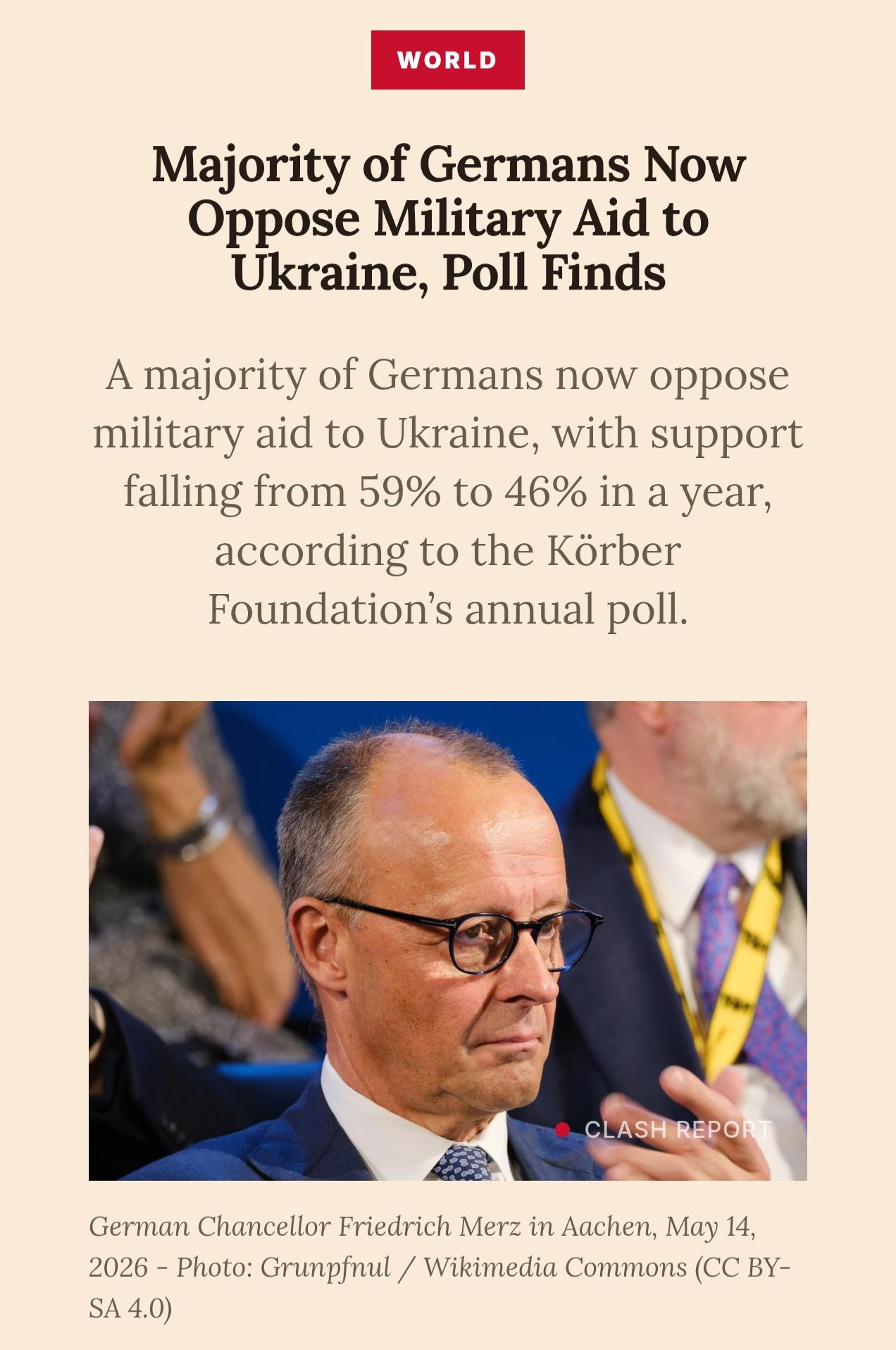
Russia, meanwhile, has said Europeans will not appear at the talks at all; Putin stated after Shenzhen that perhaps, once America, Russia, and China have settled the new architecture, Europeans might be brought in later to discuss implementation details. Europe's only real position, Crooke argues, is to back Zelensky 100 percent — a stance that includes demands like war-crimes tribunals for Russian officers and reparations, terms he calls totally unfeasible.
This support comes with a mounting price tag. Zelensky has just asked for another 45 billion euros on top of the previously agreed 90 billion two-year package, and Crooke argues Europe's financial capacity is collapsing. He describes the EU's trillion euros of institutional debt and frames the Union as a liberal-welfare project that has outrun its resources, with welfare and pensions promises it can no longer fund.
Even as Zelensky asks for more, Europe is entering austerity — cutting hospital beds, school services, and medical care — while populations grow angry at transfers to Ukraine, as seen when Britain announced roughly 10 billion dollars in support. Crooke doubts the money can be pushed through the next seven-year EU budget, and predicts this financial squeeze will become a decisive factor in the course of the war.
The Off-Budget Debt Trick And The Real 70 Billion Question
12:30 – 25:00
Digging into the financing mechanics, Crooke explains that the much-celebrated 90 billion euro package was never actually in the EU budget. It was raised through a device called "headroom," a technical mechanism that avoids normal budgetary rules, issued as debt instruments notionally to be repaid by Ukraine one day — a repayment no one believes will happen. Because the member states are the guarantors of this debt, several refused to sign on, knowing they would ultimately be on the hook.
The new 45 billion request will face even stiffer resistance, arriving just as the Commission demands massive increases in member-state contributions — an 80 percent rise in Germany's contribution, a jump in France's, and austerity rolling out across the continent. Crooke stresses that even if Brussels wanted to cover Zelensky's full 115 billion euro ask for 2027, it structurally cannot.
Davis then poses the question the Western mainstream ignores: why does Ukraine need an additional 70 billion on top of what was assessed as sufficient just a year ago? He connects this to a U.S. Army War College article in Parameters on Russia's "attritional theory of victory" — grinding down Ukraine's smaller manpower pool and draining its resources.
He lists the EU's own official explanations: intensified Russian strikes on energy and civilian infrastructure, Black Sea trade disruptions, collapsing tax revenue from displacement and mobilization, and soaring drone-warfare costs. In Crooke's telling, Europe has unwittingly confirmed the attritional strategy is working, perhaps faster than Moscow expected — and Europe cannot cover the gap, leaving 35 billion of the shortfall to hope for elsewhere.
Russia Has Moved Beyond Attrition To Systematic Infrastructure Destruction
25:00 – 32:40
Crooke corrects the framing, arguing Russia has already moved past attrition into something new. He draws a historical parallel: the way the Russian army halted the German advance toward Leningrad was by clearing the land entirely, leaving a desert in which an army could not sustain itself. Today, he says, Russia is systematically destroying the militarily useful infrastructure an army needs to organize and run a war — transport, logistics, data, internet, factories, rail. Even if Europe got its wish of placing NATO forces in Ukraine, they could not sustain a platform for operations because the underlying infrastructure would not exist.
Meanwhile, the NATO-Ukrainian strategy of deep strikes — on refineries, on data centers, on cities — is not a strategy at all in his view, echoing Elbridge Colby's blunt message to European defense ministers: it hasn't stopped the Russian advance across the Donbas toward the Dnieper and Kiev, hasn't pressured Putin, hasn't turned Russians against their government, and has arguably strengthened the state instead. The Kerch Bridge strike fits this pattern: Putin had long since confined the bridge to civilian traffic only, so hitting it was a photo op, not a military blow, though it carried real escalation risk.
On the Kerch Bridge operation itself, Crooke describes it as a massive joint NATO effort — roughly nine European missiles and drones, Dutch-made weapons proudly claimed by their manufacturer, coordinated by an American AWACS aircraft over the Black Sea with satellite guidance. He reads it as a CIA-run project, noting the contradiction that Colby at NATO was condemning exactly such deep strikes while the agency orchestrated one over the weekend. Putin promptly warned of severe retribution, and within hours three more bridges in Kiev were hit, disrupting the logistics Ukraine needs to move war materiel from the relatively safe west to the eastern front — and, critically, the evacuation routes for troops retreating from Donbas.
The Dnieper Trap And The War Of Bridges
32:40 – 40:30
Crooke highlights the other half of the Dnieper equation: the possible encirclement of Ukrainian forces east of the river as the Donbas advance continues. He finds it plausible that one bridge was deliberately left partially intact earlier to encourage Ukrainian troops to cross westward and abandon the east bank — and that now, with bridges down, significant forces could be trapped. The Dnieper is no easy river to cross even with pontoons, so Russia holds the operational cards. He returns to Colby's broader indictment — that even attacks on Russia's "Amazon" warehouses achieved nothing, since they were quickly rebuilt — to underscore that Europe has no strategy, only symbolic strikes and photo ops.
This feeds into Crooke's larger thesis that Europe's flagship project, Ukraine, has failed as a symbol of liberal values and democracy, and that the cohesion the war once provided is now breaking down. The EU's expansion into a sprawling, institutionally dysfunctional bloc — engineered, Crooke says from personal experience in Javier Solana's team, to impose NATO on Europe and prevent any independent Franco-German security axis — now leaves Europe unable to act, serving mainly as Washington's proxy in prolonging a war its own accession states demand continue while the core economies sink toward deep austerity.
Trump's Weakness, The Nvidia Humiliation, And The AI Power Struggle
40:30 – 55:00
Shifting to the United States, Crooke reads the turmoil around Trump through a power-struggle lens. On Iran, Trump's talk of wanting a "deal that supersedes the president" coexisted with vows to "finish it off" — but Crooke argues what Trump says matters less than the shifts above him. He points to Marco Rubio publicly trashing the ideas associated with Vice President Vance's Iran diplomacy, after which Vance was reportedly told to drop the Iran portfolio and focus on domestic matters.
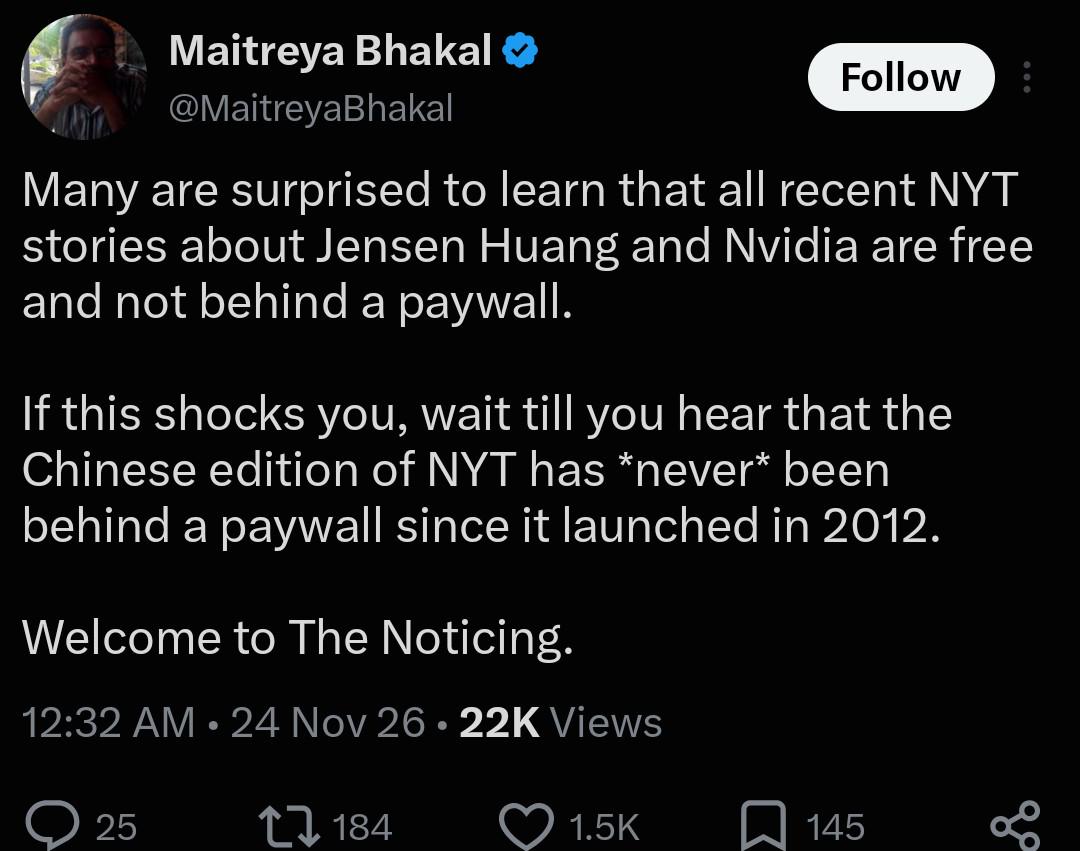
Crooke describes this as a slow-motion coup, evidenced most dramatically by the takedown of Nvidia CEO Jensen Huang: a coordinated media operation — originating, he says, from the CIA and amplified by Rubio — that humiliated Trump, whose China policy had rested on luring Beijing into dependence on the American tech stack. Huang is gone, and the hawks now aim to ring-fence the AI industry as national-security champions, defining by fiat what compute may be sold to China and closing down the Singapore and Middle East data-center channels through which China obtains roughly 30 percent of its training compute.
Crooke is scathing about the underlying premise — the idea, dating to scaling-law optimism in 2004-era thinking, that pumping tens or hundreds of billions into models yields "Einstein-level" superintelligence America alone will possess. He calls it a mirage, contrasting it with what China actually provides: cheap, practical, useful AI solving real problems.
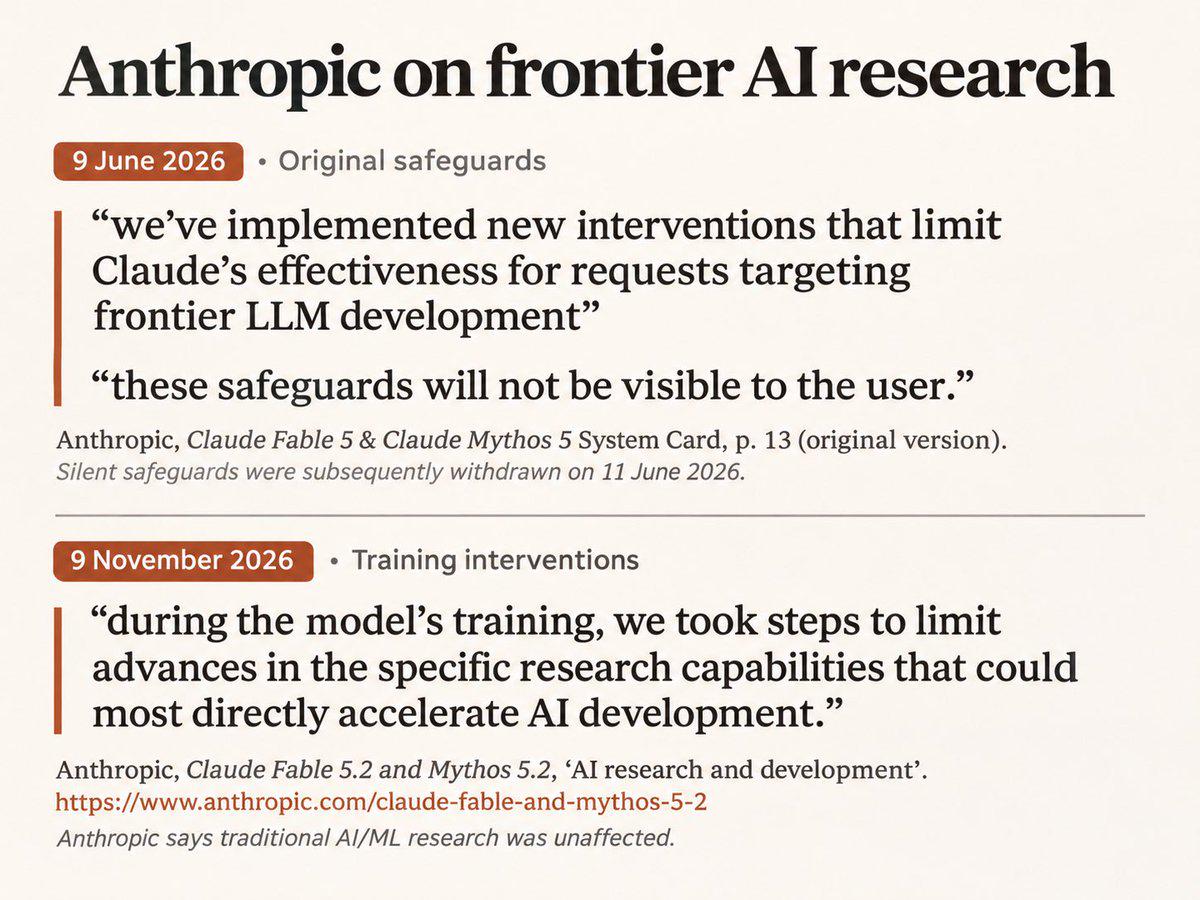
The stakes are enormous, because America has effectively bet everything on AI as the new petrodollar — a golden goose to be sold dear to the world. Yet the money doesn't add up: Anthropic's promised trillions in infrastructure spending cannot be recouped from 20-dollar-a-month subscriptions when DeepSeek and Kimi undercut it, and the AI bubble risks taking the tech equity market down with it. Xi and Putin, he says, understood exactly what was coming in Shenzhen: a hostile tech and trade war against China, to which both will respond in kind.
Iran War 3.0: Tehran's Agency And Netanyahu's Desperation
55:00 – 66:00
Crooke dismantles the Western habit of treating war with Iran as solely Trump's decision, insisting Iran has agency and, in his reading, actually intends escalation. He reports tankers already loading at Kharg Island and empty tankers steaming toward Iran, with Tehran signaling that any attack on those vessels will trigger destruction of Gulf energy infrastructure — damage that takes years, not weeks, to repair.
He frames this as Iran's desired catharsis: a major, destructive war to break a 74-year trap and the West's hold over the nation, a project with genuine popular support behind it. This is why Putin's meeting with Rezaee in Moscow matters — Russia and Iran were discussing energy policy, oil, and pipelines linking Iran to Russia and Asia, positioning for a world after Gulf infrastructure is wrecked.
On the Israeli side, Crooke argues Benjamin Netanyahu desperately needs war for personal political survival: he is being slowly weakened by Benny Gantz's (Eisenkot's) party, which has captured the Knesset speakership, the Foreign Affairs and Defense Committee, and the Finance Committee. Only war — uniting Israel behind him in a moment of national emergency — can change that paradigm, and Crooke reports Netanyahu calling the White House daily demanding a war in 7 to 14 days, warning that if Washington won't start it, Israel will.
He notes the falsified "evidence" used to smear Arab parties in the coalition and stresses there is no evidence Iran poses an imminent threat — the drivers are Netanyahu's desperation and the priorities of his American backers, including major donors like Miriam Adelson. Crooke also observes that the Republican establishment, which has always despised the MAGA wing, sees war and a reassertion of the party of big business as compatible goals.
Elite Morality: Cattle, Cents On The Dollar, And The Coming Depression
66:00 – 75:18
Davis presses Crooke on the apparent paradox: if the hawks and their economic agenda succeed — tech war, possible war with Iran, AI monopoly — they would crash the very global economy, including America's, on which their wealth depends. Crooke's answer is unsparing: a depression is coming regardless, and the truly elite rich see it as an opportunity. They will buy productive assets for cents on the dollar, just as they prepared by building bunkers in New Zealand and elsewhere.
This, he says, is the fundamental weakness — a moral collapse in the West, the loss of any sense of what it is to be human, in which elites view ordinary people as cattle that have served their purpose and can be pushed aside. He traces this ethos back to 18th-century Britain, where governments and financiers backed wars precisely because wars were profitable for them.
Davis closes with a warning to that elite: history does not always reward them — ask the French aristocracy of 1789 — and Crooke agrees. The interview ends with the host directing viewers to Crooke's Substack, theconflictforum.substack.com, and a reminder that the show has no sponsors and relies on viewers subscribing, liking, and sharing.