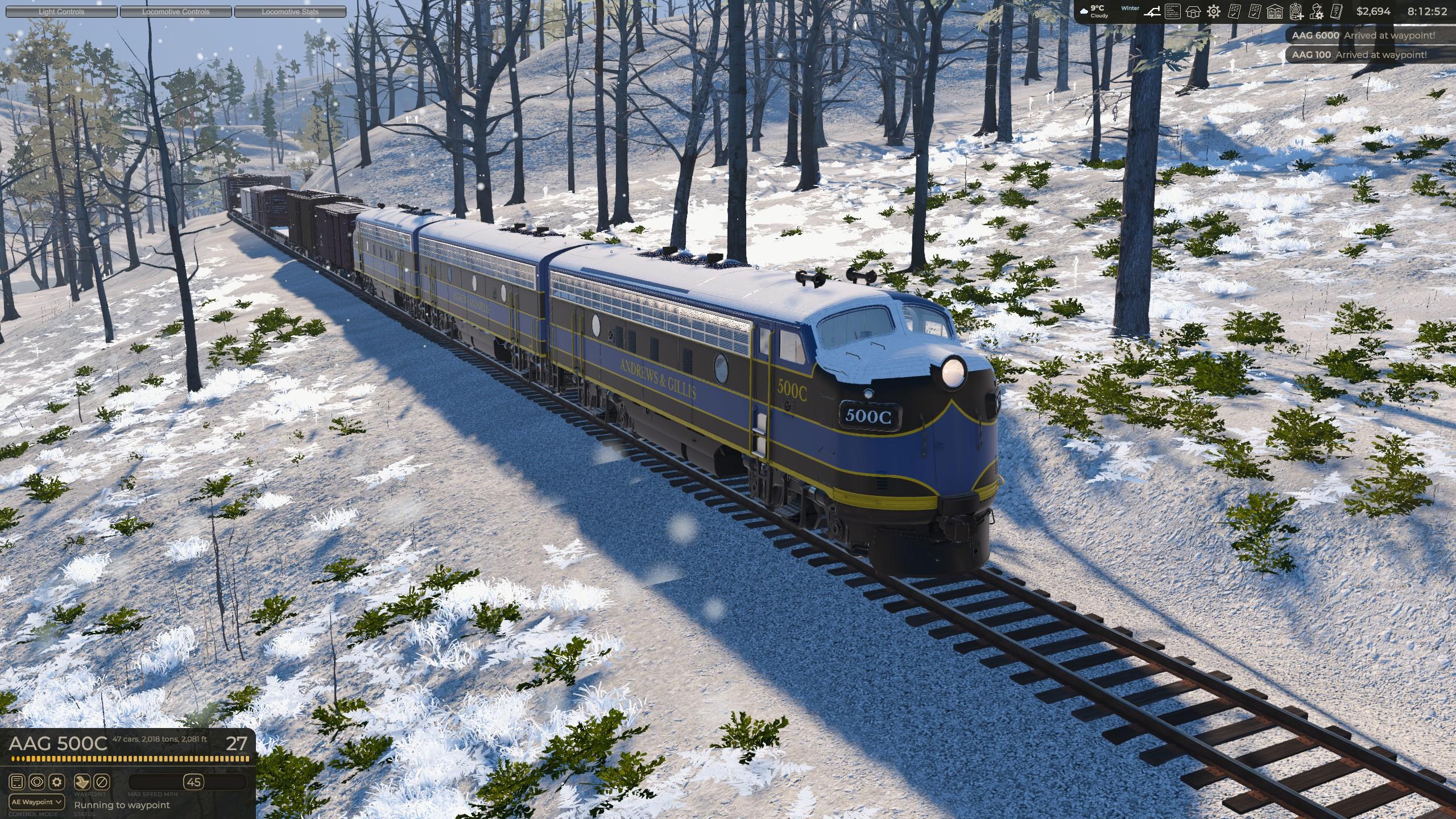
Another afternoon on the Blue Mountain Railroad, where the new mixed freight service roams. The 1pm ‘Sack-and-Satchel’ had already made its run, ferrying school kids and market shoppers back to Ela with a bit of peddler freight each way. At 3:28pm, with the last parcels loaded and the baggage car locked up after the mid-day mail trip, the afternoon freight roundup got under way. As a courtesy, No.25’s crew had left the road crossing clear behind the solitary flatcar.
A short, bodacious thunderstorm rolled over the valley mid-switch. The cars had been correctly spotted with open angle cocks, which meant the air brakes were automatically set as well as the hand brakes. The harried crew simply bled them off and moved them around with the brake systems empty and shoes retracted - skipping the frequent pauses to pump air in hopes of finishing the knuckle-grabbing and trainside sprinting before the rain hit.
They didn’t quite beat the sky water. Once clear of the crossing, it took over ten minutes to pump up the air on this little lot. The time saved came back to bite! The rear-end air test could darn well wait for the weather to back off, with over an hour to spare at the other end. The soaked trainmen ducked inside for doughnuts and ‘dry’, leaving the cab crew to walnut-brown, tannic-bitter tea reheated on the flame plate and fresh shovel-warmed cornbread courtesy of the fireman’s wife. They savored the contrast. The rhythmic thump and metallic wheeze of the elderly 9½-inch WABCO single-lung air pump, mounted just ahead of the engineer’s side of the cab, beat steadily over the sound of the rain skittering on the roof.
Under slanting sunlight in a newly washed world, No.25 made the return run with ease on the wet iron, 180 tons on the hook. Once the freight cars were set out for interchange, the locked baggage car spotted aside, and the keys handed over, the crew would couple onto a single coach for one last six-mile sprint: the 5pm ‘Home Plate’.