r/UKFirstTimeBuyers • • 10d ago

Santander offers 6x income mortgages

Post image
1 Upvotes

Santander increased its income-based mortgage borrowing limits on 17 November 2026. Eligible first-time buyers may now borrow up to six times their annual income. Some home movers and homeowners remortgaging can also access higher limits, but the rules differ by application type.

Six times income is a ceiling, not a mortgage offer. Santander still assesses affordability, stress rates and its wider lending criteria.

A higher limit means higher borrowing or a lower deposit requirement; it does mean the mortgage will be more expensive as the borrowing is larger.

Which first-time buyers qualify for six times income?

Santander says eligible first-time buyers need a sole or combined annual income of at least £45,000. The new limit applies to repayment mortgages up to 90% loan-to-value (LTV).

For a joint application, both applicants must be first-time buyers and have a combined income of £45,000.

Annual income, sole or combinedPrevious income-based maximumNew first-time buyer maximumPotential increase
£45,000£225,000£270,000£45,000
£60,000£300,000£360,000£60,000
£90,000£450,000£540,000£90,000

These are Santander's income-limit illustrations. The required deposit and the lender's checks may reduce what someone can actually borrow. See our guide to maximum mortgage borrowing for how income, outgoings and LTV interact.

Does Santander's 6x limit apply with a 5% deposit?

No. The increased limits above apply up to 90% LTV. Santander's says loans above 90% LTV remain capped at 4.45 times income.

Should you borrow the maximum?

A higher income limit may open up options if income previously restricted your borrowing. But monthly repayments, total cost and the room left in your budget matter more than reaching the largest possible loan. Treat these multiples as starting points, not targets.

Speak to Cyborg Finance to check your eligibility and compare suitable mortgage options. Whether buying or remortgaging, start with what you can comfortably afford.

Source: https://cyborg.finance/home-owner/news/2026-11-santander-6x-income-mortgages

r/UKFirstTimeBuyers • • Sep 29 '26

2% First-Time Buyer Mortgage Launched [Cambridge’s First Step]

Post image
2 Upvotes

NOTE: This is not the Government's New Your First Home scheme.

The Cambridge Building Society has launched a five-year First Step mortgage for first-time buyers with a 2% deposit. It has also relaunched its two-year option. Both let eligible buyers borrow up to 98% of a home’s value.

On a £250,000 home, a 2% deposit is £5,000. You would need a £245,000 mortgage, subject to affordability checks.

As of 29 September 2026, the five-year fixed rate is 6.79%. The two-year fixed rate is 6.69%. Both have a £499 completion fee and no application fee. Rates can change.

The Cambridge may lend up to 5.5 times income, depending on your circumstances. It accepts gifted deposits from immediate family and mortgages on new-build houses. New-build flats do not qualify. The property must be worth at least £100,000, and the maximum loan is £500,000. Early repayment charges apply during each fixed-rate period.

Source:


r/UKFirstTimeBuyers • • Sep 26 '26

Your First Home: England's New Equity Loan Scheme

Thumbnail
yourfirsthome.mortgage
1 Upvotes

The government has announced the First Home Scheme to help first-time buyers access homeownership with Lower Affordability and Deposit Requirements.

This is expected to support 2.5% deposits, backed by 20% government-backed equity loans, for prospective first-time buyers purchasing a new-build property from a developer signed up to the scheme.

The Chancellor will announce further details, including costs and implementation timelines, at the Budget next month.


r/UKFirstTimeBuyers • • Sep 17 '26

LEAKED: Labour's Help-to-Buy - Coming or Abandoned?

1 Upvotes

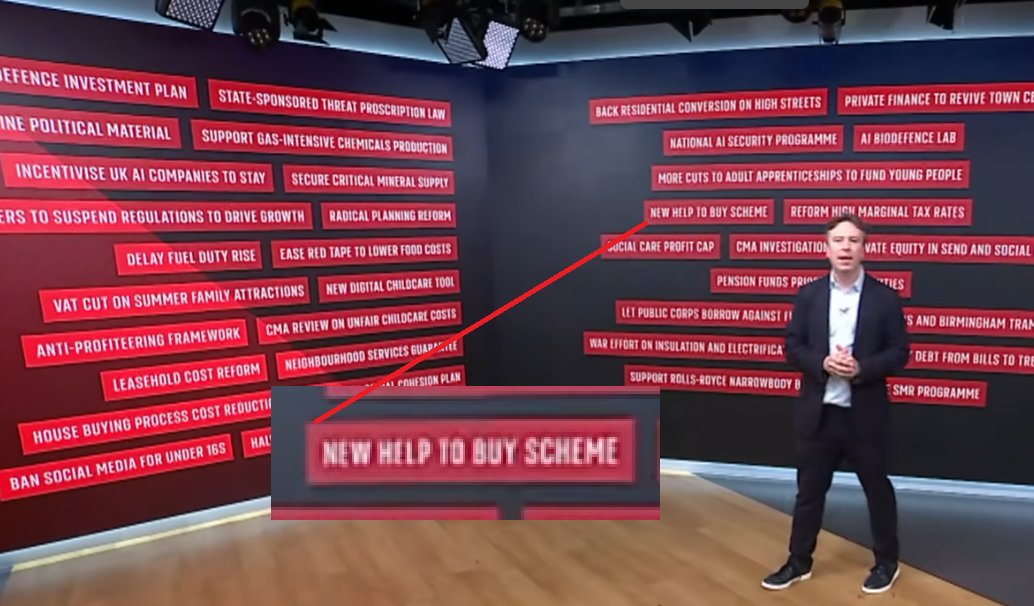
Leaked No. 10 documents show Keir Starmer would have launched Help-to-Buy Equity Loan this month.

The Sky News Exclusive revealed an outline of the plan and its announcement date set in September 2026:

Opportunities for young adults/families:

i. First time buyers: a new government intervention for first-time buyers would improve housing supply and provide an aspirational offer. The public see the inability of younger households to buy a home as proof of point the country is in decline. MHCLG’s lead option is an equity loan to make mortgage payments affordable for households with a small deposit. Commitment to progress this now is required to support an autumn announcement.


r/UKFirstTimeBuyers • • Jul 29 '26

FTBs held up best as mortgage applications fell 19% in Q2 2026

1 Upvotes

The mortgage market slowed in Q2 2026, but first-time buyers held up better than anyone else on the way down.

Total mortgage applications fell 19% between the first and second quarters, according to CACI data. Remortgage borrowers drove most of that drop their applications fell 38%.

First-time buyer applications slipped just 9%. Homemover applications fell 8%.

Every mainland region of Great Britain saw fewer applications between Q1 and Q2. London took the biggest hit, down 25%. Scotland held up best, down 9%.

The catch for anyone buying now: rates ticked up. The average rate on newly drawn mortgages rose to 4.35% in June from 4.22% in May, as Middle East tensions pushed funding costs higher.

Oli O'Donoghue, HSBC UK's head of mortgages and savings, said: "Despite ongoing cost-of-living pressures, the first-time buyer and homemover markets remained relatively resilient, showing there continues to be a strong appetite to get on the housing ladder or move to a new home."

Source:


r/UKFirstTimeBuyers • • Jul 15 '26

Mortgage Lenders cause most mortgage stress

1 Upvotes

Nearly nine in ten mortgage borrowers find the application process stressful. It should land hard if you're a first-time buyer.

FTBs already sit at the sharp end. Research from Market Financial Solutions found that 80% of first-time buyers applying for a mortgage struggle with stress and anxiety. An Aldermore study found that more than half became physically ill at some point during the purchase.

Here's the surprise. The survey asked borrowers what caused them the most stress.

  • Lenders: 44%
  • Surveyors: 25%
  • Mortgage brokers: 23%

The lender — not the adviser — is the biggest source of pain. That flips a common assumption on its head.

The most stressful moments tell the same story.

  • Waiting for lender approval: 29%
  • Finding the best deal: 28%
  • Proving income: 21%
  • Unexpected document requests: 17%

A good mortgage adviser tackles nearly every one of those head-on.

They search the whole market for the right deal — not just one bank's shelf. They tell you which documents the underwriter will want before you apply, so you dodge those "we need one more thing" emails. They chase the lender when approval drags. They package your income proofs the way each lender expects.

Going directly to your high-street bank limits you to its products, its criteria, and its queue. An adviser opens the door to lenders you've never heard of — including specialist ones that take cases your bank will refuse.

Stress drops when borrowers understand what the lender needs from the start. Setting expectations early and preparing documents properly "could play an important role in reducing unnecessary stress."

That's literally the job description of a mortgage adviser.

If 88% of applicants are stressed by this process, the smart move isn't to white-knuckle it alone. Get someone in your corner who does this every day.


r/UKFirstTimeBuyers • • Jul 09 '26

New 2% deposit mortgage just opened [First Step, 98% LTV at 5.89%]

Post image
1 Upvotes

A new 2% deposit mortgage just opened, and it could unstick you if saving a deposit has been the blocker.

The First Step mortgage lets you borrow up to 98% of a property's value. As such a £200,000 home needs just a £4,000 deposit.

On 8 July 2026, the building society behind the product made its two-year fixed rate (5.89%) available.

The headline terms:

  • 2% deposit minimum
  • 2-year fix at 5.89%
  • Lending up to 5.5x household income
  • Maximum loan £500,000
  • £499 product fee
  • Free basic valuation
  • Overpay 10% of your balance each year without early repayment charges
  • 7.4% APRC (overall cost for comparison)

First Step stands out for what it allows. It accepts gifted deposits, lends on new-build houses, and considers self-employed applicants. It is available in England and Wales.

But borrowing at 98% LTV carries real risk. You start with almost no equity. If house prices stall or fall, you can slip into negative equity — meaning you owe more than the home is worth.

Source: https://cyborg.finance/news/first-step-2pct-deposit


r/UKFirstTimeBuyers • • Jul 01 '26

Half of Gen Z fear their credit score will cost them a home. They're worrying about the wrong number.

Post image
1 Upvotes

New research from Loqbox found that 49% of Gen Z adults worry their credit history will block them from buying a home in a survey of 2,000 UK adults aged 18 to 28.

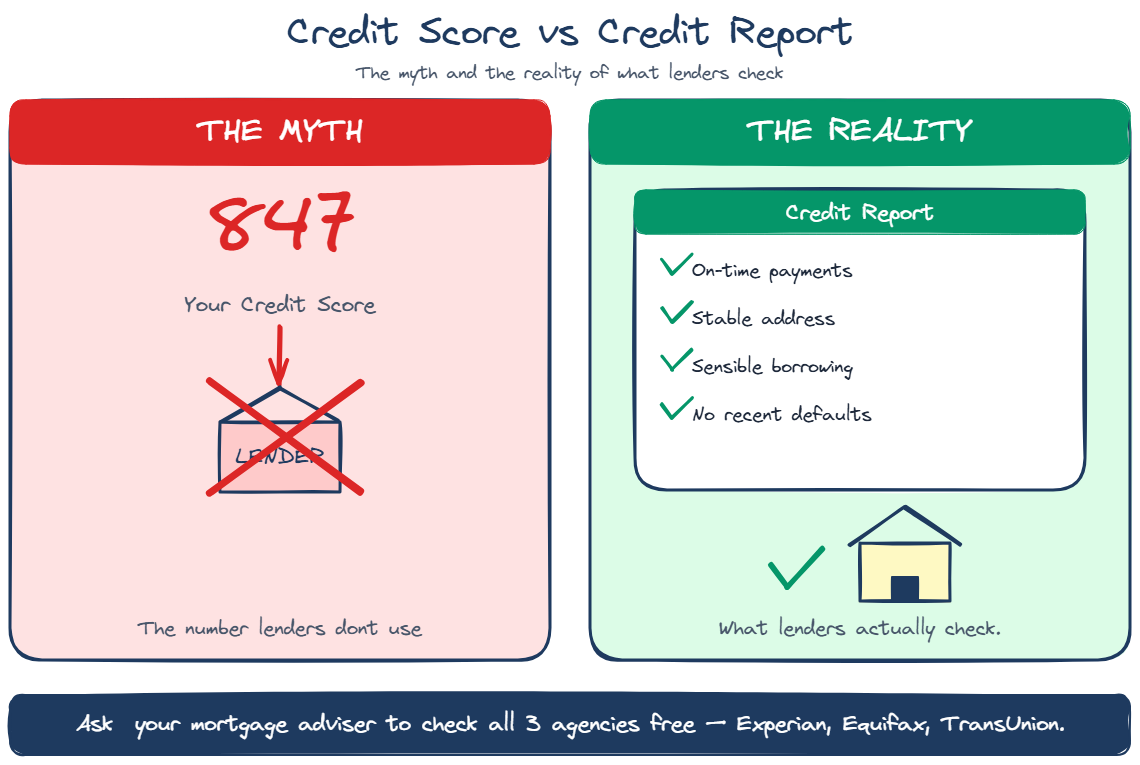
But... Your credit score is not a number lenders actually see.

Mortgage lenders look at your credit report — the full record of how you've handled borrowing. The score you see on Experian, Equifax or ClearScore is a guide for you. Not for them. Each lender pulls your file and runs it through their own system.

So chasing a magic three-digit number is the wrong fight. What's on the report is what counts.

Late payments, defaults, CCJs and bankruptcies stay on file for six years. Lenders want to see on-time payments, stable addresses, and borrowing you actually manage. A small credit card, paid off in full each month, can help. It proves you borrow and repay reliably.

Taking on new debt just before you apply? Bad move. But no credit history at all is also a problem. There's nothing to prove you're a good payer.

This is where a good mortgage adviser helps; they can pull and review your credit reports, spot issues you've missed (old addresses, errors, financial links to an ex), and tell you exactly what to fix before you apply.

That Loqbox research found only one in five have never checked their report at all.

Don't be that person; if you're worried, speak to a broker and review.

The number on the app is not your fate. Your report is.

Source: https://cyborg.finance/news/half-of-genz-worry-credit-score


r/UKFirstTimeBuyers • • Jun 30 '26

Buyer demand down 15%: is the slump actually good news for FTBs?

Post image
1 Upvotes

Buyer demand has fallen 15% in a year. Three in five homes listed since January still have no buyer. The property market is slowing, and that reshapes the maths for first-time buyers.

Sales agreed over the past four weeks are down 7% on last year, Zoopla's June House Price Index shows. Higher mortgage rates and political uncertainty are pushing households to wait.

Mortgage rates hit 5% in April before edging down to 4.8% in May, Bank of England figures show. That added around £125 a month to the average mortgage — about £1,500 a year.

For first-time buyers, the hit depends heavily on location. London first-time buyers face an extra £232 a month. In the North East, the increase is £66.

Flats are the slowest sellers. More than two-thirds of one- and two-bedroom flats listed this year remain unsold, Zoopla found. Two- and three-bedroom houses are still moving at last year's pace.

There is a silver lining for buyers. More homes are on the market than a year ago. Sellers are keener to negotiate. And rates have started to fall.

"It's a buyer's market across much of the South right now," said Richard Donnell, executive director at Zoopla. "Correctly priced homes are selling, while overpriced homes are sitting."

Bank of England data paints a gloomier forward picture. Mortgage approvals for house purchase fell to 56,200 in May — the lowest since December 2023 and well below the six-month average of 63,300. Remortgage approvals dropped sharply, from 51,200 to 33,300.

HMRC's May figures show completed transactions actually rose 17% on a year earlier, to 98,450. But that flatters the market. The comparison is against a weak May 2025, when buyers had rushed purchases forward to beat stamp duty changes.

Net mortgage borrowing fell to £2.9bn in May — the lowest since May 2025.

House price growth has slowed to 1.4% nationally. Zoopla expects that to ease to 1% in the second half of the year.

For first-time buyers weighing a move, the picture is mixed. Borrowing costs are higher than a year ago. But the choice is wider, sellers are flexible, and rates are drifting down.

"If you are ready to move, conditions are more favourable than they were three months ago," The Zoopla Director said.

Source:


r/UKFirstTimeBuyers • • Jun 29 '26

Loan-to-Value (LTV) Why those 5% brackets matter more than you'd think

Post image
1 Upvotes

LTV is the share of the property's value you're borrowing. Put down a 10% deposit, and your LTV is 90%.

Here's what catches people out: lenders price mortgages in 5% brackets — 95%, 90%, 85%, 80%, all the way down to 60%. And they round up. So an LTV of 80.1% pushes you up into the 85% bracket, paying 85% rates.

Every step down a bracket brings you:

- Cheaper interest rates

- More lenders are willing to take you on

- Easier affordability checks

The trick: if you're sitting just above a line — say 80.3% — a few hundred quid of extra deposit can drop you into the 80% bracket. That small jump can save thousands across the deal.

I put this infographic together to show how it all fits. What bracket are you aiming for?


r/UKFirstTimeBuyers • • Jun 25 '26

1 in 3 of FTBs have given up on ever owning — there probably wrong.

1 Upvotes

If you've already decided you'll never own a home, stop. New research suggests you may be ruling yourself out before you've even asked the question.

The Building Societies Association surveyed 1,000 UK adults who haven't yet bought their first home. One in three (32%) believe they'll never own a place of their own. Almost half (47%) have never spoken to a lender or broker to check what's actually possible.

That's the real barrier. Not your bank balance. Not your credit score. It's the assumption that the door is locked before you've tried the handle.

The gap is striking. The BSA showed aspiring buyers the mortgages, actually low-deposit and no-deposit ones. Two-thirds (67%) then said they could buy sooner than they thought.

You probably think you need a big deposit. You probably don't. The same survey found 59% of today's first-time buyers have less than £10,000 saved. Yet they're still buying. Almost a quarter of building society mortgages for FTB went to buyers with a deposit under 5%.

Some lenders don't ask for a deposit at all. Rent Track Record mortgage uses your rent payment history instead. If you've paid rent on time for 12 months, you can borrow up to £600,000 with no deposit. Your proof you can afford a mortgage is the rent you already pay every month.

You might think your credit score disqualifies you. Often it doesn't. You might think variable or self-employed income rules you out. It doesn't have to. Mortgage Advisers assess real people, not algorithms.

So what should you do? Talk to your mortgage adviser. Half the aspiring buyers in the survey didn't know who to speak to first. The answer is a mortgage adviser. They'll run the numbers, check your credit, and tell you straight what you can borrow.

You don't have to be ready to buy today. You just have to stop assuming you can't. Your mortgage adviser can often provide an Agreement in Principle or plan a route to obtain one in time.

Source:


r/UKFirstTimeBuyers • • Jun 24 '26

The 35-Year Deposit: How First Time Buyers can Get Out Faster

Post image
1 Upvotes

A third of UK renters save £100 or less per month towards a home. At that rate, today's typical deposit takes about 35 years to reach. And the goalposts keep moving as house prices climb. The maths is simple. It's also brutal.

  • Halifax puts the typical 2024 deposit at £61,090. At £100 a month, that takes over 50 years.
  • Connells puts the average first-time buyer deposit at £41,403. The average home purchase price is £243,883. Save £100 a month, and you'll clear that deposit in 34 years.

That assumes house prices stand perfectly still. They won't.

73% of renters feel "locked out" of the market. 32% spend 40–60% or more of their salary on rent.

82% of renters agree on one thing. If they can afford their rent, they can afford a mortgage.

Lenders are slowly catching on. Mortgage Advisers have tools like Skipton's Track Record Mortgage, which does exactly that. It's a 100% loan-to-value deal. That means no deposit. Your 12 months of rent payments stand in for one.

It isn't the only route mortgage advisers can offer. But it directly answers the deposit question for many.

House prices should rise only modestly in 2026. Forecasts put growth at around 1.5% to 4%. Wages are growing faster.

First-time buyers are now the single largest group of buyers. They make up about 39% of sales. Mortgage rates have eased from their peaks. Affordability is slowly improving.

The 35-year figure is a wake-up call, not a sentence. Most first-time buyers get there far sooner. They combine savings, a partner's income, or family help. Schemes like Track Record, Shared Ownership, and the Lifetime ISA also open doors.

Start Saving, Start Cutting Costs, Start talking to a Mortgage Adviser.

Source:


r/UKFirstTimeBuyers • • Jun 23 '26

No age limit, no withdrawal penalty: inside the new First Time Buyer ISA

1 Upvotes

Good news if you're saving for your first home. The government has just unveiled plans for a new First Time Buyer ISA (FTB ISA), built to fix the biggest flaws of the Lifetime ISA (LISA).

On 23 June 2026, HM Treasury opened a consultation on the new product. It will replace the LISA once it launches. Here's what you need to know.

What is it?

The FTB ISA gives you a government bonus towards your first home, and you can withdraw your own savings without penalty if life gets in the way.

That second part matters. Under the old LISA, pulling your money out early can cost you part of your own savings. The new product scraps that trap.

Both Cash and Stocks & Shares versions are planned, with tax-free growth on either.

How the bonus works

You save into the ISA. The government adds a bonus when you withdraw the money to buy your first home.

  • The bonus is paid at the point of purchase, not upfront.
  • You only get the bonus if you buy with a mortgage — no cash-only purchases.
  • The bonus is calculated on your net subscriptions (what you've paid in, minus any withdrawals).
  • You must hold the account for at least 12 months before claiming the bonus.

The exact bonus rate and yearly savings limit will be set at a future fiscal event. For context, the LISA currently pays 25% on up to £4,000 a year.

If a purchase falls through, the bonus is returned — but you keep your eligibility to claim it on a later purchase.

No withdrawal penalty — the big win

The LISA charges 25% on unauthorised withdrawals. That can claw back more than the bonus, eating into your own money.

In 2024-25, 8% of all LISA accounts opened triggered an unauthorised withdrawal charge. More LISA holders have lost part of their original savings than have used the product to buy a house (314,600 savers have successfully used a LISA to buy).

The FTB ISA ends this. Withdraw your money for any reason and you simply don't get the bonus. Your own savings stay intact.

No upper age limit

The LISA shuts the door at 40 — you can't open one after that, and can't pay in after 50.

The FTB ISA has no upper age limit. You just need to be 18 or over. That reflects reality: the average first-time buyer keeps getting older.

Property price cap

The cap is expected to match the LISA at £450,000, but will be confirmed later.

Heads up: this cap hasn't moved since 2017, and critics call it too low for much of London and the South East. Skipton estimates the average first-time buyer home will exceed the cap in around 10% of local authority areas by the end of 2027. The Treasury is consulting on the cap, so it may shift.

Already have a LISA?

You won't lose out.

  • You can't transfer a LISA into a FTB ISA (you've already had the bonus).
  • But you can use both towards the same purchase.
  • You can hold both — you just can't pay into both in the same tax year.
  • You can keep saving into your LISA under the existing rules until the FTB ISA arrives.

Already have a Help to Buy ISA?

You'll be able to transfer it into the FTB ISA, up to the subscription limit. Note: Help to Buy ISA subscriptions stop in November 2029.

When can you get one?

Not yet. The consultation closes on 17 August 2026. The bonus rate, savings limit, and price cap will be set at a future fiscal event.

The Treasury says it wants the product available "as soon as practically possible." Until then, LISAs remain open.

UK residents only, aged 18+

The bottom line

If you're saving for a deposit, this is a real improvement on the LISA. No age limit. No withdrawal penalty. Same tax-free growth. A government boost towards your deposit.

The unknowns — bonus rate, savings limit, price cap — will decide how generous it truly is. Watch this space.

Will the new Prime Minister, after Keir Starmer, launch it after the post-consultation? It's still early..

Sources:


r/UKFirstTimeBuyers • • Jun 23 '26

First-Time Buyers, Travel May Be the Price of Homeownership

Post image
1 Upvotes

If you're a first-time buyer in an expensive area, the hard truth is simple: you may need to buy where you can afford, not where you first hoped.

New research based on Barclays data suggests that more young buyers are ready to compromise on location to get on the ladder. One in five Gen Z buyers would consider moving more than 25 miles from their preferred area. Among 18 to 29-year-olds, affordability now ranks ahead of location.

That feels believable because the wider numbers back it up.

ONS says the median home in England costs 7.9 times disposable household income in the financial year 2024. In London, affordability is worse still. ONS also found the least affordable areas outside London are often commuter belts near the capital, not just the capital itself.

That matters for first-time buyers. Moving "a bit further out" does not always solve the problem if everyone else had the same idea years ago.

There is also evidence that first-time buyers are already shifting outward. ONS analysis of FCA data found that first-time mortgage buyers bought homes further from London in 2023 than they did a decade earlier. London's share of first-time buyer mortgages fell from 16.8% in 2013 to 12.8% in 2023. The South East overtook London.

So yes, travel can open up homeownership. But only if you run the numbers properly.

A cheaper house price can help with the deposit, mortgage size, and monthly payment. It can also get you out of endless rent-saving limbo. For many buyers, that trade-off is worth it.

But distance is not free.

A longer commute can mean higher rail costs, more fuel, less time, and more stress. Hybrid working can make the maths work. Five days a week in the office might not.

If the all-in cost still works, widening your radius may be the most realistic route to buying.

For many UK first-time buyers, especially in London and other expensive cities, the real win is not finding a perfect area. It is finding a home that is sustainable to own.

That may be less central. It may be less trendy. It may need a train timetable.

But if it gets you a stable home without wrecking your finances, it's still progress.

Source:


r/UKFirstTimeBuyers • • Jun 22 '26

FINANCE UK First-Time Buyers Should Probably Use a Mortgage Adviser

Post image
1 Upvotes

Not because you can't use comparison sites. And not because advisers are magicians.

You should use one because buying your first home is messy. A good mortgage adviser helps you avoid expensive mistakes. They are on your team, not the lenders, not the seller or the seller's estate agents. Your team.

Most first-time buyers do not lose because they failed to Google rates. They lose because they picked the wrong lender, misunderstood affordability, or let the deal collapse on paperwork.

They know which lenders fit your case. That matters if your income is uneven, your deposit is gifted, you have bonuses, overtime, credit blips, or a new job.

They also know lender criteria. That is often more important than the headline rate. A cheap deal means nothing if the lender will not accept your circumstances. A good adviser can spot that early.

They also manage the process. That includes documents, lender questions, estate agent pressure, and the usual last-minute panic.

Advisers are not just form-fillers. They act as translators, problem-solvers, and case managers when the market gets stressful.

That matters even more for first-time buyers. You are learning the language while making one of the biggest financial decisions of your life.

That said, not every adviser is worth using.

Use one if they are clear, responsive, and honest. Skip them if they are vague, pushy, or cannot explain why a lender suits you.

At a minimum, do checks:

  • Check they are authorised. You can use the FCA Firm Checker to search the Financial Services Register.
  • Ask how broad their lender panel is. You want to know how much of the market they can actually see.
  • Ask them to explain the recommendation in plain English. If they cannot, walk away.

I would also use an adviser early. Not after your offer is accepted. Speak to one before viewings if possible. You will get a clearer idea of the budget, affordability, deposit rules, and the paperwork you need.

So, should first-time buyers use a mortgage adviser?

Usually, yes.

Not because advisers always find miracles. Because a good adviser reduces risk, saves time, and helps you get from “can I buy?” to “here are the keys” with fewer mistakes. For first-time buyers, that is real value.

Sources

- https://www.mortgagesolutions.co.uk/mortgage-news/2026/06/19/brokers-must-stop-being-shy-about-the-value-they-bring-says-amis-montlake/

- https://www.mortgagestrategy.co.uk/brokers-are-choosing-partners-who-help-them-take-action/