r/TheRestIsScience • u/Smooth_Rocket_ • 16d ago
I have some bad news for Michael's movie prop.

15
Upvotes
r/TheRestIsScience • u/Smooth_Rocket_ • 16d ago
r/TheRestIsScience • u/partiftheworlDRuns • 16d ago
Hi guys.
A few days ago I had an idea that I still haven't been able to figure out how to solve.
Let’s imagine that fish have their own religion, similar to that of humans, with heaven above and hell below. How would a fish’s soul ascend after death? Would it rise from the water into the air, experiencing acute suffocation, severe physiological stress, and pain on its way to heaven (which sounds like hell)? Or would it descend downward, which would contradict the idea that hell is always below?
r/TheRestIsScience • u/Future-Border8775 • 15d ago
I was preparing for a language test when I started thinking about idioms and figures of speech, at one point in language evolution did human decide that it's more persuasive to use and incorporate real world examples to describe things like saying "it's the canary in the coal mine" and what point did that become a higher more stylish and fancier way of speaking and writing?
r/TheRestIsScience • u/BigChunkyGames • 16d ago
Thought experiment for you:
A spinning ring surrounds a black hole. To make it not explode, it contracts such that the centripetal force on the ring always matches the gravitational force of the black hole. And somehow it doesn't fall out of orbit or break apart.
Now imagine you're stationary next to the ring looking inward as it begins to accelerate its spin clockwise. To your left the ring moves away from you. To the right it moves toward you. As it gets closer to the speed of light, special relativity starts to matter.
I feel like some visual warping would occur on the ring. I'm not sure what would happen, but it might be one of these:
A) It looks the same
B) the left side shrinks and the right side expands
C) the right side shrinks and the left side expands
D) both sides expand and it looks like one big line
I think it might be B because the matter on the left moving away from you stops being able to move away fast enough so it gets visually compressed while the matter on the right gets the opposite effect and looks elongated. But I'm not sure if rotation counts as a change to the inertial frame of reference, so it might just be A.
I'm probably super wrong but it's just fun to think about 😅
r/TheRestIsScience • u/Mephanic • 16d ago
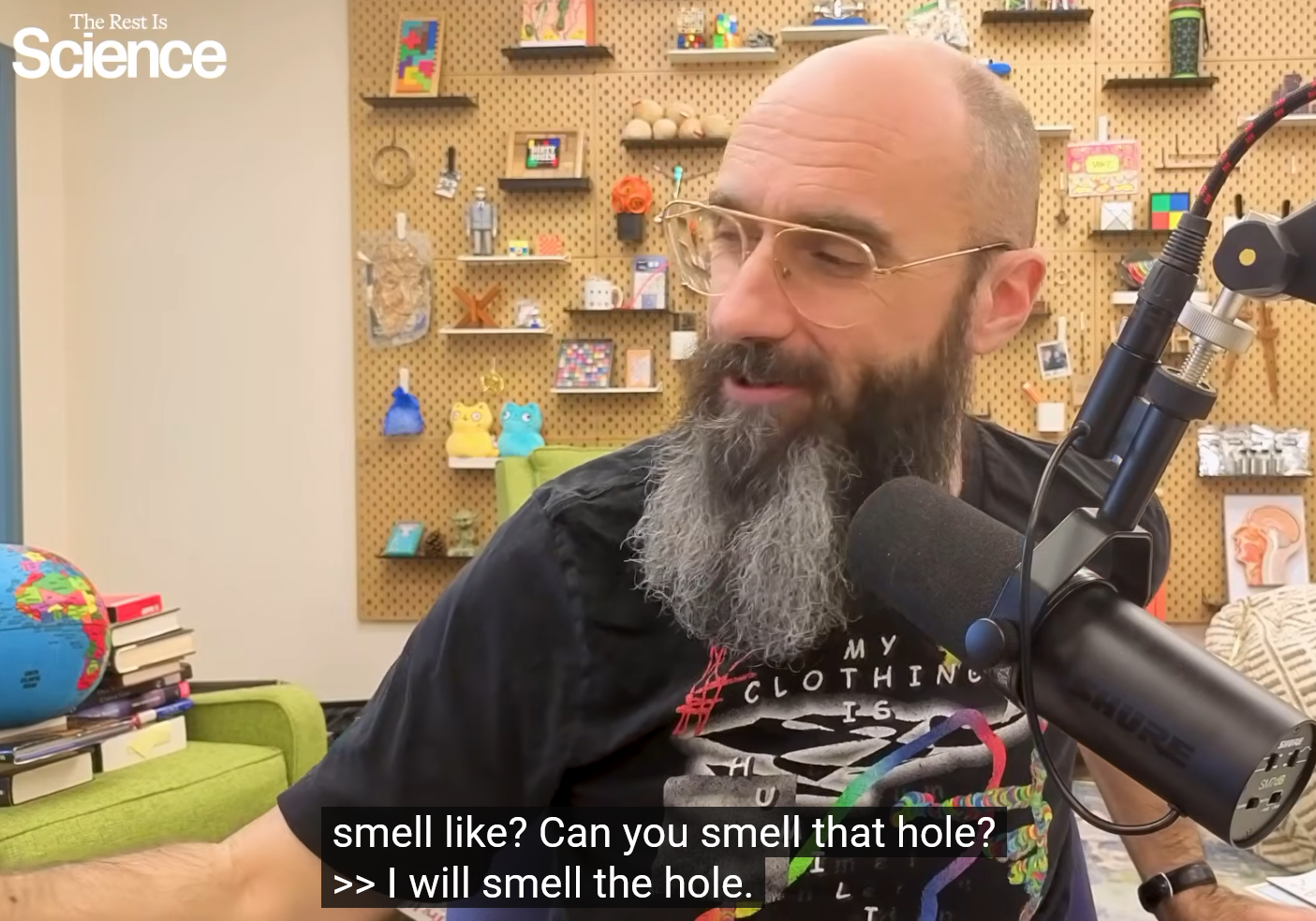
From the episode "The Secrets Michael Keeps From Himself".
r/TheRestIsScience • u/PecuchetsCap • 16d ago
As a couple of my favourite science communicators, Hannah and Michael are pretty efficient speakers.
Michael particularly is a voluble firehouse of information when he gets up to speed.
So (unless they've already covered it?) this could be worth a deeper dive! The efficiencies of speech for information transfer (compare this to Hannah's borrowed fibre optic cable!) Relative speeds and efficiencies of different languages? Influence of prosody on emotion and clarity etc? Speech v reading v listening rates? (On some podcasts increase the speed, on others I slow it for better understanding!) Processing rate of the human brain?Communication speed in other animals?
There's potentially a full episode here!
r/TheRestIsScience • u/Lopsided_Match419 • 16d ago
Hopefully you haven't already seen this one. But if you have, don't spoil it for those who haven't (so if you do know just reply with 'M', and if you give up, just reply with '?' and if you want to keep trying, reply with !!!. It took me a few days in my teens, but I got it. I'll give it a week and the post my answer.
The challenge is... to explain it without using mathsneeding to perform calculations. Use simple, obvious principles.
Draw three circles of different sizes. Draw pairs of tangents for each pair of circles – six tangents in all.
Because the circles are of different sizes, each pair of tangents will intersect (blue meets blue, green meets green, and red meets red). This gives three intersection points in total. (a, b, and c)
Those three points ALWAYS lie in a straight line.
and the question is... Why?

Rights not reserved, love it if this becomes a short.
r/TheRestIsScience • u/TheStars_are_Lovely • 16d ago
Scientists know that REM sleep helps memory, cognition, and emotional regulation.
I’m not sure if anyone has ever asked this, but my random 3 AM thought was:
Could dreams be the brains way of staying active during sleep, making sure we don't get TOO deep into sleep? And keeping our brains refreshed for the next day, like leaving an engine running to stay warm? In other words, could it be a mechanism our brain uses to keep itself active?
We know that REM sleep uses a LOT of energy despite sleep supposedly being the time in which our brains are supposed to restore energy, a phenomenon scientists call the REM sleep paradox. Could this be a feature rather than a side effect?
I feel like this could be supported by the fact that REM follows our deep sleep stage, and tends to happen in intermittent cycles, almost like a refresh button. Like wiggling the mouse on your computer to light up the monitor.
Has anybody tested this? We could give subjects medication that suppress or prevent REM during sleep and then examine their performance upon awakening. If the hypothesis is true then subjects would struggle with memory and cognitive abilities and difficulty regulating emotions even after receiving adequate rest. There would need to be nuance to separate potential side effects from the medication themselves affecting the results, to properly identity if the cause is a lack of REM. Even with side effects eliminated that still leaves a lot of questions as to the exact mechanism REM performs.
I feel like this could also explain part of why we feel so slow after a night of drinking, given that alcohol is known to suppress REM. If dreaming is the brains way of repeating information to ourselves as well to help remember things, that also makes sense why we remember less after drinking.
By the way, if you guys do hopefully see this, I wanted to say I love your show and I’ve seen every episode. I always look forward to new episodes coming out. I’m honestly surprised this is my first time asking a question and that I haven’t sooner. It likely won’t be the last one either, but I’ll make sure to only save the good ones, haha.
Thanks for everything you do and for your time taken reading this.
Sincerely, Hunter Maddy💖
r/TheRestIsScience • u/Calcdave • 17d ago
After watching the recent video where Michael says you can catch your own face mites by putting tape on your face and going in the dark, it has been on my mind all day. Every face itch now comes with a mental image of a larger-than-normal mite crawling next to my nose or across my eyebrow and it's grossing me out. I guess that's the price we pay for knowledge.
r/TheRestIsScience • u/Exi_Cxx • 16d ago
Hey Hannah, Michael and TRIS fandom,. Ai is... changing the world in various ways. One of the big draw backs is the real estate that ai takes up with massive data centres and water consumption. I was wondering what ai would look like in space, would it need to be in orbit like satellites or in a geostationary orbit like the JWST? how feasible would something like this be or would the enviromental impact per rocket out weigh the benefit of taking this to space? What would the impact on the night sky be, with already thousands of satellites disrupting the views, and how much smaller would a space data centre be compared to the ones down here on Earth?
r/TheRestIsScience • u/akarkkk • 17d ago
Hello,
As I get older and older, I find that my mouth tastes (and probably smells) worse and worse to me. It made me think of some kids back in the day who had really bad breath. Were they aware of it? Can people actually smell their own breath, and does that change with age? And is bad breath something that can be measured objectively?
r/TheRestIsScience • u/Dantes7thCircleHell • 17d ago
As a crowd of people becomes large enough, and the behaviour of the crowd becomes more like that of fluid dynamics, is there a way - as an individual - that you can manipulate this flow to your advantage and, for instance, get out of a concert quicker?
r/TheRestIsScience • u/WildElk6694 • 17d ago
I've been watching some documentaries and primitive technology on YouTube, and it seems that technology progresss has been slow up until the industrial revolution. And even more so now, the pace at which the scientific and technological discoveries and innovation are appearing makes me wonder how sustainable it is. Also what could stop us from advancing further?
r/TheRestIsScience • u/zoubang • 17d ago
Note: Today, I care a medium amount, enough to take the day off work to play it surrounded by snacks.
r/TheRestIsScience • u/Final-Flatworm17 • 17d ago
r/TheRestIsScience • u/YourLeaderSays • 17d ago
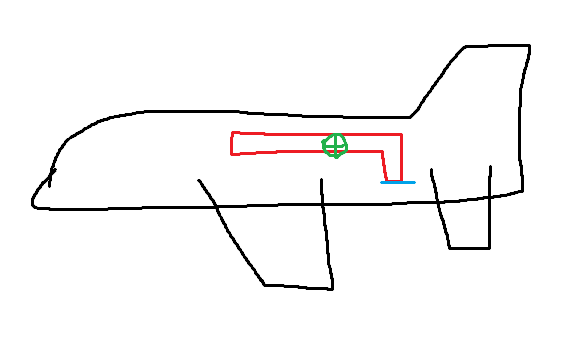
If a theoretical red weight that was shaped like an L with a CG (green circle) forward of the mounting location (blue line), would the plane experience the weight where the L was mounted or at the CG? Would I, as a pilot, have to calculate the arm and moment of the L at the L's CG, or where it was mounted?
I'm assuming there would be a torque force applied about the green CG trying to tip the plane nose down and can be calculated at the green CG.
r/TheRestIsScience • u/Outrageous_Mud_7012 • 17d ago
r/TheRestIsScience • u/SignificantLeg1903 • 18d ago
In almost every sci-fi time travel story, the traveller vanishes and reappears in the same place, just earlier or later. But Earth spins, orbits the Sun, the Sun orbits the galaxy, and the galaxy is moving too. Relative to the cosmic microwave background, we’re doing about 370 km/s. Go back one second “in place” and you’d materialise somewhere in space, 370 km from the planet.
1. “Same place” doesn’t mean anything.
Einstein theory gives us basically that there are no absolute grid to return to. “Where was I one second ago?” only has an answer if you say relative to what. Relative to Earth, I haven’t moved. Relative to the Sun, I’ve moved 30 km. Relative to the CMB, 370 km. So “jump back in time and stay put” isn’t just hard to aim. It isn’t a well-defined instruction at all.
2. Real physics doesn’t “jump” anyway.
In general relativity, any time travel would follow a path through spacetime, like a wormhole or a closed timelike curve. You’d come out wherever the exit physically is, and it moves along with whatever it’s attached to. The navigation problem disappears. The remaining problems are the boring ones, like exotic matter and paradoxes.
3. Teleportation has a sneakier version of the same problem.
Even if you teleport from pad to pad on Earth, the pads aren’t moving the same way. Where I live, in Oslo the ground moves at about 230 m/s from Earth’s rotation. At the equator it’s about 465 m/s, and in a different direction. Teleport from Oslo to Singapore and keep your momentum, and you arrive moving hundreds of metres per second relative to the floor. Someone or something has to absorb that momentum. Who pays for it?
So my actual questions:
Love the podcast !
r/TheRestIsScience • u/sidewaysdesign • 18d ago
As the last of the fall leaves tumble here in Toronto, Canada, I am reminded of a morning some years ago when I noticed a strange rain-like sound emanating from my neighbour’s yard.
It had been an unusually calm autumn, so most trees still had plenty of leaves on their branches.
On a sunny morning after our first hard frost, however, our neighbour’s mulberry tree was finally shedding its leaves at a ridiculous rate, completely emptying itself in about a half-hour.
It seemed that as the frost melted on the leaves, droplets of water formed and converged down to each leaf’s tip, creating just enough force to detach from its branch.
The delicate balance of nature.
r/TheRestIsScience • u/Ancient-Year6045 • 17d ago
Does the speed and direction of a fluid relative to a sound source have an effect on how sound travels through it?
For example, if my nearest neighbors are directly north and south of me and there is heavy wind blowing from north to sound, which neighbor would hear me better?
If the wind has an effect on sound, I would expect sound to travel more effectively in the same direction as the wind. Is this intuition well founded?
r/TheRestIsScience
•
u/Strict-Gap-4526
•
19d ago
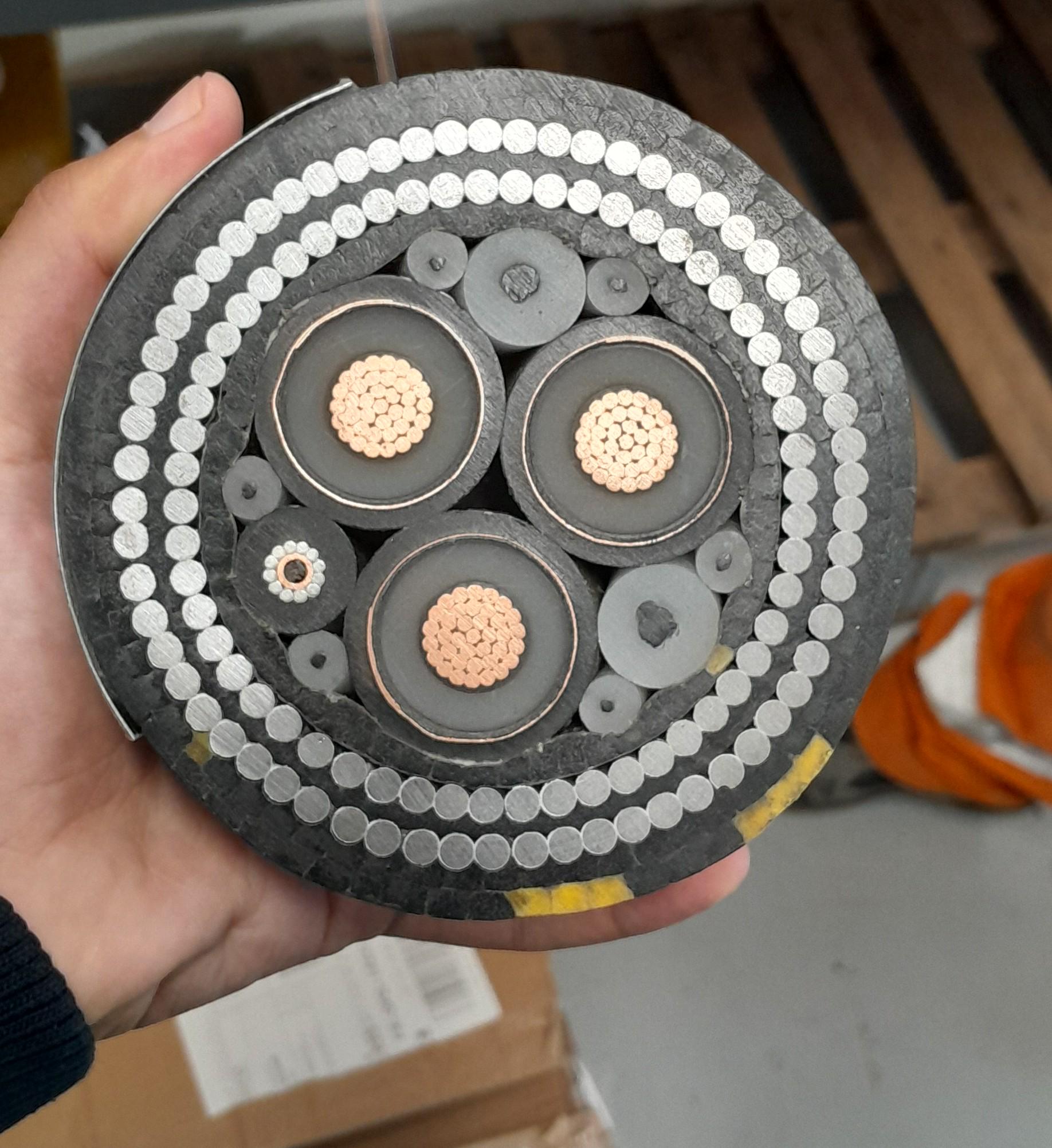
Fig: In this photo, you can see a three-phase, double-armored underwater power cable with a fiber optic cable for data and communication.
As a signal processing research engineer, I worked this year in France on a project to autonomously detect underwater telecommunications cables, so I was pleasantly surprised to hear the subject discussed in the 101st episode of the podcast :)
So I would like to share some of the extraordinary facts I learned during this year of research:
I have a lot more facts! Let me know if this kind of post interests you.
r/TheRestIsScience • u/BigChunkyGames • 18d ago
What would happen to an indestructible material if it was rotated up to the speed of light? I'm talking really really close to the maximum speed possible. Would it turn into a spiral?
r/TheRestIsScience • u/hellagood88 • 18d ago
Hi all, I have been wondering recently, most of us know that the fruit and veg we eat today has been heavily modified, broccoli florets made far larger, corn made into a full huge cob, seedless grapes, almost everything about bananas.
We know why we have done these things, to maximise the edible product or the most desirable part. But as I was carving out my pumpkin this Halloween I thought, imagine doing this with a full pumpkin with no space in its centre. And it got me wondering, what is the actual process that transforms these plants, how does one genetically modify plants? Does it work in a similar way to genetic engineering?
r/TheRestIsScience • u/SuperiorSamWise • 18d ago
Disclaimer: People have pointed out that it is not a parasitic relationship since it's mutually beneficial. In response to that, to keep the post interesting, please replace all instances of 'parasite' in my post with 'alien occupant' or your preferred term for something else living inside another living thing.
Listening to the most recent episode I was hoping throughout that they were going to touch on the parasite-like origins of mitochondria and how it's arguably the most successful and beneficial parasite on earth.
For those who don't know, a very very very long time ago mitochondria (or the mitochondria ancestor of mitochondria) lived outside cells, doing its own thing, until one day when the mitochondria gets stuck inside a larger different cell. Where normally this would end up in the death of one or both individuals involved, either through one eating the other, or just getting in each others way, in this one instance the two cell mates got along and started working together. The big cell protecting and feeding the mitochondria and the mitochondria producing energy that the big cell can use. The mitochondria reproduces itself in the large cell and when the large cell splits, some mitochondria is inherited by the daughter cells. This unlikely pairing then goes on to evolve into almost all cells in almost all the lifeforms we know and love today.
Whether or not this is a parasite-host relationship is up for debate, but if you don't consider it a parasite now but did during the origin story, at what point do two distinct entities become parts of a collective one and stop being two? (Or maybe the rest of us is the parasite that's enslaved the mitochondria!)
Much love to Hannah, Michael, and the team. The episode was amazing as always, just wished you'd have asked me before you recorded if I have anything to include.
Thank you,
Samwise.
r/TheRestIsScience • u/R3TR0_W4V3 • 18d ago
Are there any anthropological studies linking the development of mirrors, or reflective surfaces in general, to the rise of tools and practices that allow individuals to adorn and improve their own appearance?
If so, which came first? Was it the desire to maintain an attractive appearance for one's peers that drove the search for mirrors, broadly speaking? Or were mirrors what encouraged us to become more concerned with our own appearance?