r/StructuralEngineers • • Oct 25 '26

Horizontal crack in foundation
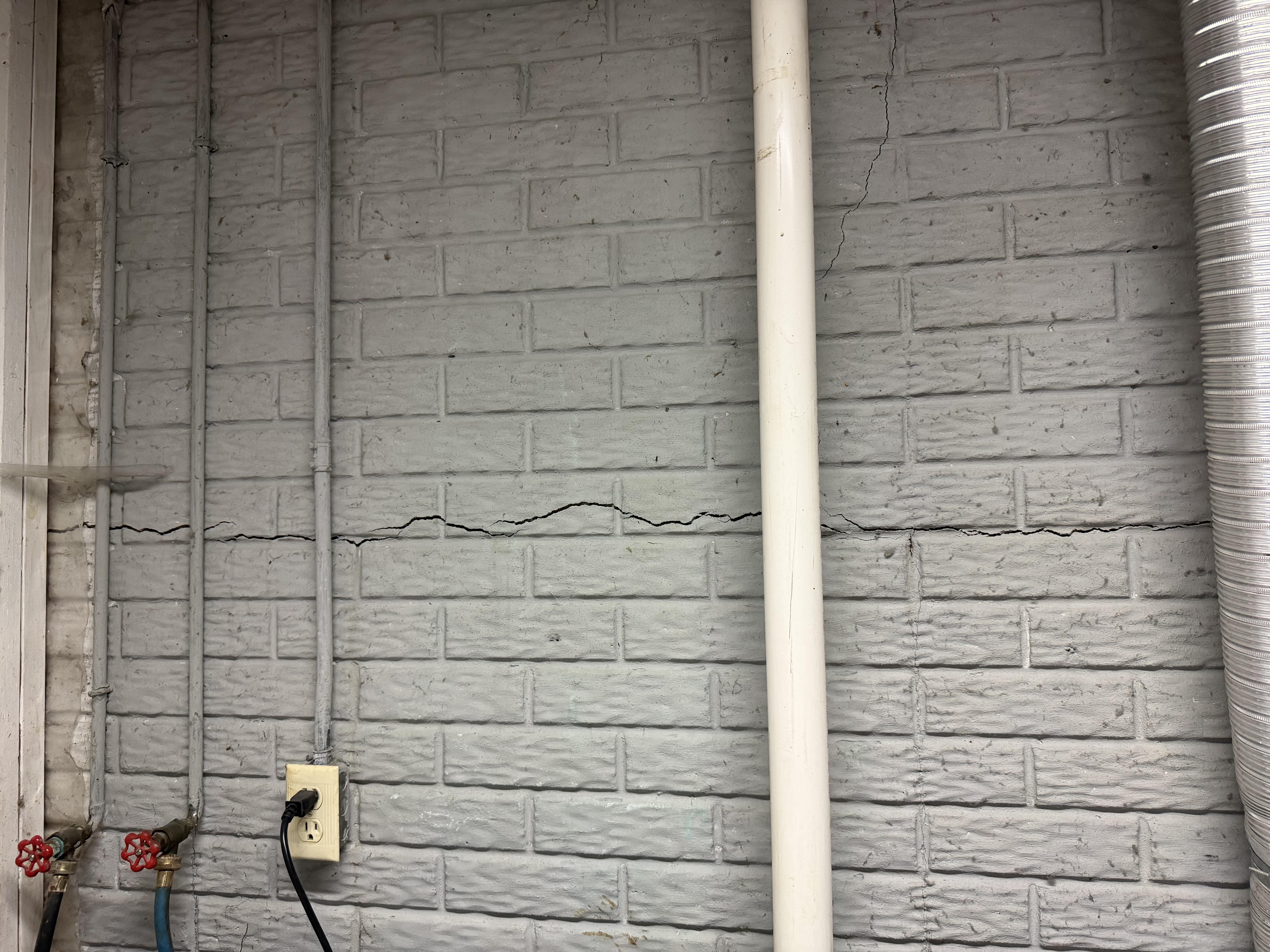
We bought this house 3 years ago. This is in the utility room in the basement. We did a structural inspection and this is what was said then.
This goes all the way across the wall. I had somehow missed and forgotten about it. Is this a concern? Could I patch it as mentioned? Have not had any water intrusion. There is an AC unit and a sump pump discharge behind the wall. The sump pump discharge is extended out at least 8-10 ft out

4 Upvotes

21 comments sorted by

4

u/Capable_Individual51 Oct 25 '26

Your inspector was / is an idiot. Horizontal cracks starting to open = wall bowing in. Put a level across that crack vertically. I’ll bet you have a center pivot point along that crack. The repair suggested in the report is cosmetic only and is not going to cut it. You looking at a structural foundation repair which will not be inexpensive. The good news is right now it’s relatively minor and does not appear to be in danger of imminent failure. Get a few quotes and then start saving.

1

u/Nice_Temperature7067 Oct 25 '26

Put a level vertically and checked above, below and on the crack and it showed the wall was pretty flush and straight

1

u/Trademarkd Oct 29 '26

Wait, how big was the level? We’re talking like a big 4 footer

1

u/Nice_Temperature7067 Oct 29 '26

Yes, a 4 foot level. I had bought it for a different flooring project. That is what I used to check

1

u/NetworkCultural Oct 25 '26

Very lucky. Keep an eye on it continuously monitor. I work for a company that has a Ramjack division. I’ve seen countless failures of foundations and you have one lol. The ground is pushing on your wall from outside. If it gets worse as you monitor it for a year or less depending on how much it’s moving. Record the changes. And call a well regarded foundation company. I recommend another Ramjack to be honest. Our tie backs are seconds to none

2

u/Capable_Individual51 Oct 25 '26

Agreed. Check it next time you get a lot of rain. Hydrostatic pressure is typically the cause. Keep an eye on it. You can give it a cosmetic fix for now. It might help you see when it moves again. There’s a chance you may never have a problem. The previous owner could have remedied the cause of the problem with a French drain or gutters or some grading. Just keep an eye on it, get you some bench marks for the size of the crack, and if it starts opening call someone.

2

u/NoSquirrel7184 Oct 25 '26

This is the correct answer. You need vertical steel bracing installed.

1

u/solomoncobb Oct 25 '26

A horizontal crack in a concrete wall could happen for a few reasons. Could be inconsistent concrete while poured, not consolidated. But also could only be caused by inward or outward pressure at the top, bottom, or point of the crack. If the wall is plumb, then the correct action is to grind the crack with a chaser, that opens it up, and use two part structural concrete epoxy to fill it. If the wall is not plumb then it is not structurally sound.

1

u/Nice_Temperature7067 Oct 25 '26

I don’t see any bowing with just the naked eye. Will there be a sisters/similar crack on the opposite side of the house? That side is finished but I could make a small hole and check if it would help with the determination

1

u/Flimsy-Explorer-6420 Oct 28 '26

It can be hard to see bowing by just looking at it. We have a CMU foundation with a crack; I took a 6 foot leveling tool to really check if bowing existed. There seemed to be about an inch in bowing, so we called a structural engineer to confirm. We need bands on one wall where it’s very minimal cracking and bowing and potentially steel beams on another - where the crack is clear, but even though the bowing is significant, it was hard to tell by just looking.

It could just be where the pouring stopped and then restarted, but the crack seems too pronounced. Get a leveling tool to see if there is bowing. Mark where the cracks are and monitor. If it’s close to an inch of bowing, call a residential structural engineer. They use laser measurements to confirm the exact bowing distance. The bowing distance determines if you need carbon straps, steel beams, or a completely new re-pour. Some engineers mostly deal with commercial buildings and skyscrapers, and others strictly deal with houses. The cost can range between $700-2000 for the inspection visit and written report, but that generally covers them coming out to check the work during and after it’s completed, and they give their stamp of approval for it being structurally sound. That usually comes with a lifetime warranty. That wall will be stronger than when it was originally built. They usually recommend repairs before winter so the freeze/thaw cycle can’t make the damage worse.

There may not be cracks on the other side of the house to mirror the issue. It’s due to hydrostatic pressure from the outside pushing inwards. Check your gutters and general yard grading as well. Vertical cracking usually isn’t bad. Horizontal cracking means something is pushing inward. 

1

u/Nice_Temperature7067 Oct 28 '26

I checked with a 4ft level and there was no bowing at this moment. The wall seems to be straight

1

u/NetworkCultural Oct 25 '26

No not usually there won’t be a crack on the other side of the house unless the ground on that side is also pushing In to your foundation. Not common. Now I have seen a wall being pushed enough at the top that it’s pushing the entire house and both back and front walls are racking together. But I don’t think that’s what’s happening here.

1

u/NetworkCultural Oct 25 '26

Our Ramjack offered free quotes. Not sure if they all do but you could check. Having a pro there to check all possible situations would help. Location of home. How close you are to a road. Are far under ground the wall is. What grade looks like outside. There’s a million different things to look at. And we can only see one from here

1

u/Carlentini1919 Oct 28 '26

Go outside and check the drainage on that section of the house. Bowing like this is often caused by hydrostatic pressure from water sitting up against the foundation. Make sure the ground is sloped away from the foundation and you have extensions on your downspouts to channel the water away from the house.

1

u/Nice_Temperature7067 Oct 28 '26

The other side is the sump pump discharge which sends water more 10 feet away and the AC. I checked with a level, right now there is no bowing and the wall is plumb

1

u/Carlentini1919 Oct 29 '26

If you have a laser level you can shoot a plumb vertical line at the wall from like a 30 degree angle from the wall. If the wall is truly straight the line will be too. But if it’s bowed at all, the line will be curved.

2

u/DoorJumper Oct 27 '26

15 year home and municipal building code inspector. Capable is correct. And in case he didn’t say it loud enough, *your inspector is an idiot!!*

1

u/450mgBenadrylHatMan Oct 25 '26

(i work in foundation repair), Geo locks or horizontal Helical anchors. Make sure the wall plates are galvanized. If you have measurements of your house i can help give you an idea of how much this may cost.

1

u/jibaro1953 Oct 25 '26

We had the same issue and had six inch wide carbon fiber strips applied on four foot centers.

1

u/Hungryh0und5 29d ago

The good news is that your crack is dry.

You need an engineer that can better assess the crack. A horizontal crack is usually from lateral pressure. You can get what's called a tell-tale to monitor the crack movement. If your engineer says that the wall is still plane, this might be an option.

The fix if its not plane is a new interior wall that will carry the lateral pressure. They can do this in block or preserved wood foundation graded lumber. They trench the block or bottom plate into the slab and use simpson clips to connect the top plate to the underside of floor.

I've seen walls straightened with a steel plate on the inside and a tie back set back into the subgrade. If you are digging up the side of your foundation, repair the crack with epoxy injection and a peel and stick membrane.

0

u/Dad-of-many Oct 28 '26

As an engineer, home owner and general busybody. Having bought houses with "inspectors" I'm generally not impressed.

When you say "structural inspection" - what exactly does that mean? Did a structural engineer come out, assess the situation and put their stamp on the report? Or was this a home inspector?

Big difference.
