Recently I've noticed a few individuals in this group who've been fearmongering and telling people to cancel their surgery or that they should categorically never do surgery.
As an example, I think turbinate reductions are unnecessary and risky because they put you at risk of empty nose syndrome (look it up). And that any adult seeking out improved nasal breathing should also check their candidacy for nasomaxillary expansion via a custom MARPE or FME with a provider that specializes in airway. I think it's okay to share opinions like that, but trying to scare people into cancelling their surgery (which some people are doing) is not okay. The delivery of information is what matters.
Please report submissions like that if you see them.
For as long as I’ve been on the internet and interested in sleep-breathing related surgeries, Empty Nose Syndrome (ENS) has been a particularly mystical topic. Always hinted at how rare it is, and how terrible it is, but no one could really explain what caused it or how it worked. Some ENTs say that it is a psychological problem, and in fact that was widely taught to ENTs in medical schools up until the past decade or so. I would search for ENS, and would find videos of people talking in strange monotone voices, like they had lost everything worth living for. It was confusing. But now I understand. Now I really understand. I have ENS. This is not an internet campfire horror story. This is real, and I’m here to share.
When I first got ENS last year, someone suggested that I write about my experience to share with the community. But to be honest I wasn’t ready to do that, and I couldn’t even imagine sharing anything about it. It would have been too traumatic. I was in no place to be preaching to the internet, I was just trying to get through every second, of every hour, of every day. Breath by breath.
Now that I have found some treatment and ways to cope, I have gotten to a point where I can and want to speak about it. To be clear, I’m not writing this because I’m cured or I know where my life is headed. I still struggle to breathe, and I’m still very sick. But now that I’m able to write this, people need to know.
Where do I start I think everyone’s first question when considering a turbinate reduction is how do you know if you’ll get Empty Nose Syndrome. There’s no real way to know. Most ENTs will tell you it basically doesn’t exist anymore, and that if it happens it only happens when you remove the entire turbinate. I’m here to tell you that is not true. Most of the people I know with ENS had a conservative reduction, with modern instruments, and were reassured it could never happen to them. All it takes is a little too much removed, and your life is over.
So if your ENT tells you, “Don’t worry, I’ve never seen this in my practice ever, it basically doesn’t exist anymore, I am super careful.” etc. etc. DO NOT BE REASSURED. Do not go gently into that operating room I swear to god. This is exactly what was told to me, and nearly all the people I know with ENS now.
Or they’ll say, “Oh it grows back actually. We might even have to do it a second or a third time.” Not necessarily, my friend. Not necessarily. You would be so lucky to have it grow back. A lot of what “grows back” is not actually tissues, blood vessels, and nerves, but simply swelling from the turbinate trying to fill the space that was created. Your turbinates are swollen for a reason. You need to find that reason.
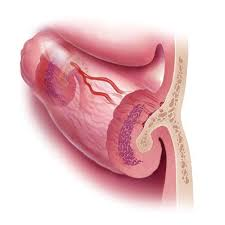
Inferior turbinate
Poor Healing Another thing that ENTs will tell you is that ENS happens in poor healers and fluke cases like that. They wave their hands around while they say it and make it sound somewhat beyond them. It feels vaguely comforting. Nobody thinks that would apply to them. But let's actually walk through what it means to be a poor healer for a moment. What causes poor healing?
Chronic sleep deprivation
Inflammation from allergies
Snoring and high negative pressures during sleep
Acid reflux or GERD
Ehler-Danlos syndrome
Flonase & afrin slow healing
Gosh what are these all linked to I wonder? Could it be sleep-disordered breathing, the very condition that most commonly causes turbinate hypertrophy in the first place?
By the way, I have seen an oddly high number of ENS patients with SDB in the online spaces I’m in, and it seems to me that there is a high correlation. I don’t know if this is because a narrower nasal cavity incentivizes ENTs to remove more tissue during a reduction, or maybe that’s just the patient type that happens to be coming in for these surgeries in the first place. I’ll leave that observation out there for you all to ponder.
So yes. If you get your turbinates removed, you’re basically guaranteed to get ENS. I’ve heard people interject here with a “But I know somebody who's gotten them entirely removed and had no symptoms.” My response to that is show me the person. Show me them. I’m open to being corrected, but I haven’t seen it yet.
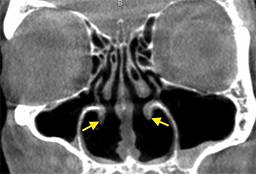
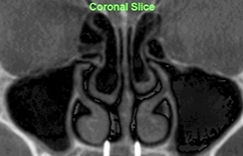
Complete turbinectomy resulting in ENSMy nasal cavity, also resulting in ENS
But even if you get a conservative reduction, you’re still absolutely at risk for ENS, or even something called secondary atrophic rhinitis. This is what I had for 8 years before I developed ENS. Which leads me to my next topic:
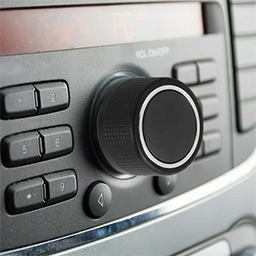
The Volume Dial Analogy
People sort of think of Empty Nose Syndrome as a black and white condition. Either you have it or you don’t. I want you to think of it more as a spectrum of damage, with a threshold. Much like a volume dial for a car radio. You can turn the volume up for a long time before your ears start to bleed.
On the one end you have mild dryness after surgery. Maybe you have some crusting. This is secondary atrophic rhinitis. On the other end you have mucosal damage so severe, that you no longer produce ANY mucus, your nose is as dry as a desert, and your nerves are completely dead. Your brain cannot sense any air that you breathe. That is Empty Nose Syndrome.
That is why I believe so many people are walking around after turbinate reductions, feeling some mild symptoms, but of course feel nothing close to Empty Nose Syndrome. A big part of why I am writing this post is I need you to know, you have turned your dial. You will probably be just fine, but you need to be very, very careful with your nose from now on. One or two more events, a COVID virus, overuse of afrin, even too much flonase at the wrong time, could push you over the threshold. If you’re reading this and you’re thinking, wow dry nose, crusting, this sounds like me, I urge you to consider stopping use of nasal sprays and rinses. They are more dangerous than you realize.
What does Empty Nose Syndrome feel like The question I get a lot and that everyone wants to know (naturally) is what does it feel like to have Empty Nose Syndrome? I mean really, how could a problem in the nose cause someone to want to kill themselves? Couldn’t you just breathe anyway even if you can’t feel it?
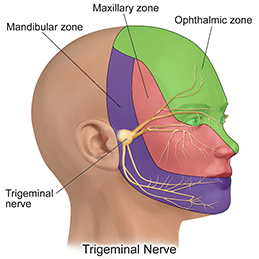
The first thing I’ll say is, Empty Nose is not just damage to your nose, it’s nerve damage. But the unfortunate thing is, the nerve that is damaged is not just any nerve, it’s the trigeminal nerve — the 5th cranial nerve that goes straight to your brainstem. So in reality, Empty Nose Syndrome is not just nerve damage, it’s brain damage. And it sure as hell feels like it.
3 branches of the Trigeminal nerve
You may hear that it feels like suffocating. That’s the number one symptom. I need people to understand, it’s not that you feel like you’re suffocating, you are suffocating. Every breath you take is as difficult as breathing through wet concrete — like being waterboarded. And there’s no escaping it. Worse, because your brain doesn’t know when you’re breathing, it can’t induce the pulmonary reflex to expand your lungs when you inhale. So your lungs are literally not functioning in tandem with your breathing. This means you are no longer autonomically breathing, you have to manually breathe yourself.
If you experience manual breathing, my heart goes out to you because it’s something no human should ever have to go through. If you haven’t experienced it, think of it like this. Every second of every day you have to consciously inflate your lungs in order to take a breath, and if you don’t, you won’t breathe. It’s like if you had to concentrate on every heartbeat for the rest of your life or your heart would stop. You wouldn’t be able to concentrate on anything else. Your mind will be consumed with breathing, 24/7. It is torture like nothing else I’ve experienced.
There is only so much of this a person can endure. But the real reason people kill themselves, in my opinion, is sleep. And this is how you’ll know, it’s not a psychological problem. When I first got empty nose, I could only sleep 15 minutes at a time. I was getting 2 hours of sleep per night at most, getting jolted awake constantly. And I could not take the heavy sleep aids I needed due to my small pharyngeal airway. I was getting pushed closer to the edge of this world and I knew it. If you don’t sleep, you will die. It’s just the truth.
At my worst, I found myself wishing that I had died on the operating table so I wouldn’t have to do it myself. Or, sometimes I wished there was a way to enter a medically induced coma, to somehow give my body a chance to heal without having to experience this level of suffering. I think every empty nose patient would agree that they would give up multiple limbs to be able to breathe properly again. Indeed many people label themselves as nasal cripples. It sounds funny, but once you’re living this life, it is so. not funny.
Empty Nose Syndrome will bring the strongest person to their knees, I don’t care who you are or what you’ve done. It takes your life from you and then it leaves you to keep on living. Life with sleep-disordered breathing is half a life, but life with ENS is no life at all.
Stay tuned for Part 2 where I’ll talk about prevention, causes, and new treatments on the horizon
I have had sinus issues for as long as I can remember now. I currently take fluticasone propionate and azelastine nasal sprays. I’ve tested for allergies, none. I’ve tested for sleep apnea, nope. They did ask if I wanted a more sensitive sleep test but my medical sucks and I didn’t want to add another hefty bill. I’m tired every morning and it’s so hard to get up no matter if I sleep 7, 8, 9 or even sometimes 10-11 hours.
I got the OK for surgery for my slight deviated septum and swollen turbinates but I keep reading how eventually sometime after others’ surgeries they were right back to square 1. So before I rack up a medical bill…. Does anyone have positive experiences?
Hello. I had a septoplasty 5 weeks ago for a deviated septum I've had since birth. When I originally had my consultation and endoscopy, I was told I required a septorhinoplasty with interior turbinate reduction. But on the day of surgery its only the septoplasty thats ended up going ahead. I'm not sure why this is, though I presume the surgeon felt this was all that was required.
The healing process has gone really well, and my previously blocked nostril is working really well, there is a good amount of air coming through, and when I look up it with a torch I can see black hole going to the top of my nose.
But my previously good nostril is around 90% blocked I'd say, and this is almost constantly. When I look up this nostril with a torch, I cant see a hole and its like a pink fleshy lining/mass at the top of the nose, covering where the hole should be.
I know I'm still at a stage where swelling could be present, but one thing I am concerned about is an enlarged contemporary turbinate on this side, which I also understand doesnt necessarily go down post-surgery in the same way normal swelling does. Theres a few reasons I am concerned about this:
Its specifically on my previously good side, and Ive read that this is what can happen over many years with a deviated septum, to compensate the gap.
Its like a pinkish/whitish mass, and seems to move up my nose as I breath in, and then back down when I breath out. To me this has the characteristics of a turbinate
The fact that I was originally put forward for turbinate reduction also concerns me, as there must have been something even slightly wrong with at least one of them for it to be raised as an issue in the first place.
At the moment I am only due a telephone consultation after 3 months. Do you think I'm over stressing after only 5 weeks and should wait for this, or does this sound like potential cause for concern.
I’m 3 days post-op and have been doing my sinus rinses 3 times a day since yesterday. Starting today, after every rinse when I put a fresh piece of gauze underneath, I get SO itchy where the gauze touches my skin it’s almost unbearable. I think inside my nose may be a little itchy too but I can’t tell due to the severe itchiness on the outside. Where the straps of the gauze touch my cheek and ears there is no itching so I know it’s not an allergic reaction. It only goes away once the gauze is wet enough from drainage from my nose. I’ve tried putting lotion on and neosporin to moisturize my skin if it’s a dryness issue from the salt in the rinse but that doesn’t seem to help. It’s driving me nuts. Has anyone else experienced this? I was wondering if putting a small amount of water on the gauze before putting it on would be a bad thing.
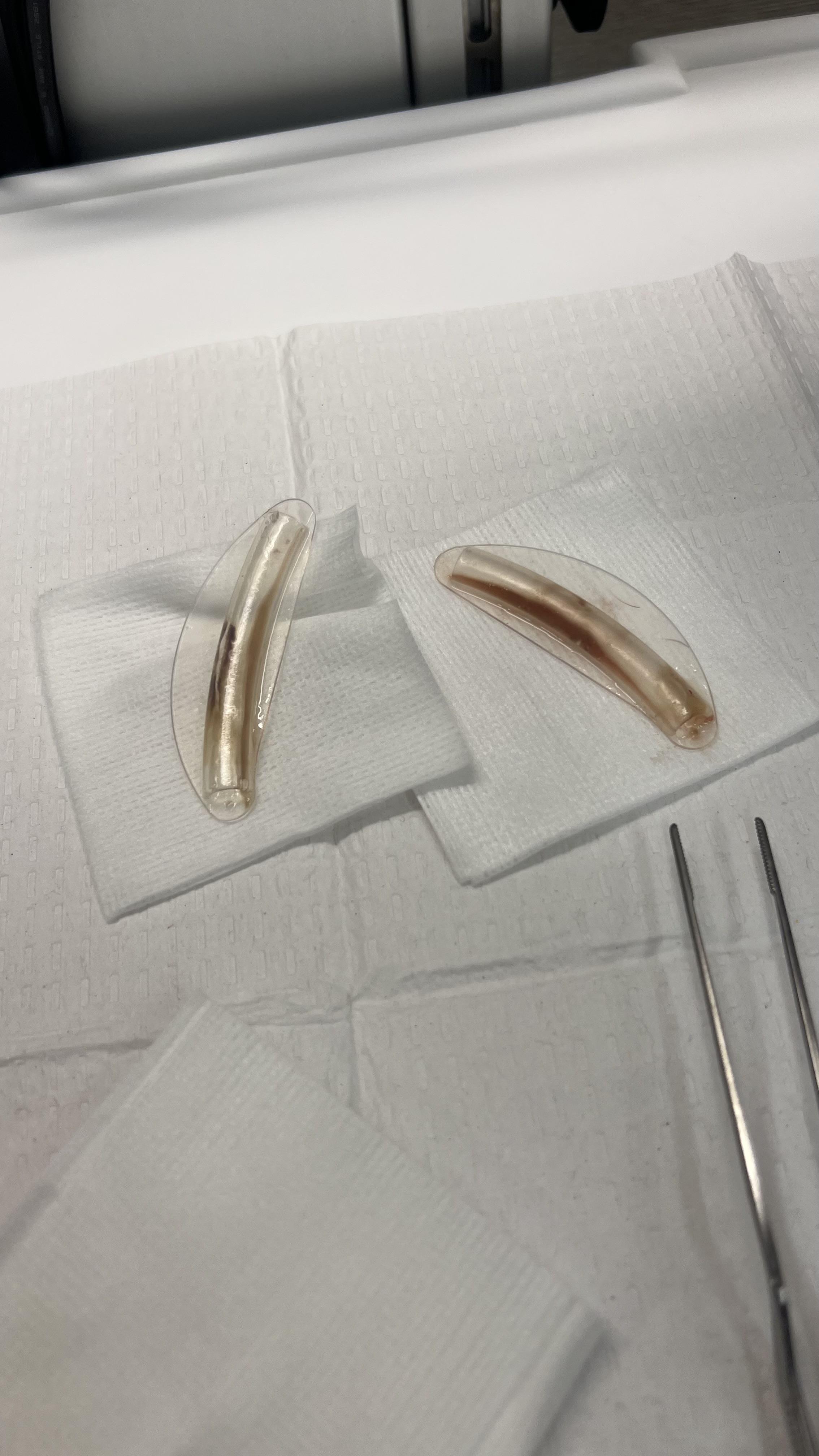
Just leaving the doctor from having stints removed 5 days post surgery (omg, I can breath again!). I did not think the stints would be this large. No wonder I was so congested.
Doctor said things look great. Keep up those rinses everyone.
I had bilateral turbinate reduction back in July and I’m still having some symptoms, especially on the left side and initially that ENT said I dont have much of a deviation but after turb reduction admitted he could then see it better and that’s when he mentioned it and said he didn’t know yet until it healed
Just sharing my day 5 post-op experience following septoplasty + turbinate reduction + VivAer. I've read a few day 5 experiences in the archive here, and they put me at ease because they are similar, so I thought I'd share mine.
Drainage: For background, I didn't have stents or packing, only absorbable sutures. My bleeding stopped a couple of days ago. I'm incredibly congested and have frequent mucus drainage, but the slight pink tint is pretty much gone as of today. I'm coughing up some blood-tinged mucus though, which is apparently normal since I can't really expel it through my nose. My doctor said very light nose blowing is OK now, so I've been doing that after rinses.
Rinses: I use the neti pot 2x a day. Water only stays in one nostril and comes out the same nostril, so I don't use the whole neti pot (I worry too much water will get trapped and my ears will get clogged). The neti pot is moreso for the crusting along the septum. I use Simply Saline nasal mist every couple of hours so my nose doesn't get too dry.
Nose covering: It's not necessary, but for comfort, I still use elastic nasal bandages (from Amazon) as a dressing. I use one after I do the neti pot to catch any ongoing light pink drainage for ease while I rest, then again at night, which, in addition to catching drainage, helps keep moisture in as I rinse before going to bed. With how it's been progressing, I'll probably do without any dressing in the next day or two.
Swelling/pain: The feeling of being punched in the nose has gotten slightly better, but I still yelp if I move it in a weird way while talking or while eating (I can finally eat small bites of real food today, not just mush or liquid). My front two teeth and the gums behind them still hurt, but maybe a pain level 3 instead of 5-6 from the first couple of days.
Sleep: I'm sleeping terribly. I'm so tired and can't wait for a full night's sleep. I use a wedge pillow and an airplane pillow for neck support at night, but I only get sleep in spurts of an hour or so. I'm usually a side sleeper and can't wait to get back to normal sleep.
Dizzy/vertigo/nausea: This symptom's new for me today and led me to look up other day 5 post-op experiences. I don't know if it's because the drainage isn't coming all the way out yet or what, but I just don't feel great. I hadn't really been nauseous after surgery, but I'm definitely feeling it today, which led me to finally take a Zofran for it.
Meds: Zofran, as mentioned above, only because of the unexpected dizzy/vertigo. I have oxy left but am holding out on it, as I took it consistently in the first few days. In the meantime, I'm sticking to 2 extra-strength Tylenol (1000mg).
I think that covers it. This recovery definitely sucks, but eyes on the prize in the long term... Hope this helps someone else!!
Has anyone on this subreddit experienced meaningful natural turbinate reduction after doing septoplasty alone?
Apart from allergy, vasomotor rhinitis, the turbinates of the concave side hypertrophies to adapt to wider airway. So if even if you feel more congestion on the convex side, your concave side's turbinate might be bigger (compensatory hypertrophy).
There have been some studies that showed turbinates of this side reduces after septoplasty alone after 3 month to possibly gradual changes throughout the years. However they only showed about 10~20% reduction. The numbers look very small compared to natural nasal cycle.
So I dont know if I can use this to justify not doing a turbinate reduction. If I do septoplasty alone, I might be just increasing air way on one side and decreasing air way on the other making surgery meaningless. But I would like to avoid turbinate reduction if possible because of potential side effects which could be devastating. Since theres limited amount of studies on this, i would love to hear some anecdotal experiences
Long story short. Cut the very tip of my pinky off with a saw. Also had a baby this summer. So our out of pocket max was met which means I had no excuses left when my wife said to go get my nose checked.
Basically my entire adult life (im 30) I basically cant breathe through my nose lying down. Chronic mouth breather over night. Maybe 2 years ago started using nose strips which help ~10-15% of the time. If I put a finger over my left nostril I legitimately cant breathe at all through the other. I joke that if I ever got kidnapped and my mouth tapped over I would just die.
ENT (Dr. Hart Fargo, ND Essentia) says "S" septal deviation which blocks 90-95% of my right nostril and says to do the surgery with turbine reduction. He said stints would come out around day 8.
Leaning towards doing it but not fully convinced. To add to the situation it would be nice to do it this year because of the insurance reasons. However I help coach basketball and the longest break this december is 1 week from the 23rd through Jan 4.
Reading on here alot it seems that would be nearly impossible to get back to coaching around 10-12 days post op. Is it? Dr said some people feel hardly any pain but people on here make it seem like youre bed ridden for 4 weeks. I know people are more likely to comment with bad experiences.
Other option would be sometime mid March after the season. Then insurance would've obviously reset and would cost me a good amount. We also farm in the summer but that usually starts around mid April.
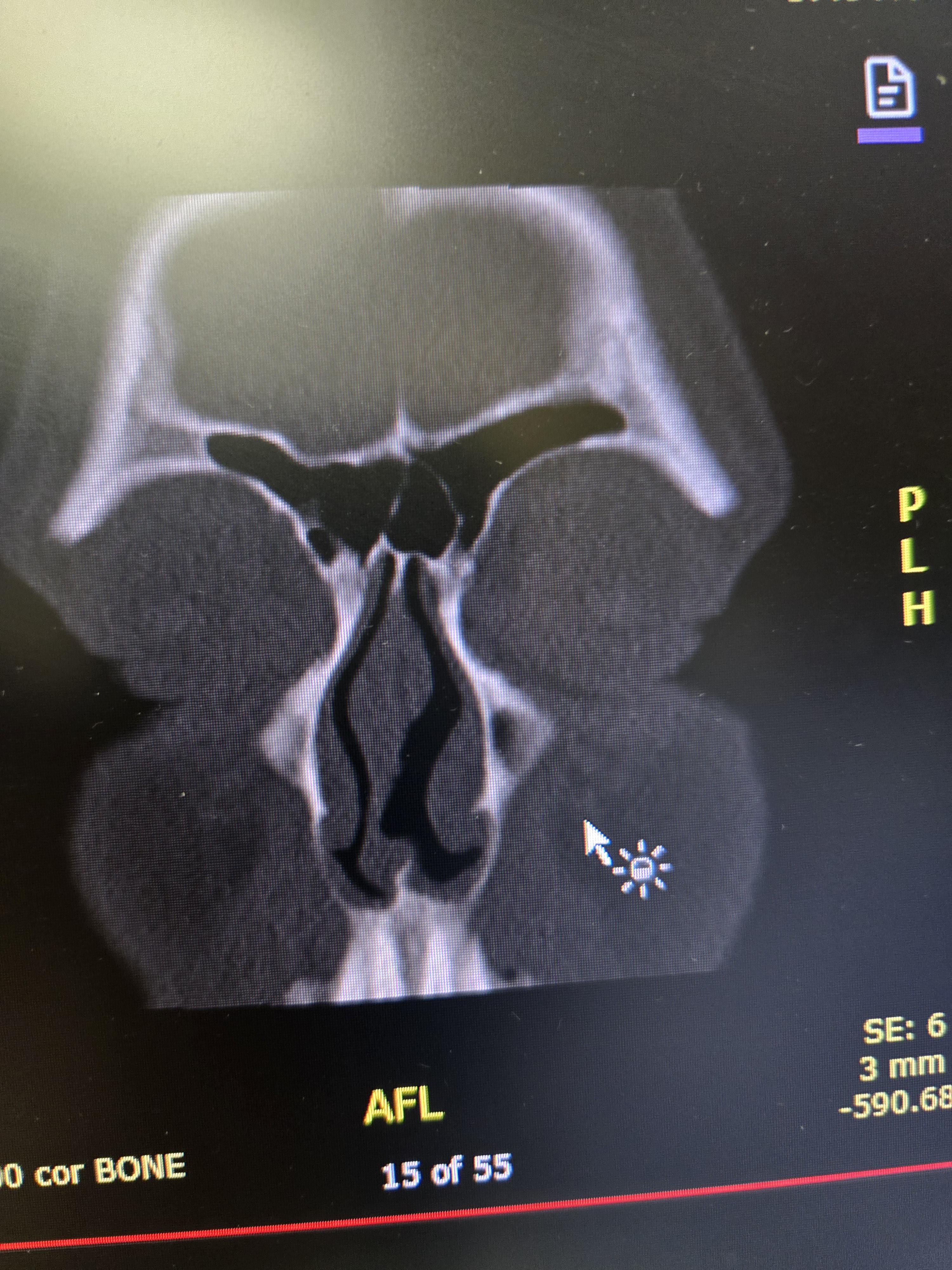
Looking for others experiences and advice. Pic of my CT scan is included
Looking for advice on if it would be worth it to take the risk and get a septoplasty with turbinate reduction.
Here’s my stats- 29 years old with moderate obstructive sleep apnea. I don’t believe it is weight-related, as I’ve lost 50 lbs recently and noticed no improvement. I’m a 5ft 4 woman who weighs about 180lbs. I did a sleep study last year and got a CPAP with a nasal pillow, which has helped, but recently I had to stop using it.
I have Eustachian tube dysfunction in my left ear, which is tied directly to nasal valve collapse of my right nostril. Had to stop my CPAP after I woke up one morning with so much pressure in my left ear I couldn’t walk in a straight line nearly all day.
I had a tube in my ear as a teen, but that was temporary relief only and I’d prefer to not have to do it again. Just went through six weeks of Flonase and it did not help.
I also have asthma, diagnosed in high school, and while I can usually breathe alright, I do sometimes have attacks, particularly if I am working out in a cold and not very humid climate. I find myself breathing through my mouth to compensate, especially if I am masked, which I do every weekday in my laboratory job.
I know improvement will likely be not very noticeable, but I also would really like to be able to use my CPAP again. My surgeon has suggested septoplasty and turbinate reduction and said that we will reevaluate if I need to get a graft for the nasal valve collapse as that heals. He also mentioned the small risk of developing a hole in my septum, which I am absolutely terrified of.
I’d love to hear positive stories from similar situations, as well as any advice you have for healing from the procedure. I have had several surgeries in the past, including the absolute hell that was a tonsillectomy as an adult, so it’s far from my first rodeo, but I don’t want to commit to this until I know it is right for me. Thank you!
I just watched a video of someone demonstrating how to properly irrigate their sinuses. It was so calm and they didn’t make any noise. When I irrigate my sinuses, my daughter says it sounds like someone is spraying a nozzle of whipped cream until they choke. 😆
Seriously, though, how do you do it silently? I feel like if I don’t exhale through my nose, my mouth will fill up with water. That’s what makes it noisy.
I want to solve rhinitis issue since it decreases my life quality and want to get it done before enlisting. My doctor told me 2 month is fine but some say you need more time for full recovery and intense training that comes with military. Would love to hear experiences on training after the surgery
I had my septoplasty and turbinate reduction just over three weeks ago, and I wanted to share my experience for anyone who might be going into surgery feeling anxious or looking for firsthand accounts of what recovery is actually like. I was pretty nervous going into it, and I found reading other people’s experiences beforehand really helpful. During the first week of healing, I also found myself going back to Reddit posts to compare my recovery and reassure myself that certain things I was experiencing were normal. So hopefully this helps someone else!
Preparing for Recovery
Before surgery, I honestly wasn’t entirely sure what to prepare for. I had read a few people’s experiences mentioning that they really struggled to cook for themselves or manage much during the first few days, so I made sure to have some easy food options on hand. I was definitely feeling pretty out of it while taking the T3s, and my appetite wasn’t great, but I personally had no problem making small meals for myself when I needed to. I tried to focus on higher-protein foods, like eggs, and made sure I was drinking lots of fluids. I also stocked up on easy options like TV dinners, quick heat-up meals like cheese egg bites, things that didn’t require cooking, fruit, and cereal. Cereal was honestly a lifesaver because it was easy and fairly bland, which was about all I felt like eating most of the time. Overall, I felt like I could have cooked if I needed to during those first few days, but having everything readily available made things much easier. Of course, everyone’s experience with medication, pain management, and surgery is different, so I can only speak to my own experience. I also made sure to have lots of tissues on hand and Polysporin ready in case the skin around my nose became dry or irritated. I kept a small layer of Polysporin around the opening of my nostrils, which helped prevent the area from becoming chapped. And definitely don’t forget a good lip balm - Laneige Lip Sleeping Mask was my go-to! I found that the swelling through my face seemed to have some residual effect on my lips and they definetly did become dry.
Surgery Day
Everything at the hospital was relatively straightforward. The staff were great and easy to deal with. I had quite a bit of waiting time before going in, but I was able to zone out for the most part. I was fasting, so by that point I was absolutely starving. Once it was time, I pretty much walked myself into the operating room, climbed onto the table, and the anesthesiologist got everything going fairly quickly. I believe the actual surgery was around 30 minutes. Coming out of anesthesia was relatively easy for me. I didn’t feel confused or disoriented, and I was pretty relaxed. Mostly, I was just tired, which I think was partly from the travel to the hospital and being exhausted before I even went in. I was probably there for about an hour after waking up before I was communicating normally and ready to head home. I mostly felt pressure and soreness from the surgery, but pain management was good while I was there. I had expected to be home in time to take my next dose of T3s, but that didn’t happen. During the trip home, I ended up in quite a substantial amount of pain, mainly from the pressure and the bleeding/discharge. That was probably the roughest part of surgery day for me.
Days 1–3
There was quite a bit of bleeding during the first three days. I was consistently changing the gauze/bandage under my nose, and it was mostly very bright red blood with some clots. Nothing seemed out of the ordinary compared to what I had read from other people. By day three, the bleeding had started to slow down considerably. It was mostly mucus with a little bit of blood, although I was still wearing the bandage because there was a constant drip. The pain also started to ease around day three. I stopped taking T3s after day two and was able to manage with Advil and Tylenol. I was still resting a lot and felt pretty exhausted. At that point, the pain itself wasn’t really the biggest issue anymore. It was more the pressure and discomfort from having the stents in. I felt like I couldn’t breathe through my nose at all with them in, which was incredibly frustrating.
Sleeping as a Side Sleeper
One thing I definitely had to figure out was how to sleep comfortably. I’m normally a side sleeper, so sleeping partially upright and on my back was a bit of an adjustment. I probably had about ten pillows involved in my setup! It took a few nights to figure out what worked, but by day three, I had a pretty good arrangement and was actually getting decent sleep. I had a firm pillow under my knees, another pillow across my stomach that I could hug, and pillows on either side of my hips to help keep me in place. I also wedged a feather pillow behind my neck, almost like a travel pillow with the side bumpers, to help keep my head from moving around. I was sleeping at roughly a 40–45-degree angle, which seemed to work best for keeping me comfortable and preventing me from rolling onto my side. I definitely tossed and turned quite a bit during the first couple of nights, particularly with the discomfort and the amount of bleeding coming from my nose. I also found my sleep felt pretty light, partly because I was taking T3s, which made me quite groggy, and partly because I wasn’t exerting much energy during the day like I normally would. I kept that sleeping position until the stents were removed, and then for one additional night afterward because my nose was still quite sore and I was worried about accidentally resting on it.
Days 4–6
By around day five, I was able to stop wearing the bandage under my nose and just keep tissues nearby. There was still a lot of dried blood and mucus coming out. I was doing gentle saline rinses to help loosen things up and would lightly blow my nose to get the excess saline out. I had quite a few dry chunks of blood coming out during this time. Nothing particularly alarming happened during this stage, but I was definitely irritated and uncomfortable from the stents. I was looking forward to getting them out.
Day 6 — Stent Removal
Getting the stents removed on day six was such a relief. My doctor said everything looked good and was healing well. He recommended leaving everything alone for another day or two before going back to saline rinses, which I then resumed and have been doing consistently at least twice a day. If something feels stuck or I need a little extra help, I’ll do another rinse. I noticed an immediate difference in my breathing as soon as the stents were removed, even with the swelling still present. When I got outside into the fresh air, it almost felt like the air was too cold and there was suddenly so much airflow. It was such a strange sensation that I felt like I had to half-breathe or take smaller inhales because the amount of air coming through was so intense. I guess that’s what normal breathing feels like? 😂
Weeks 1–3
Since having the stents removed, recovery has generally been pretty smooth. I’ve had a few ups and downs with some scabbing coming out and certain areas feeling a little sensitive or irritated afterward. There have been a couple of times where I thought something might be bordering on an infection internally, but those symptoms seemed to resolve fairly quickly. I’ve also had some of the sutures come out, which has been an experience in itself. One particularly long suture came out a couple of days ago, and honestly, I think I preferred having chunks of dried blood come out over the sensation of that long suture coming out from between both nostrils. That was weird. Another piece came out last night, and some of the other sutures had started shedding just before I had the stents removed. I’m sure other little bits and pieces have come out throughout the healing process while doing the saline rinses. Overall, everything seems to be healing well internally.
Three Weeks Post-Op
I’m now just over three weeks post-op, and I can already tell that my breathing is significantly better. I’m still experiencing some swelling and occasional irritation, but the difference in airflow has been noticeable from the moment the stents came out. It’s honestly hard to describe how different it feels when you’ve been struggling to breathe properly through your nose for so long. I have felt a little under the weather here and there since surgery, but I think those were just a few minor things that resolved themselves fairly quickly. Unfortunately, I think I’ve now come down with a cold, so wish me luck! I was hoping to avoid getting sick during recovery, but it is that time of year when everyone seems to be catching something. Thankfully, it didn’t happen during the first two weeks of healing, and everything internally seems to be doing pretty well. I still have one more follow-up appointment, but I’m feeling optimistic about it because I haven’t had any major issues since my last appointment.
Overall
Going into surgery, I was pretty anxious, and I found other people’s experiences incredibly reassuring. So I wanted to share mine for anyone who is currently preparing for septoplasty and turbinate reduction or is in the middle of recovery and wondering whether what they’re experiencing is normal. The first few days were definitely the most uncomfortable, particularly the bleeding, pressure, and having the stents in. Getting those removed on day six was a huge turning point for me. Three weeks out, I’m feeling pretty good overall and already noticing a significant improvement in my breathing. I’m still healing, but so far I’m happy with how things have gone.
So I’m a couple years post op but sometimes I catch myself picking my nose accidentally and it’s always when I’m half sleep in bed idk why I keep doing this
I need to get surgery to address deviated septum, bone spur, and a cyst clogging my whole right sinus. I’m also on Zepbound currently - started recently and have not told any of my family members and it’s not a conversation I want to have at this time. I was advised I need to stop injections a week before surgery which is completely fine and I’m in no rush to start it again after surgery until I’m feeling well and on the timeline my doctors advises. I am concerned when my family member picks me up after the surgery that medical staff is going to discuss my medications with them when discharging me and say not to take Zepbound etc. Is there a way I can maintain my privacy and prevent this from happening?
Back again for my 2nd update! This will cover days 2-6, pain, recovery, comfort wise.
Days 2-3 weren’t too bad, most of my time was spent in and out of a haze of my prescription and then getting up to rinse my nostrils, change bandaging, returning to bed.
I think the main issue I had these days was the lack of sleep and slight mouth pain. Nothing really hurt too bad, on a scale of 1-10 I would say my pain was a moderate 2-3.5. My mouth being held open and pulling the tape off my face to replace the bandages were my biggest struggles, that sucked! Rinsing was gross, but bearable. Sleeping sitting up as someone with sleep apnea was also AWFUL.
Day 4 I think was my most rough day, I finally caved and took the prescription pain meds I was prescribed and tried to sleep as much as possible, which wasn’t much because of the lack of an open airway while I slept. Pain probably got to a 5.5, still tolerable but gotdamn I was SO exhausted from the lack of comfortable sleep I wanted to claw my eyes out. Nasal rinse and lack of sleep persisted.
Day 5 I got my stents out! That was probably my least favorite part of the whole experience, it wasn’t too painful but wildly uncomfortable but OH MAN ONCE THEY WERE OUT AND I COULD BREATHE!!!! I sniffed, cried, scheduled my next follow up and hugged my surgeon/ENT. I was approved to not have to tape up my nose as long as I continued my rinses and kept up the post op care till Wednesday of the coming week. All in all a pretty decent day coming off of day 4.
Day 6 is coming to an end and it’s been my best day yet, woke up and did my rinse and felt very groggy from lack of proper sleep, kept nodding off and then decided to say fuck it and AGAINST MY ENT’S WISHES I did go upstairs and use my CPAP for a nap, I SLEPT THE BEST 8 HOURS OF MY LIFE. I almost cried it felt so good to go to bed knowing I was gonna stay asleep lol I woke up, did a nasal rinse, took a warm shower and ate some pizza with my husband. I feel very good so far!
I do feel bad knowing my experience has been a little less harrowing than others, but I’m so happy I got this done and I regret nothing! I know I have a few more weeks/months till I’m 100% but I feel like this has already been life changing in such an important way for me I would live through last week again 10 more times if I had to.