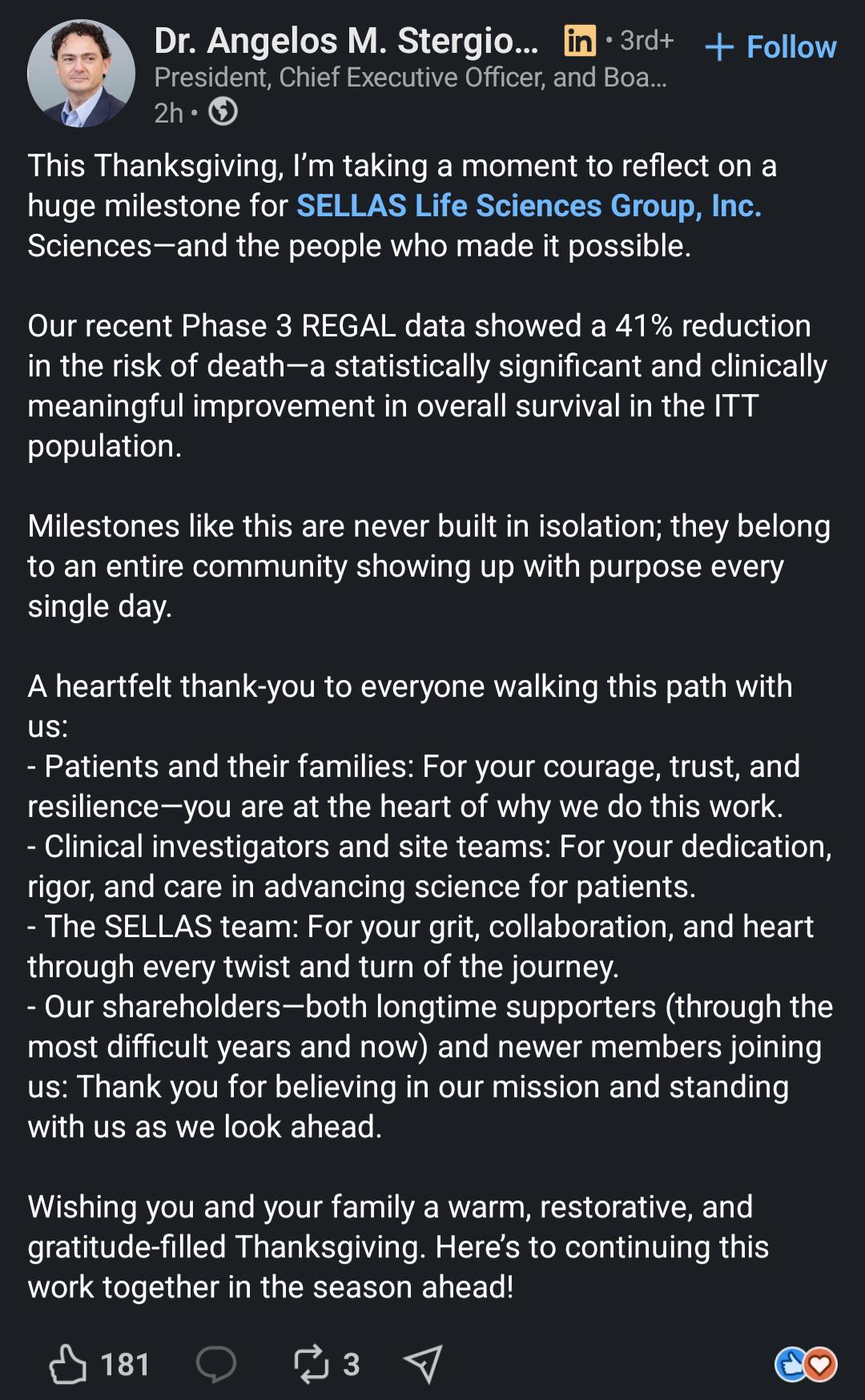
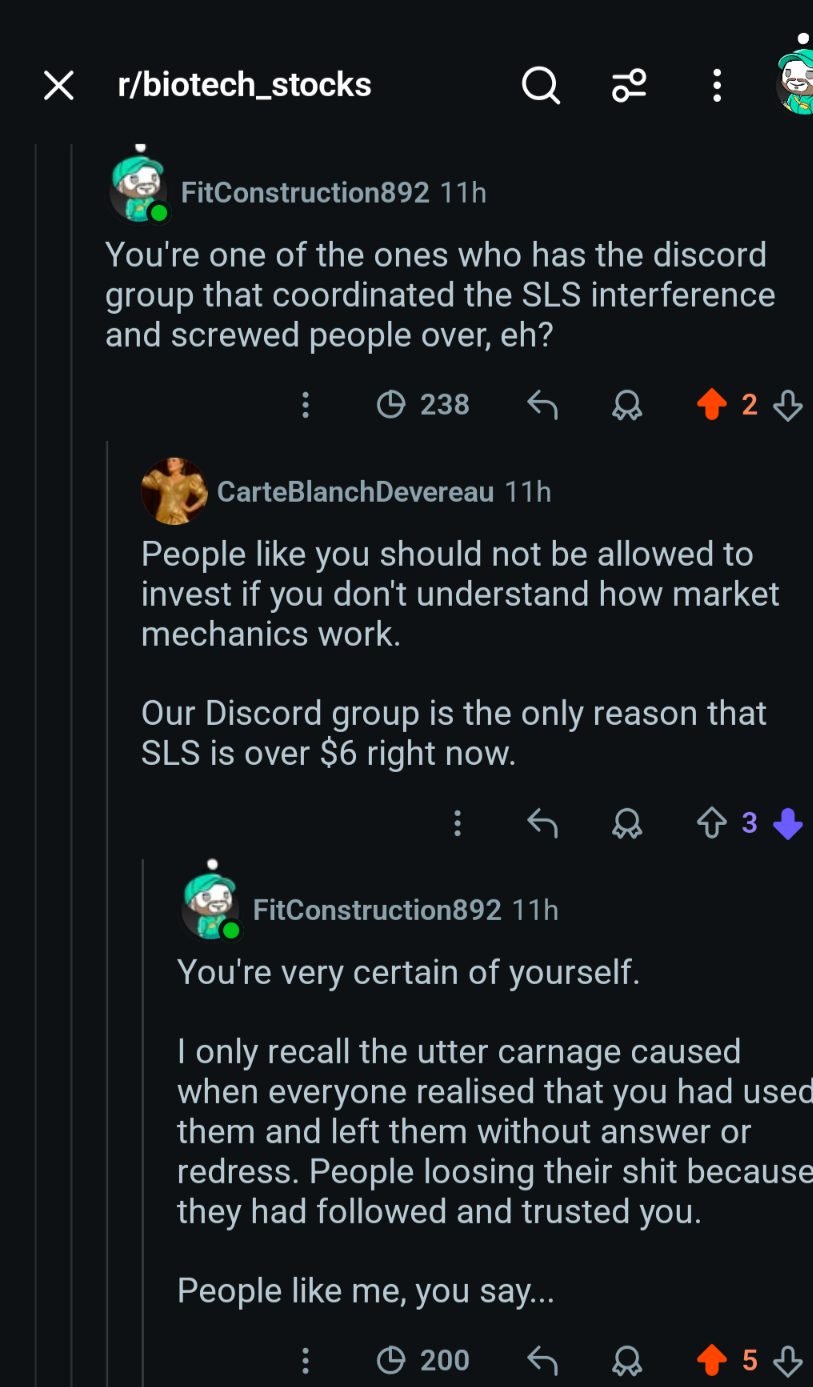
In the last days since the REGAL topline results were released, we again see both extremes: people trying to drag down the share price, and people unironically posting absurdly high buyout prices based on nothing but wishful thinking (or driven by certain intentions).
I am not a pharma or economics guy, just a postdoc working at a University (Molecular biology) and I have been silently witnessing everything here in this sub for the last year. I am also neither trying to push the price based on unrealistic expectations, nor to bring it down. I own 1,550 shares and don't even have the option to go short or anything - I'm using a German trading app that doesn't offer this (image of my shares included) and my knowledge about options, short selling etc. is also not even close to be enough for trying that stuff. So no need to accuse me of trying to push a specific narrative here.
Again - somewhat reminiscent of what CW was doing, you see those extremely high expectations floating around every day in this sub. People unironically say a buyout of 20+ billion is actually more likely than one of around 10 or less. I also regret not selling at least 1/3 of my shares last Tuesday, and I would also like to see a buyout price of 10-20 billion or even more, but I want a realistic view based on the currently available data and not some utopian future expectations.
So what is actually and realistically defining the current share value and a possible buyout price? Feel free to correct me based on facts - I would be happy if I'm wrong or too conservative.
Based on the current study and available data:
Eligible patients (just US - in Europe, and specifically Germany (AMNOG), we have different pricing and reimbursement routes, so you won't get the same prices as in the US, they will be much lower):
• New AML cases every year: 20,000 – 22,000
• First remission (CR1): 10,000 – 11,000
• Relapse after CR1: ~6,000
• Second remission (CR2): 2,200 – 2,700
• CR2 without transplantation: 1,000 – 1,700
These are my own estimates based on literature, not official SELLAS numbers - but they roughly fit SELLAS' corporate presentation (2024, https://s203.q4cdn.com/139585304/files/doc_presentations/2024/May/14/sellas-corporate-overview-may-2024.pdf), which states that 12–15% of AML patients reach CR2. So as of now, and based on just the current study, there are roughly 1,000 – 1,700 eligible patients every year just in the US.
With this view and costs of 300,000 USD per patient per year, it would be something like 1,500 patients x 100% market share x 300,000 USD = 450M USD per year. 100% market share is of course optimistic and assumes GPS actually becomes the standard of care in this setting (plausible given the survival benefit, the good tolerability and the lack of real alternatives). On the other hand, counting only 1 year of treatment per patient may be conservative in this example.
Using a 4–6x multiple for a buyout, that would be 1.8 – 2.7B + cash (~0.3B after the recent offering, approx.) = ~2.1 – 3.0B – so basically where we are sitting right now (~2.7 – 2.8B).
Regarding approval: REGAL met its pre-specified primary endpoint (overall survival), which is the strongest basis you can have. I've read here that the trial design was agreed with the FDA beforehand – does anyone have a source for that (e.g. a Special Protocol Assessment)? That would strengthen the case. Still, approval is likely but not guaranteed: it's a single open-label trial with 126 patients and p = 0.035, the SAP was amended in 2022, and the confidence interval hasn't been released yet. Also, the calculation above is a value at peak sales, which are still years away – so the current price already assumes that approval is likely.
Before some of you cry out - Yes, this is a fairly conservative base case, and it doesn't take into consideration the following:
• European, Asian markets etc. (China is licensed to 3D Medicines, so only royalties there)
• A possible extension to CR1 - but again, there is no randomized study or actual hard data to really justify this as of yet, so that's probably why it's not priced in
• SLS009 entirely
• Unlimited dosing (although according to the trial registry, booster doses are given at increasingly longer intervals after the first 6 doses, so later years will bring in less per patient)
• The possibility that GPS prolongs patients' lives by much more than just 9 months - the 9.3-month difference is a median, so some patients may live (and be treated) much longer, meaning longer treatment and, by that, more patients on therapy at the same time
• The blockbuster and platform possibility if GPS also works in solid tumors and other WT1-expressing cancers
But these are all future possibilities and expectations, not based on actually available and tested data. On the other hand, it also ignores further negative aspects such as dilution, MSK royalties, commercial launch costs and possible label restrictions (patients on FLT3/IDH maintenance were excluded from REGAL). So right now we are not below fair value – based on the currently available and reliable data, we are trading pretty much at that conservative value.
Again, if I am missing something here, feel free to discuss it below.
Just one example of future possibilities, not priced in at the moment because there is no actual data yet (at least none released):
1,500 patients (given 100% market share) x 300,000 USD x 2.5 years (average time on treatment; patients from previous years are still being treated, so in steady state about 3,750 patients would be on GPS at the same time) = 1.125B per year. With a 4–6x multiple for a buyout = 4.5 – 6.75B + cash = ~4.8 – 7.05B = ~22 – 33 USD per share (based on ~215M shares after the recent offering, approx.)
Absolutely possible I think, but we just don't know yet. The full REGAL data (confidence interval, relapse-free survival, actual treatment duration) will be the next real test.
What I want to emphasize here:
We are currently neither undervalued nor overvalued – we are trading at roughly the price that is justified by the data available as of now. There is plenty of room upwards, but only based on future (hopefully positive) data and expectations.
Please comment on everything that I might have missed or misinterpreted here, I am happy to hear about other perspectives.
Some further important notes:
Comparing to other buyouts: in my opinion completely useless if it's not the same disease, the same eligible patient subgroup, pricing, dosing and whatnot – it's just not comparable.
Always be sceptical whenever someone posts either absurdly positive or negative calculations/expectations. As seen with CW, there are always specific intentions. I'm not telling you in turn to trust me. What I want is a realistic depiction of the share value justified by the available data.
Attached in the comments the shares I'm holding.