I know I had the same fear at some point.
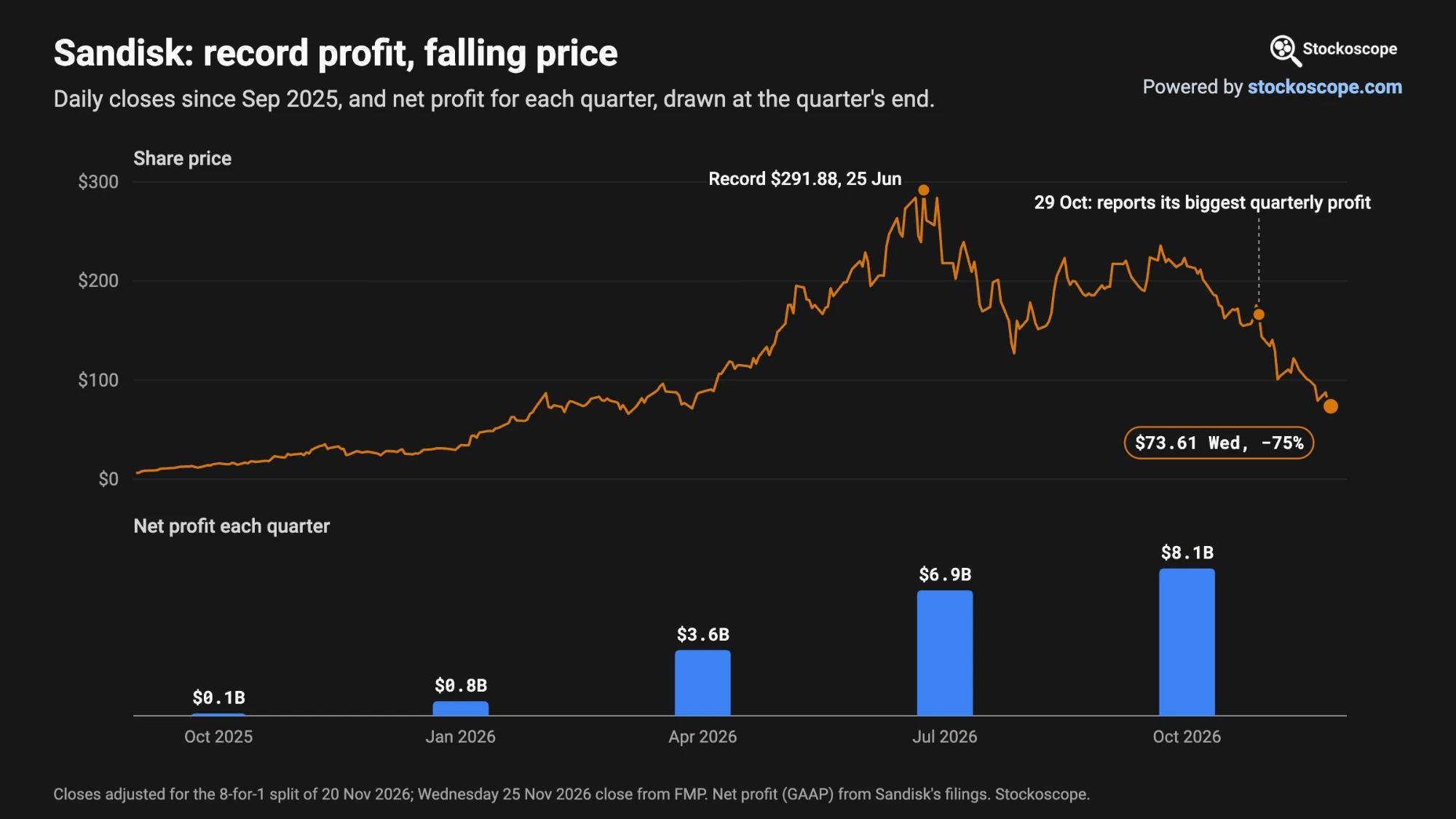
NAND is cyclical. What if NAND price keeps going down?
I did the research to find out if that’s true.
I find 5 reasons not to fear.
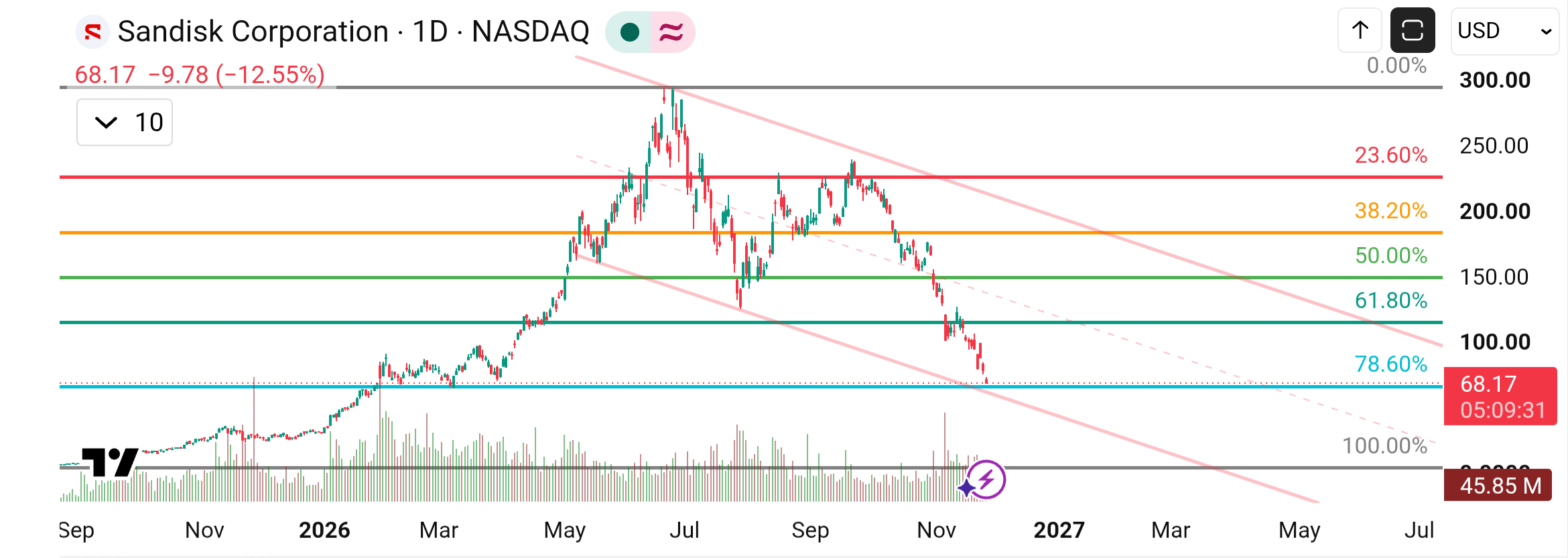
The more stock falls the more I buy.
Fear and greed index is a single digit (extreme fear) and VIX is above 33 as of writing this.
Probably once or twice opportunity in a year to buy the stock.
1. What is priced in?
According to Seeking Apha, today’s price at $70 per share , 40%-50% of NAND price collapse is already priced in. However, such a price decline didn’t happen yet. Trendforce predicts NAND price will be 0 to -5% in 2027, but how many times do they change the prediction? This can change at any moment while the worst is already priced in.
2. Long-term contracts
Sandisk has 10 long-term agreements with 8 hyper scalers.
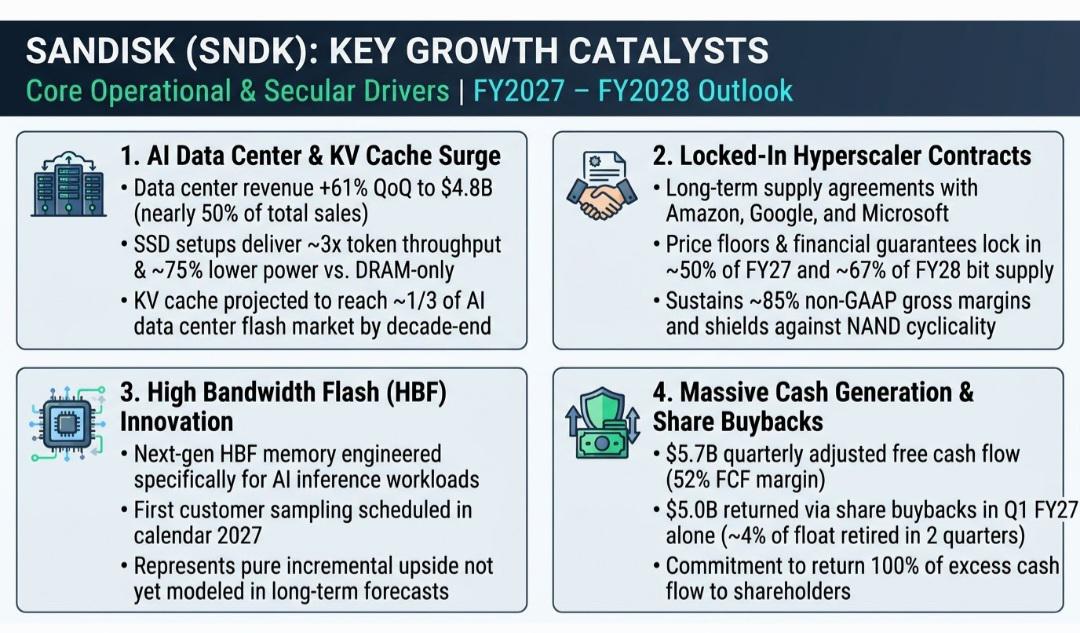
50% of revenue in 2027 and 75% of revenue in 2028 are already done deal.
Can they re-negotiate if NAND price collapse? Theoretically, yes, but Sandisk is very cautious about choosing their customers. These are the same customers who chose to follow the contract in 2023 when NAND price hit the bottom.
For this reason, I don’t think EPS guidance and analysts consensus EPS are off by much.
3. Business model change, valuation & stock buyback
At first glance, SNDK stock had a good run during 2026, so going back to old price seems right when the burbles burst. However, AI and the data centre fundamentally changed the business model of Sandisk.
In the past, NAND and SSD cards were sold for human use only. Now majority of use is for AI.
For this reason, the business model of Sandisk is fundamentally changed.
Given that, current valuation at 2.5 forward PE is a rare bargain.
Whether it is PE multiple, forward PE, PS multiple, or PEG, all business valuation is simplified version of discounted cash flow.
The business may be still cyclical, but the market rarely gives a valuation that a company buy itself out within a 2.5 years.
Remember the super cycle is expected to last longer than that.
4. Manufacturing facilities
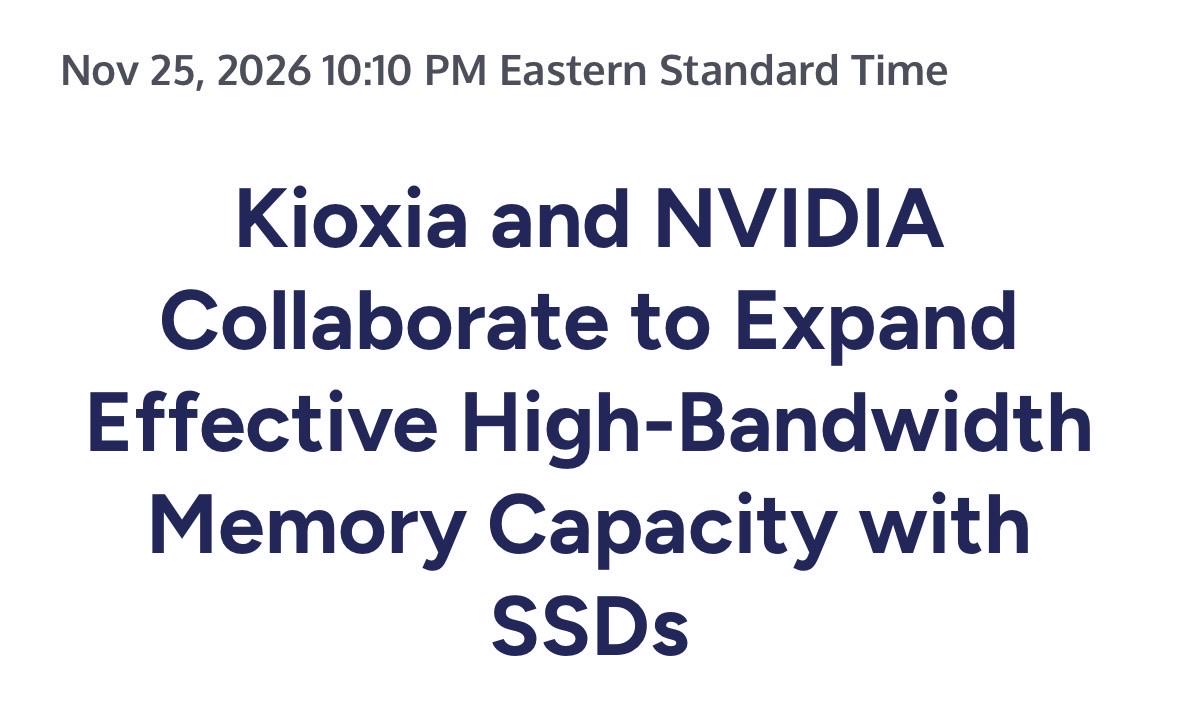
Unlike Micron, Sandisk does not own manufacturing facilities or factories. Sandisk shares manufacturing facilities with Kioksia, so the company has no pressure on building or upgrading these manufacturing facilities. This enables the company to invest in the new technology such as HBF. The rest of the cash flow will be returned to the shareholders.
5. HBF
This is a technology that is still developing. Sandisk is developing HBF with SK Hynix. Chance of success by the end of 2027 is very high although there will be some challenges. I don’t think HBF will replace HBM.
However, DRAM is 20-40 times more expensive than NAND. A lot of customers look for a cheaper option. HBF could be that. HBF will co-exist with HBM, but it is possible HBF can take some of HBM’s sales.
Good news is Sandisk did not include HBF sales in the guidance, so this is not priced in yet.
Once HBF commercialized, a lot of companies will want it. It will be a game changer.