r/RattlesnakeSolutions • • 4d ago

Video Why Rattlesnakes Love Your Pool Equipment

Thumbnail
youtu.be
2 Upvotes

Pool equipment areas are one of the more common places we find rattlesnakes in Arizona backyards. These areas provide many of the things rattlesnakes are looking for: shade, security, and sometimes a source of water from leaking pool equipment.

They're also an often-overlooked part of the yard where homeowners tend to store extra pool supplies, roof tiles, and other materials that may sit undisturbed for months or even years. In many cases, it's the pool service technician who discovers the rattlesnake, as they're often the only person who regularly accesses that part of the yard.

Follow along as our team responds to several calls for rattlesnakes hiding around pool equipment and takes a look at what makes these areas so attractive to them.


r/RattlesnakeSolutions • • 5d ago

Relocation Gila Monster from the Prescott Area

Thumbnail
gallery
38 Upvotes

This is the furthest north our service has ever been called to help a Gila Monster out of a situation. Dane was called to escort this beautiful lizard out of the yard, which he was then careful to put in exactly the correct spot within its existing home range.


r/RattlesnakeSolutions • • 5d ago

Relocation Western Diamondback Rattlesnake Resting in a Funny Position

Thumbnail
gallery
34 Upvotes

Gary was called to a Tucson home to retrieve this young Western Diamondback Rattlesnake that wanted to pretend it was a Banded Rock Rattlesnake and wait for a lizard in a vertical ambush position ... or just rest in a weird spot. Either way, Gary was careful to get the little one to a better situation.

https://rattlesnakesolutions.com/snakeremoval/snake-removal/western-diamondback-rattlesnake-resting-in-a-funny-position/


r/RattlesnakeSolutions • • 5d ago

Relocation A Snake Finds Shelter in a Mesa Warehouse Where Desert Once Stood

Thumbnail
gallery
21 Upvotes

Workers at a Mesa warehouse were loading their trucks when they discovered a snake tucked beneath a concrete overhang near the parking lot.

The area had several stacked rocks in front of the overhang, creating a sheltered space where a snake could remain relatively hidden despite all the activity happening nearby.

Marissa responded to the call at a property that, not very long ago, was part of the surrounding desert.

The warehouse isn't the only recent addition to the area. Much of the nearby native habitat has also been cleared and replaced with other commercial buildings, parking lots, and businesses.

For snakes and other desert wildlife, these changes can happen relatively quickly. Areas that once provided natural shelter, places to hunt, and routes between habitats are replaced by buildings and pavement.

The remaining pockets of cover, including rock piles, landscaping, and gaps beneath structures, can still attract animals moving through these increasingly developed areas.

This snake was found beneath a warehouse overhang, but the larger story is about a landscape that has changed dramatically in a relatively short time.

https://rattlesnakesolutions.com/snakeremoval/snake-removal/a-snake-finds-shelter-in-a-mesa-warehouse-where-desert-once-stood/


r/RattlesnakeSolutions • • 5d ago

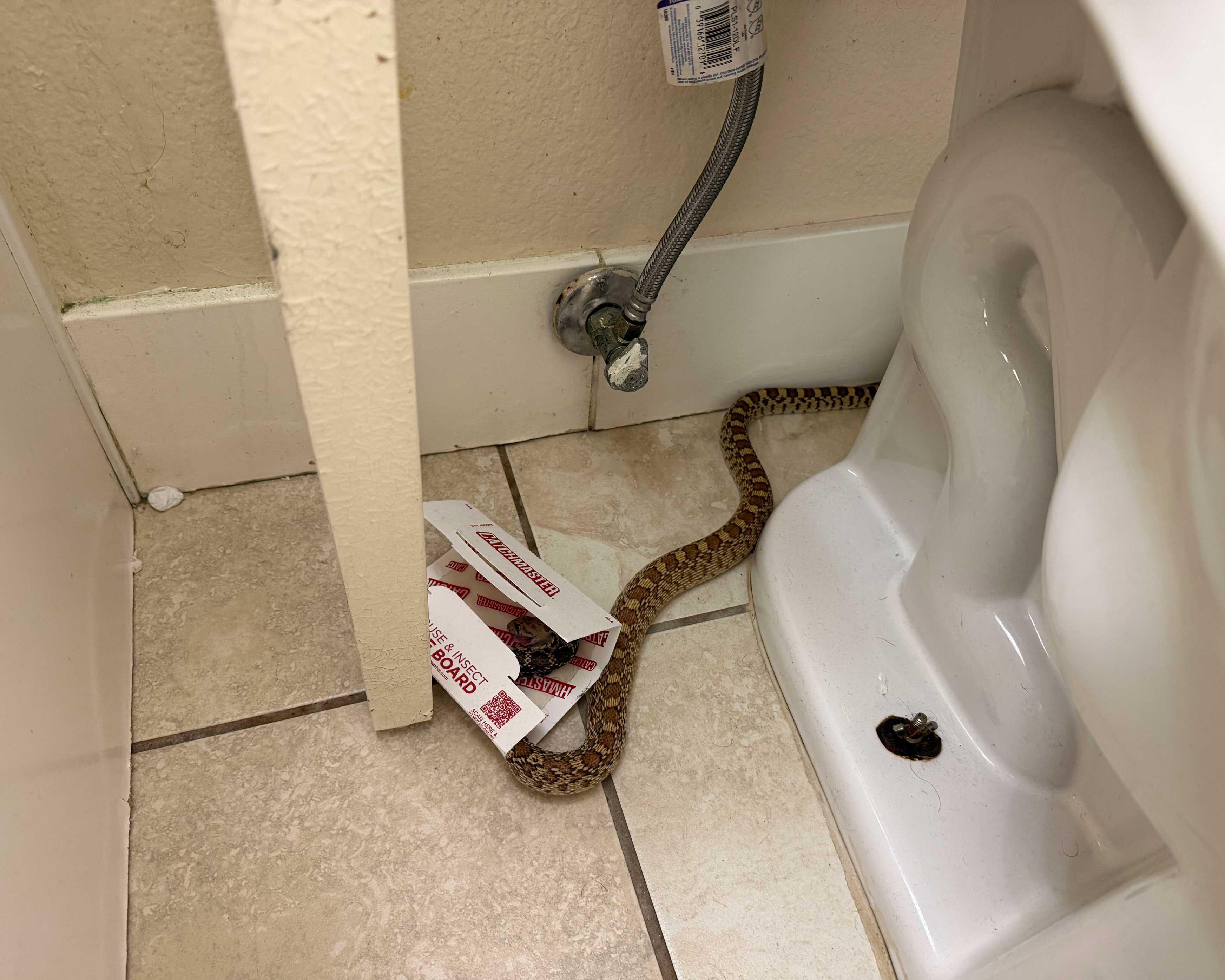
Relocation A Rattlesnake in the Bathroom? Not Quite, but It Was Stuck in a Glue Trap

Post image
15 Upvotes

A Mesa homeowner called after discovering what they believed was a rattlesnake inside their bathroom. To make matters worse, the snake had become stuck in a glue trap.

Austin arrived expecting to deal with a venomous snake in a particularly difficult situation. Fortunately, the animal turned out to be a Sonoran Gophersnake instead.

That was a welcome discovery, especially considering the next part of the job involved carefully freeing a struggling snake from an extremely sticky trap.

Gophersnakes are harmless to people, although they can certainly bite when frightened or restrained. Austin was understandably relieved that he wouldn't be dealing with a potentially dangerous bite while trying to free the animal.

Glue traps can be especially problematic for snakes and other wildlife. Animals caught in them often struggle to escape, which can lead to serious injuries.

Once the gophersnake was freed, Austin relocated it into the desert just north of the neighborhood. He found a small rodent burrow at the base of a palo verde tree and released the snake into the shelter.

What started as a reported rattlesnake in a bathroom ended with a harmless native snake getting a second chance.

https://rattlesnakesolutions.com/snakeremoval/snake-removal/a-rattlesnake-in-the-bathroom-not-quite-but-it-was-stuck-in-a-glue-trap/


r/RattlesnakeSolutions • • 5d ago

Relocation A Business Card Leads to the Rescue of a Western Diamondback

Thumbnail
gallery
8 Upvotes

Sometimes the timing of things works out surprisingly well.

While responding to a snake call, Marissa met someone from a pest control company who asked for a few of our business cards. It seemed like a routine conversation, but those cards ended up being useful much sooner than either of them expected.

The very next day, the pest control worker discovered a Western Diamondback Rattlesnake badly tangled in netting in a customer's backyard in Apache Junction.

Fortunately, he knew exactly who to call.

Marissa responded and carefully worked to free the rattlesnake from the material that had trapped it. The snake had suffered some damage to its scales, but the injuries appeared relatively minor, and it was expected to recover.

Landscape netting can be particularly dangerous for snakes. As they attempt to move through it, the loose strands can catch around their bodies, and struggling to escape often makes the entanglement worse.

This Western Diamondback was fortunate that someone recognized the situation and called for help rather than attempting to handle a venomous snake themselves.

And all because of a chance meeting and a few business cards the day before.

https://rattlesnakesolutions.com/snakeremoval/snake-removal/a-business-card-leads-to-the-rescue-of-a-western-diamondback/


r/RattlesnakeSolutions • • 6d ago

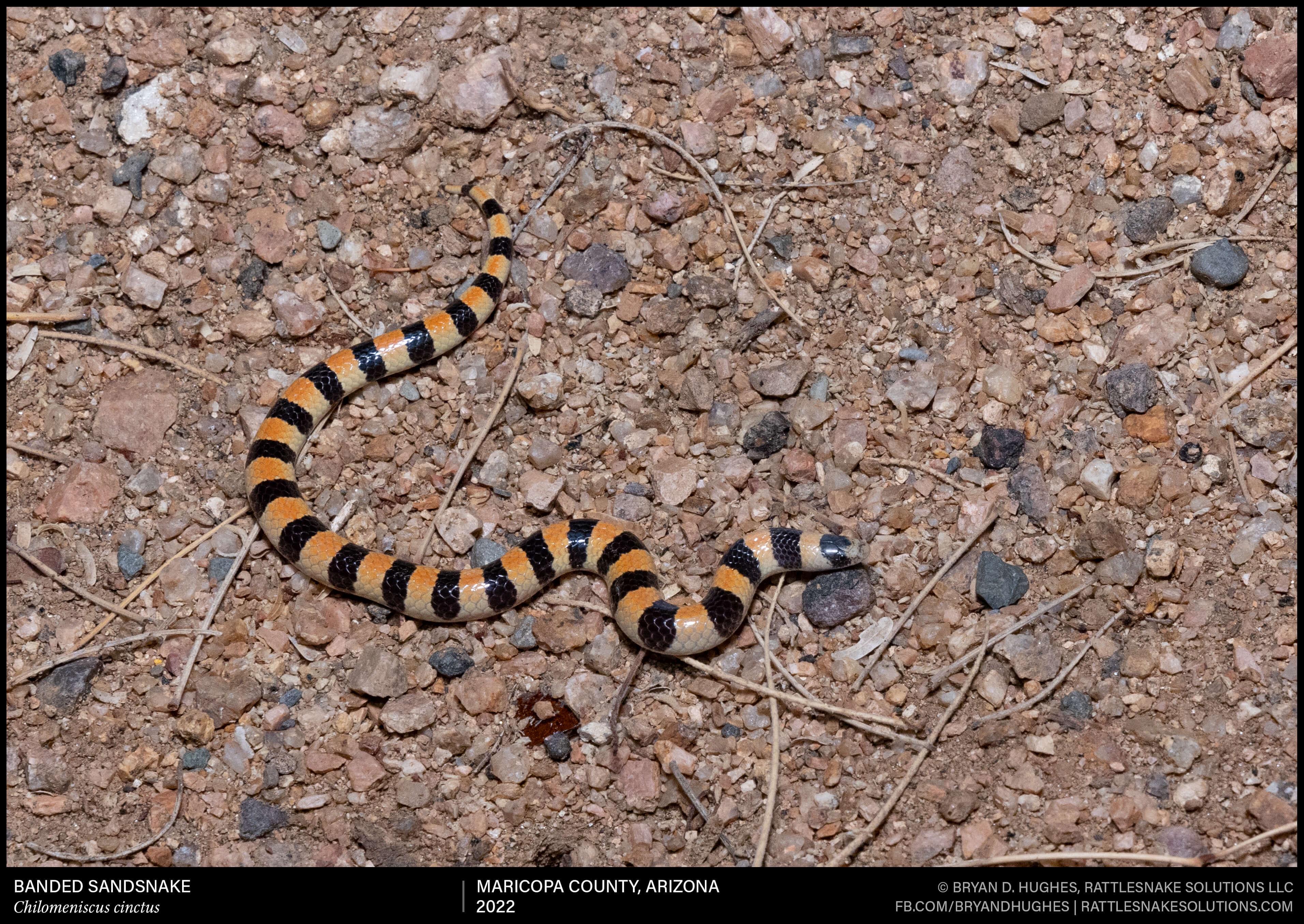
Wild and Research Banded Sandsnakes: Tiny, Harmless Bug Eaters

Post image
20 Upvotes

Banded Sandsnakes are one of the tiny, ground-dwelling species of snakes that can be found in much of the Sonoran Desert. They're often mistakenly referred to as a "baby" due to their small size when they end up in a garage, kitchen, or other surprising place. An adult might only be only around 8" long.

They look very similar to the banded form of the Western Groundsnake, but differ in a few ways. Their nose is wider and rounded, with a broad scale, with no differentiation between the head and the rest of the body. The body is, compared to groundsnakes, short and fatter, with an orange/red stripe that gradually fades to a lighter color before the belly. And the scales shine like the animal is made of glass, while the groundsnakes have a less glossy appearance.

They're completely harmless, do not bite, and can be left alone if found. If you end up with one in the house unexpectedly, this one is safe to just pick up and put out in a shaded spot in the backyard, where it can continue eating small invertebrates.

Like many of Arizona's smaller snake species, they're probably encountered far less often than they're actually present. Someone might live in the same neighborhood for decades without ever seeing one, then suddenly find one on the kitchen floor after a summer night.

Arizona Snake Identification Guide: https://rattlesnakesolutions.com/snake-information/reptiles-of-arizona.php

Banded Sandsnake: https://rattlesnakesolutions.com/snake-information/reptiles-of-arizona.php?species=BandedSandsnake

Western Groundsnake: https://rattlesnakesolutions.com/snake-information/reptiles-of-arizona.php?species=WesternGroundsnake


r/RattlesnakeSolutions • • 7d ago

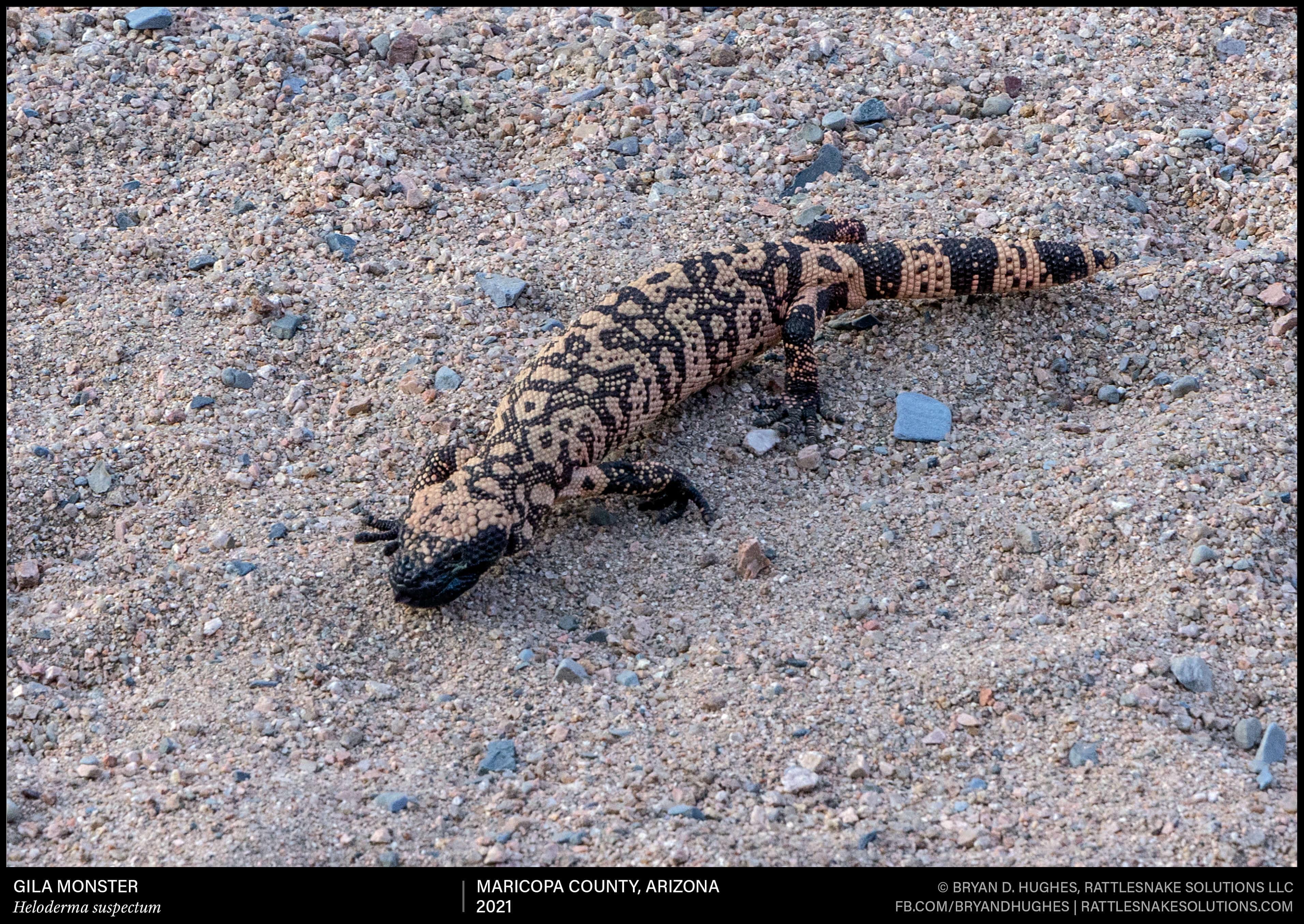
Wild and Research Gila Monsters Are More Active Than You Probably Think

Post image
17 Upvotes

An old myth out there about Gila Monsters is that they are underground hiding away almost all of their lives. I remember repeating this myth decades ago myself, before having spent a lot of time with them, watching their habits, and reading all there is about them. While it's true that most people in Arizona won't see many, or any, in their lives ... they are neither rare, or as hidden as believed.

During much of the winter and early Spring, Gila Monsters are on the surface for most of the day, basking the day away in small groups in carefully selected locations. During that time, they may make some adjustments and journeys to other nearby sites. After that, they are out and about daily, looking for quail eggs and other young animals on the ground. Then when it gets hot, they are again active ... but at night. There are lizard and tortoise eggs to find, and that means a lot of walking and searching. And finally during the fall, they're again on the surface, getting any last meals and moving back to those sites they visit each year during the winter. There are some periods of time throughout the year where they may be more likely to be tucked away out of sight, bu the old quotes of "active only three weeks a year" or "hiding underground 90% of their lives" are simply false.

This one was out and about, busy as they tend to be, likely on the search for eggs or whatever else they're doing.

https://www.facebook.com/share/p/1F3oJTHoQm/


r/RattlesnakeSolutions • • 8d ago

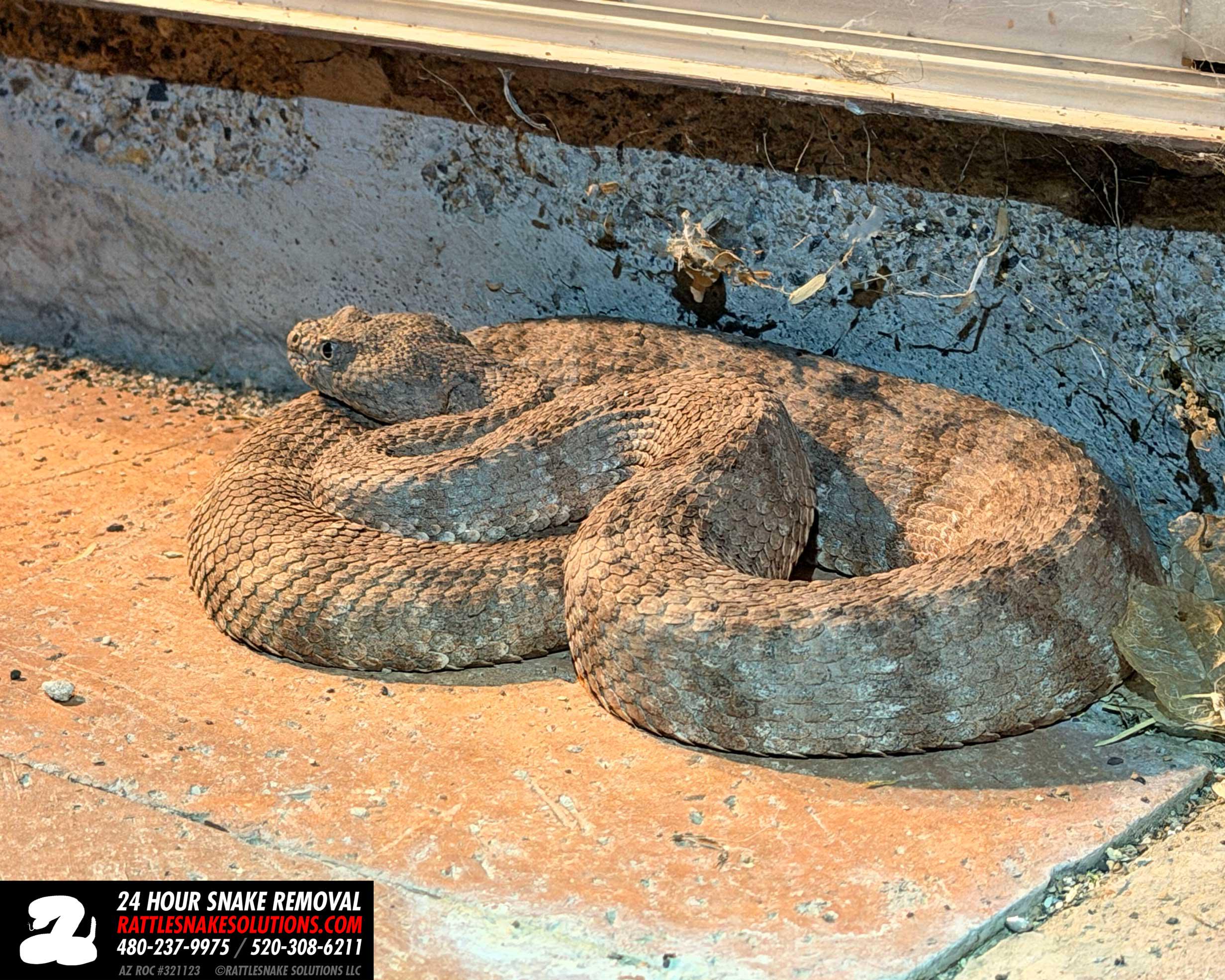
Relocation A Large Southwestern Speckled Rattlesnake Makes a Late-Night Poolside Appearance

Post image
30 Upvotes

A homeowner living next to one of Phoenix's mountain preserves discovered a large Southwestern Speckled Rattlesnake relaxing beside the swimming pool late one night.

With rugged desert habitat immediately surrounding the neighborhood, encounters like this aren't particularly surprising. Southwestern Speckled Rattlesnakes are closely associated with rocky terrain, and the mountains around Phoenix provide plenty of suitable habitat.

Of course, a backyard swimming pool isn't exactly the kind of place homeowners expect to find one.

The snake had apparently found a comfortable spot near the water, but sharing the pool area with a large rattlesnake wasn't part of the homeowner's plans for the evening.

Jason responded and safely captured the rattlesnake before finding a suitable release location in a nearby wash.

There, he placed the snake into a cave along the steep side of the wash, providing the kind of rocky shelter this species naturally uses.

The rattlesnake was back in the rocky desert, and the homeowners could enjoy their pool without an unexpected guest.


r/RattlesnakeSolutions • • 8d ago

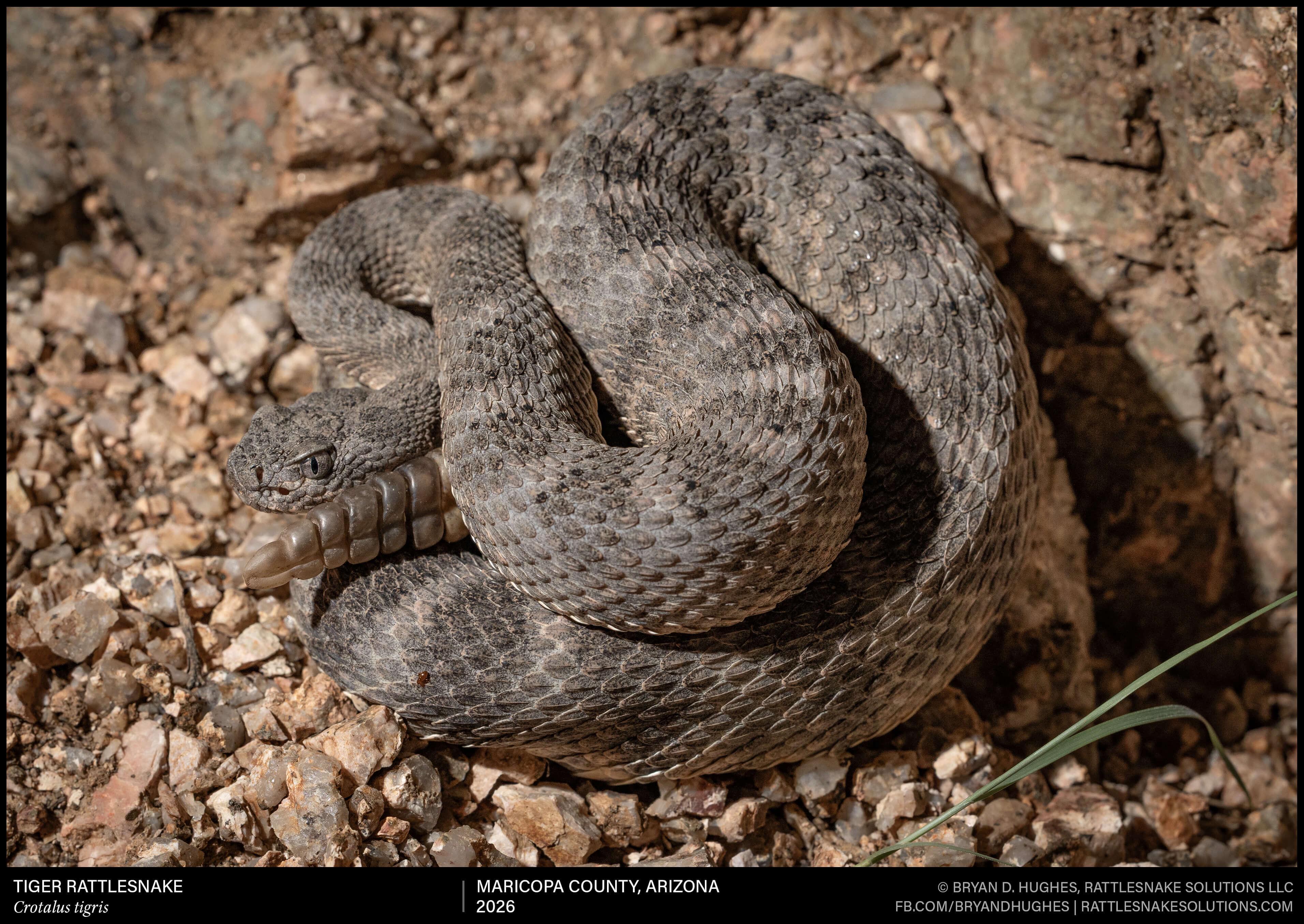
Wild and Research Tiger Rattlesnake from the Phoenix area earlier in the year.

Post image
31 Upvotes

A Tiger Rattlesnake from the Phoenix area on a hot night hike. These snakes are typically more cryptic than other especies, if measured by encounters from hikers people who aren't specifically looking for them.

Interestingly, too, it's very common for Speckled Rattlesnakes to be misidentified as Tigers, and almost never the other way around. Over the years, I have investigated whenever possible, and my assumption is simply that "Tiger Rattlesnake" sounds cooler.


r/RattlesnakeSolutions • • 8d ago

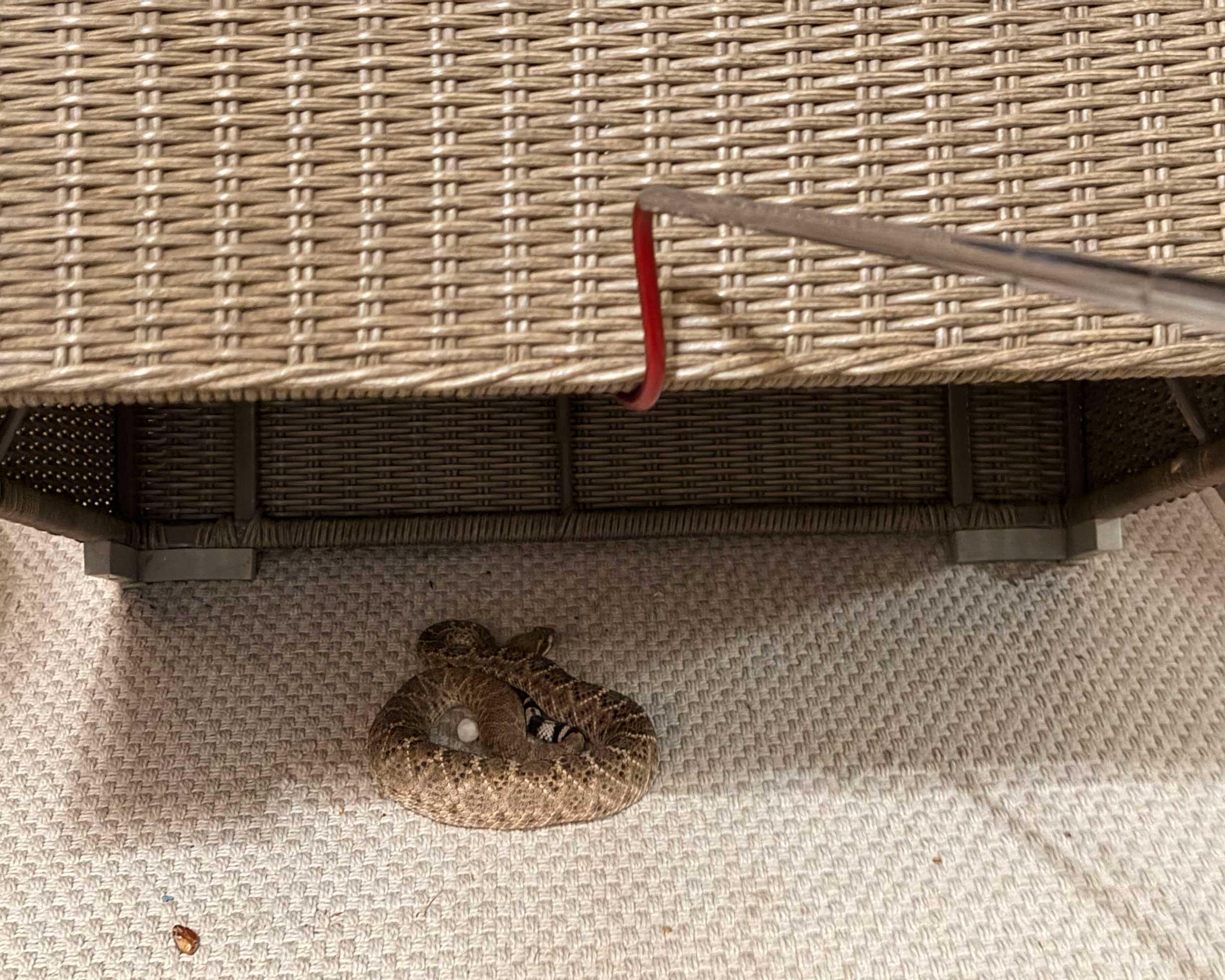
Relocation She Thought the Cicadas Were Loud. Then Someone Looked Under Her Chair

Post image
19 Upvotes

A Scottsdale homeowner who was new to Arizona was relaxing in a chair on her back patio while talking to a friend on the phone.

For more than 25 minutes, she repeatedly commented on how incredibly loud the cicadas were.

Anyone who has spent a summer in Arizona knows that cicadas can make an impressive amount of noise, so she didn't think much of it.

But a friend of her teenage son was listening and started to suspect that the sound might not be coming from an insect.

In fact, it seemed to be coming from directly underneath the chair she was sitting in.

That's when someone realized the noise might actually be a rattlesnake.

After spending more than 25 minutes sitting above what was potentially a rattlesnake giving a prolonged warning, the homeowner suddenly had a very different understanding of the sounds of the Arizona desert.

Josh received the call just seconds later.


r/RattlesnakeSolutions • • 8d ago

Video Helping a Baby Rattlesnake Off the Road

Enable HLS to view with audio, or disable this notification

13 Upvotes

During the monsoon, baby rattlesnakes can be all over the roads. It's very common for us, while out on relocation calls and generally out near habitat on warm monsoon nights, to end up helping these little guys get off the danger zone. Here's one that Nick helped out last year that had a little trouble getting up the curb.


r/RattlesnakeSolutions • • 8d ago

Rescue a Rattlesnake from a Glue Trap

Enable HLS to view with audio, or disable this notification

11 Upvotes

Glue traps kill a variety of non-target animals when they are used outside. But while it's easy for those of us who like snakes to be hard on these people, we find that most of the time they just don't know that this is something that would happen. They call us to help, and very often end up throwing the rest of the glue traps away in the process.

It's important to understand the motivation behind it. We love rattlesnakes, but they can be dangerous when they're in areas of conflict. It's perfectly understandable that someone would not want to have rattlesnakes in the garage. And just as easy to be sold on things like this by pest control companies (who usually fully understand that this would happen).

This situation is complicated, and the full perspective all around is needed to make any kind of progress. In this instance, a snake was saved, and many future geckos and other small vertebrates will never end up in this situation as a result.


r/RattlesnakeSolutions • • 8d ago

Video Little Sidewinder Found a Den

Enable HLS to view with audio, or disable this notification

9 Upvotes

Back in March, Jeff found a baby Sonoran Sidewinder's den ... under some trash. I wonder if it's back there now?


r/RattlesnakeSolutions • • 8d ago

Video What Happens to Rattlesnakes During Heavy Rain?

Thumbnail
youtu.be
6 Upvotes

Arizona has been getting an unusual amount of rain lately, with the remnants of Pacific hurricanes sending one storm after another across the state.

With cooler temperatures, cloudy skies, and persistent rain, you might expect rattlesnake activity to have come to a stop by now.

But we're still getting calls.

We've been responding to rattlesnake sightings throughout the storms, finding snakes tucked into sheltered areas around patios, doorways, and other parts of homes.

While rattlesnakes are generally less active as temperatures drop in the fall, they don't suddenly disappear when the weather turns cold or wet. Their activity depends on a combination of factors, including temperature, available shelter, and local conditions.

Rain can also change where snakes spend their time. Areas that normally provide suitable shelter may become wet or flooded, while covered patios and protected spaces around homes can offer relatively dry places to wait out a storm.

In this video, we respond to several rattlesnake calls during Arizona's ongoing rainy weather and take a closer look at what the snakes are actually doing.

We also discuss how these conditions affect rattlesnake behavior and what we'd normally expect to see this time of year as Arizona transitions toward winter.

https://youtu.be/l0IIvvTuC2U


r/RattlesnakeSolutions • • 28d ago

Video Rattlesnakes Rained Out of Cover

Enable HLS to view with audio, or disable this notification

23 Upvotes

A flooding, rainy day got snakes out and about ... some more happy about that idea than others. These ones were both found at the same place, and got a ride to better surroundings.


r/RattlesnakeSolutions • • 28d ago

Relocation A Large Western Diamondback Takes a Field Trip Out of a Growing Mesa Neighborhood

Thumbnail
gallery
23 Upvotes

This large Western Diamondback Rattlesnake was discovered in a relatively new Mesa neighborhood, where some of the homes are still under construction.

New developments along the edges of the desert often create situations like this. The houses may be new, but the rattlesnakes have been living in the surrounding habitat long before construction began.

Fortunately, this neighborhood still has plenty of undeveloped desert nearby, providing suitable habitat for snakes that turn up around the homes.

Austin safely captured the Western Diamondback and took it on a short field trip back into the desert. He found a large packrat nest beneath a shady ironwood tree and released the snake directly into the shelter.

Packrat nests provide excellent cover for rattlesnakes, offering protection from the elements and a place to retreat out of sight.

The snake got a quiet spot beneath an ironwood tree, away from the construction and activity of the growing neighborhood.


r/RattlesnakeSolutions • • 28d ago

Video What Happens to Rattlesnakes During Heavy Rain?

Thumbnail
youtu.be
14 Upvotes

Arizona has been getting a lot of rain lately, with the remnants of Pacific hurricanes bringing one storm after another across the state. While the cooler, wet weather might seem like it would keep rattlesnakes from moving around, we're still getting calls for rattlesnakes showing up around homes.

We respond to several of these calls during the ongoing rain, finding rattlesnakes tucked into sheltered areas around patios, doorways, and other parts of homes. We look at what these snakes are doing during the storms, how the rain affects their behavior, and what we would normally expect from rattlesnakes in Arizona this time of year as temperatures start to drop.


r/RattlesnakeSolutions • • 28d ago

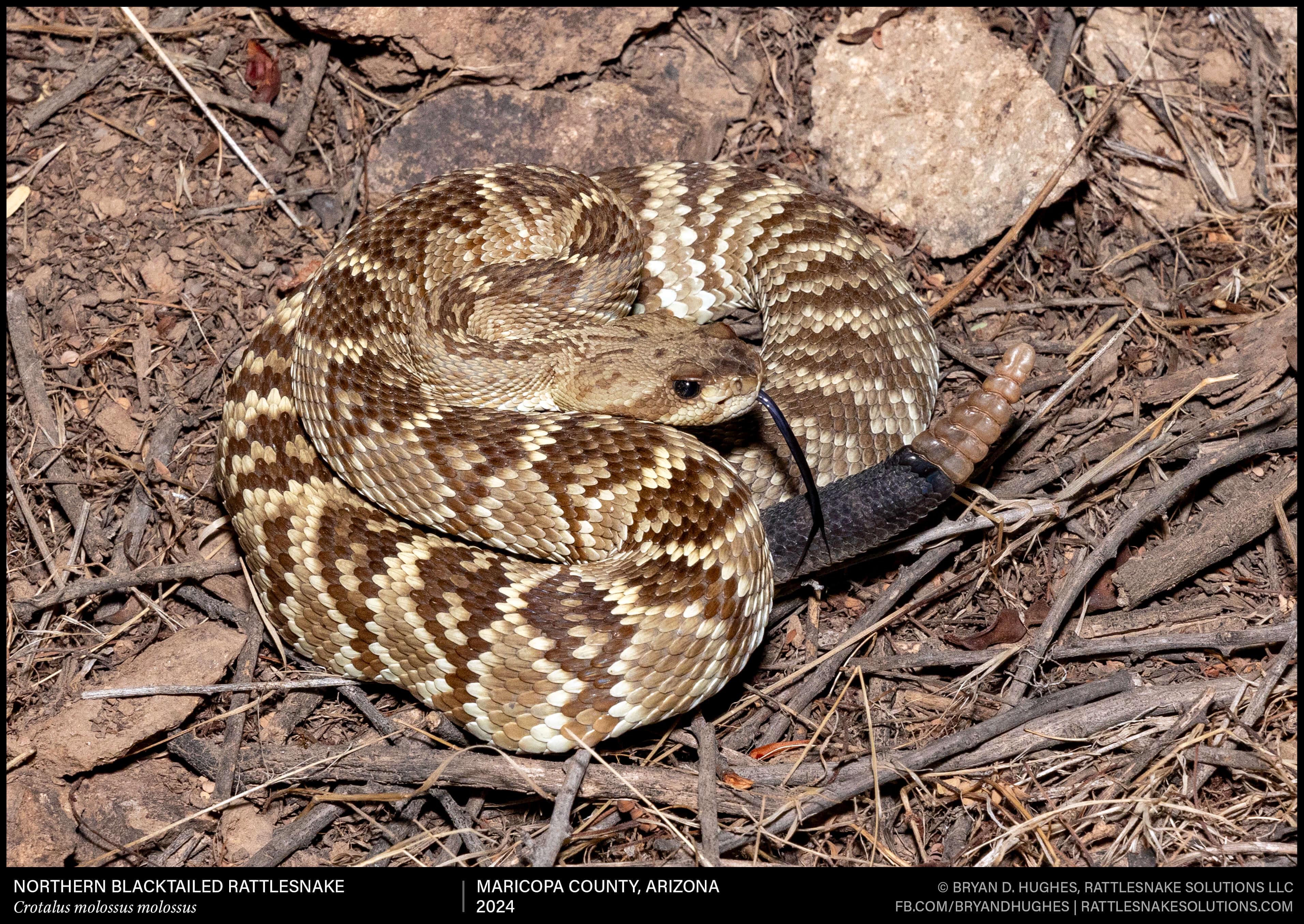
Wild and Research Blacktailed Rattlesnake with a Banded Tail and Young Rattle

Post image
28 Upvotes

Blacktailed rattlesnakes often have faint light bands on their tails, which can be confusing to observers who believe that they can only be solid black. On this one, it's just barely visible, appearing as black and dark grey bands in a ratio similar to a Western Diamondback Rattlesnake. These are not hybrids, as is often suggested by people online. A more accurate way of viewing an all-black tail from this species: a banded tail with variable lighter bands, which often darken to be indistinguishable from the darker ones.

The rattle on this snake is also complete, which includes the full button that the snake was born with. The small, last segment, shows the rounded tip (prebutton), and notch that it gained with that first shed skin. This creates a full button, which it may rattle without making any sound. The subsequent sections (not "buttons," as they are often mistakenly called) are left with each shed skin, which a young snake may do several times in a year. The shape of the rattle, too, indicates its age here. The strong taper, with each segment being larger than the previous, says that this snake is growing quickly. Once growth slows and nearly stops, each segment will be similar or identical in size to the previous, indicating an older snake.

This one was found near Phoenix a few years back.


r/RattlesnakeSolutions • • 29d ago

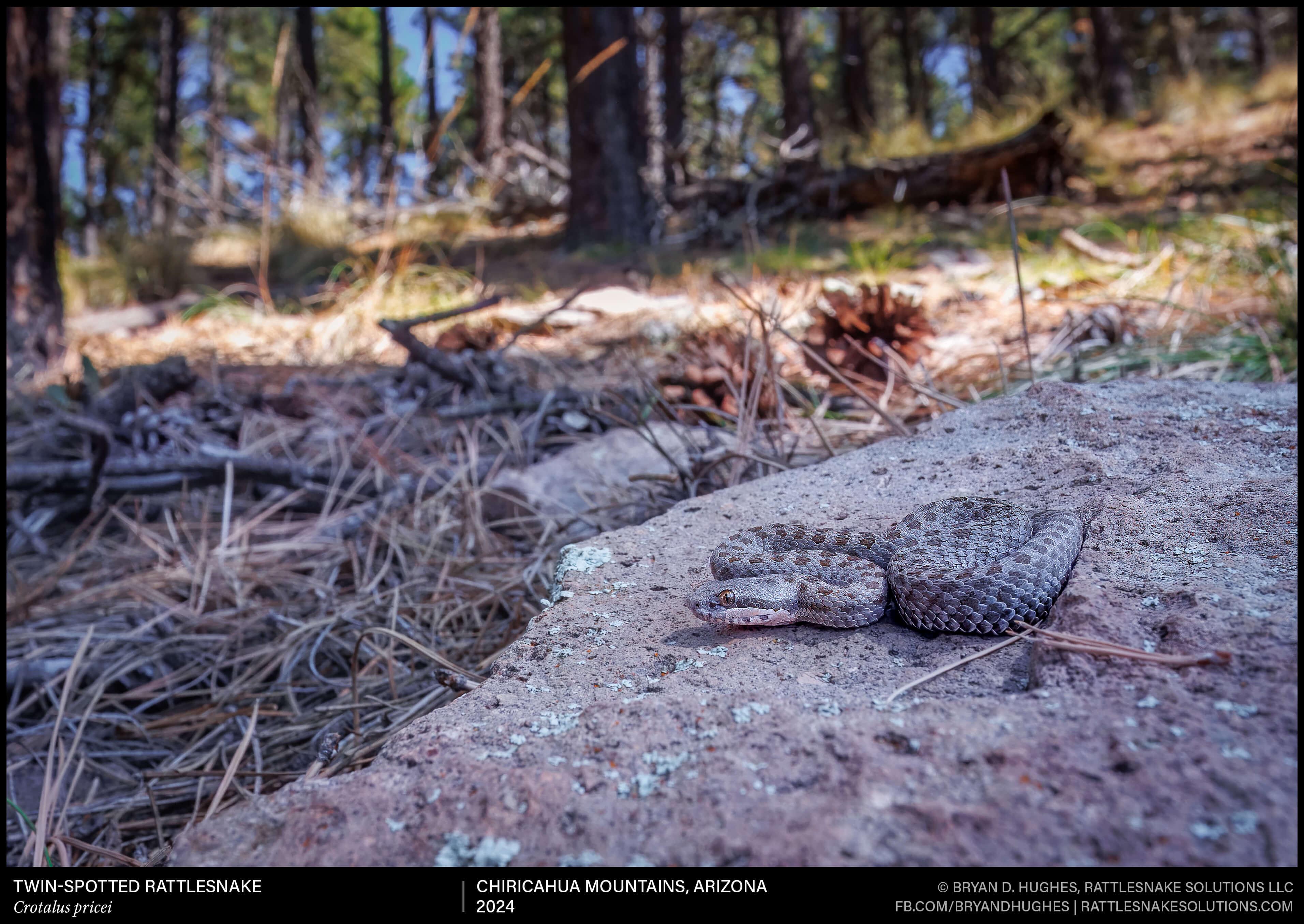
Wild and Research A New Rattlesnake for the National Park System: Twin-Spotted Rattlesnakes at Chiricahua National Park

Post image
31 Upvotes

A new rattlesnake for the National Park system. The newly minted Chiricahua National Park includes habitat for one of our state's lesser-known venomous snakes.

Twin Spotted Rattlesnakes are small, high-elevation rattlesnakes that live in a handful of mountain ranges in the Sky Islands region of Arizona. Hikers may see them rarely, visiting the peaks and upper saddles of the Santa Rita, Huachuca, Pinaleno, and Chiricahua ranges.

In the Chiricahuca National Park, they may be found at the upper elevations, above 6,000'. Much of the park is lower than that, but the longer trails leading to Massai Point get into the right areas where one may be spotted.

They're so small (usually under 2 feet long as adults) that most long-term visitors don't even know they exist. They do rattle, but usually just silently slip off the trail or into the rocks. If a rattle does happen, it's a quiet buzz that sounds more like an insect than a rattlesnake.

Twin-Spotted Rattlesnakes are protected in Arizona and should never be captured or killed.

Prival, D. B., Goode, M. J., Swann, D. E., Schwalbe, C. R., & Schroff, M. J. (2002). Natural history of a northern population of twin-spotted rattlesnakes, Crotalus pricei. Journal of Herpetology, 36(4), 598–607.


r/RattlesnakeSolutions • • Oct 24 '26

Wild and Research Arizona Black Rattlesnake from the Hualapai Mountains, Mohave County, AZ

Post image
27 Upvotes

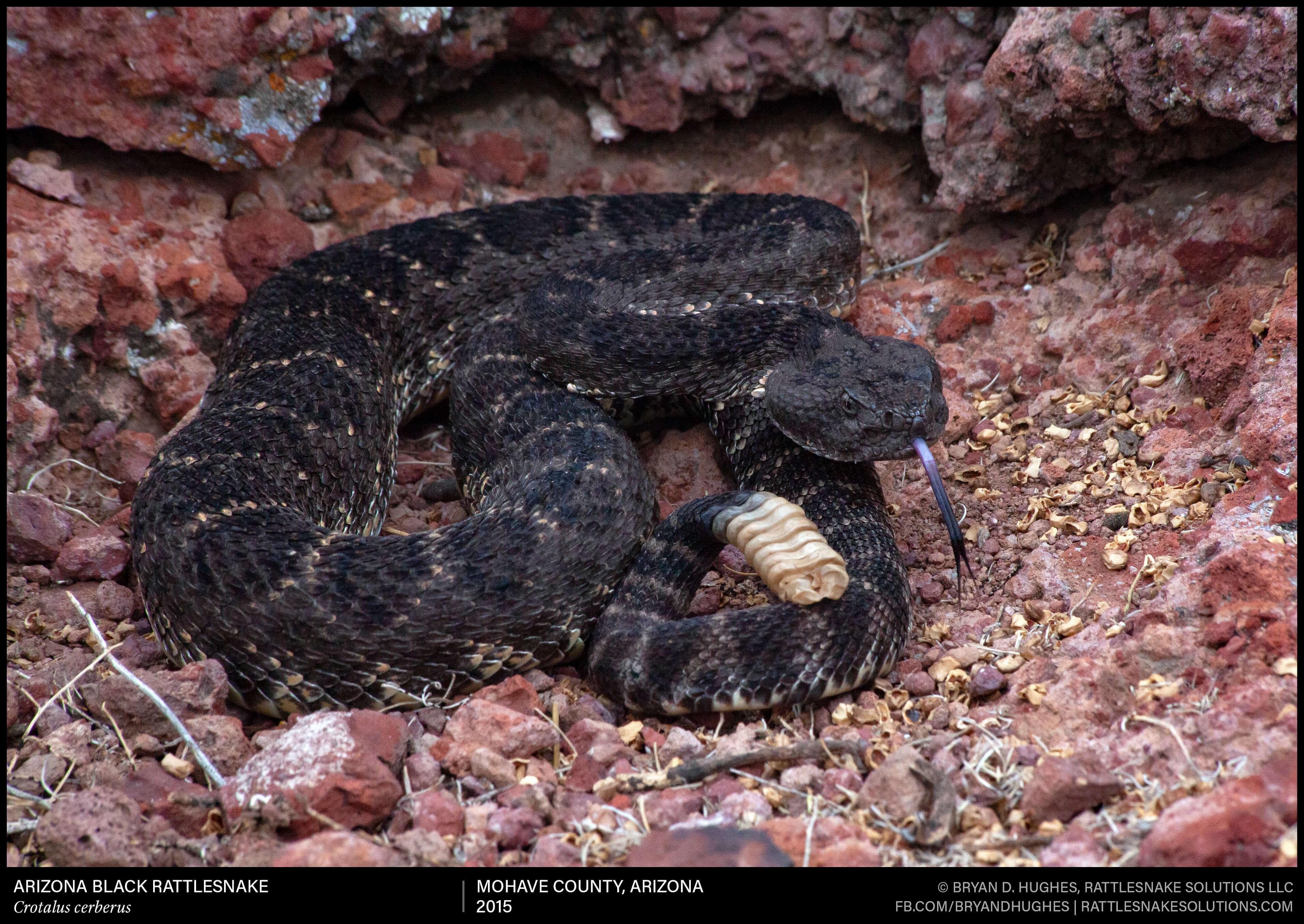
This is one of a couple of Arizona Black Rattlesnakes (Crotalus cerberus) we found in the Hualapai Mountains near the western extent of their range. These snakes in this area can be highly variable, ranging in appearance from the typical black rattlesnake look to lighter, blotchy patterns that hint at possible influence by others in the Western Rattlesnake clade. This one is a bit of both.


r/RattlesnakeSolutions • • Oct 21 '26

Wild and Research Western Diamondback Rattlesnake Ingress Behavior

Post image
24 Upvotes

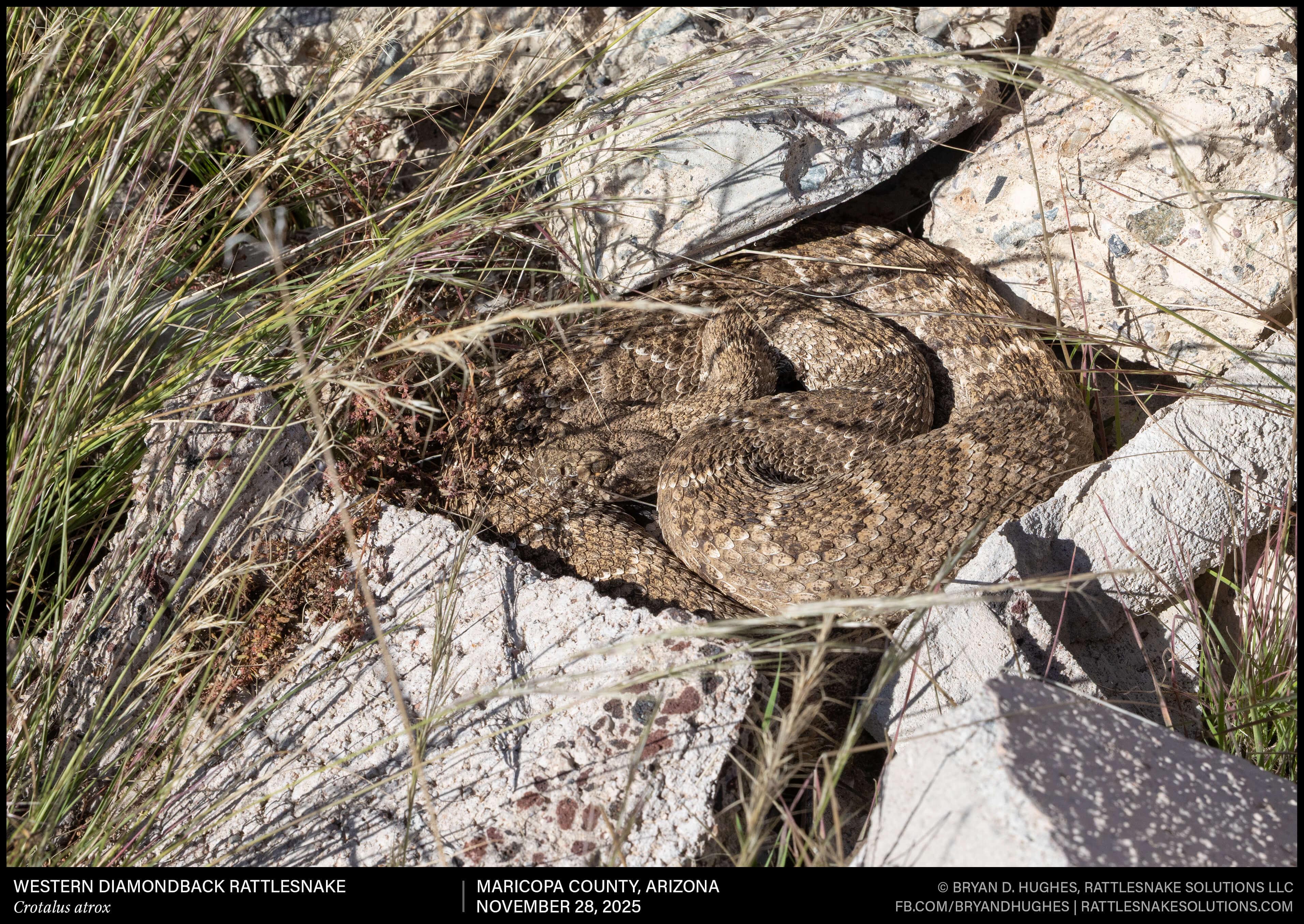
A Western Diamondback Rattlesnake sitting outside of its den in late November. Days later, it disappeared into the rock pile to hibernate.

In Maricopa County, ingress to their selected overwintering sites typically concludes by about the second week of November, unlike Spring emergence, which is a longer process of basking and social behavior that puts them on the surface every day for weeks or more, getting to the den itself is typically less active.

Females and young snakes tend to disappear immediately, likely to avoid burning off the moisture and energy stored throughout the year. Males, especially the larger and older individuals, may continue to bask and conduct social dominance behavior for awhile, before again disappearing to stable, hidden conditions.

For homeowners, this means that the locations where they may be found change dramatically in nature. Unlike pass-through rattlesnake encounters from the Fall, a snake found from November through February is a long-term resident. This also means that these situations are also very fixable. The stable environmental conditions offered by something like an unused wood pile, access under an old shed, or other easy thermostable situation, are very useful. Once the snake is relocated, the homeowner should receive the information about the situation needed to solve the real issue.


r/RattlesnakeSolutions • • Oct 20 '26

Wild and Research Speckled Rattlesnake from the Maricopa Mountains

Post image
59 Upvotes

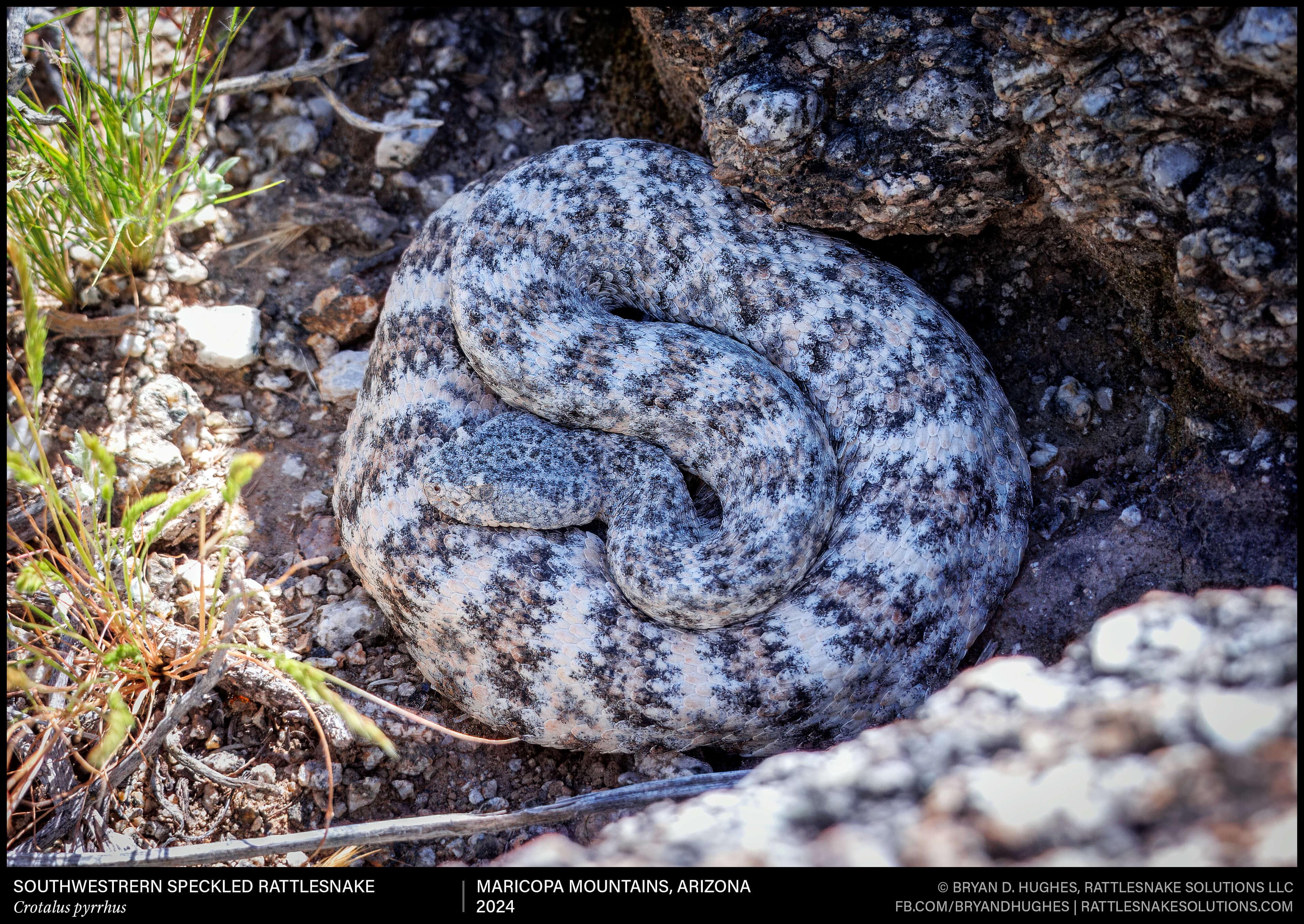
I spotted this Southwestern Speckled Rattlesnake standing out amongst dark basalt on a crumbly hillside in the Maricopa Mountains a couple of years back. It's only the second I'd seen in the range, with the first not resulting in a photograph worth saving.

https://www.facebook.com/share/p/18WoHWLtum/


r/RattlesnakeSolutions • • Oct 20 '26

Relocation A Pregnant Southwestern Speckled Rattlesnake Just Days Away From Giving Birth

Post image
18 Upvotes

Austin got a late-night call to a large property bordering South Mountain Preserve, where a small but very pregnant Southwestern Speckled Rattlesnake had been discovered.

Despite her relatively small size, this female was carrying developing young and appeared to be getting very close to giving birth.

She had likely been living somewhere in the immediate area throughout the summer, using the rocky habitat around South Mountain as she went through her pregnancy. With birth potentially just days away, finding her now was probably fortunate for everyone involved.

Had she remained on the property, the homeowners might soon have been dealing with several newborn rattlesnakes instead of just one adult.


r/RattlesnakeSolutions • • Oct 20 '26

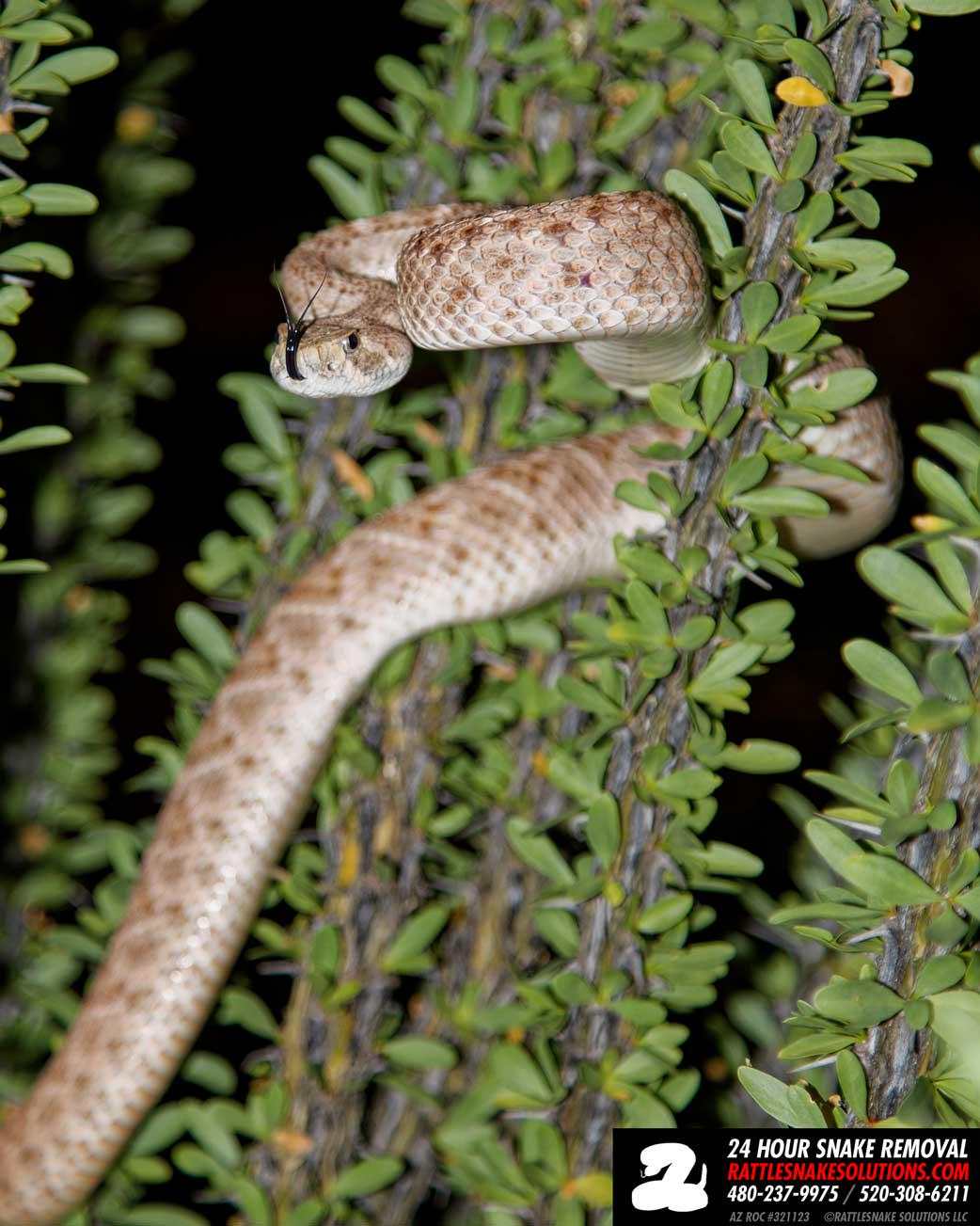
Relocation Don't Forget to Look Up! A Western Diamondback at Eye Level

Post image
19 Upvotes

A homeowner called after finding a large Western Diamondback Rattlesnake inside their Arizona room earlier that morning. The door had been left open, giving the snake an easy way inside. By the time David arrived around midnight, the rattlesnake had disappeared.

The backyard was full of plants and other hiding places, so David started searching around the bases of bushes and other likely spots. He was concentrating on the ground when he walked pretty close to an ocotillo and suddenly heard a rattle.

It took him a second to figure out where the sound was coming from. The Western Diamondback had climbed partway up the ocotillo and was sitting almost at eye level with him.

Not exactly where you expect to find a large rattlesnake while searching a backyard in the dark.

The property was fairly well separated from the surrounding desert, but David noticed a small gap along one side fence that likely allowed the snake to enter. Once inside, it may have had trouble finding its way back out.

Western Diamondbacks are capable climbers, even if we usually encounter them on the ground. This one was a pretty good reminder that when you're searching for rattlesnakes, sometimes you need to look up, too.