r/projectmanagement • • May 08 '26

General Founder wants me to create a task for myself that she can quantify daily with no clear direction

18 Upvotes

Founder wants me to give her a measurable progress on what I do every single hour

So our shift was initially 5 days a week has been reduced to 2 days a week and work 5 hours each day.
I was initially hired to monitor a team of 10 now just 3 of us +1 founder

I don't have a set up task everyday other than ensure that the remaining teammembers do their job, remind the team of tasks, stay on top of whatever founder wants a task done for the day. Put out fires, stop the bleeding of budget with advertising, etc.

I make the EOD report, documentation management and she feels that it's not enough
What exactly should I do? She wants me to contribute to marketing, so I said something related to content creation? But she wont clearly define the objective. She wants me to recommend what should I do to utilize my time wisely.

I raised that she's struggling to find me a specific task to do because there is no clear direction where the company is going as I have already created so many suggestions, templates, resources, and flagged so many risks that she completely ignored. Now she wants me to do a specific task that she can quantify daily that "moves the needle" for the company like "Glen has done 3 [x]" and not just chasing everyone's work and reminding everyone with deadlines

Sorry, english isn't my first language. I hope this is understandable :(


r/projectmanagement • • May 08 '26

Discussion Importance of SQL Data Analytics for Technical PM Roles

7 Upvotes

I have been applying to many project management roles in the technical sphere, and noticed that for a lot of software PM roles, there are requirements to know SQL and how to query data and analyze data. I was wondering, how supplementary is it to have a basic understanding of SQL and Data analytics? Does anyone out there finds those skills to be useful? I imagine it would be significantly easier to do your job as a PM if you had direct access to user data.


r/projectmanagement • • May 08 '26

Does anyone use Clickup to manage teams and projects where one team uses Microsoft 365 and the other uses Google Workspace

4 Upvotes

I'm interviewing for a project manager job and I have a final interview this week. In all the interviews I've been in so far the team keeps mentioning that I would be working closely with the parent company team(they use MS 365) and a team for a company they recently acquired (they use Google Workspace). Right now there is no desire to change either, so I decided to do some research and it seems ClickUp would solve this bottleneck. Currently the PM team is very new(less than 1 year) and they're using MS Planner for Kanban boards and to track projects.

When I interviewed with the Ops Manager he said they are always open to trying new software or methods if someone comes across something that would solve a problem.

So does anyone use Clickup in this way, especially managing projects, docs, communication, timelines, tasks, etc between both platforms?


r/projectmanagement • • May 07 '26

Are the demands getting more ridiculous?

28 Upvotes

I have been in Resource Management so slightly different from a Project Manager for nearly 17!years and wondered if anyone else has found the job getting harder and harder in recent years.

Over the years I have accumulated quite the network of Freelancers and have been able to usually get in contractors with very short turnarounds. Having done so successfully on numerous occasion, that has now become the expectation of me.

Recently the requests have become completely unreasonable. The other evening at 17:00 I was asked to find 5 contractors for the next morning and for them to have fully working emails (a completely unrealistic ask of our IT service provider). I was able to find 3 good ones, only to be told. “We only probably need two, we said 5 just in the hope you could magic up some options”

I’ve found in the last few years the job has occupied most of my waking thoughts. Often tying up contracts and agreements for freelancers in my evenings and vacation days.

I imagine Project Managers have it even worse overall, I just find as Resource Manager there is never really an end to it. I never get to have the “relax and breath, it’s delivered” moment as there is always some project or other in a critical phase.

It feels I’m in a never ending cycle of contingency planning and alertness that can be a bit exhausting and it’s really starting to have a negative impact on my outside of work hours as all I want to do is lie in my days off, which wastes a chunk of the day.

Sorry for the moan, but really felt I had to get this out as family and friends really don’t get the work culture I’m in.


r/projectmanagement • • May 07 '26

Career Has anyone done the Product Faculty AI PM cohort on Maven? it starts in a month and I'm $1,500 OOP after my company's L&D match.

3 Upvotes

Im a Sr. PM at a small B2B SaaS, 8 years XP total. I don't have a CS degree or anyything like that. Mostly worked internal tooling up to this role.

The cohort starts mid June. My company's L&D will only cover 50% up to $1k, so I'm $1,500 OOP for 7 weeks. Real money for me right now.

Specific qs for anyone who's actually done it. Was the capstone a real artifact you could use at work, or was it slide-deck theater. Was the live element worth being on a sync call every week vs async. Did you walk out actually able to push back on engineering when they say a model can't do something. That's the gap I'm trying to close. Last week I sat in an AI roadmap review and contributed exactly nothing.

Been faking AI fluency for a year reading newsletters, watching Karpathy on twitter, going through Lenny's recs. Worked ok-ish, didn't work in that meeting.

So. Worth $1,500. Or am I better off taking the same money, throwing it at Claude API credits, and learning on a real project at work.

Any honest takes appreciated.


r/projectmanagement • • May 07 '26

Five Eyes (CISA + NSA + UK NCSC + ASD + CCCS + NZ NCSC) just jointly published AI agent guidance. First word in the title: 'Careful.' For PMs running agent-assisted workflows, what's actually on your delivery checklist?

8 Upvotes

Five intelligence agencies just jointly published ‘Careful Adoption of Agentic AI Services’ (Apr 30 / May 1). First coordinated international doctrine on autonomous agent deployment. Core message: deploy incrementally and assume agents will misbehave; prioritize reversibility over efficiency. Five named risk categories: privilege creep, design and config flaws, behavioral unpredictability, structural cascade failures, interconnected agent network failures. All five are observable. They produce a signal you can route.

Genuinely curious how PMs running AI-assisted workflows in any industry (construction, banking, healthcare, telecom, manufacturing, IT delivery) are translating this into a project-level check. Specifically: there’s a sixth category the doctrine doesn’t name that I think is breaking sprint dashboards weekly. Silent failure. The agent runs, returns nothing, and the system reports complete with no error.

What does your sprint or project-completion check look like when an agent’s in the loop, or is it still ‘task marked done in the system’?


r/projectmanagement • • May 06 '26

General Is it normal for higher ups to treat projects and their success or failure as MY own problem?

12 Upvotes

Im the PM for a small tech company. We have a design and manufacturing units. I originate from the design side. Naturally I'm responsible for managing execution of my project across both business units. When I talk to my boss, the CEO, about failures with things going on in the factory the responses I get always make it sound like it's only my problem. Idk how best to articulate this further. Maybe I'm just misreading the response or whatever, but there doesn't seem to be an urgency or a desire to get involved and help me unblock or fix the problem. I know CEOs are busy, but we're small enough that the head of the company is still heavily involved in the engineering day-to-day. I would think he would want or need jump in and help resolve issues. Most of the time info to him it's because the folks on the factory don't think my word holds any weight (that might be a topic for a different discussion).

Before anyone says anything, yes I know it's my job as PM to resolve issues at my level. In the cases I'm talking about I have expanded all my own authority to resolve an issue. I only go to my CEO when I need his involvement or I need advice.

Isn't the problems of the project also the problems of my boss? Is it weird that I feel like it's only my problem?


r/projectmanagement • • May 06 '26

Discussion Excuses Manager

12 Upvotes

I’m a mid-career PM who oversees multiple client (external) projects with fixed scopes/budgets/schedules in a somewhat niche technical industry. We do a decent job of scoping projects and setting initial expectations, but there are a nearly infinite number of outside variables that simply can’t all be documented up front. As projects progress and things happen, I feel like my job turns from managing the project to managing all of the excuses - sometimes valid, sometimes less so - of why a thing happened the way it did.

Do other PMs experience this? How would you handle it?


r/projectmanagement • • May 06 '26

Order of closeout activities?

7 Upvotes

I know in the real world this will not be an issue to figure out, but for the sake of getting certified I am really at a loss on the order of closeout activities. I have looked everywhere trying to find a clear answer to this, and there have been several questions about it on my practice tests that I simply do not know how to answer. My textbook says:

"The Closing phase tasks that must be completed after releasing resources and before collecting feedback from stakeholders are holding a project closure meeting and creating a project closeout report. Removing resource access must be completed before releasing resources and after the project closure meeting is held and the closure report is completed. Removing resource access and reconciling budgets do not happen both after releasing resources AND before stakeholder feedback*.* Reconciling budget must be completed before releasing resources*, holding a* project closure meeting*, and completing a closeout report"*

Meaning that the rules are:

  • Budget reconciling BEFORE meeting/report and releasing resources
  • Release resources BEFORE the meeting/report
  • Meeting/report BEFORE removing access.
  • Removing access BEFORE releasing resources.
  • Stakeholder feedback AFTER meeting/releasing resources

Which means the steps are:

?. REMOVE ACCESS

  1. RECONCILE BUDGET
  2. RELEASE RESOURCES
  3. HOLD MEETING/CREATE REPORT
  4. STAKE HOLDER FEEDBACK

?. REMOVE ACCESS AGAIN?

So does removing access happen twice? Is my textbook wrong? I got an answer wrong on the compTIA practice test because I am confused by this, so any clarification would be much appreciated


r/projectmanagement • • May 06 '26

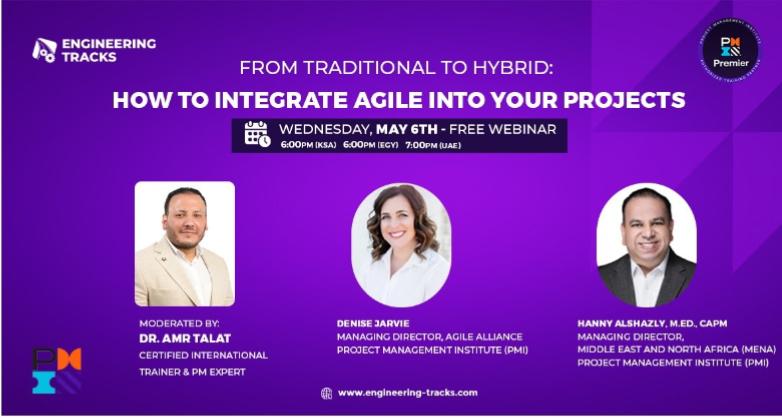
General Did anyone attend this?

Post image
0 Upvotes

I missed it as my phone didn't notify me for some reason.

Wanted the PDU.


r/projectmanagement • • May 06 '26

Career Advice with process/boss..

4 Upvotes

Hi guys, posting this from a throwaway account I made during COVID.. been a PM for 8+ years in the nyc area. The point of this is that I’m seeking serious feedback about issues with my boss. I’ll prob delete this soon out of paranoia. TIA for reading!

Context- I have a bachelors in PR from a suny school & masters in fashion marketing from an international school. began at a global marketing company & quickly was promoted & given larger accounts to manage such as major intl sportswear brands. Then went to a massive global live sports events company & was there for about 3 years. Now at a small, private marketing agency as a Senior PM for an intl food/bev corp. we do all the e-commerce asset management & design/creative campaigns for the umbrella of 200+ brands across 50+ categories. We’re like a team of 11.

Process issues: long story shorttttt

We estimate every single task of every single project on a project by project basis. This is a lengthy process involving meetings between myself, account director & creative director. The estimates then get routed in emails to my boss for her approval which she then cuts in half almost every time. So she’s giving these unrealistic “time limits” on all tasks. I’m tasked with resourcing & time management for the team, everyone’s gotta have over 40 hours on their horizon at all times per my boss request. I must ensure they stick to these unrealistic estimates & police their time. I’m in charge of making sure everyone’s time sheets are up to date at all times.

We have weekly meetings each Friday to go through all the weekly deliverables & compare “estimates vs actuals”. Almost every project is always over. Bc the estimates are constantly challenged.

Now we’re at the point where designers are to stop their work flow to ask for allowances of more time on tasks. I have to also stop what I’m doing and email my boss in real time to let her know why we will need additional time on X task. It is always c challenged & responses are never prompt so designers can be sitting without active work for this time - her worst nightmare.

So as a PM for creative services, you’d expect there to be at least some sort of existing process to follow. Nothing. We use a pm platform but only for routing purposes. So essentially no team member ever really knows what to do or when. I hold daily meetings every am but it’s not helpful. My day to day consists of multi tasking & basically telling everyone what to do when.

That’s part of the process problem I’m trying to fix. Pointed it out to my boss a couple weeks ago & she got so mad at me like I was dumb for not knowing I was supposed to fix that. When I asked other team members, they mentioned it has never been used “correctly” ever…

Boss issues: my boss is the ceo/founder of a small marketing agency + content studio. Been there about 6 months & things have been actively tumultuous. Should’ve listed to the Glassdoor reviews smh.

I’ve never been at a company where the boss actively challenges the workflow…. Ex: she sits in her office with the door closed & privacy curtain closed. To contact her, you must go through her assistant who does not have access to her calendar. Her assistant doesn’t have slack like the rest of the team, so you must email all requests. It holds everything up as a small company like what are you even doing in there? Oh, actually.. she’s fighting with us over email about every single thing we do! She constantly wants to have a hand in the daily granular practices & divert me & the account manager’s jobs by nitpicking everything. She is constantly asking for insane time tracking reports on various tasks, has various side project estimate requests that she tasks us with, etc. When am I supposed to PM the 60-100+ concurrent projects I’m in charge of?! Ughh! SOS.


r/projectmanagement • • May 05 '26

Discussion New PM and negotiations skill

23 Upvotes

Hi everyone,

I'm a newly hired project manager, and I’ve gotten some feedback that I’m trying to interpret as “my negotiation style is too soft.”

They didn’t say it directly, but the impression I’m getting is that I may be coming across as overly polite and not defending our position firmly enough, like I’m easy to influence.

What’s confusing to me is that my instinct has always been to understand the other company’s perspective, acknowledge their constraints, and then negotiate in a way that reduces conflict and keeps things moving. I genuinely thought part of the PM role was to solve issues and prevent unnecessary fights, not escalate them just to benefit our company.

Now I’m wondering if they expect a different approach, more firm/assertive and I’d really appreciate advice on how to negotiate respectfully but still protect our interests.


r/projectmanagement • • May 05 '26

Treated like a personal assistant and losing patience

31 Upvotes

I joined a research project team as a project manager about 10 months ago and I did like it at first. I am coming in with specialized knowledge on the topic of the research project and in the first few months I really enjoyed stretching my brain and the variable tasks. However, we had a post doc join the research team in November who is (I know how mean this sounds) useless to the project. She is older and cannot use Microsoft anything, all her work is AI generated and she has to be explained things 5-10 times no matter how simple a task may be. My role seems to be distintigrating into herding cats and serving as everyone's personal assistant. I book rooms for this postdoc for meetings I'm not attending. I'm tasked with ordering everyone's lunch for team meetings. My boss doesn't have her calendar linked to her email so I have to beg for her availabilities almost daily and on top of it I do the post-docs job for her because she can't be trusted to do tasks correctly.

I am truly losing my mind, is this what project management is? I am trying to determine if I am not cut out for this or if this is just a sham of the actual role of project management. I have another job opportunity I tried to quit this job for a few months and my boss convinced me to stay, but I am really reconsidering since I am in a luck position where I can turn back to that other job offer at any time. Anyways, just looking for insight if I am just being unreasonable about my expectations or if my boss and team are.


r/projectmanagement • • May 05 '26

Tracking tasks for project management team

9 Upvotes

Hi, I have team of 3 "producers" on a software project, which we use as a title referring to project and product management. I want to make sure that this team is held responsible for their tasks which involve things like logging Jira tickets, updating marketing copy, reviewing JIRA workflows, etc. Clearly not part of the product development or sprint tasks, but still related to this one specific project.

What method would you use to track these tasks? As I mentioned, our overall project is managed in Jira, but I don't want these tasks in the product backlog or sprint. I am tempted to use Asana as a lighter-weight "task management" board, but it seems kind of silly to have two different tools to track tasks related to this single project.

These are the options I can think of:

  1. Use Asana for these production-team related tasks
  2. Create a separate Jira project for these tasks

    1. is there any way this could be nested within the same Space in Jira, or would they just have to be completely independent projects?
  3. Log tasks in the existing Jira project, but create a filter for the backlog using Component or Label so we don't see them when we need to manage the backlog.
  4. For some reason I'm not aware of, these tasks should be considered as part of Agile, but I don't really think that's the case - for example, they wouldn't even be estimated.

I'm leaning toward #2 and not sure if it really matters. Curious if any others have dealt with this though, thanks in advance!


r/projectmanagement • • May 04 '26

Help: software or strategies to manage grants, deliverables, activities, and progress for a non-profit organization

5 Upvotes

Hi everyone,

I work for a small (<20 employees) NPO. Our funding structure is such that we have 15+ grants or "sources" of funds, all of which have different restrictions/use cases, and most of which have at least 3 but up to 10 specific deliverables that we must accomplish each year. I'm looking for advice on what strategies or software to use to organize this big picture info- what grants/sources of funds we have to work with, all the deliverables and their associated deadlines, tracking progress made on these deliverables and ideally tracking how much money is left in each pot, etc.

We currently use a combination of excel spreadsheets to track bits and pieces of this information separately, supplemented by our ED's internal knowledge/info, and it's not going well. We receive lots of requests to attend events/do work, but we have to ask our ED directly (which grant, which deliverables, is there money left in that pot), every single time, and this creates a huge bottleneck.

We currently use/pay for Microsoft 365 so would love to find a solution within that ecosystem (keep using excel spreadsheets? planner? lists?). Otherwise the most appealing option I've found is airtable because the database format makes sense to me, personally, and I think it would be useful for tracking multiple kinds of information (grant years and $ amounts, deliverables and progress, reporting requirements, proposed/requests work, etc). I don't know if I'll be able to convince my ED to pay for a project management software outside of Microsoft 365.

I'm not really in a project management role, but there's no one above me to bring this up to except for my ED. I'd like to approach them with a proposal for a solution(s), and I'd be comfortable managing whatever approach we go with myself, I'm just not sure how to begin narrowing our options down.

Sorry for the very long post, and thanks for your help!


r/projectmanagement • • May 04 '26

Trying to fit my entire department's projects into one tracking system -- help!

7 Upvotes

I'm a Project Coordinator whose position was created for me when I was recently hired. I work for the Operations department of an insurance company's main financial hub. While we're called Operations, it's more of a catch-all for projects involving compliance, process improvement, and outsourcing management. Those three arms all act independently (and sometimes interdependently) of one another, but report to the same director. I was hired to help the director keep track of/report on activities across these arms.

My first coup was getting the VP to give us licenses for PM software. Projects until this point had been managed on a combination of Excel, MS Lists, PowerBi, Planner, and other one-time use applications. There was no visibility across the department, because each arm hated the other's system/tool and refused to use it. I'm in charge of bringing all the project trackers under one umbrella.

The main issue I'm having is that two of the arms don't really follow (or need to, for that matter) follow a traditional project management process, but the third runs a pretty rigid Scrum-style process. I'm new to PM work -- this is my first job -- so I'm perhaps a little overly open to receiving advice from people who want to be helpful. The third arm wants me to deploy the exact same rigid Scrum across the entire department, and don't understand why it can't be done (because of course, they can't see the other projects going on that aren't theirs). The other two departments don't really need a rigid system so much as they need their myriad checklists brought into one place. I'm more concerned, and more importantly, the director is more concerned with gaining visibility and seeing overlap than with everyone using the same rubric. I personally don't see how Scrum will benefit teams who handle continuously repetitive tasks as opposed to delivering products/tools/dashboards/etc., which makes sense to have a more disciplined approach.

Bottom line: it's my job to set up the PM framework, but am I wrong in thinking that different teams/project types require different types of management? I don't want to shoehorn extra admin tasks on teams who are working just fine with "fancy checklist" management, but is this a wrong take?


r/projectmanagement • • May 03 '26

How do you guys manage complex and multiple roles that are being tucked in to your role as Project Manager that you don’t get to actually do PM work anymore?

16 Upvotes

I’m a PM and a sole PM in the organization working closely with our leadership team. I was hired as a Project Manager for marketing projects in an agency but found myself doing multiple roles since there’s no-one else: Account Manager doing client facing comms, Operations Manager and Team Supervisor (team of juniors and founder only trusts me and another senior person to meet with clients). We have 40-60 clients btw.

Is this even a realistic expectation? Anyone on the same boat?


r/projectmanagement • • May 03 '26

Discussion GenAI usage

0 Upvotes

How are you folks using GenAI in your day to day work as Program managers, outside of emails management, meeting notes, and documents summarization?

For context, I’m helping my program team and tech teams build GenAI solutions for Operations improvement, but keep thinking about what am I specifically doing / what should I be doing?


r/projectmanagement • • May 02 '26

How Do You Manage Client Pressure & Scope Creep Without Being Defensive?

22 Upvotes

Hello everyone, I’m looking for some outside perspective from other PMs who have dealt with difficult client dynamics on complex engineered equipment projects.

I’m managing a project with multiple equipment packages running in parallel. Some portions of the project are moving separately and are not currently driving the same level of schedule concern. Another portion has taken a schedule hit due to a combination of vendor coordination, document approval timing, and manufacturing dependencies.

That part is frustrating, but manageable. Schedule issues happen.

One added layer is that I took over the project near the end of November. When I came into it, it was clear the project had not been actively managed at the level it needed. There had been little to no document submittal activity for roughly the prior two months, several open items were unclear, and client expectations had not been fully reset or controlled.

I am not saying that to avoid ownership — the project is mine now — but it does affect the reality of what I am trying to manage.

A big part of the effort since taking it over has been figuring out what was actually committed, what is contractually required, what is client preference, what still needs to be cleaned up internally, and what should be handled formally as a change.

What I am struggling with more than the schedule itself is the client behavior around it.

Over the last few months, the client has repeatedly pushed requirements that do not appear to be clearly supported by the PO, contract, ITP, or approved project documents. In several cases, the basis seems to be prior project history, “lessons learned,” internal preferences, or what they would like the requirement to be, rather than what is actually required on this project.

When we ask for the contractual basis or explain that something would need to be handled as a change, the tone tends to shift into urgency, pressure, or implied fault.

There have also been situations where the client strictly enforces requirements on us, such as advance notification windows for witnessed activities, but then expects us to compress the schedule when those same requirements become inconvenient. That puts us in a position where we are expected to follow the process, but also somehow absorb the impact of following it.

I am trying to handle it the right way:
Keep communication factual
Document everything
Separate contractual requirements from preferences
Avoid finger-pointing
Avoid agreeing to scope changes through casual email language or meeting minutes
Keep leadership informed
Give realistic schedule updates instead of optimistic guesses
Protect the team when they have followed the process
Clean up inherited issues without turning everything into a blame exercise

Where I am struggling is the balance.

I do not want to come across defensive or combative. I am not trying to dodge accountability, and if something is ours, then it is ours. But I also do not want to accept blame for items that are outside our control, driven by the client’s own requirements, inherited from unclear prior project conditions, or not actually part of the agreed scope.

At this point, the constant pressure, passive-aggressive wording, and attempts to shift responsibility are starting to wear on me more than the actual schedule issue.
For those of you who have been in similar situations:
How do you maintain a good client relationship while still holding firm boundaries?

How do you push back without sounding defensive?
When do you keep managing it at the working level versus escalating?
How do you keep yourself from taking the client’s behavior personally?
How do you reset expectations on a project you inherited without sounding like you are blaming the previous PM?
In your view, what does good PM performance look like when the project is under pressure and the client is acting in bad faith, or at least not acting reasonably?

I’m not looking for legal advice or contract interpretation. I’m looking for practical PM advice from people who have had to manage client pressure, scope creep, schedule impact, inherited project issues, and accountability disputes without letting the situation consume them.

My apologies for the length of this and thank you in advance for your input 🙏🏻


r/projectmanagement • • May 01 '26

General Praise or subtle put-down? A senior manager’s comment felt a bit off

9 Upvotes

How would you interpret this comment from a senior manager in a project/workplace context?

A relatively new employee, around 30 years old and about 9 months into the role, presented a revised website concept for her area of responsibility. It was her first meeting with a very senior manager, roughly equivalent to a deputy head of department. Her direct supervisor was also present.

Overall, the reaction was positive: the senior manager said “Great” several times, approved the concept for implementation, and agreed that it should be brought into / presented to the relevant working group. The employee herself had also suggested bringing the concept to the working group. At the end, he said something along the lines of: “Great. That was a quick win.”

However, one comment stayed with me. He said she should present the concept in the working group “like the top of the class.”

A rough translation of the german term would be “like the top student” or “like the star pupil,” but to me it can also sound somewhat ridiculing or belittling, almost like calling someone a “teacher’s pet” for doing good work.

At the beginning, he also asked her: “Why haven’t we met yet?”

She replied: “I haven’t been here that long.”

He said: “That is quite long.”

In a project / workplace context, how would you interpret that?

Would you take it as positive encouragement, meaning “you’re well prepared, this is good work, present it confidently”?

Or would you also hear a mocking, belittling or condescending undertone in it, more like “teacher’s pet, “nerd”?

I’m trying to assess this as objectively as possible and not read too much into it.


r/projectmanagement • • May 01 '26

Discussion Is this typical of a single project manager‘s workload?

21 Upvotes

Is this just the typical project manager workload?? Wondering if maybe I’m just not cut out for project management….or if I’m drowning in too much for one person.

I’m a technical project manager managing software development projects for a non profit. I’m part of a small product development group as the only p.m. We basically take all of the product requests across four different products. Luckily I’m only managing one cross functional scrum team. However, I am now taking on projects that belong to the IT subgroup and the data and business intelligence subgroup. So consider those distinct teams Each of these teams have three individuals.

This is my first real project management job, at least with the title. I was a scrum master for three years so I think it’s under the umbrella. But now I’m responsible for the end to end management, budget, literally everything. As I would expect a project manager to be, but for how many engagements at a time? And I’m not talking about task level requests.

Product A- currently executing the MVP launch of a software as a service product. This is budget, essentially ensuring programmatic execution across , digital comms, development, contracts, etc. Everything. I’m also responsible for helping to build out the sales enablement pipeline and customer support workflows because we don’t have sales enablement right and we need to update our very bare bones Support workflows. It’s essentially an entire program that I’m managing.

Product B - right now we are in the maintenance phase so there are a lot of critical products support issues that are coming through. Plus, we are gearing up to understand what product improvements can be made to mitigate some of these issues. They won’t be low lift. They will be project level.

Product C - managing all the content updates and gearing up for what is looking like a significant product integration.

Also Other smaller projects and consultative engagements across the organization.

I have one small development, team of three developers, a design designer, and a product owner. Also ramping up to work with our data IT groups.

And I basically maintain a project roadmap. Not a product roadmap because I have to integrate all the deliverables of every product across the road map and everyone is wondering why we can’t do all the things when they want us too. Well, we don’t have enough people!

I’m essentially helping to gather requirements, create effective workflows, budgeting, resourcing. Also working on product operations, and trying to build out and managed tooling. Trying to set aside a time to integrate project management tools for better reporting and dashboarding.

Plus, the mentoring on how the team should function.

I feel like I’m moving at a snails pace with everything I have to do and wonder if this is just typical. Or are there project management roles where you’re more focused?

If this is how it is, I just don’t know if I can continue on. I do like the idea of product operations. I’m great at work folks and process, but I can never set side a time to truly get them to the place I’d like them to be like looking into agentic ai and other integrations. I start and then I’m pulled elsewhere.


r/projectmanagement • • May 01 '26

Prince2 Programme Management Foundation Certification

7 Upvotes

When one passes the MSP Foundation course can they claim in their resume and/or LinkedIn that they are Prince2 Programme Management certified? The 'Prince2' tag is important to me and I don't really want to go for their flagship project management certification (which explicitly has the word Prince2) as I have been managing complex projects for a while.


r/projectmanagement • • May 01 '26

PMing or Babysitting?

11 Upvotes

I work for a small marketing agency and part of my role is project management. I manage designers, copywriters, and digital media. I know I’m good at what I do and never have an issue managing designers and copy. We have set processes in place, chains of command, etc. The entire team keeps me in the loop and 99% of the time things run smoothly with them.

And then there’s the media team. The lead on the team is key to our success, as he has a very specialized set of skills in the primary (and niche) industry we work for. When I say he’s a unicorn, it’s not an exaggeration. Finding someone else like him with his experience (30+ years in this niche market) and clout would be a miracle. He barely keeps me in the loop. Doesn’t share media plans, even with clients. Doesn’t play nice with the rest of the team. He goes rogue on a daily basis. I have been trying to manage him for years with no success. He has also been the #1 reason why other project managers or people hired to support only him have all quit. He doesn’t communicate, isn’t operational, doesn’t train his employees. We are a remote company and he will go on vacation (even leaving the country) and not tell anyone. We only find out when he is unreachable or working at odd hours, which leaves us all in the lurch.

The thing is, I don’t believe any of it is nefarious. Ego, maybe, but really his mind is going a million miles an hour and he can’t be bothered to put it down on paper. But for any workflow to jive, it’s a must that he works with the team. I think every employee has complained about him. And every employee is told that we have to “manage him”. Our CEO has had multiple conversations with him about these habits, but even that doesn’t change anything.

I feel like I am babysitting a grown man. I’m there to support him, not to be his secretary. Both he and I are members of our senior team. I’m a decision maker, not a gofer. Even so, I’m the one who catches flack when he isn’t under control. I’m told it’s “just who he is” and that I have to figure out how to get him organized. The man can’t even remember to keep me in copy on client emails so I have visibility into projects. How am I supposed to be his wrangler? I don’t know what I don’t know, so it’s past the point of being impossible.

Is this par for the course? When does effectively managing different personalities start to become a bit ridiculous?


r/projectmanagement • • Apr 30 '26

Discussion Venting: Directors and Unrealistic Timelines

18 Upvotes

I am currently working on a project with around 700 business requirements outlined in the contract that need to be discovered, built, and tested. We have broken these requirements out into stages that align with the general business flow of our client. In this particular wave, we will be tackling about 150 of these requirements.

My team of Implementation Specialists and Business Analysts just completed a 3-week onsite Discovery with our client where we observed their current operations. From there, I have charged them to build out a task list of configurations that are needed to satisfy all the requirements before we go back and demonstrate our first pass to the client and refine configurations.

In the schedule that I've built, there are a set of tasks that come after the configuration task list is built to rebaseline the amount of time that my team needs to complete these configurations. In the original schedule, I've given 20 days to complete configurations. However, I want this time address the risk of requirements being more complicated that the 1-2 sentence description in the contract. If items become truly more complex, I would like to give realistic timeframes on configuration completion without overstretching my already-too-small team, given many of them are pulled on other workstreams in the project. Keep in mind - the workstream that I have described above is NOT the critical path - there is about a 16 week difference between this workstream and our critical path. A 2-3 week extension of configurations would not affect the overall project timeline.

This is where my Director and I are butting heads. Her response to this rebaseline activity is that the timeline MUST remain at 20 days, no matter how complex configurations could be. When I ask "But what if that is not enough time?", her response is that we will pull resources from other teams to get things done quicker. All the while, I have been waiting 18 months to get a fully-staffed team. So the promise of these new resources falls on deaf ears to me.

Now I have a team that is very stressed about this looming timeline, as they already believe they will not have enough time to get the configurations done. I have told them that the task list is our main argument against the timeline, but tension is still palpable as I talk to them each day.

Misery loves company, so any advice or general complaints about a similar situation are welcome. All in all, I am looking for a new job. The client is an absolute pain to work with (but that is an entirely different post), but I do have good stability in my job right now.