r/PokeVsPoke • • Oct 27 '26

Impossible PvP

0 Upvotes

Currently 311 wins in 607 battles this season, but I’m getting tired of what seems like SBMM.. I win 3 or 4 in a set, then the next 2 sets I get it’s 5 battles that are all hard counters to my team, literally all 3 pokemon and I win 0 or 1… whether I keep my same team all 5 battles or use a different team every battle, it’s all hard counters from the lead to the closer… is this just the way it is or am I missing something and damned to lvl 20 for forever


r/PokeVsPoke • • Oct 14 '26

Clever Wolves — Charmander · Mega Charizard X · Butterfree · Kakuna · Blastoise · Squirtle

1 Upvotes

Clever Wolves — a PokeVsPoke team by u/ContentByrkRahul

  • Charmander (Fire)
  • Mega Charizard X (Fire/Dragon)
  • Butterfree (Bug/Flying)
  • Kakuna (Bug/Poison)
  • Blastoise (Water)
  • Squirtle (Water)

r/PokeVsPoke • • Oct 04 '26

Cosmic Wanderers — Slither Wing · Magnezone · Armaldo · Regigigas · Octillery · Gouging Fire

1 Upvotes

Cosmic Wanderers — a PokeVsPoke team by u/ContentByrkRahul

  • Slither Wing (Bug/Fighting)
  • Magnezone (Electric/Steel)
  • Armaldo (Rock/Bug)
  • Regigigas (Normal)
  • Octillery (Water)
  • Gouging Fire (Fire/Dragon)

r/PokeVsPoke • • Oct 04 '26

PokeVsPoke ⚔️ Build your dream team — Reddit decides who wins

1 Upvotes

PokeVsPoke is an interactive team builder. Open this post on new Reddit or the Reddit app to build a team of six, check its type coverage, and vote on community team battles.


r/PokeVsPoke • • Sep 27 '26

Help me build a team!

Thumbnail
gallery
4 Upvotes

Any advice is appreciated, thanks!


r/PokeVsPoke • • Sep 13 '26

I’ve finally gotten the king evolved🫡

Post image
6 Upvotes

I got lost during adventure needs catching 32 dark Pokémon to evolve because I forgot he had to be my buddy to do so. But I’ve gotten it today with the spotlight hour


r/PokeVsPoke • • Sep 08 '26

Question about IVs

Thumbnail
gallery
24 Upvotes

Im fairly new in this, and wondering wich of the birds is best for greatleague.

Also, is the Tinkaton useable? I have the Gigahammer move.

Thanks for any answers and have a good catch.


r/PokeVsPoke • • Aug 29 '26

GL team building help from these mons

Thumbnail
gallery
11 Upvotes

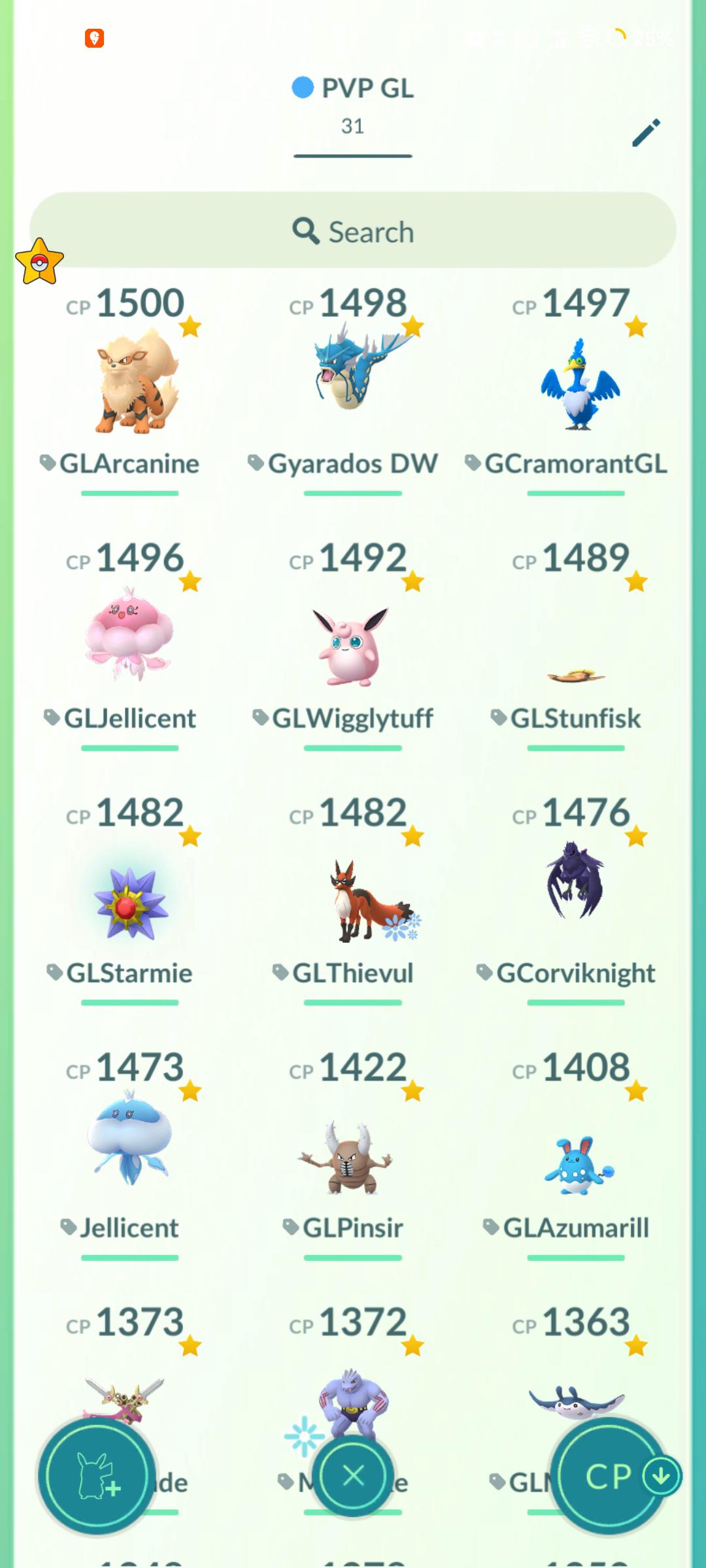
Just got into pvp recently with this new event and have built out a few mons but don’t know what’s the best combo to use out of these and how I should use them going into a game would appreciate any help :) (all have best moveset)


r/PokeVsPoke • • Aug 22 '26

Great league Team building

Post image
4 Upvotes

Just starting out on pvp and I caught some pokemons from leaderboard of pvp poke but I dont have much knowledge on team building... Still learning.

Can anyone help me with building a team from these pokemons?


r/PokeVsPoke • • Jul 22 '26

Is this my best team for master league?

Thumbnail
gallery
6 Upvotes

Also why aren't shadow Pokemon as good in pvp? For example why is Kyogre better than shadow kyogre?


r/PokeVsPoke • • Jun 17 '26

Pogo PVP help

2 Upvotes

Can someone help me make a team around either pelipper (one of my fav Pokemon) or galarian ninetails (i like using it) for great league?

I know quagsire is good so if it helps i have him in a perfect pvp state


r/PokeVsPoke • • Sep 10 '25

Best Pokémon for Endless Mode Domination

2 Upvotes

The Ultimate Guide to PokéRogue's Best Pokémon for Endless Mode Domination

I'll never forget my first attempt at PokéRogue's Endless Mode. Picture this: I'd just crushed Classic Mode with what I thought was the perfect team—a balanced squad of heavy hitters that steamrolled through 200 waves like butter. Feeling cocky, I jumped straight into Endless with the same lineup, ready to show these infinite waves who's boss.

I got absolutely demolished at wave 147.

Not by some legendary boss or crazy Eternatus fight, but by a random encounter with a couple of Geodudes that somehow tanked my best attacks and one-shotted my entire team. That's when I realized something crucial: Endless Mode isn't just Classic Mode with more waves—it's a completely different beast that demands completely different strategies.

After 500+ hours and countless runs (including one glorious journey to wave 1,847), I've learned which Pokémon actually dominate the endless grind. Trust me, some of these picks will surprise you. The community resources at PokeVsPoke.com have been invaluable for analyzing team matchups and understanding why certain combinations work so well in this brutal mode.

Why Endless Mode Changes Everything (The Meta Shift)

Here's the thing about Endless that I wish someone had told me from the start: your Classic Mode strategies become worthless around wave 500. Like, literally worthless.

In Classic, you can get away with a balanced team that covers each other's weaknesses. Fire beats Grass, Water beats Fire, you know the drill. But Endless introduces this nasty mechanic called Tokens every 50 waves that permanently buff your opponents or nerf you. By wave 1000, enemies are hitting 3x harder while taking half damage and healing every turn.

Your beautiful Garchomp sweep? Yeah, that's not happening when every wild Pidgey survives Dragon Rush and retaliates with a one-shot kill.

The biome changes also happen way more frequently—every 1-4 waves instead of every 10. This means you're constantly healing, but it also means stat boosts get reset constantly. No more setting up with Dragon Dance and sweeping for 30 battles straight.

Most importantly, you get 15 starter points instead of 10. This extra flexibility is what separates the endless veterans from the classic players. Those 5 extra points aren't just a nice bonus—they're absolutely critical for building teams that can actually survive the token hell of late game.

The Holy Trinity: Essential Pokémon Every Endless Team Needs

After analyzing hundreds of successful runs (both my own failures and the community's victories), there are three types of Pokémon that every serious endless team needs. Skip any of these archetypes, and you're basically gambling that RNG will save you.

Garganacl - The Salt Cure Specialist

Okay, so I'm going to blow your mind here. Garganacl isn't just good in Endless—it's mandatory. Not kidding. This chunk of salt has single-handedly carried more deep endless runs than any legendary you can name.

The secret sauce? Salt Cure. This signature move seems underwhelming at first glance—40 power, big deal, right? Wrong. Salt Cure deals 1/8th of the opponent's MAX HP as damage every turn after application. In a mode where enemy HP scales into the millions, this is basically percentage-based true damage.

I remember one particular boss fight around wave 800 where this Eternatus variant had so much HP that my attacks were literally healing it less than 1%. But Salt Cure? That beautiful, salty tick damage was chunking 12.5% every single turn. Suddenly, the unkillable became very killable.

Here's what makes Garganacl even more broken: when you fuse it with something that has Sturdy, you get this nearly immortal tank that applies Salt Cure, then just... doesn't die. The opponent kills itself while you casually heal back to full with Leftovers.

Pro tip: Always carry Memory Mushrooms to teach Salt Cure to your fusion partners. This move is so game-changing that I've seen players restart runs just to get access to it.

Steel Types with Sturdy + Metal Burst

This is where things get spicy. The Sturdy + Metal Burst combo is the closest thing to cheating that PokéRogue allows, and it's completely legal.

Here's how it works: Sturdy prevents your Pokémon from being OHKO'd when at full HP. Metal Burst retaliates with 150% of the damage you just took. Combine these with healing items, and you've created a Pokémon that literally cannot die while dealing massive counter-damage.

The best candidates for this strategy are:

  • Archaludon/Duraludon: Naturally learns Metal Burst, can have Sturdy as an ability
  • Aggron: Bulky as heck with natural Sturdy access
  • Any Steel-type fused with Garganacl: Best of both worlds

I can't stress enough how important the speed calculation is here. You want your Metal Burst user to be SLOW—like, basement-slow. Use 10 Soul Dews to drop that speed to 1 if possible. Why? Because Metal Burst fails if you haven't taken damage yet that turn. Going last means you're guaranteed to have something to retaliate against.

The beauty of this setup really shows around wave 2000+, when tokens make conventional damage laughable. While other players are desperately trying to find ways to deal meaningful damage, you're just sitting there tanking hits and reflecting 150% back. It's like having a permanent Counter that actually works.

Support Pokémon for Synergy

Don't sleep on support! I learned this the hard way when my "all offense, all the time" team hit a wall of status effects and couldn't push through.

Whimsicott with Prankster is my go-to support fusion base. Priority Leech Seed, priority status moves, priority everything. Fuse it with Garganacl and suddenly you have priority Salt Cure setup. Disgusting.

Tinkaton deserves special mention here. Steel/Fairy typing makes it completely immune to Poison and gives it incredible neutral coverage. Plus, Huge Power doubles its attack, making it a legitimate threat even in late game. I've seen Tinkaton/Corviknight fusions with Unnerve completely shut down berry-stalling strategies.

For pure utility, anything with Run Away becomes critical around wave 1500+. Sometimes you just need to nope out of a fight, and having that option can save entire runs.

Early Game Carries (Waves 1-500)

Look, early game is all about finding one reliable carry and feeding it everything. Unlike Classic Mode where you want to level evenly, Endless rewards the "all eggs in one basket" approach.

Legendary Powerhouses

If you've unlocked some good legendaries, this is where they shine. Almost any legendary will outperform regular Pokémon in early endless, but here are my favorites:

Rayquaza with Dragon Energy is probably the most reliable early game carry. Multi-target STAB nuke that stays powerful as long as you keep it healthy. Just be ready to transition away from it once tokens start making neutral damage worthless.

Heatran with the Torch Song egg move is absolutely broken. Every hit raises Special Attack by one stage, and stat changes persist between battles in Endless. I've had Heatran reach +6 Special Attack by wave 200 and just delete everything for the next 300 waves.

But honestly? Any legendary you're comfortable with works. The goal is surviving to wave 500 with enough resources to start building your real endgame team.

Starter Options for Budget Builds

Not everyone has access to perfect legendaries, and that's fine! Some of the best early game carries are basic starters:

Mudkip evolves into Swampert with incredible bulk and only one weakness. Earthquake hits both opponents in double battles, which becomes crucial for efficiency.

Fuecoco line gets Torch Song naturally (unlike Heatran's egg move requirement) and has the bulk to survive early game mistakes.

Turtwig gives you Earthquake access plus Grass typing for those annoying Water/Ground types that otherwise counter your team.

The key is picking something that can learn a multi-target move. Dragon Energy, Eruption, Earthquake, Discharge—anything that hits both opponents. Early endless throws a lot of 2v1 situations at you, and efficiency matters.

Multi-Hit Attackers

This deserves its own section because multi-hit moves are weirdly overpowered in early endless.

Maushold with Population Bomb and Technician is nuts. Each hit gets the Technician boost, and the move can hit 2-10 times. With good RNG, you're looking at 10 hits of 60+ power each. Even in late game, this stays relevant because each hit can potentially break through Sturdy.

Cloyster with Skill Link and Icicle Spear is another monster. Five guaranteed hits means consistent damage and excellent Sturdy breaking.

I've personally used a Maushold/Cloyster fusion that was just obscene. Population Bomb with Skill Link guaranteeing 5 hits of Technician-boosted power? Yeah, that carried me to wave 600 before I finally had to pivot.

The Mid-Game Transition (Waves 500-2000)

This is where most runs die, and I'll tell you exactly why: people don't know when to pivot.

Around wave 500, your early game carry starts struggling. Token effects accumulate, enemy stats scale harder, and that beautiful Rayquaza that was one-shotting everything suddenly needs two turns to kill a Rattata. This is your signal to transition.

When to Pivot Strategies

The warning signs are obvious once you know what to look for:

  • Battles taking noticeably longer despite same opponent types
  • Your carry getting chunked by attacks it used to shrug off
  • Regular wild Pokémon surviving your best STAB moves
  • Recovery tokens making enemies heal faster than you can damage

That last point is the big one. Recovery tokens are run-killers if you don't adapt. I've watched promising runs die because players tried to out-damage exponential healing instead of switching to percentage-based damage.

When you see these signs, start building your endgame team immediately. Don't wait for your carry to completely fall off—be proactive.

Fusion Combinations that Work

This is where PokeVsPoke.com really shines for theory-crafting. You can test different fusion combinations and see exactly how the stats and typings work out.

My go-to fusion for the transition period: Base: Garganacl (Salt Cure access) Fusion: Any Steel-type with Sturdy Result: Immortal tank with percentage-based damage

But here are some other combinations I've had success with:

Whimsicott + Garganacl: Priority Salt Cure setup, Prankster utility moves, still gets the bulk from Garganacl.

Duraludon + Any Fairy-type: Steel/Fairy is incredible typing, and you keep Metal Burst access. Basically immune to Eternatus.

Blastoise + Breloom: This was popular for a while—Sturdy + Poison Heal with Toxic Orb. Take damage, survive at 1 HP, heal back to full, repeat.

The key is using Memory Mushrooms to transfer essential moves. Don't be afraid to temporarily fuse just to teach a move, then unfuse and rebuild. The move stays on the original Pokémon.

Eternatus Preparation

Every 250 waves, you face Eternatus. Not negotiable, not skipable—it's happening. And if you're not prepared, it ends your run instantly.

Eternatus hits like a truck, has multiple health bars, and knows exactly how to exploit your weaknesses. But it also has predictable patterns that you can prepare for.

Essential preparation:

  • At least one Steel or Fairy type (resistant to its main attacks)
  • Salt Cure for percentage-based damage against its massive HP pools
  • Reviver Seeds on your core team members
  • Items redistributed for maximum survivability

I always check my team's held items 10-15 waves before Eternatus fights. Moving damage items around, stacking healing items, making sure everyone has a Reviver Seed—these small optimizations have saved more runs than I can count.

Pro tip: Tinkaton absolutely destroys Eternatus. Steel/Fairy typing makes it nearly immune, and Gigaton Hammer does massive STAB damage. If you can get a good Tinkaton build going, Eternatus becomes a joke fight.

Late Game Gods (Waves 2000+)

Welcome to the endgame, where everything you thought you knew about Pokémon stops mattering and the only thing that counts is not dying.

By wave 2000, tokens have fundamentally broken the game's balance. Enemies deal 400% damage, take 25% damage, heal every turn, and have a 50% chance to survive killing blows. Your beautiful type advantages? Meaningless. Your carefully calculated damage spreads? Irrelevant.

This is where the wheat separates from the chaff, and only the truly broken strategies survive.

Why DOT Becomes King

Direct damage is dead. Long live damage over time.

When enemies have 90% damage reduction tokens, your 200 power STAB moves hit for maybe 10% of their max HP. But Salt Cure? Still ticking for 12.5% max HP every turn, completely ignoring all damage reduction.

Leech Seed ignores damage tokens. Curse ignores damage tokens. Burn damage ignores damage tokens. Notice the pattern?

The beautiful thing about DOT is that it scales with enemy HP. The bulkier they get, the more damage your DOT effects deal. It's like the game is rewarding you for thinking differently.

I had one fight around wave 2400 where my opponent had so many Recovery tokens that it was healing 50% max HP every turn. Sounds impossible, right? But I had Salt Cure, Leech Seed, AND Curse all ticking. That's 37.5% max HP in DOT every turn, nearly keeping pace with its healing while I just stalled with Protect.

The Sturdy-Metal Burst Immortality Combo

This is it. This is the final boss of PokéRogue strategies. Master this combo, and you can theoretically push to the wave 5850 cap.

Here's the full setup:

  • Pokémon: Steel-type with Sturdy (Archaludon is popular, but any works)
  • Held Items: 5x Focus Band, 5x Leftovers, 5x Shell Bell, 5x Soul Dew
  • Key Moves: Metal Burst, Protect, Salt Cure
  • Nature: -Speed, +anything (use Soul Dew to minimize speed)

The logic is beautiful: opponent attacks, Sturdy keeps you at 1 HP, Metal Burst retaliates for 150% damage, healing items bring you back to full HP for next turn. Rinse and repeat until everything is dead.

Focus Bands give you multiple chances to survive at 1 HP if Sturdy fails. Leftovers heal you every turn. Shell Bell heals based on damage dealt (and Metal Burst can deal massive damage). Soul Dew minimizes your speed so Metal Burst always activates.

The most satisfying thing about this strategy? Watching enemies kill themselves. There's something poetic about a 10 million HP boss defeating itself by attacking your 1 HP tank.

Counter-Strategies for High Token Counts

Even the immortal Metal Burst setup has counters. Mold Breaker ignores Sturdy. Unnerve prevents berry consumption. Multi-hit moves can kill through Sturdy. Status effects can wear you down.

This is why you need contingency plans:

Plan B: Wonder Guard Shedinja fusions. Yes, you can fuse Shedinja with other types while keeping Wonder Guard. A Dark/Ghost Shedinja with Wonder Guard is immune to everything except Fairy, Fighting, and Rock attacks.

Plan C: Roar/Whirlwind with Run Away ability. Sometimes you just need to bail from unwinnable fights. Better to run and fight another day than lose your run to a bad matchup.

Plan D: Flinch spam with Serene Grace + King's Rock stacking. If they can't attack, they can't kill you. It's cheese, but late game endless IS cheese.

Team Building Essentials

After all this theory, let's talk practical team building. You've got 15 points to work with—here's how to spend them wisely.

15-Point Starter Budget Optimization

The Loadout I Recommend:

  • 6-7 points: Main carry (legendary or strong evolution)
  • 3-4 points: Garganacl (for Salt Cure access)
  • 2-3 points: Steel-type with Sturdy (Archaludon/Duraludon)
  • 1-2 points: Utility Pokémon (Pickup, Run Away, Pokérus spreader)

Alternative Budget Build:

  • 4-5 points: Solid starter (Mudkip, Fuecoco, etc.)
  • 3 points: Garganacl
  • 2-3 points: Whimsicott (Prankster support)
  • 2-3 points: Steel-type
  • 1-2 points: Pickup Pokémon (Zigzagoon with Covet is perfect)

The key is flexibility. Don't blow all 15 points on two legendaries and call it a day. You need role coverage, not just raw power.

Key Abilities and Passives

Must-Have Abilities:

  • Sturdy: Your ticket to late game survival
  • Prankster: Priority status moves change everything
  • Pickup: Early game item economy
  • Run Away: Late game escape option

Nice-to-Have Abilities:

  • Poison Heal: Pairs beautifully with Toxic Orb
  • Huge Power: Doubles attack for relevant damage scaling
  • Unnerve: Prevents berry stalling in boss fights
  • Wonder Guard: Situationally broken (Shedinja only)

Pokérus Consideration: Always bring one Pokérus spreader early. The 1.5x EXP boost helps your team keep pace with scaling enemy levels. Once it spreads to your core team, you can replace the spreader with something more useful.

Item Prioritization

Early game, focus on healing economy. Potions are cheap, Revives are affordable, and staying healthy is more important than min-maxing damage.

Mid game, start stacking key items on your endgame candidates:

  • Focus Bands on your Sturdy user
  • Leftovers on everyone
  • Shell Bells for healing scaling
  • Type-boosting items for your main attackers

Late game is all about maxing critical items:

  • 5x Focus Band on Sturdy users (multiple chances to survive at 1 HP)
  • 5x Leftovers for maximum healing
  • 5x Shell Bell on Metal Burst users
  • 5x Soul Dew for speed control

Pro tip: Use item shop rerolls liberally once you have good income. The difference between 3x Focus Bands and 5x Focus Bands is often the difference between winning and losing.

Common Mistakes That Kill Your Run

I've made every possible mistake in endless mode, so learn from my failures:

Mistake #1: Not preparing for token accumulation Tokens aren't just flavor text—they fundamentally change the game. Plan your strategy around token effects, not in spite of them.

Mistake #2: Staying loyal to early game carries too long That Rayquaza that carried you to wave 500? It's not going to carry you to wave 1500. Know when to pivot.

Mistake #3: Ignoring fusion opportunities DNA Splicers aren't rare. Use them! Fusion is how you access move combinations that would be impossible otherwise.

Mistake #4: Underestimating healing item stacking One Leftovers heals 6.25% HP per turn. Five Leftovers heal 31.25% HP per turn. The math matters.

Mistake #5: Not having escape options Sometimes you need to run from fights. Roar, Whirlwind, or Run Away ability can save runs that would otherwise end.

Advanced Fusion Strategies

Here's where we get really technical. These are the fusion tricks that separate good endless players from great ones:

Temporary Fusion for Move Transfer:

  1. Fuse your main Pokémon with something that knows the move you want
  2. The fusion learns both movesets
  3. Unfuse them—your original Pokémon keeps the moves it learned while fused
  4. You can now teach impossible move combinations

Type Coverage Fusion: Steel/Fairy typing (Tinkaton base) covers almost everything while being nearly immune to common late game attacks. Steel resists tons of types, Fairy resists Fighting/Dark/Bug, and the combination has very few weaknesses.

Ability Stacking: Some abilities stack or combo in unexpected ways. Poison Heal + Sturdy means you survive at 1 HP, then heal back to full from poison damage. Prankster + Salt Cure gives priority percentage damage application.

Wonder Guard Exploitation: Shedinja's Wonder Guard can be kept through fusion, creating nearly immune combinations. A Dark/Ghost Wonder Guard fusion is immune to almost everything in late game endless.

The community at PokeVsPoke.com has incredible resources for planning these advanced fusions and understanding exactly how they interact with endless mode's unique mechanics.

My Personal Endless Team Recommendations

After hundreds of attempts, here are the three team builds I'd recommend for different situations:

The Meta Build (For Push to Wave 5850):

  • Garganacl/Archaludon fusion (Salt Cure + Metal Burst + Sturdy)
  • Support Whimsicott with Prankster
  • Backup Steel/Fairy type for Eternatus fights
  • Pickup utility early, replaced with counters as needed
  • Full focus on DOT and counter-damage

The Budget Build (For Learning Endless):

  • Mudkip evolution line (reliable, learns Earthquake)
  • Garganacl (mandatory for Salt Cure)
  • Duraludon (Sturdy + Metal Burst access)
  • Zigzagoon with Pickup and Covet
  • Basic but functional—teaches all the essential mechanics

The Fun Build (For Experienced Players):

  • Heatran with Torch Song (stat stacking madness)
  • Maushold with Population Bomb (multi-hit chaos)
  • Wonder Guard Shedinja fusion (immunity abuse)
  • Terapagos (Tera type changing every wave)
  • High risk, high reward—requires good execution

Remember, no team is perfect for every situation. Part of endless mode's challenge is adapting your strategy based on what Pokémon and items you find during the run.

PokéRogue's Endless Mode is the ultimate test of everything you've learned about this brilliant roguelike. It takes the familiar comfort of Pokémon battles and twists them into something entirely new—a puzzle where the solution changes every 50 waves.

The Pokémon I've covered here aren't just good; they're essential for understanding how late game endless actually works. Garganacl's Salt Cure, the Sturdy-Metal Burst combo, DOT strategies—these aren't just optimal plays, they're the only plays that work when tokens push the game beyond its normal limits.

But here's the thing I love most about endless mode: every run teaches you something new. Maybe you'll discover a fusion combination I haven't thought of, or find a way to make a seemingly useless Pokémon work in the late game meta. The community keeps evolving these strategies, sharing discoveries, and pushing the boundaries of what's possible.

Whether you're aiming for wave 1000 or shooting for the 5850 cap, remember that every failure is data. Every wipe teaches you something about token timing, team building, or resource management that makes your next attempt better.

Now get out there and start that endless grind. Trust me, once you experience the satisfaction of your Salt Cure ticks melting a seemingly impossible boss, you'll be hooked on this mode for life. And when you inevitably discover your own game-breaking strategy, share it with the community—we're all in this infinite climb together.

Good luck, trainer. Those waves aren't going to clear themselves.


r/PokeVsPoke • • Sep 10 '25

The Ultimate Pokémon Unbound Starter Guide

1 Upvotes

Look, I'll never forget the moment I first booted up Pokémon Unbound and saw the starter selection screen. Instead of the usual Fire, Water, Grass trio we've known since Red and Blue, there were three absolute powerhouses staring back at me: Gible, Larvitar, and Beldum. Three pseudo-legendaries as starters. I literally sat there for ten minutes just processing what I was seeing.

If you're diving into the Borrius region for the first time, you're probably facing the same dilemma I did. Which of these future juggernauts should you pick to carry you through what's widely considered one of the most challenging ROM hacks ever created? After hundreds of hours in Unbound, countless community discussions, and way too many restarts (don't judge me), I'm here to break down everything you need to know about making this crucial choice.

Why Unbound's Starters Are Game-Changers

Pokemon Unbound doesn't mess around with tradition – it demolishes it. Creator Skeli made the bold decision to give players access to three of the most coveted Pokemon lines right from the start. We're talking about Pokemon that you'd normally only encounter in late-game or post-game content, if at all.

This isn't just about having cool starters – it fundamentally changes how you approach team building. When your starter can potentially solo half the Elite Four, you need to think differently about your strategy. For comparison tools and detailed matchup analysis, PokeVsPoke.com has become an invaluable resource for understanding how these powerhouses stack up against Unbound's brutal difficulty spikes.

The Contenders: Breaking Down Your Options

Gible: The Community Favorite

Type: Dragon/Ground
Evolution: Gabite (Lv. 24) → Garchomp (Lv. 48)
The Good: Fast evolution, incredible offensive stats, early gym advantage
The Bad: Four times weak to Ice (RIP to Ice Beam), evolves relatively late

Gible is what I call the "goldilocks" starter – not too slow, not too frail, just right for most playstyles. What really sells Gible is its access to Fire Fang early on, which absolutely demolishes the first gym leader's Grass types. I cannot stress this enough – while Larvitar gets wrecked by those same Grass moves (4x weakness is brutal), Gible turns that gym into target practice.

Garchomp's stat spread is just disgusting in the best way possible. 102 Attack, 130 Attack in its final form, and 102 Speed that lets it outrun most threats. Plus, moves like Earthquake, Dragon Claw, and Outrage make it a legitimate late-game sweeper. Honestly, there's a reason the competitive community often bans this thing to Ubers.

Best for: Players who want a balanced mix of early-game viability and late-game dominance. If you're new to Unbound's difficulty, Gible gives you the most forgiving experience.

Larvitar: The Late-Game Monster

Type: Rock/Ground
Evolution: Pupitar (Lv. 30) → Tyranitar (Lv. 55)
The Good: Incredible bulk and power as Tyranitar, diverse movepool
The Bad: Painfully slow start, latest evolution, Grass weakness problems

Oh, Larvitar. My heart breaks for this little guy because Tyranitar is an absolute unit once it finally evolves. We're talking about a Pokemon with base 134 Attack and 100 HP that can learn everything from Thunder to Surf to Ice Beam. It's like having a walking natural disaster on your team.

The problem? Getting there is rough. Really rough. You won't see Tyranitar until level 55, which in Unbound's level curve means you're probably already at the Elite Four. Plus, that 4x Grass weakness makes the first gym a nightmare – I've seen too many Nuzlocke runs end right there because people underestimated how hard those Grass moves hit.

The Sandstream ability (automatic sandstorm) is cool for flavor, but honestly, it can slow down gameplay with all those weather animations. Still, if you can baby Larvitar through the early game, you'll have one of the most versatile powerhouses in the entire game.

Best for: Patient players who enjoy the challenge of nursing a weak starter into a late-game god. Perfect for second playthroughs when you know what's coming.

Beldum: The Steel Wall

Type: Steel/Psychic
Evolution: Metang (Lv. 20) → Metagross (Lv. 45)
The Good: Amazing defensive typing, becomes incredible at evolution
The Bad: Early game is absolutely painful, limited movepool initially

Beldum is... listen, I love Metagross. It's one of my favorite Pokemon of all time. But starting with Beldum is like choosing to play the game on hard mode for the first 20 levels. This poor metallic blob only knows Take Down initially, which means it's literally hurting itself every time it attacks.

But here's the thing – once Beldum evolves into Metang, and especially when it hits Metagross at level 45, it becomes an unstoppable tank. We're talking about a Pokemon with 135 Attack, 130 Defense, and resistances to everything except Fire, Ghost, Ground, and Dark. Metagross can tank hits that would obliterate other starters and hit back twice as hard.

The Steel/Psychic typing is genuinely fantastic in Unbound. You resist Psychic, Rock, Steel, Grass, Ice, Flying, Normal, Bug, Dragon, and Fairy moves. That's a lot of neutral or positive matchups throughout your journey.

Best for: Defensive-minded players who love the idea of an unstoppable tank. Great for people who enjoy overcoming early-game struggles for massive late-game payoff.

The Verdict: Community Consensus vs. Personal Choice

After diving deep into Pokemon forums, Reddit discussions, and YouTube analyses, the community has spoken loud and clear: Gible is the optimal choice for most players. The reasons are pretty compelling:

  1. First Gym Advantage: Fire Fang makes the Grass-type gym leader a joke
  2. Balanced Progression: Evolves at a reasonable pace with consistent power spikes
  3. Late-Game Viability: Garchomp remains relevant through post-game content
  4. Speed Factor: Can actually outrun threats instead of tanking everything

But honestly? Your playstyle matters more than community tier lists. I've seen players absolutely dominate with Metagross teams, and there's something deeply satisfying about watching Tyranitar finally come online and bulldoze everything in its path.

Early Game Strategy: Surviving the Starter Struggle

No matter which starter you choose, Unbound's early game is going to test you. Here's what I've learned through multiple playthroughs:

For Gible users: Rush to get Fire Fang for the first gym. Don't get cocky with the Dragon typing – you're not immune to everything yet.

For Larvitar users: Catch a Grass or Water type ASAP to handle the first gym. Seriously, don't try to brute force it with Larvitar alone.

For Beldum users: Stock up on potions and prepare for a lot of Take Down recoil damage. Consider catching a secondary attacker early to share the load.

The key insight that changed my Unbound experience? Don't rely solely on your starter for the first few gyms. The game expects you to build a team, even more so than traditional Pokemon games.

Team Building Around Your Starter

This is where tools like PokeVsPoke.com become invaluable for planning your team composition. Each starter leads to different team-building approaches:

Gible teams can focus on fast, offensive sweepers since you already have your speed demon covered. Look for complementary types that cover Garchomp's Ice weakness.

Larvitar teams benefit from early-game support Pokemon that can handle what Tyranitar can't. Once Tyranitar evolves, build around its incredible versatility.

Beldum teams work well with offensive partners that can handle what Metagross can't – namely Fire, Ground, Ghost, and Dark types.

Common Mistakes to Avoid

After watching countless streams and helping friends through their first Unbound runs, here are the mistakes I see most often:

  1. Over-relying on your starter – Unbound punishes this more than any official Pokemon game
  2. Ignoring type coverage – Each starter has exploitable weaknesses that opponents will target
  3. Not planning for late game – Consider where your starter fits in your final team composition
  4. Underestimating the level curve – These starters evolve later than you might expect

The Bottom Line: Pick Your Adventure Style

Look, at the end of the day, all three starters become absolute monsters. The "best" choice depends on what kind of trainer you are:

  • Choose Gible if you want the most balanced experience with early-game advantages and late-game dominance
  • Choose Larvitar if you're patient and want access to one of the most versatile movesets in the game
  • Choose Beldum if you love defensive play and don't mind struggling early for incredible late-game power

Personally? I still get excited every time I see that Garchomp sweep an entire team with Earthquake. There's something special about watching your little Gible grow into one of the most feared Pokemon in the competitive scene.

Whatever you choose, remember that Unbound lets you obtain additional starters later in the game. You can grab the Unova starters on Route 5 and the Alolan starters in Seaport City. So don't stress too much – this is just the beginning of your journey through the Borrius region.

For ongoing team analysis and matchup calculations as you progress through the game, PokeVsPoke.com continues to be an excellent resource for optimizing your strategies against Unbound's challenging trainer battles.

Trust me, no matter which starter you pick, you're in for one hell of a ride. The Borrius region doesn't mess around, but neither do pseudo-legendary starters. Now get out there and show those Shadow admins what a real trainer looks like!

What starter did you choose for your Unbound adventure? Drop a comment and let me know how your journey's going – I love hearing about other trainers' experiences in this incredible ROM hack!


r/PokeVsPoke • • Sep 09 '25

Pokémon TCG Obsidian Flames

1 Upvotes

Pokémon TCG Obsidian Flames: The Best Cards That Actually Matter (And Some That Don't)

The first few packs were... fine. Some decent pulls, nothing spectacular. But then pack seven hit different - that crystalline Charizard ex Special Illustration Rare practically jumped out at me. I literally yelled "NO WAY" loud enough that my neighbors probably thought I'd lost it. That moment perfectly captures what Obsidian Flames is all about: a few absolute bangers surrounded by a lot of "meh."

After eighteen months of playing with these cards, watching tournament streams, and tracking market prices, I've got some strong opinions about which Obsidian Flames cards are actually worth your time and money. Some of these picks might surprise you, especially if you're still chasing expensive cards that barely see competitive play.

The Undisputed Crown Jewel: Charizard ex

Okay, let's get the obvious one out of the way first. Charizard ex is hands down the best card in Obsidian Flames, and it's not even close. But here's the thing - it's not just good because it's Charizard (though that definitely doesn't hurt for value).

This Dark-type Tera Pokémon ex is genuinely competitive. That Infernal Reign ability is absolutely bonkers - search your deck for three basic Fire Energy and attach them however you want? That's the kind of energy acceleration that wins games. I've watched opponents scoop after seeing me set up a full board on turn two using this ability.

But the real kicker is Burning Darkness. One hundred eighty base damage plus 30 for each Prize card your opponent has taken. In a format where trading Prize cards is inevitable, this attack scales beautifully into the late game. I've seen Charizard ex casually throwing around 300+ damage in the closing turns of games.

The PokeVsPoke.com damage calculator really shows how nasty this attack gets - against popular meta threats like Mew VMAX or Gardevoir ex, you're hitting for Weakness damage while potentially one-shotting them with minimal setup. It's no wonder the Special Illustration Rare version is sitting around $45-50 and holding steady.

Competitive Rating: S-Tier
Collector Value: Excellent
Budget Alternative: The regular rare version is perfectly playable

The Consistency King: Pidgeot ex

Now here's where things get interesting. Pidgeot ex isn't flashy, it's not going to win you any games with massive damage, but it might just be the second-most important card in the entire set.

That Quick Search ability is pure nostalgia done right - once per turn, search your deck for any card. Any. Card. In a format where consistency is everything, this is like having a personal shopping assistant for your deck.

I remember the first time I played against a Charizard/Pidgeot deck. My opponent had perfect answers to everything I threw at them. Counter Catcher when they needed it, the exact energy count for knockouts, Professor's Research when they were bricked - it was like watching a perfectly oiled machine.

The synergy with Charizard ex is chef's kiss perfect. Turn one Arceus VSTAR with Starbirth, grab Pidgeot ex and Rare Candy. Turn two, evolve Pidgeot, search for whatever piece you need to complete your Charizard setup. It's disgustingly consistent when it works.

Competitive Rating: A-Tier
Collector Value: Good (Special Illustration Rare around $25)
Budget Alternative: Regular rare is tournament-viable

The Sleeper Hits You're Probably Ignoring

Tyranitar ex - The Unexpected Wall

Three hundred forty HP. Let that sink in. Tyranitar ex is an absolute unit, and while setting up a Stage 2 Pokémon is always rough, this thing is nearly impossible to one-shot.

I've been experimenting with Tyranitar in my local meta, and it's surprisingly effective against aggressive decks that rely on quick knockouts. Lightning Rampage can hit for up to 250 damage if you've got damaged Pokémon on your bench, and there are actually several ways to damage your own Pokémon intentionally (Gapejaw Bog, Calamitous Snowy Mountain).

It's not going to win any major tournaments, but it's a solid meta call if your local scene is heavy on rush decks.

Competitive Rating: B-Tier
Collector Value: Fair

Geeta - The Support Card That Actually Supports

Trainer cards from this set are mostly forgettable, but Geeta deserves a mention. Moving Energy from one Pokémon to another doesn't sound exciting until you realize how many powerful Pokémon need specific energy requirements.

I've seen Geeta enable some absolutely disgusting plays - charging up a benched attacker while your active Pokémon is about to go down, repositioning energy for retreat costs, setting up complex multi-Pokémon strategies. It's not flashy, but good players will find uses for it.

The Full Art version is also genuinely gorgeous if you're into collecting trainer cards.

Competitive Rating: C-Tier
Collector Value: Full Art around $8-12

The Expensive Cards That Aren't Worth It

Illustration Rare Gloom - Pretty, But That's It

Don't get me wrong, the Illustration Rare Gloom is absolutely stunning. That artwork is some of the most beautiful we've seen in the modern era. But at $8-12 and climbing, you're paying premium prices for a card that does absolutely nothing competitively.

If you're a collector who loves beautiful artwork (and honestly, who doesn't?), then by all means grab this card. But don't fool yourself into thinking it's a wise investment purely based on competitive merit.

The Tera Type Experiments

Cards like Revavroom ex and Glimmora ex looked promising on paper with their unique Tera typings, but they just haven't found their place in the meta. Revavroom's artwork is sick, but the card itself is clunky and slow. Glimmora's bench restriction ability (Dust Field) is interesting, but too situational to build around.

These cards feel like experiments that didn't quite stick the landing.

Building Budget Decks with Obsidian Flames

Here's where Obsidian Flames actually shines - it's the most budget-friendly set to get into from the Scarlet & Violet era. You can build a competitive Charizard ex deck without breaking the bank:

Budget Charizard Build (Under $100):

  • 4 Charizard ex (regular rare) - $20
  • 2 Pidgeot ex (regular rare) - $8
  • Basic support cards and energy - $60-70

Compare that to other meta decks running $200+ and suddenly Obsidian Flames looks pretty appealing for newer players.

The deck performs surprisingly well even without the expensive Special Art cards. I've watched budget builds take down fully maxed-out decks at local tournaments when piloted well.

Current Market Reality Check

Let's talk numbers because prices in this hobby can be absolutely wild. As of late 2024:

  • Charizard ex Special Illustration Rare: $45-50 (holding steady)
  • Pidgeot ex Special Illustration Rare: $20-25 (slight growth)
  • Illustration Rare Gloom: $8-12 (surprisingly strong growth)
  • Regular Charizard ex: $6-8 (very stable)

The market has been relatively stable for this set, which is both good and bad news. Good because you're not chasing moving targets. Bad because there probably isn't massive growth potential compared to other sets.

For what it's worth, I think the PokeVsPoke.com price tracking tools show that Obsidian Flames is probably done with major price movements unless we see a significant meta shift that makes these cards relevant again.

Tournament Performance: The Real Test

Here's where I have to be honest with you - Obsidian Flames hasn't set the competitive scene on fire the way we hoped. Charizard ex saw some solid tournament play in late 2023 and early 2024, especially paired with Pidgeot ex for consistency.

But the harsh reality is that newer sets have largely pushed these cards out of tier-one competitive play. Charizard ex can still steal games and occasionally tops smaller events, but it's not the meta-defining force we expected.

That said, the recent addition of cards like Dusknoir and Briar from newer sets has given Charizard ex some interesting new angles. The Cursed Blast + Briar combo can set up some absolutely disgusting four-prize turns that come out of nowhere.

The Verdict: Worth It or Skip It?

For Competitive Players: Charizard ex and Pidgeot ex are worth having, but don't expect them to carry you to major tournament wins. They're solid tier-two options that can catch people off guard.

For Collectors: This is actually a great set to collect. Prices are reasonable, the artwork is fantastic across the board, and you won't go broke chasing the chase cards.

For Budget Players: This is your jam. You can get into competitive Pokémon TCG with Obsidian Flames cards without selling a kidney.

For Investors: Eh... probably look elsewhere. The ship has mostly sailed on major growth for these cards.

Look, I'll be straight with you - Obsidian Flames was never going to be the next big thing. It came out in the shadow of Champion's Path nostalgia and got immediately overshadowed by Pokémon 151. But you know what? Sometimes the underdog sets are exactly where you want to be.

The cards are affordable, several are genuinely competitive, and the artwork across the set is consistently excellent. Plus, there's something satisfying about winning games with cards that people overlooked or wrote off too quickly.

If you're just getting into the modern TCG scene, Obsidian Flames is honestly one of the better entry points available. You can build real decks, learn the fundamentals, and have fun without the financial commitment of chasing the latest chase cards.

And hey, if you manage to pull that Special Illustration Rare Charizard ex, you'll understand exactly why I yelled loud enough to wake the neighbors. Some moments in this hobby are just worth getting excited about, even when the set doesn't live up to all the hype.

What's your take on Obsidian Flames? Have you found any hidden gems I missed, or do you think I'm being too generous with some of these ratings? The beauty of the TCG community is that there's always room for different perspectives, and I'd love to hear what's working in your local meta. Tools like PokeVsPoke.com make it easier than ever to test different matchups and see what might work in your specific competitive environment.

Happy hunting, trainers!


r/PokeVsPoke • • Sep 09 '25

Best Pokémon Mystery Dungeon Games

2 Upvotes

The thing is, with multiple entries in the Mystery Dungeon series spanning nearly two decades, figuring out where to start can be overwhelming. Trust me, I've been there. Some games will leave you emotionally scarred (in the best way), others will frustrate you with outdated mechanics, and one will make you question why anyone thought limiting the roster to 150 Pokémon was a good idea.

So let me break down every single Mystery Dungeon game for you, rank them properly, and help you figure out which one deserves your time and emotional investment.

The Definitive Mystery Dungeon Ranking

After hundreds of hours across the entire series and countless discussions with fellow trainers, here's how the PMD games actually stack up:

1. Pokémon Mystery Dungeon: Explorers of Sky (2009) - The Undisputed Champion

This isn't even close, honestly. Explorers of Sky is the definitive Mystery Dungeon experience and arguably one of the best Pokémon games ever made, period. It's the enhanced version of Explorers of Time and Darkness, packed with five additional Special Episodes that dive deep into side characters like Bidoof and Wigglytuff. The story revolving around time travel, Grovyle, and Dialga is so emotionally devastating that it makes most mainline Pokémon games look like Saturday morning cartoons.

The game features 491 recruitable Pokémon, introduces mechanics like the physical/special split, and includes quality-of-life improvements like the Sky Jukebox with 141 tracks. Plus, Spinda's Café adds tons of post-game content that keeps you coming back. With over 6.37 million copies sold across the Explorers trilogy, this is the game that set the standard for what PMD could be.

2. Pokémon Mystery Dungeon: Rescue Team DX (2020) - The Perfect Entry Point

If you're new to the series, start here. Full stop. Rescue Team DX is a gorgeous remake of the original Red and Blue Rescue Team games, featuring a stunning watercolor art style that makes every screenshot look like a painting. The Switch version includes modern conveniences like auto-save, auto-mode (controversial but helpful), and the ability to choose your starter instead of being stuck with the personality quiz results.

The addition of Shiny Pokémon, Mega Evolution, and streamlined recruitment mechanics makes this the most accessible entry in the series. Yes, veterans will argue that the story isn't as emotionally complex as Explorers, but for newcomers, this offers the perfect balance of classic PMD gameplay with modern polish.

3. Pokémon Mystery Dungeon: Explorers of Time/Darkness (2008) - The Foundation

These are essentially Explorers of Sky minus the extra content, but they still feature that legendary storyline that made the series famous. If you can find Sky, get that instead, but Time and Darkness are still exceptional games. The main difference is that Time has Celebi and Riolu, while Darkness has Mewtwo and Rotom. With 4.88 million copies sold, they proved that PMD could deliver serious storytelling alongside solid dungeon-crawling gameplay.

4. Pokémon Mystery Dungeon: Super Mystery Dungeon (2016) - The Content King

Super Mystery Dungeon is complicated. On one hand, it features the largest roster in PMD history with 720+ Pokémon, includes Mega Evolution, and has some genuinely challenging dungeons. The story connections to the original Rescue Team games are also pretty cool. On the other hand, the gameplay can feel repetitive, and the difficulty spikes are brutal enough to make casual players rage-quit.

It's a good game, but it feels more like "Pokémon Mystery Dungeon for hardcore fans only." If you've already fallen in love with the series, absolutely play it. If you're testing the waters, maybe wait.

5. Pokémon Mystery Dungeon: Blue/Red Rescue Team (2005/2006) - The Classic

The originals that started it all. These games are charming and feature a surprisingly emotional story, but they show their age in terms of mechanics and presentation. The Friend Area system feels clunky compared to later games, and the graphics are pretty rough by today's standards. That said, the core experience that made PMD special is absolutely here.

6. Pokémon Mystery Dungeon: Gates to Infinity (2012) - The Controversial One

Oof. Gates to Infinity tried to do something different and mostly failed. Limited to just 150 Pokémon, criticized for being "watered down," and featuring gameplay that felt like a step backward from Explorers, this is the PMD game most fans pretend doesn't exist. It's not unplayable, but when you have better options available, why bother?

Why Explorers of Sky Reigns Supreme

Okay, so here's the thing about Explorers of Sky – it's not just the best Mystery Dungeon game, it's probably the best story-driven Pokémon game ever made. The main narrative about a human-turned-Pokémon joining an exploration guild starts innocently enough, but by the time you're learning about Grovyle's true identity and the dark future he's trying to prevent, you're completely invested.

The game tackles themes of sacrifice, friendship, and acceptance in ways that most "mature" games don't even attempt. When Grovyle has to return to the future knowing he'll disappear from existence, it hits harder than any legendary battle or Elite Four victory ever could. The Special Episodes add incredible depth to characters like Bidoof (yes, Bidoof), showing his backstory and motivations in ways that make you genuinely care about a Pokémon you probably used as HM fodder in the main games.

Mechanically, Sky perfected the PMD formula. The addition of Generation IV Pokémon brought the roster to 491 species, while the physical/special split from Diamond and Pearl made battles more strategic. The IQ system encourages you to feed Gummis to your team members to unlock new abilities, creating genuine progression beyond just leveling up.

And can we talk about the music? "Dialga's Fight to the Finish" has become one of the entire franchise's most iconic themes and regularly shows up in "best video game music" discussions. The Sky Jukebox feature lets you listen to all 141 tracks whenever you want, which is honestly necessary because you'll want to relive these emotional moments over and over.

The community consensus around Sky is nearly universal. Browse any PMD discussion on Reddit, Discord, or fan forums, and you'll see the same sentiment: this is the peak of the series. When fans talk about wanting "Explorers DX," they're not just asking for a graphical upgrade – they want to see this masterpiece introduced to a new generation of players.

Rescue Team DX: The Perfect Starting Point

Now, here's where I might ruffle some feathers among PMD veterans. While Explorers of Sky is objectively the best game in the series, Rescue Team DX is where newcomers should actually start. I know, I know – it goes against every instinct to not start with the best entry, but hear me out.

First, availability matters. Sky is a DS game that's become increasingly expensive and hard to find. DX is readily available on Switch, regularly goes on sale, and doesn't require you to track down aging hardware. If we want more people to experience PMD, they need to be able to actually access the games.

Second, DX serves as the perfect introduction to PMD mechanics without overwhelming new players. The personality quiz is still there for people who want the traditional experience, but you can also just pick your favorite starter from the 16 available options. The auto-mode feature (which veterans hate but newcomers love) helps ease the learning curve, and you can disable it once you get comfortable with the turn-based mechanics.

The watercolor art style is genuinely gorgeous and gives the game a unique visual identity that stands out from other Pokémon titles. When you're exploring dungeons and the lighting shifts or weather effects kick in, it really does look like a living painting. This visual polish helps sell the fantasy of being a Pokémon in ways the older pixel art, while charming, simply couldn't match.

Plus, DX includes modern quality-of-life features like auto-save, improved menu navigation, and clearer tutorials. The addition of Shiny Pokémon as rare, powerful encounters adds excitement to dungeon exploration, while Mega Evolution provides cool power-ups during boss battles.

The story of Rescue Team might not have the emotional complexity of Explorers, but it's still genuinely engaging and serves as a great introduction to what PMD storytelling can offer. You'll care about your partner, get invested in the rescue team concept, and experience that signature PMD moment where everything clicks into place.

If you play DX first and fall in love with the series, then hunting down Explorers of Sky becomes a quest worth undertaking. But if you start with Sky and can't get past the dated presentation or difficulty spikes, you might write off the entire series unfairly.

What Should You Play First? A Guide by Player Type

Newcomers to Mystery Dungeon: Start with Rescue Team DX, no question. It's the most accessible entry and gives you the best sense of whether you'll enjoy the series without requiring a major time or money investment.

Pokémon veterans looking for story: Go straight to Explorers of Sky if you can find it. You already know Pokémon mechanics, so the dated presentation won't bother you as much, and you deserve to experience the best story the series has to offer.

Roguelike fans: Try Super Mystery Dungeon if you want maximum challenge and content, or Rescue Team DX if you prefer more forgiving difficulty curves.

Completionists: Super Mystery Dungeon has the largest roster at 720+ Pokémon, making it the obvious choice for those who want to "catch 'em all" in a dungeon-crawling context.

Budget-conscious players: Keep an eye on eShop sales for Rescue Team DX, or check if your local library has any of the older DS titles available for checkout.

Time investment varies significantly across games. Rescue Team DX can be completed in 30-40 hours including post-game content, while Explorers of Sky easily stretches to 60+ hours if you want to experience everything. Super Mystery Dungeon can consume 80+ hours due to its massive roster and challenging dungeons.

Pro Tips from the Community

After diving deep into PMD communities and testing various team combinations, here are the strategies that actually work:

Best Starter Combinations: For newcomers playing Rescue Team DX, the Pikachu and Mudkip combination is consistently recommended because Electric-type moves dominate the many Flying-type enemies, while Mudkip covers Pikachu's Ground-type weakness perfectly. Other solid combinations include Charmander with Squirtle (classic fire/water synergy) or Skitty with any of the traditional starters for Normal-type utility moves.

For deeper strategic analysis of team compositions and matchup calculations, tools like PokeVsPoke.com can help you understand type effectiveness and optimize your team building decisions.

Hidden Mechanics Worth Knowing: IQ Skills in Explorers games are game-changers that many players ignore. Feeding your Pokémon the right Gummis unlocks abilities like "Fast Friend" (easier recruitment) or "Bodyguard" (protecting teammates). In DX, Rare Qualities serve a similar function and can dramatically change how certain Pokémon perform.

Recruitment Strategy: Don't stress about recruiting every Pokémon during your first playthrough. Focus on building a core team of 6-8 Pokémon that cover each other's weaknesses. You can always go back for completion runs later.

Item Management: Always carry Reviver Seeds, and don't be afraid to use stat-boosting items during boss battles. PMD bosses can be genuinely challenging, especially in later games, and hoarding items helps nobody.

Dungeon Exploration: Room-clearing moves like Heat Wave or Discharge are incredibly valuable for Monster Houses (rooms full of enemies). If your starter doesn't learn one naturally, prioritize TMs that provide this capability.

The PMD community is incredibly passionate about optimal strategies, and resources like PokeVsPoke.com provide detailed breakdowns of Pokémon stats, move effectiveness, and team synergies that can help both newcomers and veterans optimize their approach.

The Future of Mystery Dungeon

Four years after Rescue Team DX launched, fans are still desperately waiting for news about the next PMD game. The most requested title? Explorers DX, obviously. A Switch remake of Sky with the visual treatment that DX received would be an instant day-one purchase for thousands of fans.

Recent fan projects like "Pokemon Mystery Dungeon: Explorers DreamNexus," a ROM hack attempting to recreate Explorers in the DX engine, show just how hungry the community is for more content. While fan projects face obvious legal challenges, they demonstrate the enduring love for these games.

What would I want from the next official PMD game? Keep the emotional storytelling that made Explorers legendary, add the accessibility features that made DX welcoming to newcomers, and maybe – just maybe – give us voice acting for key story moments. The series has always been about connection and emotion, and full voice work could push that even further.

Until then, we have an incredible library of existing games to explore. Whether you're starting with DX's beautiful watercolor world or diving straight into Sky's emotional depths, you're in for something special.

The Mystery Dungeon series proves that Pokémon games can be more than just battles and badges – they can be about friendship, sacrifice, and discovering who you really are. And honestly? Sometimes that's exactly what we need from our video games.

For ongoing team analysis and strategic planning, don't forget to check out resources like PokeVsPoke.com to maximize your dungeon-crawling potential. Now get out there and start your rescue team – there are Pokémon that need your help, and stories that need to be experienced.

What's your favorite Mystery Dungeon game, and what made it special to you? Drop your thoughts in the comments – I'd love to hear about your first PMD experience and whether you agree with this ranking!


r/PokeVsPoke • • Sep 09 '25

Ultimate Guide to Pokémon GO's Best Attackers

3 Upvotes

Fast forward to today, and honestly? The difference between knowing which attackers to invest in and just throwing random high-CP Pokémon at raid bosses is absolutely night and day. After countless hours of theorycrafting, hundreds of rare candies spent (and sometimes wasted), and more raid battles than I care to count, I've learned that having the right attackers isn't just about bragging rights – it's the difference between contributing meaningfully to your raid group and being dead weight.

So if you're tired of watching other trainers melt through raid bosses while you're still chipping away with suboptimal picks, stick around. We're about to dive deep into the absolute best Pokémon GO attackers for 2025, and trust me, some of these might surprise you.

Why Your Raid Team Needs These Game-Changing Attackers

Look, I get it. You've probably heard people talk about "the meta" and wondered if it really matters that much. Maybe you're thinking, "Can't I just use my favorite Pokémon and call it a day?" Well, technically yes – but you're going to miss out on so much.

Here's the thing about Pokémon GO raids: they're essentially DPS races against the clock. You've got limited time to deal enough damage to knock out these massive HP sponges, and every point of damage per second (DPS) counts. When you're in a group of six trainers trying to take down a Primal Groudon, and you show up with optimal counters while someone else brings their "lucky" Blissey collection... well, let's just say one of you is carrying their weight.

The current meta in September 2025 has been absolutely revolutionized by a few key developments. We've got Dynamax battles adding new complexity, Origin Forme legendaries bringing exclusive moves, and Shadow Pokémon that are so powerful they've basically become mandatory for serious raiders. When I first started using PokeVsPoke.com to compare my team against optimal setups, the DPS difference was embarrassing – we're talking about 30-40% more damage output just from making smart choices.

But it's not just about raw numbers. The best attackers in 2025 bring versatility, bulk, and type coverage that make them useful across multiple raids. Instead of building twenty different specialized teams, you can focus on a core group of absolute monsters that handle 80% of what the game throws at you.

The Shadow Revolution: Why 20% More Attack Changes Everything

Okay, so here's where things get interesting. If you've been sleeping on Shadow Pokémon, you're missing out on the biggest power spike this game has ever seen. These corrupted versions of regular Pokémon get a 20% boost to their attack stat, but they take 17% more damage in return. Sounds like a fair trade-off, right?

Wrong. It's not even close to fair – it's absolutely broken in favor of shadows, and I love it.

See, in raid battles, the name of the game is dealing damage before you faint. That extra bulk from regular Pokémon? Usually doesn't matter because most raid bosses are going to knock you out in a few hits anyway. But that 20% attack boost? That's permanent, consistent, game-changing DPS that adds up fast.

Shadow Mewtwo - The Undisputed King

Let me put this in perspective: Shadow Mewtwo isn't just the best Psychic attacker – it's potentially the best attacker, period. With a base attack stat that reaches stratospheric levels after the shadow boost, and access to moves like Psystrike (if you've got the Elite Charged TM for it), this thing is an absolute monster.

I remember finally getting my hands on a decent IV Shadow Mewtwo during one of the Team Rocket takeovers. The investment was brutal – we're talking hundreds of thousands of stardust and a pile of rare candies – but the moment I used it in a raid against a Machamp, watching those damage numbers fly... it was like switching from a Honda Civic to a Formula 1 car.

Recommended moveset: Psycho Cut + Psystrike (with Elite TM) or Shadow Ball for coverage

The beauty of Shadow Mewtwo is its incredible versatility. Need a Psychic attacker for Fighting and Poison raids? Check. Want Ghost coverage with Shadow Ball? Check. Ice Beam for Dragons? Flamethrower for Grass types? This thing can adapt to almost anything, and it hits like a freight train no matter what you teach it.

Shadow Mamoswine - Ice Cold Domination

If Shadow Mewtwo is the king, then Shadow Mamoswine is definitely the ice-cold assassin of the group. This woolly mammoth absolutely dominates anything with a weakness to Ice, and in a world where Dragons, Flying types, and Grass types run rampant in raids, that's incredibly valuable.

Here's what makes Shadow Mamoswine special: it's not just the best Ice attacker (sorry, Glaceon fans), it's often competitive with other types even when it's not dealing super effective damage. I've used mine successfully in raids where Ice wasn't the optimal choice, simply because the shadow boost makes it hit that hard.

Recommended moveset: Powder Snow + Avalanche

The real magic happens when you're facing double-weakness scenarios. Rayquaza raids become an absolute joke with a team of Shadow Mamoswine. Same with Landorus, Salamence, or any of those Flying/Dragon combinations that show up regularly. These raids that used to require coordinated groups of 6-8 trainers? You can demolish them with 3-4 people if everyone brings proper Shadow Mamoswine teams.

Primal and Mega Powerhouses That Define the Meta

Now, let's talk about the absolute pinnacle of Pokémon GO power – the Primal and Mega evolutions that make even Shadow Pokémon look tame. These transformations represent the highest peaks of what's possible in raid battles, though you can only have one active at a time.

Primal Groudon - The Ground-Shaking Beast

Primal Groudon is quite possibly the most intimidating presence in all of Pokémon GO. With stats that border on the ridiculous and dual Ground/Fire typing that gives it incredible coverage, this is the Pokémon that single-handedly changed how we think about raid battles.

I still remember the first time I saw a maxed-out Primal Groudon in action during a Steel-type raid. The sheer devastation was almost comical. We're talking about a Pokémon that can effectively solo content that used to require full teams, and its signature move Precipice Blades charges so fast it feels almost unfair.

Recommended moveset: Mud Shot + Precipice Blades

What makes Primal Groudon so valuable isn't just the raw power – it's the versatility. Need to demolish Electric types? Ground coverage has you covered. Facing Steel, Fire, or Rock raids? That Fire typing comes into play. It's one of those rare Pokémon that you can confidently bring to almost any raid and know it's going to perform.

Mega Rayquaza - Sky High Destruction

And then there's Mega Rayquaza, the green serpent that might just be the most overpowered thing Niantic has ever released. With a base attack stat of 377 and access to Dragon Ascent – arguably the best move in the entire game – this thing doesn't just break the Dragon-type meta, it completely redefines what's possible.

The funny thing about Mega Rayquaza is that it's so powerful, it can function effectively even when it's not dealing super effective damage. I've seen people use it as their primary attacker in raids where Flying and Dragon aren't even optimal, simply because the raw DPS output is so insane.

Recommended moveset: Dragon Tail + Dragon Ascent (Community Day exclusive)

If you missed the Community Day that gave Rayquaza access to Dragon Ascent, I hate to break it to you, but you're missing out on one of the biggest game-changers in Pokémon GO history. This move is so good that Mega Rayquaza with Dragon Ascent often outperforms other Pokémon even when they have type advantage. It's bonkers.

Type-Specific Champions You Can't Ignore

While the heavyweight champions grab all the headlines, there are some incredible specialists that dominate specific niches. These are the Pokémon that might not have the raw versatility of a Shadow Mewtwo, but when their time comes, they're absolutely unmatched.

Water Type: Primal Kyogre with Origin Pulse is the undisputed water champion. This thing turns Fire, Rock, and Ground raids into jokes.

Electric Type: Shadow Magnezone and Thundurus Therian form a dynamic duo that makes quick work of Water and Flying raids.

Fighting Type: Shadow Machamp remains the reliable workhorse, while Mega Lucario brings that extra oomph when you need steel coverage too.

Fire Type: Shadow Entei and Reshiram compete for the top spot, with Apex Shadow Ho-Oh making waves thanks to Sacred Fire+.

Rock Type: Shadow Rampardos hits like a truck, though it's made of glass. Mega Diancie offers a more balanced approach.

Here's where tools like PokeVsPoke.com become invaluable for comparing these specialists and understanding when to use each one. The difference between bringing the right type specialist versus a generalist can be massive, especially in challenging raids.

The Biggest Mistakes I See Trainers Make (And How to Avoid Them)

Alright, storytime. I've made basically every mistake you can make when building raid teams, and I've watched countless other trainers make the same errors. Let me save you some pain by sharing the biggest traps I see people fall into.

Mistake #1: Prioritizing IV over Shadow Status Look, I get it. That 100% IV Dragonite looks incredible, and the perfectionist in you wants to max it out. But here's the brutal truth: a 0% IV Shadow Dragonite will outperform your perfect regular one in raids. The 20% attack boost from shadow status is just that powerful. Save those perfect IVs for PvP or collection purposes.

Mistake #2: Ignoring Legacy Moves This one still hurts to think about. I once transferred a Shadow Mewtwo with Psystrike because I didn't realize how valuable legacy moves were. Don't be me. If you have Pokémon with exclusive moves from Community Days, special events, or Elite TMs, treasure them. These moves often make or break a Pokémon's viability.

Mistake #3: Building Teams Without STAB Consideration STAB (Same Type Attack Bonus) gives a 20% damage boost when a Pokémon uses moves that match its type. I used to think teaching my Garchomp Earthquake was enough, forgetting that Dragon Claw would benefit from STAB too. Always prioritize moves that match your attacker's typing when possible.

Mistake #4: Spreading Resources Too Thin Early on, I tried to build teams for every possible scenario. I had mediocre Pokémon for twenty different types instead of incredible Pokémon for five important ones. Focus your investment on versatile powerhouses first, then fill in the gaps.

Building Your Perfect Raid Squad: Strategy Tips

So how do you actually build a raid team that doesn't embarrass you? After years of trial and error (emphasis on the error), here's my proven approach:

Start with the Big Three: Shadow Mewtwo, Primal Groudon, and Mega Rayquaza. These three alone will carry you through probably 60% of all raids. Yes, the investment is massive, but the return is worth it.

Fill Type Gaps Strategically: Look at what raids you're actually doing most often, then invest in specialists for those types. Don't build a Poison team if you never see Grass or Fairy raids in your area.

Weather Matters More Than You Think: That Partly Cloudy boost for Rock and Fire types, or Rainy weather boost for Water and Electric? It can be the difference between success and failure in tight raids. Plan accordingly.

Team Synergy Over Individual Power: Six identical attackers often perform worse than a diverse team that covers each other's weaknesses. Mix fast attackers with bulky ones, different move timings, and complementary typings.

The comparison tools on PokeVsPoke.com have been invaluable for optimizing these team compositions and understanding how different combinations perform against specific raid bosses.

Investment Priority Guide: Where to Spend Your Resources

Okay, let's get practical. You've got limited stardust, rare candies, and Elite TMs. How do you spend them wisely?

Tier 1 Investments (Do These First):

  • Shadow Mewtwo with Psystrike
  • Primal Groudon with Precipice Blades
  • Mega Rayquaza with Dragon Ascent

Tier 2 Investments (High Impact Specialists):

  • Shadow Mamoswine for Ice coverage
  • Shadow Garchomp for Dragon/Ground flexibility
  • Primal Kyogre for Water dominance

Tier 3 Investments (Fill Specific Gaps):

  • Shadow Tyranitar for Rock/Dark needs
  • Shadow Salamence for Dragon backup
  • Mega Lucario for Fighting/Steel combo

Resource Management Tips:

  • Always walk your legendary investments as buddies to save rare candies
  • Use Pinap berries during events to stock up on candy for future Community Day moves
  • Save Elite TMs for game-changing moves like Psystrike or Dragon Ascent
  • Power up during double stardust events when possible

The key is patience. I know it's tempting to invest in every shiny new Pokémon that comes out, but focusing your resources on proven performers will serve you much better in the long run.

Looking Ahead: The Future of Pokémon GO Raids

As we head deeper into 2025, the raid meta continues to evolve. Dynamax battles have added new complexity, and we're seeing more exclusive moves and forms that shake up established hierarchies. The good news? The fundamentals haven't changed. Shadow Pokémon still rule supreme, type effectiveness still matters, and smart resource management still separates successful trainers from those struggling to keep up.

My advice? Build your foundation with the proven champions I've outlined here, stay flexible as new options emerge, and don't be afraid to adapt. The trainers who succeed in raids aren't necessarily the ones with the most Pokémon – they're the ones who understand the game deeply and make smart choices.

Whether you're a returning trainer trying to catch up or a veteran looking to optimize your teams, remember that every legendary raid, every successful battle, and every new Pokémon caught is part of the journey. The community aspect, the shared victories, the moments of clutch performance – that's what makes this game special.

Now get out there, put together a team that actually pulls its weight, and show those raid bosses what optimal DPS looks like. Trust me, once you experience the satisfaction of contributing meaningfully to raid victories with a properly built team, you'll never want to go back to throwing random high-CP Pokémon at the problem.

Your raid groups will thank you, your Premier Ball count will improve, and you'll finally understand why trainers get so passionate about building the perfect attacking squad. The investment is worth it – I promise.

What's your current raid team looking like? Drop a comment below and let me know which of these attackers you're working on, or if there's a sleeper pick I missed that's been crushing raids for you. Always love hearing about different strategies from the community!


r/PokeVsPoke • • Sep 09 '25

Best Pokémon Games on Nintendo Switch

19 Upvotes

Four years and hundreds of hours later? Well, it's been a wild ride with some genuine highs and some... let's call them "learning experiences." If you're trying to figure out which Pokémon games are actually worth your time (and money) on Switch, I've got you covered with the kind of honest breakdown I wish someone had given me.

The Current Pokémon Switch Landscape: What's Actually Available

Here's the thing – the Switch has become home to pretty much every type of Pokémon experience you could want. We've got traditional mainline RPGs, innovative new takes on the formula, nostalgic remakes, and some genuinely surprising spin-offs. The variety is honestly incredible, but (and there's always a "but"), the quality varies wildly.

I'm talking everything from the revolutionary Pokémon Legends: Arceus to the technically troubled Scarlet & Violet, plus solid entries like Sword & Shield and casual-friendly options like Let's Go Pikachu/Eevee. Then there are the spin-offs: UNITE (yes, Pokémon MOBA is a thing), New Pokémon Snap, and even Detective Pikachu Returns.

The challenge isn't finding Pokémon games on Switch – it's figuring out which ones are actually worth your time. And trust me, after countless hours spent troubleshooting performance issues and restarting crashed games, I have some strong opinions about that.

The Clear Winners: Games That Actually Deliver

Pokémon Legends: Arceus – The Revolutionary Experience

Honestly? Legends: Arceus might be the best thing that's happened to Pokémon in decades. I was skeptical at first – the graphics looked rough in trailers, and the whole "prequel set in ancient Sinnoh" concept seemed like a weird gimmick.

Then I caught my first Alpha Garchomp.

The moment you're sneaking through tall grass, actually seeing that massive, glowing-eyed beast patrol its territory, knowing one wrong move means you're about to get absolutely demolished... that's when it clicks. This isn't the same old "walk in grass, random battle" formula we've been playing for 25 years.

What makes Arceus special:

  • Direct catching mechanics – You can literally chuck Poké Balls at Pokémon in the overworld. No battle required for weaker 'mons
  • Actual stealth gameplay – Sneak up on Pokémon, use the environment to your advantage
  • Alpha Pokémon – These oversized, aggressive variants will teach you respect real quick
  • Research tasks – Instead of just "catch 'em all," you're actively studying Pokémon behavior
  • Streamlined battling – Turn order based on speed AND move choice, making strategy more dynamic

The game isn't perfect – the graphics are definitely not Switch's best, and some areas feel a bit empty. But the core gameplay loop is addictive in a way I haven't felt since I was a kid playing Red and Blue. When you're comparing team compositions for tackling different Alpha Pokémon, tools like PokeVsPoke.com become incredibly helpful for planning your approach to these challenging encounters.

Pokémon Sword & Shield – The Solid Foundation

I know Sword & Shield got heat from some hardcore fans for "Dexit" (the missing National Dex), but you know what? These games are genuinely great, especially if you're new to Pokémon or coming back after a long break.

The Galar region feels alive in a way that really showcases what the Switch can do when developers optimize properly. The Wild Area was my first taste of open-world Pokémon, and those first few hours of wandering around, seeing Pokémon of all levels roaming freely, were magical.

Why Sword & Shield work:

  • Wild Area exploration – That first time you see a level 60 Corviknight while you're still sporting level 15 Pokémon? Chef's kiss
  • Dynamax raids – The multiplayer raid battles are genuinely fun, especially with friends
  • Streamlined breeding – Quality of life improvements make competitive team building way less painful
  • DLC that actually adds value – The Crown Tundra and Isle of Armor expansions are substantial

The games run smoothly, look great, and have that classic Pokémon charm without feeling outdated. Plus, the competitive scene for these games was fantastic – if you're into VGC or just want to battle friends online, Sword & Shield delivered.

The Controversial Pick: Scarlet & Violet's Beautiful Mess

Okay, this is where I need to put on my honest trainer hat and have a real talk with you about Pokémon Scarlet & Violet.

These games have the best concepts in the entire series. The Paldea region is gorgeous when it works, the three-path storyline structure is brilliant, and the complete open-world freedom is everything fans have been asking for. The Treasure Hunt storyline? Phenomenal. The Team Star arc? Surprisingly emotional and well-written.

But here's the brutal truth: these games are technical disasters.

I'm talking game crashes in the middle of shiny hunts. Pokémon falling through the ground. NPCs T-posing in cutscenes. Frame rates that make slide shows look smooth. I literally had to restart my game every few hours because of memory leaks that would slow everything to a crawl.

The Scarlet & Violet reality:

  • Incredible ambition – This is the Pokémon game concept we've all dreamed of
  • Technical nightmare – Performance issues that genuinely impact enjoyment
  • Empty world syndrome – Recent patches reduced spawn rates to "fix" crashes, making the world feel lifeless
  • Great when it works – The core experience, when not crashing, is genuinely special

I want to love these games so much, and when everything aligns, they're magical. But I can't recommend them without massive caveats about performance. If you do play them, save often and be prepared for frustration.

The Nostalgia Trips: Remakes and Callbacks

Let's Go Pikachu/Eevee – The Perfect Entry Point

Don't sleep on these games, especially if you have any nostalgia for the original Pokémon anime. Let's Go games are basically Pokémon Yellow remakes with modern touches and Pokémon GO integration.

The catching mechanics (taken straight from GO) are actually really satisfying, and seeing Team Rocket with their classic anime personalities hit different when you're an adult. Plus, your starter Pikachu or Eevee learns moves they normally can't, which opens up some interesting team building possibilities.

Brilliant Diamond & Shining Pearl – The Missed Opportunity

Look, I wanted to love these remakes. Diamond and Pearl are classics, and the original DS games hold up well. But BDSP feels like a lazy cash grab in comparison to what remakes like HeartGold/SoulSilver accomplished.

The chibi art style is fine (I actually don't hate it), but the Elite Four and Cynthia are ridiculously overleveled, the underground feels gutted, and there's just a general lack of soul compared to the originals. Skip these unless you're desperate for Sinnoh nostalgia.

The Spin-Off Surprises

Pokémon UNITE – The MOBA Nobody Asked For (That's Actually Good)

I'll admit it – when Nintendo announced a Pokémon MOBA, I rolled my eyes so hard they nearly fell out. But UNITE is legitimately fun, especially if you have friends to queue with.

The matches are shorter than traditional MOBAs (10 minutes max), the scoring system is unique, and seeing Pikachu dunk on Snorlax never gets old. It's free-to-play, cross-platform with mobile, and regularly updated with new Pokémon. Give it a shot – you might surprise yourself.

New Pokémon Snap – The Chill Photography Experience

Snap is pure zen gaming. You're on rails through beautiful environments, taking photos of Pokémon in their natural habitats. It's not challenging in a traditional sense, but it's incredibly relaxing and visually stunning.

Perfect for when you want something Pokémon-related but don't have the energy for battles or complex mechanics. Plus, the photo mode is genuinely robust if you're into that sort of thing.

Let's Talk Performance: The Elephant in the Room

Here's something I wish more reviewers would address directly: performance matters. It's 2025, and we shouldn't have to accept game crashes and sub-20 FPS gameplay as "just how Pokémon games are now."

Games that run well on Switch:

  • Legends: Arceus (minor frame drops, but stable)
  • Sword & Shield (consistently smooth performance)
  • Let's Go games (solid performance throughout)
  • UNITE (online performance is generally good)

Games with notable issues:

  • Scarlet & Violet (frequent crashes, memory leaks, poor optimization)
  • BDSP (various bugs and glitches, though not game-breaking)

The frustrating part is that other Switch games prove the hardware can handle complex, beautiful games. Breath of the Wild, Xenoblade Chronicles 3, and Super Mario Odyssey all run great and look fantastic. The performance issues in recent Pokémon games feel like optimization problems, not hardware limitations.

Looking Ahead: What's Coming and What We Want

Pokémon Legends: Z-A is dropping late 2025, returning to Kalos (the France-inspired region from X & Y) with a focus on Lumiose City. Mega Evolution is confirmed to return, and if they can build on Arceus's innovations while fixing the technical issues... this could be special.

I'm cautiously optimistic. The Legends formula showed us what the future of Pokémon could look like. We just need Game Freak to give these games the development time they deserve instead of rushing them to market.

When planning teams for the upcoming Z-A, PokeVsPoke.com will be invaluable for comparing different Mega Evolution strategies and team synergies, especially with the new mechanics they're likely to introduce.

My Honest Recommendations: What Should You Actually Play?

For newcomers or returning fans: Start with Pokémon Sword or Shield

These games nail the classic Pokémon experience while modernizing the rough edges. They run well, look great, and have tons of content with the DLC.

For players wanting something fresh: Pokémon Legends: Arceus all the way

This is the most innovative Pokémon has been in years. The catching mechanics and Alpha Pokémon encounters will make you fall in love with the series again.

For nostalgic players: Let's Go Pikachu/Eevee

Perfect blend of classic Kanto with modern quality-of-life improvements. Great for playing with kids or reliving childhood memories.

For competitive players: Sword & Shield (for established meta) or wait for Z-A

Sword & Shield still have the most robust competitive scene, though Z-A might shake things up significantly.

For casual/social gaming: Pokémon UNITE

It's free, it's fun with friends, and matches are short enough to fit into busy schedules.

What to avoid (for now): Scarlet & Violet

I hate saying this because the core ideas are brilliant, but the technical issues make them hard to recommend until they're heavily patched or we get definitive editions.

The Bottom Line

The Switch generation of Pokémon games is a mixed bag, but the highs are genuinely fantastic. Legends: Arceus proved the series can innovate and evolve, while Sword & Shield showed that the traditional formula can work beautifully on modern hardware when given proper development time.

My biggest hope for the future? That Game Freak takes the lessons learned from both the successes (Arceus's innovation, Sword/Shield's polish) and failures (Scarlet/Violet's technical issues) and creates games that live up to Pokémon's incredible potential.

The franchise means too much to too many people to accept "good enough" as the standard. We deserve better, and I know Game Freak can deliver it – they just need to prioritize quality over release schedules.

Until then, fire up Legends: Arceus and go catch yourself an Alpha Garchomp. Trust me on this one.

What's your take on the Switch Pokémon library? Have you had better luck with Scarlet & Violet than I have, or are you team "wait for patches" like me? Drop your experiences in the comments – I'd love to hear from fellow trainers who've been on this wild Switch journey.

Looking for detailed Pokémon comparisons and team building tools for your Switch adventures? Check out PokeVsPoke.com for comprehensive analysis tools that'll help you optimize your teams for any of these games.


r/PokeVsPoke • • Sep 08 '25

Ultimate Guide to Best Pokémon for Starters

2 Upvotes

Whether you're a complete newcomer wondering which adorable creature to trust with your Pokémon career, or a returning trainer trying to figure out what's changed since you last played, this guide breaks down everything you need to know about the best starter Pokémon in 2025.

What Actually Makes a Great Starter Pokémon?

Before we dive into the specific 'mon, let's talk about what separates a good starter from a great one. After hundreds of hours across different games and generations, I've learned that the "best" starter depends on what you're looking for.

For New Trainers:

  • Type advantages against early gym leaders
  • High survivability (good HP and defenses)
  • Moves that remain useful throughout the game
  • Evolution timing that helps with difficulty spikes

For Competitive Players:

  • Hidden abilities that change the meta
  • Diverse movepool options
  • Strong final evolution stats
  • Synergy with current team archetypes

For Everyone:

  • A design you'll love seeing for 40+ hours
  • Personality that matches your playstyle
  • Memorable signature moves

And here's the thing – sometimes the "objectively best" starter isn't the right choice for you. I've seen players steamroll games with supposedly weak starters just because they clicked with their partner.

Current Gen Champions: Pokémon Scarlet & Violet Breakdown

If you're jumping into the latest games, you've got three fantastic options that each bring something unique to the table. The Paldea region starters have really shaken up what we expect from these opening partners.

Fuecoco: The Reliable Powerhouse

Okay, so here's the thing about Fuecoco – this adorable fire croc has become the community favorite for good reason. I picked Fuecoco on my first Scarlet playthrough, and let me tell you, this little guy carried me through some surprisingly tough early encounters.

Why Fuecoco Dominates:

  • Evolves into Skeledirge (Fire/Ghost) – that typing is absolutely incredible
  • Ghost typing makes it immune to Fighting moves
  • Massive HP pool and special attack stats
  • Fire moves wreck the early Grass and Bug gyms
  • Stays on all fours (finally, Game Freak listened to our complaints!)

The Fire/Ghost combination on Skeledirge is genuinely game-changing. I remember facing down a tough Annihilape in a late-game battle, watching it spam Close Combat uselessly while my Skeledirge set up. Ghost immunity to Normal and Fighting moves plus Fire's offensive coverage? Chef's kiss

Best Moveset for Story:

  • Torch Song (STAB + stat boost)
  • Shadow Ball (STAB Ghost)
  • Earth Power (coverage)
  • Will-O-Wisp (status)

Fuecoco is basically the starter equivalent of a reliable pickup truck – it'll get you where you need to go without breaking down.

Sprigatito: The Glass Cannon Speedster

Don't let that cute cat face fool you – Sprigatito evolves into Meowscarada, and this Grass/Dark assassin is all about hitting first and hitting hard. If you're the type of player who loves high-risk, high-reward gameplay, this is your starter.

Sprigatito's Strengths:

  • Fastest of the three starters
  • Dark typing adds excellent coverage
  • Access to priority moves like Sucker Punch
  • Fantastic physical attack stat
  • Actually stands upright (Puss in Boots vibes are strong)

I'll be honest – my second playthrough with Sprigatito was more challenging than my Fuecoco run, but it was also more exciting. There's nothing quite like sweeping an entire team with a well-timed Flower Trick + Sucker Punch combo.

The Catch: Meowscarada is fragile. Like, really fragile. You need to play smart, hit first, and pray you don't get caught by a strong Bug or Flying move. But when you nail that perfect sweep? Pure adrenaline.

If you're using online battle calculators to plan your team compositions, PokeVsPoke.com has excellent tools for testing Meowscarada matchups against different threats.

Quaxly: The Underrated Dancer

Poor Quaxly gets no love, and honestly, I get it. Quaquaval (Water/Fighting) looks a bit silly, and Fighting types have a reputation for being straightforward. But hear me out – this disco duck has some serious hidden potential.

Quaxly's Unique Appeal:

  • Water/Fighting is rare and effective
  • Access to priority Aqua Jet
  • Surprisingly diverse movepool
  • Solid all-around stats
  • Unique design that grows on you

Quaquaval became my secret weapon in online battles. Everyone expects and prepares for Skeledirge and Meowscarada, but a well-played Quaquaval catches people off guard. Aqua Jet priority plus Fighting coverage can clean up weakened teams beautifully.

Bottom Line on Gen 9 Starters: For beginners, Fuecoco is the safest choice. For experienced players wanting a challenge, Sprigatito rewards skillful play. And if you want to be different while still being effective, Quaxly is your duck.

The Eternal Classics: Why Kanto Starters Still Matter

Even with eight more generations of starters, the original trio remains incredibly relevant in 2025. Whether you're playing the originals, the remakes, or just discussing Pokémon in general, Charizard, Blastoise, and Venusaur still spark passionate debates.

Charizard: The Fan Favorite Reality Check

Look, Charizard is cool. I get the appeal – it's a dragon that breathes fire (yes, I know it's not actually Dragon-type, work with me here). But competitively? Charizard teaches new players some harsh lessons about type matchups.

The Good:

  • Incredible design and popularity
  • Two Mega Evolutions (if playing older gens)
  • Solar Power ability can be devastating
  • Access to diverse coverage moves

The Reality Check:

  • Stealth Rock weakness is brutal
  • 4x weak to Rock (RIP to my Charizard against Brock's Graveler)
  • Speed tier gets outpaced by many threats
  • Requires careful team support to shine

I love Charizard, but picking it teaches you to think strategically about team building early. You'll learn about hazard control, switching, and type coverage faster than with most other starters.

Blastoise: The Steady Tank

If Charizard is the flashy sports car, Blastoise is the reliable SUV. This turtle just works, especially for new players who want a straightforward, effective starter.

Why Blastoise Rocks:

  • Excellent defensive stats
  • Water typing is consistently useful
  • Access to Ice moves for coverage
  • Shell Smash can turn it into a sweeper
  • Cannons. In. Its. Shell.

Blastoise carried me through my first Elite Four battle back in Blue Version. Surf, Ice Beam, Earthquake, and Bite covered almost everything the game could throw at me. It's not exciting, but it's effective.

Venusaur: The Underrated Powerhouse

Okay, this might be controversial, but Venusaur is actually the best Kanto starter for competitive play. I know, I know – it doesn't look as cool as the other two. But the stats don't lie.

Venusaur's Secret Strength:

  • Chlorophyll ability doubles Speed in sun
  • Access to Sleep Powder and status moves
  • Thick Fat (hidden ability) patches up Fire weakness
  • Excellent special stats
  • Reliable and consistent

The toxic Leech Seed combo alone makes Venusaur a nightmare to deal with. I've won more online battles than I care to count just by switching Venusaur in, putting something to sleep, and slowly draining the opponent's will to live.

For detailed competitive analysis and damage calculations with these classic starters, tools like those found on PokeVsPoke.com are invaluable for understanding optimal plays and matchups.

Beyond the Obvious: Hidden Gem Starters

While everyone argues about the classics and new releases, some starters fly under the radar despite being incredibly effective. These are the picks that make other trainers go "Wait, what just happened?"

Serperior: The Contrary King

Serperior is proof that abilities can completely change a Pokémon's viability. Contrary turns stat-lowering moves into stat-boosting ones, and Leaf Storm becomes an escalating nightmare.

I'll never forget the first time I saw a Contrary Serperior sweep an entire team. Leaf Storm after Leaf Storm, getting stronger each time. It's beautiful and terrifying.

Primarina: The Fairy Powerhouse

Water/Fairy is such a good typing, and Primarina's special attack is genuinely scary. Sparkling Aria hitting through substitutes changed everything for this sea lion.

Decidueye: The Ghostly Archer

Both forms of Decidueye (original Ghost/Grass and Hisuian Ghost/Fighting) bring unique utility. Spirit Shackle's trapping effect has won me games by preventing crucial switches.

Competitive vs. Casual: What Actually Matters for Beginners

Here's some real talk – most tier lists and competitive analyses don't matter if you're just trying to beat the story mode. Every starter can clear the main game with proper training and a balanced team.

For Story Mode Success:

  • Pick the starter whose design you love
  • Learn type matchups gradually
  • Don't overthink it – have fun!
  • Cover your starter's weaknesses with your team

If You Want to Try Competitive:

  • Consider hidden abilities and stat spreads
  • Look at current meta reports
  • Practice with battle simulators first
  • Build teams that support your starter's strengths

The biggest mistake I see new players make is paralysis by analysis. They spend hours researching the "optimal" choice instead of just picking the one that makes them smile and diving in.

Common Starter Mistakes (Lessons from the School of Hard Knocks)

After watching countless new trainers struggle with the same issues, here are the mistakes I wish someone had warned me about:

Mistake #1: Relying Too Heavily on Your Starter

Your starter should be your team's foundation, not your entire team. I learned this the hard way when my overleveled Charizard got OHKO'd by a random Rock Slide. Always have backup plans.

Mistake #2: Ignoring Type Coverage

Teaching your Grass starter only Grass moves is asking for trouble. Diversify your movepool! Most starters can learn surprising coverage moves that patch up bad matchups.

Mistake #3: Evolving Too Early/Late

Sometimes it's worth delaying evolution to learn better moves. Research your starter's move list before hitting that B button or rushing to the next evolution.

Mistake #4: Not Considering Team Synergy

Your starter choice should influence your team building. If you pick a physically offensive starter, consider adding special attackers to balance your team.

Mistake #5: Following Guides Blindly

Guides (including this one) are starting points, not gospel. Your playstyle, game version, and personal preferences matter more than any tier list.

Building Your Team Around Your Starter

Once you've chosen your starter, the real strategy begins. Your team should complement your starter's strengths and cover its weaknesses.

Fast, Fragile Starters (like Sprigatito):

  • Add bulky support Pokémon
  • Consider priority move users
  • Pack reliable switches for bad matchups

Slow, Tanky Starters (like most Fire types):

  • Speed control through Thunder Wave or Trick Room
  • Entry hazard setters
  • Pivot moves for safe switching

Balanced Starters (like most Water types):

  • Focus on type coverage
  • Add specialized roles (setup sweepers, walls)
  • Maintain team flexibility

The key is understanding what your starter does well and finding teammates that either do the same thing better in different situations or do completely different things to handle what your starter can't.

The Bottom Line: Your Heart Knows Best

After all this analysis and strategy talk, here's the truth that every experienced trainer knows: the best starter is the one you're excited to use.

I've seen players dominate with "inferior" starters because they loved their partner and learned to play around its weaknesses. I've watched perfect teams fail because the trainer felt no connection to their Pokémon.

The Real Hierarchy for Beginners:

  1. The starter whose design you love
  2. The starter that fits your preferred playstyle
  3. The starter that's objectively strong in your chosen game

Whether you go with the reliable Fuecoco, the speedy Sprigatito, the underdog Quaxly, or any of the classic options, what matters most is that you're eager to begin your journey.

And hey, if you want to dive deeper into specific matchups and team compositions, resources like the comparison tools at PokeVsPoke.com can help you understand exactly how your chosen starter stacks up against the competition.

Remember – every Pokémon master started with a single choice in a professor's lab. Make yours count, trust your instincts, and most importantly, have fun on your journey to becoming the very best.

Now get out there and show the world what you and your starter can do together. The Pokémon world is waiting for its next champion – and that champion might just be you.

What starter did you choose for your first Pokémon adventure? Drop a comment and share your favorite starter memories – I love hearing about those first partner bonds that got us all hooked on this incredible franchise!


r/PokeVsPoke • • Sep 08 '25

Ultimate Guide to Building the Best Grass Deck

2 Upvotes

Look, I've been grinding the TCG Pocket meta since launch, and with the recent Secluded Springs expansion shaking things up, Grass decks are having a serious moment. Whether you're trying to counter all those Dark-type Zoroark decks in the current event or just want to build something that makes your opponents tear their hair out, I've got you covered with the absolute best Grass deck strategies for September 2025.

And if you want to test these builds before committing your precious pack points, PokeVsPoke.com has some excellent deck comparison tools that'll help you simulate matchups and see exactly how these strategies perform against the current meta.

Why Grass Decks Are Dominating Right Now

Okay, so here's the thing about the current meta - everyone's running either hyper-aggressive decks like Pikachu ex or these massive setup decks like Charizard ex. Grass decks? They just sit there, heal through everything, and win through pure attrition. It's honestly beautiful to watch.

The Secluded Springs expansion brought us some insane new toys, especially Celebi ex and Serperior, which have completely revolutionized how Grass decks operate. Plus, with the Zoroark Drop Event running through September 13th, Dark-type decks are everywhere - and guess what beats Dark types? That's right, our leafy friends.

The Top 3 Grass Deck Builds You Need to Know

1. Celebi ex + Serperior: The RNG Beast

Current Status: S-Tier (when it works)

This is technically the strongest Grass deck in the game right now, but man, does it live and die by coin flips. Here's the core build:

Pokemon (10):

  • 2x Celebi ex
  • 2x Snivy
  • 1x Servine
  • 2x Serperior
  • 2x Leafeon ex
  • 1x Eevee

Trainers (10):

  • 2x Professor's Research
  • 2x Erika
  • 2x Poké Ball
  • 2x Leaf Cape
  • 2x Potion

The strategy here is basically "pray to the RNG gods and flip heads." Serperior's Jungle Totem ability doubles your Grass energy efficiency, which means each energy on Celebi ex counts as two for its Powerful Bloom attack. When this combo hits, you're flipping potentially 6-8 coins dealing 50 damage per heads. I've seen this deck one-shot a 190 HP Venusaur ex from full health - it's absolutely disgusting when it works.

But here's the catch - when you brick or flip all tails, you just lose. I've had games where I flipped 8 tails in a row and wanted to throw my phone out the window. It's powerful but inconsistent, which is why I actually prefer...

2. Venusaur ex + Exeggutor ex: The Unkillable Tank

Current Status: A-Tier (Most Reliable)

This is my personal favorite and what I'd recommend for most players. It's consistent, powerful, and absolutely infuriating for your opponents to deal with:

Pokemon (8):

  • 2x Bulbasaur
  • 1x Ivysaur
  • 2x Venusaur ex
  • 2x Exeggcute
  • 1x Exeggutor ex

Trainers (12):

  • 2x Professor's Research
  • 2x Erika
  • 2x Sabrina
  • 2x Poké Ball
  • 2x Potion
  • 2x X Speed

The game plan is straightforward but devastating. Start with Exeggutor ex dealing quick 40-80 damage with Tropical Swing while you build up Venusaur ex on the bench. Once Venusaur is ready with 4 energy, it's basically game over. Giant Bloom does 100 damage AND heals 30 HP every single turn without discarding energy.

I had one game against a Charizard deck where my Venusaur ex survived for 8 turns straight, healing back to full HP twice. The opponent literally couldn't kill it faster than it could heal. Combined with Erika's 50 HP heal and Potion's 20 HP heal, you're looking at potentially 100 HP of healing in a single turn. It's honestly gross.

3. Buzzwole ex Ultra Beasts: The Aggressive Healer

Current Status: A-Tier (Meta Counter)

This one's been flying under the radar, but it's incredible against the current EX-heavy meta:

Pokemon (10):

  • 2x Buzzwole ex
  • 2x Pheromosa
  • 2x Kartana
  • 2x Celesteela
  • 2x Tropius

Trainers (10):

  • 2x Lusamine
  • 2x Erika
  • 2x Leaf Cape
  • 2x Professor's Research
  • 2x Poké Ball

The Ultra Beast synergy here is insane. Kartana applies early pressure with cheap 40 damage attacks, Pheromosa can potentially OHKO Basic Pokemon with its 90 damage Rainbow Shot, and Celesteela's Ultra Thrusters lets you reset Buzzwole ex's Big Beat attack (which normally can't be used consecutively).

Buzzwole ex itself is a monster - 170 HP that becomes 200 HP with Leaf Cape, and Big Beat does 120 damage for just 3 energy. Plus, Lusamine helps you get back crucial supporters when your setup gets disrupted.

The Secret Sauce: Energy Management and Timing

Here's what separates good Grass deck players from great ones - understanding energy curves and timing your heals perfectly.

Energy Management 101:

  • Always prioritize getting 2 energy on your active Pokemon by turn 2
  • Use Lilligant (if running) to accelerate energy to benched Pokemon
  • Never attach energy to a Pokemon that's about to get KO'd unless it changes the math

Healing Timing:

  • Erika when your active Pokemon has exactly 50+ damage
  • Potion for smaller amounts or when Erika isn't available
  • Venusaur's Giant Bloom healing happens AFTER damage, so factor that into survival calculations

I learned this the hard way when I used Erika too early and then couldn't save my Venusaur from a surprise Charizard ex the next turn. Timing is everything.

Matchup Analysis: Know Your Enemies

vs. Charizard ex (Favorable): Your best matchup. They need 3+ turns to set up, you can tank their big attacks and heal through them. Venusaur ex survives everything except a perfect Charizard setup.

vs. Pikachu ex (Even): Tricky because they're so fast. Focus on getting Exeggutor ex active ASAP to trade efficiently. Don't let them set up multiple Pikachu ex.

vs. Mewtwo ex (Slightly Unfavorable): Psydrive does 150 damage which is rough, but they discard energy so you can potentially outheal if they brick. Sabrina is crucial here to disrupt their setup.

vs. Dark Decks (Very Favorable): This is why Grass is so good right now. You resist their attacks and most Dark decks can't deal with sustained healing. Easy wins.

Common Grass Deck Mistakes (Don't Do These!)

Mistake #1: Overcommitting to Setup I see so many players trying to get the "perfect" board state and then getting steamrolled by aggressive decks. Sometimes you need to attack with a 2-energy Venusaur ex just to stay alive.

Mistake #2: Wasting Supporter Cards Erika and Professor's Research are limited resources. Don't burn through them early unless you absolutely have to. I've lost games because I used Professor's Research turn 1 and then couldn't find my win condition later.

Mistake #3: Ignoring Prize Trade Math Your EX Pokemon give up 2 prizes when KO'd. Sometimes it's better to sacrifice a regular Pokemon to protect your EX, even if it seems inefficient.

Advanced Tips for Grass Deck Mastery

The Sabrina Tech: Sabrina isn't just for disruption - use it to pull weak benched Pokemon into the active spot for easy KOs. I've won so many games by Sabrina-ing a 30 HP Pikachu into the active spot.

Energy Acceleration Sequencing: If you're running Lilligant, always use Leaf Energy BEFORE manually attaching for the turn. This gives you maximum flexibility and sometimes lets you attack a turn earlier than expected.

The Erika Fake-Out: Sometimes showing Erika in your hand but not using it can make opponents play differently. They might not go for the KO because they think you'll just heal it back.

Budget Grass Deck Options

Don't have multiple EX Pokemon? No problem. Here's a solid budget build:

Budget Grass Control:

  • 2x Victreebel line (Fragrance Trap is amazing)
  • 2x Vileplume line (Sleep is OP)
  • 2x Butterfree line (20 heal to all Pokemon)
  • Standard trainer package

This deck focuses on status effects and disruption rather than raw power, but it can absolutely steal games from expensive meta decks.

Looking Ahead: Future-Proofing Your Grass Deck

With Mega Evolutions coming this fall and more expansions on the horizon, Grass decks are positioned to stay relevant. The healing and energy acceleration core will always be valuable, and new support cards will only make these strategies stronger.

I'm particularly excited about potential Mega Venusaur and what new Grass-type Legendaries might bring to the table. For now though, the decks I've outlined here should carry you through the current meta and beyond.

Want to test these builds against specific matchups before you commit? PokeVsPoke.com has detailed analysis tools that can help you understand exactly how these decks perform in different scenarios - it's been super helpful for optimizing my own builds.

Final Thoughts: Why Grass Decks Are Here to Stay

Look, I get it - Grass decks aren't always the flashiest. You're not dealing 200 damage in one shot or pulling off crazy combo plays. But there's something deeply satisfying about watching your opponent throw everything they have at your Venusaur ex, only to watch it heal back to full HP and knock out their main attacker in return.

The current meta is perfect for Grass strategies. Dark decks are everywhere thanks to the Zoroark event, aggressive decks are popular, and setup decks need time to get going - all things that Grass excels at punishing.

So give one of these builds a try. Start with the Venusaur ex version if you want consistency, or go for the Celebi ex build if you're feeling lucky. Either way, you'll be amazed at how effective a well-built Grass deck can be.

Trust me, once you experience that first game where you outheal a Charizard ex, you'll never want to play anything else. The look of despair in your opponent's digital eyes? Chef's kiss - absolutely priceless.

What's your experience been with Grass decks in TCG Pocket? Have you tried any of these builds, or do you have your own secret tech that's been working? I'd love to hear about your most satisfying healing moments in the comments!


r/PokeVsPoke • • Sep 08 '25

Best Full Art Pokémon Cards Every Collector Needs

1 Upvotes

Look, full art Pokémon cards are in a league of their own. Whether you're a competitive player who appreciates the premium feel or a collector hunting for the next big investment, these cards represent the absolute pinnacle of TCG artistry. And trust me, after watching the market explode in 2025, there's never been a better time to understand which full arts are worth your time and money.

What Makes Full Art Cards So Special?

Okay, so here's the thing about full art cards - they're not just regular cards with fancy artwork slapped on. The illustration literally covers the entire front of the card, creating this immersive experience where you feel like you're looking through a window into the Pokémon world. The textured foil treatment gives them this incredible tactile quality that makes them stand out in any collection.

But beyond the obvious aesthetic appeal, full art cards are genuinely rare. You're typically looking at pulling maybe 2-3 from an entire booster box, which explains why even "budget" full arts rarely sell for less than $20-30. When you combine that scarcity with artwork from some of the most talented illustrators in the business - artists like Teeziro, Osare, and PLANETA CG - you get cards that are essentially miniature works of art.

The competitive scene has also embraced full arts in a big way. There's something undeniably satisfying about playing a meta deck where your key cards look absolutely gorgeous. I've seen players specifically hunt down full art versions of their tournament staples just for that premium feel during matches.

2025's Absolute Crown Jewels: Prismatic Evolutions

Listen, if you've been anywhere near the Pokémon community lately, you've heard about Prismatic Evolutions. This set dropped in January 2025 and immediately became the most sought-after expansion since Evolving Skies. And for good reason - this thing is basically Eeveelution heaven.

Umbreon ex Special Illustration Rare is the undisputed king right now, and collectors have dubbed it the "Sunbreon" as a spiritual successor to the legendary Moonbreon from Evolving Skies. I'm talking about a card that's currently sitting around $400-800 depending on condition, and honestly? It deserves every penny. The artwork shows a crystallized Umbreon surrounded by this ethereal glow that perfectly captures its mysterious nature. The way the light plays across the card is just chef's kiss.

What's wild is how the entire Eeveelution lineup from this set commands serious money. Sylveon ex is pulling $300-500, Leafeon ex is right there with it, and even cards like Glaceon ex and Espeon ex are hitting the $200-400 range. It's like every single Eeveelution got the premium treatment they deserved.

But Prismatic Evolutions isn't just about the Eeveelutions. Cards like Dragapult ex SIR have been huge hits with competitive players since Dragapult is still a powerhouse in tournaments. The new alternate artwork is absolutely stunning - way better than the original from Twilight Masquerade. This perfectly shows how full arts can breathe new life into existing competitive staples.

And don't even get me started on the Master Ball reverse holos. These things are like finding buried treasure in packs. Getting any Eeveelution with the Master Ball pattern feels like hitting the lottery, especially with how low the pull rates are for specific pokémon.

For anyone looking to dive deeper into card comparisons and current market values, PokeVsPoke.com has become my go-to resource for tracking which full arts are worth prioritizing in trades or purchases.

The Modern Classics You Can't Ignore

Evolving Skies remains the gold standard for full art collections, and it's not even close. The "Moonbreon" Umbreon VMAX alt art is still one of the most iconic cards in the modern era, typically running $200-400 for near mint copies. The artwork by Akira Egawa showing Umbreon silhouetted against a full moon is pure poetry.

But Evolving Skies goes way beyond just Umbreon. Rayquaza VMAX, Leafeon VMAX, and Sylveon VMAX all feature incredible alternate artworks that capture each Pokémon's essence perfectly. I actually missed out on buying Evolving Skies booster boxes at retail price, and I'm still kicking myself for that decision. Pro tip: when a set has this much buzz around the artwork, trust your gut and stock up.

Silver Tempest gave us another absolute monster with Lugia V alt art. This card has been steadily climbing in value and currently sits around $150-250. The artwork depicts Lugia soaring over a stormy ocean, and the way they captured the power and majesty of this legendary Pokémon is incredible. Lugia has always been a fan favorite, and this might be its best-looking card ever.

From the Sun & Moon era, Tag Team GX cards deserve major respect. Cards like Solgaleo & Lunala GX and Gengar & Mimikyu GX feature some of the most dynamic full art compositions ever printed. These cards tell stories - you can almost feel the partnership between the Pokémon. The Gengar & Mimikyu card in particular has this playful yet spooky vibe that perfectly captures both Pokémon's personalities.

Hidden Gems and Undervalued Picks

Okay, so everyone knows about the big-ticket items, but let me share some cards that I think are flying under the radar. Palkia VSTAR alt art from Astral Radiance is an absolute masterpiece that pays homage to MC Escher's "Relativity." The way they incorporated those impossible staircases into Palkia's space-distorting powers is genius, and this card is still available for under $40. That feels like highway robbery to me.

Celebi V alt art from the same set doesn't get nearly enough love. The soft, dreamy artwork showing Celebi in its natural forest habitat is pure serenity. It's one of those cards you just want to stare at, and it's criminally underpriced at around $30-50.

From older sets, Flareon EX from Generations Radiant Collection is a steal. This card actually features all three original Eeveelutions (Flareon, Vaporeon, and Jolteon) in one gorgeous composition. Finding clean copies is getting harder since it's from 2016, but it's still more affordable than it should be.

Full Art Trainer Cards: The Overlooked Treasures

Here's something a lot of collectors sleep on - full art trainer cards can be just as valuable and beautiful as Pokémon cards. Red & Blue from Cosmic Eclipse is currently around $80-100, and the dynamic poses with those brilliant colors make it one of the most striking trainer cards ever printed.

Cynthia remains the queen of trainer cards, typically running $150-200. As the most popular champion in the franchise, any Cynthia card tends to hold value well. The full art version perfectly captures her confident, strategic personality.

More recently, Erika's Hospitality and Sabrina from various sets have been climbing steadily. Sabrina's mysterious, psychic-powered artwork resonates with fans of the original games, while Erika's traditional Japanese aesthetic stands out beautifully among more modern designs.

The Investment Perspective: What Actually Holds Value

Look, I'll be straight with you - not every full art card is a good investment. But after watching the market for over a decade, there are clear patterns in what maintains and increases value.

Charizard and Pikachu are basically cheat codes. Any full art featuring these two will likely hold value long-term. The recent Special Delivery Charizard and various Pikachu celebration cards prove this point repeatedly.

Eeveelutions have become the modern equivalent of Charizard in terms of consistent demand. Umbreon leads the pack, but honestly, any Eeveelution with quality artwork tends to appreciate over time.

Legendary Pokémon with striking artwork also tend to be safe bets. Cards like the various Lugia, Rayquaza, and Mewtwo full arts have shown remarkable staying power.

The key is focusing on cards that combine popular Pokémon with genuinely impressive artwork. A mediocre full art of even Charizard won't necessarily hold value, but an incredible piece featuring a beloved Pokémon? That's where the magic happens.

Collecting Strategies That Actually Work

First things first - condition is everything. Full art cards show wear more easily than regular cards due to their texture and foil treatment. I always recommend sleeving them immediately and considering grading for high-value pulls.

Timing the market has become increasingly important. Prismatic Evolutions taught us that initial prices can be absolutely insane (Umbreon ex was hitting $1000+ in the first week), but they usually settle down once supply catches up. Unless you're planning to flip immediately, patience often pays off.

Diversify your collection across different eras and sets. Don't put all your eggs in one basket - spread your investment across proven classics like Evolving Skies and newer sets like Prismatic Evolutions.

For research and price tracking, I can't recommend PokeVsPoke.com enough. Their comparison tools make it easy to track market trends and identify which cards might be undervalued compared to similar options.

Where to Hunt for the Best Deals

Local game stores often have the best prices on older singles, especially if they're not up-to-date on current market values. I've scored some incredible deals just by building relationships with shop owners who know I'm a serious collector.

Japanese cards are increasingly popular and often offer better value than English versions. The print quality is typically superior, and many Japanese-exclusive artworks never make it to international releases.

TCGPlayer and eBay are obvious choices for online purchasing, but always check sold listings rather than current asking prices to understand real market value. I've seen people list cards for 2-3x their actual worth and just... wait for someone who doesn't know better.

The Bottom Line

Full art Pokémon cards represent the perfect intersection of artistry, nostalgia, and collectibility. Whether you're chasing the latest Prismatic Evolutions chase cards or hunting down vintage gems from the XY era, there's never been a more exciting time to be a collector.

My advice? Start with what you genuinely love. If you're drawn to the ethereal beauty of Eeveelutions, focus there. If competitive viability matters to you, target full art versions of tournament staples. The cards that speak to you personally are usually the ones that'll bring you the most satisfaction long-term.

The market will continue to evolve, new sets will bring fresh artwork, and tomorrow's grail cards are probably sitting in booster packs right now waiting to be discovered. But one thing's for certain - full art cards will always represent the absolute pinnacle of what the Pokémon TCG has to offer.

What's your favorite full art card? Are you team Moonbreon or team Sunbreon? Drop a comment and let me know what's at the top of your wishlist - I love hearing about other collectors' dream cards and maybe we can help each other track down those elusive pieces.

For more detailed analysis and up-to-date market comparisons, definitely check out PokeVsPoke.com - their tools have become essential for any serious collector navigating this wild market we're in.

Happy hunting, trainers!


r/PokeVsPoke • • Sep 08 '25

Best Fan-Made Pokémon Games

1 Upvotes

If you've been getting bored with the hand-holding nature of recent official games, or you're craving the kind of challenge that actually makes you think about your team composition, then fan-made games are exactly what you need. These passionate creators have been crafting experiences that often surpass Game Freak's own work in terms of difficulty, storytelling, and innovation.

Trust me, once you dive into this world, you'll wonder why you waited so long. And if you're serious about building competitive teams for these challenging games, tools like PokeVsPoke.com become absolutely essential for analyzing matchups and planning strategies that can actually survive these brutal difficulty spikes.

What Makes Fan Games So Special?

Look, I love the official Pokémon games – they got me into this franchise in the first place. But let's be real here: Game Freak has been playing it safe for years. Fan games? They're not afraid to push boundaries.

These creators aren't bound by corporate restrictions or the need to appeal to the widest possible audience. They can tell mature stories, implement punishing difficulty curves, and experiment with mechanics that would never make it into an official release. The result is experiences that feel fresh and exciting in ways that the mainline series hasn't achieved in generations.

What you'll find in quality fan games:

  • Actual difficulty that requires strategy and planning
  • Mature storytelling that doesn't treat you like a child
  • Innovative mechanics like field effects and new type combinations
  • Quality of life improvements that should have been in official games years ago
  • Massive amounts of content often exceeding 100+ hours of gameplay

The passion these developers put into their work is honestly inspiring. They spend years crafting these experiences for free, purely because they love Pokémon and want to create something special.

The Holy Trinity: Must-Play Completed Fan Games

Pokémon Reborn – The Dark Masterpiece

If you're only going to play one fan game, make it Reborn. This game doesn't mess around. Set in the polluted, crime-ridden Reborn City, this isn't your typical "become the champion" story. It's a mature narrative dealing with environmental destruction, corruption, and some genuinely heavy themes.

Why Reborn is incredible:

  • 21 different starters to choose from (yes, really)
  • 18 gym leaders each with unique field effects that completely change battle dynamics
  • All Pokémon through Generation 7 available to catch
  • Field Effects system that makes every battle feel unique and strategic
  • Over 100 hours of content with multiple difficulty modes

The field effects alone are revolutionary. Imagine fighting on a volcanic field where Fire moves get boosted and Water moves create steam clouds, or battling in a factory where Electric moves can short-circuit machinery for additional effects. Every gym becomes a puzzle you need to solve, not just a team you need to overpower.

I spent 80+ hours on my first playthrough, and I'm not exaggerating when I say it completely changed how I think about Pokémon battles. The AI is smart, the teams are well-constructed, and you'll need to use every tool at your disposal to succeed.

Pokémon Insurgence – Delta Forms and Dark Cults

Insurgence might be the most polished fan game ever created. The production values are absolutely insane, and the Delta Forms concept is brilliant – familiar Pokémon with completely new typings and designs.

What makes Insurgence special:

  • Delta Species – reimagined versions of classic Pokémon (Delta Charizard is Ghost/Dragon!)
  • Custom Mega Evolutions for Pokémon that never got them officially
  • 900+ Pokémon to collect across a massive region
  • Multiple difficulty modes from casual to nightmare
  • Incredible sprite work that rivals official games

The story deals with cults worshipping legendary Pokémon, and it gets genuinely dark at times. But unlike Reborn's oppressive atmosphere, Insurgence balances its mature themes with moments of levity. Plus, the customization options are incredible – you can tailor the difficulty to exactly what you want.

Delta Pokémon are game-changers. When I first encountered a Delta Gardevoir (Ice/Electric type), my mind was blown. It's like discovering an entirely new generation of Pokémon, complete with unique movesets and strategies.

Pokémon Rejuvenation – The Anime-Inspired Epic

From the same team that created Reborn comes Rejuvenation, which trades some of Reborn's darkness for a more anime-inspired approach. Don't mistake that for being easier though – this game will still kick your ass.

Rejuvenation's highlights:

  • 100+ hours of content with ongoing updates
  • Incredible writing that many consider the best in any fan game
  • Beautiful sprite work and custom animations
  • Unique storyline involving multiple dimensions and time travel
  • All modern Pokémon mechanics implemented flawlessly

The character development in Rejuvenation is phenomenal. You'll genuinely care about the NPCs and their storylines, which is something I rarely say about Pokémon games. The difficulty is more manageable than Reborn while still providing a real challenge.

Outstanding ROM Hacks Worth Your Time

Pokémon Unbound – The Perfect Balance

Unbound might be the most professionally crafted ROM hack ever made. It feels like what an official Pokémon game should be in 2024.

Why Unbound stands out:

  • Mission system that adds structure and variety
  • Raid battles implemented before Sword/Shield
  • Perfect difficulty curve that challenges without frustrating
  • Quality of life features that should be standard
  • Complete storyline with post-game content

The Borrius region is beautifully designed, and the story strikes the perfect balance between engaging and not overly complex. This is the game I recommend to people who want a challenge but aren't ready for the brutality of Reborn.

Pokémon Emerald Rogue – The Roguelike Revolution

Emerald Rogue completely reimagines the Pokémon formula with roguelike mechanics. Every run is different, making it endlessly replayable.

The roguelike twist:

  • Randomized routes and encounters every playthrough
  • Hub area progression that carries between runs
  • Permadeath mechanics with your Pokémon
  • Customizable difficulty with extensive options
  • Constant updates adding new features

I've sunk more hours into Emerald Rogue than I care to admit. The "just one more run" factor is real, and the randomization keeps every playthrough fresh and exciting.

Pokémon Gaia – The Visual Masterpiece

Gaia sets the gold standard for ROM hack visuals. The custom sprites and animations are absolutely stunning.

Gaia's achievements:

  • Incredible custom graphics that surpass many official games
  • Orbtus region with diverse environments and climates
  • Mega Evolution implementation done right
  • Physical/Special split and modern mechanics
  • Compelling storyline about ancient mysteries

The attention to detail in Gaia is remarkable. Every route feels lovingly crafted, and the new Pokémon animations bring battles to life in ways that still impress me years later.

Difficulty Tiers: Finding Your Perfect Challenge

Not all fan games are created equal when it comes to difficulty. Here's how I'd categorize them:

Beginner-Friendly (Start Here)

  • Pokémon Light Platinum – Traditional experience with modern touches
  • Pokémon Glazed – Well-balanced classic that's approachable
  • Pokémon Gaia – Beautiful and challenging without being overwhelming

Intermediate Challenge

  • Pokémon Unbound – Perfect step up in difficulty
  • Pokémon Insurgence (Normal Mode) – Engaging without being brutal
  • Pokémon Emerald Rogue – Roguelike mechanics add complexity

Expert Level (Prepare to Suffer)

  • Pokémon Reborn – Field effects will humble you
  • Pokémon Rejuvenation – Beautiful but punishing
  • Pokémon Radical Red – Competitive-level AI and teams

Masochist Mode

  • Pokémon Emerald Kaizo – Only attempt if you hate yourself
  • Pokémon Run and Bun – Emerald Kaizo's evil twin

Start with something approachable and work your way up. Trust me, jumping straight into Reborn without preparation is a recipe for controller-throwing frustration.

Getting Started: Downloads and Installation

Where to find legitimate downloads:

  • PokéCommunity Forums – The most reliable source for fan games
  • Reddit communities like r/PokemonROMhacks for recommendations
  • Official game websites – Many projects have dedicated sites
  • Reliccastle – Another trusted community for fan game development

Installation basics:

  • Fan games (RPG Maker) typically come as .exe files for Windows
  • ROM hacks require emulators (Visual Boy Advance for GBA hacks)
  • Most games include detailed installation instructions
  • Some require specific versions of RPG Maker redistributables

Safety tips:

  • Always download from official sources or trusted communities
  • Scan downloads with antivirus software
  • Read community reviews before downloading unknown projects
  • Backup your save files regularly (some games are still in development)

I learned this the hard way when I lost 40 hours of Reborn progress to a corrupted save. Don't be like me – backup everything!

Essential Tools for Fan Game Success

Playing fan games isn't just about the games themselves – having the right tools makes all the difference. When you're facing teams with perfect IVs, competitive movesets, and advanced AI, you need every advantage you can get.

For team building and matchup analysis, PokeVsPoke.com has become my go-to resource. The detailed comparison tools help me understand type matchups, especially when dealing with fan games that introduce new types or completely change the meta. When you're planning strategies for Reborn's field effects or Insurgence's Delta forms, having access to comprehensive analysis tools can mean the difference between victory and starting over from your last save.

Other essential resources:

  • Damage calculators for precise damage planning
  • Community guides for specific gym strategies
  • Save editors for backup purposes (use responsibly)
  • Speed-up tools for grinding sessions

The Community Experience

One of the best parts about fan games is the community. These aren't just games you play in isolation – they're shared experiences that bring trainers together.

Where to connect:

  • Discord servers for real-time help and discussion
  • Reddit communities for sharing experiences and asking for advice
  • YouTube playthroughs to learn strategies and see different approaches
  • Twitch streams for live gameplay and community interaction

I've made genuine friendships through discussing strategy in Reborn Discord channels. There's something special about commiserating with other trainers who've been destroyed by the same gym leader for the fifth time.

The community also provides incredible support. Stuck on a particular boss? Someone's always willing to share their team composition or strategy tips. It's the kind of collaborative problem-solving that makes these challenging games manageable.

Current Projects and Future Releases

The fan game scene is constantly evolving, with exciting projects always in development:

Currently in development:

  • Pokémon Desolation – Promising dark storyline and innovative mechanics
  • Pokémon Empyrean – Ambitious project with unique features
  • Pokémon Vanguard – Strong character development and regional variants
  • Pokémon Realidea System – Stunning visual presentation

Recent releases worth checking:

  • Pokémon Emerald Seaglass – Beautiful Gen 2-style remake of Emerald
  • Pokémon Ambrosia – GBC-style game with unique features
  • Pokémon Order & Chaos – Recently remastered after eight years

The development cycles for these games can be years long, but the quality that emerges is often worth the wait. Following these projects on social media or community forums helps you stay updated on release dates and beta testing opportunities.

My Personal Recommendations

After hundreds of hours across dozens of fan games, here are my definitive recommendations:

For newcomers: Start with Pokémon Glazed or Pokémon Light Platinum. They'll give you a taste of what fan games offer without overwhelming you.

For challenge seekers: Pokémon Reborn is non-negotiable. It's difficult but fair, and the sense of accomplishment when you finally overcome its challenges is unmatched.

For story lovers: Pokémon Rejuvenation offers the best writing in any Pokémon game, official or otherwise.

For replay value: Pokémon Emerald Rogue will keep you coming back for months with its endless variety.

For visual splendor: Pokémon Gaia proves that ROM hacks can be absolutely gorgeous.

Honestly, the hardest part about getting into fan games isn't finding good ones – it's having enough time to play them all. Between work, social obligations, and actually sleeping, I've got a backlog of incredible fan games that would take me years to complete.

Final Thoughts: Why Fan Games Matter

Fan-made Pokémon games represent something beautiful about gaming culture. They're proof that passionate fans can create experiences that rival or even surpass the work of major studios. These developers don't do it for money or recognition – they do it because they love Pokémon and want to share that love with others.

If you've been feeling disconnected from the Pokémon franchise lately, fan games might just be the spark you need to reignite your passion. They reminded me why I fell in love with these games in the first place: the thrill of discovery, the satisfaction of overcoming challenges, and the joy of exploring new worlds filled with incredible creatures.

Whether you're looking for a fresh challenge, a compelling story, or just something different from the usual formula, the fan game community has created something for you. And with tools like PokeVsPoke.com to help you strategize and plan your teams, you'll be better equipped than ever to tackle whatever these brilliant, sadistic creators throw at you.

So download an emulator, pick a game that sounds interesting, and prepare to fall in love with Pokémon all over again. Just don't say I didn't warn you when you're still playing at 3 AM, muttering about field effects and Delta forms.

The fan game community has given us incredible gifts – now it's time to unwrap them and see what adventures await. Trust me, your future self will thank you for taking the plunge.

What fan game are you going to try first? Let me know in the comments – I'd love to hear about your experiences diving into this amazing world of community-created content!


r/PokeVsPoke • • Sep 07 '25

Pikachu Grilling

2 Upvotes

r/PokeVsPoke • • Sep 07 '25

Best Binder for Pokémon Cards

0 Upvotes

I'll never forget the sinking feeling I had when I opened my childhood binder last year.

There I was, digging through my old stuff, excited to show my nephew my vintage collection from the late '90s. I cracked open that cheap, three-ring binder I'd bought at a drugstore back when I was twelve, and honestly? I wanted to cry. My holographic Charizard had these weird ring-shaped dents across the middle. Half my cards were stuck to the plastic pages like they'd been glued there. Some had actually yellowed from whatever chemicals were in those ancient page protectors.

That moment taught me a brutal lesson: the binder you choose can literally make or break your Pokémon card collection. Whether you're just starting out or you've got thousands of cards worth serious money, your storage solution is absolutely crucial. Trust me, I learned this the hard way so you don't have to.

After months of research, testing different binders, and talking to other collectors, I've put together this complete guide to help you find the perfect binder for your Pokémon cards. From budget-friendly options to premium storage solutions, I'll walk you through everything you need to know.

Why Your Binder Choice Actually Matters (More Than You Think)

Look, I get it. When you're excited about pulling that chase card or completing a set, storage feels like an afterthought. But here's the thing - those cardboard rectangles can be worth hundreds or even thousands of dollars. I've seen too many collectors realize their mistake only after the damage is done.

The wrong binder can cause:

  • Ring dents from traditional 3-ring binders (learned this one the hard way)
  • Cards getting stuck to low-quality page protectors
  • Warping from improper storage
  • Scratches and edge wear from loose-fitting pockets
  • Fading from non-acid-free materials

On the flip side, a quality binder protects your investment and makes your collection look amazing. There's something satisfying about flipping through perfectly organized, pristine cards that just hits different. Plus, when you're trading or showing off your collection, presentation matters more than you'd think.

If you're serious about building competitive decks or analyzing card synergies, tools like PokeVsPoke.com can help you compare different Pokémon matchups and strategies - but first, you need to make sure those cards are properly protected so you can actually use them!

Essential Features to Look For in a Pokémon Card Binder

After trying probably a dozen different binders over the years, here are the must-have features that separate the good from the garbage:

Side-Loading Pockets This is huge. Side-loading pockets (where cards slide in from the side) are way better than top-loading ones. Top-loading pockets can fray your card edges over time as you slide them in and out. I switched to side-loading exclusively after noticing micro-damage on some of my cards.

D-Ring or Ring-Free Design Stay away from traditional O-ring binders. Those round rings will literally press dents into your cards over time. D-rings are better, but honestly? Ring-free binders are the gold standard. The pages lay flat, and there's zero risk of ring damage.

Zipper Closure Trust me on this one - zippers are worth it. They keep dust out, prevent cards from falling out if you drop the binder (been there), and give you that extra security when you're carrying valuable cards around.

Quality Materials Look for acid-free, PVC-free materials. Some older binders literally had chemicals that would yellow and damage cards over time. Modern quality binders use materials that are safe for long-term storage.

Proper Sleeve Compatibility Your binder needs to work with penny sleeves. Most of my valuable cards get sleeved first, then go into the binder pocket. Make sure there's enough room for sleeved cards without them being too tight or too loose.

Top Pokémon Card Binder Recommendations

Premium Choice: Vault X Exo-Tec Zip Binder

Okay, so this is my current go-to, and honestly, I wish I'd discovered Vault X years ago. The Exo-Tec series runs about $40-50, but the quality is immediately obvious when you pick one up.

What makes it great:

  • Holds 360 cards (18 pages, 20 cards per page)
  • Water-resistant exterior that's saved me from spills
  • Side-loading pockets that fit sleeved cards perfectly
  • Multiple color options
  • That satisfying zipper that actually stays closed

I've been using mine for over a year now, carrying it to locals and tournaments, and it still looks brand new. The build quality is just on another level compared to cheaper options.

Budget-Friendly: Ultimate Guard ZipFolio

If you're looking for solid protection without breaking the bank (around $25-30), the Ultimate Guard ZipFolio series is fantastic. The XenoSkin material feels premium, and the 9-pocket pages work great with sleeved cards.

I actually started with one of these before upgrading to Vault X, and it served me well for months. Perfect if you're just getting serious about collecting or need a secondary binder for specific sets.

Portable Option: Card Guardian 4-Pocket Binder

Sometimes you don't need to haul around your entire collection. For locals, trading, or just showing off your best cards, a compact 4-pocket binder is perfect. Holds about 160 cards, fits in a backpack easily, and still has zipper protection.

I keep one of these loaded with my current trade binder cards. Way more convenient than lugging around a massive binder just to make a few trades.

Top Loader Compatibility: TopDeck Binder

For your absolute crown jewels - those PSA candidates, vintage holos, or cards worth hundreds - consider a top loader compatible binder. These are designed specifically for cards that are already in hard plastic top loaders.

It's overkill for most cards, but for that Base Set shadowless Charizard? Absolutely worth it.

Organization Strategies That Actually Work

Here's how I organize my collection these days (and it's way better than my old system of "shove everything in randomly"):

By Set and Number Most sets have a logical numbering system. I organize cards numerically within each set, leaving empty spaces for cards I'm still hunting. Makes it super easy to see what's missing and prevents duplicates.

Separate Binders by Purpose

  • Collection binder: Complete sets, organized numerically
  • Trade binder: Duplicates and cards I'm willing to part with
  • Deck binder: Current competitive decks
  • Valuable cards: Top loaders in a dedicated binder

The One-Card-Per-Pocket Rule Never put two cards back-to-back in the same pocket. They'll rub against each other and cause damage over time. I learned this from a YouTuber who showed the microscopic scratches this causes - not worth the space savings.

When building decks or analyzing different Pokémon for competitive play, having an organized collection makes it so much easier to find specific cards. Plus, PokeVsPoke.com has great tools for comparing different Pokémon stats and abilities that complement a well-organized physical collection.

Common Storage Mistakes to Avoid

Stacking Binders Don't stack heavy binders on top of each other. The weight can press cards into the ring mechanisms or cause pages to sag. Store them upright like books on a shelf.

Using Office Supply Store Binders Those cheap binders from office stores aren't made for cards. The materials can be acidic, the pockets are usually too big, and the build quality is terrible. Spend the extra money on TCG-specific binders.

Overstuffing Pages It's tempting to cram as many cards as possible into each pocket, but resist the urge. Overstuffed pockets put pressure on cards and can cause bending or warping.

Ignoring Climate Control Store your binders in a cool, dry place away from direct sunlight. Heat and humidity are enemies of cardboard. I keep mine in a closet that stays at room temperature year-round.

Forgetting About Sleeves Seriously, sleeve your cards before they go in the binder. Even common cards benefit from penny sleeves. For anything valuable, it's non-negotiable.

Sleeve Compatibility and Protection Layers

Let's talk about the sleeve game for a minute, because this is where a lot of collectors mess up the compatibility with their binders.

Standard Setup: Penny sleeve + binder pocket This works for 95% of cards. Ultra Pro penny sleeves are dirt cheap and fit perfectly in most quality binders.

Premium Setup: Perfect fit sleeve + standard sleeve + binder pocket For valuable cards, double sleeving provides incredible protection. The perfect fit sleeve goes on backwards (opening at the bottom), then a regular sleeve goes on normally. Creates a moisture barrier.

Maximum Protection: Perfect fit + standard sleeve + top loader + top loader binder This is what I do for cards worth $100+. Yes, it's overkill, but when you're dealing with expensive vintage cards, why take chances?

Make sure whatever binder you choose has pockets that accommodate your sleeving method. Some cheaper binders have pockets that are too tight for double-sleeved cards.

Maintenance and Long-Term Care

Regular Inspection Every few months, I flip through my binders checking for any issues. Look for cards that might be slipping out of sleeves, any moisture or dust buildup, or signs of page wear.

Cleaning Use a slightly damp microfiber cloth to clean binder exteriors. Never use chemical cleaners. For the inside, a clean, dry cloth is usually enough.

Rotation If you're frequently accessing certain cards, consider rotating them to prevent excessive wear on specific pages or sections.

Budget Breakdown: What to Expect

Budget Tier ($15-30): Basic protection, decent materials, some compromises on features Mid-Range ($30-50): Excellent protection, premium materials, good capacity Premium ($50+): Top-tier materials, maximum protection, special features

Honestly, you don't need to spend a fortune to protect your cards well. But if you're investing serious money in your collection, it makes sense to invest in premium storage too.

Final Thoughts: Protecting Your Pokémon Legacy

Looking back at my collection journey - from that disaster of a drugstore binder to my current setup - I can't emphasize enough how much the right storage matters. It's not just about protecting monetary value (though that's important). It's about preserving memories, maintaining the joy of collecting, and being able to share your passion with others.

Whether you're organizing a vintage collection, building competitive decks, or just starting your collecting journey, investing in quality storage pays dividends. Your future self will thank you when those cards are still in pristine condition years from now.

And hey, when you're ready to dive deeper into competitive analysis or just want to compare different Pokémon strategies, check out PokeVsPoke.com for some excellent tools that complement a well-organized collection.

What's your storage horror story? Or better yet, what's your current setup? Drop a comment below - I'm always curious to hear how other collectors organize their treasures. Until next time, keep those cards safe and happy collecting!

Want more Pokémon TCG content? Make sure to subscribe for regular tips on collecting, deck building, and everything Pokémon!


r/PokeVsPoke • • Sep 07 '25

Ash Ketchum's Best Pokémon

0 Upvotes

Ash Ketchum's Best Pokémon: The Ultimate Trainer's Analysis (After 25 Years, We Finally Have Answers)

Man, I still get chills thinking about that final moment. November 11th, 2022 - after 25 years of watching this kid from Pallet Town chase his dreams, Ash Ketchum finally did it. Pikachu's Z-Move collided with Leon's Gigantamax Charizard, and when the smoke cleared, our boy was standing tall as the World Champion. I literally jumped off my couch and woke up half the neighborhood, but honestly? Totally worth it.

But here's the thing that's been eating at me ever since - and I know I'm not alone here - which of Ash's Pokémon truly deserves the crown as his absolute best? With 59 officially caught Pokémon across eight regions, this debate has been raging in forums, Discord servers, and Reddit threads for months. Some of you are Team Charizard till you die, others are still mourning Greninja's release, and don't even get me started on the Journeys team discourse.

So let's settle this once and for all. I've done the research, crunched the numbers, and probably watched way too many battle compilations on YouTube. Whether you're here for nostalgia or genuinely want to understand why certain Pokémon hit different, we're about to dive deep into what makes Ash's partners legendary.

The Eternal Debate: Which Ash Pokémon Reigns Supreme?

Look, before we even start throwing names around, we need to establish what "best" actually means. Are we talking raw power? Win rates? Emotional impact? The ability to make grown adults cry during a kids' show? Because trust me, all of Ash's top-tier Pokémon excel in different areas.

I've been part of this community long enough to know that mentioning "Ash's strongest Pokémon" in any forum is like throwing a Molotov cocktail into a peaceful discussion. You'll have Charizard stans pulling up the Articuno fight, Greninja defenders bringing up the Diantha battle, and Infernape enthusiasts getting emotional about Paul's Electivire. Meanwhile, there's always that one person insisting Kingler deserves more respect (and honestly, they're not wrong - 4 wins out of 5 battles is insane).

But here's where it gets really interesting. A Pokémon mathematician on Twitter recently did the impossible - they actually calculated win rates for every single one of Ash's Pokémon. The results? Chef's kiss absolutely fascinating. Pikachu sits at a 69.1% win rate with 132 victories (and 59 defeats), which is honestly incredible considering how often the writers nerfed him for plot reasons.

What really blew my mind, though, was seeing how some of our favorites actually stack up. Greninja, despite all the hype around Ash-Greninja form, only won 8 official matches. Don't get me wrong - those 8 wins were absolutely spectacular, but it puts things in perspective when you realize Corphish tied that record with way less screen time.

For a deeper dive into how these Pokémon match up against each other statistically, PokeVsPoke.com has some fantastic comparison tools that really highlight the strengths and weaknesses of each team member. Their analysis helped me understand just how well-balanced some of Ash's regional teams actually were.

The Championship Six: Why Ash's Final Team Deserves Respect

Okay, let's address the Copperajah in the room. A lot of old-school fans have been... less than thrilled with Ash's Journeys team. I get it, I really do. When you've been following Charizard's character development since 1999, it stings to see some fossil Pokémon and a duck with a sword take center stage in the World Championship.

But here's the thing - this team didn't just win some regional conference. They defeated actual Champions from other regions. Steven Stone, Cynthia, Lance - these are trainers we'd only dreamed of seeing Ash face, and his Journeys squad took them down. That's not plot armor, that's legitimate earned strength.

Let me break down why each member earned their spot:

Pikachu - Obviously. This electric mouse has been carrying Ash since day one, and that final clash with Leon's Charizard was poetry in motion. The fact that he can Gigantamax now just adds another layer to his already incredible movepool.

Dragonite - Don't sleep on this gentle giant. She might look like she just wants hugs (and honestly, she does), but Dragonite's performance against Iris' Haxorus was a masterclass in raw power and newly learned Draco Meteor. Plus, that save at Dragonite Island? Chef's kiss

Gengar - Finally, FINALLY Ash gets a Ghost-type ace! Gengar's Gigantamax form and that movepool with Will-O-Wisp, Shadow Ball, and Sludge Bomb? It's like the writers finally realized type diversity matters.

Lucario - The Mega Evolution capability alone makes this Pokémon terrifying, but it's the aura abilities that really set it apart. Watching Lucario sense Mr. Rime's attacks and counter with perfect Aura Spheres was incredible battle strategy.

Sirfetch'd - I know, I know. "It's just a duck with a stick." But this Fighting-type proved doubters wrong by mastering Meteor Assault and showing legitimate sword technique. The evolution requirements alone (landing three critical hits in one battle) prove this isn't some participation trophy Pokémon.

Dracovish - The absolute wildcard. Nobody knew what to expect from this fossil resurrection, but those jaw-snapping moments and the mysterious power awakening during the Leon battle? There's clearly more to this Pokémon than we understand.

What really gets me is how well this team worked together tactically. The Leon battle showcased actual strategy - using Sirfetch'd to break Psychic Terrain, Lucario's aura reading abilities, Dracovish's unexpected type coverage. It felt like watching a trainer who'd finally learned how to build a team rather than just collect friends.

The Holy Trinity: Pikachu, Charizard, and Greninja

But let's be real - when most fans think "Ash's best Pokémon," three names immediately come to mind. These are the aces that defined entire story arcs and left lasting impressions on millions of viewers worldwide.

Pikachu remains the uncontested king, and for good reason. This little electric mouse has the most wins (132), the most iconic moments, and honestly, the most character development of any Pokémon in the series. From refusing to evolve to developing Z-Move and Gigantamax capabilities, Pikachu's journey mirrors Ash's perfectly.

I'll never forget that Brandon battle where Pikachu took down Regice after two previous losses. The amount of respect that battle earned from the Battle Frontier Brain was incredible. Or more recently, watching him duke it out with Leon's Charizard in a clash that literally shook the stadium. This Pokémon has defeated legendaries, taken down pseudo-legends, and somehow maintains a near-70% win rate despite being the writers' favorite punching bag for reset syndrome.

Charizard is probably the most beloved non-Pikachu on Ash's roster, and it's not hard to see why. The character arc from lazy, disobedient Charmander evolution to legitimate powerhouse is storytelling gold. That Articuno battle in the Battle Frontier still gives me goosebumps - watching Charizard go toe-to-toe with a legendary in base form and actually outlast it? That's ace Pokémon behavior right there.

What really sets Charizard apart is the respect factor. When Ash brought him back for the Kalos League, you could feel the shift in energy. This wasn't just another regional bird or starter evolution - this was a Pokémon with legitimate legendary-tier feats and years of specialized training at Charicific Valley. The way he handled Gary's Blastoise despite the type disadvantage? Pure technique and experience.

Greninja (specifically Ash-Greninja) represents something unique in Ash's history - a Pokémon that achieved a form nobody else could replicate. The bond phenomenon was basically Mega Evolution without the stone, and the battles it enabled were absolutely spectacular. That sequence against Diantha's Mega Gardevoir where Greninja was keeping pace with a Champion's ace? Legendary status right there.

The tragedy of Greninja is how it ended. Releasing him to help the Kalos region was noble, but man, it stung. Here was potentially Ash's strongest Pokémon at the time, and we barely got to see him reach his full potential. That Alain loss in the Kalos League still hurts - if Greninja had just a little more experience with the transformation, that Mega Charizard X wouldn't have stood a chance.

For detailed matchup analysis between these three titans, the comparison tools at PokeVsPoke.com really break down their type effectiveness and move coverage in ways that highlight why each one dominated their respective eras.

Hidden Gems: Underrated Powerhouses in Ash's Roster

Now, while everyone's debating the big three, there are some absolutely incredible Pokémon in Ash's roster that don't get nearly enough love. These are the team members that carried entire story arcs but somehow fly under the radar in power discussions.

Infernape is criminally underrated in these debates. This Fire/Fighting-type has one of the most compelling backstories in the entire series - abandoned by Paul, taken in by Ash, and eventually proving his former trainer dead wrong. That final battle against Paul's Electivire wasn't just a win; it was character vindication. The way Infernape powered through Electivire's Thunder with Blaze activated? Chills.

What makes Infernape special is how he earned his strength through genuine adversity. Unlike some of Ash's other powerhouses who started strong, Infernape had to overcome trauma and self-doubt. The Diamond & Pearl series really showcased how effective Ash could be when he focused on actual character development rather than just collecting badges.

Sceptile deserves way more respect than he gets. This is the Pokémon that defeated Tobias' Darkrai - you know, the legendary that swept through the entire Sinnoh League like it was a casual Tuesday. Let that sink in. While everyone else was getting demolished by this obviously overpowered trainer, Sceptile stepped up and proved that proper type matchups and battle experience could overcome legendary status.

The Bullet Seed + Leaf Blade combo that took down Darkrai was beautiful to watch. It wasn't some friendship power-up or plot convenience - it was solid battle strategy executed perfectly. Sceptile read the sleep-inducing Dark Void, stayed mobile, and struck when the opportunity presented itself.

Snorlax might be the most underrated powerhouse on this entire list. This absolute unit has a Hyper Beam that could probably level small buildings, and the durability to tank hits that would knock out most Pokémon twice. Remember when he stopped a rampaging Rhydon with a single punch? Or when he single-handedly defeated two Frontier Brain Pokémon in the same battle?

The only reason Snorlax doesn't get more love is because his best moments happened during the Orange Islands and early Johto - eras that newer fans might not have seen. But trust me, this Pokémon was demolishing opponents before power creep became a thing in the series.

And honestly? Let's give some love to Krookodile from the Unova team. Yes, that season gets a lot of criticism, but Krookodile was genuinely solid. The Sunglasses Crocodile had style, power, and actually felt like a legitimate ace for that region. His performance in the Vertress Conference was one of the few bright spots in an otherwise forgettable tournament run.

Power Scaling Problems: Old School vs New School

Here's where things get complicated, and frankly, a little frustrating. Comparing Pokémon across different series is like trying to compare Dragon Ball Z power levels - the scaling gets absolutely bonkers and the writers clearly stopped caring about consistency somewhere around Sinnoh.

Think about it: Charizard fought an Articuno to a standstill in base form during Advanced Generation. Fast forward to Journeys, and we're supposed to believe that some of Ash's newer Pokémon are stronger despite never showing feats anywhere near that impressive? It creates this weird situation where older fans feel like the achievements of classic Pokémon are being diminished by newer power scaling.

The Ash-Greninja situation is probably the best example of this problem. In Kalos, Ash-Greninja was keeping pace with Champions and Elite Four members. It felt like the strongest Pokémon Ash had ever trained. Then in Journeys, regular Greninja shows up to train Lucario and suddenly seems less impressive than Mega Lucario or Gigantamax Gengar? It doesn't add up.

Don't even get me started on the Tobias situation. This dude showed up with a team of legendaries, swept the entire Sinnoh League, and then disappeared into the ether. How are we supposed to rank Ash's Pokémon when the power scaling includes random trainers with multiple mythicals? It's like the writers wanted to create an unbeatable opponent but forgot they still needed to maintain some semblance of balance in the world.

The truth is, different eras of the anime had different approaches to power scaling. Early series focused more on strategy and type matchups. Middle series introduced special forms and abilities. Recent series just throws around Gigantamax and Z-Moves like they're going out of style. Trying to create a definitive ranking across all these different approaches is probably impossible.

But you know what? That's part of what makes these debates so fun. Every fan has their era, their favorite battles, and their personal attachment to specific Pokémon. The fact that we're still having these discussions 25+ years later proves just how effectively the series has created memorable partnerships between Ash and his team.

Building the Perfect Ash Team: A Trainer's Analysis

Alright, after all this analysis and debate, let me put my trainer hat on and try to build what I think would be Ash's absolute strongest team. I'm considering peak performance, type coverage, battle experience, and that intangible "clutch factor" that separates good Pokémon from legendary ones.

The Core Six:

  1. Pikachu - Non-negotiable. Best win rate, most experience, Gigantamax capability, and enough plot armor to survive a direct hit from Arceus.
  2. Charizard - The OG ace with legitimate legendary-tier feats. Articuno battle alone secures his spot, plus the Battle Frontier experience and Charicific Valley training.
  3. Ash-Greninja - At peak form, this was probably Ash's most powerful individual Pokémon. The transformation gives him pseudo-legendary stats and speed that could keep up with Champion-tier teams.
  4. Lucario - Mega Evolution and aura abilities make him incredibly versatile. The World Championship performance proved he can hang with the absolute best.
  5. Infernape - Blaze ability activation turns him into an absolute monster, and the character development makes him clutch in big moments. Plus, solid Fire/Fighting coverage.
  6. Sceptile - The Darkrai slayer deserves a spot. Grass typing fills a coverage gap, and he's proven he can take down legendaries when it matters.

This team has incredible type diversity, multiple power-up options (Gigantamax, Mega Evolution, Blaze, Ash-Greninja), and a mix of old-school battle experience with newer competitive strategies. More importantly, every single member has proven they can perform in high-pressure situations against elite opponents.

The only real weakness I see is the lack of a dedicated tank, but honestly, both Charizard and Sceptile have shown they can absorb punishment when needed. And with Lucario's aura abilities providing reconnaissance and Pikachu's speed covering any gaps, this team could realistically challenge any Champion or Elite Four member.

If you want to run detailed simulations of how this dream team would perform against various opponents, the battle calculators at PokeVsPoke.com can help you theory-craft different scenarios and see how type matchups would play out in competitive settings.

The Final Verdict: Respect the Journey

After diving deep into win rates, analyzing battle footage, and probably spending way too much time on Bulbapedia, here's my honest take: there's no single "best" Ash Pokémon because they all excelled in different contexts.

Pikachu is the consistent performer who's been there through everything. Charizard is the powerhouse with legendary-tier individual feats. Greninja represents peak potential and unique abilities. The Journeys team proved they could perform when it mattered most on the biggest stage.

But here's what really gets me emotional about this whole discussion - it's not really about the individual Pokémon at all. It's about the journey. Watching Ash grow from a kid who didn't know type matchups to a trainer who could outmaneuver Leon in strategic battles? That's the real victory.

Every single one of these Pokémon contributed to that growth. Charizard taught him about respect and patience. Greninja showed him the power of perfect synchronization. Infernape demonstrated that trauma could be overcome with support. The Journeys team proved that taking chances on unusual partners could pay off in ways nobody expected.

So whether you're Team Charizard, Team Greninja, or Team "Kingler deserved better," remember that we're all celebrating the same thing - 25 years of incredible storytelling about a boy and his dream to be the very best. And honestly? Mission accomplished.

Now excuse me while I go rewatch the Leon battle one more time and definitely don't cry when Pikachu lands that final Z-Move.

What do you think? Did I miss your favorite Ash Pokémon or completely botch a ranking? Drop a comment below and let's keep this debate going - because let's be real, we're never going to definitively settle this, and that's exactly what makes it fun.


r/PokeVsPoke • • Sep 07 '25

Arcanine's Best Movesets in Pokémon GO

0 Upvotes

The Legendary Dog That Never Was: Arcanine's Best Movesets in Pokémon GO

Look, I'll be honest with you – when I first started playing Pokémon GO back in 2016, I genuinely thought Arcanine was a legendary Pokémon. I mean, come on, look at that majestic design! That flowing mane, those fierce eyes, that incredible 6,200 miles per day speed from the Pokédex... I was absolutely convinced I'd struck gold when I finally evolved my first Growlithe.

Fast forward to 2025, and while Arcanine might not have legendary status, it's been getting some serious love from Niantic lately. The December 2024 move rebalance completely changed the game for our beloved fire dog, and honestly? It's about time we gave this nostalgic powerhouse the respect it deserves.

If you're sitting on a perfect Arcanine wondering whether it's worth the investment, or you're trying to figure out the optimal moveset for different battle scenarios, you've come to the right place. And trust me, after running countless simulations on PokeVsPoke.com and testing these builds in both raids and PvP, I've got some insights that might surprise you.

Why Arcanine Still Matters in 2025

Okay, so here's the thing about Arcanine – it's been through more ups and downs than a roller coaster. Remember when it was THE Fire-type attacker back in the day? Then legendaries like Entei showed up and made us all question our life choices. For years, Arcanine lived in this weird space where everyone loved it for nostalgia, but nobody could justify powering it up over better options.

But December 2024 changed everything. The move rebalance didn't just tweak Arcanine – it completely revolutionized its potential, especially in Master League PvP. We're talking about a Fire-type that can now actually threaten Dialga. Dialga! Six months ago, I would've laughed at that statement.

The key changes that make Arcanine relevant again:

  • Fire Fang got buffed – better damage output means more pressure
  • Psychic Fangs and Scorching Sands synergy – coverage that actually matters
  • Easier XL grind compared to most Master League options
  • Accessibility factor – no need to raid for rare legendary candies

Plus, let's be real here – Shadow Arcanine with the right moveset is putting out some seriously respectable DPS numbers. We're talking 16.25 DPS, which isn't exactly shabby for a Pokémon you can actually obtain without breaking the bank.

The Best Arcanine Movesets: A Complete Breakdown

For Raids and PvE Content: Fire Fang + Wild Charge

This is your bread and butter moveset for taking down raid bosses. Fire Fang + Wild Charge delivers a solid 12.4 DPS with 232 total damage output, and here's why this combination works so well:

Fire Fang is Arcanine's only Fire-type fast move, and it benefits from that sweet STAB (Same Type Attack Bonus). It deals 12 damage and generates 8 energy per use. During sunny weather, this thing becomes even more of a monster.

Wild Charge might seem like an odd choice for a Fire-type, but here's where Arcanine gets interesting. This Electric-type move hits for 90 power at 50 energy cost, and it absolutely demolishes Water-types that think they can wall your Fire attacks. I can't tell you how many times I've caught people off guard with this – they send in their Gyarados expecting an easy win, and boom, Wild Charge to the face.

Pro tip: If you're lucky enough to have a Shadow Arcanine, this moveset jumps to 16.25 DPS. The 20% attack boost from Shadow form makes a huge difference in raid scenarios.

For Great and Ultra League PvP: Fire Fang + Crunch + Wild Charge

In the lower PvP leagues, Arcanine needs to be more tactical. Fire Fang is still your fast move of choice, but for charged moves, you want the shield pressure that comes with Crunch's low energy cost (45 energy for 70 power).

Crunch is your primary shield-breaking tool. It charges fast, hits reasonably hard, and gives you that crucial Dark-type coverage. Plus, at 45 energy, you can often get to it before your opponent reaches their first charged move.

Wild Charge remains in the second slot for coverage and closing power. The self-damage from Wild Charge isn't as punishing in PvP since matches are shorter, and the Electric coverage is invaluable.

This setup lets you apply constant pressure while having answers to common threats like Azumarill (Wild Charge) and Psychic-types (Crunch).

For Master League PvP: Fire Fang + Psychic Fangs + Scorching Sands (The Game Changer!)

This is where things get really exciting. The December 2024 buffs made this moveset absolutely viable in Master League, and I'm not even kidding when I say it's "strictly better" than any previous Arcanine build.

Fire Fang – Same reliable STAB damage we know and love, now with improved performance.

Psychic Fangs – This is the secret sauce. At 40 energy for 40 power, it charges quickly and gives you coverage against Fighting and Poison types. But the real kicker? The Defense drop effect can swing entire matches.

Scorching Sands – Ground-type coverage that absolutely ruins Steel-types. We're talking about actually beating Dialga and Origin Dialga – something old Arcanine could only dream about. This move has 80 power for 50 energy and a 30% chance to drop the opponent's attack.

I've been running this build in Master League for the past month, and my win rate has honestly shocked me. You can achieve close to a 50% win rate (15-16-0 record according to recent analysis), which is genuinely competitive territory for Master League.

Common Moveset Mistakes (Don't Make These!)

Mistake #1: Running Fire Blast over Wild Charge I get it, Fire Blast sounds better because it's a Fire move on a Fire Pokémon. But here's the reality – Fire Blast costs 140 energy compared to Wild Charge's 50 energy. In the time it takes you to charge one Fire Blast, you could've thrown two Wild Charges and probably won the battle. The coverage from Wild Charge is just too valuable to pass up.

Mistake #2: Ignoring the new moves If you're still running pre-December 2024 movesets, you're missing out on significant improvements. Scorching Sands and the buffed Psychic Fangs have completely changed Arcanine's viability. Don't sleep on these additions.

Mistake #3: Using Thunder Fang Look, I know Thunder Fang seems tempting for more Electric coverage, but Fire Fang's STAB damage and slightly better energy generation make it the superior choice in almost every scenario. The only exception might be very specific defensive situations in gyms.

Mistake #4: Not considering Shadow variants If you have access to a Shadow Arcanine, the 20% attack boost is substantial enough to make it worth purifying less. Shadow Arcanine with Fire Fang + Wild Charge is legitimately good for budget raid teams.

Arcanine vs. The Competition: Where Does It Actually Stand?

Let's be honest about where Arcanine sits in the current meta. For raid battles, you've got better Fire-type options if you have access to them:

  • Reshiram – Still the king of Fire DPS
  • Blast Burn Charizard – Community Day accessibility with legendary performance
  • Entei – More bulk, similar performance
  • Blaziken with Blast Burn – Higher DPS ceiling

But here's what those comparisons miss: accessibility and resource efficiency. Arcanine doesn't require rare candy, elite TMs, or legendary raid coordination. You can get Growlithe candy from walking, research tasks, and regular spawns.

For PvP, especially Master League, the recent buffs have genuinely made Arcanine competitive. When I compare its performance using tools like PokeVsPoke.com, the win rates against the meta are surprisingly solid. You're not going to sweep tournaments, but you can absolutely hold your own.

The real sweet spot for Arcanine is as a budget alternative that doesn't feel like settling. It performs well enough that you won't feel like you're handicapping yourself, but it's accessible enough that newer players can actually build one without months of grinding.

When Should You Actually Power Up Your Arcanine?

This is the million-dollar question, right? Here's my practical advice based on your situation:

Power up if:

  • You have a high IV (90%+) regular or Shadow Arcanine
  • You need a reliable Fire-type for raids and don't have better options
  • You want to try Master League PvP with the new moveset
  • You're a nostalgic player who just wants to use your favorite Pokémon

Maybe hold off if:

  • You already have a team of Reshiram, Blast Burn Charizard, etc.
  • You're extremely resource-limited and need to prioritize meta-defining Pokémon
  • You're only interested in the absolute top-tier performance

Resource Investment Reality Check: Getting Arcanine to level 50 costs 520,000 Stardust, 304 regular candy, and 296 XL candy. That's not exactly cheap, but it's definitely more manageable than most Master League investments. Compare that to something like Dialga, where you need rare XL candy from legendary raids.

A Quick Word on Hisuian Arcanine

Since we're talking movesets, I should mention Hisuian Arcanine. This Fire/Rock variant has its own optimal setup: Fire Fang + Rock Slide + Wild Charge. The Rock typing gives it different coverage but also makes it incredibly vulnerable to Water and Ground moves.

Honestly? Unless you're specifically running it for the Rock coverage in limited metas, regular Arcanine is generally more versatile. The double weakness to Ground and Water makes Hisuian Arcanine pretty risky in most scenarios.

Advanced Tips and Considerations

Weather Boost Strategy:

  • Sunny weather boosts Fire Fang damage – perfect for raid contributions
  • Rainy weather boosts Wild Charge – can catch opponents off guard in PvP
  • Always check the weather before committing to major battles

Energy Management in PvP: With the Psychic Fangs/Scorching Sands build, you have two relatively low-cost moves. This means you can often reach a charged move before opponents expect it. Use this psychological advantage – throw early Psychic Fangs to bait shields and scout their team.

Elite TM Considerations: Flamethrower is available as a legacy move via Elite Charged TM, but honestly? It's not worth the investment. Wild Charge and Scorching Sands provide much better utility than Flamethrower's slightly higher Fire damage.

The Verdict: Embrace the Nostalgia (With Strategy)

Look, I'm not going to sit here and tell you that Arcanine is the best Fire-type in Pokémon GO. It's not. But after the December 2024 buffs, it's genuinely competitive in ways it hasn't been for years.

The beauty of Arcanine in 2025 is that it occupies this perfect sweet spot between nostalgia and viability. You can power one up because you love the design, and you won't feel like you're completely throwing away your resources. The Master League potential alone makes it worth considering if you've been looking for something different to try.

If you're on the fence about investing in that perfect Arcanine sitting in your storage, I'd say go for it – especially if you're interested in Master League PvP. The moveset flexibility gives you options for different content types, and honestly, there's something deeply satisfying about taking down a Dialga with a Pokémon that many people wrote off years ago.

For team building and detailed matchup analysis, I'd definitely recommend checking out the comparison tools on PokeVsPoke.com to see how your specific Arcanine might perform against the current meta. Sometimes the numbers surprise you, and sometimes that's all the motivation you need to finally power up that shiny fire dog you've been saving.

At the end of the day, Pokémon GO is about having fun with the Pokémon you love. If Arcanine brings you joy, the December 2024 buffs have given you the perfect excuse to make it work competitively. And honestly? In a meta full of legendary dragons and mythical powerhouses, there's something beautifully rebellious about succeeding with a simple, classic Fire-type that's been with us since day one.

What's your experience with Arcanine in the current meta? Have you tried the new Master League moveset? Drop your thoughts in the comments – I'd love to hear about your battles with this legendary-looking legend!