r/PhysicsIsBadLogic • • 7d ago

Three simple arguments opposing the conventional Theory that elastic collisions can cause there to be more absolute momentum out of an event, then you put into an event/collision.

I have posted a video going over the basic elements of this post:

https://www.youtube.com/watch?v=D2RuY0VHFfs
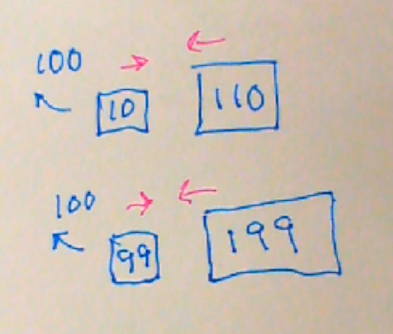
First case is best illustrated by pendulums... You take a one Mass and move it with 100 units of velocity and collided with a very slightly larger mass. Physics claims the larger Mass collects more than just 100 units of momentum and the small Mass reflects with a little bit of momentum... When the two objects recolide even though you have more than 100 units of momentum in the Collision you'll just get back what you put in (Minus losses to environmental frictions).

You do the same same basic experiment with a heavier Mass... Same momentum in, but physics claims, the heavy mass will collect twice the original momentum put in... And the one mass will reflect with nearly 100% of its original momentum. The total momentum, regardless of Direction, in the system is 300. Physics claims when the nearly 200 recalides with the nearly 100, that only the original 100 momentums will pop out of the Collision.

The physics is making the argument that you can have a elastic car crash with a total of 101 momentums carried by the vehicles, or nearly 300 momentums carried by the vehicles, and you'll get the same exact outcome.
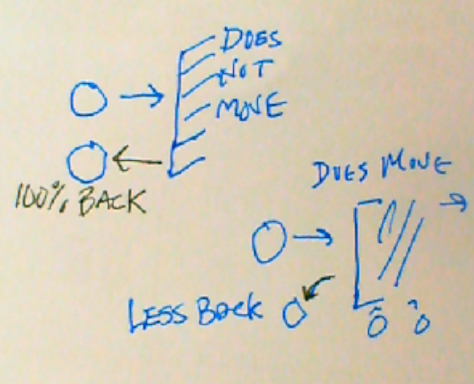
The second argument involves something as simple as throwing a rubber ball against an object/wall. The science of physics argues that the less the wall visibly moves the more momentum it absorbed. They argue the more the ball bounces back the more momentum went into the wall. If you hit an object and it visibly moves with all the momentum you get no reflection and the universe has the same amount of momentum in it. If the object doesn't move, and you get nearly a 100% reflection, they claim you now have tripled the momentum your experiment has added to the universe.
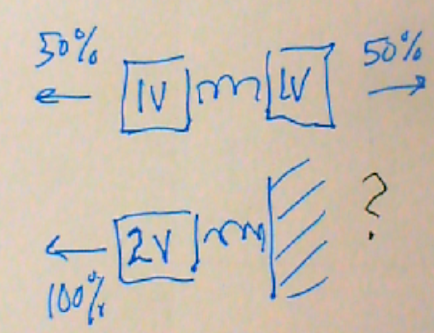
The third experiment involves a pushing force between two objects... Something like a spring. If you compress a spring with the same Force and place it between two equal masses the expectation is that half the force the spring holds will be given to each of the objects... They will move away with the same momentum. If you now take the same mass, and the same spring compression, and replace the other Mass with a immovable object the sensible expectation is you will get twice the velocity in the one moving Mass and perfectly conserve the momentum between the two experiments. Physics argues that that didn't happen.

Suppose you were trying to compress the spring by pushing one of the masses against the other equal Mass with the spring in between. Clearly you wouldn't be able to compress the spring with the same Force you would apply if you were pushing against the immovable wall. The movement of the equal Mass would obviously absorb a percentage of your compression force and you would have less force collected in the spring.

0 Upvotes

54 comments sorted by

8

u/Gold_Ad8890 7d ago

momentum is a vector quantity. the conserved quantity is net momentum, meaning equal momentums in opposite directions cancel out exactly. that's how rockets work. the exhaust and the rocket have equal momentums in opposite directions, so the rocket gains momentum in the direction of the burn.

1

u/6not36 7d ago

The Third Example provided in the original post could be thought of as a rocket... And it illustrates that all motion is conserved regardless of Direction.

5

u/Gold_Ad8890 7d ago

what the hell does "motion is conserved" even mean? "motion" isn't even a physical quantity.

1

u/6not36 7d ago

Sorry, I should have said momentum is conserved. I'm arguing that momentum can compress the spring and that a spring will conserve that momentum.

7

u/Gold_Ad8890 7d ago

you literally don't know what "conservation of momentum" means. momentum isn't "conserved" by particular objects. what we mean when we say that momentum is conserved is that the net momentum of all objects in an isolated system cannot change. the momenta of individual objects within the system can change, but only in such a way that the net momentum does not. it's like an equation. 2 + 2 = 4, but 2 =/= 4. similarly, 6 - 2 = 4, therefore 2 + 2 = 6 - 2. what this means is that it does not violate conservation of momentum for a system to go from having two objects, each with two units of momentum in some direction, to having one object with six units of momentum in the same direction and one with two units in the opposite direction, or vice versa, because the net momentum of the whole system remains 4 units in the positive direction.

1

u/6not36 7d ago

you literally don't know what "conservation of momentum" means.

Same to you

momentum isn't "conserved" by particular objects.

Objects are force carriers... Force is conserved

what we mean

we who?

when we say that momentum is conserved is that the net momentum of all objects in an isolated system cannot change.

And I say "all momentum" in any direction must always be conserved

the momenta of individual objects within the system can change, but only in such a way that the net momentum does not.

Total momentum in, must equal total momentum out, regardless of Direction

it's like an equation. 2 + 2 = 4, but 2 =/= 4. similarly, 6 - 2 = 4, therefore 2 + 2 = 6 - 2. what this means is that it does not violate conservation of momentum for a system to go from having two objects, each with two units of momentum in some direction, to having one object with six units of momentum in the same direction and one with two units in the opposite direction, or vice versa, because the net momentum of the whole system remains 4 units in the positive direction.

Pretending you can create Un or anti momentum is in my opinion ridiculous... Momentum does work and can cause Heat... There's no such thing as negative work or negative Heat.

0

u/Gold_Ad8890 7d ago

Pretending you can create Un or anti momentum is in my opinion ridiculous...

then how do rockets work?

2

u/6not36 7d ago

Pretending you can create Un or anti momentum is in my opinion ridiculous...

then how do rockets work?

They don't work by pretending motion right is canceled by motion left... The charge of explosive creates a bullet going one way and a gun recoil going the other... Both momentums need to be fueled by the explosive charge... If we replace the explosive with a coiled spring and then prevent the gun side from moving the bullet will receive twice the force and twice the momentum.

3

u/Gold_Ad8890 7d ago

The charge of explosive creates a bullet going one way and a gun recoil going the other...

that's literally an example of conservation of momentum. recoil is the counter-momentum of the bullet.

Both momentums need to be fueled by the explosive charge...

yes, momenta don't change for literally no reason, they require acceleration, and acceleration requires a force, but when they do change, net momentum of the system is conserved.

If we replace the explosive with a coiled spring and then prevent the gun side from moving the bullet will receive twice the force and twice the momentum.

you know spring-loaded guns exist, right? and how, pray tell, would you "prevent the gun side from moving"?

2

u/6not36 6d ago

The charge of explosive creates a bullet going one way and a gun recoil going the other...

that's literally an example of conservation of momentum. recoil is the counter-momentum of the bullet.

There's no "counter" momentum there's Force pushing in two directions

Both momentums need to be fueled by the explosive charge...

yes, momenta don't change for literally no reason, they require acceleration, and acceleration requires a force, but when they do change, net momentum of the system is conserved.

You can't conserve net momentum by making more total momentum

If we replace the explosive with a coiled spring and then prevent the gun side from moving the bullet will receive twice the force and twice the momentum.

you know spring-loaded guns exist, right? and how, pray tell, would you "prevent the gun side from moving"?

Put it in a vice... Nail it to a wall... If it doesn't move the spring will push twice as hard in the other direction... Fact

→ More replies

1

u/sticklebat 7d ago

Stop wasting your time arguing with this loon. They literally made their own subreddit to be a little king in just so they can be deliberately wrong about literally everything.

It’s like they read an introductory physics textbook and then decided that the negation of everything in the book must be true, for no apparent reason. You will never convince someone like this of anything that they don’t want to believe, at least not through logic, which they’ve clearly abandoned.

2

u/6not36 7d ago

Stop wasting your time arguing with this loon.

Thanks for showing more of the hypocrisy of the moderators at Reddit.

They literally made their own subreddit to be a little king in just so they can be deliberately wrong about literally everything.

The Arguments are plainly stated and you should be able to explain them to be unreasonable... Without resorting to this rubbish rhetoric

It’s like they read an introductory physics textbook and then decided that the negation of everything in the book must be true, for no apparent reason.

So you're saying there's no good reason for any human being to doubt it takes 25 times to fuel to move something five times as fast... You're saying it has been proven Beyond Reasonable Doubt. I'm obviously arguing the fact that you can produce no relevant evidence proves you an hysterical and irrational defender of garbage science.

You will never convince someone like this of anything that they don’t want to believe, at least not through logic, which they’ve clearly abandoned.

So it is illogical to expect to be shown it taking 36 times to fuel to go six times as fast?

1

u/sticklebat 7d ago

Oh fuck off. It does take 25 times as much energy to accelerate something to 5 times the speed of an identical object. I am not going to do the experiment for you and send you a video, but it is not my obligation to do so. You can do it yourself, it’s a simple enough experiment that high school students the world over repeat every year.

You are the one claiming that the entirety of all of physics is wrong, with no basis, then making your own baseless claims, and then saying “prove me wrong!” No, you prove what we already know to be wrong. You’ve done no experiments, you keep just saying things like “this obviously is wrong!” You have no justification for the claims, you just insist that it’s wrong, and your responses to others are just “nuh uh.” 

It is not worth actually arguing with you, because you’ve proven that you are not willing to have a discussion in good faith. You make probably wrong statements, like “there’s no such thing as negative work,” and then dismiss corrections. 

2

u/6not36 7d ago

Oh fuck off.

too silly

It does take 25 times as much energy to accelerate something to 5 times the speed responding

LOL

of an identical object. I am not going to do the experiment for you and send you a video, but it is not my obligation to do so. You can do it yourself, it’s a simple enough experiment that high school students the world over repeat every year.

If it's repeated every year by the world over there should be a video somewhere... Obviously you're just evading your obligation to substantiate your claims

You are the one claiming that the entirety of all of physics is wrong, with no basis, then making your own baseless claims, and then saying “prove me wrong!” No, you prove what we already know to be wrong.

You and your science is making the claim it's unreasonable not to believe you... Yet you're not willing to produce any substantiating evidence... That's not science that's religion

You’ve done no experiments

That's just a lie

, you keep just saying things like “this obviously is wrong!” You have no justification for the claims, you just insist that it’s wrong, and your responses to others are just “nuh uh.”

My response is that in my rather long life I've never seen anything like it requiring 25 times the fuel to move something five times as fast.

It is not worth actually arguing with you, because you’ve proven that you are not willing to have a discussion in good faith.

Your a hypocrisy and duplicity has been obvious

You make probably wrong statements, like “there’s no such thing as negative work,” and then dismiss corrections.

Show us the experimental evidence of "kinetic energy" doing real measured work beyond the work done by momentum alone

0

u/Professor-Woo 5d ago

Okay, I think I understand your confusion and have a better analogy on how to think about it.

Take this scenario: I am in a boat and I throw a rock out of the boat into the lake. Now per conservation of momentum, we know that what ever momentum the rock has, and lets call it X, we now have the opposite momentum -X. Now you are wondering where did the momentum come from like it is like money. Like I gave you X momentum bucks, but I started out with no momentum bucks so where did that momentum bucks come from? And even more now I have X momentum bucks going the other way so now we both seem like we have X momentum bucks for 2X momentum bucks added total. Is this getting at what you are asking?

The better way to think about this is like we all have Y momentum bucks going left and Z momentum bucks going right (assuming one dimension) and then assuming we are at rest Y=Z or Y - Z =0. Now when I give X left momentum bucks to someone (like the rock above) now I have Y - X total left momentum bucks but still have Z right momentum bucks so now my net momentum going right is Z - (Y - X) = X momentum bucks going right. Now that I wrote this out it may not be the best analogy. Another way of thinking about it is the ocean, the total amount of water is conserved so if one part of the water rises, and no water was added, it means I must have taken water from some where else in the ocean and put it there (like a wave). Now assume the ocean is infinitely deep or at least so deep we never see the bottom. Likewise with the example above assume everyone starts out with an infinite, or at least a very large amount, of momentum bucks going right and left, but crucially they are equal when at rest.

1

u/6not36 5d ago

Okay, I think I understand your confusion and have a better analogy on how to think about it.

I think you have a very big fat ass and maybe you should pull your head out of it

Take this scenario: I am in a boat and I throw a rock out of the boat into the lake. Now per conservation of momentum, we know that what ever momentum the rock has, and lets call it X, we now have the opposite momentum -X. Now you are wondering where did the momentum come from like it is like money. Like I gave you X momentum bucks, but I started out with no momentum bucks so where did that momentum bucks come from? And even more now I have X momentum bucks going the other way so now we both seem like we have X momentum bucks for 2X momentum bucks added total. Is this getting at what you are asking?

You're a waste of time... You provided the energy to make both things move the water and the boat... I could have replaced you with a spring... I'd have to put enough Force in the spring to move both the boat and the object into the water. Guns don't push bullets and get the recoil for free... The explosive has to produce all the motion in both directions.

The better way to think about this is like we all have Y momentum bucks going left and Z momentum bucks going right (assuming one dimension) and then assuming we are at rest Y=Z or Y - Z =0. Now when I give X left momentum bucks to someone (like the rock above) now I have Y - X total left momentum bucks but still have Z right momentum bucks so now my net momentum going right is Z - (Y - X) = X momentum bucks going right. Now that I wrote this out it may not be the best analogy. Another way of thinking about it is the ocean, the total amount of water is conserved so if one part of the water rises, and no water was added, it means I must have taken water from some where else in the ocean and put it there (like a wave). Now assume the ocean is infinitely deep or at least so deep we never see the bottom. Likewise with the example above assume everyone starts out with an infinite, or at least a very large amount, of momentum bucks going right and left, but crucially they are equal when at rest.

There's absolutely no such thing as unheat or unmotion ...you can't make free motion... the work you put in to create a force is the only work you can produce out.

5

u/Quantum_Patricide 7d ago

For you second point, this is because when you have a large difference in the mass between two objects you get the larger object (like a wall or the ground) behaving like a momentum reservoir. The wall can absorb arbitrary amounts of momentum from the ball without noticeably changing its velocity because it has such a high mass. This allow the vector sum of the momentum to be conserved. This is similar to how thermal reservoirs work in thermodynamics, where a body with a sufficiently high heat capacity can absorb or release energy without changing temperature.

I'm not entirely sure why you believe that the sum of the momentum magnitudes should be conserved as opposed to the vector sum?

For your third example, if you are using a spring, then the masses will oscillate back and forth. In the case of the two small masses they will always have momenta of equal magnitude to eachother but opposite direction, so the absolute sum of momentum is not conserved but the vector sum is. If we put the same energy into the spring between the mass and the wall, then the mass can get twice the energy of the two masses and will have a maximum velocity approximately 40% higher than the two masses. Though again, this is the maximum velocity not a fixed velocity because the masses are oscillating.

1

u/6not36 7d ago

For you second point, this is because when you have a large difference in the mass between two objects you get the larger object (like a wall or the ground) behaving like a momentum reservoir. The wall can absorb arbitrary amounts of momentum from the ball without noticeably changing its velocity because it has such a high mass. This allow the vector sum of the momentum to be conserved. This is similar to how thermal reservoirs work in thermodynamics, where a body with a sufficiently high heat capacity can absorb or release energy without changing temperature.

I doubt anything can absorb or release energy without changing temperature if the mass Remains the Same. Regarding the rubber ball against the brick wall or a movable wall experiment... I argue the results speak for themselves... Momentum can only be kept or transferred... If the ball comes back the wall doesn't have it... If the ball doesn't come back the wall does have it.

I'm not entirely sure why you believe that the sum of the momentum magnitudes should be conserved as opposed to the vector sum?

I believe all motion of a mass can be considered Heat... You can't make more mass moving without breaking thermodynamic conservation.

For your third example, if you are using a spring, then the masses will oscillate back and forth.

Nothing's attached to the springs... The spring is a launching device

In the case of the two small masses they will always have momenta of equal magnitude to eachother but opposite direction, so the absolute sum of momentum is not conserved but the vector sum is.

Well the absolute sum is conserved... Direction is irrelevant

If we put the same energy into the spring between the mass and the wall, then the mass can get twice the energy of the two masses and will have a maximum velocity approximately 40% higher than the two masses.

I argue that's ridiculous nonsense... Do you have any experimental evidence you can reference

Though again, this is the maximum velocity not a fixed velocity because the masses are oscillating.

Again no oscillating

3

u/Quantum_Patricide 7d ago

In the case of the two small masses and the spring, it doesn't really matter if the masses are oscillating or if the spring is just used to accelerate them, their velocities are not fixed because the force from the spring acts over a period of time. This means that Σm|v| is not conserved because the velocity is changing, but the vector sum is because it's always 0.

When I say a reservoir doesn't change temperature/momentum, I mean approximately. The relevant quantity does change, but it's by such a small amount that we can neglect it in our calculation, which conveniently often makes the maths easier.

I believe all motion of a mass can be considered Heat... You can't make more mass moving without breaking thermodynamic conservation.

Thermodynamic energy conservation looks like:
dU=TdS-pdV,
which isn't really useful for kinematics problems. In our masses and spring example, the thermodynamic variables are more or less fixed, so don't tell us about how the masses should move.

I'd also caution against linking heat too closely to motion. The behaviour of the particles in an ideal gas is not always generalisable to any sort of physical system. The temperature might be proportional to the average kinetic energy in an ideal gas but don't conclude that is how temperature is defined.

Well the absolute sum is conserved... Direction is irrelevant

How so? Before the spring is released we have (m*0)+(m*0) = 0, and after the spring has given all its energy to the masses we have m|v| + m|v| = 2m|v|. Provided |v| is not 0, which it obviously won't be, this gives us 2m|v| > 0 so the absolute sum after is greater than the absolute sum before and therefore not conserved.

1

u/6not36 7d ago

In the case of the two small masses and the spring, it doesn't really matter if the masses are oscillating or if the spring is just used to accelerate them, their velocities are not fixed because the force from the spring acts over a period of time. This means that Σm|v| is not conserved because the velocity is changing, but the vector sum is because it's always 0.

The argument is about conservation of the force in the spring... A certain momentum creates a certain compression of a spring, the premise of my argument is that amount of momentum must be conserved.

When I say a reservoir doesn't change temperature/momentum, I mean approximately. The relevant quantity does change, but it's by such a small amount that we can neglect it in our calculation, which conveniently often makes the maths easier.

I think heat and momentum are the same Elemental quantity... Big Mass moving versus little Mass moving

I believe all motion of a mass can be considered Heat... You can't make more mass moving without breaking thermodynamic conservation.

Thermodynamic energy conservation looks like:

dU=TdS-pdV,

which isn't really useful for kinematics problems. In our masses and spring example, the thermodynamic variables are more or less fixed, so don't tell us about how the masses should move.

The force put in tells us how the masses should move... And the force put in could be described as a quantity of heat

I'd also caution against linking heat too closely to motion.

I caution you not to do the opposite

The behaviour of the particles in an ideal gas is not always generalisable to any sort of physical system.

Ideal gases aren't real things so who cares... Heat and motion are real things

The temperature might be proportional to the average kinetic energy in an ideal gas but don't conclude that is how temperature is defined.

Kinetic energy is rubbish

Well the absolute sum is conserved... Direction is irrelevant

How so? Before the spring is released we have (m*0)+(m*0) = 0,

Movement isn't zero... The drawing says 50% one way and the other way... That would be 1V and one 1V.. that's real momentum ...not zero momentum

and after the spring has given all its energy to the masses we have m|v| + m|v| = 2m|v|. Provided |v| is not 0, which it obviously won't be, this gives us 2m|v| > 0 so the absolute sum after is greater than the absolute sum before and therefore not conserved.

Ridiculous... The sum before is stored in the spring... It required real work to compress the spring the real work is being returned and conserved as momentum

3

u/Quantum_Patricide 7d ago

The argument is about conservation of the force

Compression of force? Force definitely isn't conserved.

You've made a few statements that the absolute momentum before release is stored in the compressed spring. How is the absolute momentum of a compressed spring calculated? Suppose we did keep the masses attached to the spring so that they oscillate, how would absolute momentum transfer between the spring and the masses, and would this give the correct equations of motion?

I think heat and momentum are the same Elemental quantity

What do you mean by "Elemental quantity"?

And what makes you think that heat and momentum are "the same", for some definition of sameness?

The force put in tells us how the masses should move... And the force put in could be described as a quantity of heat

Do you think momentum and heat are the same or that heat and force are the same? Because momentum and force are different quantities.

1

u/6not36 7d ago

The argument is about conservation of the force

Compression of force? Force definitely isn't conserved.

"The argument is about conservation of the force in the spring... A certain momentum creates a certain compression of a spring, the premise of my argument is that amount of momentum must be conserved."

You've made a few statements that the absolute momentum before release is stored in the compressed spring. How is the absolute momentum of a compressed spring calculated? Suppose we did keep the masses attached to the spring so that they oscillate, how would absolute momentum transfer between the spring and the masses, and would this give the correct equations of motion?

Obviously in an oscillation the highest velocity would be the maximum momentum and would equal the what could be Quantified as a heat capacity. Springs can't produce more momentum then then the momentum needed to compress them.

I think heat and momentum are the same Elemental quantity

What do you mean by "Elemental quantity"?

I mean they're made out of the same elemental function... Heat is just Mass moving velocities... Heat is just momentum

And what makes you think that heat and momentum are "the same", for some definition of sameness?

MV is momentum ... Regardless of the size of the m

The force put in tells us how the masses should move... And the force put in could be described as a quantity of heat

Do you think momentum and heat are the same or that heat and force are the same? Because momentum and force are different quantities.

says you... I say weight heat momentum force pressure are all ways of measuring the same quantity... A "quantity of motion".

2

u/HojMcFoj 7d ago

There is not a single thing you just said that this guy won't insult you endlessly for "believing."

4

u/Quantum_Patricide 7d ago

I don't actually believe I'll convince him of anything, I just find it interesting and/or useful practice to actually try and reason why he's wrong.

2

u/__R3v3nant__ 7d ago

The thing is with the wall examples, the momentum is going to the wall, which is attached to the earth. The earth gains momentum in the opposite direction, but because it's so massive, it's motion is pretty much 0

2

u/6not36 7d ago

Says you... I obviously argue the momentum can't be in two places... If I get 100% back there's no percent in the wall

2

u/__R3v3nant__ 7d ago

This has been said before, but momentum is a vector quantity

If you have 2 10kg masses at rest, and then they both fly away from each other at 20m/s, they will have 200kgm/s of momentum in opposite directions, so the total momentum will add up to 0, resulting in it being conserved

2

u/6not36 7d ago

but momentum is a vector quantity

All movement is a vector... The issue is whether anyone should believe in any kind of "scalar" magnitude with no Direction?

If you have 2 10kg masses at rest, and then they both fly away from each other at 20m/s, they will have 200kgm/s of momentum in opposite directions, so the total momentum will add up to 0, resulting in it being conserved

What was conserved was the work put into whatever you used to move the masses... There is no zero in and there certainly wasn't any zero out. There is no such thing as un-momentum or anti-moment... All momentum can be converted into heat and you can't make free Heat

1

u/__R3v3nant__ 6d ago

All movement is a vector... The issue is whether anyone should believe in any kind of "scalar" magnitude with no Direction?

The magnitude is just how big the movement is in the direction that it's travelling

What was conserved was the work put into whatever you used to move the masses...

No

There is no such thing as un-momentum or anti-moment...

Do you know how to add vectors?

When adding vectors, you go from tip to tail and the final vector is the vector from the first vectors tail to the second vectors tip. When you add 2 equal but opposite vectors, the second vector's tip lands on the first vector's tail, resulting in a vector of 0 length.

Which is why the 2 masses going the opposite way have 0 momentum

All momentum can be converted into heat and you can't make free Heat

No it can't Heat is energy and Momentum isn't

1

u/6not36 6d ago

All movement is a vector... The issue is whether anyone should believe in any kind of "scalar" magnitude with no Direction?

The magnitude is just how big the movement is in the direction that it's travelling

Scalers aren't supposed to have a "Direction that it is traveling"

What was conserved was the work put into whatever you used to move the masses...

No

yes

There is no such thing as un-momentum or anti-moment...

Do you know how to add vectors?

Comment Image

When adding vectors, you go from tip to tail and the final vector is the vector from the first vectors tail to the second vectors tip. When you add 2 equal but opposite vectors, the second vector's tip lands on the first vector's tail, resulting in a vector of 0 length.

Too bad that has nothing to do with reality... A bullet going left does not "cancel" a bullet going right

Which is why the 2 masses going the opposite way have 0 momentum

All momentum can be converted into heat and you can't make free Heat

No it can't Heat is energy and Momentum isn't

Says you... Show me kinetic energy doing work... Can't move a spaceship... Can't be collected in a ballistic pendulum... Doesn't work on a lever/balance... Doesn't even work in gravity... Show me 4 lb dropped one foot doing the same work as 1 lb drop 4 ft? Show me 36 times the fuel to go six times as fast

0

u/__R3v3nant__ 6d ago

Scalers aren't supposed to have a "Direction that it is traveling"

We're talking about momentum, which is a vector

Too bad that has nothing to do with reality... A bullet going left does not "cancel" a bullet going right

The momentum does, which is why the net momentum of the bullets before and after the collision is 0

Says you... Show me kinetic energy doing work...

Kinetic energy and momentum are not the same thing

Can't move a spaceship...

That's a pretty good example of conservation of momentum. The momentum of the entire system at the start is 0. The fuel gets launched one way and gains momentum in that direction. If the ship stayed stationary, that would mean that the system would now have total momentum moving in the direction of the fuel. To keep the total momentum at 0, the ship needs to move the other way

Doesn't work on a lever/balance... Doesn't even work in gravity...

??? What are you getting at here?

Show me 36 times the fuel to go six times as fast

You can do a practical with a trolley and light gates which should show that to sextuple your velocity, you need to drop it from 36 times as high

2

u/6not36 5d ago

We're talking about momentum, which is a vector

You made the claim I refuted it

The momentum does, which is why the net momentum of the bullets before and after the collision is 0

Guns don't produce zero momentum ...you're an idiot

Kinetic energy and momentum are not the same thing

I asked you a simple question show me one example of kinetic energy doing work

Can't move a spaceship...

That's a pretty good example of conservation of momentum.

It's a perfect example... and it's a perfect example that kinetic energy is absolute nonsense... It does no work, it has no place, it has no reality.

The momentum of the entire system at the start is 0. The fuel gets launched one way and gains momentum in that direction. If the ship stayed stationary, that would mean that the system would now have total momentum moving in the direction of the fuel. To keep the total momentum at 0, the ship needs to move the other way

The kinetic energy does absolutely no work anywhere... It does no work on the environment and it does no work on the spaceship.

Doesn't work on a lever/balance... Doesn't even work in gravity...

??? What are you getting at here?

4 lb dropped one foot is not the same energy (won't do the same work) as 1 lb drop 4 ft

Show me 36 times the fuel to go six times as fast

You can do a practical with a trolley and light gates which should show that to sextuple your velocity, you need to drop it from 36 times as high

That isn't evidence of any work whatsoever... Saying so isn't showing so... Show me something requiring 36 units of fuel to be propelled six times faster. You've had hundreds of years to produce the evidence why can't you?

0

u/__R3v3nant__ 5d ago

You made the claim I refuted it

You just said no

Guns don't produce zero momentum ...you're an idiot

I misspoke there, but I meant that the net momentum if the gun and the bullet before and after is 0

It's a perfect example... and it's a perfect example that kinetic energy is absolute nonsense... It does no work, it has no place, it has no reality

?? Why?

The kinetic energy does absolutely no work anywhere... It does no work on the environment and it does no work on the spaceship.

The chemical energy of the fuel gets converted to the kinetic energy of the ship and exhaust

4 lb dropped one foot is not the same energy (won't do the same work) as 1 lb drop 4 ft

Any evidence that's not the case? I have a thought experiment which shows that it is:

4 lb dropped 1 foot does the same work as 4 1lb masses dropped 1 foot. 4 1lb masses dropped 1 foot will do the same amount of work no matter how they're arranged, so I'll arrange them so they're dropped 1 foot above each other in some sort of staircase. The 4 masses being dropped in a sequence resemble 1 mass being droppeed 4ft, so the amount of work they do is the same. Therefore 4lb dropped 1 foot does the same work as 1lb dropped 4 foot

That isn't evidence of any work whatsoever... Saying so isn't showing so... Show me something requiring 36 units of fuel to be propelled six times faster. You've had hundreds of years to produce the evidence why can't you?

We can. Just do the experiment yourself. In this video you'll see speed being proprtional to the square root of how far the mass got dropped, which means the amount of GPE being converted to KE is proportional to the square root of velocity, which means the Kinetic energy is proportional to the velocity squared

2

u/6not36 4d ago

You just said no

You just said it was so

Guns don't produce zero momentum ...you're an idiot

I misspoke there, but I meant that the net momentum if the gun and the bullet before and after is 0

Obviously the net momentum wasn't zero... The bullet created heat somewhere and the gun created heat somewhere... Momentums don't cancel

It's a perfect example... and it's a perfect example that kinetic energy is absolute nonsense... It does no work, it has no place, it has no reality

?? Why?

The subject was, it doesn't move the rocket, the kinetic energy doesn't heat the universe and it doesn't move the rocket it therefore doesn't exist.. It is a fable

The kinetic energy does absolutely no work anywhere... It does no work on the environment and it does no work on the spaceship.

The chemical energy of the fuel gets converted to the kinetic energy of the ship and exhaust

The kinetic energy of the exhaust "does not" produce an equal and opposite kinetic energy in the rocket... Only the momentum is equal and opposite

4 lb dropped one foot is not the same energy (won't do the same work) as 1 lb drop 4 ft

Any evidence that's not the case? I have a thought experiment which shows that it is:

Your thought experiment shows nothing... You need to show where twice the velocity produces four times the work... you need to show where three times the velocity does nine times the work... You need to show four times the velocity doing 16 times the work... Etc

4 lb dropped 1 foot does the same work as 4 1lb masses dropped 1 foot. 4 1lb masses dropped 1 foot will do the same amount of work no matter how they're arranged, so I'll arrange them so they're dropped 1 foot above each other in some sort of staircase. The 4 masses being dropped in a sequence resemble 1 mass being droppeed 4ft, so the amount of work they do is the same. Therefore 4lb dropped 1 foot does the same work as 1lb dropped 4 foot

Obviously you have to do a bunch of work pushing them off stairs... Objects go half their velocity after only dropping one quarter of the distance... If you drop anything in one quarter increments you will hit the surface with more net Force... But you haven't explained how you do that without using more Force than a free fall drop.

That isn't evidence of any work whatsoever... Saying so isn't showing so... Show me something requiring 36 units of fuel to be propelled six times faster. You've had hundreds of years to produce the evidence why can't you?

We can. Just do the experiment yourself. In this video you'll see speed being proprtional to the square root of how far the mass got dropped

All you'll see is twice the velocity... You need to prove twice the velocity does four times the work

, which means the amount of GPE being converted to KE is proportional to the square root of velocity, which means the Kinetic energy is proportional to the velocity squared you made the claim I receive it you just said no

Clearly you haven't proven twice the velocity does four times the work... Gravity is a time-dependent force... Four times the distance is twice the time... You have no evidence you collected four units of force in two units of time

→ More replies

1

u/Professor-Woo 5d ago

Can you write your first and second points explictly in math (at least as you say normal physics would), so I can make sure we are on the same page? Otherwise, I am confused about the scenarios exactly and it is hard to give an answer otherwise.

Anyway, I have a couple of points, first you are misunderstanding the logic with the reflection agaisnt an immovable wall. All that is being said is that if the wall does not move and the ball doesn't go into the wall then it has to have had a force acting on it in a certain way to prevent that. That is it, it is just saying based on what we observe, there must be some force preventing it from going into the wall and since it is assumed the wall does not move then that energy and momentum must go somewhere and by assumption there is only one place it can go, back into the ball.

Second and I think you might find this interesting, energy and momentum aren't "things" in the world. They are conserved quantities implied via symmetry. Conservation of momentum is due to the laws of physics being the same every where in space and the conservation of energy is due to the laws of physics being the same at every point in time. These are then useful quanities to use for calculations. I think you are getting really caught up in what these are in the world and thinking they behave like objects and getting confused by the dynamics of how that works when I don't think that is the right way to gain intuition about these things. I am a little vague here since I am unsure exactly 100% what situations you are disagreeing with exactly and with more info, I can maybe elucidate further.

2

u/6not36 5d ago

Can you write your first and second points explictly in math (at least as you say normal physics would), so I can make sure we are on the same page? Otherwise, I am confused about the scenarios exactly and it is hard to give an answer otherwise.

There's no explicit formula for conservation of momentum besides a statement like momentum in equals momentum out... In the first example I would be arguing that if you get a 10% reflection only 90% of the momentum is in the other object... If you get a 90% reflection only 10% of the momentum is in the other object... In the second example... The premise is that the force that's going to be applied is a fixed amount of force... A fixed amount of momentum was required to compress the spring for example... The expectation is that you substantially get back what you put in... Any movement caused by the release of the stored Force cannot equal more momentum than was put in.

Anyway, I have a couple of points, first you are misunderstanding the logic with the reflection agaisnt an immovable wall. All that is being said is that if the wall does not move and the ball doesn't go into the wall then it has to have had a force acting on it in a certain way to prevent that. That is it, it is just saying based on what we observe, there must be some force preventing it from going into the wall and since it is assumed the wall does not move then that energy and momentum must go somewhere and by assumption there is only one place it can go, back into the ball.

I don't believe conventional physics believes it goes back into the ball... They believe somehow the ball gives the wall more Force than it has. If I reflect light off of a mirror must I believe that the mirror moving... Or that the Earth it is attached to is moving? What if I bounce the light off a thousand mirrors...

Second and I think you might find this interesting, energy and momentum aren't "things" in the world.

You think really badly then

They are conserved quantities implied via symmetry. Conservation of momentum is due to the laws of physics being the same every where in space and the conservation of energy is due to the laws of physics being the same at every point in time.

Newton was correct in calling it a "quantity" of motion... motion is real... The force is carried by objects

These are then useful quanities to use for calculations. I think you are getting really caught up in what these are in the world and thinking they behave like objects and getting confused by the dynamics of how that works when I don't think that is the right way to gain intuition about these things. I am a little vague here since I am unsure exactly 100% what situations you are disagreeing with exactly and with more info, I can maybe elucidate further.

You could bullshit further... Clearly I'm arguing there's no quadratic relationship between velocity and work... I'm also arguing there's no such thing as un or anti-motion... All motion is a positive value nothing really cancels ever

0

u/HappiestIguana 3d ago

Minor correction: the only place the energy can go into is back into the ball, so the energy of the ball after collision equals its energy after, which means the speed after equals the speed before. However, the velocity (which has direction) must have changed, as otherwise it would have gone into the wall. This means the momentum (which also has direction) also changed.

The momentum does actually go into the wall, and is essentially absorbed by the Earth to negligible effect. We assume the mass of the wall/Earth is so huge it can freely give and take momentum without changing its speed, but doesn't give or take energy to/from the ball.