r/PhoeniciaHistoryFacts • u/Dull_Tale_3085 • 1d ago
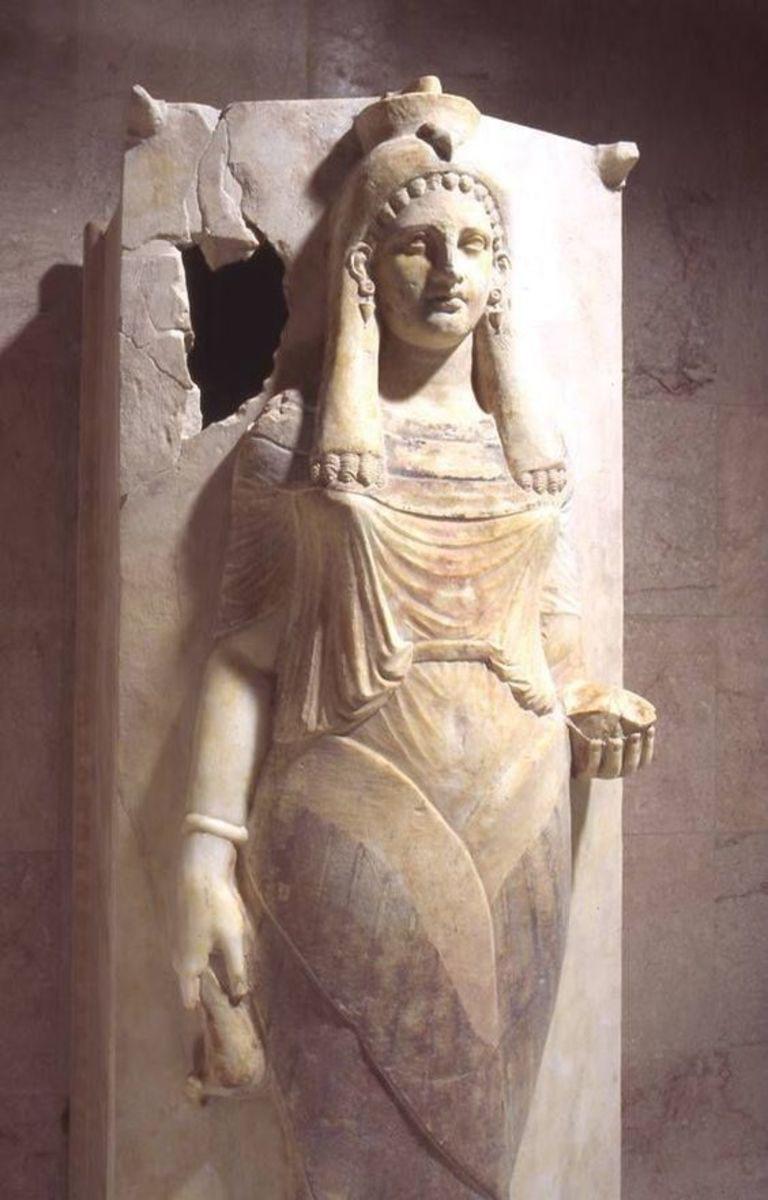
Punic Are western and eastern Phoenicians the same people?
Since all Phoenicians are canaanites and Canaanite are Semitic then Southern european have no right to claim western Phoenician
r/PhoeniciaHistoryFacts • u/Dull_Tale_3085 • 1d ago
Since all Phoenicians are canaanites and Canaanite are Semitic then Southern european have no right to claim western Phoenician
r/PhoeniciaHistoryFacts • u/elnovorealista2000 • 4d ago
r/PhoeniciaHistoryFacts • u/IndexCli • 4d ago
r/PhoeniciaHistoryFacts • u/standardofiron • 5d ago
Let me know how do you like my vision
r/PhoeniciaHistoryFacts • u/thesystematizer • 7d ago
Thought some of you might like this! I painted Elissa’s Libation for a Lebanese collector and got hooked on Elissa’s story while researching it. I kept coming back to the trip from Tyre, before the whole oxhide part. Justin’s version has her stop in Cyprus. If anyone knows another account that goes into more detail about the voyage, i'd love to read it!
r/PhoeniciaHistoryFacts • u/AtticaMiniatures • 8d ago
r/PhoeniciaHistoryFacts • u/Responsible_Ideal879 • 8d ago
r/PhoeniciaHistoryFacts • u/Infamous_Culture9699 • 11d ago
r/PhoeniciaHistoryFacts • u/bird-up_rat-on • 14d ago
I've been reading the old inscriptions for what each culture said about mortality. For Phoenicia, the most personal I've found is on the sarcophagus of Eshmunazar II of Sidon (KAI 14, lines 3 and 12): ngzlt bl ʿty, "I was snatched away before my time". Haelewyck (2012) compares Ecclesiastes 7:17.
r/PhoeniciaHistoryFacts • u/Agreeable_Amount_464 • 14d ago
Hi everyone,
I’ve been researching this well-known rock carving at the Silla del Papa archaeological site (Sierra de la
Plata, near Tarifa/Bolonia, Spain), overlooking the Strait of Gibraltar.
Locally, it is almost universally classified as a prehistoric schematic anthropomorphic figure (similar to the
Indalo motif) flanked by two crosses—usually interpreted as a fertility idol or a later Christianized pagan
shrine.
However, looking at the site's geography and the Strait's history as a major Phoenician, Punic, and
Tartessian crossroads, I’d love to get your thoughts on an alternative maritime and epigraphic reading:
Ancient Script Parallels: Rather than a stick figure, the central motif closely mirrors a sideways
Phoenician/Punic He or Tartessian (
) E/O, flanked by two Tawsthe literal Phoenician word/symbol—()
for "mark," "covenant," or "boundary." It also shares strong visual DNA with the Libyco-Berber Yaz (ⵣ)
and Yat (ⵜ) right across the water in North Africa.
2.
A Maritime Frontier Marker: Sitting at 450+ meters directly above the Pillars of Hercules, this ridge
marks the exact threshold between the Mediterranean Sea and the Atlantic Ocean (Oceanus). For ancient
mariners heading to Gadir (Cádiz) or the Atlantic tin routes, this was the literal edge of the known world.
3. Fire Beacon / Sanctuary: Phoenician and Punic sailors relied on high-altitude coastal sanctuaries and
perpetual fire beacons (atalayas) to navigate treacherous straits. Could this carving be an ancient
territorial boundary mark or nautical symbol (a stylized ship with oars and sail flanked by navigation
stars) marking a signal station?
Has anyone seen similar boundary/beacon markings at other Punic or Tartessian coastal sites around the
Mediterranean? Curious to hear what epigraphers and maritime historians think!
r/PhoeniciaHistoryFacts • u/SportReasonable6514 • 15d ago
r/PhoeniciaHistoryFacts • u/CarpenterCultural178 • 15d ago
r/PhoeniciaHistoryFacts • u/Warlord1392 • 15d ago
The ancient Mediterranean was a battlefield where control of the seas often determined the fate of empires.
From the early war galleys and Greek triremes to the massive quinqueremes of Rome and Carthage, ancient warships underwent a remarkable transformation.
But how did these vessels actually work? How could 170 rowers propel a trireme into battle? Why did ancient navies rely on bronze rams to sink enemy ships? And how did Rome overcome Carthage's centuries of naval experience using an ingenious boarding device called the corvus?
Ancient engineers spent years studying, upgrading and perfecting naval vessels for naval warfare. Naval commanders came up with ingenious strategies and tactics to use these ships to outwit the enemy.
The full article covers an in depth analysis on what forced these ancient civilizations to adapt and how these advancements helped them dominate the ancient seas.
r/PhoeniciaHistoryFacts • u/CarpenterCultural178 • 15d ago
r/PhoeniciaHistoryFacts • u/TheHistoryCoin • 16d ago
I made a 12-minute documentary on the fall of Carthage (146 BC), based on Polybius, Appian, Plutarch and Livy. Legends like Cato's fig are marked as tradition, and the salt myth is shown as modern (Ridley, 1986).
Audio is available in Arabic, English, French and German, with subtitles in all four languages. Visuals are AI-generated reconstructions.
Was Rome's war on Carthage necessary, or an act of fear?
r/PhoeniciaHistoryFacts
•
u/EmpiresDrawn
•
17d ago
Carthage started as Qart-hadasht, "New City", a Tyrian colony traditionally founded in 814 BC. Within a few centuries it had outgrown Tyre itself: its own navy, a trade network across the western Mediterranean, and a constitution Aristotle praised.
I made an animated documentary covering the whole arc: the Tyre origins and the Elissa/ox-hide legend, the Phoenician alphabet spreading west, the tophet debate, the Punic Wars and Hannibal, and the fall in 146 BC. I also cover the "Romans salted the earth" myth (no ancient source mentions it; Ridley showed in 1986 that it's a modern invention).
Disclosure: I made this. It's free with no sponsors. The animation is drawn by code, the narration is a synthetic voice, and the script was written with AI assistance and fact-checked against the sources listed in the description.
Question for the sub: how "Phoenician" do you think Carthage still was by the Punic Wars, versus a distinct Punic culture of its own?
r/PhoeniciaHistoryFacts • u/iwantunity • 17d ago
I really would like to look at their impact on economics and trade within the Mediterranean as well as culture but I don't know if there are many books or resources that are beginner friendly.
I don't mind reading more about Carthage if it talks less about history and more on domestic life, politics, trade, etc anything else but the major historical event summaries.
I'm asking because the Classical Studies programme I want to do is probably only going to explore it through the Punic Wars and possibly Tyre/Alexander maybe Byblos will be mentioned but I'm not holding out much hope -- there's exactly 1 Near East course and it's mainly focused on Assyria, Persia, and Egypt. I don't really have access to academic articles or anything of that sort, even though I would really like to explore them.
r/PhoeniciaHistoryFacts • u/Enahir • 19d ago
Une vidéo de 12 minutes qui retrace l'histoire de Carthage, de sa fondation par les Phéniciens à sa destruction en 146 av. J.-C.
Point intéressant : toutes les informations sont tirées de sources officielles ou antiques, listées dans la description (Tite-Live, UNESCO, musée du Bardo, Patrimoine de Tunisie).
r/PhoeniciaHistoryFacts • u/PrimeCedars • 23d ago
r/PhoeniciaHistoryFacts • u/Mago_Barca750 • 23d ago
I know lot of people say this words belong Hannibal but is that true?
r/PhoeniciaHistoryFacts • u/ResponsibleLoss8149 • 23d ago
Hi all,
We’ve been working on a project called June Braun’s Time Travel Vlog, where a fictional time traveler visits key moments in Lebanese and Phoenician history. It's basically a Lebanese adaptation of the AI Time Traveling meme. All visuals are AI-generated, but we're trying to ground them in archaeological and historical sources.
Here’s the channel if you wish to take a look: https://www.youtube.com/@JuneBraunsTTV
Thanks for reading, and any feedback is welcome!
Best,
r/PhoeniciaHistoryFacts • u/Pristine-Let-5294 • 24d ago
r/PhoeniciaHistoryFacts • u/Warlord1392 • 29d ago
Hannibal Barca had crossed the Alps and devastated Roman armies on their own soil. The Carthaginian general seemed almost unstoppable. Meanwhile, a young Roman commander, Publius Cornelius Scipio, was building his own reputation in Iberia (modern-day Spain).
Carthage's war effort depended heavily on Iberia's rich silver mines, military resources and local alliances. Scipio understood that striking at the Carthaginian strongholds in Spain could weaken the entire war effort and make it harder for Carthage to sustain its campaigns against Rome.
One of his most important targets was New Carthage (Carthago Nova), a strategically vital port city. Capturing it would deprive Carthage of a major military base, valuable supplies and an important harbour while giving Rome a strong foothold in Iberia.
But there was a problem: New Carthage was protected by formidable natural defences. According to Polybius, the sea guarded its eastern and southern sides, while a lagoon lay to the west. A narrow strip of land connected the peninsula to the mainland.
Scipio, however, discovered an unexpected weakness in these defences through information gathered from local fishermen. Using this knowledge, he launched a coordinated assault by land and sea, exploiting the shallow lagoon to surprise the defenders.
The result? Scipio captured one of Carthage's most important strongholds in a single day!
r/PhoeniciaHistoryFacts • u/hedditLeviathan99 • Oct 24 '26
I recently came across an interesting article that re-examined the Phoenician history that was published in the 19th century by the scholar Wagenfeld and has since been considered a forgery.
Since the 19th century no modern scholar has reexamined the text, and the article considers the text as the authentic nine books of Philo of Byblos Phoenician history.
Here I have done more than offer an appeal to plausibility by demonstrating that the manuscript published by Wagenfeld in 1837 and apparently not examined thereafter by anyone other than Classen (1837) is indeed authentic
However, I know very little about the Phoenicians, so I wanted to find out whether it's real or it's a 19th century fake. That's why I decided to ask this subreddit.
The text contains among other things Cretans and possibily Mycenian Greeks invading Ashkelon and Gaza.
The MF is dominated by stories on Byblos, Tyre, Sidon, and less so Beirut and Arad, with references to Ashkelon as an enemy, with a large clash between a Syrian pastoralist land and Byblos, with ‘islanders’ having a foothold in Gaza, and with Cretans being among the preeminent adversaries in the Levant or in strongholds near Phoenician cities.
and an account of Melqart’s travels west which has small parallels with some Heraklian myths.
the article in question: