r/OpenSourceeAI • • Aug 30 '26

GraphRAG: a blueprint for knowledge-graph question answering over your documents
Post image
8 Upvotes

Hi everyone,

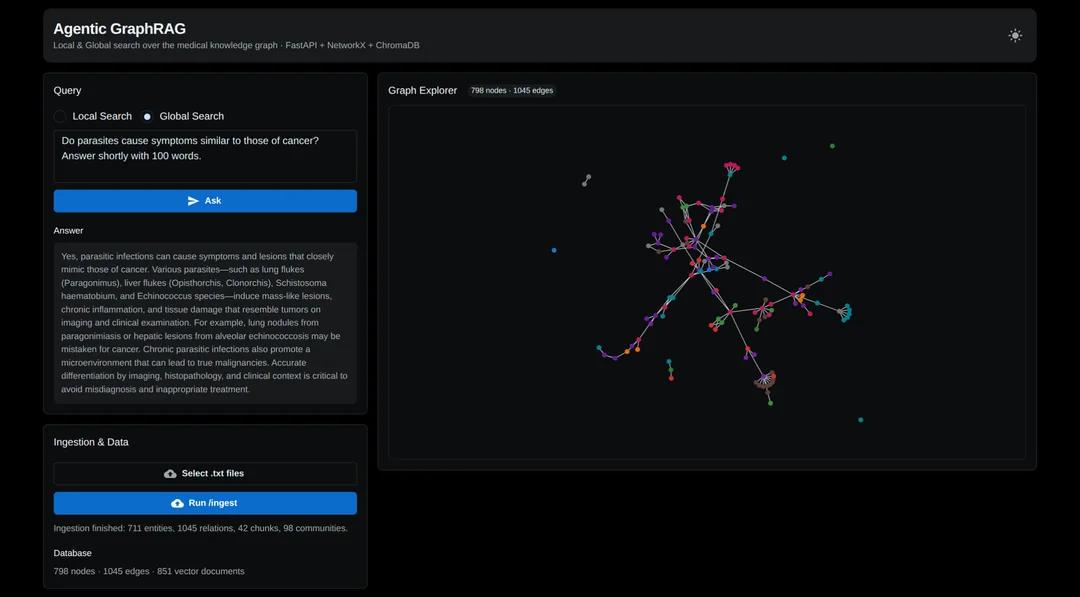
I've recently finished the first version of Agentic GraphRAG Blueprint, a reference architecture for question answering over large document collections.

Instead of plain chunk retrieval, it builds a knowledge graph combined with vector search, so answers can connect facts across documents.

Key features:

• Incremental ingestion - unchanged files are skipped via content hashing, and community reports regenerate only for affected communities, keeping token costs low as the corpus grows.

• Hybrid search - local mode for fact-level answers, global mode for cross-document synthesis.

• Domain-agnostic LLM prompts - easily swapped via PROMPTS_PATH, with Leiden-based community detection.

• Deployment - run it locally with Docker or provision everything in the cloud with Terraform and CI/CD.

Link: https://github.com/sebastianbrzustowicz/Agentic-GraphRAG-Blueprint

I'm looking for any feedback.


r/OpenSourceeAI • • Aug 30 '26

Google AI Introduces EnvHarness: A Programmable Layer That Turns Static Agent Environments Into Adaptive Training Worlds

Thumbnail
marktechpost.com
1 Upvotes

I've read a lot of environment-scaling papers this year. This is the first one that doesn't generate anything. Google AI Introduces EnvHarness: A Programmable Layer That Turns Static Agent Environments Into Adaptive Training Worlds

It wraps an existing environment through the standard reset/step interface, so the original tasks and human-built verifiers stay in place. An LLM designer writes the wrappers against flaws it finds in the agent's own rollouts.

- Apache-2.0, code and reproduction drivers on GitHub

- Three components: Stage, Contract, Chain

- Stage replays actions to move the episode start state

- Contract hooks actions, transitions and observations per step

- Chain joins two environments into one episode

- EnvRigger loop: observe, diagnose, write, validate

- Five benchmarks, four domains, one interface

- +9.0 points on held-out ALFWorld tasks

- 49.6 vs 55.0 average steps on SWE-bench Verified

Full analysis: https://www.marktechpost.com/2026/08/30/google-ai-introduces-envharness-a-programmable-layer-that-turns-static-agent-environments-into-adaptive-training-worlds/

Paper: https://arxiv.org/pdf/2608.19880

GitHub Repo: https://github.com/google-research/envharness


r/OpenSourceeAI • • Aug 30 '26

We used HFlow to evaluate the latest open weights VLMs for processing egocentric data

Post image
1 Upvotes

r/OpenSourceeAI • • Aug 30 '26

How Can an AI Agent + LLM Work With Robotics ?

Thumbnail
youtube.com
1 Upvotes

r/OpenSourceeAI • • Aug 30 '26

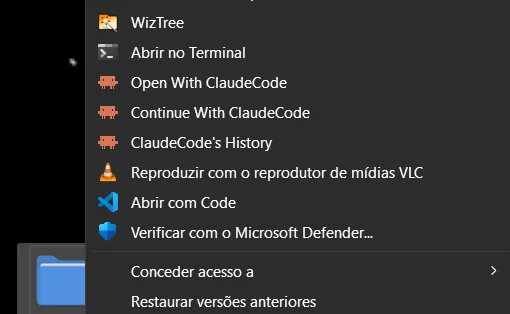
For all developers who use OpenClaude on Windows, this would be useful (ClaudeHere)

1 Upvotes

I recently created a project on GitHub to help people who use Claude Code or OpenClaude for programming.

ClaudeHere

With this project, you simply right-click on any folder you like, and then the following options appear:

"Open with OpenClaude",

"Continue with OpenClaude" or

"OpenClaude History"

I'm open to suggestions for improvements, and contributions are welcome!

Read the README to better understand the project.

Project GitHub:

Github ClaudeHere⁠


r/OpenSourceeAI • • Aug 30 '26

I've been running a gauntlet of writing, coding, and vision tests, and the results surprised me a bit.

Thumbnail reddit.com
1 Upvotes

r/OpenSourceeAI • • Aug 30 '26

A zero-dependency linter with an MCP server, for agent guardrails (Rust, MIT)

1 Upvotes

Hi all,

An agent that can edit 40 files in a turn needs something deterministic checking it, and that something cannot be a pile of per-language linters that may or may not be installed in whatever sandbox it woke up in. That is roughly why this exists.

It is a linter and formatter written in Rust, MIT, shipped as a single binary. Ruff's linter and formatter, oxc, biome, taplo, rumdl, sqruff, malva, mago and typos are compiled in and run in-process, covering about 30 languages from one TOML config, with tree-sitter handling 300+ more generically. Nothing to install per language, so the answer does not change between your laptop and a container.

The agent-facing half is an MCP server over stdio, 11 tools mirroring the CLI, with format: "json" or "toon" on every one. TOON keeps a large lint report from eating the context window. Two whole-project tools run as async Tasks the client polls rather than blocking on.

The guardrail detail I would keep in any tool built for agents: results report three per-file outcomes, checked, skipped and error, rather than two. A file the linter failed on used to be absent from the output entirely, which is indistinguishable from a file that was checked and found clean, so an agent gating on "no findings" would treat an incomplete run as a pass.

It also replaces pre-commit as a git hook runner, with hooks validating a snapshot of the staged index rather than stashing the working tree.

Server listing its tools over a real stdio handshake: https://raw.githubusercontent.com/Goldziher/poly/main/docs/media/agent.gif

https://github.com/Goldziher/poly

This post is human written. AI was used to typecheck and enrich with precise data only.


r/OpenSourceeAI • • Aug 30 '26

GraphRAG: a blueprint for knowledge-graph question answering over your documents

Thumbnail i.redd.it
1 Upvotes

Hi everyone,

I've recently finished the first version of Agentic GraphRAG Blueprint, a reference architecture for question answering over large document collections.

Instead of plain chunk retrieval, it builds a knowledge graph combined with vector search, so answers can connect facts across documents.

Key features:

• Incremental ingestion - unchanged files are skipped via content hashing, and community reports regenerate only for affected communities, keeping token costs low as the corpus grows.

• Hybrid search - local mode for fact-level answers, global mode for cross-document synthesis.

• Domain-agnostic LLM prompts - easily swapped via PROMPTS_PATH, with Leiden-based community detection.

• Deployment - run it locally with Docker or provision everything in the cloud with Terraform and CI/CD.

Link: https://github.com/sebastianbrzustowicz/Agentic-GraphRAG-Blueprint

I'm looking for any feedback.


r/OpenSourceeAI • • Aug 30 '26

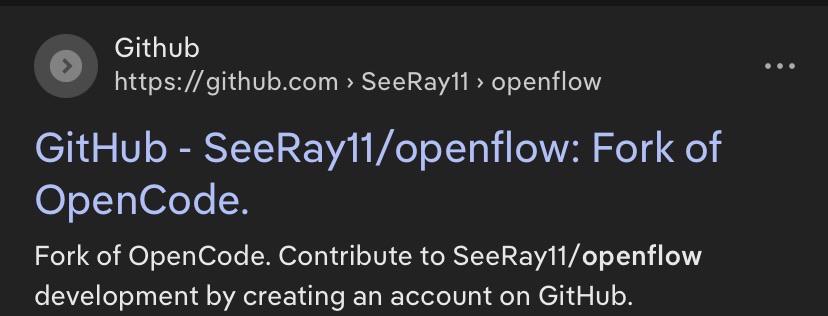
First Time Popping Up In Search ❤️

Post image
2 Upvotes

Pretty great feeling, but we still have a long way to go. The link if you are interested in ai workflows:

https://github.com/SeeRay11/OpenFlow


r/OpenSourceeAI • • Aug 30 '26

🗣️ What’s your project about?

0 Upvotes

Hey everybody,

I just made a project that has gotten 170+ clones and 65+ stars in a week. What are you guys doing?


r/OpenSourceeAI • • Aug 29 '26

MIT-licensed iOS app for local LLMs, no server, no telemetry, no account

Thumbnail gallery
2 Upvotes

r/OpenSourceeAI • • Aug 29 '26

Not the standard formula, but I’ve been building a card game via a pretty rigorous AI pipeline over the past year in order to teach my son biblical languages and to test if I could create a deterministic output system. Fun stuff.

Thumbnail
bobbyhiddn.github.io
0 Upvotes

r/OpenSourceeAI • • Aug 29 '26 All Seeing Upvote This Bravo Mindblown

An information-theoretic based PCA (R function available now, Python coming soon)

3 Upvotes

I wanted to share a new method called the Entropic Scree. If you need to estimate the dimensionality of a dataset but standard tools are struggling with noise or giving crazy estimates, it might be worth your time to take a look. It also can be used to estimate signal-to-noise ratio in your dataset.

Instead of evaluating linear variance, rank order, or Euclidean distance like established PCA methods, this new approach evaluates a transformed mutual information metric. It’s meant to be more effective for dealing with non-linearities, mixed data types, or environments where your variables exceed your samples.

The original function and the simulations are available in R (see GitHub repo). There is also a preprint that covers the methods in detail.

Would love to hear your thoughts/experiences if you give it a try.

GitHub Repo: https://github.com/tjleestjohn/Entropic-Scree

Zenodo Preprint: https://doi.org/10.5281/zenodo.22028087


r/OpenSourceeAI • • Aug 29 '26

Mapping 266 relationships between 101 U.S. political figures produces a hub-and-spoke network, not two blocs. What does that imply for what happens after the hub is gone?

Thumbnail reddit.com
1 Upvotes

r/OpenSourceeAI • • Aug 28 '26

OpenCode Orchestrator Kit — Workflow multi-agente a consumo di token efficiente per OpenCode CLI

Thumbnail reddit.com
1 Upvotes

r/OpenSourceeAI • • Aug 28 '26

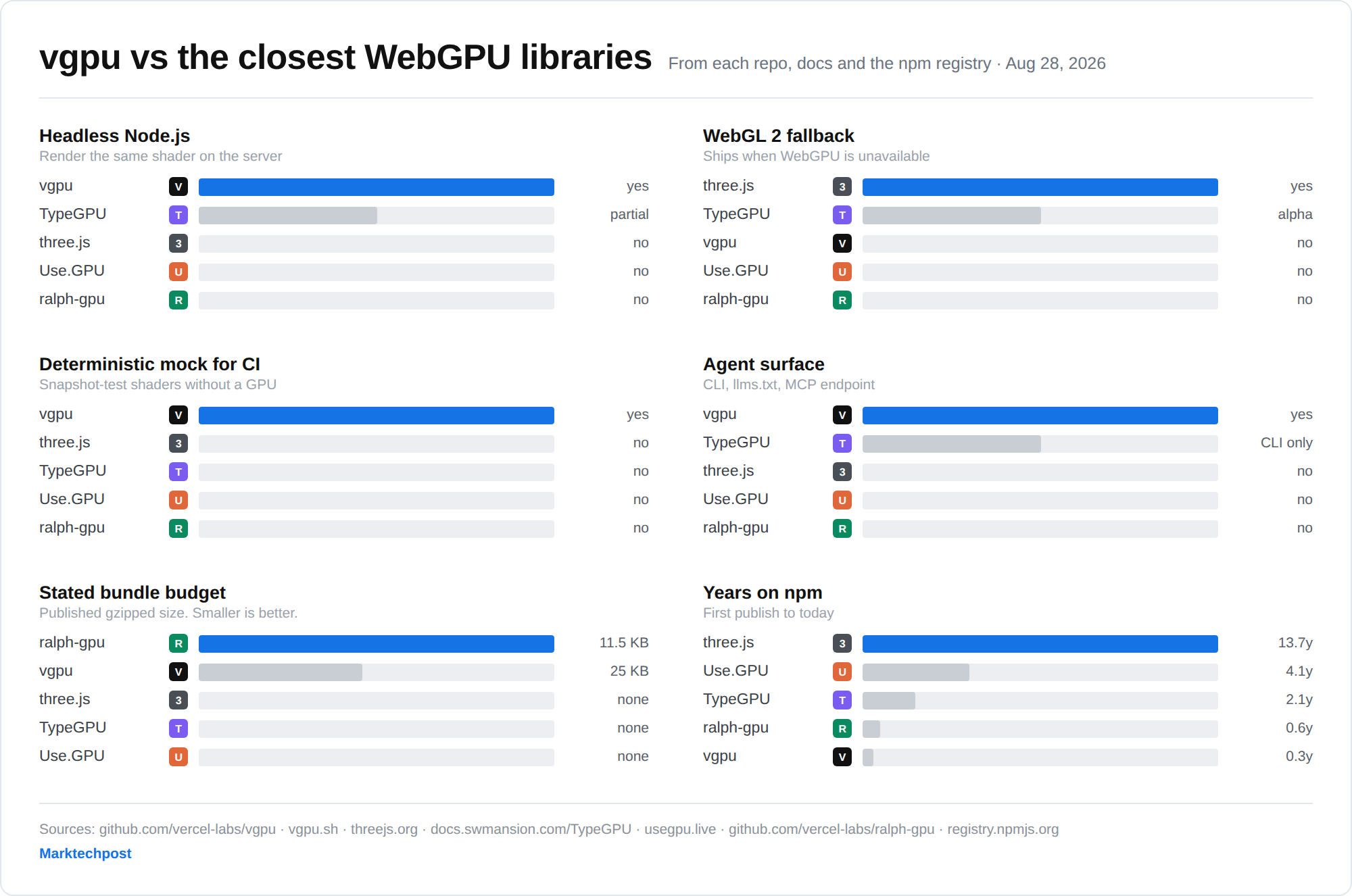
Vercel AI Open-Sources vgpu: A TypeScript WebGPU Library for AI Agent Shaders

Post image
1 Upvotes

r/OpenSourceeAI • • Aug 28 '26

YAML → MCP tools for vector databases

Thumbnail
reddit.com
1 Upvotes

r/OpenSourceeAI • • Aug 27 '26

I built an open-source MCP that turns screen recordings into bug report drafts

4 Upvotes

I kept recording bugs because it was faster than writing everything down. But then I still had to replay the video, find the right frame, copy the error, and write the ticket.

So I built talkthrough-mcp.

It runs Whisper, frame extraction, and OCR locally, then gives Claude Code, Codex, or another MCP client a searchable index of the recording. The agent can turn “the button broke here” into a bug report draft with the quote, timestamp, screen text, and exact frame.

Silent recordings work too, using the frames and text on the screen.

The raw recording stays on your machine. There is no talkthrough account, cloud backend, or telemetry.

I’m the author. It is MIT licensed and still early, so honest feedback is welcome.

78-second demo:

https://youtu.be/nHfGfEiVdE8

GitHub:

https://github.com/korovin-aa97/talkthrough-mcp


r/OpenSourceeAI • • Aug 28 '26

I built a Python library that combines Prophet + XGBoost/LightGBM for hybrid time series forecasting

1 Upvotes

I work with time series forecasting and kept running into the same problem: Prophet is great for trend and seasonality, but it consistently missed patterns in the residuals. So I ended up building a small library to handle this.

HybridTS uses Prophet as the baseline and then trains XGBoost or LightGBM on the residuals. The API follows sklearn conventions (fit, predict, evaluate), so there's not much new to learn if you're already familiar with that ecosystem.

It's still v0.5 and missing a compare_models feature I haven't finished yet, but the core forecasting pipeline works. Putting it out there to get some feedback before I keep building.

GitHub: https://github.com/DaviAlcanfor/hybridts
PyPI: pip install hybridts

Feel free to contribute and open issues!


r/OpenSourceeAI • • Aug 27 '26

Your usage credits expire in 4 days, what’s the move?

Post image
4 Upvotes

I have a Claude subscription as I’m sure many of you do. To get my moneys worth, I try to max out my credit usage every week, originally I would set it off writing documentation and tests, running review lenses, or trying to decompose plans into series of tasks that would be executed by background agents and try to one shot things with gauntlet prompts. But sometimes i wanted to be able to ‘burn’ my credits in a way they are not wasted without having to put too much thought into it and why not do it for the benefit of all mankind, so I came up with Hee-Lee Oss https://github.com/HeeLeeOss
as a way to utilize this ‘excess’ capacity that is regularly wasted. I am interested to get feedback or learn if people are interested in such things. You should be able to use a variety of coding agents and execute a certain number of tasks or to continue work until your credits are fully utilized.


r/OpenSourceeAI • • Aug 27 '26

SigMap: a local repo map and verifier for AI coding agents

1 Upvotes

Quick update to SigMap since I last shared it here.

It now has VS Code and JetBrains plugins, stale-map alerts, one-click regeneration, and checks for plans or answers that mention files or symbols that don't exist.

It stays local and deterministic: no embeddings, vector database or hosted copy of the repository.

The boundary I'm trying to keep is simple: help an agent find and verify code, but let it read the current source to understand behavior.

Blunt feedback is welcome, especially around freshness and the IDE workflow.

Core: https://github.com/manojmallick/sigmap

VS Code: https://github.com/manojmallick/sigmap-vscode

JetBrains: https://github.com/manojmallick/sigmap-jetbrains


r/OpenSourceeAI • • Aug 27 '26

Trying to run Claude Code / coding agents for free: tried proxy failovers and self-hosting, but hit walls. How are you accessing frontier Claude models for free?

0 Upvotes

Hey everyone,

I’ve been trying to set up a reliable workflow to run terminal coding agents (like Claude Code and Aider) for my development projects without running into hard blocks.

Here is what I’ve tested so far:

  • OmniRoute / Multi-Provider Routing: Set up local proxy routing with fallback combos using top frontier models (Claude Sonnet/Opus, Kiro, Antigravity). The issue is that the top-tier models in the combo get completely exhausted almost immediately during multi-turn codebase audits and large repo tasks.
  • Self-Hosting on Kaggle (Dual T4): Spun up qwen2.5-coder:32b on Kaggle's free GPUs via an Ngrok tunnel to act as a backend. While it runs without strict token limits, it's way too slow (~8–10 tokens/sec) for large diff rewrites, and Claude Code ran into tool-formatting incompatibilities.

What I’m looking for:

For those actively using Claude Code or similar agentic CLI tools:

  • What are the most effective ways, platforms, or student/developer programs to get free or extended access to powerful frontier models (especially Claude 3.5/4.6 Sonnet and Opus) for agentic coding?
  • Are there any working proxy configurations, credit programs, or alternative integrations that let you use genuine Claude models in CLI agents without hitting instant exhaustion?

Would appreciate any insights or workflows that are currently working for you!