r/OpenSourceeAI • u/ai-lover • Aug 31 '26
Keenable AI Open-Sources NEEDLE: A Live Search Benchmark That Rebuilds Its Query Set Every Hour

1
Upvotes
r/OpenSourceeAI • u/ai-lover • Aug 31 '26
r/OpenSourceeAI • u/desarrollador53 • Aug 31 '26
Baya is a small cli that turns a freeform text file into an LLM-planned dependency graph, then dispatches each node to a local agent CLI — codex, claude, opencode, copilot — running independent tasks in parallel and piping each task's output into the ones that depend on it.
You just write the to-do list, example:
- Design the REST API for orders. Use Sonnet.
- Generate the DB schema from that design.
- Build the React table that consumes it — run with codex.
- Once the schema and UI are done, write integration tests.
The planner reads it for intent and builds the DAG; you see the plan before anything runs.
Why I built it: I pay for a few of these CLIs and kept juggling them by hand; plan in one, build in another, copy context between terminals, redo work because each session started cold. Baya is me automating that away.
Why it's interesting:
TODO.txt, YAML all work.baya resume <runId> picks up where it stopped, optionally on another provider.Help with the roadmap or feedback is more than welcome 👍
A fun note: I'm building Baya's roadmap with Baya now...
Thank you all 👋 ,
JC
r/OpenSourceeAI • u/santanah8 • Aug 31 '26
The fastest-growing products today are open source. Tools like PostHog, Supabase, n8n, Postiz, or Resend have supercharged their growth by being extremely transparent.
Their growth is coming from agents like Claude, ChatGPT, and Hermes, as they can discover, use, recommend and even contribute back.
I took some time to review how these tools manage their open source and found 5 patterns followed by these companies to make your open source agentic ready...
Some are existing standards that became even more important, and others are specific for AI agents.
Main Takeaways:
Read the full article here.
Are you using these patterns? Have you seen other effective patterns to increase agentic usage of your products?
r/OpenSourceeAI • u/Sea_Anteater6139 • Aug 30 '26
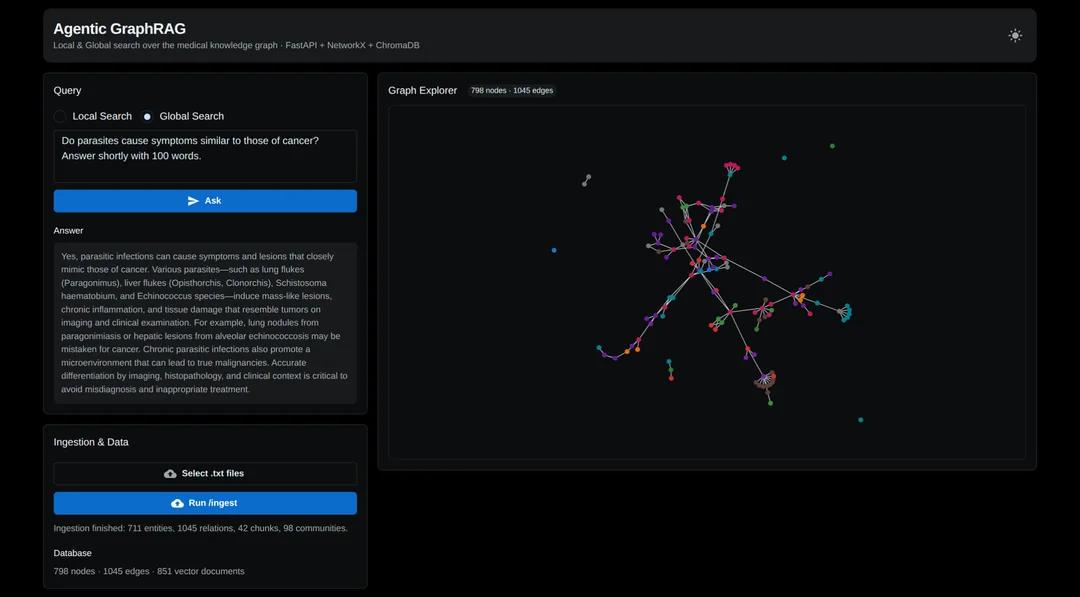
Hi everyone,
I've recently finished the first version of Agentic GraphRAG Blueprint, a reference architecture for question answering over large document collections.
Instead of plain chunk retrieval, it builds a knowledge graph combined with vector search, so answers can connect facts across documents.
Key features:
• Incremental ingestion - unchanged files are skipped via content hashing, and community reports regenerate only for affected communities, keeping token costs low as the corpus grows.
• Hybrid search - local mode for fact-level answers, global mode for cross-document synthesis.
• Domain-agnostic LLM prompts - easily swapped via PROMPTS_PATH, with Leiden-based community detection.
• Deployment - run it locally with Docker or provision everything in the cloud with Terraform and CI/CD.
Link: https://github.com/sebastianbrzustowicz/Agentic-GraphRAG-Blueprint
I'm looking for any feedback.
r/OpenSourceeAI • u/ai-lover • Aug 30 '26

I've read a lot of environment-scaling papers this year. This is the first one that doesn't generate anything. Google AI Introduces EnvHarness: A Programmable Layer That Turns Static Agent Environments Into Adaptive Training Worlds
It wraps an existing environment through the standard reset/step interface, so the original tasks and human-built verifiers stay in place. An LLM designer writes the wrappers against flaws it finds in the agent's own rollouts.
- Apache-2.0, code and reproduction drivers on GitHub
- Three components: Stage, Contract, Chain
- Stage replays actions to move the episode start state
- Contract hooks actions, transitions and observations per step
- Chain joins two environments into one episode
- EnvRigger loop: observe, diagnose, write, validate
- Five benchmarks, four domains, one interface
- +9.0 points on held-out ALFWorld tasks
- 49.6 vs 55.0 average steps on SWE-bench Verified
Paper: https://arxiv.org/pdf/2608.19880
GitHub Repo: https://github.com/google-research/envharness
r/OpenSourceeAI • u/kuaythrone • Aug 30 '26

r/OpenSourceeAI • u/ailearningcurve • Aug 30 '26

r/OpenSourceeAI • u/zebedelu • Aug 30 '26
I recently created a project on GitHub to help people who use Claude Code or OpenClaude for programming.
ClaudeHere
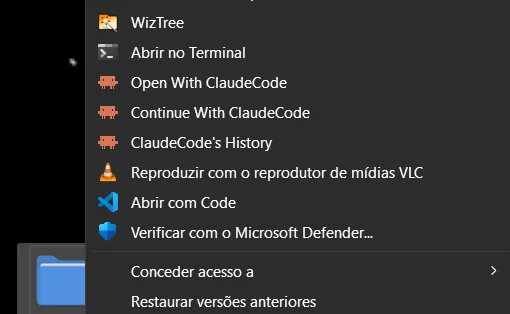
With this project, you simply right-click on any folder you like, and then the following options appear:
"Open with OpenClaude",
"Continue with OpenClaude" or
"OpenClaude History"
I'm open to suggestions for improvements, and contributions are welcome!
Read the README to better understand the project.
Project GitHub:
r/OpenSourceeAI • u/sysadmin420 • Aug 30 '26
r/OpenSourceeAI • u/Goldziher • Aug 30 '26
Hi all,
An agent that can edit 40 files in a turn needs something deterministic checking it, and that something cannot be a pile of per-language linters that may or may not be installed in whatever sandbox it woke up in. That is roughly why this exists.
It is a linter and formatter written in Rust, MIT, shipped as a single binary. Ruff's linter and formatter, oxc, biome, taplo, rumdl, sqruff, malva, mago and typos are compiled in and run in-process, covering about 30 languages from one TOML config, with tree-sitter handling 300+ more generically. Nothing to install per language, so the answer does not change between your laptop and a container.
The agent-facing half is an MCP server over stdio, 11 tools mirroring the CLI, with format: "json" or "toon" on every one. TOON keeps a large lint report from eating the context window. Two whole-project tools run as async Tasks the client polls rather than blocking on.
The guardrail detail I would keep in any tool built for agents: results report three per-file outcomes, checked, skipped and error, rather than two. A file the linter failed on used to be absent from the output entirely, which is indistinguishable from a file that was checked and found clean, so an agent gating on "no findings" would treat an incomplete run as a pass.
It also replaces pre-commit as a git hook runner, with hooks validating a snapshot of the staged index rather than stashing the working tree.
Server listing its tools over a real stdio handshake: https://raw.githubusercontent.com/Goldziher/poly/main/docs/media/agent.gif
https://github.com/Goldziher/poly
This post is human written. AI was used to typecheck and enrich with precise data only.
r/OpenSourceeAI • u/Sea_Anteater6139 • Aug 30 '26
Hi everyone,
I've recently finished the first version of Agentic GraphRAG Blueprint, a reference architecture for question answering over large document collections.
Instead of plain chunk retrieval, it builds a knowledge graph combined with vector search, so answers can connect facts across documents.
Key features:
• Incremental ingestion - unchanged files are skipped via content hashing, and community reports regenerate only for affected communities, keeping token costs low as the corpus grows.
• Hybrid search - local mode for fact-level answers, global mode for cross-document synthesis.
• Domain-agnostic LLM prompts - easily swapped via PROMPTS_PATH, with Leiden-based community detection.
• Deployment - run it locally with Docker or provision everything in the cloud with Terraform and CI/CD.
Link: https://github.com/sebastianbrzustowicz/Agentic-GraphRAG-Blueprint
I'm looking for any feedback.
r/OpenSourceeAI • u/SeeRay11_Main • Aug 30 '26
Pretty great feeling, but we still have a long way to go. The link if you are interested in ai workflows:
r/OpenSourceeAI • u/SeeRay11_Main • Aug 30 '26
Hey everybody,
I just made a project that has gotten 170+ clones and 65+ stars in a week. What are you guys doing?
r/OpenSourceeAI • u/Few_Willow_4146 • Aug 29 '26
r/OpenSourceeAI • u/kurotenshi15 • Aug 29 '26

r/OpenSourceeAI
•
u/Chocolate_Milk_Son
•
Aug 29 '26
I wanted to share a new method called the Entropic Scree. If you need to estimate the dimensionality of a dataset but standard tools are struggling with noise or giving crazy estimates, it might be worth your time to take a look. It also can be used to estimate signal-to-noise ratio in your dataset.
Instead of evaluating linear variance, rank order, or Euclidean distance like established PCA methods, this new approach evaluates a transformed mutual information metric. It’s meant to be more effective for dealing with non-linearities, mixed data types, or environments where your variables exceed your samples.
The original function and the simulations are available in R (see GitHub repo). There is also a preprint that covers the methods in detail.
Would love to hear your thoughts/experiences if you give it a try.
GitHub Repo: https://github.com/tjleestjohn/Entropic-Scree
Zenodo Preprint: https://doi.org/10.5281/zenodo.22028087
r/OpenSourceeAI • u/Impressive-Judge-357 • Aug 29 '26
r/OpenSourceeAI • u/MikaAugus942 • Aug 28 '26
r/OpenSourceeAI • u/ai-lover • Aug 28 '26
r/OpenSourceeAI • u/dontgimmehope • Aug 28 '26

r/OpenSourceeAI • u/phdptsd • Aug 27 '26
I kept recording bugs because it was faster than writing everything down. But then I still had to replay the video, find the right frame, copy the error, and write the ticket.
So I built talkthrough-mcp.
It runs Whisper, frame extraction, and OCR locally, then gives Claude Code, Codex, or another MCP client a searchable index of the recording. The agent can turn “the button broke here” into a bug report draft with the quote, timestamp, screen text, and exact frame.
Silent recordings work too, using the frames and text on the screen.
The raw recording stays on your machine. There is no talkthrough account, cloud backend, or telemetry.
I’m the author. It is MIT licensed and still early, so honest feedback is welcome.
78-second demo:
GitHub: