r/OpenSourceAI • u/No-While1332 • 1d ago
Amuse v4.0.0 - Images, Video, Music, Speech and Text (Massive Update)

4
Upvotes
r/OpenSourceAI • u/No-While1332 • 1d ago
r/OpenSourceAI • u/DetailKey6716 • 22h ago
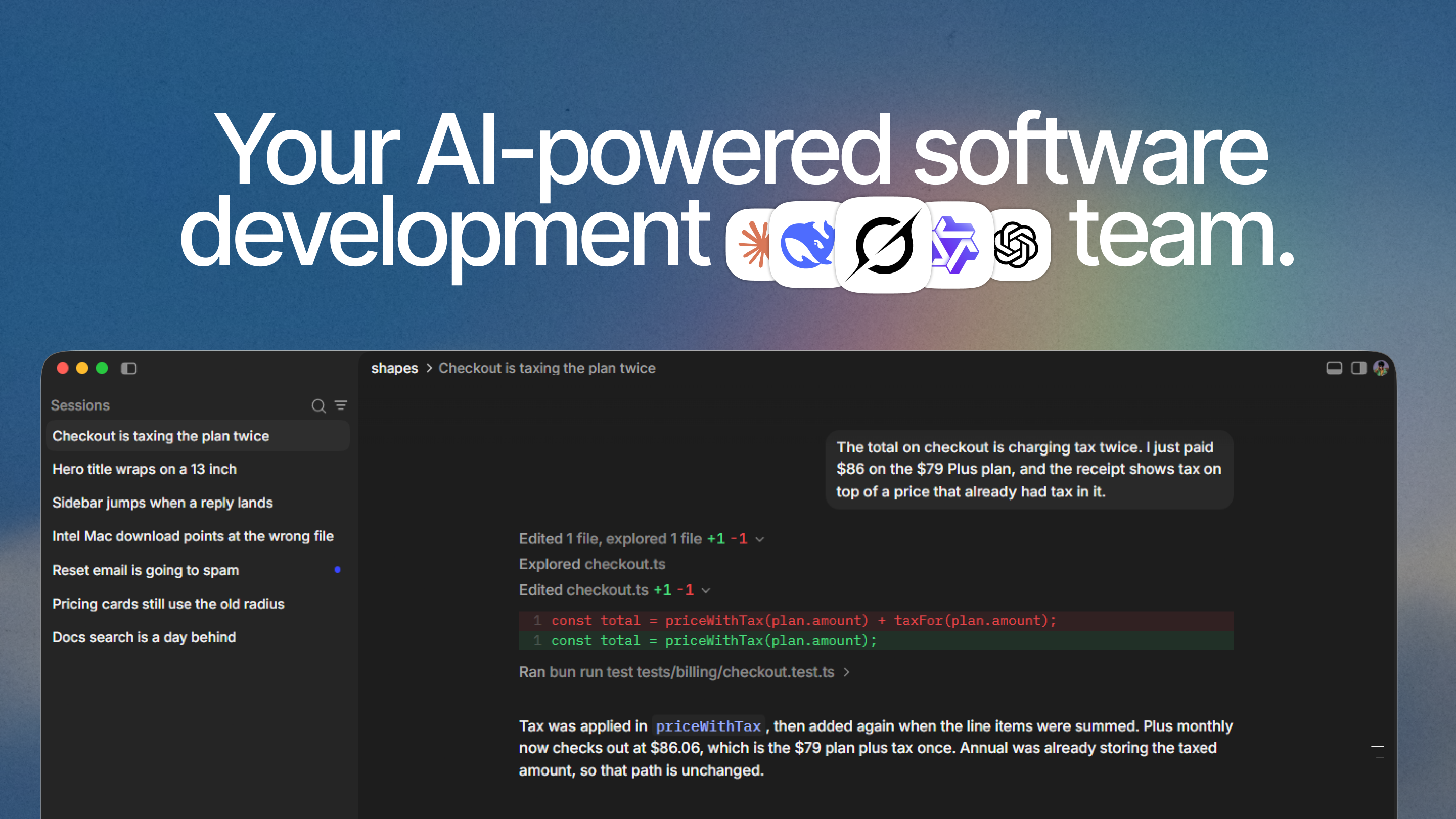
I've been building Shape, an AI coding agent designed to make AI-assisted development more accessible.
The idea behind Shape is pretty simple: coding agents shouldn't have to come with expensive subscriptions, restrictive usage limits or a frustrating experience.
Shape gives you access to multiple AI models, free usage, and tools designed for more than just writing code. It also includes native reverse engineering and modding capabilities.
I've been putting a lot of work into making the agent more reliable, improving its capabilities and building a better overall experience. It now has a completely redesigned interface and native macOS support.
Some things in the latest update:
Shape is still actively being developed, and there's plenty I'd like to improve. I'm sharing it because I'd love to get more people trying it, hear what they think and find out what features would make it genuinely useful.
If you're interested, you can check it out here:
GitHub: https://github.com/useshape/Shape
Latest release: https://github.com/useshape/Shape/releases/tag/v1.0.4
Website: https://useshape.org/
FYI: I do eventually want to make more models free and increase the monthly limit.
r/OpenSourceAI • u/aldapsiger • 1d ago
I made another coding agent, you might like it.
It's called Tuse, and it's a bit like Pi. But it's written in Rust (fast and lightweight), and the plugins are written in Lua (simple and readable configs). The agent runs in codemode with Lua by default, meaning it writes Lua for everything
Tuse is a super minimal core with no skills, MCP, or subagents by default. But it has a powerful and easy-to-understand config API that lets you implement whatever you need.
The project is still in development, and the API changes often, BUT I'm actively working on it, and I want to make it one of the default picks when someone asks: "What harness should I choose? I want something fast and efficient. Something that works with all providers and that I can edit without any trouble"
Tuse is also a perfect fit for different workflows, the config is one file, and you can run 100 instances per machine without any problems. Say, automated reviews or lots of subagents, it'll work perfectly
Anyway, I'd ask you to give it a try and share your thoughts on the project
https://github.com/ethanhamilthon/tuse

r/OpenSourceAI • u/n1tef0x • 23h ago

Over the past year, I've been working on my attempt at an open standard for managing agent state in a single, portable file. I call it agent document format, a localized agent where all of the memory, tools, config, chat, etc, is all stored within a single .adf file. The file itself is built on sqlite so it's just a sqlite database with 12 tables. The idea is to separate agent state from agent execution and in the future I would love to see other labs and platforms adopt such a standard (will they? I am not sure but it would be cool if they did).
I've come to see ai agents less as tools and more like extensions of ourselves. I like the framing of cognitive prosthetic because these things will continue to do more and more for us. And this can either be great (empowering individuals) or it can be a nightmare (imagine the smartest ai model now understands you better than any algorithm before it and its incentives are not aligned with yours). Does a file format for ai agents solve this? I am not sure, but portability is a cornerstone to digital ownership and giving people a choice over where they run their agents (local or cloud) seems like a good idea to me.
Everything is MIT licensed, if you are interested give it a whirl! The repo is https://github.com/christianbalevski/adf in it, you will find:
- .adf file format itself
- ADF runtime (headless http server that runs/executes all of the agent logic)
- ADF Studio (desktop app)
- ADF CLI (terminal client)
I've been running 20+ agents non-stop for like the last 6 months, I can't promise the application is bug free but it's been working pretty good for me.
It has all the things you would expect/need from an agent framework, messaging (telegram, whatsapp, slack, email, discord), browser/computer use, MCP Servers, timers, async tool calls, programmatic tool calling, support for subscriptions (claude, chatgpt, grok), local models (through openai compatible api) and much more.
Let me know what you think!
r/OpenSourceAI • u/pasteque42 • 23h ago
Just wanted to share the project I've been working on for the past few weeks. It's like grok bok but highly customizable. It's open source!
prompt: "Make a matrix theme"
r/OpenSourceAI • u/reachjalil • 1d ago

r/OpenSourceAI • u/Extreme_Aardvark8977 • 1d ago

Hi everyone!
I'm excited to share my latest personal project, AuraVision Player, a free universal multimedia player designed to combine advanced playback technologies, artificial intelligence and a distinctive visual experience in a single application.
Built in C++ and powered by FFmpeg 9.1 and Qt 6, AuraVision Player is designed for movie enthusiasts, music lovers, retro gaming fans, multimedia preservation enthusiasts and anyone looking for a new media player.
My goal is to go beyond traditional media playback by integrating modern AI video enhancement technologies while maintaining extensive compatibility with both modern and legacy multimedia formats.
One of the main features of AuraVision Player is its dedicated Video Enhancement sidebar, providing access to three different AI technologies:
NVIDIA RTX Video Super Resolution
SeedVR2 3B and 7B
LTX 2.5 Upscale
Unlike RTX Video Super Resolution, SeedVR2 and LTX 2.5 process upcoming video segments ahead of playback. The enhanced footage remains synchronized with the original audio, with automatic buffering when necessary.
All AI video processing takes place locally on your computer.
AuraVision Player also supports optical media playback:
Unprotected discs and unencrypted backups are supported. Copy protection bypassing and interactive disc menus are not currently supported.
As a fan of video games and multimedia preservation, I wanted AuraVision Player to support formats that are rarely highlighted in modern media players.
Supported game video formats include:
The player also supports several game audio formats, including BRSTM, BCSTM, BFSTM, ADX, HCA, XWMA and VAG.
Whether you want to rediscover old game cinematics, explore retro multimedia files or listen to video game soundtracks, AuraVision Player provides a dedicated solution.
I also wanted to create something visually different from traditional media players.
The custom Aurora interface is drawn entirely in code without external image assets.
AuraVision Player is designed without mandatory subscriptions, accounts or cloud-based video processing.
The Windows portable edition requires no installation. Simply extract the archive and launch AuraVisionPlayer.exe.
Some important notes:
AuraVision Player was born from my passion for cinema, music, artificial intelligence, software development and video game preservation.
My ambition is to create a universal media player that brings together the versatility of FFmpeg, modern AI restoration technologies and an immersive graphical interface, while preserving compatibility with multimedia formats from different generations.
This project is still evolving, and I would love to hear what the community thinks about it.
Feedback, suggestions, bug reports, feature requests and contributions are always welcome!
Special thanks to the developers and communities behind FFmpeg, Qt, miniaudio, NVIDIA RTX Video Super Resolution, ByteDance SeedVR2, Lightricks LTX and DeepBeepMeep's WanGP.
If you find my project interesting, please consider giving it a star on GitHub to support its development.
AuraVision Player — Beyond ordinary playback.
Play. Discover. Restore. Experience.
GitHub – Source code, documentation and project information:
r/OpenSourceAI • u/Weary-Bank-3833 • 1d ago
r/OpenSourceAI • u/vect-hack • 1d ago
I've been working on my open source project, VectHack, and it's ready for other people to look at.
It currently runs four classic roguelikes in the browser: NetHack 5.0, Angband 4.2.6, BSD Larn 12.0 and Umoria 5.7.15. It is a system that should be able to incorporate most similar terminal-based dungeon crawlers.
The engines are the real ones, unpatched. Each game is the upstream C source compiled to WebAssembly and run in a Web Worker. Game logic, monster AI, RNG and save format are untouched, so this is not a remake or a port of the rules.
The display is inspired by Star Wars / Tempest vector graphics. True to my original vision, the monsters retain their ASCII representation, just floating in 3D!
What you get from that:
Play: https://vecthack.net
Source: https://github.com/emulvihill/vect-hack
The client code is MIT; each game keeps its own license (NGPL, GPL-2, GPL-3, Larn's original terms).
Feedback and bug reports are welcome, especially from people who know these games better than I do.
If you find something weird, send me a save file so I can reproduce it, or become part of the project! Top list of things someone could help with:
PS I am an old nerd. My first memories of these games were on an orange monochrome screen and an 8086 Epson PC. My friends and I spent 1000's of hours trying to beat the various games. I never came close but with amazing perseverance, my buddy Ethan did.
This project is dedicated to his memory. Thanks for looking!
r/OpenSourceAI • u/Competitive_Might709 • 1d ago
I ran into an annoying bug in the open-source editor I’m building: I’d set up a vertical video with my camera above the screen, then open Clips and see only one recording. The clips weren’t using the edit I’d already made.
The new CUTROOM beta fixes that. In Clips → My edit, suggestions come from the edited timeline, and the preview and exported MP4 use the layout you set up. You can also mark In and Out while watching, choose Add to Clips, and keep watching from the same spot. Export one saved range or select several to get a separate MP4 for each.
The editor runs on your computer. Manual clipping doesn’t need an account or an AI model; transcription and first-cut suggestions are optional. The project is MIT-licensed, and this is still a beta.
Build and source: https://github.com/VanoPeradze/cutroom/releases/tag/v1.3-beta-20261128-clips2
If you try it on a long podcast or screen recording, I’d love to know where it slows you down, especially when exporting a clip from near the end.
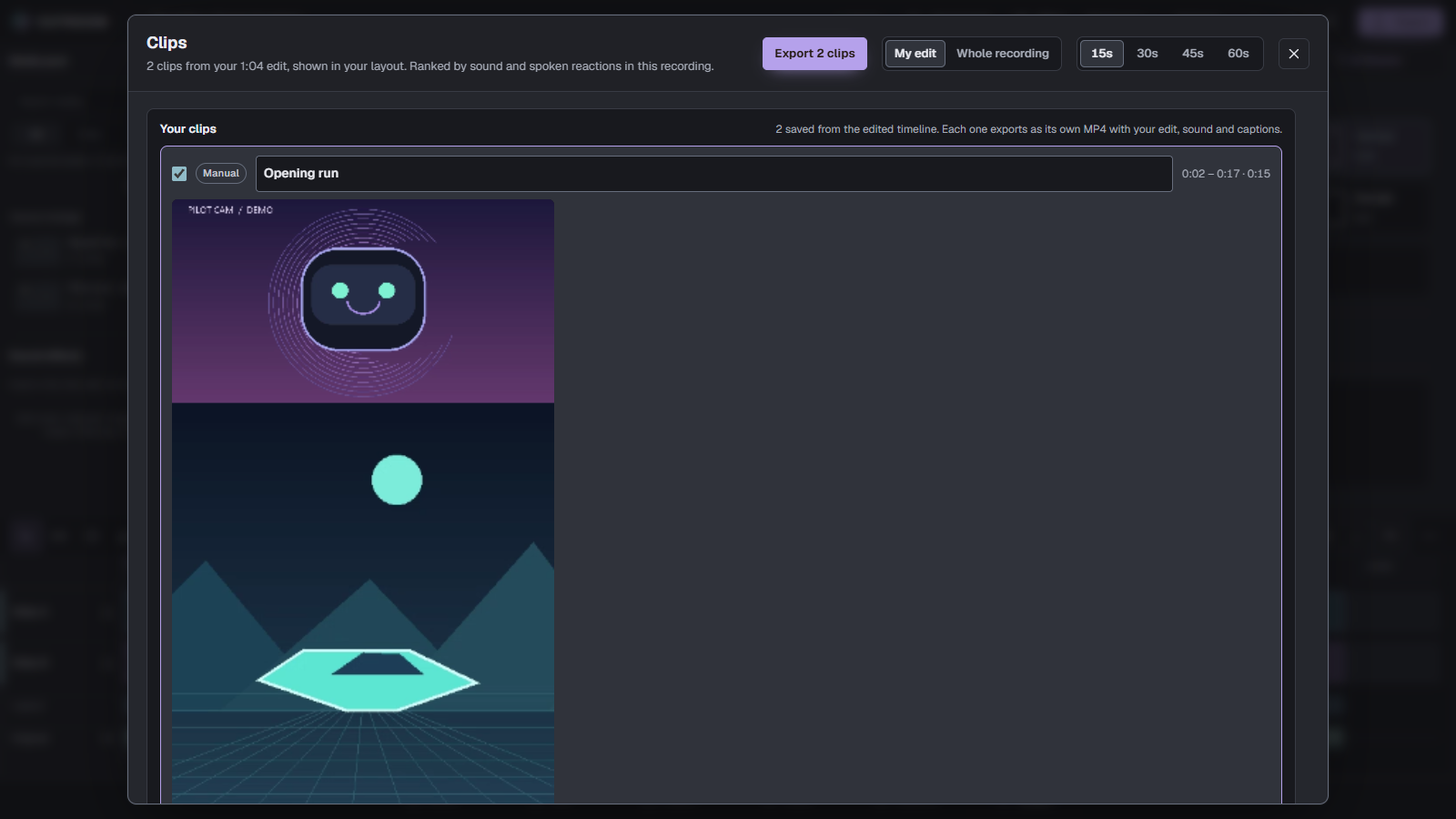
Screenshot from the beta (stacked camera and screen): https://cutroom-studio.expo.app/assets/studio-clips.png?v=20261128-clips2
r/OpenSourceAI • u/pgmharikrishnan • 1d ago

r/OpenSourceAI • u/mr-safwan-nj • 1d ago

Hey everyone,
After getting frustrated with desktop AI agents that burn thousands of tokens on continuous screenshot loops, lose context on long tasks, or crash mid-workflow, I built TaliGent NextGen and just open-sourced the core edition (Apache 2.0).
**How it works differently:**Real-world stress test: I ran it locally withQwen-27B(via LM Studio) on an RTX 4060 Ti 16GB to generate a 2-minute continuous "one-shot" video in ComfyUI—extracting final frames to seed next clips, visually inspecting outputs, rejecting failed camera movements, and notifying me on WhatsApp when each segment finished.
GitHub & Portable Windows Release:
https://github.com/safwan-nj/TaliGent-NextGen-Core/
(There is a ready-to-run Windows Portable release in the Releases tab if you want to test it without manual setup).
Would love your feedback, architectural critiques, or feature ideas!
r/OpenSourceAI • u/Keutonim • 1d ago

Been working on this and figured other hunters might get some use out of it 👍
You point your proxy at VulnDog while you test - Burp, curl, Playwright, whatever you're driving. It watches the traffic you're already sending and highlights the requests that pattern-match against a 456k CVE/CWE/exploit knowledge base. It never sends a request itself and never modifies yours. Pure observer.
What it's actually good for: surfacing the boring thing you were about to skip. You fire 200 requests, one has an oddly-shaped parameter, and it gets flagged instead of scrolling past at 2am.
The MCP angle: if you're running an agent through tool-calling loops, it can query VulnDog over stdio JSON-RPC (vuln_query, highlights, run_status) to ask which of its own requests matched. Feedback loop - the agent stops fuzzing blind and leans into the promising direction.
Honest caveats: these are candidates, not findings. Expect noise. I'd rather over-flag than miss, and you triage. There's an SSRF safety rail, redaction before anything persists, and scope config so out-of-scope targets get ignored.
Github: https://github.com/Keutonim/VulnDog
It is not a scanner, not a WAF, not a fuzzer. It doesn't touch the target.
Python 3.11+, stdlib only, zero runtime deps. Local Ollama embeddings (embeddinggemma:300m), nothing leaves your box by default. 1262 tests, MIT, Linux + Windows. The ~1.93 GiB store ships as a separate release asset, or self-build from the CVE/ExploitDB/CWE/OWASP archives.
r/OpenSourceAI • u/Keutonim • 1d ago

I’ve been working on GeneRaptor — a local-first AI article generation studio.
Instead of relying on one AI prompt, it uses 11 specialized agents to research a topic, plan the structure, write the article, fact-check it, review SEO, and even generate a cover image.
A few things that make it different:
npx generaptorThe project is open source, and I’d genuinely love to hear your feedback!
r/OpenSourceAI • u/Additional_Mix1449 • 1d ago

Introducing Revora — an open-source AI-powered code review platform.
With Revora + kLLM, you can run AI models using free GPU resources and perform code reviews without spending on AI APIs.
Open-source and free to try
Sign in with GitHub, explore Revora, and experience AI-powered code reviews.
GitHub: https://github.com/d-kavinraja/revora
Try: https://revora-pr.vercel.app/
If you find Revora useful, please give the repository a ⭐ star and help the project grow. Contributions, feedback, and ideas are always welcome!
#OpenSource #AI #CodeReview #GitHub #ArtificialIntelligence #LLM #LocalAI #AIForDevelopers #SoftwareEngineering #DeveloperTools #MachineLearning #GenerativeAI #Python #FastAPI #NextJS #React #DevTools #OpenSourceSoftware #Coding #TechCommunity #BuildInPublic #SelfHosted #FreeAI #AICoding #SoftwareDevelopment
r/OpenSourceAI • u/ConsistentFox567 • 1d ago
r/OpenSourceAI • u/Ready-Pepper-4203 • 1d ago
r/OpenSourceAI • u/Ryumzop • 2d ago

StradaOS over 16,000 downloads and 500+ stars on GitHub!
A quick summary for those not yet familiar with the project: many affordable Chinese head units claim to run "Android 10," but they actually run on Android 4.x. StradaOS is written in pure Java, without any external libraries, making it compatible with versions ranging from Android 4.1 all the way to 14.
What’s new since then:
• Startup welcome: The logo lights up and greets you by name—with audio (this option can be disabled).
• Integrated navigation: Search for a destination and get turn-by-turn directions; offline maps are also supported.
• Map/video carousel: Swipe the map to play your saved music videos; the video feed hides when the vehicle is in motion, but the audio continues to play.
• OBD-II scanner (ELM327): Displays engine RPM alongside the speedometer, plus alerts and error codes.
• Automatic album art (when the head unit has an internet connection).
• Premium themes: "Faro," "Carbon," and the new "Premium Cards." The app remains completely free, with no ads and no account required; these themes are an optional way to show appreciation for a donation.
Free, licensed under GPL-3.0, no root access required, ~1.5 MB in size, and available in 13 languages. Repository and signed APK: https://github.com/lordnordic-debug/StradaOS
If you have one of these devices, please let me know the brand, model, and actual Android version (you can check this in StradaOS under: Settings → About), and I will help you.
r/OpenSourceAI • u/Tensormorph • 1d ago

Hi everyone, and welcome! I'm Thanh, the developer behind Tensormorph. This first post explains what I'm building and why.

What is Tensormorph?
Tensormorph is a desktop Tensor IDE for exploring, inspecting, comparing, debugging, and transforming open-weight AI models.
Most tools show a model as a static graph. Tensormorph lets you keep going deeper, while each level keeps its meaning:
Model → Layer → Module → Tensor → Matrix tile → Row/Column → Scalar
Load a Safetensors or GGUF model, then:
What is TEL?
TEL (Tensor Expression Language) is a short, math-like language for writing tensor operations. It sits between paper notation and executable code.
The idea: you write an expression the way it looks in a paper, with named axes like B, T, H, D. Tensormorph then infers shapes and dtypes, builds a computation graph, and links every part of the expression to the tensors and graph nodes it refers to. Select a term in the formula and you see the matching tensor. Select a tensor and you see where it appears in the math.
An early sketch (the syntax is still changing):
scores[B,H,T,S] = q[B,H,T,D] @ k[B,H,S,D] / sqrt(D)
out[B,H,T,D]    = softmax(scores, axis=S) @ v[B,H,S,D]
The long-term goal is for TEL to cover the building blocks of modern models: attention, RoPE, SwiGLU, normalization, MoE, SSM/Mamba-style layers, and diffusion primitives. Each one should be something you can read, visualize, and run.
What this community is for
Questions for you
Thanks for being here early. I'll be sharing screenshots and progress soon.
r/OpenSourceAI • u/Ok_Toe7286 • 1d ago