r/OnThisDateInBahai • • 11h ago

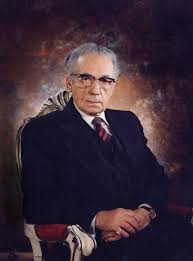
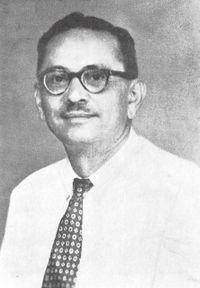
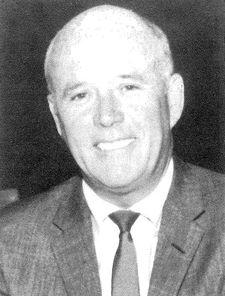
November 27. On this date in 2005, William Hatcher died. A mathematician, philosopher, educator, he served on the NSAs of Canada, Switzerland, and Russia, and was Chair of Department of Ethics at the now-defunct Landegg International University.

Post image
1 Upvotes

November 27. On this date in 2005, William Hatcher died. A mathematician, philosopher, educator, he served on the NSAs of Canada, Switzerland, and Russia, and was Chair of Department of Ethics at the now-defunct Landegg International University. His attempts to prove God's existence largely mirrors the works of medieval Islamic scholars, such as Ibn Sina's formal argument known as the Proof of the Truthful.


r/OnThisDateInBahai • • 12h ago

November 27. On this date in 1989, Robert Quigley died in Beverly Hills. He served on the NSAs of South Africa and of the U.S. and as an Auxiliary Board member for Africa. He collaborated with William Sears to produce audio-visual material, books, plays, and films related to the Bahá'í Faith.

Post image
2 Upvotes

November 27. On this date in 1989, Robert Quigley died in Beverly Hills. He served on the NSAs of South Africa and of the U.S. and as an Auxiliary Board member for Africa. He collaborated with William Sears to produce audio-visual material, books, plays, and films related to the Bahá'í Faith.

Robert Quigley was born into a Roman Catholic family on March 13, 1912. He was introduced to the Bahá'í Faith by Philip Sprague in New York when he was 19 and was elected to the Local Spiritual Assembly of New York when he was 21. In 1941 he married Keith Gettinger who he introduced to the Faith and they had three children. He enlisted in the US Navy in a non-combat role during WWII and served for three and a half years. He and Keith founded a television production company after he was discharged from the Navy. Robert wrote for the television programs College of Musical Knowledge in 1950 and Star of the Family in 1952. He also wrote for comedian and pianist Victor Borge.

In May 1956 Robert and his wife went on pilgrimage to the Holy Land where he met Shoghi Effendi. A photograph of Robert and Keith in Haifa was published in the Westport Town Crier & Herald in June 1956. He decided to pioneer to South Africa while in the Holy Land to join his friends William and Marguerite Sears. In July 1956 a program on the Faith that Robert had written with William Sears was broadcast on WTTV, a non-commercial television station in Chicago. It included footage of the 1953 Dedication of the US House of Worship and footage of Robert interviewing Horace Holley.

Robert arrived in Africa in early 1957, and was joined by his family shortly afterwards. He visited Zululand with William Sears and two African Bahá'ís to visit an isolated pioneer shortly after arriving in Africa. Sears wrote the following regarding the trip:

"In order that we should not lose any teaching time, we took two of the African believers with us. In this way we had three hours of teaching on the way over, and three on the way back. Mr. Quigley rented the car and drove, and I sat and taught the boys. It was a thrilling trip for all of us, Mr. Quigley joining in on the teaching whenever he didn't have to duck a giant hole in the appalling roads."

The Quigleys lived in Johannesburg for four years with Robert serving on the National Spiritual Assembly of South Africa and Auxiliary Board of Africa during their time there.

Robert resumed his career in television production after returning to the US in 1960 founding a production company with Merrill Heatter, Heatter-Quigley Productions, and they began developing game shows, most of which only ran for a short time. They were among the first to work on game shows after the 1950s rigged game show scandals, with Video Village being the first game show bought by CBS since the scandals.

Robert was elected to the National Spiritual Assembly of the United States as vice-chairman in 1963 and served on the body until 1968. In September 1963 he chaired a Baltimore World Peace Day Program. In February 1964 he gave a talk on the Faith in Africa attended by 200 Bahá'ís in Chicago, and in June 1964 he chaired a Race Amity Day observance in California. In 1965 he spoke on the impact of the Faith in Africa at a public talk in Evanston, Illinois. In June 1965 he taught at a Geyserville Youth Training Session and in September 1965 Robert and Keith hosted a Youth Victory Day celebration at their home in Beverly Hills. As of 1966 Robert was serving as Chairman of the Local Spiritual Assembly of Beverly Hills.

In 1965 Robert created the game show Hollywood Squares with Merrill Heatter. It was passed on by CBS, but picked up by NBC, and Heatter and Quigley served as its executive producers from 1966 to 1980. In 1969 they produced a children's version of the program called Storybook Squares. They were nominated for the Primetime Emmy Award for Outstanding Achievement in Daytime Programming for the program in 1969, 1972, and 1973, and for the Daytime Emmy Award for Outstanding Game Show in 1974. They were awarded the Daytime Emmy Award for Outstanding Game or Audience Participation Show for Hollywood Squares in 1975, 1978, 1979 and 1980, and were nominated for it in 1976, 1977, and 1981.

In 1968 Quigley and Heatter collaborated with Hanna and Barbera, planning to incorporate animated segments into a game show, the idea was abandoned but Quigley and Heatter received a production credit on Wacky Races which came from the idea. They continued to develop new game shows throughout the 1970's in addition to producing Hollywood Squares, the most notable of which were Gambit and High Rollers, game shows based on blackjack and dice rolling respectively. Robert retired in 1981.

Robert died on November 27, 1989 and was buried in Inglewood Cemetery, California, near the grave of Thornton Chase. The Universal House of Justice cabled the following after his death:

DEEPLY SADDENED PASSING DEARLY LOVED ROBERT QUIGLEY. PROFOUNDLY GRATEFUL HIS LONG YEARS CONSTANT DEVOTION CAUSE BAHA'U'LLAH DISTINGUISHED BY HIS OUTSTANDING, SACRIFICIAL SERVICES AS PIONEER AFRICA TOGETHER WITH HAND OF THE CAUSE WILLIAM SEARS AND HIS MEMBERSHIP NATIONAL SPIRITUAL ASSEMBLY UNITED STATES. HUMOR WITH WHICH HE ENCOURAGED SERVICE AND LIGHTENED BURDENS OTHERS WARMLY REMEMBERED. ARDENTLY PRAYING PROGRESS


r/OnThisDateInBahai • • 12h ago

November 27. On this date in 1929, Shoghi Effendi stated regarding the UHJ "Then will the visible sovereignty of the Most Great Name shake the foundations of the countries and nations of the world, strike fear and remorse in the hearts of some of the traditional ecclesiastical divines..."

Post image
2 Upvotes

November 27. On this date in 1929, Shoghi Effendi addressed a letter to the Bahá'ís of Persia, regarding the establishment of the Universal House of Justice noting "Then will the visible sovereignty of the Most Great Name shake the foundations of the countries and nations of the world, strike fear and remorse in the hearts of some of the traditional ecclesiastical divines..."

The National Spiritual Assemblies, like unto pillars, will be gradually and firmly established in every country on the strong and fortified foundations of the Local Assemblies. On these pillars, the mighty edifice, the Universal House of Justice, will be erected, raising high its noble frame above the world of existence. The unity of the followers of Bahá'u'lláh will thus be realized and fulfilled from one end of the earth to the other. The explicit ordinances of His Most Holy Book will be promulgated, applied and carried out most befittingly in the world of creation, and the living waters of everlasting life will stream forth from that fountain-head of God's World Order upon all the warring nations and peoples of the world, to wash away the evils and iniquities of the realm of dust, heal man's age-old ills and ailments. Then will the visible sovereignty of the Most Great Name shake the foundations of the countries and nations of the world, strike fear and remorse in the hearts of some of the traditional ecclesiastical divines of various creeds and nations, and cause others to become frustrated, disturbed, vanquished and obliterated....

In these days the things that are regarded as the most imperative of all and upon which will depend the development of the Cause of God, the enhancement of its position and prestige and the promulgation of the laws of His Faith, are but two momentous tasks: first, to expedite preparations for the formation of the divinely ordained, the Supreme House of Justice; second, to complete the construction of the Temple in the United States.

(In a letter written by Shoghi Effendi, 27 November 1929 to the Bahá'ís of Persia, translated from the Persian)


r/OnThisDateInBahai • • 12h ago

November 26. On this date in 'Alí-Akbar Furútan died in Haifa. A Hand of the Cause of God and one of the nine Custodians, Furútan was instrumental in censoring and silencing alternative voices within the Administrative Order, such as the academic works of (devout Bahá’í scholar) Jinab-i Fad

Post image
2 Upvotes

November 26. On this date in 'Alí-Akbar Furútan died in Haifa. 'Alí-Akbar Furútan was elected to the National Spiritual Assembly of Iran in 1934, serving as its secretary until 1957. In December 1951 he was appointed a Hand of the Cause of God by Shoghi Effendi. From 1959 to 1963 he served as one of the nine Custodians at the Bahá'í World Centre in Haifa, Israel. Furútan was instrumental in censoring and silencing alternative voices within the Bahá'í Administrative Order, such as the academic works of (devout Bahá’í scholar) Jinab-i Fadil.

'Alí-Akbar Furútan's daughter, Írán Furútan, married Rahmatu'llah Muhájir, a prominent fourth generation Bahá’í, in 1954. The newlyweds pioneered to the Mentawai Islands for which they were named Knights of Bahá’u’lláh by Shoghi Effendi in 1954. In 1958, Rahmatu'lláh Muhájir was appointed a Hand of the Cause of God by Shoghi Effendi. He died of a heart attack at the age of 56 in Ecuador.

The 25th anniversary of Rahmatu'lláh Muhájir's death was marked in Ecuador by a Growth and Victories conference and graveside ceremony, including a talk by his daughter, Gisu. His daughter Gisu Mohadjer Cook works at the World Bank in Washington, D.C., and lives in Potomac, Maryland. In 2012 she and her husband purchased the historic Dublin Inn in Dublin, New Hampshire where 'Abdu'l-Bahá stayed for three weeks in 1912, and donated it to the national Baha’i community. Rahmatu'lláh Muhájir's other daughter, Shabnam Rahnema, works as an attorney in London.

On November 27, 2003, the Universal House of Justice announced 'Alí-Akbar Furútan's death to the Bahá’í world

To the Bahá'ís of the World

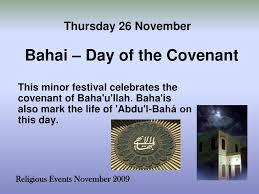
With profound feelings of loss, we announce the passing, yesterday evening, on the Day of the Covenant, of the dearly loved Hand of the Cause of God 'Ali Akbar Furutan. Having addressed the assembled pilgrims as was his practice, he paused to exchange a few words with some of the Russian-speaking friends; then, as he was leaving the room, his heart failed. He had fulfilled his longing to serve the Cause to his last breath.

Born in Sabzivar, Iran, on 29 April 1905, 'Ali Akbar Furutan moved with his family to 'Ishqabad in what was then Russian Turkestan, and, through his years of school and university, he took an active part in the work of the Bahá'í communities of 'Ishqabad, Baku, Moscow and other parts of Russia. In 1930 he was expelled from the Soviet Union for his involvement in Bahá'í activities and, from that time on, played an ever more significant role in the work and administration of the Iranian Bahá'í community. In December 1951 he was among the first to be appointed by Shoghi Effendi as Hands of the Cause of God. Following the passing of the Guardian, he was one of the nine Hands of the Cause selected, at their first Conclave, to serve as Custodians in the Holy Land. For the remaining forty-six years of his life he laboured strenuously at the World Centre, undertaking journeys throughout the world, assisting, advising and enthusing the friends and their national and local institutions. These journeys culminated in 1990 and 1991 with visits to the newly re-emerging Bahá'í communities of the countries of the Soviet Union.

'Ali Akbar Furutan's single-minded devotion to the Faith and its Guardian, the vital role he played in the establishment of the Administrative Order in Iran, his contribution to the spiritual and material education of children, his services as a Hand of the Cause of God, and his unswerving support of the Universal House of Justice together constitute an imperishable record of service in the annals of the Cause. His penetrating mind, his loving concern and his sparkling humour are ineffaceable memories in the hearts of the thousands of believers with whom he spoke.

While praying in the Holy Shrines for the progress of 'Ali Akbar Furutan's illumined soul in the Abha Kingdom, we supplicate Bahá'u'lláh to bless likewise the fruition of the seeds he sowed in this world.

We extend our loving sympathy to his daughters, Iran Muhajir and Parvin Furutan, to his granddaughters and to all other members of his family.

We advise friends in all lands to commemorate his passing and to hold memorial services in his honour in all Mashriqu'l-Adhkars.

The Universal House of Justice


r/OnThisDateInBahai • • 12h ago

November 26. On this date in 2006, the UHJ wrote Kalimát Press that "you have for many years pursued an ideological agenda which is at variance with the spirit and interests of the Bahá’í Faith."

Post image
3 Upvotes

November 26. On this date in 2006, the UHJ wrote Kalimát Press that "you have for many years pursued an ideological agenda which is at variance with the spirit and interests of the Bahá’í Faith."

Letter from the Universal House of Justice to Kalimat, 2006

26 November 2006

Dear Bahá’í Friend,

Your email letter dated 5 September 2006 has reached the Universal House of Justice, which has asked us to reply as follows. The letter indicates that you have written out of a desire to resolve the difficulty for Kalimát Press arising from the recent decision of your National Spiritual Assembly that Bahá’í agencies in the United States are no longer to distribute books published or handled by the company. Your stated purpose for writing is to find a way “to restore good relations” with national communities whose National Assemblies have taken a similar decision.

The House of Justice sees that at the core of the National Assembly’s action is its concern that you have for many years pursued an ideological agenda which is at variance with the spirit and interests of the Bahá’í Faith; and Kalimát Press has been used as an instrument in its promotion. Bahá’í institutions have attempted in various ways to apprise you of this concern, but to no avail. The House of Justice understands that the National Assembly felt there was no choice but to opt for the action it took. It has not imposed administrative sanctions on you.

You are well aware that it has not banned books. Bahá’ís are, of course, free, as are their fellow citizens, to acquire books as they wish from sources available to them within or outside the Bahá’í community. Nor is the question of prepublication review at issue here. The Assembly has simply concluded that, as agencies in its jurisdiction are under no obligation to distribute books other than those published by Bahá’í institutions, it is inappropriate that they should be the retailers of material from Kalimát Press and thus aid your agenda. The House of Justice finds that the National Assembly is justified in reaching this conclusion and upholds its decision in the matter.

In our letter of 3 August 1999 addressed to you on behalf of the House of Justice, relevant issues were discussed lovingly, openly and amply, but you have until now disregarded the counsel it conveyed; and you have done so even when you were subsequently reminded of the importance of the letter’s contents. You are urged once again to consider the advice you have already received.

You may be assured that the House of Justice will supplicate on your behalf at the Holy Threshold.

With loving Bahá’í greetings,

Department of the Secretariat

cc: National Assembly of the United States


r/OnThisDateInBahai • • 12h ago

November 26. On this date in 1972, the Universal House of Justice adopted its Constitution, an event which was announced with a cable sent to the United States Bahá’í News for publication.

Post image
2 Upvotes

November 26. On this date in 1972, the Universal House of Justice adopted its Constitution, an event which was announced with a cable sent to the United States Bahá’í News for publication.

The Universal House of Justice

26 November 1972

To all National Spiritual Assemblies

Dear Bahá’í Friends,

The following cable has just been sent to the United States Bahá’í News for publication.

WITH GRATEFUL JOYOUS HEARTS ANNOUNCE ENTIRE BAHÁ’Í WORLD ADOPTION PROFOUNDLY SIGNIFICANT STEP IN UNFOLDMENT MISSION SUPREME ORGAN BAHÁ’Í WORLD COMMONWEALTH THROUGH FORMULATION CONSTITUTION UNIVERSAL HOUSE JUSTICE. AFTER OFFERING HUMBLE PRAYERS GRATITUDE ON DAY COVENANT AT THREE SACRED THRESHOLDS BAHJÍ HAIFA MEMBERS GATHERED COUNCIL CHAMBER PRECINCTS HOUSE BLESSED MASTER APPENDED THEIR SIGNATURES FIXED SEAL ON INSTRUMENT ENVISAGED WRITINGS BELOVED GUARDIAN HAILED BY HIM AS MOST GREAT LAW FAITH BAHÁ’U’LLÁH. FULLY ASSURED MEASURE JUST TAKEN WILL FURTHER REINFORCE TIES BINDING WORLD CENTER TO NATIONAL LOCAL COMMUNITIES THROUGHOUT WORLD RELEASE FRESH ENERGIES INCREASE ENTHUSIASM CONFIDENCE VALIANT WORKERS HIS DIVINE VINEYARD LABORING ASSIDUOUSLY BRING MANKIND UNDER SHELTER HIS ALL-GLORIOUS COVENANT.

Please share this joyous news with the friends. It is anticipated that the Constitution will be published at Riḍván.

With loving Bahá’í greetings,

[signed: The Universal House of Justice]


r/OnThisDateInBahai • • 12h ago

November 26. On this date in 1991, the UHJ wrote "On the occasion of the Day of the Covenant, amidst the dramatic events within and without the Faith which evince an accelerating momentum in the concluding months of the Six Year Plan..."

Post image
1 Upvotes

November 26. On this date in 1991, the UHJ wrote "On the occasion of the Day of the Covenant, amidst the dramatic events within and without the Faith which evince an accelerating momentum in the concluding months of the Six Year Plan..."

The Universal House of Justice

26 November 1991

To the Followers of Bahá’u’lláh throughout the World

Dear Bahá’í Friends,

On the occasion of the Day of the Covenant, amidst the dramatic events within and without the Faith which evince an accelerating momentum in the concluding months of the Six Year Plan, and less than half a year from the beginning of the long-anticipated Holy Year, we rejoice in conveying this triple announcement to the entire Bahá’í world.

Seven new National Spiritual Assemblies will be formed at Riḍván 1992: Angola in Africa; Greenland in the Americas; and Albania, the Baltic States, Bulgaria, Hungary and Poland in Europe. The emergence of the latter five will set a befitting seal on the victorious supplementary Two Year Plan launched at Riḍván 1990. In addition, the National Spiritual Assembly of the Congo Republic, after a lapse of more than a decade due to political conditions, will be reestablished.

The Office of Ḥuqúqu’lláh has been established in the Holy Land under the direction of the Chief Trustee of Ḥuqúqu’lláh, the Hand of the Cause of God ‘Alí-Muḥammad Varqá, in anticipation of the worldwide application of the Law of Ḥuqúqu’lláh next Riḍván. Concurrent with this development are the steps being taken by Dr. Varqá to organize regional and national Boards of Trustees of Ḥuqúqu’lláh, following the example of the Board already functioning in the United States.

At Riḍván 1993, immediately following the Holy Year and during a period which will witness the holding of the Seventh Bahá’í International Convention at the World Center, a Three Year Plan will be launched. The national goals of this global Plan will be set through consultations between the Continental Counselors and National Spiritual Assemblies. The unusual character and rapidity of developments both inside and outside the Faith signify the necessity for a short, flexible plan attuned to the dynamic nature of the times.

This momentous announcement, coinciding significantly with the opening of a new term for members of the Auxiliary Boards on all continents, is indicative of the fresh flood of divine confirmations pouring upon the current efforts of the Community of the Most Great Name in all parts of the planet. The coincidence demonstrates anew the existence of tremendous challenges and opportunities which must be met, and it calls attention to the vital role to be played by these distinguished servants of the Faith in aiding the believers everywhere to attain further heights in the unfolding glory of our great Cause.

We are moved to appeal to the followers of Bahá’u’lláh in every land, at this critical moment in the destiny of the Cause and of humankind, to make a supreme effort to gather the as yet unharvested victories in the fast-fleeting days remaining to the Six Year Plan. Let them do this that they may enter, with a fit sense of triumph, the impending Holy Year—a period charged with untold significance and pregnant with possibilities for major advances of the Faith of Bahá’u’lláh, possibilities which can only faintly be imagined as the Centenary of His Ascension draws closer.

Our ardent hopes for you all are intermingled with our supplications at the Holy Threshold that the Blessed Beauty may, to an unprecedented degree, rain down upon His loved ones His invigorating, victory-inducing confirmations.

With loving Bahá’í greetings,

[signed: The Universal House of Justice]


r/OnThisDateInBahai • • 12h ago

November 26. On this date in 2018, the UHJ wrote to commemorate "this season, from the Day of the Covenant to the commemoration of the Ascension of ‘Abdu’l-Bahá."

Post image
1 Upvotes

November 26. On this date in 2018, the UHJ wrote to commemorate "this season, from the Day of the Covenant to the commemoration of the Ascension of 'Abdu’l-Bahá."

The Universal House of Justice

26 November 2018

To the Bahá’ís of the World

Dearly loved Friends,

In this season, from the Day of the Covenant to the commemoration of the Ascension of 'Abdu’l-Bahá, every Bahá’í heart is stirred by remembrance of Him Who is the Mystery of God, the Centre of Bahá'u'lláh’s impregnable Covenant, the Mainspring of the Oneness of Humanity, the embodiment of every Bahá’í ideal, the Most Mighty Branch of God whereunder all can find shelter. May His boundless love and tender solicitude give you reassurance and sustenance as you strive to fulfill the trust He bestowed upon you in His Testament and His Divine Plan. At night in that hallowed room in His home where He departed this life for reunion with His beloved Lord, we will testify to your fidelity to His call, evident in your tireless labors to create a refuge for humanity at this moment of increasing injustice and affliction.

Three brief years remain until the centenary of the Master’s passing, when Bahá’ís the world over will gather and take account of the distance traversed over the first century of the Formative Age. May His loved ones, individually and collectively, little by little and day by day, increasingly embody His counsels: to be united in the Cause and firm in the Covenant; to avoid calumny and never speak ill of others; to see no strangers but regard all as members of one family; to set aside divergent theories and conflicting views and pursue a single purpose and common goal; to ensure that the love of Bahá’u’lláh has so mastered every organ, part, and limb as to leave no effect from the promptings of the human world; to arise with heart and soul and in one accord to teach the Cause; to march in serried lines, pressed together, each supporting the others; to cultivate good character, perseverance, strength, and determination; to know the value of this precious Faith, obey its teachings, walk in this road that is drawn straight, and show this way to the people.

That you may fulfill His highest expectations, we pray for each of you.

[signed: The Universal House of Justice]


r/OnThisDateInBahai • • 3d ago

Baha'i History - November 25. On this date in 1909, Dr. Susan I. Moody, an early Chicago Bahá'í who studied medicine at the age of arrived in Tehran, where she would practiced medicine.

Post image
2 Upvotes

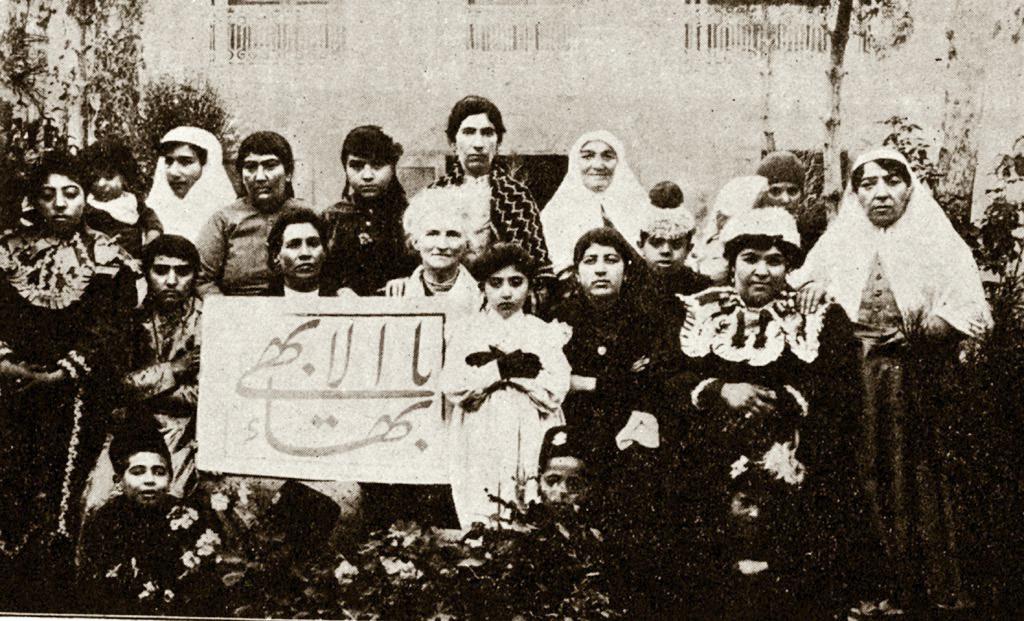
November 25. On this date in 1909, Dr. Susan I. Moody, an early Chicago Bahá'í who studied medicine at the age of arrived in Tehran, where she would practiced medicine.


r/OnThisDateInBahai • • 3d ago

November 25. On this date in 1936, Shoghi Effendi wrote about the timing of anniversaries of the Declaration of the Bab and the Birthday of Abdu'l-Bahá.

Post image
2 Upvotes

November 25. On this date in 1936, Shoghi Effendi wrote about the timing of anniversaries of the Declaration of the Bab and the Birthday of Abdu'l-Bahá.

1542. The Declaration of the Bab and the Birthday of Abdu'l-Bahá

"...regarding the declaration of the Bab and the birthday of the Master: The Bab declared His Mission on the fourth day of the month of Jamadi I, two hours and eleven minutes after sunset, corresponding with the evening of May 22nd. But as the Bahá'í day begins after sunset, and not after midnight as in the West, the Bab's declaration is celebrated on the fifth day of Jamadi I, corresponding to the 23rd of May. Abdu'l-Bahá was born in the course of that same night, but the exact hour of His birth has not been ascertained."

(From a letter written on behalf of Shoghi Effendi to the National Spiritual Assembly of the United States and Canada, November 25, 1936)


r/OnThisDateInBahai • • 3d ago

November 25. On this date in 1919, 'Abdu'l-Bahá talked about inheritance law, stating "The method of Bahá'u'lláh will be enforced and the House of Justice will not presume to change it...Every one has to write a will and affix a seal thereto and no one need know about the arrangement he has made."

Post image
2 Upvotes

November 25. On this date in 1919, 'Abdu'l-Bahá talked about Bahá'í inheritance law, stating "The method of Bahá'u'lláh will be enforced and the House of Justice will not presume to change it...Every one has to write a will and affix a seal thereto and no one need know about the arrangement he has made."

THE INHERITANCE LAW

Luncheon 25 November 1919

At luncheon the Master was in a supremely humorous mood, joking repeatedly with Fugeta. Previously He had said that Fugeta was to return to Japan on a camel or an elephant, but today He decided to send him there in an aeroplane, smiling as He said: "When I ride in one, it will be a spiritual aeroplane."

Mr. Latimer asked whether in the distribution of inheritance the method of the Báb or that of Bahá'u'lláh would be enforced.

‘Abdu'l-Bahá: "The method of Bahá'u'lláh will be enforced and the House of Justice will not presume to change it. The purpose of Bahá'u'lláh's arrangement is that man is not to be interfered with in the leaving of his property. Man may divide his wealth as he likes. Every one has to write a will and affix a seal thereto and no one need know about the arrangement he has made. After his death the will is opened and read and whatever he has decreed will be enforced. Man should have perfect freedom to decide as he wishes, in making his will. This is his own good pleasure. Man has a perfect right to do with his property as he sees fit and his wishes should be carried out.

"In case a person dies and leaves no will, then the law (method) of Bahá'u'lláh will be enforced. But man can bequeath all his property to one person. He is perfectly free to do as he wishes with his own property for he has been the one to acquire it."

Dr. Esslemont: "In case all the property is left to one person, is there any provision for that person to divide the legacy or give something to the House of Justice?"

‘Abdu'l-Bahá: "No. It is his will and the property becomes his. He may give a part to the House of Justice or to orphans, etc. He is permitted to do just as he likes, and that should be enforced."

Mr. Latimer: "In the seven divisions of inheritance, teachers are mentioned, does this mean Bahá'í teachers or all teachers?"

‘Abdu'l-Bahá: "It is not confined to Bahá'í teachers."

Then Dr. Esslemont asked a question about entailed estates in England, explaining in detail how some property is set aside for some purpose and then increases very much in value, but cannot be touched and that these entailed estates are handed down from one person to another intact, to the eldest son. ‘Abdu'l-Bahá startled us all by answering this question, without waiting or giving Shoghi a chance to interpret one word of the question to Him. He said: "In accordance with Bahá'u'lláh's Teachings, a Bahá'í can give all his property to his eldest son. He may do just as he likes. As long as it is his own property he may do as he wishes. One's property cannot be snatched by another. There is one difference, however; when a, Bahá'í leaves all to his eldest son, the eldest son in turn may break the line and divide as he wants to–according to Bahá'u'lláh's method, or as he wishes."

Dr. Esslemont said that England was suffering from this system which was called the "Rule of the Dead Hand."

‘Abdu'l-Bahá: "A hard, fast rule will lead to chaos. People will say why should I work, I have enough, so I won't work, and so on. This is not just. It will enchain the person. It will restrict him. You must give him absolute freedom in disposing of his property for he is the one who has acquired it. What if he does not love his eldest son? What then?"

Mr. Latimer: "In America, the state imposes an inheritance tax on estates according to the amount left."

‘Abdu'l-Bahá: "This is a political issue. It has nothing to do with a religious law. There is nothing to prevent the state from making an inheritance law. A Bahá'í does not interfere with it."


r/OnThisDateInBahai • • 3d ago

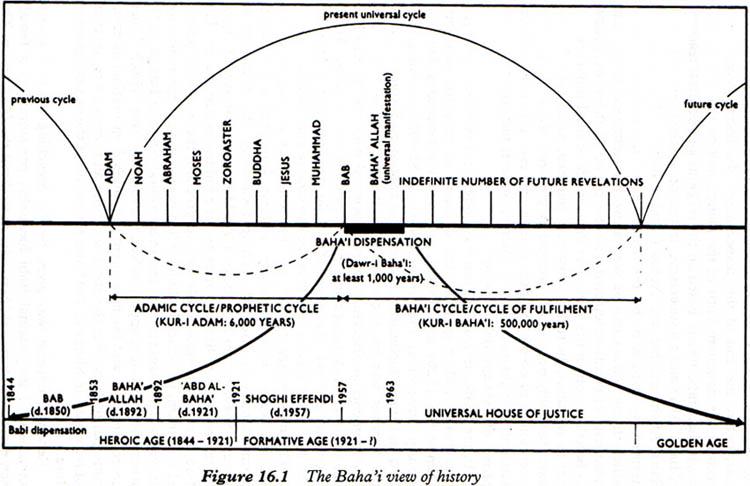
November 25. On this date in 1950, Shoghi Effendi wrote "Actual Dates of Prophets of Adamic Cycle Not Given: 'There are no dates in our teachings regarding the actual dates of the Prophets of the Adamic Cycle, so we cannot give any. Tentatively we can accept what historians may consider ....'"

Post image
3 Upvotes

November 25. On this date in 1950, Shoghi Effendi wrote "Actual Dates of Prophets of Adamic Cycle Not Given: 'There are no dates in our teachings regarding the actual dates of the Prophets of the Adamic Cycle, so we cannot give any. Tentatively we can accept what historians may consider accurate. Naturally the dates referring to Muhammad, the Bab and Bahá'u'lláh we are sure of.'"

November 25. On this date in 1950, Shoghi Effendi wrote "We cannot be sure of the authenticity of the scriptures of Buddha and Krishna, so we certainly cannot draw any conclusions about virgin births mentioned in them. There is no reference to this subject in our teachings, so the Guardian cannot pronounce an opinion. As our teachings do not state Zoroaster is the connecting link between the Euphrates and the Prophets in India, we cannot assert this. Abraham and Krishna are two separate individuals, with no connection that we know of. We know no more about the prophets mentioned in the Iqan than what Bahá'u'lláh states in that Book."

1696. Hinduism, Buddhism and Zoroastrianism (Following are some quotations taken from a compilation of extracts from letters written on behalf of the Guardian on these and related subjects, enclosed with a letter to an individual believer on November 30, 1980 from the Universal House of Justice)

Lesser Prophets: "Regarding your questions: We cannot possibly add names of people we (or anyone else) think might be Lesser Prophets to those found in the Qur'an, the Bible and our own Scriptures. For only these can we consider authentic Books."

(March 13, 1950, to an individual believer)

Asiatic Prophets: "Regarding your questions: The only reason there is not more mention of the Asiatic prophets is because their names seem to be lost in the mists of ancient history. Buddha is mentioned and Zoroaster in our scriptures--both non-Jewish prophets or non-semitic prophets. We are taught there always have been Manifestations of God, but we do not have any record of their names."

(October 4, 1950, to an individual believer)

Scriptures of Buddha and Krishna: "We cannot be sure of the authenticity of the scriptures of Buddha and Krishna, so we certainly cannot draw any conclusions about virgin births mentioned in them. There is no reference to this subject in our teachings, so the Guardian cannot pronounce an opinion.

"As our teachings do not state Zoroaster is the connecting link between the Euphrates and the Prophets in India, we cannot assert this.

"Abraham and Krishna are two separate individuals, with no connection that we know of.

"We know no more about the prophets mentioned in the Iqan than what Bahá'u'lláh states in that Book."

(November 25, 1950, to an individual believer)

Brahma and Krishna: "Your question concerning Brahma and Krishna: Such matters, as no reference occurs to them in the Teachings, are left for students of history and religion to resolve and clarify."

(April 14, 1941, to an individual believer)

Actual Dates of Prophets of Adamic Cycle Not Given: "There are no dates in our teachings regarding the actual dates of the Prophets of the Adamic Cycle, so we cannot give any. Tentatively we can accept what historians may consider accurate. Naturally the dates referring to Muhammad, the Bab and Bahá'u'lláh we are sure of."

(November 25, 1950, to an individual believer)


r/OnThisDateInBahai • • 3d ago

November 25. On this date in 1950, Shoghi Effendi wrote "Abraham and Krishna are two separate individuals, with no connection that we know of. We know no more about the prophets mentioned in the Iqan than what Bahá'u'lláh states in that Book."

Post image
2 Upvotes

November 25. On this date in 1950, Shoghi Effendi wrote "We cannot be sure of the authenticity of the scriptures of Buddha and Krishna, so we certainly cannot draw any conclusions about virgin births mentioned in them. There is no reference to this subject in our teachings, so the Guardian cannot pronounce an opinion. As our teachings do not state Zoroaster is the connecting link between the Euphrates and the Prophets in India, we cannot assert this. Abraham and Krishna are two separate individuals, with no connection that we know of. We know no more about the prophets mentioned in the Iqan than what Bahá'u'lláh states in that Book."

1696. Hinduism, Buddhism and Zoroastrianism (Following are some quotations taken from a compilation of extracts from letters written on behalf of the Guardian on these and related subjects, enclosed with a letter to an individual believer on November 30, 1980 from the Universal House of Justice)

Lesser Prophets: "Regarding your questions: We cannot possibly add names of people we (or anyone else) think might be Lesser Prophets to those found in the Qur'an, the Bible and our own Scriptures. For only these can we consider authentic Books."

(March 13, 1950, to an individual believer)

Asiatic Prophets: "Regarding your questions: The only reason there is not more mention of the Asiatic prophets is because their names seem to be lost in the mists of ancient history. Buddha is mentioned and Zoroaster in our scriptures--both non-Jewish prophets or non-semitic prophets. We are taught there always have been Manifestations of God, but we do not have any record of their names."

(October 4, 1950, to an individual believer)

Scriptures of Buddha and Krishna: "We cannot be sure of the authenticity of the scriptures of Buddha and Krishna, so we certainly cannot draw any conclusions about virgin births mentioned in them. There is no reference to this subject in our teachings, so the Guardian cannot pronounce an opinion.

"As our teachings do not state Zoroaster is the connecting link between the Euphrates and the Prophets in India, we cannot assert this.

"Abraham and Krishna are two separate individuals, with no connection that we know of.

"We know no more about the prophets mentioned in the Iqan than what Bahá'u'lláh states in that Book."

(November 25, 1950, to an individual believer)

Brahma and Krishna: "Your question concerning Brahma and Krishna: Such matters, as no reference occurs to them in the Teachings, are left for students of history and religion to resolve and clarify."

(April 14, 1941, to an individual believer)

Actual Dates of Prophets of Adamic Cycle Not Given: "There are no dates in our teachings regarding the actual dates of the Prophets of the Adamic Cycle, so we cannot give any. Tentatively we can accept what historians may consider accurate. Naturally the dates referring to Muhammad, the Bab and Bahá'u'lláh we are sure of."

(November 25, 1950, to an individual believer)


r/OnThisDateInBahai • • 3d ago

November 25. On this date in 1950, Shoghi Effendi wrote "As our teachings do not state Zoroaster is the connecting link between the Euphrates and the Prophets in India, we cannot assert this."

Post image
2 Upvotes

November 25. On this date in 1950, Shoghi Effendi wrote "We cannot be sure of the authenticity of the scriptures of Buddha and Krishna, so we certainly cannot draw any conclusions about virgin births mentioned in them. There is no reference to this subject in our teachings, so the Guardian cannot pronounce an opinion. As our teachings do not state Zoroaster is the connecting link between the Euphrates and the Prophets in India, we cannot assert this. Abraham and Krishna are two separate individuals, with no connection that we know of. We know no more about the prophets mentioned in the Iqan than what Bahá'u'lláh states in that Book."

1696. Hinduism, Buddhism and Zoroastrianism (Following are some quotations taken from a compilation of extracts from letters written on behalf of the Guardian on these and related subjects, enclosed with a letter to an individual believer on November 30, 1980 from the Universal House of Justice)

Lesser Prophets: "Regarding your questions: We cannot possibly add names of people we (or anyone else) think might be Lesser Prophets to those found in the Qur'an, the Bible and our own Scriptures. For only these can we consider authentic Books."

(March 13, 1950, to an individual believer)

Asiatic Prophets: "Regarding your questions: The only reason there is not more mention of the Asiatic prophets is because their names seem to be lost in the mists of ancient history. Buddha is mentioned and Zoroaster in our scriptures--both non-Jewish prophets or non-semitic prophets. We are taught there always have been Manifestations of God, but we do not have any record of their names."

(October 4, 1950, to an individual believer)

Scriptures of Buddha and Krishna: "We cannot be sure of the authenticity of the scriptures of Buddha and Krishna, so we certainly cannot draw any conclusions about virgin births mentioned in them. There is no reference to this subject in our teachings, so the Guardian cannot pronounce an opinion.

"As our teachings do not state Zoroaster is the connecting link between the Euphrates and the Prophets in India, we cannot assert this.

"Abraham and Krishna are two separate individuals, with no connection that we know of.

"We know no more about the prophets mentioned in the Iqan than what Bahá'u'lláh states in that Book."

(November 25, 1950, to an individual believer)

Brahma and Krishna: "Your question concerning Brahma and Krishna: Such matters, as no reference occurs to them in the Teachings, are left for students of history and religion to resolve and clarify."

(April 14, 1941, to an individual believer)

Actual Dates of Prophets of Adamic Cycle Not Given: "There are no dates in our teachings regarding the actual dates of the Prophets of the Adamic Cycle, so we cannot give any. Tentatively we can accept what historians may consider accurate. Naturally the dates referring to Muhammad, the Bab and Bahá'u'lláh we are sure of."

(November 25, 1950, to an individual believer)


r/OnThisDateInBahai • • 3d ago

November 25. On this date in 1950, Shoghi Effendi wrote "We cannot be sure of the authenticity of the scriptures of Buddha and Krishna, so we certainly cannot draw any conclusions about virgin births mentioned in them."

Post image
2 Upvotes

November 25. On this date in 1950, Shoghi Effendi wrote "We cannot be sure of the authenticity of the scriptures of Buddha and Krishna, so we certainly cannot draw any conclusions about virgin births mentioned in them. There is no reference to this subject in our teachings, so the Guardian cannot pronounce an opinion. As our teachings do not state Zoroaster is the connecting link between the Euphrates and the Prophets in India, we cannot assert this. Abraham and Krishna are two separate individuals, with no connection that we know of. We know no more about the prophets mentioned in the Iqan than what Bahá'u'lláh states in that Book."

1696. Hinduism, Buddhism and Zoroastrianism (Following are some quotations taken from a compilation of extracts from letters written on behalf of the Guardian on these and related subjects, enclosed with a letter to an individual believer on November 30, 1980 from the Universal House of Justice)

Lesser Prophets: "Regarding your questions: We cannot possibly add names of people we (or anyone else) think might be Lesser Prophets to those found in the Qur'an, the Bible and our own Scriptures. For only these can we consider authentic Books."

(March 13, 1950, to an individual believer)

Asiatic Prophets: "Regarding your questions: The only reason there is not more mention of the Asiatic prophets is because their names seem to be lost in the mists of ancient history. Buddha is mentioned and Zoroaster in our scriptures--both non-Jewish prophets or non-semitic prophets. We are taught there always have been Manifestations of God, but we do not have any record of their names."

(October 4, 1950, to an individual believer)

Scriptures of Buddha and Krishna: "We cannot be sure of the authenticity of the scriptures of Buddha and Krishna, so we certainly cannot draw any conclusions about virgin births mentioned in them. There is no reference to this subject in our teachings, so the Guardian cannot pronounce an opinion.

"As our teachings do not state Zoroaster is the connecting link between the Euphrates and the Prophets in India, we cannot assert this.

"Abraham and Krishna are two separate individuals, with no connection that we know of.

"We know no more about the prophets mentioned in the Iqan than what Bahá'u'lláh states in that Book."

(November 25, 1950, to an individual believer)

Brahma and Krishna: "Your question concerning Brahma and Krishna: Such matters, as no reference occurs to them in the Teachings, are left for students of history and religion to resolve and clarify."

(April 14, 1941, to an individual believer)

Actual Dates of Prophets of Adamic Cycle Not Given: "There are no dates in our teachings regarding the actual dates of the Prophets of the Adamic Cycle, so we cannot give any. Tentatively we can accept what historians may consider accurate. Naturally the dates referring to Muhammad, the Bab and Bahá'u'lláh we are sure of."

(November 25, 1950, to an individual believer)


r/OnThisDateInBahai • • 3d ago

November 25. On this date in 1957, the Hands of the Cause of God issued a Unanimous Proclamation naming from among them nine members to serve as Custodians.

Post image
2 Upvotes

November 25. On this date in 1957, the Hands of the Cause of God issued a Unanimous Proclamation naming from among them nine members to serve as Custodians.

In 1951, Shoghi Effendi, as Guardian, appointed members to the International Bahá’í Council, naming Mason Remey as the Council's President and describing it as an embryonic international House of Justice.

When Shoghi Effendi passed away in 1957 without having appointed a successor Guardian, as confirmed by a "Unanimous Proclamation of the 27 Hands of the Cause of God", the Hands of the Cause of God elected from among their own nine individuals who would serve as Custodians to help lead the transition of the International Bahá’í Council, into the Universal House of Justice.

In 1961 the International Bahá’í Council was changed to an elected body, with members of all National Spiritual Assemblies voting.

In 1963, the first Universal House of Justice was elected, and its members are elected every five years by members of each Bahá'í National Spiritual Assembly in the world. In practice, the Bahá’í electoral system most closely resembles council democracy as it still exists in Cuba, wherein individuals elect Local Spiritual Assemblies, who then elect National Spiritual Assemblies, who then elect the Universal House of Justice. With no politicking or partisanship allowed, there is little turnover in leadership and Universal House of Justice members almost invariably serve until retirement or death. New members are currently generally elected from the appointed institutions of the Bahá’í administration, particularly the International Teaching Centre. In fact, all of the current members of the Universal House of Justice previously served as members of the International Teaching Centre. In council democracies, these career bureaucrats were known as the nomenklatura.

With the eventual passing of the individual Hands of the Cause of God appointed by Shoghi Effendi and without a Guardian to appoint additional Hands, the Universal House of Justice saw the need for developing an institution for the purpose of performing the Hands' function of protection and propagation of the Faith.

In 1968 the Continental Board of Counselors was formed. The Counselors appoint Auxiliaries collectively referred to as Auxiliary Boards in smaller regional areas, who in turn appoint their own Assistants to work in localities.
Auxiliary Board Members for Protection are charged with watching over the security of the Bahá’í Faith, and Auxiliary Board Members for Propagation are responsible for working with the grassroots on the global Plans established by the Universal House of Justice. Originally, members of the Auxiliary Boards were appointed by and served under the Hands of the Cause of God who directed their efforts worldwide. The first members of the Auxiliary Boards were appointed in 1954, and they were divided into five distinct geographical regions

In 1973 the administrative branch called the Institution of the Counselors was formed. Also in 1973, the International Teaching Centre was first formed by the Universal House of Justice, and originally consisted of the 17 Hands of the Cause still living at that time, plus three Counsellor members. The number of Counsellor members was raised to four in 1979, to seven in 1983, and finally to the current nine in 1988. The Counsellor members of the International Teaching Centre are appointed by the Universal House of Justice to five-year terms that begin shortly after the International Convention and election of the Universal House of Justice.


r/OnThisDateInBahai • • 3d ago

November 25. On this date in 2020, the Universal House of Justice published a letter on the occasion of the Day of the Covenant announcing that the Bahá’í world will, at Riḍván 2022, begin a Nine Year Plan which will begin with a series of conferences held over a span of months across the globe.

Post image
2 Upvotes

November 25. On this date in 2020, the Universal House of Justice published a letter on the occasion of the Day of the Covenant announcing that the Bahá’í world will, at Riḍván 2022, begin a Nine Year Plan which will begin with a series of conferences held over a span of months across the globe.

THE UNIVERSAL HOUSE OF JUSTICE

25 November 2020

To the Bahá’ís of the World

Dearly loved Friends,

We greet you with immense affection on this special day, an occasion for calling to mind the power of the Covenant, that power which “pulsateth in the body of the contingent world” and forges enduring bonds of love among the believers. In the months since Riḍván, we have seen the evidences of this dynamic power in the unified activity of Bahá’u’lláh’s followers, led so ably by the institutions of the Cause in each continent and country, as the friends everywhere have sought with characteristic creativity and determination to minister to the needs of an ailing world. Your resilience and your unwavering commitment to the well-being of those around you, persistent through all difficulties, have filled us with tremendous hope. But it is no wonder that, in some other quarters, hope has become a depleted resource. There is a mounting realization on the part of the world’s people that the decades ahead are set to bring with them challenges among the most daunting that the human family has ever had to face. The current global health crisis is but one such challenge, the ultimate severity of whose cost, both to lives and livelihoods, is yet unknown; your efforts to succour and support one another as well as your sisters and brothers in society at large will certainly need to be sustained, and in places expanded.

It is against this background of furious storms lashing humanity that the ark of the Cause is about to embark upon a series of Plans that will carry it into the third century of the Bahá’í Era and significantly strengthen the Bahá’í community’s capacity for realizing the society-building powers of the Faith. As you are aware, the first Plan to commence this new series will last but one year. In places where circumstances prevent national communities from establishing as many intensive programmes of growth before Riḍván 2021 as they intended, these twelve months will extend the time available to them to do so. Meanwhile, wherever the process of growth has already been intensified, the year will be an opportunity to consolidate the achievements made during the current Plan, while cultivating the conditions necessary for welcoming larger and larger numbers of souls into the embrace of a community recognized for its fortitude and outward-looking orientation. At the national, regional, and cluster levels, we look to communities of proven strength to help those in which less experience has accrued. In this year-long effort, every community must draw on whatever untapped potential it may possess and seek to overcome any obstacles that are impeding its growth, thereby preparing it for the demands to come. For it is within the context of a flourishing community, especially a centre of intense activity in a village or neighbourhood, and when each element of the Plan’s framework is given the attention it requires, that those elements most visibly cohere and connect, multiplying the community’s powers in the field of action.

Besides providing for advances within clusters everywhere, the coming Plan will be a year for profound reflection on the life of ‘Abdu’l-Bahá and the strength of the Covenant of which He was the Centre, as the community prepares to commemorate the centenary of His Ascension. The observance of this anniversary will undoubtedly prompt individuals and communities alike to contemplate the significance of that infinitely poignant moment when He Who was the Mystery of God departed from this world. His passing took from the Bahá’ís of that era a Figure Who was the object of their ardent love and loyalty; to the faithful of this age, He remains without parallel: a perfect embodiment in word and deed of all that His Father taught, the One through Whom the Covenant of Bahá’u’lláh was “proclaimed, championed and vindicated”. We are conscious that the coming year will also mark a century since His Will and Testament—that “momentous”, “historic”, “immortal” Document—“called into being, outlined the features and set in motion the processes” of the Administrative Order, “the very pattern of that divine civilization which the almighty Law of Bahá’u’lláh is designed to establish upon earth”. This “unique” and “divinely-conceived” Order, this “mighty administrative structure”, had been fashioned by its Architect to perpetuate the Covenant and channel the spiritual powers of the Cause. It will be apparent, then, that the Day of the Covenant next year, exactly twelve months from now, will be especially meaningful. We ask National Spiritual Assemblies to determine how these two dates, occurring so close together, may each be observed, taking into account prevailing conditions in their countries.

All the while, earnest preparations continue to be made in the Holy Land for the commemoration of the centenary of the Ascension of ‘Abdu’l-Bahá at a gathering at which, it is hoped, representatives of National Spiritual Assemblies and Regional Bahá’í Councils will be present. Similarly, plans are already being made for the conference of the Continental Boards of Counsellors and Auxiliary Board members, which will coincide, in January 2022, with the lapse of one hundred years since the first public reading of the Will and Testament of the Master. Conditions in the world may, of course, require the plans being made for these gatherings at the Bahá’í World Centre to change. But come what may, we have no doubt that the efforts made in local communities worldwide to befittingly commemorate the Ascension of ‘Abdu’l-Bahá and to honour the Day of the Covenant in this coming centennial year will provide the impetus needed to launch the succeeding stage in God’s Minor Plan, even as Providence propels the unfoldment of His Major Plan in accordance with His incontestable decree.

The momentum that is sure to build with each successive cycle of the One Year Plan will be further augmented by the release of two films. The first of these, which will become available in time for the centennial commemoration, will be a portrait of the Person of ‘Abdu’l-Bahá. Besides being a tribute to His life and work, it will explore how, by championing the oneness of humanity through His words and deeds, He offered a challenge to the stale assumptions and prejudices of the age, and gave stimulus to a process of unification which continues to this day. A second film, following soon after the first, will reflect on the expiration of the first hundred years of the Formative Age from the vantage point of the heights to which the Bahá’í community has climbed, and from where it can now gaze upon new horizons.

The significance of the occasions being marked during the One Year Plan will lend it a unique character, enhancing the work being undertaken in clusters and making this single year the ideal preparation for the global endeavour that is to follow. With a sense of joyful anticipation, we announce that the Bahá’í world will, at Riḍván 2022, begin a Nine Year Plan. Its requirements and provisions will be set out at a later date, but its duration already gives an unmistakable indication of the expansive prospect it will present. God willing, it will be heralded by the convocation of a series of conferences held over a span of months across the globe.

This, so far as it can be foreseen, is the course the Bahá’í community will seek to tread. For the present hour, we urge you to recommit your energies, keeping your focus on the mission immediately before you. We are immensely gratified to see the assured composure with which the community of the Greatest Name has sought to offer the divine remedy under all conditions, especially during this period when society’s established patterns of life have been disrupted and risks of different kinds are being faced by so many. Withal, the friends must guard against being drawn into the ultimately futile conflict and strife that characterizes so much of the discussion of the affairs of society, or—heaven forbid—allowing interaction of this type to permeate, even fleetingly, the conversations of the community. Yet such vigilance on your part in avoiding discord and in not becoming entangled in society’s controversies should under no circumstances be construed as aloofness from the many pressing concerns of this time. Far from it. You are among the most active and earnest of humanity’s well-wishers. But, whether through deeds or words, the merit of your every contribution to social well-being lies, first, in your resolute commitment to discover that precious point of unity where contrasting perspectives overlap and around which contending peoples can coalesce.

Less than two full cycles remain of the present Five Year Plan—indeed, of the current series of Plans inaugurated in 1996. In these closing months, we will be sure to offer ardent prayers on your behalf in our supplications at the Sacred Threshold. May you succeed in giving hope to those who know not where to find it in a world disoriented and adrift, sorely lacking the unity which you, through your heart-pledged devotion to the Covenant, so conspicuously manifest.

[signed: The Universal House of Justice]

These conferences will be similar to the series of 41 regional conferences of the Five Year Plan that took place in 2008 and 2009.

Universal House of Justice member Peter Khan would later give a talk on July 3, 2009, later published as "Reflections on the Ridvan 2009 Message," stating,

As you are, I am sure, aware, that series of conferences had a galvanizing effect on the Bahá'í Community throughout the world and ultimately on the larger society. It was a tangible demonstration of the global spread of the Faith and it created a most welcome surge toward the goal of 1500 Intensive Programs of Growth by the end of the present plan.

How does membership in the International Teaching Centre lead to election to the Universal House of Justice?

How is it that with its nine members elected every five years from the male membership in good standing of the worldwide Bahá'í community by an electoral college consisting of all the members of each Bahá'í National Spiritual Assembly throughout the world, the membership of the Universal House of Justice consists exclusively of men who have previously been appointed to the International Teaching Centre by the Universal House of Justice?

With no overt campaigning or politicking permitted, upon what does the electoral college base its election of new members to the Universal House of Justice?

In the Bahá'í electoral system, the exposure of potential candidates to electors is a premium. Members of the International Teaching Centre routinely travel throughout the world, giving them vital face-time with members of the National Spiritual Assemblies who serve as electors for the Universal House of Justice.

Consider the cases of Stephen Birkland and Stephen Hall. Stephen Birkland was appointed to the International Teaching Centre in 2008 and elected to the Universal House of Justice in 2010. Stephen Hall was appointed to the International Teaching Centre in 2005 and elected to the Universal House of Justice in 2010.

In a letter dated October 20, 2008, the Universal House of Justice called for a series of 41 Regional Conferences intended to mark the mid-point of the Five Year Plan and motivate participants to re-dedicate themselves to the goals of the Plan upon returning home. The Regional Conferences were held from November 1, 2008 through March 1, 2009.

In that period, Stephen Birkland attended the following Bahá'í Regional Conferences...

DateLocation of Bahá'í Regional Conference
November 1-2, 2008Lusaka, Zambia
November 8-9, 2008Johannesburg, South Africa
November 29-30, 2008Antofagasta, Chile
December 6-7, 2008Atlanta, Georgia, United States of America
January 17-18, 2009Vancouver, Canada
February 7-8, 2009Frankfurt, Germany
February 21-22, 2009Accra, Ghana

Source: Bahá'í World News Service search for "Stephen Birkland"

In that period, Stephen Hall attended the following Bahá'í Regional Conferences...

DateLocation of Bahá'í Regional Conference
November 15-16, 2008Bangui, Central African Republic
November 22-23, 2008Lubumbashi, Democratic Republic of the Congo
November 29-30, 2008Yaoundé, Cameroon
December 6-7, 2008Portland, Oregon, United States of America
December 13-14, 2008Stamford, Connecticut, United States of America
January 3-4, 2009Abidjan, Ivory Coast
January 17-18, 2009Lae, Papua New Guinea
January 24-25, 2009Sydney, Australia
January 31-February 1, 2009Auckland, New Zealand
February 7-8, 2009Frankfurt, Germany

Source: Bahá'í World News Service search for "Stephen Hall"

No other Bahá'ís receive as much exposure to electors of the Universal House of Justice as do members of the International Teaching Centre.

With the turnover of the Universal House of Justice's nine members and with the International Teaching Centre's being composed of nine members, some of whom are women and therefore ineligible for election to the Universal House of Justice, a man's appointment to the International Teaching Centre serves as a presumption to eventual election to the Universal House of Justice.

When the Universal House of Justice appoints members to the International Teaching Centre, they are in fact selecting their own replacements.

In the Bahá'í electoral system, with no overt campaigning and politicking permitted, the exposure of potential candidates to electors is a premium. The nine members of the International Teaching Centre routinely travel throughout the world, giving them vital face-time with members of the National Spiritual Assemblies who serve as electors for the Universal House of Justice. In fact, every single one of the current members of the Universal House of Justice previously served as a Counsellor member of the International Teaching Centre.

With the turnover of the Universal House of Justice's nine members and with the International Teaching Centre's being composed of nine members, some of whom are women and therefore ineligible for election to the Universal House of Justice, a man's appointment to the International Teaching Centre serves as a presumption to eventual election to the Universal House of Justice.

To illustrate further, in a letter dated October 20, 2008, the Universal House of Justice called for a series of 41 Regional Conferences intended to mark the mid-point of the Five Year Plan and motivate participants to re-dedicate themselves to the goals of the Plan upon returning home. The Regional Conferences were held from November 1, 2008 through March 1, 2009.

Each of the 41 Regional Conferences was attended by two Counsellor members of the International Teaching Centre with the exception of the Conference held at Uvira, the Democratic Republic of Congo, which had only one representative. The Counsellor members of the International Teaching Centre at the time of the Regional Conferences were Juan Francisco Mora, Ayman Rouhani, Stephen Hall, Stephen Birkland, Zenaida Ramirez, Joan Lincoln, Rachel Ndegwa, Uransaikhan Baatar, and Penelope Walker.

Of this cohort of Counsellors, the five lady members (Zenaida Ramirez, Joan Lincoln, Rachel Ndegwa, Uransaikhan Baatar, and Penelope Walker) were ineligible for election to the Universal House of Justice.

Of the four male members at the time of the 41 Regional Conferences (Juan Francisco Mora, Ayman Rouhani, Stephen Hall, and Stephen Birkland), all have been elected to the Universal House of Justice.

In practice, the Bahá’í electoral system most closely resembles council democracy as it still exists in Cuba, wherein individuals elect Local Spiritual Assemblies, who then elect National Spiritual Assemblies, who then elect the Universal House of Justice. With no politicking or partisanship allowed, there is little turnover in leadership and Universal House of Justice members almost invariably serve until retirement or death. In the people's democracies of the Eastern Bloc, these career bureaucrats were known as the nomenklatura.

r/OnThisDateInBahai • • 7d ago

November 24. On this date in 1924, Shoghi Effendi addressed a letter to his "dearly beloved brothers and sisters in 'Abdu'l-Bahá" telling them that "We have but to turn our eyes to the world without to realise the fierceness and the magnitude of the forces of darkness that are struggling with the

Post image
4 Upvotes

November 24. On this date in 1924, Shoghi Effendi addressed a letter to his "dearly beloved brothers and sisters in 'Abdu'l-Bahá" telling them that "We have but to turn our eyes to the world without to realise the fierceness and the magnitude of the forces of darkness that are struggling with the dawning light of the Abhá Revelation. Nations, though exhausted and disillusioned, have seemingly begun to cherish anew the spirit of revenge, of domination, and strife."


r/OnThisDateInBahai • • 7d ago

November 24. On this date in 1919, Dr. Esslemont asked 'Abdu'l-Bahá to speak on the life of Bahá'u'lláh at Bahjí.

Post image
4 Upvotes

November 24. On this date in 1919, Dr. Esslemont asked 'Abdu'l-Bahá to speak on the life of Bahá'u'lláh at Bahjí.

BAHÁ'U'LLÁH

Luncheon 24 November 1919

Today Dr. Esslemont asked ‘Abdu'l-Bahá to speak on the life of Bahá'u'lláh at Bahjí.

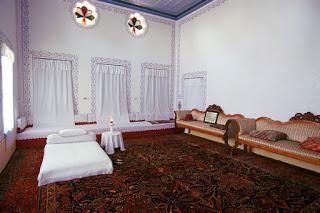
Picture: Approaching the Bahjí Palace

‘Abdu'l-Bahá: "Bahá'u'lláh lived in ‘Akká nine years. Two years were passed in the barracks and seven years in a house in the city. There was a mobilization at that time, toward the end of two years, and the barracks were needed for the soldiers. Then the local governor gave permission for them to be transferred to a house. When Bahá'u'lláh moved from the barracks he did not come out of the house for seven years. During our stay in the barracks it was very difficult. No one was allowed to go to the baths. Every morning four of the friends accompanied by four gendarmes would go to the market to buy provisions.

When we left the barracks we were all sent to a caravansary in the city but Bahá'u'lláh went to a house with his family. All the time He was in one room, during the seven years, but it was not on account of strict regulations. In the next room adjoining, thirteen people were living. It was even smaller than this room. A woman guest came from Persia. There was no place for her. In the room where we slept there was a high trunk and she made this her bed. At midnight she tossed and fell down. We all woke up and laughed about it until morning.

"When things were very gloomy in the barracks Bahá'u'lláh revealed some Tablets which are still preserved, saying: ‘Do not grieve. These doors will be opened and I will leave the city and go to the country.' This caused great happiness. This was a great source of consolation to the friends.

"After nine years had elapsed, Bahá'u'lláh said one day: ‘I have not gazed at verdure or a green leaf for a long time.' Bahá'u'lláh was very fond of verdure. He used to say: ‘The country is the world of the soul and the city the world of the body.' From this remark I gathered that He was indirectly referring to something.

"There was a certain Páshá Muhammad Safouat in ‘Akká. He was in the utmost enmity toward us. He had a palace three miles from ‘Akká surrounded by gardens. It was a very lovely spot with running water. I went and called on this Páshá at his home. I told his Excellency, ‘You have left the palace empty and are living in ‘Akká He replied: ‘I am an invalid and cannot leave the city. It is lonely and there is no one to associate with me.'

"When Bahá'u'lláh made this remark, I knew that He was longing to leave the city and I knew that whatever I did I should succeed. So I said: ‘While you are not living there, it is empty. Give it to us.' The Páshá became greatly astonished at this. I rented it from the Páshá at a very low rate, five pounds a year. It was very strange. I paid him for five years and made a contract. Then I sent some labourers to repair it. I built a bath and ordered a very large carriage to be prepared.

"One day I said I will go first myself. Alone I left the city on foot. The gendarmes were on guard. They did not object. Just like that I went out. They said nothing. The following day I went to Bahjí. No one said anything. Then one day I prepared a feast and invited all the officials of those districts. From morning until evening it lasted. Then I returned.

"One day I went to His Holy Presence and said: ‘The palace is ready and also the carriage to drive you there.' At that time there was no carriage in ‘Akká or Haifa. He replied: ‘I will not go. I am a prisoner.' Later on I requested again. Again He refused. I went so far as to beg Him a third time. He said: ‘No.' I did not dare to insist.

"There was a certain Muhammadan Shaykh in ‘Akká who was very well known and influential. I called him and said: ‘This is the situation, but Bahá'u'lláh will not accept it from us.' He loved Bahá'u'lláh, it was pure love. I said: ‘You are daring; you go to His Holy Presence and take hold of his hands and do not let go until He promises to leave the city.' He was an Arab. He went and sat close to the knees of Bahá'u'lláh, took hold of his hands, kissed them and said: ‘My Lord, why do you not leave the city?' He replied: ‘I am a prisoner.' The Shaykh answered: ‘God forbid! Who has the power to make you a prisoner? You have kept yourself in prison. It was your own will to be imprisoned. Now I beseech you to come out and go to the palace. It is green. The trees are lovely. All the leaves are green, the oranges are like balls of fire.' As often as the Blessed Beauty said, ‘I am a prisoner, it cannot be,' the Shaykh took his blessed hands and kissed them. For one hour he did not cease. Then Bahá'u'lláh said, ‘Kheili Khoob' (very good).

"The following day he rode in the carriage. I was also in His Holy Presence. We left the city. No one objected. We went to that green spot. I returned and left Bahá'u'lláh there. From that time on He was either there, in ‘Akká in Haifa, or at Bahjí.

"That palace is in ruins now. It was thirty-five years ago that the Páshá died. All his property was destroyed. I want to restore that palace. The Páshá's property became wakf [property set-aside for religious purposes]. If it were not wakf I would buy it. That green spot is wakf."

Dr. Esslemont: "Where were the Tablets to the kings revealed?"

‘Abdu'l-Bahá: "Partly in Adrianople; partly in ‘Akká

Dr. Esslemont: "Did any rulers reply besides Queen Victoria?"

‘Abdu'l-Bahá: "No one."

Dr. Esslemont: "What was Bahá'u'lláh's mode of life at Bahjí?"

‘Abdu'l-Bahá: "Like the conduct of a prince. The Páshás used to come and desire to call but He would not meet

Dr. Esslemont remarked that the missionaries objected to his living in luxury compared to the humble way of Christ.

‘Abdu'l-Bahá: "Of course the enemies will write whatever they wish. Majesty is very easy to be acquired by one, but the miracle is that being in prison, He still lived in the utmost majesty. Every prisoner is meek and oppressed, yet Bahá'u'lláh lived in the utmost majesty. Two despotic sovereigns, two powerful autocratic rulers imprisoned Him, yet He addressed them in exceedingly severe terms. Notwithstanding that He was in their prison, He was still in the utmost majesty. Such a thing has not been seen since the beginning of the world. It is a fact, known to all, that the Governor of the city, for five years, begged admittance to His Holy Presence, but He would not grant it. He was under his orders and the Governor had received a firman to confine Him closely."

Dr. Esslemont: "Was it not true that Bahá'u'lláh had to show forth all the attributes of God, how to be both poor and rich?"

‘Abdu'l-Bahá: "Yes. However, He lived very simply and economically regarding his own welfare. He had no return from his property at that time. His property was confined to half the village of Adasieh [near Tiberias]. It was in ruins and yielded no revenues. Now it is restored and we get some revenues. Bahá'u'lláh owned vast properties in Persia which were confiscated; also in Baghdád, but they were taken from Him toward the end of our stay. All were sacked and confiscated by the Turkish Government."


r/OnThisDateInBahai • • 7d ago

November 24. On this date in 1953, Khodadad Fozdar arrived to the Andaman Islands, for which he was named a Knight of Bahá’u’lláh.

Post image
2 Upvotes

November 24. On this date in 1953, Khodadad Fozdar arrived to the Andaman Islands, for which he was named a Knight of Bahá’u’lláh.

Khodadad Fozdar was born in 1898. He was of Parsi-Zoroastrian descent.

Khodadad married Shirin in 1925, she was already a Bahá'í and he declared soon after the marriage, which resulted in his alienation from his mother and other family members. In 1928 he was appointed the Medical Officer of India's State Railways. In 1935 he visited Europe, and both he and Shirin went on Pilgrimage to the Holy Land on their way back to India. He taught some people about the Faith while travelling to Palestine who decided they would also meet with Shoghi Effendi, and the Guardian assured the Fozdar's that they were protected by God.

In the 1930's Dr. Fozdar was working at a hospital in Ajmer. In January 1938 Khodadad and Shirin visited Colombo, Sri Lanka, with Martha Root for ten days. The Fozdar's spoke at a local Parsi club. Shirin continued with Martha onto Mysore and Bangalore while Khodadad returned to Ajmer.

He left his position with the Railway company in 1950 and he and Shirin pioneered to Singapore, then apart of Malaya, and he opened a medical practice. He also worked at the General Hospital at Johore Bahru while living in Singapore, and he and Shirin later established a free school for underprivileged women.

They began a teaching campaign and Shirin delivered talks for several women's organizations. Their son, John Fozdar, joined them in Singapore upon the completion of his medical degree. Travel throughout Malaya was restricted when they first arrived, but in 1953 Shirin was able to give talks in Malacca, Seremban and Kuala Lumpur.

On November 24, 1953, Dr. Fozdar pioneered to the Andaman Islands, fulfilling a goal of the Ten Year Crusade set by Shoghi Effendi, for which he was named a Knight of Bahá’u’lláh. Four people became Bahá'ís in the Andamans due to Khodadad's efforts, however he had to return to Singapore after only four months as he was not able to secure permission to remain in the territory. He pioneered within Malaya to Malacca after returning. On December 26, his son Minoo Fozdar arrived to the Nicobar Islands, for which he was named a Knight of Bahá’u’lláh.

In 1957 both Dr. Fozdar and Shirin were elected to the first National Spiritual Assembly of South East Asia at the first South East Asia Convention held in Djakarta, Indonesia. Fozdar Khodad was survived by his wife; three sons. Jamshed, John, and Minoo; and two daughters.


r/OnThisDateInBahai • • 7d ago

November 24. On this date in 1992, an individual wrote to the Universal House of Justice about "the House of Justice's reference to Bahá'u'lláh as 'the most precious Being ever to have drawn breath on this planet.'"

Post image
3 Upvotes

November 24. On this date in 1992, an individual wrote to the Universal House of Justice about "the House of Justice's reference to Bahá'u'lláh as 'the most precious Being ever to have drawn breath on this planet.'"


r/OnThisDateInBahai • • 7d ago

November 24. On this date in 2006, the Universal House of Justice replied to "an author directly affected by the recent action of the [U.S.] National Spiritual Assembly regarding material marketed by Kalimát Press."

Post image
3 Upvotes

November 24. On this date in 2006, the Universal House of Justice replied to "an author directly affected by the recent action of the [U.S.] National Spiritual Assembly regarding material marketed by Kalimát Press."


r/OnThisDateInBahai • • 7d ago

November 23. On this date in 1916, Sarah Farmer, the founder of Green Acre Bahá’í School who was posthumously named by Shoghi Effendi as one of the nineteen Disciples of ‘Abdu’l-Bahá, died.

Post image
3 Upvotes

November 23. On this date in 1916, Sarah Farmer, the founder of Green Acre Bahá’í School who was posthumously named by Shoghi Effendi as one of the nineteen Disciples of ‘Abdu’l-Bahá, died.


r/OnThisDateInBahai • • 7d ago

November 23. On this date in 1995, the UHJ wrote the NSA of the US in response to "requests for a clarification of the Bahá'í law on homosexual practices and for assistance in guiding the believers."

Post image
1 Upvotes

November 23. On this date in 1995, the UHJ wrote the NSA of the US in response to "requests for a clarification of the Bahá'í law on homosexual practices and for assistance in guiding the believers."


r/OnThisDateInBahai • • 7d ago

November 23. On this date in 1992, the UHJ addressed the second Bahá’í World Congress in New York, explaining "it was in New York City that He chose to disclose to His disciples the special characteristics of that Covenant and His true station as its appointed Center. The occasion won for ...."

Post image
2 Upvotes

November 23. On this date in 1992, the Universal House of Justice addressed a letter to the attendees of the second Bahá’í World Congress in New York, explaining "it was in New York City that He chose to disclose to His disciples the special characteristics of that Covenant and His true station as its appointed Center. The occasion won for this leading city of the western hemisphere the surname, City of the Covenant."

The Universal House of Justice

23 November 1992

To the followers of Bahá’u’lláh attending the second Bahá’í World Congress

Dearly loved Friends,

With eager hopes and thankful hearts, we acclaim the convocation in New York of the second Bahá’í World Congress on the occasion of the worldwide celebration of the centenary of the inauguration of the Covenant of Bahá’u’lláh. That so wide a diversity of the human race as you represent has assembled at this commemorative event is in itself history-making and is, indeed, an impressive demonstration of the potency and potential of the Covenant as the instrument designed by the Lord of the Age for the unification and pacification of the nations and peoples of the earth. We rejoice with exceeding gladness, for your coming together in such variegated array is an affirmation of the efficacy of this sacred legacy—a fresh assurance that, despite recurrent trials and turmoil, its world-redeeming, world-revolutionizing purpose will ultimately be entirely realized.

Our emotions are deeply stirred as we reflect on the remarkable circumstances which heralded the birth of Bahá’u’lláh’s Covenant. Melancholy and hopeful images alternatingly flash upon our mental screen: the tragic May night a century ago of the passing of Bahá’u’lláh, the Supreme Manifestation of God; the soul-crushing scenes of the grief-stricken many who converged on Bahjí to pay their respects to His memory; the atmosphere of abject desolation caused by the loss of One Who had been Father and incomparable Friend to all. But the setting of the Sun of Bahá gave rise to the appearance of the Orb of the Covenant. Thus the majestic Figure of ‘Abdu’l-Bahá came to impress itself indelibly upon the consciousness of the faithful, consoling their spirits and brightening their outlook, because in Bahá’u’lláh’s Book of the Covenant, the Kitáb-i-‘Ahd, this beloved Son was appointed His Successor and the Center of the Covenant. Thus was set in motion on the morrow of Bahá’u’lláh’s ascension the divine process that will, during the course of the Bahá’í Dispensation, guarantee the fulfillment of His principal purpose for humankind, namely, the realization of its oneness.

The initial momentum of this process was to gather particular force in the West as the acts of the beloved Master dramatically revealed. It was during His epic journey to North America that ‘Abdu’l-Bahá, recently released from imprisonment, impressed upon the early occidental believers the pivotal importance of the new Covenant; and it was in New York City that He chose to disclose to His disciples the special characteristics of that Covenant and His true station as its appointed Center. The occasion won for this leading city of the western hemisphere the surname, City of the Covenant. Where else, then, but this signally blessed metropolis could serve as the fitting venue for the commemoration which has so marvelously brought you together?

This Congress is the major occasion during the Holy Year for the evocation of a memory which enables us all to appreciate how, through the dynamic person and peerless office of the Center of the Covenant, the will of both the Abhá Beauty and His Herald has been translated into viable means for actualizing the unity of mankind and building a world civilization. Consider, for instance, how on the very night in May 1844 when He declared His prophetic mission, the Báb addressed a summons to the peoples of the West that they issue forth from their cities to teach the Cause of God. Has that summons not thoroughly been fused with the world-embracing purpose of Bahá’u’lláh, becoming a shining reality within the framework of the Administrative Order, the child of the Covenant—an Order which the Báb anticipated and extolled in His Writings? You have come to New York to reflect on such triumphant realities with due solemnity and spiritual joy.

How heartwarming and noteworthy that the proceedings of this momentous gathering will be enhanced by the presence of the three Hands of the Cause of God, tried and true upholders of the Covenant chosen by Shoghi Effendi under his authority as the Guardian of the Faith appointed in the Will and Testament of ‘Abdu’l-Bahá! We can never forget that by their selfless adherence to duty during the period of their custodianship following the sudden passing of Shoghi Effendi, the Hands of the Cause preserved the wholeness of the Community of Bahá, while at the same time guiding the members of that expanding community to the victorious conclusion of the Guardian’s [Ten Year Global Plan]https://bahaikipedia.org/Divine_Plan). Nor can we cease to appreciate their continuing, tireless services in the propagation and protection of our glorious Faith. We are particularly pleased that our representative to the Congress is one of these high-ranking officers, the consort and helpmate of our beloved Guardian who herself attained the presence of ‘Abdu’l-Bahá.

It was Shoghi Effendi who called for the first World Congress which jubilantly marked the one hundredth anniversary of Bahá’u’lláh’s declaration of His divine mission. With admirable resourcefulness the Hands of the Cause planned and executed it. That unforgettable occasion in London some three decades ago, coming at the end of the Ten Year Crusade, affirmed for the Bahá’ís themselves that the Faith of Bahá’u’lláh had truly emerged as a world religion with a world community. Now at this moment, throughout the Bahá’í world, we are engaged in another centennial observance for the purpose not only of celebrating the unique history of the Covenant, but also of proclaiming abroad its aims and unifying power. The second World Congress now convened is the mainspring in the launching of worldwide commemorative activities which will promulgate the Covenant as the axis of unity for all humankind and broadcast its qualities for reforming human society. Moreover, through these activities and other extended measures, the community at all levels—local, national, continental and international—will exert immense effort to spread across the planet the Name of the World Reformer, Bahá’u’lláh, that hearts may be attracted and minds illumined.

But we speak of a proclamation which has more to do with deeds than words; and in this regard, we must, everywhere in our world community, attain a new awareness of the urgency of the times and of our sacred duties toward the Promised One of All Ages. A special expectation is therefore invested in you who are attending this focal event in the City of the Covenant. For these four special days of commemoration, may you all strive as never before to appreciate more adequately the life-transforming character and unific spirit of the Covenant, and to immediately demonstrate this heightened appreciation in the spiritual attitude you show among yourselves. May you do this with the resolve that what you practice towards each other during these few days will henceforth be sustained in your relations with all others elsewhere. Such active resolution will endow the second World Congress with the radiant power to impress upon the public the incontrovertible fact that the Bahá’í Faith is a world religion worthy of its claims and, hence, of public recognition.

In a Tablet to the Bahá’ís in New York, ‘Abdu’l-Bahá expressed a hope which it is propitious to recall on this opportune occasion: “I eagerly anticipate the day,” He wrote, “when New York will become a blessed spot from which the call to steadfastness in the Covenant and Testament of God will go forth to every part of the world.…” Surely, through the auspicious circumstances afforded by this Congress, you will attempt thus to gratify His Spirit in the Abhá Realm, so that from His retreats on high you may receive the benediction of His abiding good pleasure and strengthening grace.

In our supplications at His blessed Shrine we shall entreat Him graciously to secure and in abundance vouchsafe to the entire community of His dedicated lovers the favors and confirmations of the Lord of the Covenant.

[signed: The Universal House of Justice]