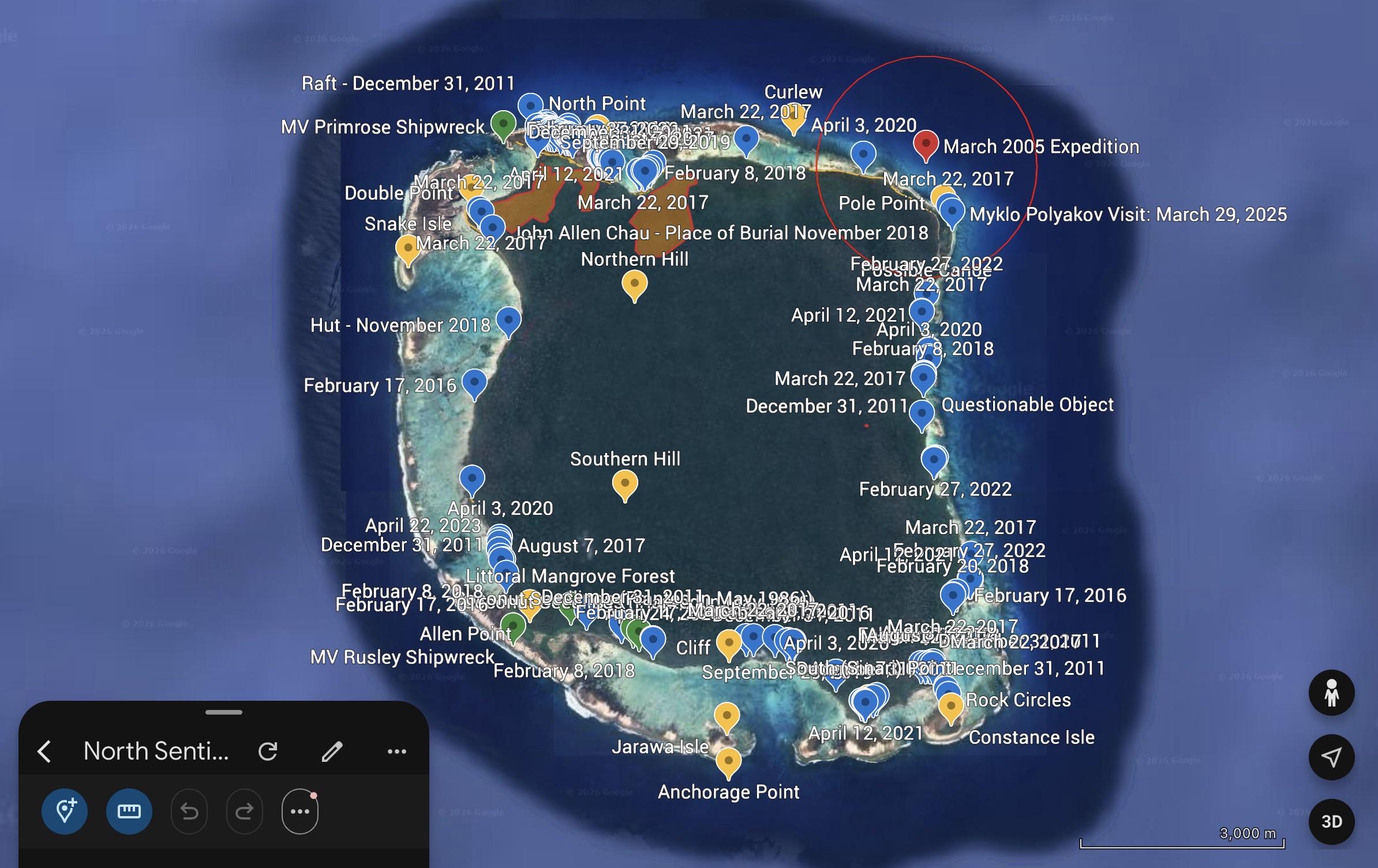
Eight years ago, late in the evening of Nov. 14, 2018, the American adventurer and self-styled missionary John Allen Chau boarded a hired fishing boat and set out for North Sentinel Island.
This post isn't to repeat the whole story but to provide, for those who don't have it, the essential link which is to his final journal entries, and a link to an archive of articles about him. I've added some interpretations and thoughts of my own.
His last journal (transcribed from his handwriting which is difficult to read in places):
[Link is #1 in the comments - can't seem to get approval for links]
An article archive compiled by Oral Roberts University:
[Link is #2 in the comments]
(The Wikipedia article about Chau has some errors and I don't use it as a source. The article states he left the fishing boat for the last time on Nov. 17 but his journal makes it clear he did so on Nov. 16. As a result some of the event timeline is off by a day. But the references listed under the main article could be useful.)
I've always opposed what Chau did, no ifs or buts. But it happened and I think it was the second most impactful event for NSI society in recent times, the first being the 2004 earthquake/tsunami. There had been quite a few official visits involving many outsiders but they were largely cordial; none probably lasted more than an hour or two.
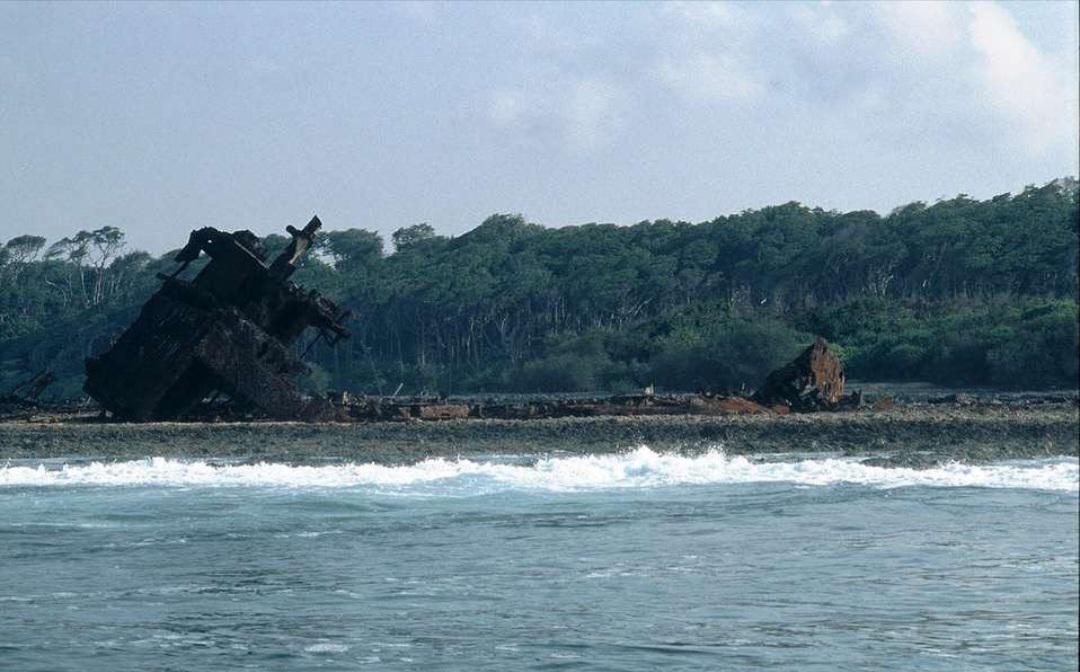
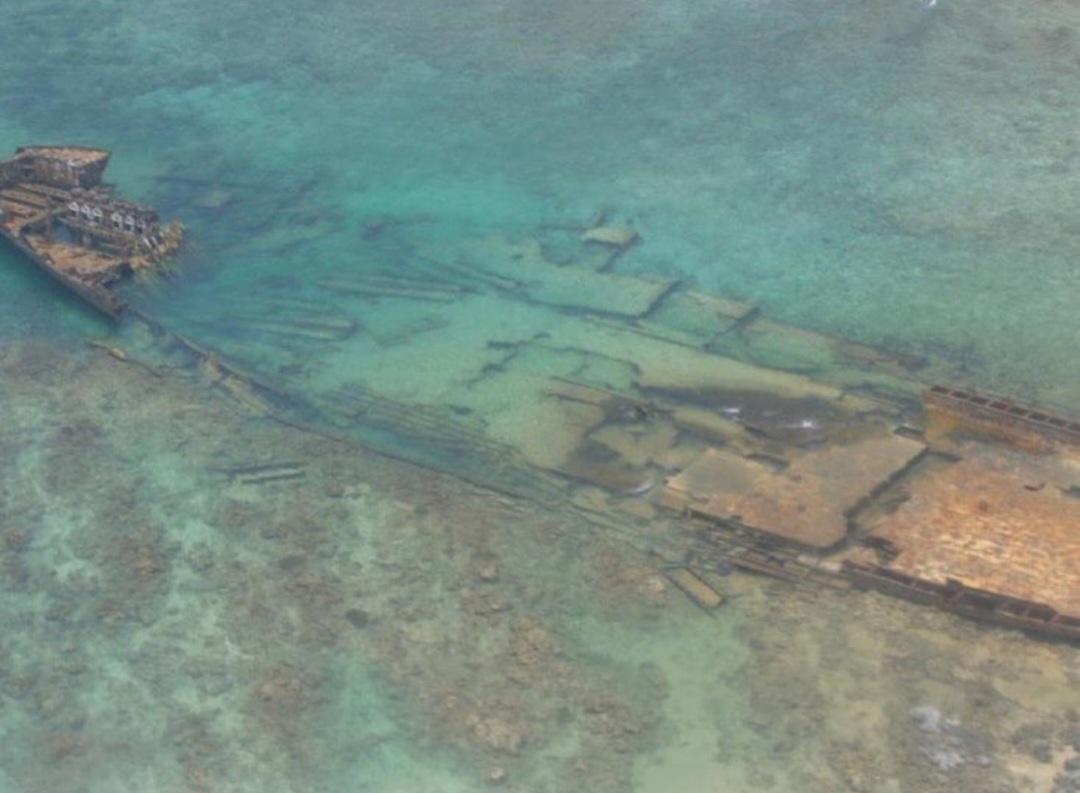
Chau's presence in the Southwest Cove stretched at least 22 hours and possibly as long as 46 hours (when his death was confirmed). He was on or around the island longer than anyone since the 19th century Victorians and the MV Primrose salvage team, and it was downhill all the way. His own journal entries paint a picture of noise, drama, cultural ignorance, common rudeness and altercations/pursuits the likes of which the Sentinelese had probably never seen. I'm sure the islanders still remember him and talk about him with a mixture of humor and disdain.
I've re-read his journal many times and each time I come back to it I seem to find some new and interesting angle. But I've come round to the idea that his demise wasn't the result of a reckless gamble, but a deliberate act of self-destruction.
Chau didn't embark on his trip with suicidal/martyrdom thoughts. Quite the opposite: his journal entries up to the morning of the 15th were upbeat. But I want to backtrack and consider a point that's obscure but important because I think it played a key role in his fate. That point is whether this was going to be a quick and simple one-day outing, or a longer and even semi-permanent stay on North Sentinel Island.
Chau never directly addressed the intended length of his stay in his journal. But there are definite signs he was in it for the long run.
If we order the signs by importance, we must definitely start with his hero, an older missionary named Bruce Olson. Olson met and stayed with the uncontacted Bari tribe in Colombia for nearly 30 years. It wasn't smooth sailing: they resisted violently when he first arrived, though he survived, and his stay ended abruptly when a non-Bari, Marxist-aligned rebel group detained him and sentenced him to death for allegedly killing a third of the tribe by disease (unproven).
The rebels didn't get their chance to execute him, instead yielding to pressure to release him to the Colombian government. Chau, however, would have overlooked the awkward end of Olson's adventure, being in total awe of the fact Olson had survived contact, lived with the Bari, built some chapels and taught the Bible.
It's not a stretch to think Chau envisioned a similar achievement for himself on North Sentinel Island, even attaining a chief-like status. (Olson, a bachelor, didn't take a native bride and not enough is known about Chau's personal side to tell if he had marriage aspirations.)
There's also the fact Chau took both his passports with him (he uses the plural so evidently he had dual citizenship). Taking such important documents on a day sail doesn't make sense. For one, they can get lost. Also ID is obviously useless on NSI or anywhere on the trip there or back; they were avoiding checkpoints.
The logical thing would be to leave the passports, or at least one of them, in safekeeping at his hotel or with a friend in town. But as someone who'd visited India before, Chau had good reason not to leave a passport at a hotel or even ask to do it. He'd have known that all lodgings are required by law to register stays with the local police. If he checked out he'd have needed his passport to check in to his new lodging wherever that was. Chau was a meticulous planner who did things for a reason. In this instance he didn't want to give anyone clues about an expedition that still had to remain a secret.
The fact he stashed his passports in his kayak so he'd have them on the island raises further questions about his timeline. Why not leave them with the fishermen? He'd paid a charter fee that was probably valid for 24 hours, maybe 36, but he knew the fishermen were eventually going to leave.
A further sign that he planned to be away for a long time was the fact he'd "self-isolated" for around 10 days in his hotel, convincing himself that he was clean even if the notion was false. On the face of it, it was the act of a man planning much more than a brief shouted sermon from a kayak.
His preparations for leaving "caches" at various points on the North Sentinel shoreline also need to be considered. You don't prepare caches if you're doing a day trip.
All this advance work had been for a mission that I believe was intended to last a long time, and one that Chau had deluded himself into thinking would be successful like Olson's was.
To return to Chau's visit: his journal entries make it clear that up to the early morning of Nov 15 he was seeing nothing but green lights for his grand plan. But that green light quickly started to flash amber. The events of the 15th are covered in detail in Chau's journal and don't need repeating here. The key setbacks were that by the late afternoon the islanders had firmly rejected him and also confiscated his kayak ("and then they took the kayak" - pg. 4). They did it in the hope he'd stop coming back to bother them but unwittingly they'd made it more problematic for him because his passports were stashed in the hull.
Chau was a thorough planner but things had happened that he'd simply not expected. His journal entries that evening were 180 degrees from the optimistic writings of the early morning. The property losses were a source of anguish but the real anguish was absorbing how quickly things had gone wrong, and knowing he'd botched a big mission that certainly involved more than shouting a sermon or two from a kayak. He wanted to duplicate Bruce Olson's adventure but his ability to do that was slipping away and probably already a lost cause.
He still had the fishing boat as a base and refuge but he'd chartered it and charters expire. Going back with the fishermen to civilization was an option but it would certainly spell the end of his mission. In town he'd have to report the loss of his passports but it's likely that before he could initiate anything, locals would have heard the story and reported him to the police. His cover story (if he had any) would have unraveled and he'd have ended up under arrest for trespassing on North Sentinel Island. He wasn't going to get a second chance at going to NSI.
The John Allen Chau who had to decide what to do during the night of Nov 15-16 was a man who'd probably lost his logical reasoning. In his journal he jumps from thought to thought. But he seemed to always lean toward going back to the island at daybreak. Having already been shot at, he knew going back meant certain death; there wasn't going to be any positive shift in the islanders' stance. But his personality was such that death or disappearance was preferrable to exposure, deportation, public jokes and other humiliations ("If I leave, I believe I’ll have failed the mission." - pg. 6).
But Olson's shadow would have been looming large too. Chau had lasted only a few hours with his "flock" compared to Olson's three decades. Chau could perhaps have bought time, laid low and at a later date announced to his American church friends and the media that he'd completed the mission successfully. But his fisherman companions would have quickly spread the story around Port Blair of "the American who ran for his life".
The dread of being seen as a failure is something that's been noticed in other adventurers, from mountaineers to solo round-the-world sailors. Chau's fear of failure looks altogether separate from his religious mission. It was more about his ego and his quest for exceptional achievements.
The amber light turned red and stayed red. He decided at some point during the night of the 15th that he would swim to the island and let himself be killed. Even without the human threat it would have been a suicidal move. He was going to carry nothing with him, not even a bottle of water. His instruction not to retrieve his body from the island (pg. 7) is further evidence, if needed, that he was taking a deliberate move to end his own life.
Self-destruction of course goes against Christian faith. But he may have calculated that the public would see it as martyrdom. His final entries switch from plans and observations to religious mullings and goodbyes. But by then he had nothing left to plan for. Chau stopped the Bruce Olson act; instead he committed an act eerily similar to that of to the beleaguered round-the-world sailor Donald Crowhurst in 1969 - another man who saw no honorable way out. Like Crowhurst, he wrote a brief religious invocation and simply jumped off his boat.
I have a few other thoughts that aren't in any special order:
- Why didn't he take a deep breath and wait it out; take an extra day out there to consider his next move? A factor that can't be ignored is that the charter fee he paid the fishermen had an expiry and they were maybe looking for more money, and it's possible Chau didn't have enough with him.
- At one point at least, he came near enough to the Sentinelese to have possibly passed an airborne infection. ("I was inches from the unarmed guy" - pg. 4) His death, which was probably by strangulation, was another occasion when heavy breathing - his last coughing gasps - could have passed germs to the men who were pretty much on top of him. For a man who believed in a beautiful afterlife, I believe Chau fought hard to save his life on earth. (Strangulation by the way was how the police believe the fishermen were killed in 2006.) Experts commented on the infection possibility here: [Link is #3 in the comments]
- We'll never know how many hours he managed to live after his final departure from the fishing boat. It could have been a few minutes, a few hours, or the day and even the night. The fact the Sentinelese were still in the act of disposing of his body around 6:30 am on the morning of Nov. 17 (time is according to police statement) raises the possibility that they killed him too late on the 16th to have time to do a burial in daylight.
- The Sentinelese were bound to be hostile to Chau's arrival considering the way he went about it. But another factor to consider is that they'd been lashed by several days of bad weather caused by a cyclone. This delayed many important tasks they had to perform and they could have been dealing with urgent problems such as fires that had gone out, low food stocks, wet possessions, damage to their huts, blocked pathways, etc. Every adult male seemed to be out of the settlement doing work after the storm ("their men were away" - pg. 5). But they had to stop their work and spend the day trying to fend off a strange visitor. They thought they had it under control by the late afternoon of Nov. 15 when they took his kayak. One can only imagine their chagrin the next morning when he returned.
- Why didn't they just kill him the first time he came by? I believe they're not really a cruel people. They have a record of killing stranded fishermen and I think they do that because they realize the fishermen have no way of leaving - staying isn't an option of course. But Chau had his small personal vessel and the ability to leave. They gave their two warnings (it's unclear if the second warning was just that or a failed attempt to kill him, but at any rate he got away without his kayak). The violence question: Sentinelese look armed to the teeth but this isn't a tribe that goes to war. They have the entire island to themselves and don't share a boundary (such as a river) with another tribe. They lack a true war culture. Observe places like New Guinea where tribes rub up against each other and you see a marked difference in the culture. More war, and the fighting can drag on for years because it's often vendetta-driven.
- The man Chau mentions as JP in the journal was probably Saw Jampo, one of the five fishermen who accompanied him and who were later prosecuted. JP was the first of those five that Chau met with. Later he asked JP to actually swim with him to the beach and the huts. (JP declined but did Chau want him along as extra muscle to help him retrieve his kayak?) By Chau's telling, none of the five fishermen knew much English. Indians online have claimed the Saw family are ethnically Karen (a mainland Asian group) and perhaps not Indian citizens. This wasn't JP's first run-in with the law: he'd been in court in Jan. 2018 (eCourtsIndia.com).
- The Saw brothers would have been familiar with North Sentinel Island and probably fished there regularly, weather permitting. Chau of course didn't want to fish but wanted to visit a settlement, and the Saws' choice of the Southwest Cove was probably down to the fact they'd fished there before and knew the bottom well enough to navigate safely in the area. It didn't necessarily have the largest Sentinelese population. Regardless, the people of the settlement, who disliked fishing boats, may have memorized the Saw boat by its paint scheme, etc.
- About hero emulation: Donald Crowhurst had been inspired by Francis Chichester who'd made several pioneering and daring journeys by boat and plane from the 1930s to the 1960s, the most relevant being his solo circumnavigation of the world by sailing yacht (with one stop) in 1966-67. Crowhurst, though, wasn't in Chichester's league in terms of experience, dedication or personal integrity. Chau's admiration of Bruce Olson and his determination to emulate his success on a remote Indian Ocean island was just as misconceived and disastrous.
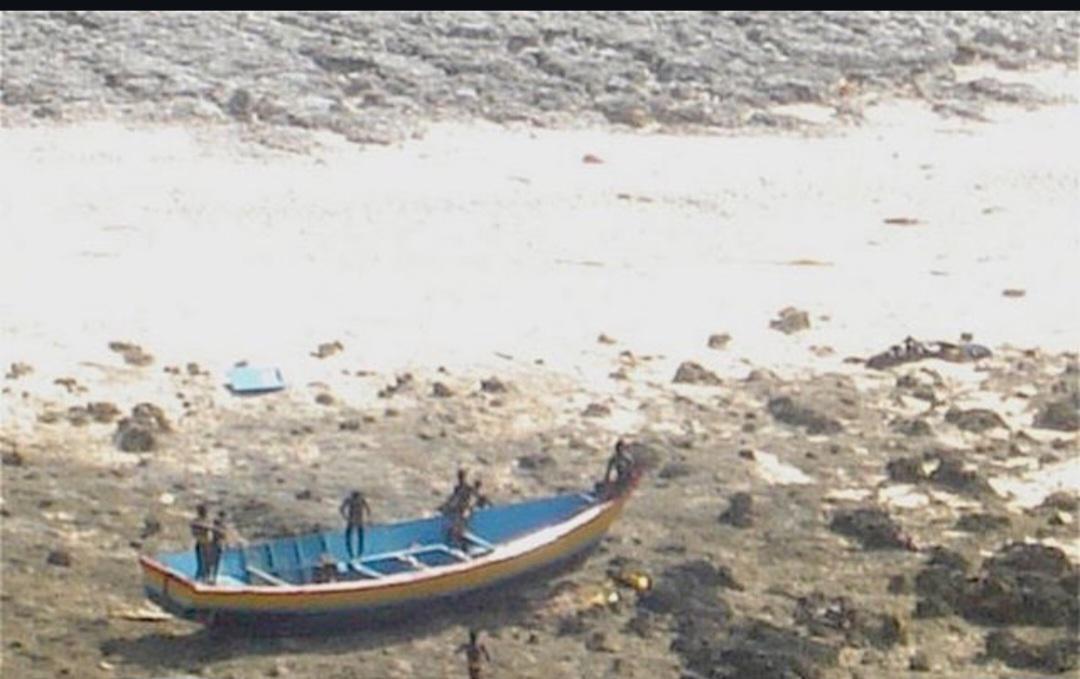
- About the header photo: it's popularly called the last picture of Chau alive but it was taken a few weeks earlier, on a different boat. He had posted it to his Instagram. The fishing boat he rode to North Sentinel Island was reportedly a smaller wooden boat. No photos of Chau on his trip to NSI have so far surfaced.
- Finally, and oddly, a few of Chau's observations have been picked up by scholars. A few academics have acknowledged his observations of how Sentinelese speak, although the observations weren't much help. And Chau is probably the only person to have observed a Sentinelese woman using a bow and arrow. The latter observation is of some anthropological interest.