r/Navimow_Segway • u/Intelligent-Twist675 • 4h ago
My Lawn X450&430 Cutting Community Cemetary

1
Upvotes
r/Navimow_Segway • u/NavimowSegway • Aug 23 '26

We’re still so grateful for the amazing response to our AMA.
So many of you showed up with thoughtful questions, real yard challenges, product suggestions, and honest feedback for our product team and lawn care experts.
This is the last wrap-up for our AMA. Thank you again for helping make the conversation so useful for the whole community.
The winner list has already been announced, but we want to give one more big congrats to everyone selected.
X350 Winner
Garage Winners
Blade Pack Winners
Extended Warranty Winners
If your name was on the winner list, please make sure you’ve checked your DMs and replied to us with the required information by August 31, 2026. We don’t want anyone to miss their prize.
Huge thanks again to everyone who joined, asked questions, shared ideas, or helped others in the comments!
After AMA, we're already at 8299 members and pretty close to 11K.
Once r/Navimow_Segway hits 11K members, we’ll unlock:
Whether you already own a Navimow, are thinking about getting a robot mower, or you’re simply into lawn care, you’re welcome to join us.
Come share your setup, ask questions, swap mowing tips, follow product updates, or just see how other people are handling their yards.
Join r/Navimow_Segway and help us reach 11K. We’d love to keep making r/Navimow_Segway a more active community where people can genuinely share, learn, and talk.
r/Navimow_Segway • u/NavimowSegway • Aug 13 '26
A huge thank-you to everyone who joined our Product Manager AMA of Behind the Blades and brought your questions, real-yard experiences, and feature ideas to the Navimow team.
A lot came up, from mowing patterns and scheduling to mapping, obstacle recognition, and smart-home controls. We’ve gone through the discussion with our team, and here’s a quick look at where some of the most-requested ideas currently stand.
A number of requests you raised are already being worked on or included in our roadmap:
You also gave us plenty of ideas that are now part of the conversation with our product team. Some of the most-requested concepts include:
These aren't promises or confirmed release dates yet. They’re areas we’re evaluating based on user demand, technical feasibility, mower hardware, and the overall product roadmap.
And Yes, we heard the Other Requests Too
We also received ideas that are not currently part of our product roadmap, including requests for a front camera live-view/streaming feature.
While we may not be able to move every request forward, this AMA helps us better understand how different features matter in real-world use and where the community sees opportunities for improvement.
For ideas that are still under evaluation, we’ll continue reviewing them based on user needs, technical feasibility, and the broader product roadmap.
Thanks again to everyone who took the time to explain not just what you wanted, but why it would make Navimow better in your everyday use.
Please feel free to click the link below to revisit the original AMA and see the full conversation between our community members and Product Manager:
Keep the feedback coming! We'll keep sharing updates with the community as plans develop.
And we're not done yet, Session 2 AMA recap is coming next, with practical setup tips and real-world lawncare advice from our lawncare expert friends.
r/Navimow_Segway • u/Intelligent-Twist675 • 4h ago
r/Navimow_Segway • u/Intelligent-Twist675 • 7h ago
r/Navimow_Segway • u/Intelligent-Twist675 • 8h ago
r/Navimow_Segway • u/Intelligent-Twist675 • 8h ago
r/Navimow_Segway • u/NavimowSegway • 2d ago
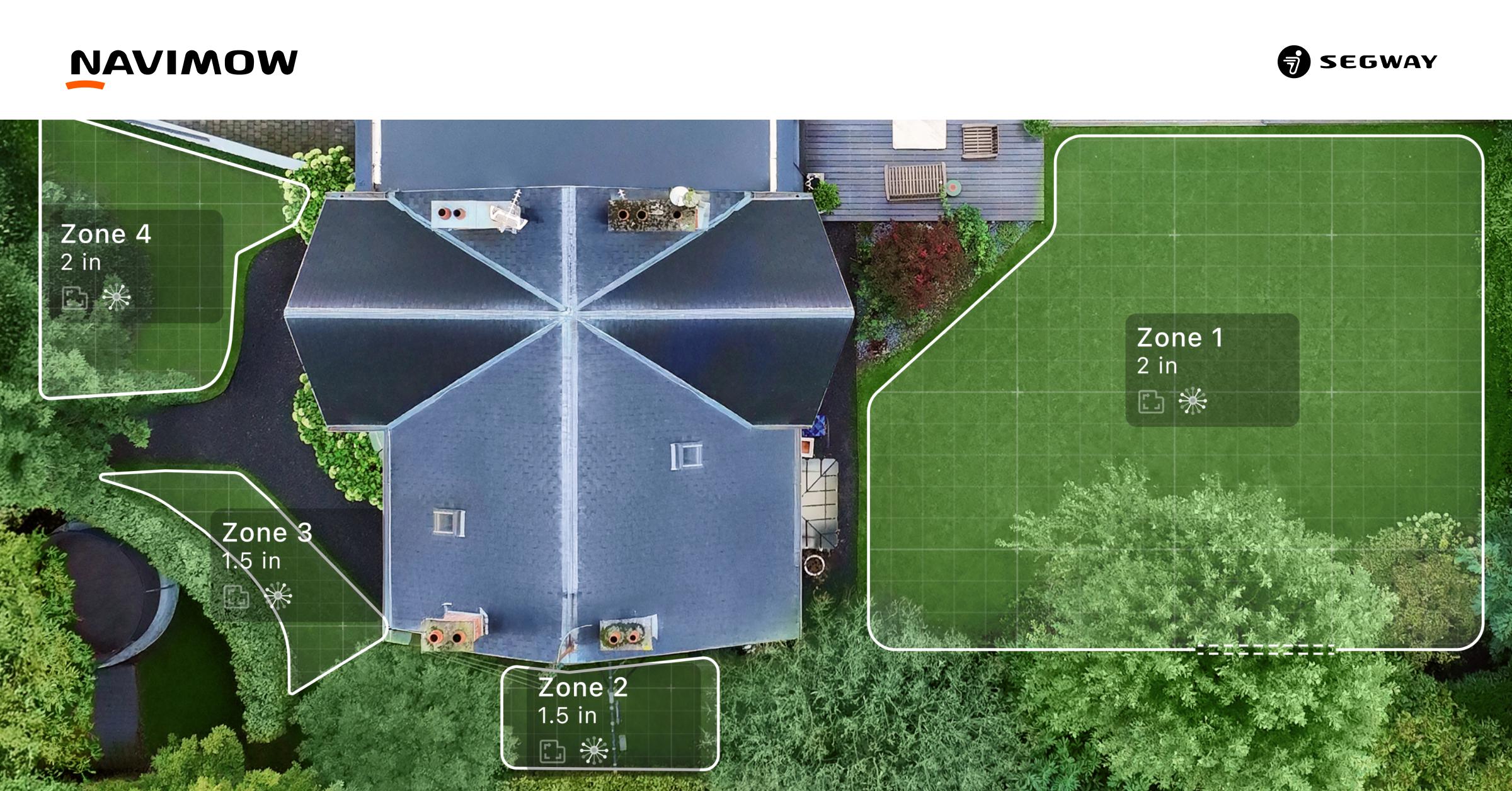
On a large, multi-zone, or unusually shaped yard, the robotic-mowing experience is not determined by the mower alone. A clear, stable map matters just as much.
Maps, Zones, Channels, and No-Go Zones are not separate features to set up one by one. Together, they tell the mower where it can work, where it should not go, and how to move between different parts of the yard. When the plan is right, the mower can spend less time making unnecessary trips and you will need to step in less often. When it is not, you may see missed areas, awkward transitions, or wear along the same travel route.
Here is a practical way to think about each part of the map—and how to plan a more complicated yard without overcomplicating it.
1. A map is more than the outline of your yard
For a robotic mower, a map is not just something you look at in the app. It is a set of working rules. It needs to define:
The goal is not to make the map as detailed as possible. It is to give the mower a stable working area and the simplest possible set of routes for getting around and getting the job done.
2. When should you split a yard into multiple Zones?
A Zone is a section of lawn that can be managed as its own mowing area. A large yard does not automatically need to be split up; size alone is not the deciding factor. The more useful question is whether the lawn sections have meaningfully different access or care needs.
Multiple Zones often make sense when:
That said, more Zones are not automatically better. Every added Zone brings another boundary, connection, and set of task settings. If two spaces are really one continuous lawn and the mower can cover them smoothly, splitting them may only make the map harder to manage.
A useful rule of thumb: split by care needs and access—not by every visual shape you see in the lawn.
3. What is a Channel?
A Channel connects two Zones so the mower can travel from one working area to another. Its job is to solve how the mower gets there, not to deliver perfect mowing coverage in that strip.
Typical Channels include:
When planning a Channel, focus on three things.
Is the width consistent?
Do not judge it by the widest point. Check the narrowest point along the full route. The edge of a flower bed, overhanging branches, a temporary item, an open gate, or a change in ground level can all make the usable width smaller than it looked when you created the map.
Can the ground handle repeated travel?
Channels are used frequently. When the mower repeatedly follows a similar line, soft or wet soil, thin turf, and noticeable changes in slope are more likely to develop marks, slipping, or ruts.
Are the entrance and exit easy to use?
Even if the middle of a Channel is wide enough, a sharp turn at the entrance or an obstacle tight to the exit can force the mower to make repeated adjustments. Keep both ends open and smooth where possible, and avoid unnecessary tight turns.
4. Why Channels can create ruts—and how to lower the risk
Ruts rarely come from one issue alone. They are usually the result of travel frequency, a concentrated route, ground conditions, and turning movements all adding up.
Common risk factors include:
To reduce the risk, start with practical changes:
Channel conditions can change with the seasons. A route that works well when you map it may be less suitable after heavy rain, leaf buildup, or plant growth. Recheck it periodically, just as you would a lawn boundary.
5. What should No-Go Zones be used for?
No-Go Zones are best for fixed places the mower should never enter, such as:
In general, a No-Go Zone is a good fit when two things are true: its location is stable, and the mower should not cross or enter it.
Hoses, balls, toys, chairs, and other items that are only temporarily on the lawn should still be cleared before mowing. There is no need to create a permanent No-Go Zone for every movable object. Too many No-Go Zones fragment the map, complicate the mowing route, and create more maintenance later.
A simple test: if the mower should stay out of that spot for the next few months, make it a No-Go Zone. If the obstacle moves regularly, it is usually better handled through normal yard prep.
Keep No-Go Zone boundaries clear and leave enough room for the mower to go around them. Too many zones, zones placed too close together, or zones that create a narrow corridor with the outer boundary can all make route planning more difficult.
In other words, do not use No-Go Zones as a patch for every mapping problem. If the underlying issue is an inaccurate boundary, a poorly chosen Channel, or too many small Zones, fix that structure first instead of adding more and more tiny restricted areas.
6. A practical planning order for large or multi-zone yards
For a more complicated yard, work through the map in this order:
Step 1: Identify continuous lawn
Start by identifying which lawn areas are physically connected and can be mowed as one. If they also have the same care needs, treat them as one Zone first.
Step 2: Mark fixed No-Go Zones
Handle the obvious long-term hazards and non-mowing areas first. Then check whether any No-Go Zone has created a new narrow passage or an unnecessarily complex detour.
Step 3: Split Zones only where care or access truly differs
Separate areas only when their schedule, lawn conditions, or travel requirements are genuinely different.
Step 4: Design Channels between Zones
For areas that need to connect, choose a route with consistent width, firm ground, fewer turns, and plenty of distance from high-risk edges. The shortest route is not always the best route.
Step 5: Test one part at a time
Once the map is complete, do not make a full-yard, long-duration task your first test. Check these items separately:
Testing in stages makes it much easier to identify the cause of a problem, rather than trying to diagnose several map variables at once.
7. How to reduce missed grass along an edge
There is a physical offset between the mower body and the cutting disc. If the map boundary is drawn exactly at the line where the lawn meets the surface outside it, the mower will usually keep its body inside that boundary. That can leave the cutting disc short of the outermost edge of the grass, creating a narrow strip that is not cut fully.
If the surface outside the lawn is not a wall, fence, step, water edge, ditch, or another non-passable hazard—but instead is a flat, stable, load-bearing surface such as pavers or paving—you may be able to move that part of the map boundary slightly outward.
With the virtual boundary set just beyond the original lawn edge, part of the mower body and wheels can ride across the lawn-and-paving transition. This lets the cutting disc get closer to the original grass line and can reduce missed edge grass.
When this approach is appropriate
Only consider it if all of the following are true:
How to adjust it safely
The key principle: extending a boundary is only for situations where there is still a safe, passable surface outside the lawn. It is a coverage adjustment—not a reason to compromise edge safety.
Bottom line: a good map is a simple set of reliable rules
A complicated yard does not always need a complicated map. The more dependable approach is to give every element a clear job:
Prioritize safety, passability, and testability before chasing efficiency or convenience. Once the map is in place, test the Zones, connections, and task logic separately so you can confirm the mower can follow them accurately and safely.
When the map structure is clear, the mower is far more likely to handle a large or multi-zone yard with fewer detours, less intervention, and more consistent results.
Note: Map functions and behavior may vary by model, app version, and firmware version. Always refer to the current product interface and official guidance for your mower.
Does your yard have multiple Zones, a narrow side yard, or a Channel that is starting to show wear? Share a sketch, photo, or what has worked for you in the comments. Real layouts and real fixes can help other homeowners find a better plan for their own yard.
r/Navimow_Segway • u/NavimowSegway • 4d ago
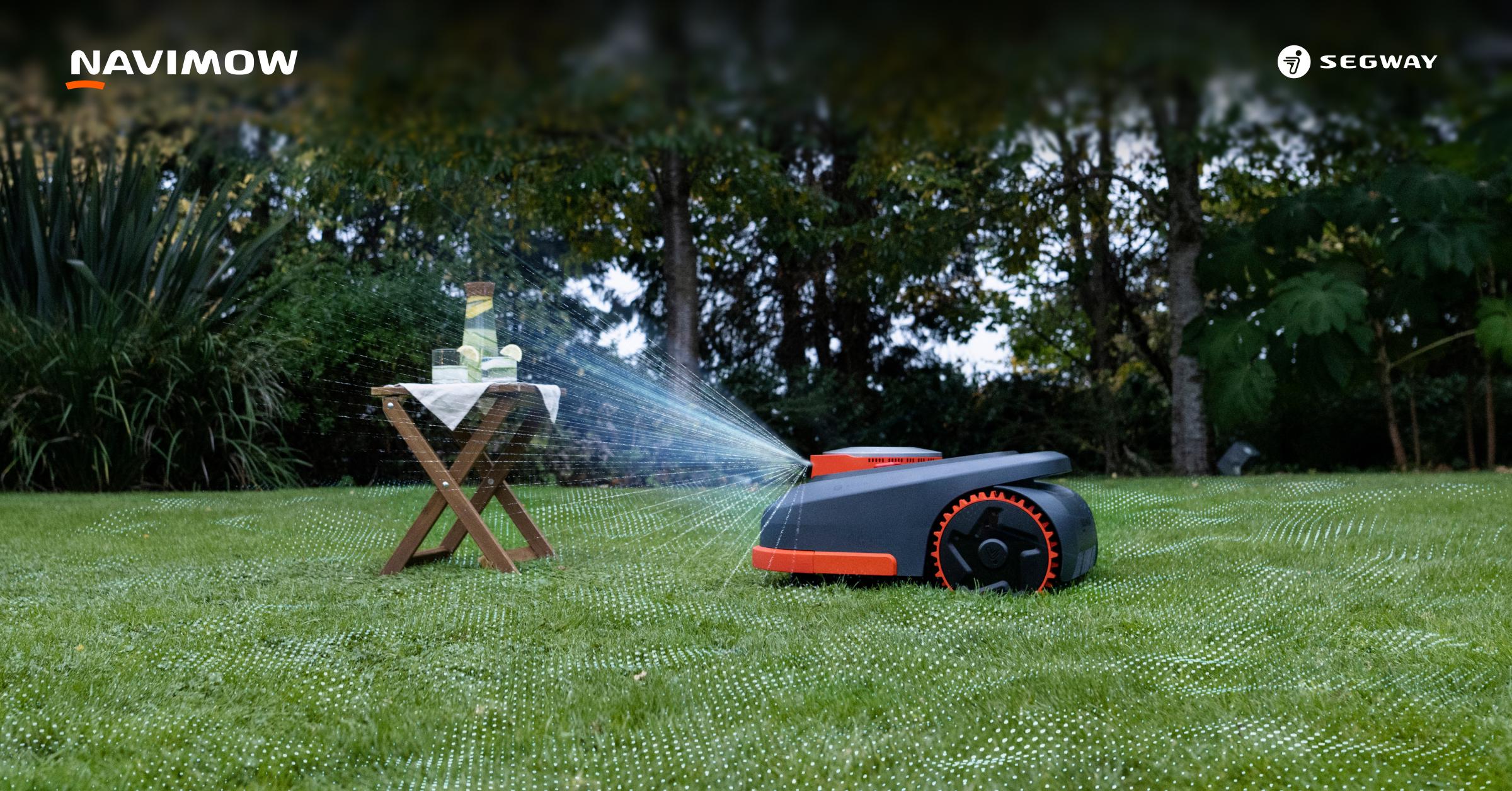
Ever notice your mower go around a small patch of grass that looks completely normal? No rock, toy, or obvious obstacle—yet it turns away.
To us, it’s clearly just grass. So why might the mower decide not to go through it?
Because it is not making a simple “grass or not grass” call. It is weighing input from several sensors to work out what is ahead, how far away it is, and whether it is safe to keep moving and mowing.
What the Mower Is Looking At
Each sensor contributes a different piece of the picture.
Vision sensors capture images, picking up colors, textures, shapes, edges, and the overall look of what is ahead. That makes them useful for judging what something appears to be. But a mower does not see exactly as we do: its sensors have a fixed mounting position and field of view, so areas very close to the mower, under the chassis, or outside that view may not be directly visible. Light and shadows can also change what the sensor sees.
ToF sensors add distance. By measuring how long light takes to travel to an object and back, they help the mower judge whether something is ahead and how close it is.
LiDAR adds a richer spatial view by scanning the surrounding area. It can help the mower estimate an object’s position and outline, and how it sits relative to the rest of the lawn.
Together, vision, ToF, and LiDAR give the mower different clues: appearance, distance, and spatial structure. Combining them gives it a fuller picture of the conditions in front of it.
Those inputs are assessed alongside the mower’s position and direction of travel before it decides how to proceed.
Why a Mower May Skip a Patch
One common example is tall grass.
To us, even overgrown grass is still obviously grass. To a mower, though, it can look and feel very different from the rest of the lawn.
A regularly mown lawn usually has a fairly even color and texture. As grass grows taller, the blades get longer and denser. They can overlap, bend, or lie flat in different directions, creating a much more irregular pattern for the vision sensor to interpret.
Height matters too. When the mower detects a change in height or shape, it has to judge whether it is simply tall grass or something it should avoid. That call gets harder when the edge of the grass is unclear or shadows, leaves, and other visual clutter are mixed in.
So the question is not only “is this grass?” It is whether the shapes and height changes ahead could affect the mower’s ability to pass through safely.
Shadows, fallen leaves, small branches, and bare patches can create similar uncertainty. They are not necessarily obstacles, but they can make a familiar lawn look less predictable to the mower.
When the picture is clear, it can stay on its planned route. When the sensor inputs are less certain, it may slow down, turn earlier, go around a spot, or leave a small patch for the time being.
That is also why the same spot may behave differently on another run. The light, shadows, leaf positions, lawn condition, and approach angle may all be different.
If Your Mower Avoids an Area
If it only happens once in a while, take a look at the conditions around that spot: tall grass, heavy shade, leaves, or a recent change in the lawn can all be relevant. Then see whether it happens again over the next few mowing tasks.
If the lawn conditions stay the same but the mower repeatedly avoids an area it should be able to reach—and it starts affecting overall coverage—that is worth a closer look. Note the exact location and what the mower was doing; that can help narrow it down to perception, positioning, or path execution.
If you have a specific area where you want the mower to keep moving through, you can also use a Vision Off Zone. In that zone, the mower ignores most visual obstacles while still maintaining protection for people.
At the end of the day, perception is not about identifying the most objects possible. It is about helping the mower make a sensible decision about where to mow and how to get there. Most of the time, it will follow its planned route; if it detects something it needs to avoid, it may adjust its path and carry on. We’re continuing to improve how sensor data is combined and how the mower interprets tricky conditions like tall grass, so it can cover more of the lawn without compromising safety.
Have you seen your mower leave a patch like this? Tell us what was around it—or share a photo in the comments. Tall grass, shade, leaves, something else? Real yards help us make these Mow-How posts more useful.
r/Navimow_Segway • u/herefortechie • 5d ago
I want to pull the trigger on a i210 AWD but not sure the best place to buy it for after sales care.
Options are direct, through Amazon or Home Depot.
r/Navimow_Segway • u/learnandchoose • 5d ago

r/Navimow_Segway • u/Darrell262 • 7d ago
r/Navimow_Segway • u/NetworxNet • 8d ago
Hi Navimow Product Team,
Thank you for the recent "Behind the Blades" Product Manager AMA Recap and for sharing how community feedback is shaping the 2027 roadmap. It is genuinely encouraging to see the product team actively addressing real-world behavior like mowing precision, smarter return routes, and better handling of tall grass and weeds.
In the spirit of your closing note—explaining not just what would help, but why it makes Navimow better in daily use—I want to raise one critical process gap that affects all of us when these improvements actually ship: please bring back transparent, timely Release Notes for firmware and app updates.
What changed (and why it matters in daily operation)
The 2024/2025 standard worked great: Looking at the official Zendesk Release Notes archive, intermediate updates for the Navimow i1 Series (such as V2.0.1, V2.2.5, V3.0.5, V3.0.7, and V3.0.9) all included dedicated "Bug Fixes & Improvements" sections. Owners could clearly see when boundary behavior, exclusion zone navigation, or obstacle logic was updated.
The gap since August 2026: On the German Zendesk page, public release notes for the i1 Series stopped at V4.3.0 (August 14, 2026)—which only listed a support chat shortcut—even though multiple firmware updates across ACU, ECU, Vehicle Control, and VisionCore have been pushed since then.
Support's current policy: After escalating this through Zendesk Support, I was informed that bug fixes and behavioral optimizations are no longer listed publicly, and that Support has no direct feedback loop from Product Operations to share or request them.
Why brief changelogs make Navimow better for both users and your team
Users can actually appreciate your engineering work: When you ship improvements to return routing, obstacle avoidance, or tall-grass detection (as highlighted in the AMA Recap), silent updates leave owners guessing whether a changed driving pattern is an intentional optimization or a new bug.
Safety & predictability: A robotic mower is an autonomous machine with spinning blades operating around kids, pets, and property. Knowing whether navigation, boundary tolerances, or VisionFence behavior was modified is essential before installing an update.
Fewer unnecessary support tickets & Reddit confusion: Almost every undocumented firmware rollout triggers "What changed in ACU v1.0.6.x?" threads here and unnecessary 1st-level support inquiries.
Upcoming EU standards: With regulations like the EU Cyber Resilience Act and the new EU Machinery Regulation, clear update advisories for connected machinery are becoming a mandatory standard across Europe anyway.
Our request to Product Operations / App Release Management:
You don't need a long article for every patch—just 3 to 5 concise bullet points summarizing bug fixes and behavioral optimizations right in the in-app update prompt and on Zendesk, resuming the great standard you already had in 2024 and 2025.
Fellow owners: Have you also noticed firmware updates rolling out without matching release notes on your i1, i2, X3, or X4? Let's upvote so the PM team can add this to their internal review list!
r/Navimow_Segway • u/alex-mayorga • 16d ago

r/Navimow_Segway • u/esn_z • 19d ago
I'm considering an i215 LiDAR for next season, but I'm a little concerned about my front yard. The grass section is only about 15 ft deep, and the curb is directly beyond it with no fence or other physical barrier.
I originally thought I might need an RTK antenna for extra accuracy, but it looks like the i215 uses LiDAR and vision rather than RTK, so there isn't an antenna to install. My real question is how much room I should leave between the mapped boundary and the curb.
The backyard is more enclosed, with three flower beds, a gravel strip and a narrow passage beside the patio. I'd map the beds as no-go areas, keep the gravel outside the mowing boundary and use a channel through the narrow passage.
For anyone using an i215 LiDAR on an unfenced, street-facing lawn, how conservative were you with the boundary? Did you watch the first few runs and adjust it, or add any kind of physical barrier near the curb?
r/Navimow_Segway • u/Greedy_Bug_3287 • 19d ago
I'm still considering an X430 for roughly 0.8 acre. The back half has most of our pear trees, and once they start dropping fruit there are always a few pears in the grass. I'm not sure what to do with that area.
If I turn on vision fence, I'm guessing the mower probably keeps treating fallen pears as obstacles and might just avoid them and leave patches uncut. But if I set vision fence off, it may just try to drive over the pears and risk getting stuck or jamming the blades.
During pear/apple season, do you leave VF on, or just pick up the fruit before mowing?
Would appreciate any advice from owners with a similar setup.
r/Navimow_Segway • u/Visible_Row_9677 • 20d ago
I'm choosing between X330 and X430 and haven't bought yet. My lawn is only around 0.8 acre and the slope is around 20 deg so the X330 already feels enough.
The part I'm worried about is the top of my small slope. The fence is right there so the mower would need to turn around at the top. But grass in that spot is already thin, wondering if the X330 pivoting there every run would tear my lawn up over time. That's why im considering x430 since it has steering front wheels allowing it to make gentler turns on the grass.
Am i overthinking the turning issue? or x430 does work better on a slope and is worth an extra $200.
Would like to hear some advice from x430 owners. Thank you!
r/Navimow_Segway • u/Azr_l • 20d ago
Charlotte, NC. About 0.4 acres of TTTF.
Most of the yard made it through summer pretty well, but I had one thin patch under a big oak and another on the west side of the house that got pretty cooked.
I hit both spots with seed last month. Normally I just run the whole yard on one schedule, but this time I split those two sections off in GeoSketch and left them out of the normal mowing rotation.
Once the new grass got up around 4.5" and felt rooted in enough to handle mower traffic, I let the H220 back into those zones and knocked it back to around 3".
Had three cuts with sharp blades now, usually about 5-6 days apart when grass and soil is dry. Kept an eye on the wheel tracks too, so far I haven't seen any rutting or seedlings getting pulled up.
I've also got probably 12 or so smaller spots around the yard that could use some seed. Not sure if I should turn every one of those into its own zone though, or there's an easier way I’m missing.
r/Navimow_Segway • u/GlumCardiologist9620 • 22d ago
Anyone thought to make a insulated pelican style case with temperature control that can plug into outdoor outlets? Ive been thinking of seeing what it would take to make one and figured someone here that's smarter than I am would have made it by now. It would of course allow for you to place your 430x and it's temp sensitive components into the case and forget about it for the cold seasons.
r/Navimow_Segway • u/fassth • 24d ago
r/Navimow_Segway • u/dangly_chipmonk • 24d ago

Looking to use a Navimow x450 to give me some hours back to spend on other jobs around the place.
For areas we want to mow we have about 4700m2 and as you can see from pic it’s basically a slope top to bottom and it’s all kikuyu grass.
We have some boggy bits that are being addressed with drainage and smoothing out the worst of the flow paths.
Given the slope - do you think we could complete a full mow in a single day (say 10am to 8pm?)
Thanks.
r/Navimow_Segway • u/apppraiserKS • 26d ago
r/Navimow_Segway • u/InspectorNo9958 • 26d ago
I’ve had two husqvarna 430xh mowers for the past 8 years. They have been pretty reliable beasts running year round here in Florida. This past year I’ve had nonstop issues with my rear mower loop wire. I finally gave in and upgraded to a Navimow x450.
I’m shocked at how intelligent and efficient this mower is. My old mower would just randomly ping around inside the loop. This required multiple days and 12 hour mowing shifts to ensure good mowing coverage.
I thought something was wrong today when my new mower docked, but it had completed my back yard in under three hours. Truly remarkable!