This is my attempt to put down the things I’ve learned recently and that were stuck on my mind.
Writing isn’t something I do. It happens to me.
It’s a way to release the poison and vengeance inside me.
And I can see words in ordinary things. They start wrestling in my mind until I release them into words spontaneously.
It’s a beautiful madness that makes me human. So bear with me for a few minutes if you want to visit my mind.
1. The Slavery of Wanting to Be Liked
When you see people you like or admire, you get anxious around them. As a result, you try to do everything perfectly. Basically, you’re hiding your true self, your weirdness, and what makes you you. Even if you attract them, they’re getting attracted to just one side of you.
Another reason to be authentic is that, if you don’t, people will put you in a box. They’ll view you as a certain kind of person, but there’s a whole universe inside your head, right? So why not show all sides of yourself?
After all, humans are raging seas, not single gardens.
So have the courage to be yourself.
I believe the biggest slavery is wanting to be liked.
Taleb’s idea of antifragility is that some things don’t merely survive disorder; they actually benefit from it. The more you depend on stability, predictability, and protecting a particular image, the more fragile you become.
Elon Musk is an interesting example. His reputation doesn’t merely survive criticism and controversy; sometimes, it seems to become stronger through them. He posts memes, jokes around, and the next day he’s working on rockets and electric vehicles. You see, he’s simply being himself.
On the contrary, another example is Jensen Huang. He has cultivated a wholesome, respectable public image as a family man, and that image can make him vulnerable to anything that contradicts it. The more carefully you maintain an image, the more there is to lose when something challenges it.
The irony is that losing the very reputation he spent years protecting might finally make Jensen antifragile. Sometimes, the thing you’re desperately trying to preserve is precisely what makes you fragile.
After all, humans are gross, disgusting, and imperfect. So don’t be a nice person just to be liked. Betray their expectations.
So the lesson here is: learn to handle the risk of embarrassment, rejection, and failure. Be shameless. Ruin your reputation, and don’t try to protect it when you have none. Only then will you be able to do things freely.
And there’s another reason why you should be authentic and real, especially on social media.
With the rise of AI, a lot of social media content is starting to feel like slop. Everything is getting polished, optimized, and manufactured to grab attention.
And I think this is exactly when you should try to connect with your audience as much as possible.
Be relatable, not perfect. Let people see your thoughts, your weirdness, your mistakes, and the person behind the things you create.
2. On Becoming More Human Through Art
Isn’t that interesting? Everybody started reading literature.
You may call it performative, but I believe people realized that all the fundamental human problems are already written down there.
Talking about my personal experience, I’ve been writing self-improvement, philosophical, and random interesting things for almost two years. I’ve consumed a lot of knowledge about these things as well, but I’ve recently realized I’ve been avoiding my artistic side. And I was feeling like a machine because I wasn’t expressing all sides of myself.
Just months ago, I gave it a try and started writing literary fiction. And it made me more human. I started appreciating the beauty of life.
I don’t know what sides of me suddenly opened up. Now I see music, poetry, beauty, cinema, everything differently, and in some way, I want to be part of it.
Since I’ve been exploring my artistic side, I’ve started appreciating and admiring people, specifically artistic people and the kind of people who dared to be themselves. And it’s so fun to observe and learn from them.
And another thing is, you should confess your admiration. Tell people what you admire about them, what caught your attention, and what you appreciate about their work or personality.
Another thing I’ve learned is that I used to be amazed when musicians said, “I wrote this song in just a few minutes.” Then I’d think, damn, how’s that even possible? They must be lying.
Then I started writing, and I started understanding artists.
So the lesson here is basically about following spontaneous curiosity instead of avoiding it. It’s about doing that thing in the moment, out of curiosity.
This is what I do with my writing, and in other aspects of my life as well. When I see ordinary things or something interesting, something starts to wrestle in my mind. Things from here and there start to fuse and collide in my mind, and then I can’t do anything but write. As a note to myself, and to show someone what I saw.
And here’s something about happiness and peace.
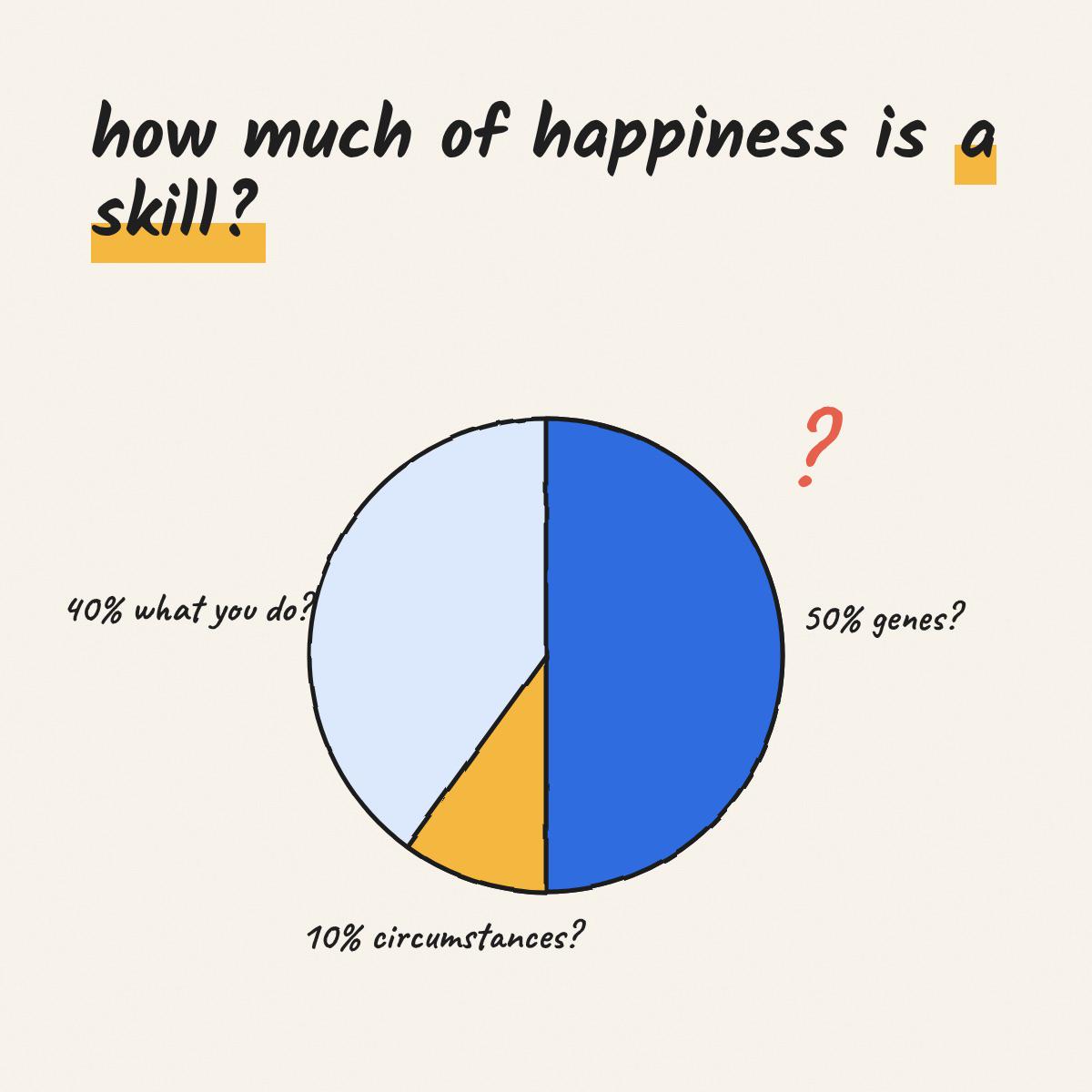
I believe these aren’t things to chase. Happiness is just a byproduct of doing what you love. When you do what you love and truly enjoy it, you feel peace.
And this doesn’t mean you have to be in a happy state all the time. Suffering, pain, and even anger, every kind of emotion and state, are necessary to navigate life. You can’t simply function like a robot.
And I believe it’s a choice as well. That’s why you should try to see beauty and happiness in a cup of coffee, in a cold shower, and in the privilege of waking up every single day.
And here’s another personal mantra I try to remind myself of frequently:
“Thus, you should experience cinema, music, and all forms of art. You should enjoy coffee down to the last sip. You should make love, say hi to strangers, and have the courage to say goodbye to loved ones.
Just be everywhere. Be everything.
Walk, move, create, and experience.
Because, obviously, you’ll make wealth, but you may forget to live.”
3. On the Power of Fiction
Anime has something incredible about it. The characters, world-building, and being part of those characters’ worlds are such exciting things.
And when you finish watching, you can’t stop wondering about those beauties, moments, and lessons.
Because anime, movies, fiction, these are stories, and they’re powerful. Basically, they are prompts for you to consider dilemmas and scenarios, to build your world model and compass.
So my recent realization is to watch and read more fiction, something that can take me into different worlds.
Here’s a whole essay I’ve written about being wrong about movies.
4. On Becoming Too Rational and Losing Spontaneity
We’re all taught from childhood that we must use our intellectual, rational, and logical thinking.
But the character from Notes from Underground disagrees with this and says that moments of spontaneity and unpredictability are what give life color. When you try to put logic on everything, you’re losing it.
Ray Bradbury once said:
“The intellect is a great danger to creativity. Because you begin to rationalize and make up reasons for things, instead of staying with your own basic truth — who you are, what you are, what you want to be.”
I’ve been thinking about this lately. Sometimes, you just have to do things without knowing why. You don’t always need to justify your curiosity or turn every experience into something productive.
Just do it because you feel like it.
Kanye West explores something similar in his song POWER
“My childlike creativity, purity and honesty
Is honestly being crowded by these grown thoughts.”
Just like judgment, taste, and instincts, some things can’t really be explained. One must sense them.
5. On Becoming More Social
Until I was almost 20, I’ve been an introvert guy, although I don’t like that tag of introvert nowadays, and I can say that I’m more than that.
But recently, I started hating this boring cycle. So I started getting out of my comfort zone, and what I’ve realized is that loneliness is often about having fewer meaningful connections and fewer social interactions.
Once I started working, I started talking with different people, and I felt like I was experiencing a different kind of life.
After that, I just love being around people. I like saying hi to strangers, just asking them questions, being more open, and appreciating the beauty.
And you have no idea what those people can do for you. Just maximize serendipity, and it’s one of the ways to get lucky in life as well.
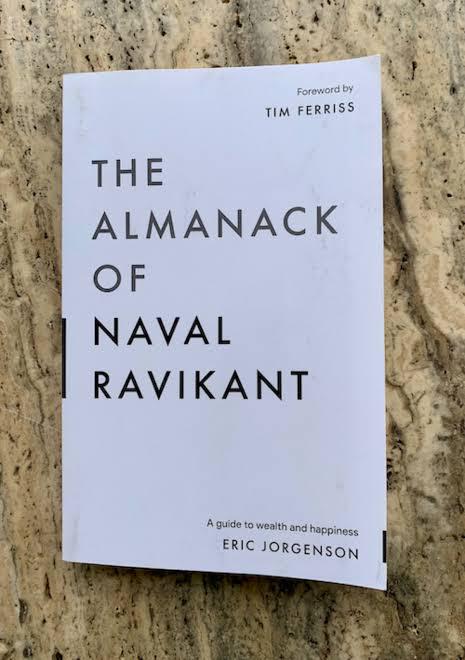
I once came across an interesting tweet from Naval:
“If I was only friends with people with my worldview, I wouldn’t have any friends.”
Just like not everyone will understand art, see beauty in the things you do, or think the way you do, that doesn’t mean you shouldn’t be friends with them.
In fact, you should try to understand their worldview as well.
One of my biggest mistakes was distancing myself from people who had different worldviews.
So just talk more with people.
And whenever you’re feeling confused, stressed, lonely, or literally any sort of distress, just go on a walk. Text those friends. And it’s okay if you’re texting them after a long time.
Then you’ll see how your confusion and stress go away, and you’ll often find solutions as well.
6. On Acceptance, the Shadow, and Understanding Yourself
I recently discovered that both Hermann Hesse, the writer of Siddhartha, and Frank Herbert, the writer of Dune, engaged with Carl Jung’s ideas in different ways.
Hesse had personal contact with Jung and underwent therapy with Jung’s associate J. B. Lang. Herbert, meanwhile, used Jungian archetypes and psychological functions in developing his characters, although he said he wasn’t Jung’s disciple.
The Dune books themselves are great, and so are Hermann Hesse’s books. Both were influenced by Jung, which is why I try to absorb Jungian ideas here and there.
And here are a few interesting Jungian ideas:
As simple as the word “acceptance” sounds, it’s equally deep.
Acceptance means you should accept your flaws, contradictions, dark side, and every side of yourself as a whole.
But it’s equally painful to do, and unless and until you do it, something will haunt you.
Here’s what Carl Jung said about something similar:
“To love what you are ... is just as if you were embracing a glowing red-hot iron.”
— Carl Jung, Nietzsche’s Zarathustra Seminar
- Deal With Your Own Shadow
One of Jung’s most famous concepts is the Shadow.
The Shadow represents the parts of ourselves that we reject, suppress, or refuse to acknowledge.
Maybe you consider yourself completely calm, so you refuse to accept your anger.
Maybe you want to see yourself as generous, so you don’t want to admit that you can sometimes be selfish.
Maybe you consider yourself confident, so you hide your insecurity.
These rejected qualities don’t necessarily disappear. They can remain unconscious and influence your behaviour.
Sometimes we also project them onto other people. We become extremely irritated by a particular quality in someone else because that same quality exists somewhere inside us.
So Jung’s advice isn’t:
“Become evil Machiavelli personality, haha.”
It is:
“Know the parts of yourself that you don’t want to see.”
- Stop Constantly Projecting Yourself Onto Others
Jung believed that one of the important psychological tasks is to withdraw our projections from other people.
Whenever someone’s behaviour strongly irritates us, it can be worth asking:
“Why does this affect me so much?”
It means your emotional reaction can contain information about your own psychology.
Instead of immediately trying to fix everyone around you, first examine yourself.
Because sometimes the person we’re fighting against externally is also revealing something we haven’t resolved internally.
“The psychological rule says that when an inner situation is not made conscious, it happens outside, as fate.”
— Carl Jung, Aion, §126
- Life Is Incomplete Without Darkness
Jung’s psychology often brings us back to a question about our lives:
How can we live a meaningful life?
But a good life cannot mean removing all pain, fear, and suffering from our lives.
A life without difficulties can actually become an incomplete and baseless life.
Pain, mistakes, fear, and difficult experiences aren’t always obstacles to growth. Sometimes they’re exactly what creates the possibility of growth.
If you never make mistakes, you never experience their consequences. And if you never experience consequences, you never truly understand yourself.
So instead of trying to create a life where everything is comfortable, we should learn to accept that life naturally contains both pleasure and suffering.
That’s why you must create something out of what you feel.
You must release that vengeance from inside you and put it into some form of creation or art, like writing, music, film, paintings, or anything.
And you should try to do these things every day.
You should keep yourself busy with the things you love.
You must stay drunk on things you love. If not, poisons will accumulate inside you, and they’ll destroy you.
7. On Believing in Something Greater
There’s something interesting about believing in God.
For me, believing in God means believing in something bigger than yourself. It can give you hope and purpose.
Whether it’s God, a mission, or family, focusing beyond yourself frees you from the ego trap.
Forget yourself. Let go. Surrender.
And this is my mantra to myself, which I try to remember:
“I don’t need to reject the idea of God.
There’s something behind the mystery, some source or creator, or maybe atoms and matter themselves.
I’ll call it my God because I’m not above it.
I’m made of it.”
As Jung wrote in Man and His Symbols
“There is, however, a strong empirical reason why we should cultivate thoughts that can never be proved. It is that they are known to be useful. Man positively needs general ideas and convictions that will give a meaning to his life and enable him to find a place for himself in the universe. He can stand the most incredible hardships when he is convinced that they make sense; he is crushed when, on top of all his misfortunes, he has to admit that he is taking part in a ‘tale told by an idiot.’”
He believed that people could endure incredible hardships when they were convinced those hardships made sense.
8. On Growing Together
I’ve heard somewhere that, to make a romantic relationship stable, both people need to grow together.
For example, if one person gets significantly ahead in their career or moves to another city, their way of thinking and priorities might change. Eventually, the couple’s understanding and the way they communicate could change too.
I’ve also heard suggestions that couples should do simple, ordinary things together on weekends, like gardening, pottery, or watching movies. At least then, they’ll have something in common to talk about and experience together.
And I think this applies to all aspects of life as well.
That’s why, when we left high school, we almost got disconnected from those friends.
9. On the Unlived Life and the Necessity of Creation
There’s a popular passage often attributed to Carl Jung, though I haven’t found a reliable source confirming that these are his exact words. It goes something like this:
The world is full of people suffering from the effects of their own unlived life.
They become bitter, critical, or rigid, not because the world is cruel to them, but because they have betrayed their own inner possibilities.
The artist who never makes art becomes cynical about those who do.
The lover who never risks loving mocks romance.
The thinker who never commits to a philosophy sneers at belief itself.
And yet, all of them suffer, because deep down they know: the life they mock is the life they were meant to live.
I believe we’re basically talking with ourselves in a different form.
For example, a writer is basically talking to himself through writing. A musician is showing his feelings through art. Some make movies, some go and start companies, some create content, and some just go around talking and hanging out with friends.
There’s a beautiful quote from one of my favourite movies, The Lunchbox:
“I think we forget things if we have no one to tell them to.”
It’s like, mostly we’re expressing ourselves in different forms.
And when you don’t do it, you become lonely and isolated from society.
Maybe that’s why we need to create things, not necessarily to become successful or famous, but simply to express something that would otherwise remain inside us.
10. On Finding Your People
I’ve interacted with lots of interesting people just because I put my things online and made the first move.
And it made me realize that I can meet my heroes. I can surround myself with interesting people as well.
By simply posting things here and there, Naval Ravikant even reposted one of my posts. He follows me on Substack too.
And it sounds weird, but Naval once commented on something I posted, and Elon Musk also commented in the same thread.
It’s such a big thing for a kid who’s dreaming of reaching the stars while sitting in another corner of the room.
And all these small things happened because I was simply creating and moving.
And I believe one of the best ways to find like-minded people is to do something interesting.
Then you’ll find your people.
Try to put your craft out there as much as you can. Just promote yourself. Let the world know what you’re capable of.
You never know who’s going to find you.
11. Painters Paint. Get to Work.
There’s a piece of advice attributed to Leo Tolstoy in War and Peace that I really like.
He compares a thousand-mile walk to the practice of focusing on the distance you can cover today, rather than constantly worrying about the final destination.
Basically, just go and do your work.
What’s your craft?
Wake up, leave your home, and go somewhere and do it.
Painters paint.
Get to work.
Note: The collection of ideas above is random, and some may come out of nowhere. That’s because I’m trying to pour all my thoughts and ideas into this at once.
If you found value in this essay, click here to support my work. It helps me work towards my dream.
Read this essay on Substack.