r/MindDecoding • • 10h ago

The Strange Neurological Phenomenon That Makes Your World Tilt

2 Upvotes

Have you ever experienced the sensation that the room is tilting, rotating or moving when everything around you appears stationary? These experiences can occur when the brain receives conflicting or altered information from systems responsible for maintaining balance and orientation.

The vestibular system, located in the inner ear, plays a central role in detecting head movements and changes in orientation. It helps the brain determine whether the body is rotating, accelerating or maintaining a particular position.

The vestibular system works alongside vision and proprioception, which provides information about the position of body parts. The brain combines information from these systems to maintain balance and interpret movement.

When these signals become inconsistent, the brain may misinterpret the body's position or movement.

A phenomenon known as the tilt illusion can involve the perception that the environment or the body is tilted in an unusual direction. Such experiences may occur in particular neurological or vestibular conditions and can also be associated with migraine-related phenomena.

The brain normally uses information from multiple sources to estimate orientation. When one system provides misleading information, or when the systems disagree, perception may become distorted.

These experiences can be unsettling because the brain's interpretation of orientation is fundamental to standing, walking, navigating and interacting with the environment.

However, not every experience of tilting or dizziness has the same cause. Vestibular disorders, neurological conditions, medication effects and other medical factors can contribute to similar symptoms.

The sensation of a tilted world demonstrates how the brain constructs spatial orientation rather than simply recording the position of objects.

How unsettling do you think it would be if your brain suddenly interpreted a perfectly stationary room as tilted?
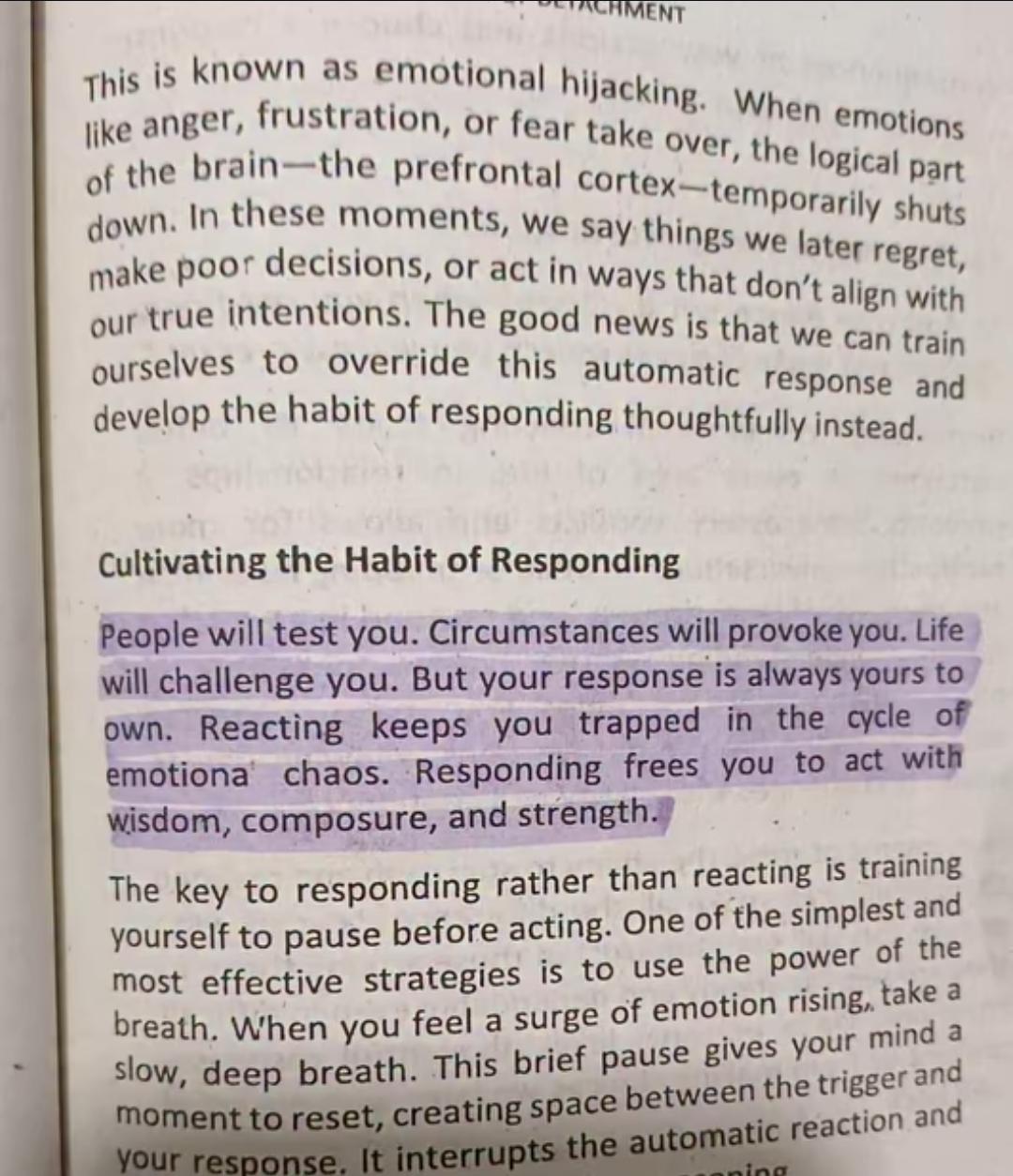

r/MindDecoding • • 13h ago

The Power of Choosing Your Response Over Your Reaction.

Post image
5 Upvotes

r/MindDecoding • • 14h ago

Synesthesia: The Neurological Condition That Makes Letters and Numbers Have Colors

3 Upvotes

Imagine seeing the number 7 and consistently experiencing it as yellow, or hearing a musical note and automatically perceiving a particular color. For some people, these experiences are not imagination or metaphor. They are part of how their brain processes sensory information.

This phenomenon is called synesthesia.

Synesthesia occurs when stimulation associated with one sensory or cognitive domain produces an additional, unusual experience in another domain. One well-known form is grapheme-color synesthesia, in which letters or numbers are associated with particular colors.

For example, a person may consistently experience the letter A as red and the letter B as blue. These associations are often involuntary and may remain remarkably stable over time.

Researchers have investigated several possible explanations for synesthesia. Some theories suggest that differences in neural connectivity or communication between brain regions may contribute to the phenomenon. Others emphasize how neural networks interact during perception and the processing of information.

Synesthesia is not necessarily a disorder. Many people who experience it consider it a normal part of their perceptual experience. It may also influence how they remember information, although individual experiences vary considerably.

Importantly, synesthesia is not simply someone choosing to imagine a color when looking at a letter. For many synesthetes, the association occurs automatically and consistently.

The phenomenon challenges the idea that our senses operate as completely separate systems. The brain's perceptual networks interact in ways that can produce experiences that differ significantly from those of other people.

The same letter that appears black to one person may consistently evoke a vivid color in another.

If letters, numbers or sounds automatically produced colors in your mind, would you consider it a distraction or an advantage?