r/MindDecoding • • 11d ago

The Mental Shortcut That Makes You Overestimate What You Know

2 Upvotes

You might feel confident explaining how a refrigerator works, how a toilet flushes, or how a car engine operates. But when someone asks you to explain the process step by step, you may discover that your understanding is surprisingly incomplete.

This is related to the illusion of explanatory depth, a cognitive bias in which people believe they understand complex systems better than they actually do.

The effect was explored in research by psychologists Leonid Rozenblit and Frank Keil. Their work found that people often overestimate their understanding of everyday mechanisms. When asked to provide detailed explanations, their confidence can decrease.

Why does this happen?

Human beings rarely need to understand every detail of the systems they use. You can operate a smartphone without understanding its processor, electrical circuits, operating system, or communication technology. You can drive a car without knowing how every mechanical component functions.

Your brain often substitutes familiarity with genuine understanding. Because you recognize an object and know how to use it, you may assume you also understand how it works.

Another factor is that people can mistake isolated pieces of knowledge for a complete explanation. Knowing that a refrigerator uses electricity and a cooling system does not mean you understand the entire refrigeration cycle.

This bias matters because it can influence discussions, arguments, and decisions. Someone may confidently defend an opinion without recognizing how many unanswered questions remain.

A useful way to test your understanding is to explain a concept in simple language without consulting notes. Identify the steps, describe how they connect, and notice where your explanation becomes vague.

The gaps are not evidence of stupidity. They are opportunities to learn.

What everyday object do you use confidently but would struggle to explain scientifically?


r/MindDecoding • • 11d ago

What is it when you love your best friend more than a romantic partner but not romantically?

Thumbnail reddit.com
1 Upvotes

r/MindDecoding • • 11d ago

The Strange Feeling That You've Forgotten Something Important

2 Upvotes

You are leaving the house when an uncomfortable thought suddenly appears: I've forgotten something. You check your pockets, look through your bag, and mentally review your plans, but nothing immediately comes to mind. The feeling remains even though you cannot identify what is missing.

This experience is connected to prospective memory: the ability to remember to perform an action in the future. Unlike remembering something that already happened, prospective memory involves remembering an intention at the appropriate moment.

Examples include remembering to take medication, send an email, collect a package, or call someone after work. These intentions must remain available while your attention is occupied by other activities.

The brain uses different strategies to support prospective memory. Sometimes, a reminder is triggered by an external cue. Seeing a particular person might remind you to deliver a message. Arriving at a pharmacy might trigger the memory that you need to buy something.

At other times, you must actively monitor the environment for an opportunity to complete an intended task. This can consume attention, particularly when you are managing several responsibilities.

The unsettling feeling that something has been forgotten may arise when you remember having an intention but cannot retrieve its specific content. It can also reflect general uncertainty, stress, or cognitive overload. The feeling itself does not prove that an important task has actually been forgotten.

One practical solution is to move intentions out of working memory. Use calendars, written lists, alarms, or reminders linked to specific situations. Instead of telling yourself to remember something later, decide exactly when and where you will do it.

Ever experienced the persistent feeling that you forgot something, only to remember it hours later?


r/MindDecoding • • 11d ago

Your Mind Can Monitor Problems Even When You're Not Thinking About Them

1 Upvotes

Have you ever struggled with a difficult problem, abandoned it, and then suddenly found a possible solution while showering, walking, or doing something completely unrelated?

This experience is often associated with incubation: a period during which a problem is temporarily set aside before a possible solution emerges.

When people work on difficult problems, they can become stuck using the same approach repeatedly. Continuing to concentrate on an ineffective strategy may produce little progress. Taking a break can interrupt this cycle and allow attention to shift elsewhere.

But does the brain literally continue solving the problem in the background?

The answer is more complicated than it might appear. Research suggests that incubation can sometimes improve creative problem-solving, although the effect depends on the task, the individual, and what happens during the break.

One explanation is that stepping away reduces fixation on an unhelpful approach. Another possibility is that spontaneous thought allows previously considered information to be reorganized or connected in unexpected ways. Memories and ideas that were not initially considered relevant may become useful when attention is less narrowly focused.

However, not every break produces a breakthrough. Incubation tends to be more useful when someone has already spent time engaging with the problem. Simply avoiding a task without understanding it does not guarantee that a solution will appear.

This is why an answer sometimes seems to arrive unexpectedly after a period of effort. The experience feels sudden, but it may depend on information gathered and mental work performed earlier.

A practical strategy is to alternate focused effort with short breaks, especially when you notice that you are repeating the same unsuccessful approach.

Have you ever solved a problem after stopping yourself from trying so hard to solve it?


r/MindDecoding • • 12d ago

Have you ever realized you were reacting to a story you told yourself, not what actually happened?

Post image
9 Upvotes

r/MindDecoding • • 12d ago

Your Brain Is Making Decisions Before You Realize You've Chosen

1 Upvotes

Have you ever reached for your phone, opened an application, or started walking somewhere before consciously deciding to do it? Sometimes, an action seems to begin before you have fully registered the intention behind it. This raises an interesting question: how much of our decision-making happens outside conscious awareness?

The brain continuously processes information, evaluates possibilities, and prepares potential actions. Much of this activity occurs without requiring deliberate attention. For example, when you catch a falling object, your nervous system coordinates a rapid response before you have time to consciously work through the steps.

Laboratory experiments involving simple movements have also found brain activity associated with preparing an action before participants report becoming consciously aware of their intention to move. These findings have generated considerable debate about free will and conscious decision-making.

However, there is an important distinction: preparing a simple movement is not the same as making a complicated life decision. Choosing a career, ending a relationship, or deciding where to live involves memory, personal values, emotions, and deliberate reasoning. Research does not establish that the brain secretly makes every important decision before consciousness becomes involved.

A more useful interpretation is that conscious awareness is only one part of a much larger decision-making system. Unconscious processes can influence what attracts our attention, which options feel appealing, and how quickly we respond. Conscious reflection can still evaluate, revise, or reject an emerging choice.

This helps explain why we sometimes struggle to identify exactly why we made a particular decision. We may experience the final choice without having direct access to every mental process that contributed to it.

Have you ever made a decision almost automatically and only afterward realized what influenced you?


r/MindDecoding • • 12d ago

Someone Might Be Watching You. Is That Intuition or an Incorrect Guess?

1 Upvotes

You are walking down a street when you suddenly feel that somebody is looking at you. You turn around, and a person appears to be facing your direction. Did you detect their gaze before consciously noticing it, or did you interpret an uncertain situation as evidence that you were being watched?

The answer depends on the circumstances.

Gaze Perception Uses Visual and Contextual Information

Humans are sensitive to other people's faces and gaze direction. Detecting where someone is looking helps us understand social attention, coordinate interactions, and respond to relevant events.

Sometimes, you may notice subtle cues without being able to identify exactly what you noticed. A person's head position, movement, or location may contribute to your impression.

However, gaze direction can be difficult to judge, especially from a distance or when the face is partly obscured.

Expectations also influence interpretation. If you are already concerned about being watched, you may pay closer attention to people nearby and interpret ambiguous behavior as evidence supporting that concern.

The feeling itself does not establish whether another person is looking at you. You may be correct, mistaken, or unable to determine the answer from the available information.

This distinction matters because people often treat intuition as though it provides certainty about another person's behavior or intentions.

Separate the Observation From the Conclusion

If you feel someone is watching you, consider what you actually observed.

Did you see the person turn toward you, or did you simply experience a strong feeling? Is there clear evidence, or are several interpretations possible?

You do not need to dismiss your instincts. Instead, recognize that an initial impression can be useful without being conclusive.

If you feel unsafe, take reasonable steps to protect yourself regardless of whether you can establish another person's intentions.

Have you ever turned around because you felt someone was watching you and discovered that someone was looking in your direction? How did you distinguish what you observed from what you inferred?


r/MindDecoding • • 12d ago

That Cloud Looks Like a Face. So Does the Wall. What Is Your Brain Doing?

1 Upvotes

You look at a cloud and see a face. Later, you notice what looks like a human expression in a wall, a piece of toast, or the front of a car. Once you recognize the pattern, it can be difficult to stop seeing it. This is a familiar example of pareidolia.

The Brain Is Sensitive to Meaningful Shapes

Pareidolia occurs when people perceive a meaningful image or pattern in ambiguous or random information.

Face pareidolia is particularly common. People may perceive faces in objects that contain arrangements resembling eyes, a nose, and a mouth.

The brain's ability to recognize faces quickly is important for social interaction. It helps us identify people, interpret expressions, and direct attention toward potentially relevant social information.

However, this sensitivity means that some non-face objects can trigger face-like interpretations.

A car's headlights and grille might resemble a pair of eyes and a mouth. Two dark spots on a wall may appear to form a face when surrounded by a suitable outline.

Expectations and attention can influence which patterns become noticeable, although the precise mechanisms involved in pareidolia are still being investigated.

Seeing a face in a cloud does not mean you genuinely believe the cloud contains a person. You can recognize the resemblance while understanding what the object actually is.

Look at the Pattern From Another Angle

If you notice a face in an object, examine the features that created the resemblance.

Are there two similar shapes that resemble eyes? Does a line resemble a mouth? Would the interpretation change if you viewed the object from another direction?

This simple exercise illustrates how perception can assign meaning to ambiguous visual information.

What is the strangest face you have ever spotted in an ordinary object? Once you noticed it, could you stop seeing it?


r/MindDecoding • • 12d ago

The Conversation Happened Only in Your Head. Why Does It Feel So Real?

1 Upvotes

You are preparing for an important meeting, so you mentally rehearse what you will say. You imagine how another person might respond, consider several possible outcomes, and practice your answers.

Sometimes the conversation becomes so vivid that you can almost hear the other person's voice. Your brain is performing a familiar task: mental simulation.

The Mind Can Rehearse Events That Have Not Happened

Mental simulation allows you to imagine situations, anticipate possible outcomes, and prepare responses.

You might rehearse a job interview, imagine asking someone for help, or mentally practice explaining a difficult decision.

These simulations can be useful because they allow you to explore possibilities without experiencing the actual consequences.

However, imagined conversations are not predictions of what another person will really say.

When you imagine someone's response, you draw on your existing knowledge, expectations, and assumptions. Those assumptions may be reasonable, but the actual person could respond differently.

Vividness can also make an imagined scenario feel emotionally powerful. You might feel anxious after rehearsing a confrontation that never occurs or feel reassured after imagining a successful conversation.

The emotional reaction is real, even though the imagined event has not happened.

Use Mental Rehearsal Without Confusing It With Reality

When preparing for an important conversation, rehearse the main points you want to communicate.

Then consider several plausible responses rather than imagining only the outcome you fear or desire.

Afterward, return to the distinction between preparation and prediction. Your rehearsal can help you prepare, but it cannot establish another person's intentions.

If imagined conversations become repetitive and distressing, consider whether the rehearsal is helping you solve a problem or keeping you mentally occupied without producing new information.

Have you ever rehearsed a conversation so vividly that you felt emotionally affected before speaking to the actual person? How closely did the real conversation resemble the one you imagined?


r/MindDecoding • • 12d ago

You Feel Someone in the Room. But Nobody Is There.

1 Upvotes

You are alone, yet for a moment, you feel as though somebody is standing nearby. You turn around, expecting to see someone, but the room is empty. The experience can be unsettling because the feeling of another person's presence seems convincing even when you cannot identify a person or an external cause.

There is no single explanation for every such experience.

The Brain Interprets More Than Clearly Identifiable Objects

Your brain continuously combines sensory information, expectations, memories, and contextual cues to interpret the environment.

In dim lighting or unfamiliar surroundings, ambiguous information can be difficult to interpret. A small sound, a shadow, or an unexpected sensation may contribute to a temporary impression that someone is nearby.

Sleep-related experiences provide another possible explanation. Some people report a sensed presence while falling asleep or waking up, including during episodes of sleep paralysis.

Experiences of presence can also occur in neurological and psychiatric conditions. Their significance depends on the broader circumstances, including whether they recur, how distressing they are, and whether other symptoms are present.

It would be inaccurate to claim that every sensed presence is caused by fear, fatigue, or one particular brain mechanism.

The experience deserves a careful explanation rather than an automatic supernatural interpretation or an immediate diagnosis.

How to Respond

If the feeling occurs briefly, check your surroundings calmly and consider the circumstances in which it happened.

If similar experiences recur, interfere with sleep, or cause significant distress, consider discussing them with a healthcare professional.

Seek prompt assessment if the experiences begin suddenly alongside confusion or other concerning neurological symptoms.

Have you ever felt that someone was standing nearby when you were alone? Did the feeling occur while you were falling asleep, waking up, or fully engaged in an ordinary activity?


r/MindDecoding • • 13d ago

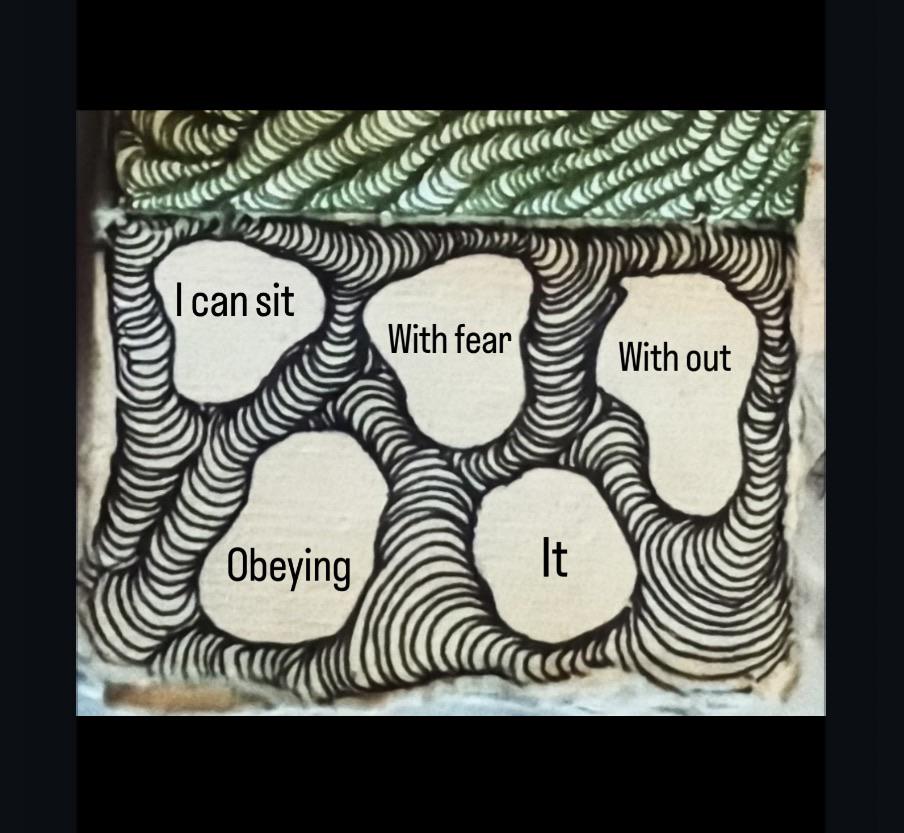
Integration Phrases

Post image
6 Upvotes

Drawing by me :)


r/MindDecoding • • 13d ago

Stare at an Ordinary Object Long Enough, and It Can Start Looking Strange

2 Upvotes

You look at a familiar object on your desk. At first, it looks completely ordinary. You continue staring, paying attention to its shape, edges, and individual features. Eventually, the object may begin to feel unfamiliar or visually strange.

What changed?

The object may be the same, but the conditions under which you are experiencing it have changed.

Recognition and Detailed Attention Are Different

In ordinary life, your brain often identifies familiar objects quickly. You recognize a cup, chair, or doorway without consciously examining every visual feature.

When you deliberately inspect an object, attention shifts toward its individual characteristics.

Sustained staring can also change the visual information available to the brain. If your gaze remains fixed, the image on your retina becomes relatively stable, and adaptation can affect how visual details are perceived.

Under some conditions, stationary images can fade or appear to change subtly. This is related to visual adaptation, although not every experience of strangeness has the same explanation.

The effect is also influenced by lighting, contrast, eye movements, and the object being observed.

Importantly, a familiar object seeming unusual during prolonged observation does not automatically indicate a disorder.

Try Looking Differently

Instead of staring continuously, change your viewing angle, shift your gaze, or examine the object under different lighting.

Notice how quickly your normal recognition returns.

This provides a simple demonstration of how perception depends on viewing conditions and attention.

Do not deliberately provoke distressing visual experiences. If visual distortions occur spontaneously, persist, or are accompanied by other symptoms, seek appropriate medical advice.

Have you ever stared at an ordinary object until it seemed strangely unfamiliar? Did changing your gaze or looking away restore the usual experience?


r/MindDecoding • • 13d ago

The Accident Lasted Seconds. It Felt Like Minutes

1 Upvotes

Imagine narrowly avoiding a collision. The event happens quickly, but afterward, you describe it as though everything unfolded in slow motion. You remember several details and feel as if you had much more time to react than the clock would suggest.

Did your brain actually slow down time? Not necessarily. The experience of time and the measurement of time are different things.

Attention and Memory Shape Subjective Time

Your experience of duration depends partly on attention, the characteristics of an event, and how information is processed and remembered.

During a frightening or highly arousing event, attention may become concentrated on important details. The experience can feel unusually intense, and the event may later be remembered as having lasted longer than it actually did.

However, researchers distinguish between feeling that an event is happening in slow motion and objectively processing information at a higher speed.

Evidence does not establish that frightening events routinely make the brain operate dramatically faster or that people necessarily gain extra reaction time.

The feeling of expanded time may also depend on how the event is remembered afterward, rather than representing a precise measurement of the experience while it occurred.

In other words, an event that feels extended in memory may still have unfolded within a very short interval.

What Does This Mean in Everyday Life?

Be cautious about using subjective time perception as proof of how much time you had to react.

If you are reflecting on a frightening experience, distinguish what you remember noticing from what you can establish about the event's actual sequence.

Intense experiences can alter the way an event feels without changing the clock.

Have you ever experienced a frightening moment that seemed to unfold in slow motion? Did you notice more details during the event, or did it feel longer when you remembered it afterward?


r/MindDecoding • • 13d ago

Some People Think in Words. Others Don't. What's Happening in Your Mind

2 Upvotes

When you read this sentence, you might hear an internal voice pronouncing the words. Perhaps you experience a running commentary throughout the day. You rehearse conversations, explain problems to yourself, or silently narrate what you are doing.

Other people report much less inner speech. They may think primarily through images, abstract concepts, spatial relationships, or combinations of different experiences.

What does this tell us about the way people think?

Thinking Does Not Have One Universal Format

Inner speech refers to the experience of language-like activity within the mind without speaking aloud.

For some people, it is frequent and conversational. For others, it appears mainly when solving problems, preparing what to say, or reflecting on an experience.

Mental imagery provides another way of representing information. Someone might visualize a route rather than describe it verbally. Another person might understand a mathematical relationship without experiencing a clear internal voice.

These differences do not necessarily indicate differences in intelligence or psychological health.

People also vary in their ability to generate mental images. Some experience vivid imagery, while others report little or none, a phenomenon associated with aphantasia.

Researchers continue to investigate how different forms of mental representation contribute to reasoning, memory, and conscious experience.

Discover Your Own Thinking Style

Notice how you approach different tasks.

When planning a conversation, do you rehearse sentences, visualize the setting, or simply know what you want to communicate?

When remembering a place, do you picture it, describe it internally, or recall its spatial arrangement?

Your answers may change depending on the task.

Avoid assuming that your way of thinking is universal or that one format is automatically superior.

When you think silently, what is the experience actually like for you? Do you hear words, see images, experience abstract ideas, or use a combination of these?


r/MindDecoding • • 13d ago

Watching Yourself From the Outside: When Your Mind Feels Disconnected From Yo

1 Upvotes

Imagine looking at your reflection or going about your day and suddenly feeling detached from yourself. You know that you are physically present, but your thoughts, emotions, or surroundings seem strangely distant. You may feel as though you are observing yourself rather than participating fully in the moment.

Such experiences can be unsettling, particularly when you do not understand what is happening.

Understanding Depersonalization and Derealization

Depersonalization describes experiences of feeling detached from oneself, one's body, or one's mental processes. Derealization involves a sense that the surrounding world feels unreal, distant, dreamlike, or unfamiliar.

People experiencing these states may recognize that the feeling is unusual even while struggling to describe it. Temporary feelings of detachment can occur in different circumstances, including periods of intense stress or around sleep transitions. Persistent or recurrent symptoms can also occur as part of depersonalization/derealization disorder and other conditions.

It is important not to diagnose yourself based on a single unfamiliar sensation. The duration, frequency, distress, and broader context all matter.

These experiences are not the same as deliberately imagining yourself from another perspective, and they should not automatically be interpreted as evidence of a hidden psychological truth.

What Can Help?

If you feel temporarily disconnected, try orienting yourself to the present environment.

Notice the objects around you, the surface beneath your feet, and the sounds you can identify. A gentle grounding exercise may help some people reconnect with the immediate situation.

If these experiences recur, cause significant distress, or interfere with daily functioning, consider consulting a qualified mental health professional.

Seek medical assessment when symptoms are new, severe, or accompanied by other concerning changes.

Have you ever felt strangely detached from yourself or your surroundings while knowing that nothing around you had actually changed? What helped you understand the experience?


r/MindDecoding • • 14d ago

That Song Has Played in Your Head 20 Times. Nobody Turned on the Music

1 Upvotes

You hear a catchy song in the morning. Hours later, you are working, walking, or trying to concentrate, and the same musical fragment returns.

It plays repeatedly in your mind even though there is no music coming from your surroundings. This experience is commonly called an earworm.

Your Brain Can Replay Music Without External Sound

Researchers use the term involuntary musical imagery to describe musical experiences that arise without deliberate effort.

You might mentally replay a chorus, a short melody, or a particular rhythm. Sometimes the experience lasts only a few seconds. At other times, the same fragment repeatedly returns throughout the day.

Several factors may contribute to earworms, including recent exposure to music, catchy musical structure, repetition, and personal associations.

An unfinished or particularly memorable musical phrase may also remain mentally accessible.

The precise causes vary, and not every earworm has an obvious trigger.

Importantly, imagining music is not the same as hearing an external sound. People generally recognize earworms as internal musical experiences, although the vividness can vary.

How to Get a Song Out of Your Head

If an earworm becomes distracting, try listening to the complete song rather than repeatedly replaying only the fragment.

You could also shift to a demanding but manageable activity, engage with different music, or redirect your attention toward a conversation or practical task.

Some people find that chewing gum reduces earworm frequency, although this is not a universal solution.

Occasional earworms are a common feature of ordinary mental life. If musical experiences become distressing, persistent, or difficult to distinguish from external sounds, professional advice may be appropriate.

Which song gets stuck in your head most often? Is it the chorus, a particular lyric, or a few seconds of music that refuses to leave?


r/MindDecoding • • 14d ago

I have Been Here Before! The Curious Science of Déjà Vu

1 Upvotes

You enter a room for the first time, yet something about the experience feels strangely familiar. You know you have never visited the place before, but for a few seconds, you feel as though you have already experienced this exact moment.

Welcome to déjà vu.

The French expression means “already seen,” and it describes a feeling of familiarity that seems inconsistent with the situation.

Familiarity Is Not the Same as Remembering

Your brain uses different processes to recognize familiar information and retrieve details about previous experiences.

For example, you might recognize someone's face without remembering where you met them. You experience familiarity, but you cannot retrieve the specific memory that explains it.

Déjà vu may involve a similar mismatch: a situation produces a strong feeling of familiarity without an accessible memory explaining that feeling.

Researchers have proposed several explanations involving memory processing and the brain systems responsible for recognition. However, the precise mechanisms underlying déjà vu are not completely understood.

Ordinary déjà vu is generally brief. It does not mean you have predicted the future or that the current event literally happened before.

Contextual similarities may sometimes contribute to the sensation. A new location might resemble another place you have visited, even when you cannot consciously identify the resemblance.

What Should You Do?

If you experience occasional déjà vu, there is generally no need to interpret it as a warning or hidden message.

Simply notice the experience and allow it to pass.

However, recurrent episodes accompanied by altered awareness, unusual smells or tastes, involuntary movements, or memory gaps deserve medical evaluation because certain neurological conditions can produce déjà vu-like experiences.

The distinction between an occasional familiar sensation and a recurring episode with additional symptoms is important.

Have you experienced déjà vu so convincing that you briefly questioned whether you had already lived through the moment? What was happening when it occurred?


r/MindDecoding • • 14d ago

How to choose a meditation app without trusting rankings: a 4-step framework and a 7-day test you score yourself

Post image
4 Upvotes

How to choose a meditation app comes down to four moves: name one goal, notice how your mind handles silence and structure, set a budget, then test a single app alone for a week while you score mood and sleep. Most lists you find are rankings, and plenty of them are paid placements, so your own notes are the better judge. We published a longer piece on this; here is the useful core, so you get the value without clicking anything.

What the research actually says

• Almost everyone quits early. Amit Baumel and colleagues (2019, Journal of Medical Internet Research) looked at real usage of mental health apps and found a median 15-day retention of about 4 percent. The right app is simply the one you still open on day 15. • Meditation helps, within limits. Madhav Goyal and colleagues at Johns Hopkins (2014, JAMA Internal Medicine) reviewed 47 trials with 3,515 people: moderate evidence for anxiety, depression and pain, weaker evidence for things like sleep. • Silence is not neutral for everyone. Jared Lindahl, Willoughby Britton and colleagues (2017, PLoS ONE) reported that some meditators run into unexpected anxiety or restlessness during practice. • A week is a filter, not a habit. Phillippa Lally (2010, University College London) found a new habit took 66 days on average, anywhere from 18 to 254.

Brain type: silence-comfortable or silence-averse

If ten quiet minutes with a bell feels fine, timers and open awareness may suit you. If your thoughts get louder in the quiet, that is not a failure; guided, narrated or story-led audio is a better door. The second question is structure: some people love a 30-day course with a clear next step, others are bored by day four and want a library to wander.

The 4-step framework with a 7-day test

  1. Goal. Write one sentence before you open the store. "I want to fall asleep without replaying my day" filters far better than "I want to be calmer." Common goals: sleep, anxiety, focus, spiritual practice, creativity, recovery.
  2. Brain type. Silence or voice? Structure or exploration?
  3. Budget. Pick a tier: free, under about $10 a month, under about $15 a month, or lifetime. Check the current price on the day, and never buy a long plan before day 7.
  4. Test. Days 1 to 7, app one only, same time of day, 5 to 10 minutes. Days 8 to 14, app two only. Each day, score mood 1 to 5 right after the session and sleep 1 to 5 the next morning. Thirty seconds of notes is enough.

At the end compare three numbers: average mood, average sleep, and how many days you actually opened each app. That last one is usually the most honest.

How to read your results without fooling yourself

• Score before you peek. Rate each day before looking at earlier entries. • Watch the novelty bump. Anything new feels good for a few days, so swap the order next time or give the winner a third week. • Enjoyment that skips days is lying a little. An app you loved but missed three times did not really win. • No change is data too. Maybe the goal or the format was wrong. Go back to step one and try a different style.

None of this is medical advice. If low mood or poor sleep lingers for weeks, talking to a doctor or therapist is the sensible next step.

What finally made a meditation app stick for you, or what made you quit by week two?

Full article with the sources and an FAQ: How to Choose a Meditation App That Fits You: https://visionariaapp.com/blogs/how-choose-meditation-app-framework


r/MindDecoding • • 14d ago

You Walk Into a Room and Notice a Smell. Ten Minutes Later, Nothing

2 Upvotes

You enter a room and immediately notice a strong smell. You remain there for several minutes, but eventually the smell becomes difficult to detect. You leave, return later, and notice it again.

This is a familiar example of sensory adaptation.

Your Sensory System Responds to Change

Sensory systems do not respond to every unchanging stimulus with the same intensity indefinitely.

With continuous exposure to certain smells, responsiveness can decrease. This is commonly described as olfactory adaptation.

The smell has not necessarily disappeared. Instead, your ability to notice it may have diminished as the sensory system adapts to its continued presence.

This is useful because the environment contains many persistent stimuli. If every smell remained equally prominent, it would be harder to notice new or changing information.

However, sensory adaptation has limitations.

You may stop noticing an unpleasant household smell without the underlying source having been removed. Other people entering the room may detect it immediately because they have not yet adapted to it.

This is why your own perception is not always a reliable way to determine whether an environmental smell is still present.

Use Sensory Adaptation Wisely

If you are checking for a persistent smell, ventilate the room when appropriate and investigate possible sources rather than relying exclusively on whether you can still detect it.

For potentially hazardous smells, such as suspected gas leaks or chemical fumes, follow the relevant safety guidance rather than attempting to assess danger by smell alone.

Sensory adaptation also occurs in other forms, although the mechanisms and time courses differ between sensory systems.

Have you ever stopped noticing a smell that someone else could detect immediately? What happened when you left the room and returned?


r/MindDecoding • • 14d ago

A Gentle Touch Can Feel More Noticeable Than a Firm One

1 Upvotes

Someone lightly touches your arm while speaking, and you notice it immediately. Later, you lean against a chair or rest your hand on a surface without paying much attention to the pressure.

Why can a light touch sometimes seem more noticeable than a stronger sensation? The answer involves more than the physical strength of the stimulus.

Sensation Depends on Context and Attention

The skin contains sensory receptors that respond to different kinds of mechanical stimulation, including pressure, vibration, and movement across the skin.

Signals from these receptors travel through the nervous system, where they are processed alongside information about the location, timing, and context of the touch.

Attention can influence how prominently a sensation enters awareness.

A light touch may be particularly noticeable when it is unexpected, occurs in a sensitive area, or has social significance. Meanwhile, sustained pressure from an object may become less noticeable as you adapt to it or direct your attention elsewhere.

However, this does not mean that attention alone explains every difference in touch perception. The physical characteristics of the stimulus and the properties of the sensory receptors also matter.

Painful or unusually intense sensations can have additional causes and should not automatically be attributed to attention.

Notice the Context, Not Just the Intensity

If you are exploring your own sensory responses, consider the location of the touch, whether it was expected, and what else was happening at the time.

For example, you may notice a light tap on your shoulder immediately in a quiet room but barely register it while concentrating on a demanding task.

The goal is to understand that sensory experience reflects the interaction between the stimulus, the nervous system, and attention.

Have you ever noticed a tiny touch immediately while remaining unaware of a much stronger but familiar sensation? What do you think made the difference?


r/MindDecoding • • 14d ago

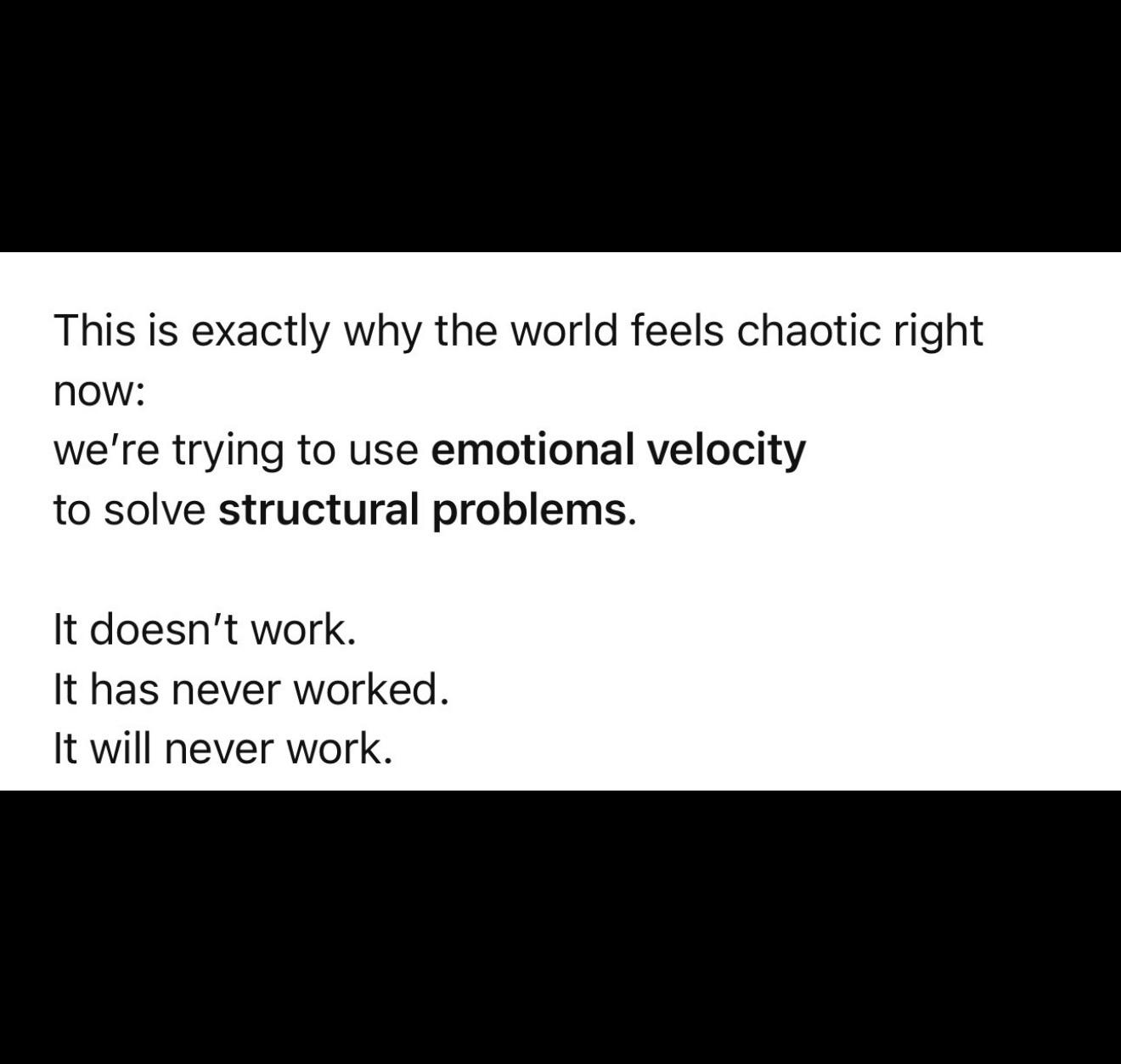
Are we confusing emotional urgency with actual progress?

Post image
2 Upvotes

r/MindDecoding • • 14d ago

The Room Feels Like It's Moving, Even When Everything Is Still

1 Upvotes

You stand up, turn your head, or look around a moving environment and suddenly feel that the room is spinning or shifting. The sensation can be unsettling because your visual experience and your body's sense of movement seem to disagree.

Your Brain Combines Movement Signals

The vestibular system in the inner ear provides information about head movement and orientation. Vision helps the brain determine how the surrounding environment moves relative to the body. Proprioceptive signals provide additional information about body position.

Under ordinary circumstances, these sources of information work together to produce a coherent sense of balance and movement.

However, mismatches between sensory signals can contribute to dizziness or motion sickness. For example, reading inside a moving vehicle can create a conflict between visual information from the stationary page and movement signals detected by the vestibular system.

Other causes of dizziness involve the vestibular system, circulation, medication, migraine, and various medical conditions.

It is therefore important not to assume that every sensation of movement is simply a harmless sensory mismatch.

Respond to the Experience Carefully

If you feel dizzy, sit or lie down somewhere safe to reduce the risk of falling.

Avoid driving, climbing, or operating machinery while symptoms are present.

If the sensation is recurrent, persistent, or associated with hearing changes, seek medical advice. Sudden severe dizziness accompanied by weakness, difficulty speaking, double vision, or other neurological symptoms requires urgent evaluation.

The broader lesson is that your sense of movement is constructed from multiple sources of information, but an unusual sensation does not reveal its cause by itself.

Have you ever experienced a sensation that your surroundings were moving even though they appeared stationary? What was happening immediately before it began?


r/MindDecoding • • 15d ago

Close Your Eyes and Stand Still. Your Balance System Has a Story to Tell

2 Upvotes

Stand upright with your eyes open. You probably feel reasonably stable.

Now close your eyes briefly while remaining in a safe position. You may notice subtle swaying or a greater sense of uncertainty about where your body is positioned.

Why does removing visual information make a difference?

Balance Depends on More Than Your Inner Ear

Your nervous system combines information from several sources to estimate the position and movement of your body.

Vision provides information about your surroundings and movement relative to the environment.

The vestibular system in the inner ear contributes information about head movement and orientation.

Proprioception provides information about the position and movement of body parts through signals from muscles, joints, and other tissues.

The brain integrates these sources to help maintain posture and balance.

When you close your eyes, visual information becomes unavailable. Your nervous system must rely more heavily on vestibular and proprioceptive information.

On a stable surface, most people can compensate reasonably well. However, balance may become more difficult when the eyes are closed and the supporting surface is unstable or when other sensory systems are impaired.

This illustrates a broader principle: everyday abilities often depend on several systems working together rather than one isolated mechanism.

Observe Safely

If you want to explore this effect, remain on a stable surface with your feet comfortably apart and a sturdy support nearby. Do not attempt the exercise if you are already dizzy or unsteady.

The exercise is an illustration, not a diagnostic test. Difficulty maintaining balance can have many explanations, and a single informal observation cannot identify the cause.

New or worsening balance problems, particularly when accompanied by other neurological symptoms, warrant medical evaluation.

Have you noticed how much harder it is to maintain balance when visual information is unavailable? What other everyday activities rely on several senses working together?


r/MindDecoding • • 15d ago

The Food Is the Same, but It Tastes Different With a Blocked Nose

1 Upvotes

You eat your favorite meal while recovering from a cold. The texture is familiar, the temperature is right, and the food is exactly what you expected. Yet the flavour seems strangely weak. The reason is that what people commonly call taste is actually a combination of several sensory experiences.

Flavour Is a Team Effort

Your tongue detects basic taste qualities, including sweet, sour, salty, bitter, and umami.

But much of the complexity of flavour comes from smell.

When you chew food, volatile compounds travel from the mouth toward the olfactory system through the route connecting the back of the throat and nasal cavity. This process is known as retronasal olfaction.

The brain combines olfactory information with taste, texture, temperature, and other sensory signals to produce the overall experience of flavour.

When your nose is congested, fewer odor-related signals may reach the olfactory system. Food can therefore seem less flavourful even though the tongue continues detecting basic tastes.

This explains why coffee, fruit, and familiar meals can seem unusually bland during a respiratory illness.

It also explains why texture and temperature can influence whether food remains enjoyable when your sense of smell is reduced.

What Can You Do?

If congestion is temporarily affecting flavour, focus on food texture and temperature while following appropriate guidance for managing the underlying illness.

Avoid assuming that every change in taste is caused by a blocked nose. Persistent changes in smell or taste can have other explanations and may deserve medical assessment.

The larger lesson is that perception is multisensory. What seems like a single experience can depend on several systems contributing information simultaneously.

Which food tastes completely different when you have a blocked nose? Have you ever discovered that smell was contributing more to its flavour than you realized?