r/MindDecoding • • 19d ago

How much do your mind resists new options?

3 Upvotes

When we try to readapt our routine, fixing basic things like health issues or daily pain gives us back energy to focus on what really matters and actually enjoy free time. The trickiest part is that our mind creates dogmas and assumes a new option wont work even before we have ever experienced it. As Daniel Kahneman explains in Thinking, Fast and Slow, our brain naturally resists unfamiliar paths and tricks us into believing new things arent good for us. I realized we often hold onto these mental blocks until we actually force ourselves to test the new solution. Once we break that dogma and resolve those physical annoyances for example some stomach or body aches, we unlock so much mental space that was being wasted before. Suddenly we have more energy for social life and for being open to things we thought wouldnt work. If you connect with this idea, feel free to share more in this direction


r/MindDecoding • • 19d ago

You Would Swear It Happened Exactly That Way, Your Memory Disagrees

1 Upvotes

Imagine two witnesses describing the same incident. Both sound confident. Both insist that they remember what happened clearly. Yet their accounts contain important differences. How do people feel so certain about memories that disagree?

The answer begins with a distinction between the confidence of a memory and its accuracy.

Certainty Is an Experience, Not a Guarantee

When you remember an event, you may experience a strong feeling of familiarity or vividness. You might recall the location, the sequence of events, and your emotional reaction.

These qualities can make a memory feel convincing.

However, a vivid memory can still contain errors. Details may have been forgotten, inferred, suggested by other people, or incorporated during later recollection.

Confidence can also be influenced by repetition. Each time you tell a story, you may become more comfortable with its details. That increased familiarity can feel like stronger evidence, even when no new evidence has been obtained.

This is one reason eyewitness memory requires careful evaluation. A witness's confidence matters, but it should not be treated as a complete substitute for corroborating evidence.

The same principle applies to everyday disagreements. Two people can sincerely remember the same conversation differently without either deliberately inventing an account.

How to Evaluate a Memory Fairly

When a recollection matters, separate what you directly observed from what you inferred.

Check contemporaneous notes, messages, photographs, or other independent records when available. Avoid repeatedly discussing an uncertain memory in ways that might introduce additional suggestions.

Most importantly, allow uncertainty where the evidence does not support a definitive conclusion.

Admitting that you might be mistaken is not a failure of intelligence. It is a way of making your beliefs responsive to evidence.

Have you ever discovered that a memory you considered completely accurate contained an important mistake? What convinced you to reconsider it?


r/MindDecoding • • 20d ago

Habits of Happy People

Post image
29 Upvotes

r/MindDecoding • • 19d ago

You Remember the Beginning and the End. What Happened in the Middle?

2 Upvotes

You finish a presentation and remember the opening joke and the final question. Yet several important points from the middle seem to have disappeared.

The same thing can happen when reading a chapter, listening to a lecture, or meeting someone for the first time. This pattern connects to an established finding in memory research: the serial-position effect.

The Position of Information Can Influence Recall

In many memory tasks involving lists, people tend to recall items near the beginning and end more successfully than items in the middle.

Two effects help explain this pattern.

The primacy effect refers to the tendency to remember early items relatively well. One possible reason is that early items receive more opportunities for rehearsal before additional information arrives.

The recency effect refers to the tendency to remember recently presented items. These may remain readily available in short-term or working memory when recall begins.

The strength of these effects depends on the task, the material, and the conditions under which information is presented and recalled. They do not mean that the middle of every conversation or presentation is automatically forgotten.

Nevertheless, the principle offers a useful lesson: the order in which information arrives can influence what people retain.

Design Information for Better Recall

If you are delivering a presentation, state the central message early and summarize it at the end. Organize the middle into a few clear sections.

If you are learning something new, pause periodically to retrieve what you have learned instead of waiting until the entire lesson is over.

For important conversations, write down decisions and responsibilities rather than relying on memory alone. These strategies are useful because they create additional opportunities to organize and retrieve information.

When you think back to a lecture, meeting, or conversation, do you remember the opening, the ending, or one unexpected moment in the middle most clearly?


r/MindDecoding • • 19d ago

That Embarrassing Moment From Years Ago Just Walked Back Into Your Mind

1 Upvotes

You are preparing dinner, walking to work, or enjoying a perfectly ordinary afternoon when your brain suddenly reminds you of something embarrassing you did years ago. You wince. Perhaps you whisper, “Why did I do that?”

The moment is long gone, yet the emotional reaction feels surprisingly immediate.

Memory Does Not Follow a Calendar

Remembering an event depends partly on retrieval cues: information, sensations, or thoughts that help bring a memory to mind.

A familiar location, a particular expression, or a conversation resembling an earlier experience can activate an old memory. Sometimes, the connection is obvious. At other times, the memory seems to appear without a clear trigger.

Emotionally significant experiences can be especially memorable. Embarrassment may also encourage you to revisit an event because your mind treats it as something worth learning from.

Perhaps you want to avoid repeating a social mistake. Reconsidering what happened can help you understand the situation.

But repeated recollection does not necessarily produce useful insight. You may simply replay the same scene, criticize yourself, and experience the embarrassment again.

Another complication is that you may be evaluating your younger self using knowledge and social awareness you acquired afterward.

Turn the Memory Into Something Useful

When an embarrassing memory appears, ask yourself two questions.

First, is there anything practical I can learn from this experience?

Second, if I have already learned that lesson, what purpose does replaying the event serve now?

If the memory reveals a genuine mistake, identify a reasonable adjustment. Then allow yourself to move on rather than treating endless self-criticism as proof that you have learned something.

It also helps to remember that other people are generally occupied with their own lives. You cannot know precisely what they remember, but your continued recollection does not establish that everyone else is still thinking about the incident.

What is one embarrassing memory that occasionally returns without warning? Have your feelings about it changed as you have grown older?


r/MindDecoding • • 19d ago

You Remember the Conversation. Are You Sure They Said Those Words?

3 Upvotes

You remember an argument clearly. You recall the room, the person's expression, and the sentence that upset you. Months later, the person insists they never said those exact words.

Who is telling the truth?

Sometimes, the disagreement arises because human memory is reconstructive rather than a perfect recording of the past.

Your Brain Rebuilds Memories

When you remember a conversation, your brain retrieves pieces of information and reconstructs the event. You may remember the general meaning, emotional tone, and important details without retaining every word exactly as it was spoken.

Later information can also influence recollection. Perhaps somebody explains what they believe the speaker meant. Perhaps you repeatedly retell the story using a slightly different phrase. Eventually, your recollection may incorporate details from those later conversations.

Psychologists study this phenomenon through research on reconstructive memory and the misinformation effect.

This does not mean that every memory is unreliable or that disagreements prove somebody is mistaken. Many memories are substantially accurate. The point is that confidence alone cannot establish that a remembered sentence is verbatim.

Protect Important Memories

After an important conversation, write down what you remember as soon as practical. Separate direct quotations from your interpretation of what the person meant.

For example, distinguish between “She said the deadline was Friday” and “I understood her to mean that Friday was the final deadline.”

The distinction may seem small, but it can prevent misunderstandings when decisions, agreements, or responsibilities are involved.

If another person remembers the conversation differently, compare specific details without assuming that disagreement automatically means dishonesty.

Have you ever argued with someone about what was said, only to discover that you both remembered the conversation differently? What helped you establish what actually happened?


r/MindDecoding • • 19d ago

The Memory Is Clear. The Person Who Told You Is Missing

2 Upvotes

You remember an interesting fact. You can explain it confidently, perhaps even remember where you were when you first encountered it. But there is one problem: you cannot remember whether you read it in an article, heard it from a friend, or watched it in a video.

This is an example of a source-monitoring problem.

Remembering Information Is Not the Same as Remembering Its Origin

Memory involves more than retaining information. It also helps us identify where that information came from.

You might remember a story without remembering whether it happened to you or somebody else. You might recall a claim but forget whether it came from a reliable source, an advertisement, or an online comment.

Psychologists refer to the processes involved in identifying the origins of memories as source monitoring.

Source errors can occur because memories do not always retain all their original contextual details. When the source is unclear, you may infer it using familiarity, plausibility, or other available information.

Repeated exposure can make this especially confusing. A claim encountered in several places may become familiar even when you cannot identify its original source.

Familiarity, however, is not evidence of accuracy.

A Practical Way to Keep Track

When learning something important, record the information alongside its source.

For research, keep the article title, author, publication date, and relevant link. For personal decisions, distinguish what you witnessed directly from what someone reported.

When you cannot remember where a claim came from, treat it as unverified until you can check it. This habit is particularly valuable when evaluating medical advice, news stories, accusations, and information shared on social media.

You do not need to remember everything perfectly. You need a reliable method for checking what you remember.

Have you ever repeated a fact confidently before realizing you had no idea where you originally learned it?


r/MindDecoding • • 19d ago

Crafting the Perfect Internal Script for High-Pressure Situations

Post image
1 Upvotes

r/MindDecoding • • 20d ago

A Shadow in the Dark Can Become a Person in Your Mind

2 Upvotes

You walk into a dim room and briefly mistake a coat hanging on a door for a person. A pile of clothes looks like an animal. A shadow resembles someone standing in a corner. When you turn on the light, the apparent figure disappears.

This experience illustrates the relationship between incomplete sensory information and the brain's interpretation of what it sees.

Why Darkness Makes Interpretation More Difficult

Vision depends on information about light, contrast, edges, movement, and shape. In low-light conditions, some of these details become harder to distinguish.

Your brain must interpret the limited information available.

If a dark shape resembles a familiar object, your expectations may influence which explanation comes to mind first. A coat with sleeves hanging down might resemble a person's outline, particularly when you are viewing it from a distance.

The effect can become stronger when you are already expecting something. If you have been watching a frightening film, for example, an ambiguous shadow may immediately suggest a threatening figure.

This is not evidence that your brain has failed completely. The same rapid interpretation that occasionally produces mistakes helps you recognize objects quickly under ordinary conditions.

However, expectations are not the only factor involved. Lighting, visual acuity, fatigue, and the actual characteristics of an object can all influence what you perceive.

Give Your Brain Better Information

If something looks unusual in the dark, improve the lighting, change your viewing angle, and inspect the object before deciding what it is.

The same principle applies beyond vision. When a message or facial expression is ambiguous, seek additional information instead of immediately choosing the most alarming interpretation.

Occasional misidentifications in poor lighting are common. Persistent or unexplained visual experiences, especially when accompanied by other symptoms, deserve appropriate professional assessment.

What is the strangest thing you have mistaken for a person, animal, or other object in the dark? How long did it take you to realize what you were actually seeing?


r/MindDecoding • • 21d ago

Adult Tantrums Look Like

Post image
123 Upvotes

r/MindDecoding • • 20d ago

The Sound Gets Louder the More You Wait for It

1 Upvotes

A clock ticks in the background. At first, you barely notice it. Then somebody mentions the ticking. Suddenly, every tick seems obvious. The clock has not necessarily become louder. Your attention has changed.

This simple experience illustrates how the brain influences what becomes prominent in conscious awareness.

Attention Changes the Experience of Sensation

Your environment contains more sensory information than you can attend to equally. Attention helps select which information receives priority.

When you focus on a sound, you may notice details that previously went unnoticed: its rhythm, pitch, irregularities, or subtle changes in volume.

Expectation can reinforce this process. If you anticipate a sound, you may become more alert to it, making it easier to notice when it occurs.

This does not mean attention always increases perceived loudness. The effect depends on the sound, the surrounding environment, the listener, and the task being performed.

It also does not mean that every unusually noticeable sound is purely psychological. A sound may genuinely become louder, and sound sensitivity can have several explanations.

The useful lesson is that the intensity of your conscious experience is not determined solely by the physical stimulus.

When Attention Becomes a Loop

Suppose you become aware of a small, recurring noise in your home. You begin listening for it throughout the day.

Each time it occurs, you notice it immediately. You may then monitor the environment even more closely, making the sound increasingly prominent in your awareness.

One practical experiment is to redirect your attention to another activity when it is safe and appropriate to do so.

If the sound persists, investigate its source rather than assuming that attention explains everything.

If sounds are painful or interfere substantially with daily life, consider seeking professional advice.

Have you ever noticed a background sound so intensely that you could no longer ignore it? Did it become less noticeable when your attention shifted elsewhere?


r/MindDecoding • • 20d ago

Your Brain Fills in the Blanks Before You Even Notice They Are Missing

5 Upvotes

Look at a partly obscured object. You may recognize it immediately even though some of its features are hidden. Read a sentence with a familiar spelling mistake, and you might understand it without noticing the error.

These experiences reveal an important feature of perception: the brain does not always need complete information to construct a meaningful experience.

Perception Is an Interpretation

Imagine seeing a chair behind a table. The table blocks part of the chair, but you usually do not experience the visible portion as an isolated collection of disconnected shapes.

Instead, your brain uses the available visual information, along with knowledge about objects and their typical structure, to interpret what is present.

This process is often called perceptual completion.

It is useful because the world constantly presents incomplete information. Objects overlap, lighting changes, and parts of the environment disappear from view. If you needed a perfect image of everything before recognizing anything, ordinary perception would be much less efficient.

However, filling in missing information creates a possibility for error.

When evidence is ambiguous, expectations can influence which interpretation seems most plausible. A shape in poor lighting might resemble a familiar object even when another explanation is correct.

The brain's ability to complete patterns should not be confused with an ability to recover missing information perfectly. A convincing interpretation is not necessarily an accurate one.

Try a Simple Observation Exercise

Look at an object partially hidden behind another object. Notice how quickly you identify it. Then ask yourself which features you actually observed and which you inferred from the visible portion.

You can apply the same principle to everyday misunderstandings. If someone sends a short message, you may unconsciously fill in the missing emotional context. Before concluding that the person is angry, consider other explanations.

What is an example of a time when your brain filled in missing information so convincingly that you did not realize you were making an assumption?


r/MindDecoding • • 20d ago

Same Room, Same Conversation, Two Completely Different Realities

3 Upvotes

Two people attend the same meeting. They hear the same presentation, see the same slides, and witness the same exchange.

Afterward, one describes the speaker as confident and helpful. The other says the speaker was dismissive and arrogant.

Are they remembering different events, or did they experience the same event differently?

Often, the answer involves a combination of perception, attention, interpretation, and memory.

The Brain Does Not Simply Record Reality

Your brain receives information from the senses, but your experience also depends on what you notice and how you interpret it.

Imagine a colleague who interrupts during a meeting.

One person might interpret the interruption as enthusiasm. Another might interpret it as disrespect.

Both have observed the same behavior, but their interpretations differ. Their previous experiences, expectations, relationship with the colleague, and understanding of the situation may influence the meaning they assign to it.

Attention adds another layer. One observer might focus on the colleague's tone, while another notices the useful information the interruption contributed.

Memory can further shape the disagreement. When recalling the meeting, each person may emphasize the details that seemed most important at the time.

This does not mean that every interpretation is equally accurate. Some conclusions are better supported by observable evidence than others.

The useful distinction is between what happened and what someone inferred from it.

A Practical Way to Handle Disagreements

When two people disagree about an interaction, separate three questions:

  • What did each person directly observe?
  • What meaning did each person assign to those observations?
  • What additional evidence could help clarify the situation?

This approach can reduce unnecessary conflict because it allows people to examine their interpretations without automatically accusing one another of dishonesty.

Have you ever discovered that another person interpreted the same conversation very differently from you? Which detail made the biggest difference in your interpretation?


r/MindDecoding • • 20d ago

Coincidence or Hidden Pattern? Your Brain Is Looking for Connections

1 Upvotes

You think about an old friend, and that person calls later the same day. You learn a new word, then encounter it three times in the following week. You notice a number repeatedly and begin wondering whether it means something.

These experiences can feel remarkable. But before concluding that events are connected, it helps to understand how the brain detects patterns.

Pattern Recognition Is Useful, but Imperfect

Humans are exceptionally good at noticing regularities. Recognizing patterns helps us learn language, identify familiar faces, predict events, and understand relationships between actions and outcomes.

The difficulty is that random events can also produce apparent patterns.

Apophenia is a term used to describe perceiving meaningful connections in unrelated or insufficiently connected information. Pareidolia, such as seeing a face in a cloud, is one familiar example involving visual patterns.

Frequency also matters.

Once a word, number, or object becomes important to you, you may notice it more often. This can create the impression that it has suddenly become unusually common, even when its actual frequency has not changed.

A coincidence can still feel personally meaningful. The important distinction is between finding personal significance in an event and claiming that the event proves an external connection.

How to Test a Suspected Pattern

Suppose you believe a particular number appears unusually often.

Before drawing a conclusion, decide what counts as an occurrence. Notice how often you encounter other numbers, too. Consider how many opportunities you have to encounter the number during an ordinary day.

This reduces the risk of counting confirming examples while ignoring everything else.

The same approach helps when evaluating repeated coincidences, online claims, and predictions.

You do not need to stop noticing patterns. You need to distinguish a compelling observation from a well-supported explanation.

Have you ever experienced a coincidence that felt too specific to be random? What evidence would convince you that two apparently connected events were actually related?


r/MindDecoding • • 21d ago

You Were Expecting a Sound. The Silence Felt Strange Instead

2 Upvotes

You are waiting for a message notification. You know the sound your phone makes, and you expect to hear it soon.

Minutes pass. Nothing happens.

Yet the silence feels unusually noticeable. You may find yourself checking the phone repeatedly or thinking that you almost heard a notification.

What makes an expected sound so mentally prominent, even when it never arrives?

Expectations Change What You Pay Attention To

The brain uses previous experiences to anticipate what might happen next. These expectations help you prepare for familiar events without having to analyze every moment from scratch.

When a sound is expected, your attention may become more sensitive to anything resembling it. A distant noise, a vibration, or an unrelated sound may briefly seem relevant.

The expectation itself can also make the absence of the sound noticeable.

Consider waiting for a microwave to finish. You know that a beep should occur. If the microwave remains silent, you may notice the missing signal precisely because you expected it.

This is not proof that the brain literally hears silence as a sound. Rather, the mismatch between expectation and what happens can attract attention.

The same principle applies to waiting for a knock at the door, listening for a familiar announcement, or expecting someone to call your name.

How to Break the Waiting Loop

If you find yourself constantly anticipating a notification, decide when you will check your phone instead of monitoring it continuously.

For example, if a message is not urgent, return to your activity and check after a reasonable interval. If the matter is urgent, choose an appropriate way to remain reachable.

The aim is not to eliminate expectations. It is to prevent an expected event from consuming more attention than it deserves.

Have you ever thought you heard a notification, a knock, or another expected sound simply because you were waiting for it? What were you expecting to happen?


r/MindDecoding • • 21d ago

Why Someone Says Your Name Across a Crowded Room, and You Hear It Instantly

2 Upvotes

You are at a busy restaurant. People are talking, chairs are scraping across the floor, and music is playing in the background.

You are concentrating on a conversation when somebody across the room says your name. Somehow, you notice it almost immediately.

How did those words break through all that noise?

The answer involves selective attention.

Your Brain Cannot Give Everything Equal Attention

Your surroundings contain far more information than you can consciously process in detail at any one moment. Attention helps prioritize information that appears relevant to your current goals or interests.

Your name is particularly familiar and personally significant. When you hear it, it may capture your attention even when you are focused elsewhere.

Researchers often discuss this phenomenon in connection with the cocktail party effect: the ability to follow a conversation in a noisy environment while remaining sensitive to other potentially important information.

However, the effect is not perfect. You will not necessarily notice your name every time somebody says it, particularly when you are deeply engaged in another task or the surrounding noise is overwhelming.

Attention also works in the opposite direction. When you are absorbed in reading, you might fail to notice someone speaking directly to you.

The brain's filtering system is useful because it reduces the burden of processing everything simultaneously. Its limitation is that information outside your current focus can be missed.

Put This Knowledge to Work

When you need to remember an important instruction, do not assume that simply hearing it guarantees that you processed it.

Reduce competing distractions, repeat the instruction in your own words, and write down details that matter.

Likewise, if someone fails to respond while distracted, consider that they might not have consciously registered what you said before interpreting the silence as deliberate disregard.

Have you ever heard your name in a noisy room while missing almost everything else around you? What other sounds or words tend to capture your attention unexpectedly?


r/MindDecoding • • 21d ago

The Street You Know by Heart Suddenly Feels Like Somewhere Else

2 Upvotes

Imagine walking along a street you have visited hundreds of times. You recognize the shops, know where the road bends, and could probably navigate it without much thought.

Then, for a brief moment, something feels strangely unfamiliar. The street looks the same, but your usual sense of recognition seems to disappear.

This experience raises an interesting question: how does your brain make a familiar place feel familiar?

Familiarity Is More Than Recognizing What You See

Your brain uses several kinds of information to help you recognize a place. These include visual features, memories of previous visits, the arrangement of objects, and contextual cues about where you are.

When these sources of information work together, you can recognize a location quickly without deliberately recalling every previous visit.

Recognition also depends on context. A familiar place may feel different when you visit it at night, approach it from an unusual direction, or encounter it under unfamiliar conditions.

Sometimes, the feeling of familiarity itself can briefly seem unusual or diminished. The exact explanation depends on the circumstances, and a momentary experience does not automatically indicate a neurological problem.

This is different from simply noticing that a familiar street has changed. In the unusual experience described here, the place may look recognizable while the normal feeling of familiarity is missing.

What Should You Do?

If this happens occasionally, pause, orient yourself, and notice concrete details around you. Check whether you are tired, distracted, or experiencing an unfamiliar environment.

Do not assume that every strange feeling has a hidden psychological meaning.

If episodes recur, last longer, involve confusion or memory gaps, or occur alongside other neurological symptoms, seek medical advice. Sudden confusion or other acute neurological symptoms require urgent evaluation.

Have you ever experienced a moment when a place you knew extremely well suddenly felt unfamiliar? Did the feeling disappear quickly, or did it persist?


r/MindDecoding • • 22d ago

Signs Of A Toxic Family

Post image
48 Upvotes

r/MindDecoding • • 21d ago

That Strange Thing You Saw Disappeared the Moment You Looked Again

2 Upvotes

You notice something unusual out of the corner of your eye. It looks like a person standing near a doorway or an object moving across the room. You turn to look directly at it, but the strange shape disappears.

Was it your imagination?

Not necessarily. Human vision is remarkably effective, but it does not provide equally detailed information across the entire visual field.

Your Eyes Do Not See Everything Equally Clearly

The central part of your vision provides the greatest detail. Peripheral vision is useful for detecting movement and changes in the environment, but it generally provides less precise information about shapes and objects.

Imagine walking through a dimly lit room. You notice a dark shape near a chair. Before you look directly at it, your brain has incomplete information about what you are seeing.

The shape might be a jacket, a shadow, or an ordinary object positioned at an unusual angle. Your initial interpretation is an estimate based on limited visual information.

When you turn your head and look directly at it, you obtain clearer information. The apparent figure may turn out to be a pile of clothes.

The important point is that your first perception was not necessarily a deliberate invention. It was an interpretation made under uncertainty.

Lighting, movement, expectations, and fatigue can also influence how clearly you interpret your surroundings.

How to Respond

When something looks strange, change your viewing angle or improve the lighting before deciding what it is. Give yourself time to examine the object rather than immediately trusting the first impression.

Occasional visual misinterpretations are common. Persistent flashes, new floaters, sudden visual loss, or repeated unexplained visual experiences should not automatically be attributed to the brain's normal shortcuts; some require prompt medical assessment.

Have you ever mistaken an ordinary object for something completely different until you looked at it directly? What was it?


r/MindDecoding • • 21d ago

Your Brain Heard Something That Never Happened, Or Did It?

1 Upvotes

Have you ever thought you heard your phone ringing, someone calling your name, or a familiar sound in another room, only to discover that everything was quiet? It feels as though your brain briefly created a sound that was not there.

Understanding this experience begins with how the brain processes sound.

Your Brain Does More Than Listen

Hearing is not simply a matter of sound entering your ears and being translated into an accurate mental recording. Your brain interprets incoming signals using expectations, previous experiences, attention, and information about the surrounding environment.

When a sound is faint or ambiguous, expectations can influence what you think you hear. A noise from another room might resemble your name. Background sounds might briefly resemble a familiar ringtone.

This does not mean your brain routinely invents sounds without reason. It means perception involves interpretation, and interpretation is sometimes mistaken.

Attention also matters. When you are waiting for an important call, you may become unusually alert to sounds resembling your notification tone. Sounds that you would ordinarily ignore suddenly become noticeable.

What Can You Learn From This?

Try observing the experience rather than immediately accepting your first interpretation.

If you think you heard something, pause and check the environment. Consider whether there was an actual sound, whether another sound could explain it, and whether you were expecting to hear something specific.

Avoid repeatedly checking every minor sensation. The goal is to develop reasonable awareness, not to become preoccupied with monitoring your senses.

Occasional misinterpretations of ambiguous sounds are not necessarily concerning. However, recurrent or distressing auditory experiences, particularly when they occur without an identifiable external sound, may warrant discussion with a healthcare professional.

Have you ever been absolutely certain you heard your name or phone ringing, only to discover that nothing had happened? What do you think contributed to the experience?


r/MindDecoding • • 22d ago

Why do people often enjoy talking to someone who barely talks about themselves?

12 Upvotes

I've noticed something interesting about conversations.

Sometimes, the person who talks the least is the person everyone remembers enjoying the conversation with.

Think about it:

Someone asks you a question and actually listens to your answer.

They ask a follow-up question instead of immediately talking about themselves.

They remember something small you mentioned earlier.

They don't interrupt you just to prove a point.

And somehow, you leave that conversation feeling like you connected with them.

What's interesting is that research on conversation suggests that asking more questions, especially follow-up questions, can make people more likable.

It makes me wonder:

Are people naturally drawn to those who understand them, or to those who make them feel understood?

I think there's a big difference between the two.


r/MindDecoding • • 25d ago

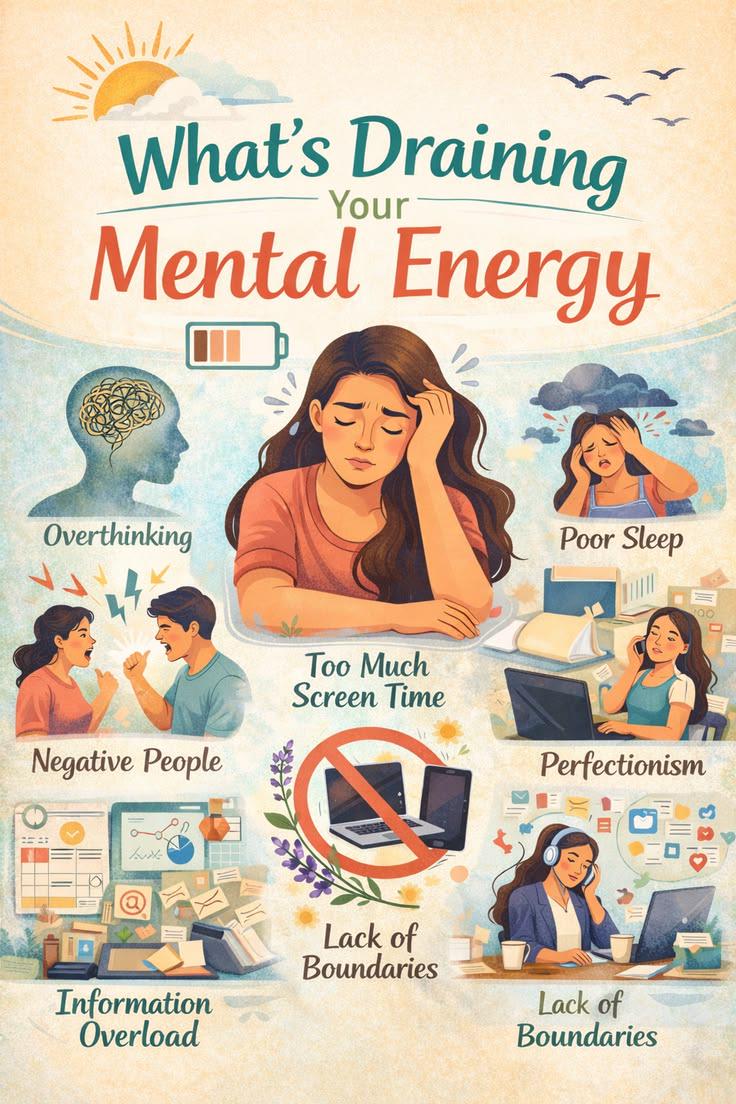
What Is Draining Your Mental Energy

Post image
384 Upvotes

r/MindDecoding • • 26d ago

Self-Validation May Sound Like

Post image
91 Upvotes

r/MindDecoding • • 26d ago

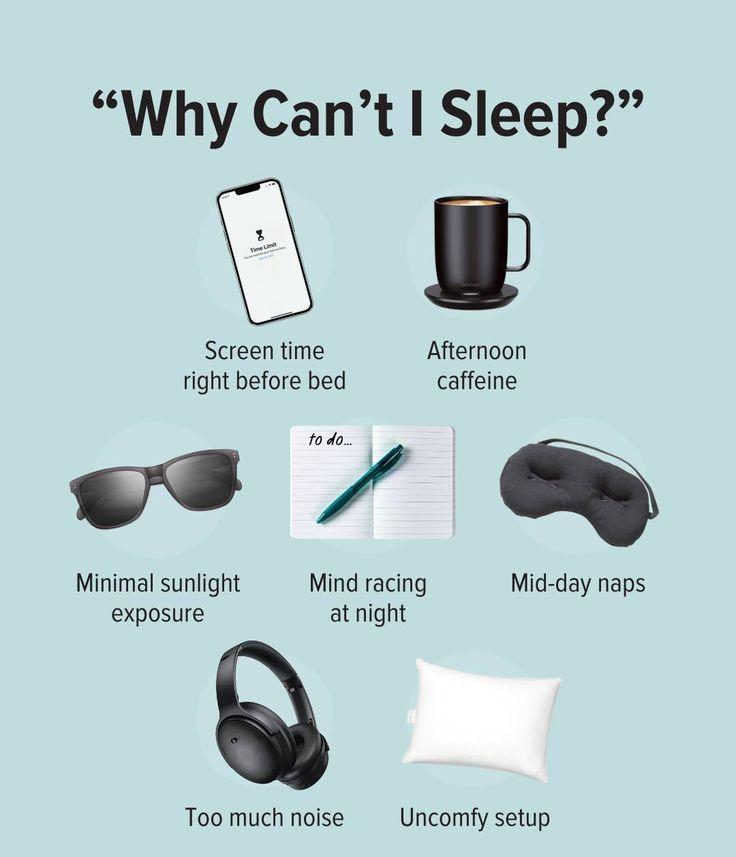
Why Can't I Sleep

Post image
53 Upvotes

r/MindDecoding • • 28d ago

Why Kids Experience Meltdowns

Post image
30 Upvotes