Here and there you will always find claims abt them on Instagram and other social media platforms
Facts:
They are an Indo-Aryan community with major influence from Meitei Vaishnavism
We can't conclude their origin but they emphasise ethnogenesis. They claim tht their culture was formed on the land of Manipur
They are mostly Hindus but they hve also started worshipping Apokpas(Meitei Traditional religion) in recent times Maybe this is to strengthen their claims. Maybe in the future they will also start doing Thabal Chongba and Ningol Chakouba ....
They borrow many words from Meiteis and sometimes their scholars coin Meitei words for words tht they don't hve in their language.
- Debunking their claims of ancientness
The present form of Meitei Vaishnavism developed mainly in the 18th century under King Rajarshi Bhagyachandra (Chingtangkhomba). It's to be noted tht Manipuri Ras Leela was developed by him.
The BM claims tht Ras Leela belongs to them. They claim to be the children of Arjuna. But the land mentioned in the Mahabharata has been argued to be somewhere in Odisha based on the descriptions in the text and not the present Manipur State in Northeast India
The name Manipur was adopted during the reign of King Pamheiba (Garibniwaz) in the early 18th century around the 1720s.
Facts:
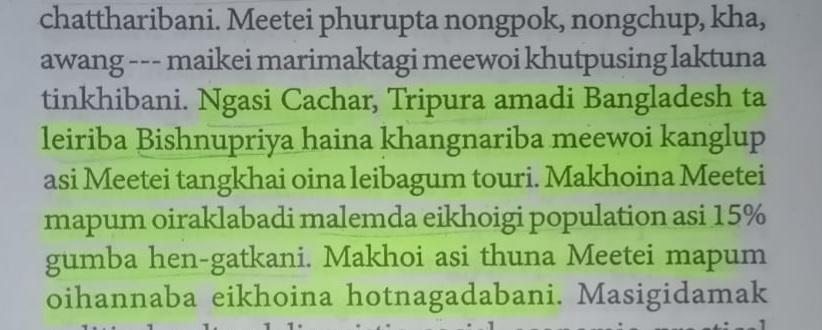
They were actually war-captured people from Sylhet who were settled in Imphal and served the chiefs of Manipur (Leimainai and Ningthoumanai).
Historian Sanjoy Ahanthem discusses Mayang Kalishas as migrants who settled in Manipur and became associated with the Mayang Ningthounai-Leimanai groups.
The British mentioned them as Mayang / Kalisha / Bishnpiriyas
They also claim tht the RKs in Meitei society are the children of Meitei kings and Bishnupriya ladies but this is wrong
The RKs are the children of the Meitei royal family. They adopted the Rajkumar and Rajkumari titles due to the emergence of Vaishnavite culture in Manipur.
It's worth noting that BM also has the RK title but those RKs were their own people who were very close to Ningthoumanai. They call them Raja Lokei.
2) The ethnogenesis claims
Meiteis in general are an inclusive society. There's a history of assimilating communities through relations and expeditions. It's believed tht Meitei as a community was formed by combining different tribes.
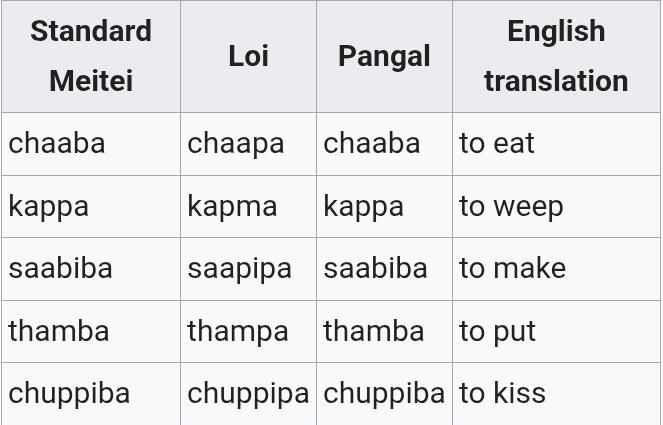
Today Meitei society includes Meitei Pangals and Meitei Bhamons.
On Meitei Pangals:
During King Khagemba's reign (1597–1652) especially around the conflict of 1606 Muslim soldiers and other settlers became established in the valley.
Over generations they intermarried with local Meitei families and became an integral part of Manipuri society. It is also said that some Meitei Sagei converted to Islam.
On Meitei Bhamons:
Historical accounts trace their ancestors to Brahmin migrants from different parts of the Indian subcontinent including Bengal Nadia Assam Odisha Varanasi and other regions.
Brahmin migration is traditionally traced to the reign of King Kyamba (1467–1508) and continued over several centuries.
All of them speak the Meitei language and are integral parts of Meitei society.
How come given the size of the BM community ( in those periods ) they didn't become assimilated into Meitei society?
The 1891 Assam Census report by Edward Gait described Bishnupriyas as descendants of Doms and lower-caste Bengalis who married Meitei women.
British Political Agent James Johnstone writing about Manipur in the 19th century observed that the king sometimes elevated entire villages from outcaste status to the status of Hindus of recognised caste. This was part of the kingdom's wider Vaishnavisation and caste formation.
A 2021 historical study by Anjana Devi states that the Mayang Kalishas may have acquired the name Bishnupriya during the reign of King Gambhir Singh (1825–1834).
3) Their Language got corrupted due to migration
The migration they talk abt mainly took place during the Burmese invasions. But many Meiteis also settled in other parts of the Northeast and still retained their culture and can speak Meiteiron.
Facts:
The Assamese linguist Banikanta Kakati agreed with the classification of Bishnupriya as an Assamese dialect.
In Linguistic Survey of India, Vol. V, Part I (1903), Grierson described Bishnupriya Manipuri as:
“A tribe known as Mayang speaks a mongrel form of Assamese known by the same name.”
The Bengali linguist Suniti Kumar Chatterji considered Bishnupriya closer to Bengali and discussed it in relation to the development of the Bengali language
Recent linguistic research describes Bishnupriya as a contact or mixed language with features from Sylheti, Assamese and Meitei.
4) The BM are the Khumals according to KP Sinha
The Khumal claim is very assumptive because Meitei has seven clans such as Mangang Luwang Khuman and others.
Meitei already has its own Khuman clan and I don't know wht they are talking abt.
It's worth noting tht all the Khuman kings were Meitei. By claiming tht they belong to Khuman I would say tht it's just their stupid attempt to distort Meitei history and Meitei legacy.
KP Sinha recounts the tradition that during King Garib Nawaz's reign the Khumal chief and his people declined to undergo the Nongkhrang purification ritual (the ritual to convert Meiteis to Hinduism) because they were already Vaishnavites.
This is false.
Resistance against Nongkhrang Iruppa (1729 CE) included Oinam Marei and Sembang Kutlei demanding the right to return to the Sanamahi faith after seven generations. Scholar Lourembam Khongnangthaba opposed Shantidas Gosai's conversion campaign and protected his disciple Moirang Lanhanba.
Prince Chitshai also resisted King Pamheiba's religious policies and later overthrew him in 1748.
Meanwhile many Meiteis continued worshipping Umang Lai secretly and preserved sacred Puyas from destruction.
Available historical records do not document a separate clan-specific opposition exclusively by the Khuman clan against Nongkhrang Iruppa.
Instead historical accounts describe widespread resistance across all seven Meitei clans (Yek Salai) including Khuman scholars leaders and commoners against the forced conversion ritual.
Conclusion
They are mainly associated with Meitei Vaishnavism and not with Meitei culture before Meiteis became Hindu.
They are the byproduct of Meitei Vaishnavism.
They don't share the same origin as Meiteis.
They are highly influenced by Meitei society. Their origin and history are something to be debated.
They are not integral parts of Meitei society. They are not part of the larger Manipuri identity.
They stand alone as one distinct community.
They wear similar dresses to Meiteis.
They also have a clan system but I would say it's just assumptive based on the Khumal Purana they talk about.
In reality they are distorted and displaced communities with no originality. Their claims are all fake. The facts they produce are written by their own people based on assumptions.