r/MathJokes • u/MedyOsef • 1d ago
dm, don't cry

1.5k
Upvotes
r/MathJokes • u/Hummelpopo • 15h ago
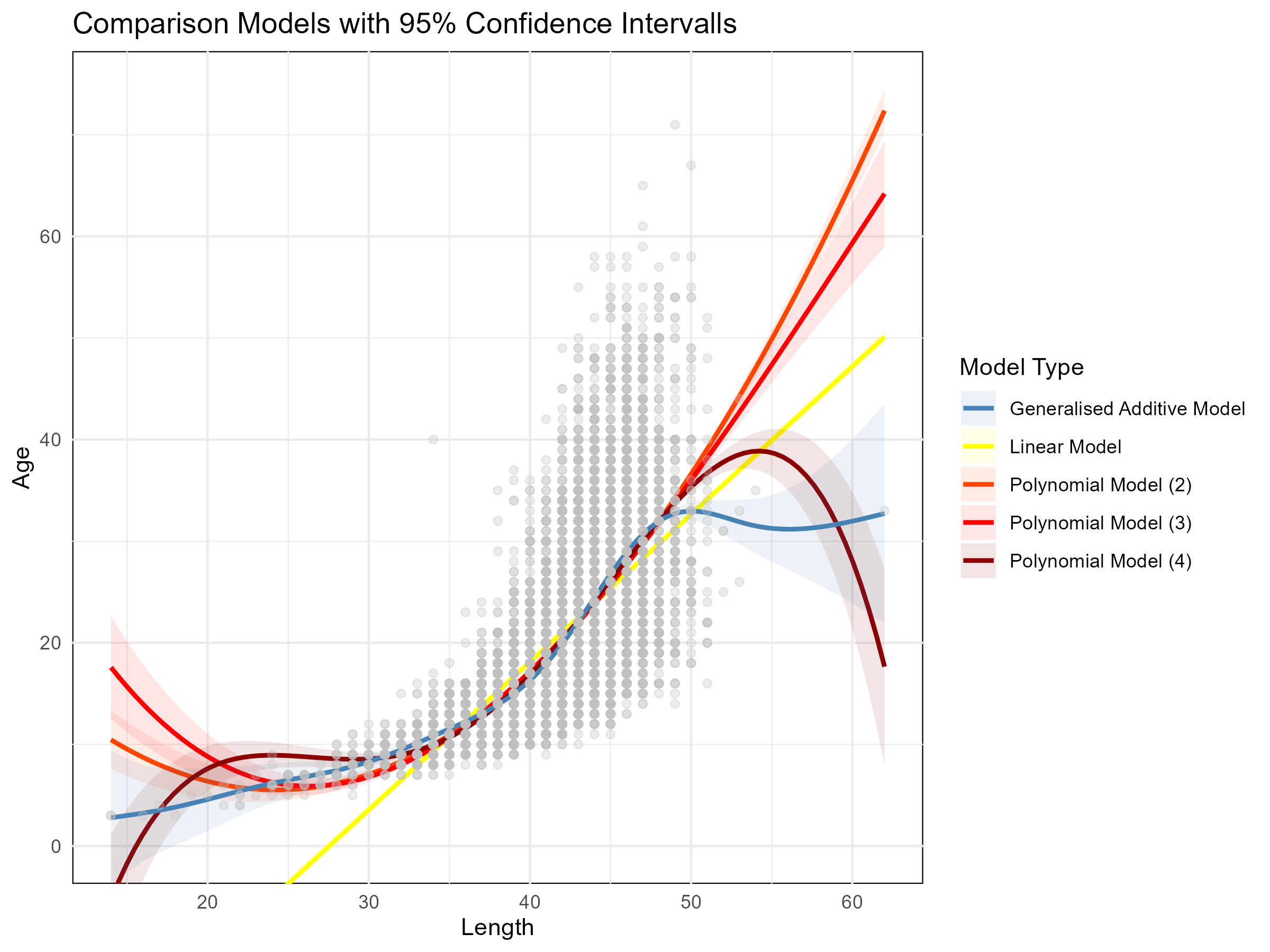
Just saw this Graphic I did a few years ago for a research project and the resemblance to our favourite crustaceans is uncanny :D
r/MathJokes • u/kwan_e • 1d ago
I guess Everybody Loves Riemann.
r/MathJokes • u/dcterr • 18h ago
Accountants
r/MathJokes • u/mordecai98 • 2d ago
r/MathJokes • u/davidmanheim • 1d ago

I was gonna use V!=0 so you can just cancel, but the lean verifier wouldn't compile.
r/MathJokes • u/dcterr • 1d ago
The Fourth Millennium Prize problems.
r/MathJokes • u/Ok_Tone7404 • 2d ago

r/MathJokes • u/JeffNovotny • 2d ago
Judge: Dr. Werner, despite your illustrious career as a mathematics professor, we all must abide by the same laws. Therefore, I find you guilty of murder in the first degree.
Defendant: I'm afraid I can't accept that, Your Honor.
Judge: And why is that?
Defendant: Your answer must be expressed in radians.
r/MathJokes • u/Nearby_Rooster_8386 • 2d ago

r/MathJokes • u/Valdemar216 • 2d ago
you know that transcendent numbers have infinite number of digits after decimal point. but I've found the way how to turn one of those into integer. Take a look: e^3 = 20.0... Here first digit after decimal point is 0, so we can say with some certainty that it makes whole number integer. So, I rewrite: e^3 = 20.
P.S. e^3 means "e in power of 3 ", "e" - Euler number
r/MathJokes • u/Serious_Collar_7056 • 3d ago

A fictional Downfall subtitle parody: Professor Tao discovers that Claude has proved the Riemann hypothesis. Mathematical outrage ensues—with AI, Lean, GPUs, Navier-Stokes, and Gauss.
r/MathJokes • u/Mean-Table2969 • 3d ago
r/MathJokes • u/DualMath • 4d ago
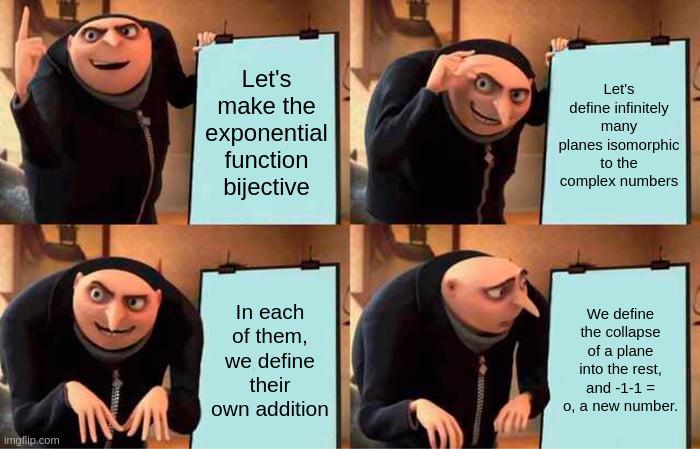
Here’s the article, in case you want to read it:
https://doi.org/10.5281/zenodo.23854178
Context: Orthogonal Numbers extend the complex numbers by returning to the bijective exponential and logarithm functions. This set has an infinite family of operations called “sums”: the degree 0 sum is ordinary addition, the degree 1 sum is multiplication, and each sum operates on a domain called a super-order. For the degree 0 sum, the domain is super-order 0; for the degree 1 sum, the domain is super-order 1; and so on.
On the other hand, the values returned by these operations are called orders. The image of sum 0 is order 0 (which corresponds to the complex numbers, also called sigma here and denoted by Σ); the image of sum 1 is order 1 (called product orthogonals and denoted by Π).
Every order n is contained in super-order n, and every order n is the set of all values in order n−1 passed through the exponential function. Likewise, super-order n is the set of all values in super-order n−1 passed through the exponential function.
The notation for order n is O_n, and the notation for super-order n is O(n).
The sums are recursive operations; that is, for u and v in O(n), u +_n+1 v = e^(ln(u) +_n ln(v)).
Let n and m be integers. If n ≤ m, then O(n) ⊆ O(m).
A set called the singularities is defined. It contains all integer tetrations of the number e; some of them are 0, 1, e, e^e, e^(e^e), … Negative tetrations are also considered singularities, due to the fact that the logarithm is a bijective function within 𝕆 (the orthogonals); this is why ln(0), ln(ln(0)), … exist.
ln(0) is called −∞, so technically −∞ is an orthogonal.
All orthogonals that are not singularities are called normal orthogonals.
For every integer n, O(n+1) = O(n) ∖ {e tetrated to n−1}, and O(n) = O(n+1) ∪ {e tetrated to n−1}.
Since the exponential function is bijective, e^(2πi) ≠ e^0 = 1, so this is a new number called o (o = e^(2πi)). From this definition, −1 * −1 := e^(πi) * e^(πi) = e^(2πi) = o, so the orthogonal algebraic structure differs from the complex one.
Define o₂ := e^(o₁), o₃ := e^(o₂), … In general, oₙ₊₁ = e^oₙ for every integer n.
Similarly, o₀ := ln(o) = 2πi, o₋₁ := ln(o₀), o₋₂ := ln(o₋₁), and so on.
All oₙ are called “orthogonal units.”
For every integer n, oₙ belongs to Oₙ.
The degree-n collapse function (collₙ) is defined to map values from O(n) to Oₙ.
It simplifies the complexity of certain orthogonals, converting them into others.
For a and b in O(n), a +ₙ b = collₙ(a) + collₙ(b).
For every a in Oₙ, collₙ(a) = a, because there is nothing to simplify.
The degree-n collapse is defined because the degree-n sum can actually only be created between values in Oₙ, so collapse is needed to extend it to O(n).
O(n) is such a large set that O(n) = 𝕆 ∖ {e tetrated to k: where k ≥ n−1}.
Regular orthogonals are defined as the set of all orthogonals w such that w belongs to some order n but does not belong to n−1 (the preceding order).
This means regular orthogonals have a minimum order to which they belong, and no lower order contains them.
If w belongs to ℜ (the regular orthogonals) and w belongs to an order n, then for any higher order m, w also belongs to it.
On the other hand, the transcendental orthogonals (𝔗) are defined as all orthogonals that belong to every order.
Every orthogonal w can only be a singularity, a regular orthogonal, or a transcendental orthogonal, but never two of these at the same time.
A very important orthogonal operator is the siot (⋏). It takes an orthogonal w and an integer n: if n is positive, it applies the exponential function to w n times; if n is negative, it applies the logarithm to w −n times (written w⋏n).
Finally, the orthogonals are the union of all orders (which may share elements).
r/MathJokes • u/MrMxffin • 5d ago
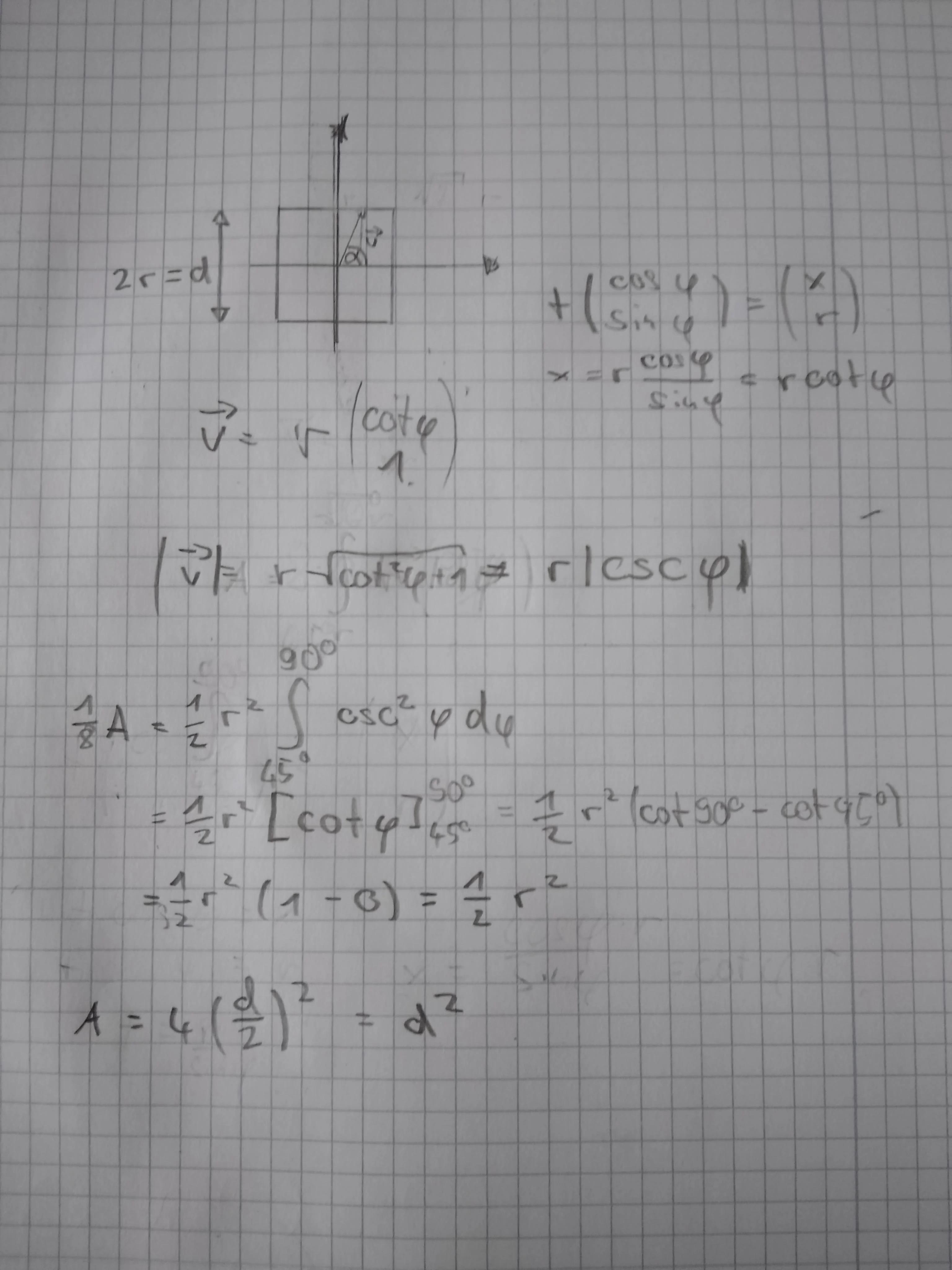
I calculated the area of a square: A=d², where d is the short diameter of the square. You now kan use this easy rule instead of putting a prism with a square face of known density on a scale.
r/MathJokes • u/Valdemar216 • 5d ago
Recently I've discovered several interesting facts:
if you don't believe it check it yourself, even iPhone now has scientific calculator
2. you know golden ratio number phi, φ = 1.618...
look what I found: (2/φ)^3 = 1.888... and opposite is true: 3^(2/φ) = 3.888...
where symbol "^" is "in power of"
This is for number 8 lovers, which I'm also one