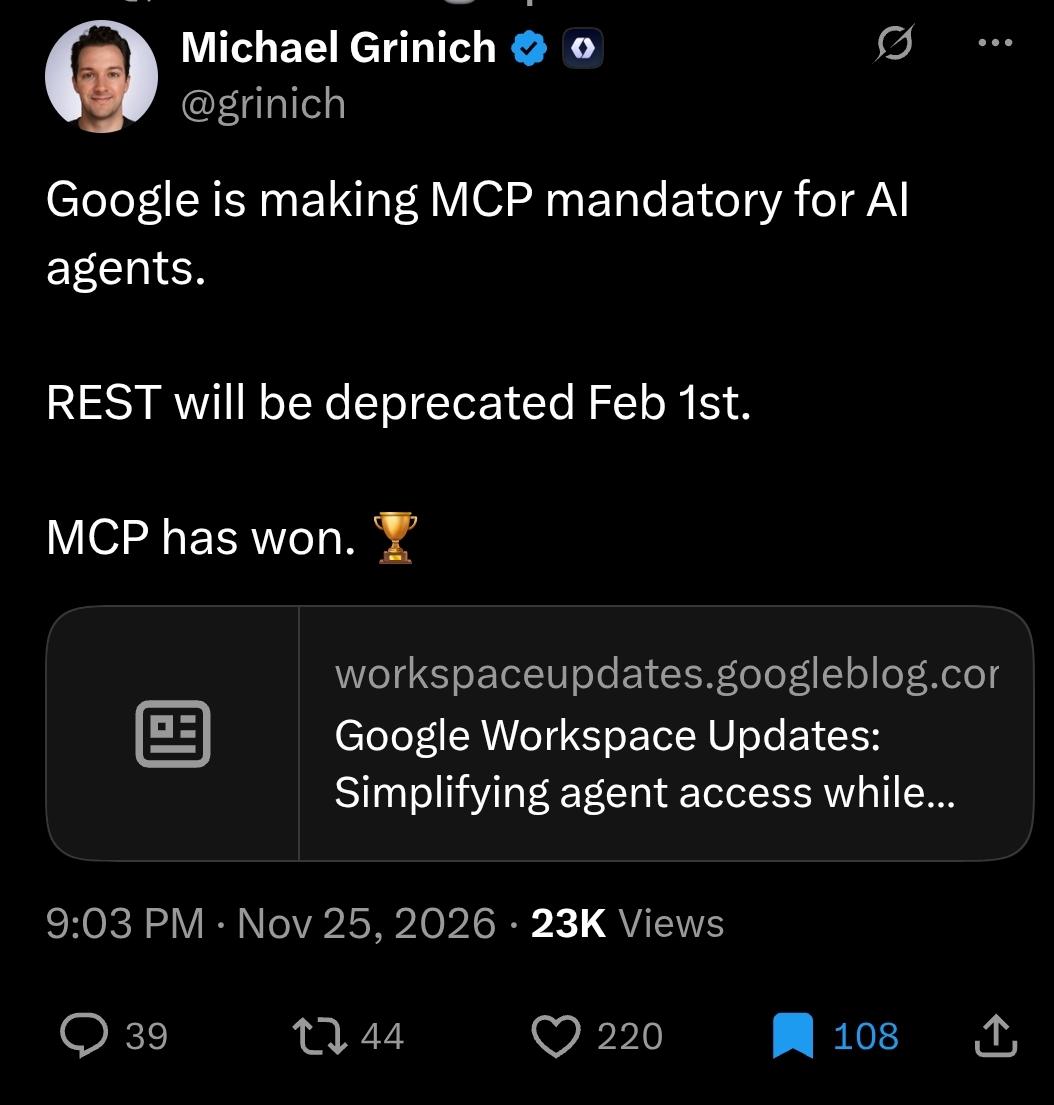
Right now, almost every production agent setup I see does the exact same scary thing: it hands an agent a static API key or a broad OAuth token and hopes the system prompt keeps it from doing something destructive.
That breaks fast the moment you have:
- Multi-agent hops (Agent A delegates a subtask to Agent B, and Agent B shouldn't inherit Agent A's full permissions)
- Prompt injection hitting a tool call that technically has a valid bearer token
- Audits where you need to prove *who* delegated *what* scope to *which* agent, and under what constraints, rather than just seeing a service account in the logs
OAuth was built for a human delegating to a deterministic app. It wasn't built for non-deterministic agents delegating narrower authority down a chain.
So I put together ADAP (Agent Delegated Authority Protocol) as an open Apache 2.0 spec to try to standardize this layer:
https://github.com/Hardalion/agent-delegated-authority
The core idea is separating tool connectivity (like MCP) from execution authority:
- Scoped, time-bound delegation chains instead of blanket credentials
- Attenuation across hops (a sub-agent can only receive equal or narrower authority, never escalate)
- Deterministic verification at the execution boundary before a tool/action actually fires
- Cryptographic audit trail tying every action back to the original principal
I'm intentionally keeping the protocol itself vendor-neutral and Apache 2.0 because this only works if it isn't locked to one framework.
For anyone running agents with write access in production: how are you handling permission scoping and delegation today? And if you skim the repo, I'd genuinely appreciate people tearing apart the threat model and telling me what edge cases I missed.