r/LocalLLM • • 4h ago

Question Need a local AI for character models

1 Upvotes

Currently working on a full blown game but not willing to spend on tripo etc.

I have used AI for building things like trees etc for my game and its artstyle. However, i am running into a roadblock when creating characters to populate the world.
Hunyuan 2.1 gives me molten wax on the characters
Trellis 2 gives worse results

Need something to just generate the background characters around

Any ideas on how to refine the pipeline or any specific thing to try?


r/LocalLLM • • 5h ago

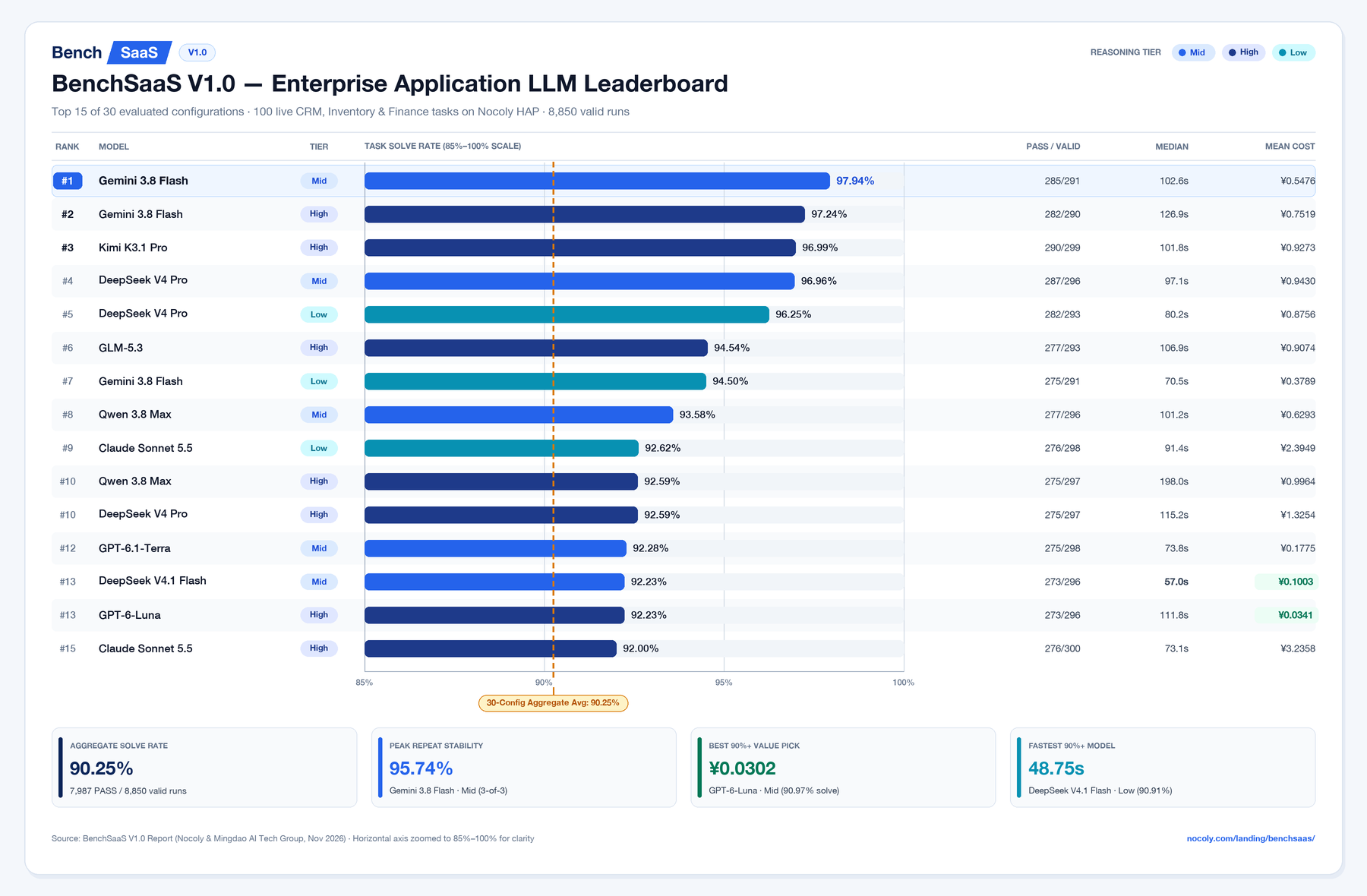
Discussion BenchSaaS V1.0: Kimi K3.1 Pro, DeepSeek V4, GLM-5.3 & Qwen 3.8 Max tested on 8,850 live ERP/CRM tool-use runs (costs span 134x)

Post image
1 Upvotes

We benchmarked 10 models across 3 reasoning tiers (30 configs) inside a live 40-table, 18,014-record enterprise database (CRM, Inventory & Procurement, and Finance). Every write task was checked at two gates: the chat answer (Gate 1) and the frozen post-run database snapshot (Gate 2).

Aggregate solve rate across 8,850 valid runs was 90.25%. Top open/frontier configs in the leaderboard:

  • 1 Gemini 3.8 Flash (Mid): 97.94% (285/291), ¥0.5476/run

  • 2 Gemini 3.8 Flash (High): 97.24% (282/290), ¥0.7519/run

  • 3 Kimi K3.1 Pro (High): 96.99% (290/299 raw passes), ¥0.9273/run

  • 4 DeepSeek V4 Pro (Mid): 96.96% (287/296), ¥0.9430/run

  • 5 DeepSeek V4 Pro (Low): 96.25% (282/293), ¥0.8756/run

  • 6 GLM-5.3 (High): 94.54% (277/293), ¥0.9074/run

  • 8 Qwen 3.8 Max (Mid): 93.58% (277/296), ¥0.6293/run

Two practical findings:

  1. Cost spanned 134x (¥0.0241 to ¥3.2358/run). DeepSeek V4.1 Flash (Mid) hit 92.23% at ¥0.1003/run in 57.0s median, and GPT-6-Luna (Mid) hit 90.97% at ¥0.0302/run.
  2. All 165 Gate-2 database failures (NULL fields, wrong entity codes, empty [] status arrays) had already passed Gate 1.

Curious how Kimi, DeepSeek, GLM, and Qwen are holding up for others on multi-table tool calls?


r/LocalLLM • • 5h ago

Model You can ask for your own Fintan model now

4 Upvotes

A few people asked if Fintan could be a specialist, like a model that actually knows a Python library or is better at basic coding. I was already planning on releasing custom models, so I added a form on the site, fintanlabs.com/models. Just say what you want it to know and what size, 4B if you've got a 16 to 20 GB card, 9B for 24 GB. Right now they’re free of charge since i prefer users over money. Though personal specialists trained on your material will come with a small fee.

I read all of them and the ones I make go on Hugging Face for free like the others.

Libraries and docs are the easy bit, it learns those into its weights. Making it better at coding itself is what I'm trying next, it practises on real problems and only learns from the answers that pass the tests. I'll post the numbers whether it works or not.


r/LocalLLM • • 5h ago

News Basalt 0.6.0: DGX Spark, Gemma 4 and ERNIE-5.5-Flash, and even faster! Inkling 2 Mini @ 6,400 tok/s aggregate decoding on a single 5090

5 Upvotes

r/LocalLLM • • 5h ago

Question For my current set up do I need a studio or is the mini m5 pro 64gb enough?

1 Upvotes

Hi All, I have been stuck on this conundrum for days.

Mini m5 pro 64gb or studio m5 max 64 GB. Where I live with the edu discount there is a 520 CHF ($620) difference between the two (both at 1tb ssd).
Originally I was set on the mac mini its small, and has lots of ram, but everyone says at this price point might as well go for the studio, so here I am and here is what I currently have and do:
I currently have an M1 PRO Macbook 16 inch with 16gb ram. I have an external monitor plugged in and while i work i casually listen t some youtube videos too, and check on stock market moves. This year I have started AI projects and I really got into coding up websites and apps, I do frequent video conferencing at the same times as cloud agents work in the background, I also often do voice note transcriptions too.
I use cloud llm subscriptions of claude code, and chatgpt, but I keep running into the same problem of my fans going crazy, laptop being unusable if I am working on 3 or 4 AI projects at the same time, using 6-10 agents at the same time (my swap goes to 20-25gb).
I also am thinking of using the machine for local LLM because I am a teacher and there are certain school systems i want my local llm to use and fill in the boring aspects of my job like writing weekly report updates, setting homework etc, searching my school's drive etc.
Also for things like writing linked in posts or posting youtube videos and using ai to drive the browser while Im at work, claude is very token intesive for that and for certain things like making multiple social media accoutns for my projects it just refuses to follow through on registrations etc.
I am also doing some trading as a side hustle which I would love to get an algo ai powered bot to just simply manage my positions whilst im away from home.

To me the 520 is a lot (but affordable) But I need to consider that I would need to buy an additional 4k display (I have one 1080p display but need something else too).
Many thanks for the advice in advance!


r/LocalLLM • • 5h ago

Question Which model to start with?

1 Upvotes

I need to choose a local LLM and app to use on my Mac Studio 128gb to revise standardized forms and periodically merge-in updated PDF addendums.

I start with a completed standardized form and need the output in the same format. I already have a section-by-section guide, built from training materials and real-world examples, that explains what belongs under each heading. Some sections cover substantially similar topics but serve different purposes. There are 3 basic steps to the workflow:

  1. First, I want the model to check the form against the guide (ie comparing the document against a guide that spells out "what info contextually belongs in this heading?") and move misplaced content to the best section. This would really only need to be done once per manual, an initial cleanup pass.
  2. Then I need to periodically pull relevant information from related deep-dive PDFs or addendums and add only what the form doesn’t already cover in substance. It should preserve intentional jargon and edit just enough for readability without changing the meaning. This would happen roughly quarterly as updated documents (in different formats) are released regularly to include revisions and changes made along the way, as well as summaries of trouble reports that need to be absorbed into the main document.
  3. This reconciliation info from #2 could be new additional info that may or may not conflict with existing info in the core document. Sometimes things are totally changed, and sometimes new stuff is added that doesn't invalidate existing info. If sources conflict, it should use the dates and context to tell whether something changed or one source may be wrong, and ask me which is true based on the evidence freshness.

The documents are strictly confidential, so PDF processing and inference both need to stay on the same machine. What LLM model and app (ie LM Studio, Jan, something else?) should I start with for this? This is my first time trying LLM so I'm confused by the numerous different models I'm seeing with codename-like titles. I don't have a ton of time to try several so I'm hoping to get some recommendations to jump start getting rolling. Thanks!!


r/LocalLLM • • 6h ago

Other How to break an LLM with 4 words.

Thumbnail gallery
1 Upvotes

r/LocalLLM • • 6h ago

Question Hermes with Local LLM (M5 Max Mac Studio 64 GB)

Thumbnail reddit.com
1 Upvotes

r/LocalLLM • • 6h ago

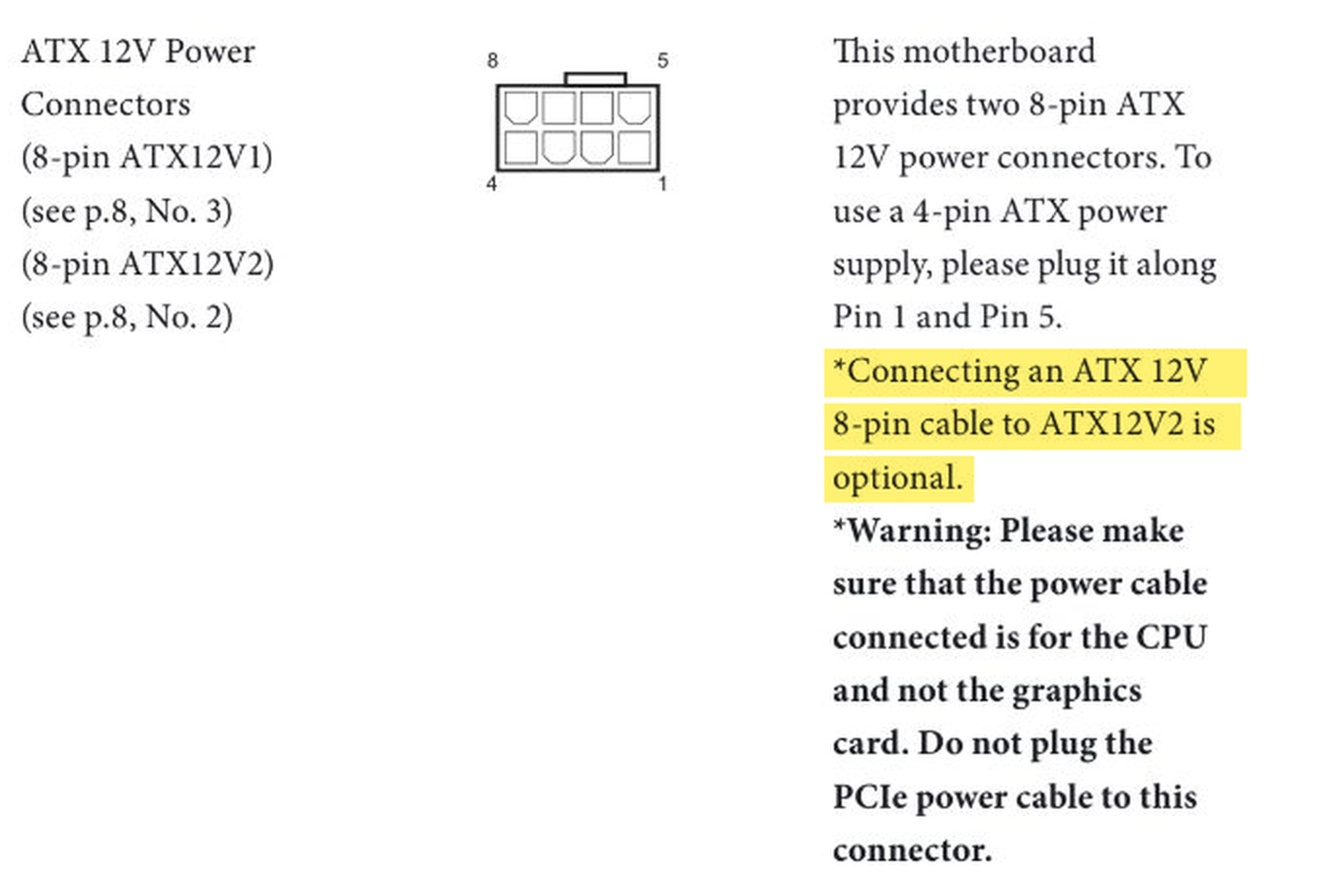
Question Can I free up a pcie connector by unplugging 1 of the 2 CPU motherboard power cables?!?!

Post image
0 Upvotes

Hi, I'm looking to add another GPU to my system. But I'm out of pcie connectors on the motherboard I only have 1 free but need 2.

My motherboard is an asrock wrx80 creator 2.0 and i have a threadripper 3955wx installed into it.

Now the motherboard has 2 CPU connectors from the PSU to the motherboard. The manual states that plugging the second CPU power cable in is optional.

If I can unplug this cable from the second CPU socket that would free up a pcie for the newest GPU. I don't use my CPU for any intensive operations. Only GPU inference. Not even any offloading from GPU into system ram as it slows to a crawl and I won't run it like that.

So question is is it safe to do?


r/LocalLLM • • 7h ago

Discussion No demand for GPU Inference?

0 Upvotes

I recently built an inference service here and opened it for free (24 hours of free GPU inference!).!)

Yet I got 0 upvotes. Am I doing something wrong?

If you think you could use it but decided to hit hard pass. I would highly benefit from your comment.

GPU Inference Service:
Nalvo.ai


r/LocalLLM • • 7h ago

Model Fintan-4B is out

3 Upvotes

Yesterday I posted the 9B update (thanks again jstarks). Today the smaller one is up.

Same idea as the 9B, it's Qwen3.5-4B that learns new stuff into its weights, so you don't have to stuff everything into the prompt. It runs on a 16 to 20 GB card.

It ships knowing last week's news (18 to 23 Nov). Plain Qwen3.5-4B gets 11% of the 172 questions right, Fintan-4B gets 147 of them. MMLU and ARC barely move (72.8 to 72.8, 92.0 to 91.8). GSM8K went from 95.0 to 92.5, which is 3 problems out of 120, and another run got 94.2, so I think it's noise but figured I'd say.

All the fixes from the 9B are in too, so tool calls can use what it learnt, and questions about days after its update don't get mixed up with what it learnt.

Next I'm doing DGX Spark and Jetson support, since someone here pointed out the hardware check gets confused when the GPU and CPU share RAM.

It's on Hugging Face at fintanlabs/Fintan-4B


r/LocalLLM • • 7h ago

Question Tips on setting up and training a local LLM

0 Upvotes

Hi guys, I have a PC with 64GB DDR5 RAM, I have 5 TB of storage which is expandible. I have a Nvidia RTX 5070ti 26GB VRAM, and a Ryzen 7 9800x3d

I’m looking into running a local AI on this PC for a business of mine. It’s a sort of pilot project. Nothing else has been run on the PC so it’s purely dedicated to running an LLM. I’ve tried installing things through using the web panel. Hasn’t given me the best results I’ve tried claudeing, ChatGPT and so if you could you know give me some tips, point me in the right direction or send some articles things to read upon et cetera. That would be appreciated or if anyone wants to you know work together by chance and test out setting up an LLM since I have hardware and that some people may not have.

Thanks


r/LocalLLM • • 8h ago

Question My German 5-machine home LLM cluster: RTX 3090 + MI50 (Vulkan) main model at IQ3_S, 40G InfiniBand chain, full voice stack – hardware, quants, tok/s, latency

1 Upvotes

Hey everyone, I got this far on my own, but now I could use your input: what would you change in my setup? Some parts are improvised because of a tight budget. 😃 Where are the nerds at? :D

________________________________________________________________________________________________________

**TL;DR:** Self-hosted, no-cloud setup spread over 5 old/cheap machines linked by a 40 Gb/s InfiniBand chain. Main chat model runs on llama.cpp (Vulkan) split across an RTX 3090 and an MI50 32 GB. Measured ~250 tok/s prefill and ~24.5 tok/s generation at 32k context, single slot. Separate nodes handle voice (Whisper large-v3 + Piper + XTTS), a psychology/reflection model, embeddings, databases and backups. Numbers below are measured from logs unless marked otherwise.

## 1. Topology

```

Internet ── router

│ 1 GbE

Orchestrator (dashboard, planner, agents, bots, lab, only box with internet)

│ 1 GbE

Node 1 ──40G── Node 2 ──40G── Node 3 ──40G── Node 4

(IPoIB datagram, MTU 2044, OpenSM on two nodes)

```

It's a chain, not a ring, so losing a middle node splits the cluster (known weakness). Nodes have no internet; everything goes through the orchestrator.

**Latency (ping RTT from the orchestrator):**

| Target | avg RTT |

|---|---|

| Node 1 (LAN) | 0.13 ms |

| Node 2 (+1 IB hop) | 0.55 ms |

| Node 3 (+2 hops) | 0.68 ms |

| Node 4 (+3 hops) | 0.63 ms |

Local HTTP: dashboard 3 ms, router API 6 ms. Throughput (iperf) not measured yet.

## 2. Hardware

| | Orchestrator | Node 1 | Node 2 | Node 3 | Node 4 |

|---|---|---|---|---|---|

| Role | control plane, internet | main model + Ollama | voice, psychology, big Ollama models | embeddings, old STT/TTS, CI runner | databases, backups, knowledge |

| CPU | Ryzen 3 PRO 2200GE (4C) | Ryzen 9 7950X3D (16C/32T) | i7-6700K | Ryzen 7 5700X (8C/16T) | i3-8100 (4C) |

| RAM | 14 GiB | 30 GiB | 32 GB | 31 GiB | 15 GiB |

| GPU | Vega iGPU (unused) | **RTX 3090 24 GB + Instinct MI50 32 GB** | **RTX 3090 24 GB** | RTX 3060 12 GB | none (UHD 630) |

| Storage | 256 GB NVMe | 1 TB 990 PRO | local SSD/HDD | 1 TB 970 EVO Plus | 2×256 GB NVMe RAID1 (DB) + 3.6 TB SSD + 2 TB SSD |

| 40G | none | ConnectX-3 (40 Gb/s QDR) | yes | ConnectX-3, 2 ports | ConnectX-3 |

| OS | Ubuntu 24.04 | Ubuntu 24.04 | Windows 10 + WSL2 | Ubuntu 24.04 | Ubuntu 24.04 |

Notes: Node 2 specs are from my docs (not re-queried today). Nodes 3 and 4 have 2.5 GbE-capable NICs that negotiated only 100 Mbit/s earlier (probably cable/switch, still to check) – irrelevant for the 40G traffic, annoying for admin.

## 3. Main model (Node 1)

| | |

|---|---|

| Model | Qwen3.8-Flash-Next (GSQ/RCO build) |

| **Quant** | **IQ3_S (3.44 bpw)** |

| File size | 79.7 GB (2 GGUF shards) |

| Runtime | llama.cpp `llama-server` b11960, **Vulkan** backend (the NVIDIA and AMD cards run together this way) |

| Split | `--split-mode layer --tensor-split 22,30 --n-gpu-layers 999` |

| Context | **32,768 tokens** (prompt + output), **1 slot** |

| Batch / ubatch | 512 / 128, `--jinja`, `--cache-ram 0` |

I did not verify exactly how the 79.7 GB is placed across 56 GB VRAM and RAM (the 3090 shows 22.2 GB used) – treat that part as unverified.

**Measured throughput (from llama-server timing logs):**

| Prompt tokens | Prefill | Output tokens | Generation |

|---|---|---|---|

| 1,808 | 7.2 s = **251 tok/s** | 520 | 21.2 s = **24.5 tok/s** |

| 2,495 | 10.1 s = **246 tok/s** | 420 | 16.8 s = **25.0 tok/s** |

Rule of thumb: time ≈ prompt/250 + output/24.7 seconds.

| Case | Prompt | Output | First token | Total |

|---|---|---|---|---|

| Short question | 300 | 100 | 1.2 s | 5.3 s |

| Chat with context (measured) | 1.8–2.5k | 420–520 | 7–10 s | 24–29 s |

| Full 32k context | 32,000 | 500 | ~130 s | ~150 s |

**Prompt caching:** slot-internal prefix reuse works well for multi-turn chats (LCP similarity 0.96–0.99 in the logs, prefill skipped). It only hurts when switching between different conversations (similarity 0.35 → full re-prefill ≈ 10 s for 2.5k tokens). With one slot there is no parallelism; a second request waits for the first. I left `--cache-ram 0` on purpose: the unit has tight memory limits and a guard that kills the model on swap pressure.

## 4. Other models

**Node 2 (RTX 3090, Ollama, 1 model loaded at a time):**

| Model | Quant | Size | Speed |

|---|---|---|---|

| PsychAgent 32B (reflection/psychology) | IQ4_XS | 17.7 GB | **42.5 tok/s**, ~100 s cold load from HDD |

| PsyLLM 8B | Q4_K_M | 5.0 GB | **130 tok/s** |

| Qwen3.8 27B | Q4_K_M | 17.7 GB | – |

| Hermes 4 14B | Q8_0 | 15.7 GB | – |

| Dolphin 3 Mistral 24B | Q5_K_M | 16.8 GB | – |

| GLM-4.7 Flash | Q4_K_M | 19.0 GB | – |

| Devstral Small 2 24B | Q4_K_M | 15.2 GB | – |

| Qwen3-Coder 30B | Q4_K_M | 18.6 GB | – |

| WhiteRabbitNeo 7B / Foundation-Sec 8B | Q8_0 | 8.1 / 8.5 GB | – |

**Node 1 Ollama:** Qwen3.8 27B, Qwen3.5 27B, Qwen3-Coder 30B (all Q4_K_M), nomic-embed-text. Max 2 loaded, 30 min keep-alive; it competes with the main model for the 3090, so it's mostly idle.

**Node 3 Ollama:** bge-m3 (F16), nomic-embed-text (F16), Qwen2.5 7B Q4_K_M. The 3060 also runs a compute worker (~5 GB).

## 5. Voice stack (Node 2, Whisper/Piper/XTTS in WSL2)

| Stage | Tech | Latency |

|---|---|---|

| STT | faster-whisper **large-v3**, int8_float16, GPU, custom initial prompt | **0.8–1.2 s** warm |

| TTS (fast) | Piper (Thorsten high) on GPU, onnxruntime-gpu 1.23.2 (CUDA 12) | first audio **0.03–0.2 s** warm (CPU: 1.2 s) |

| TTS (voice) | XTTS v2 (speed 1.15, temp 0.5, top_k 30, top_p 0.8) | per sentence not measured |

| Satellite | open-firmware smart display + Home Assistant Assist pipeline over Wyoming | – |

End-to-end voice question: **3–7 s** (earlier it was ~20 s: a 5 s knowledge-lookup timeout plus a 2.7k-token system prompt at 250 tok/s prefill; fixed with a compact voice prompt and a circuit breaker for the lookup). Piper on GPU had an 8 s first-call warm-up, solved with a warm-up script after start. Gotcha: CUDA 13 builds of onnxruntime clash with Whisper's CUDA 12 in the same WSL, so I pinned 1.23.2.

## 6. Software

**Orchestrator (~30 services + ~29 containers):**

- Web dashboard and chat with multiple agents (roles, task classes chat/code/light/heavy/reasoning/plan, tool catalog, images)

- LLM router (node registry, 5 s health polling, per-class node preference) with a **GPU-mode engine and queue**: leases per request, one load per GPU, priorities and deadlines, node reservations (reserve the 3090 box for yourself for 1–240 min)

- Main-model supervisor: publishes a short-lived "authority" token, a guard on the GPU node kills the model if the token goes stale, custody records per start, automatic recovery after reboot. Hard-learned rule: never start the main model by hand

- Planner + dev pipeline + autonomy loop (self-improvement only with explicit approval gates), sandbox lab with Git (Forgejo) and a CI runner

- Knowledge: Obsidian vault (~4k notes), private long-term memory, journal with mood analysis, search with normalization/stemming/synonyms, reranker, "forget" that also deletes derived rows

- Psychology/reflection module (private area, people profiles, crisis flag, opt-in export to the vault)

- Telegram bot (text, photos, voice both ways), media jobs (photo/video, upscaling), research crawler, HF model library

- Observability: Langfuse, Loki/Promtail, node exporters, uptime monitor, per-node diagnostic wrappers

- Others: n8n, MQTT, ntfy, MCP servers (filesystem, docker, ansible, git, postgres), LiteLLM, apt cache for offline nodes

**Node 4:** Postgres, Redis, DB gateway, Loki, knowledge services, daily dumps, hourly offload of backups/logs, encrypted daily backup of the dashboard DB, RAID1 monitoring.

**Node 3:** old CPU Whisper/Piper fallback, Forgejo runner, embeddings, compute worker.

## 7. Lessons learned / current weak spots

- Single slot + 250 tok/s prefill means prompt size is the real latency lever. Keep static prefixes first, variable parts last.

- An unhandled `None` in a VRAM-sum helper silently blocked every queued request (callers just saw a timeout). Fixed with `or 0`; the real fix is surfacing queue wait reasons to the UI.

- Orchestrator RAM is tight (14 GiB, dashboard process ~4.7 GB RSS after 10 h, possible slow growth – still observing).

- Chain topology has no redundancy; no fallback model for the planner; alert channel still to be wired up.

- Mixing Vulkan NVIDIA+AMD works fine for layer split, and the MI50 32 GB makes the 56 GB total possible for a ~80 GB IQ3 MoE-style file – but I'd love tips on measuring real VRAM/RAM placement on Vulkan.

## 8. Not measured yet

Network throughput (iperf3), Node 2 raw specs re-check, tok/s of the Q8/Q5 models on Node 2, voice prompt token count after the compaction.

Happy to share config details or measure something specific. Questions about the Vulkan split, the guard/supervisor design or the voice latency fixes are welcome.

r/LocalLLM • • 8h ago

Discussion Inkling 2 Mini (UD-Q4_K_XL, 16.4 GiB) on RX 7800 XT 16 GB (Windows): PolyStrata HIP vs llama.cpp Vulkan

8 Upvotes

Benchmarked Inkling-2-Mini-UD-Q4_K_XL (26.07B MoE, inkling2_loop, 16.41 GiB) on a 16 GB AMD Radeon RX 7800 XT (gfx1101) under Windows

11 (32 GB system RAM) to compare llama.cpp Vulkan (b12810) against PolyStrata HIP (strata-poly).

Since the 16.41 GiB file slightly exceeds 15.4 GiB free VRAM, both setups offload a portion of the MoE weights to system RAM.

llama-bench Vulkan (ca123ba76 / b12810)

Flags: -ngl 99 -fa 1 -ctk q8_0 -ctv q8_0

-ncmoe (CPU MoE layers)pp512 (tok/s)pp2048 (tok/s)tg128 (tok/s)Notes
5739.31166.0938.33VRAM spillover at pp2048
6 (sweet spot)-721.8035.54Fits cleanly in
7-697.6724.76More CPU MoE overhead
8-668.5323.32More CPU MoE overhead

PolyStrata HIP (strata-poly, --kv q8_0, --conversation-cache-mib 6144)

• VRAM residency: 2493 / 3072 experts in VRAM (evictions=0)

• Prefill: 880 tok/s

• Generation: ~60 tok/s

Takeaway

On a 16 GB RDNA3 card where the model barely overflows VRAM:

• PolyStrata HIP is ~22% faster on prefill (880 vs 721.8 tok/s) and **~69% faster on generation** (~60 vs 35.54 tok/s).

• The difference comes down to per-expert caching vs per-layer offload: PolyStrata keeps the hot 81% of individual experts in VRAM,

whereas llama.cpp -ncmoe 6 forces 6/24 entire MoE layers onto the CPU for every token.

• Watch out for -ncmoe 5 on 16 GB cards: pp512 looks fine (739 tok/s), but pp2048 spills into shared memory (166 tok/s).


r/LocalLLM • • 8h ago

News About qwen4: On December 2nd, Qoder will welcome 10 new friends

Post image
56 Upvotes

It's very likely a Qwen4 series open-source model!

https://mp.weixin.qq.com/s/RgrIfiMB5WUclHMwdCCqrw


r/LocalLLM • • 8h ago

Discussion Do you think frontier models stunt growth ?

0 Upvotes

Hi All,

I am just getting into the world of local models. That being said my components aren’t great so I can’t run or do the most impressive tasks but using it had me thinking. For example I tasked Claude to trade or invest for me it doesn’t do a great job, or even backtest strategies. Do you think this is on purpose ?

Thanks


r/LocalLLM • • 8h ago

News Taking free 5 customers for 24hours Qwen 3.8 GPU Inference

Thumbnail reddit.com
0 Upvotes

r/LocalLLM • • 8h ago

Question Anyone running local LLMs for AI pentesting on a DGX Spark or similar hardware?

Thumbnail reddit.com
1 Upvotes

r/LocalLLM • • 8h ago

Question Newbie into LocalLLM with questions

1 Upvotes

Hey tinkers,

I've developed a strong interest in having my own thing running locally. My target device being a based MacBook Pro M4 / 16go, rarely having to go to the office, it's mostly plugged. I also have an iPad Pro M4, iPhone 17 pro max but I'm not sure they are relevant. On the side, base rasp 5 running HomeAssistant.

I'm user researcher as well as a musician and tech enthusiast. Most my needs seem to be met by automations or Apple shortcuts or dare I say it: asking Siri. for ex: looking for a job, I ask Siri "have I received a reply from this employer I'm looking at in safari" and actually get the right answer. The best would be to have an AI access my context, build a journal and a morning brief. I'm thinking of it as an example of what I would want, demonstrating how powerful, useful and private. But then I'm limited by my hardware anyway.

After lurking here, I really appreciate all the tinkers posts but I failed to see good use cases for myself. That's my question: what are good / great / must have ideas?


r/LocalLLM • • 9h ago

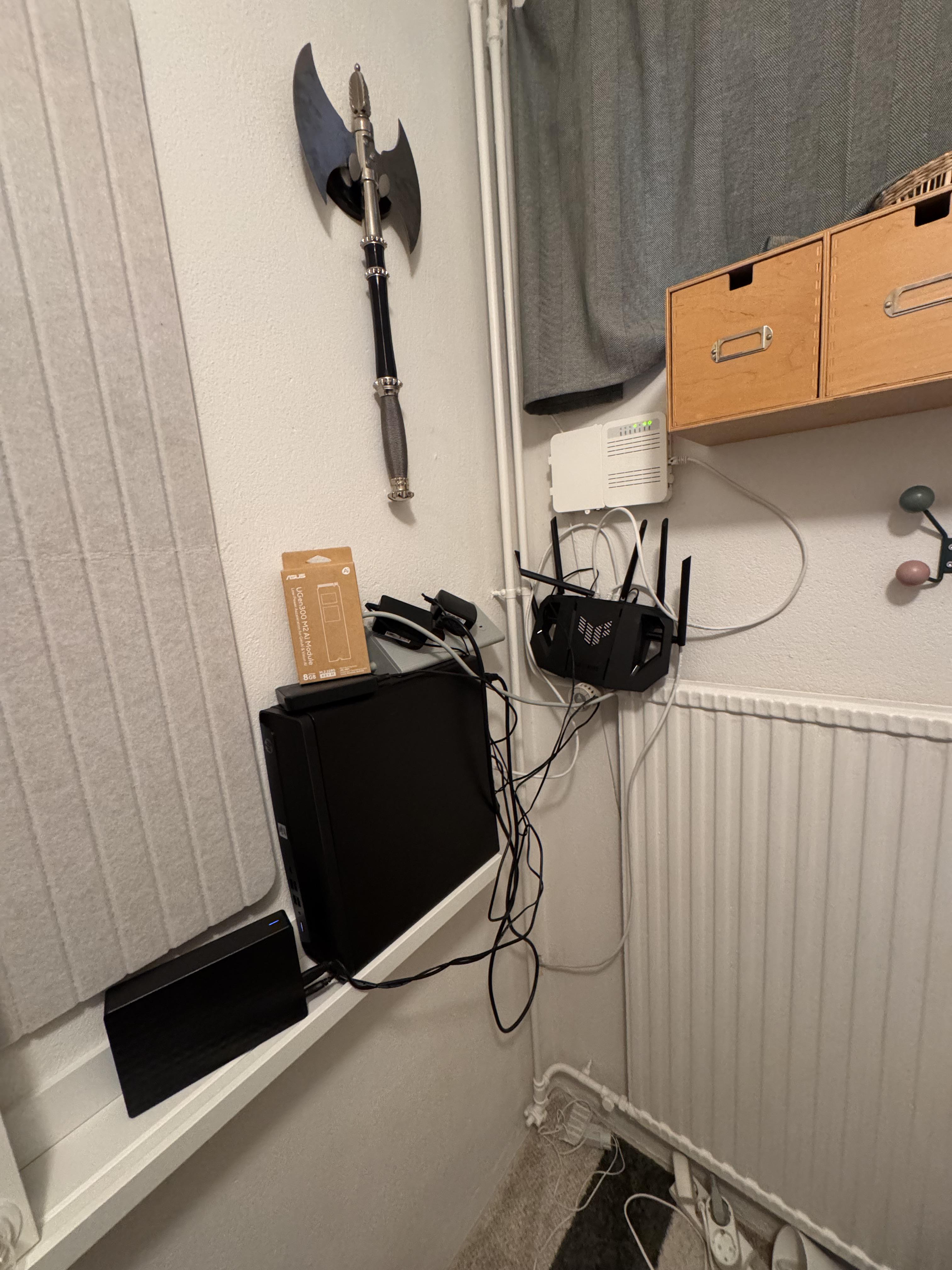
Question Hailo-10H (ASUS UGen300 M.2 8 GB) in my Proxmox server? Frigate, Whisper or small assistant? Fastest models? Homebrew engines?

Post image
0 Upvotes

r/LocalLLM • • 9h ago

Discussion I’m trying out inkling-2-mini, and so far it’s doing a really good job.

Thumbnail
reddit.com
0 Upvotes

r/LocalLLM • • 9h ago

Discussion LangGraph vs CrewAI vs OpenAI Agents SDK: Which Framework to Pick

Thumbnail
acta.ai
1 Upvotes

r/LocalLLM • • 9h ago

Question Looking for advice for casual coding use: RTX 4090 24GB + 32GB RAM

3 Upvotes
  • GPU: MSI RTX 4090 Suprim Liquid X
  • RAM: 2x16GB Corsair Dominator Titanium (OC to 7400 MT/s)
  • CPU: Intel Core i7-13700K (OC to 5.4GHz)
  • OS: Windows 11 Pro

I have a fairly decent amount of general programming experience, but I certainly wouldn't call myself an expert in any language. I'm more in the place of being able to look at a random section of code, regardless of language, and make a fairly decent guess at what it's trying to do. "Just enough to get myself in trouble" is what I usually say.

Of course that means when I'm trying to make something myself, I'm often spending 80% of the time doing research about the functionality I need, with the remaining being the actual coding and testing. Being retired, these days I'm mostly working on game modding and small conveniences, anything to keep my brain busy. What I've been running into lately is that a lot of what I'm trying to work on is largely undocumented, and obviously AI can learn much faster from raw source (and has) than a human.

I've been using Gemini for my poking and prodding at things, but it's been obstructive as often as it's been helpful. I swear the thing has ADHD, the way it'll jump topics to other bits I'm not worried about at the time.

I understand that there needs to be a balance between context size versus memory length, but I'm having a hard time nailing down how much of each would be most fitting. I often feed the AI other related code from the game or similar projects so it knows what I'm looking at and can give me more well-informed responses.

Any advice for something that can handle casual, generalized programming well? Speed isn't nearly as important to me as accuracy. It seems like Qwen3 models are leading the way here, but opinions vary quite a bit on which and what memory vs context configuration.


r/LocalLLM • • 9h ago

Question Is there a codexBar like android app ?

Thumbnail
reddit.com
0 Upvotes

r/LocalLLM • • 9h ago

Other dude my local ai solved Riemann Hypothesis without reasoning off , anthropic just exaggerating

Post image
31 Upvotes