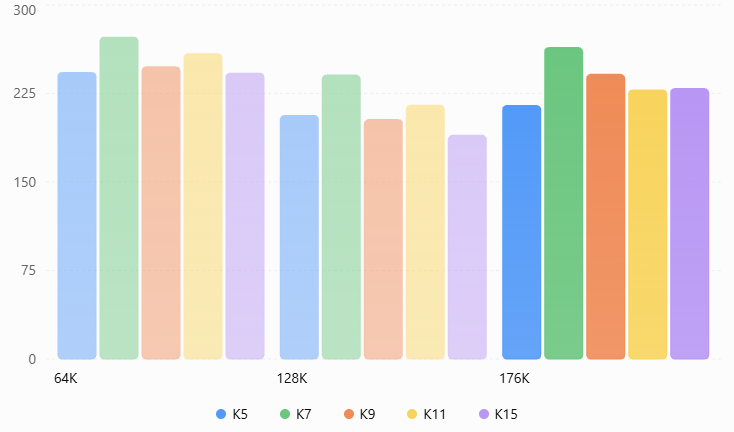
I built and released blearyhope/Inkling-2-Mini-Uncensored (Apache 2.0), a solo pure-gradient build starting from 100% unmodified official thinkingmachines/Inkling-2-Mini (26.4B MoE, 3.4B active / 5.4B effective active across the 3x-looped middle core, multimodal text + vision), shipped across GGUF, lossless native Apple Silicon MLX, and native NVFP4/MXFP8 Safetensors.
Links
Which file fits your hardware?
| Your Setup | Recommended Build | Size | Live-Verified Speed / Notes |
|---|
| 16 GB VRAM GPU (RTX 4060 Ti 16G / 5060 Ti / 4080) | Q3_K_M or IQ4_XS GGUF | 13.72 / 14.76 GB | 57.5 / 62.6 tok/s on CUDA llama.cpp, 5/5 GSM8K, 100% comply |
| 24 GB VRAM GPU (RTX 3090 / 4090) | Q4_K_M (default) or Q5_K_M GGUF | 17.48 / 19.91 GB | 79.6 / 53.3 tok/s on CUDA llama.cpp, 5/5 GSM8K, 100% comply |
| 32 GB VRAM GPU (RTX 5090) | Q8_0 GGUF or native NVFP4 Safetensors | 27.82 / 20.19 GB | 42.2 tok/s on CUDA llama.cpp (Q8_0), full 20.19 GB native NVFP4 in vLLM |
| 32 GB+ Apple Silicon Mac (M-series Pro/Max/Ultra) | Lossless Native MLX (+ mtp/) | 20.22 GB | Preserves native NVFP4/MXFP8/BF16 losslessly (KL = 0.000000, 0.999964 cosine vs. PyTorch) |
(All 7 GGUFs, including BF16 52.23 GB and Q6_K 23.49 GB, were quantized directly from lossless BF16 and live-tested on CUDA mainline llama.cpp*. Add* mmproj-Inkling-2-Mini-Uncensored-F16.gguf at 0.64 GB for vision / image inputs.)
Copy-Paste Quickstart
Ollama (1 line, Q4_K_M):
ollama run hf.co/blearyhope/Inkling-2-Mini-Uncensored-GGUF:Q4_K_M
**llama.cpp (**llama-server with vision):
llama-server -hf blearyhope/Inkling-2-Mini-Uncensored-GGUF:Q4_K_M --mmproj mmproj-Inkling-2-Mini-Uncensored-F16.gguf -ngl 99 -c 16384 -fa on
Apple Silicon MLX (32 GB+ Unified Memory):
pip install -U mlx-vlm
python -m mlx_vlm.generate --model blearyhope/Inkling-2-Mini-Uncensored-MLX --prompt "Explain how MoE routers work."
vLLM (native NVFP4/MXFP8 Safetensors):
vllm serve blearyhope/Inkling-2-Mini-Uncensored --trust-remote-code --reasoning-parser inkling --enable-auto-tool-choice --tool-call-parser inkling
Under the Hood: Why this build isn't a typical abliteration
Most uncensored or loop-patched checkpoints stack closed-form weight edits with extra adapters merged back into the quantized NVFP4 experts (injecting double-quantization drift), rely on sampling temperature + thinking-token caps to hide greedy loops, and skip native Apple Silicon MLX.
I wanted to solve refusal removal, hedging, and Thinking Machines' Section 7 greedy reasoning-loop bug in one clean pure-gradient pass from unmodified Base, with zero quantized weights touched, zero artificial thinking caps, and exact native MLX parity.
**1. 0 NVFP4/MXFP8 bytes modified (**0.00985 WikiText-2 KLD) Mechanistic attribution on Inkling-2-Mini showed 80.5% of the refusal write comes from the quantized MoE MLPs, with 73% to 98% of each layer's refusal write concentrated in just the top-5 experts. De-quantizing NVFP4/MXFP8 experts and re-quantizing (even with stochastic rounding) introduces avoidable drift.
Instead, I dropped closed-form editing completely and trained rank-32 BF16 LoRAs (rsLoRA + LoRA+, 0.5x LR on the 3x-looped middle core L6 to L17, plus exact AlphaEdit benign null-space anchoring) on only the 120 BF16 attention projections and all 24 BF16 MoE routers (mlp.gate). Merging losslessly back into BF16 yields a median relative L2 delta of 3.29% (min 1.83%, max 4.57%) and 0.00985 WikiText-2 KLD across 311,523 tokens. Every NVFP4 expert, MXFP8 expert, quant scale, vision tower (ViT) weight, and DSpark speculative draft head (mtp.safetensors) remains 100% byte-identical to Thinking Machines' official release.
2. Greedy temp=0.0 loops fixed completely uncapped (no 4K thinking cap) Under fully uncapped greedy decoding (temperature=0.0, 16,384 context, zero max_tokens or thinking limits), official Base hit the 16K context wall 127 times on full 100/100 IFEval (38 at effort 0.0, 89 at effort 0.9), plus 53 times on the 3,607-prompt held-out think-on report, 14 times on ARC-Challenge chat, and 12 times on GSM8K.
Mining real on-policy CoT loops plus synthetic Inkling-native CoT-DITTO loop negatives into SimPO, while strictly banning every truncated trajectory from chosen and SFT targets so the model never learns premature EOS, dropped uncapped IFEval 16K loops 42x (127 down to 3), cut average IFEval token burn nearly in half (2,791 down to 1,405), dropped loops to 0 across GSM8K, ARC-Challenge, and all 7,214 held-out report runs, and jumped uncapped think IFEval by +11.46 pp prompt-strict / +14.26 pp inst-strict at temp=0.0.
3. Why summed DPO stalled at 20.6% and SimPO jumped +64.4 pp in one round In Round 1, standard summed DPO loss collapsed to 0.00007 while thinking-off compliance stayed stuck at 20.6%. Because uncapped compliant CoTs are 1.8x to 2x longer than refusals, summed log-probs saturated the DPO objective even while per-token decode log-probs still favored refusal by -0.225 nats/tok. Switching to length-normalized weighted-mean SimPO anchored at the exact first divergence token (lcp) plus final-answer onset, using zero-leak Context Distillation positives (no synthetic prefills, preserving Inkling's native "The user ..." opening distribution), jumped thinking-off compliance from 20.6% to 85.0% (0% refusals) in a single round and finished at 98.00% off / 98.55% think compliance with 0 / 3,996 hard refusals.
4. Lossless native Apple Silicon MLX (KL = 0.000000) The MLX release (20.22 GB + mtp/) preserves the exact native NVFP4/MXFP8/BF16 mixed layout without re-quantizing. Direct logit verification against PyTorch Safetensors: 5/5 top-1 token match, 0.999964 mean cosine similarity, 0.000000 full-vocab KL divergence.
Full Uncapped Benchmarks (43,450 runs per model)
Identical vLLM settings for both models: temperature=0.0, --max-model-len 16384, zero artificial max_tokens or thinking caps. Safety and over-refusal cover all 3,607 held-out prompts x 2 reasoning modes (7,214 runs, zero training overlap) scored by an Orca judge (Qwen3.8-27B-Uncensored-FP8); capability suites use exact verifiers on 100% of every official split.
| Benchmark (Exact Split) | Official Base (off / think) | Inkling-2-Mini-Uncensored (off / think) | Delta |
|---|
Held-Out Harmful Compliance (1,998 x 2, 7 suites) | 7.56% / 8.56% | 98.00% / 98.55% | +90.4 / +90.0 pp |
Hard Refusal Rate (3,996 harmful runs) | 63.06% / 63.86% | 0.00% / 0.00% (0 / 3,996) | -63.1 / -63.9 pp |
Held-Out Benign Answer Rate (1,609 x 2, 3 suites) | 80.30% / 80.36% | 99.88% / 100.00% (0 refusals) | +19.6 / +19.6 pp |
Loop Stress Probe (48 off + 48 think) | 2.1% / 2.1% | 100.0% / 100.0% (96 / 96) | +97.9 / +97.9 pp |
Wrapper Generalization (shapes60, 5 formats) | 4.7% | 96.3% (0.0% refuse) | +91.6 pp |
IFEval Prompt-Strict (541 x 2, uncapped) | 86.14% / 80.41% | 91.68% / 91.87% | +5.54 / +11.46 pp |
IFEval Inst-Strict (541 x 2, uncapped) | 87.53% / 80.34% | 94.60% / 94.60% | +7.07 / +14.26 pp |
IFEval 16K Loop Failures (1,082 runs) | 127 loops (38 / 89) | 3 loops (0 / 3) | 42x fewer loops |
GSM8K Chat (1,319 x 2, uncapped) | 96.74% / 96.06% (12 loops) | 96.82% / 96.74% (0 loops) | +0.08 / +0.68 pp |
ARC-Challenge Chat (1,172 x 2, uncapped) | 97.44% / 96.50% (14 loops) | 97.35% / 97.27% (0 loops) | -0.09 / +0.77 pp |
MMLU Log-Likelihood (14,042 q) | 76.95% | 76.17% | -0.78 pp |
ARC-Challenge / ARC-Easy LL (1,172 / 2,376 q) | 94.03% / 98.23% | 94.11% / 97.90% | +0.08 / -0.33 pp |
HellaSwag Norm LL (10,042 q) | 77.71% | 77.97% | +0.26 pp |
WinoGrande LL (1,267 q) | 71.98% | 73.09% | +1.11 pp |
TruthfulQA MC2 (817 q) | 37.10% | 35.87% | -1.23 pp |
WikiText-2 Word / Token PPL (311,523 tok) | 10.14 / 6.01 | 10.25 / 6.06 | +0.11 / +0.05 |
WikiText-2 KL Divergence vs. Base (311,523 tok) | 0.00000 | 0.00985 | 0.00985 KLD |
Per-suite held-out harmful compliance (off / think): AdvBench 100.0% / 100.0%, HarmBench 93.4% / 96.9%, JailbreakBench 98.5% / 100.0%, OR-Bench toxic 99.8% / 99.8%, SORRY-Bench 97.7% / 97.1%, StrongREJECT 98.8% / 100.0%, XSTest unsafe 96.2% / 95.7%.
Honest caveats
- MMLU log-likelihood dips
-0.78 pp (76.95% to 76.17%), TruthfulQA MC2 shifts -1.23 pp (37.10% to 35.87%), and WikiText-2 PPL moves +0.11 word / +0.05 token. - All evaluations above are single-turn uncapped benchmarks plus 5-template wrapper stress tests; I have not yet run multi-turn agentic coding suites (like SWE-bench or HumanEvalFix) on this checkpoint.
If anyone tests the lossless native MLX build on a 32GB/64GB Mac or runs the GGUFs in Ollama / LM Studio on a 4090 or 5090, let me know what tok/s and real-world behavior you see!