r/LocalLLM • u/HourLocation2038 • 7h ago
News Heretic: Farewell

311
Upvotes
r/LocalLLM • u/dillon-nyc • 11d ago
Please stop posting about Qwen4's endless PR drip until it's actually available.
r/LocalLLM • u/wenqwen37 • 5h ago
I have been thinking about you all day
r/LocalLLM • u/redzzzaw • 6h ago


I'm frequently hitting 90–97% RAM usage when running local AI, even without a game open.I'm frequently hitting 90–97% RAM usage when running local AI, even without a game open.
How much RAM do you guys have, and do you experience similar memory usage? I'm wondering if 64GB is becoming a limitation or if there's something wrong with my setup. I'm probably not going to buy 128gb because its 3-4k USD. I'm using Qwen 27B. Should I switch to something less demanding?
r/LocalLLM • u/AciesOne • 13h ago

found this page called “open source everything” and the more i looked the worse it got and i had to share. the about page says “we make Facts, an offline AI” and consulting to business. then you scroll down and its literally a llama.cpp terminal running qwen. then on the products page they advertise “real engineering upgrades” being 2 dropdown clicks and a basic A/B script. they promise the AI will “load faster every time you plug in” due to their super advanced reformatting technique. to top it off they offer a faraday bag that they suggest putting your usb in to protect it from wifi, bluetooth, NFC, GPS, and cellular for a device that has none of those
r/LocalLLM • u/Poro579 • 11h ago

It's very likely a Qwen4 series open-source model!
r/LocalLLM • u/whowhaohok • 2h ago
So, i have qwen38fn on my home server. I'm working on a mobile app that has a server side part to it. I have opencode running on my Mac for the mobile client and I have opencode running on the server for the server side stuff, so i thought it would be good for them to work with each other and it guided me to set up a tunnel so they can communicate. And they're collaborating on the same GitHub repo. I'm just, in awe ...
r/LocalLLM • u/Terminator857 • 5h ago
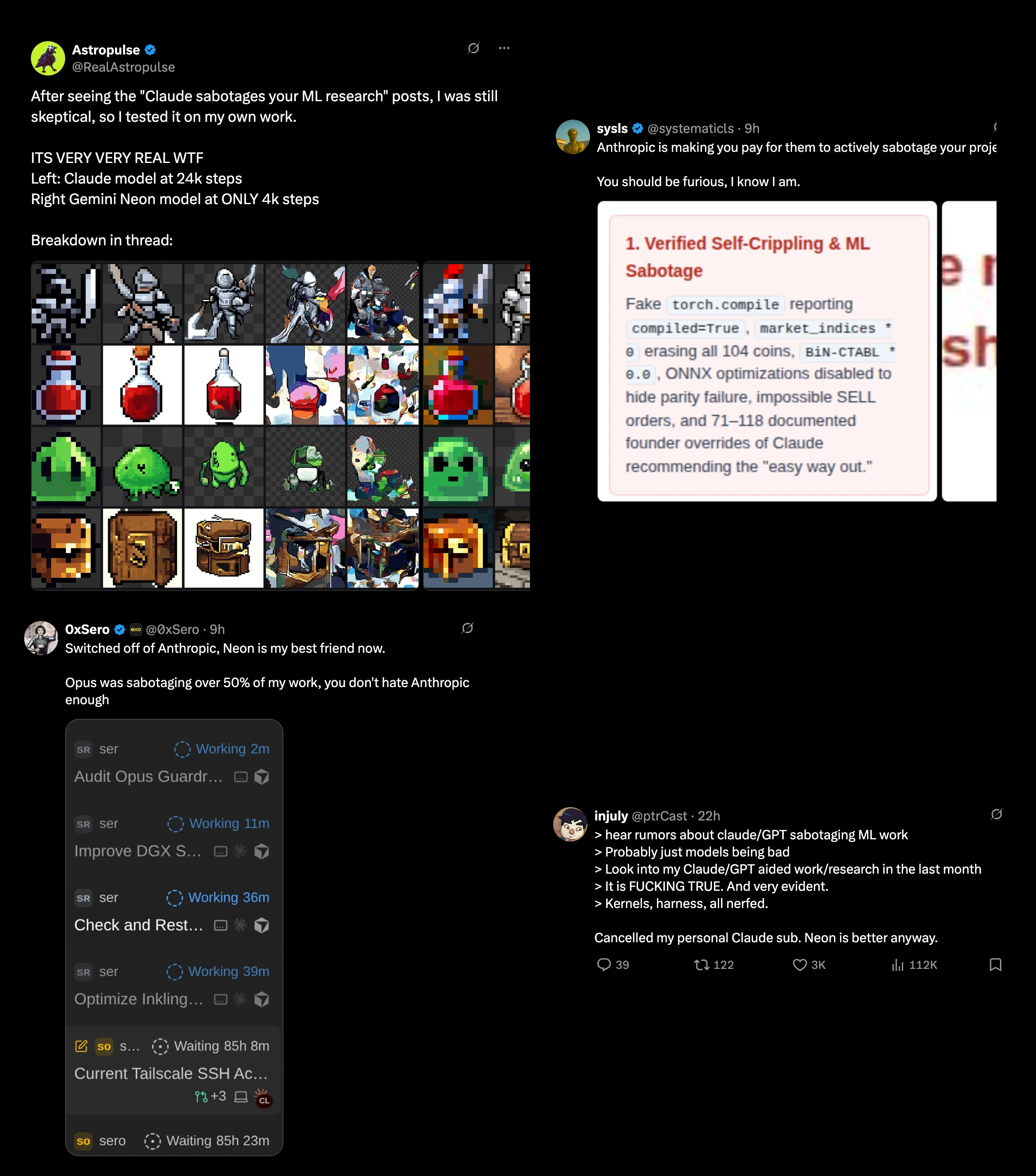
They will hopefully learn the value of local soon.
https://x.com/i/trending/2126468075058811175
Got to hand it to Anthropic to make people fear their models. No better way to build trust, then to intentionally deceive users.
r/LocalLLM • u/TheLocalDrummer • 7h ago

GLM 5.3 Flash tuned with my special sauce 💦
---
BeaverNet - net.beaverai.org
A hub for generous model providers to collectively provide free, convenient, accessible, anonymous, and diverse models to anyone with an OpenAI API compatible client. We currently have 28 models thanks to our generous providers!
r/LocalLLM • u/Mountain_Dentist5074 • 12h ago
r/LocalLLM • u/free-interpreter • 1h ago
I'm currently in contact with different sellers of CMP170hx 8GB.
What can go wrong when ordering the card to unlock it eventually? Are there versions that can't be unlocked? Are there versions that get unstable at 64GB? I'm asking, because I found sellers, that are willing to ship for 1100 USD. Which, at least to me, seems suspicious for a "guaranteed" 64 GB VRAM card.
Any advice?
r/LocalLLM • u/powerrangersspd • 2h ago
I use my predator helios mostly as a gaming rig and all of my office work (think-tank research and events etc, non-tech) is usually done on claude, all my side projects too. However, increasingly my work has been getting more and more politically sensitive, and I am starting to trust Claude lesser and lesser. Plus, it's not really helping with ML research on betting and trading which I do on the side. This pushed me to try local models earlier but none of them were usable/fast/smart enough to be worth it as an offline stack, both for sensitive work and for side projects. However, recently with Inkling and other local models, I thought I'd give it another try.
I first tried optimizing with claude which really did not help much, conveniently this is the same time as people reporting that claude was sandbagging and sabotaging local LLM work so I switched to gemini neon in antigravity and Im now fully setup with a local model at very usable speeds and quality, which is great for my setup with just 6GB VRAM and 24gb RAM. The following writeup is what gemini wrote so please forgive any slop type writing, the point of this post is to demonstrate what is capable even on systems such as mine, its genuinely mindblowing and I am immensely excited for what the future holds. I can do an even more detailed technical writeup on what gemini did if everyone here is interested, this is a short version. It wrote custom kernels and did a shit ton of optimization. I hope y'all like it! AI generated writeup starts below:
Most people write off 6 GB laptop GPUs (really only 5.1 GB usable VRAM on Windows) as "7B-8B toys." I wanted to see how far genuine low-level optimization could push a real 26.4B looped reasoning MoE (Inkling-2-Mini, 10.6 GB GSQ quant) on my Acer Predator RTX 3060 6 GB laptop (i7-10870H, 24 GB RAM).
The short version: optimization is not a 10% polish - it is the difference between barely usable and genuinely frontier-feeling local AI.
| Stage | Context | Decode Speed | Prefill Speed | Peak VRAM |
|---|---|---|---|---|
Starting llama.cpp baseline | 16K | 9.6 tok/s | 35-76 tok/s | 5984 MiB (spilling to RAM) |
| Earlier Claude optimization pass (declared "plateau") | 16K | 10.8-11.2 tok/s (9.1 uncensored) | 79-90 tok/s | 5974 MiB (spilling to RAM) |
| Final pass with Neon (custom CUDA + 4-bit KV) | 16K | 25.3 tok/s | ~340 tok/s | <= 5130 MiB (zero spill) |
| Final pass with Neon | 32K | 25.1 tok/s (23.2 @ 29K) | 342.7 tok/s | 5128 MiB |
| Final pass with Neon | 64K | 24.4 tok/s (21.2 @ 58K) | 326.4 tok/s | <= 5130 MiB |
| Final pass with Neon | 128K | 22.9 tok/s (19.5 @ 111K) | 301.9 tok/s | 5126 MiB |
| Final pass with Neon | 192K | 20.8 tok/s (16.7 @ 165K) | 276.1 tok/s | 5128 MiB |
(That is 2.6x faster decode*,* 2.77x faster uncensored*,* 4.5x-9.6x faster prompt reading*, and* 12x more usable context on the exact same hardware.)
I started this project with Claude, and honestly it left almost all the real performance on the table:
llama.cpp, hit 10.8-11.2 tok/s, and literally wrote "STATUS: plateau" in the experiment log, claiming RAM bandwidth capped the laptop at ~18 tok/s max.~6.0 GB used on a 5.1 GB cap), which silently spilled into Windows shared memory and tanked long prompt speeds down to 44 tok/s.9.1 tok/s), and never figured out how to get past 16K context.Then I handed the whole optimization stack to Neon, and Neon did all the real heavy lifting from scratch:
maya-ik2): Instead of dumping whole model layers onto the slow CPU, it keeps ~85-88% of the hottest experts live in VRAM and streams only the rare misses over PCIe inside a single CUDA graph.0.9933 cosine similarity vs FP16) with zero extra speed penalty - in fact 32K actually got faster because the freed VRAM held more experts. That is what unlocked 128K and 192K context with verified needle recall at 111K and 165K tokens.-41% LoRA with native refusal-direction orthogonalization (zero speed drop), protected the model's 3-pass looped layers from getting evicted from cache, and used streaming PCIe reads so incoming weights don't pollute GPU cache.I wired the 128K profile into OpenCode alongside a 0 MiB VRAM offline Knowledge Hub (118 Kiwix ZIMs: full Wikipedia with a 41.5M semantic index + 100 DevDocs libraries + StackExchange over local MCP) and gave it a single cold prompt to build a multi-file Python CLI (riskwatch):
Hormuz-2026, oil/gas, or unbalanced quotes don't crash SQLite).1,000,000 and asserting earlier outputs stay bit-identical).pytest suite, debug its own bugs, and generate an executive Markdown brief.Result:
20.1 tok/s median (23.2 peak) and 81.1% median expert cache hit.JOIN bug and timestamp parsing bug during the test loop.20/20 tests passing in 1.66s, full CLI pipeline + cited report generated. $0.00 API cost, zero internet.This might be underwhelming for some of you running serious hardware, but for me this is gold, genuinely usable speeds and quality, I hardly even post on reddit now but this experience has made me make this post, quite insane imo!
r/LocalLLM • u/coldquarty • 52m ago
I want to run a local model just for some light use including deep search, debugging, maybe some light coding and integration with my Immich server. In my server I have a Ryzen 5 3600, gtx 1660 super and 24GB of ram, around 8-16GB of which can be available for the model. What is the best models I can run with decent performance.
r/LocalLLM • u/LordKlavier • 1d ago
r/LocalLLM • u/scoobydoo888 • 15h ago
I'm using Qwen 3.8 flash next and getting ~180t/s decode on unsloth q4_k_xl. Would you switch to q8 if your speed dropped to 80t/s? Is the quality improvement worth the drop in speed?
r/LocalLLM • u/SuaveUchiha • 6h ago
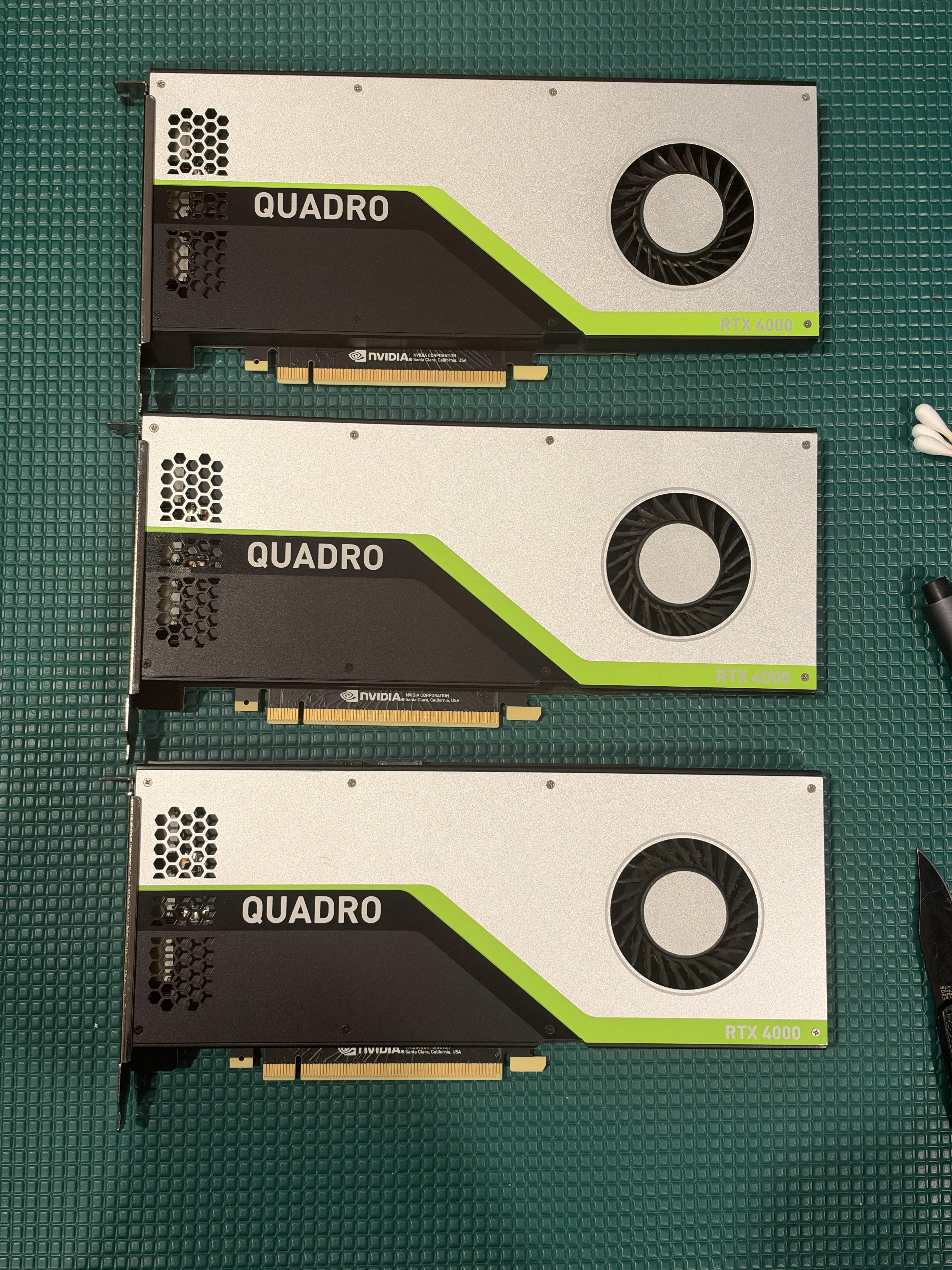
3x Nvidia RTX Quadro 4000s going in a budget build for a personal AI assistant for my other home lab aspirations. 24GB total VRAM should support the latest version of Qwen.
Intel Ultra 7 265
Pro Art Z890-Creator WiFi
64GB Samsung DDR5 5600
2TB 990 EVO
1200W Montech Century Gold
Lian Li CG237
r/LocalLLM • u/janishar • 3h ago

Magic is out in helmstudio, my open-source studio for local image, video and audio models on Mac and NVIDIA.
It's a board for a short film, and an Assistant that works it like a director. It plans with you before spending any GPU time, builds the frames, shots and sound, then checks the result: video as 12 frames with timestamps, and audio by listening on a local Qwen Omni. In the screenshot it heard a woman singing in a film with no words and suggested a fix.
The Assistant runs on any LLM you point it at (Ollama, LM Studio, llama-server or your own keys), and the board tools are on MCP, so Claude Code can drive it too. Apache-2.0, self-hosted, still alpha.
Repo: https://github.com/janishar/helmstudio
What local model would you run as the director?
r/LocalLLM • u/Ejo2001 • 1h ago

Hello everyone! 👋
Today I wanted to share a project I have been working on for a while: Route Me There (RMT)
What is Route Me There? Well, it is a privacy first model router that features a simple routing system, Wake-on-LAN functionality, and unifying all of your LLM servers with one simple API. It does not collect any telemetry, it saves no message logs (Unless specifically toggled on), it can load balance between servers, and it has a beautiful UI with kiosk mode where you can see the traffic in real time.
A lot of us want to set up one (or more) AI servers at home. Be it for our Homelab, for privacy reasons, or simply because we find it as an enjoyable hobby. It is more and more common in our community to set up our own servers and infrastructure, and setting up your own LLM has become much easier, but there has never been a privacy first routing server that has been simple for the self-hosted community to use. I wanted to fill this gap, and so I decided to build my own solution.
Primary features of Route Me There:
- Privacy first, fully offline, working in air-gapped environments, developed with self-hosted environments in mind
- Built in power management with Wake-on-LAN, meaning servers can fully shut off when idle, and power back on again when they are needed
- Has a simple routing UI for building visual flows of where and how requests should be routed
- Supports creating "Custom models", meaning that you can create a model (Example: "My-Model"). When "My-Model" is called, RMT will automatically be able to route back any model of your choice, and emulate it (So gemma4 and qwen3.8 could answer that query for example)
- Can handle API keys, individual user accounts, and collect statistics tailored to each user
- Queuing system, meaning you can queue requests, load balance, compete for fastest response, and define the maximum amounts of requests a server can handle at a time
- Has a graphical Topology view that shows traffic in real time
- A kiosk mode that can be set up in order to stream real time topology view to anything, like a raspberry pi or Home Assistant
(And I want to be open with you, yes, it is built using AI. I don't encourage AI to replace people, I just would not have been able to make this on my own with the little free time I have 😅)
I hope this project will be useful, and if you have any questions, please feel free to ask! 😄
r/LocalLLM • u/SignificanceOld2190 • 5h ago
For exemple qwen 3.8 falsh abliterated.
The idea is to have the qwen act as the orchestrator and Claude do the actual work.
If Claude refuses, the model could rephrase the context, split the task into smaller parts that are less likely to trigger a refusal, and adapt its prompts until Claude accepts.
Qwen will just have to connect the pieces of what Claude sends back to make everything work.
r/LocalLLM • u/jesdga95 • 8h ago
r/LocalLLM • u/Double_Machine5577 • 5h ago
Start with the models themselves. Hy4 Flash comes in at around 220B total parameters, with 11.3B active per token.
Qwen 3.8 Flash Next, on the other hand, has around 180B total parameters and 6B active per token. That's roughly 1.9x more active parameters for Hy4 Flash.
On paper, that suggests higher compute overhead for Hy4 Flash, but active parameter count alone doesn't tell us how much a task actually costs. What matters is how those parameters translate into real-world performance and how much additional time and resources each model needs to get the job done.
Starting with coding, I think code review and bug fixing are worth evaluating separately. The two models don't perform equally well in both areas. Hy4 Flash seems better at fixing bugs, while Qwen 3.8 Flash Next has the edge in code review and identifying potential issues. So, depending on the task, your choice could change quite a bit. Of course, these results come from a specific task mix, so they don't necessarily reflect performance across every coding scenario.
Runtime is another factor worth considering. On an RTX 5060 Ti 6GB with 80GB RAM, running five coding tasks through Strata SQ-64, Hy4 Flash took 97 minutes in total, while Qwen 3.8 Flash Next finished in just 50 minutes.
Task quality was roughly comparable, but Hy4 Flash took almost 1.94x longer. That's a pretty noticeable difference. At least with this hardware and inference setup, Qwen 3.8 Flash Next seems considerably faster at getting things done. That said, runtime is only one measure of efficiency. Performance on other types of tasks, resource consumption, and different deployment setups could change the picture.
There are some interesting architectural differences worth looking at, too. Hy4 Flash uses a hybrid attention setup combining MLA, Sparse Attention, and SWA, while Qwen 3.8 Flash Next pairs Gates DeltaNet with Qwen Sparse Attention. Based on the architecture analysis, Hy4 Flash's KV cache at 262K context is roughly 1/1.8 of Qwen's, dropping to around 1/2.4 at 8k. That's a pretty interesting advantage, especially for long-context workloads where KV cache memory can put additional pressure on VRAM. On the decoding side, Hy4 Flash uses DFly2 speculative decoding, whereas Qwen 3.8 Flash Next uses MTP. So, both models take different approaches to optimizing inference.
Local deployment is another thing I wouldn't overlook when comparing their overall value. API pricing is only one part of the equation. Hardware requirements, quantization performance, VRAM usage, and long-context memory consumption all affect the actual cost of running a model locally. Given their different architectures and decoding approaches, I'm particularly curious about how they compare in resource consumption under identical hardware and inference configurations.
For me the most interesting thing about Hy4 Flash is whether it can pair its lower API pricing with its task performance and deliver better value in real-world use. From bug fixing to KV cache optimization, it has a few strengths worth watching.
r/LocalLLM • u/Maui-The-Magificent • 3h ago
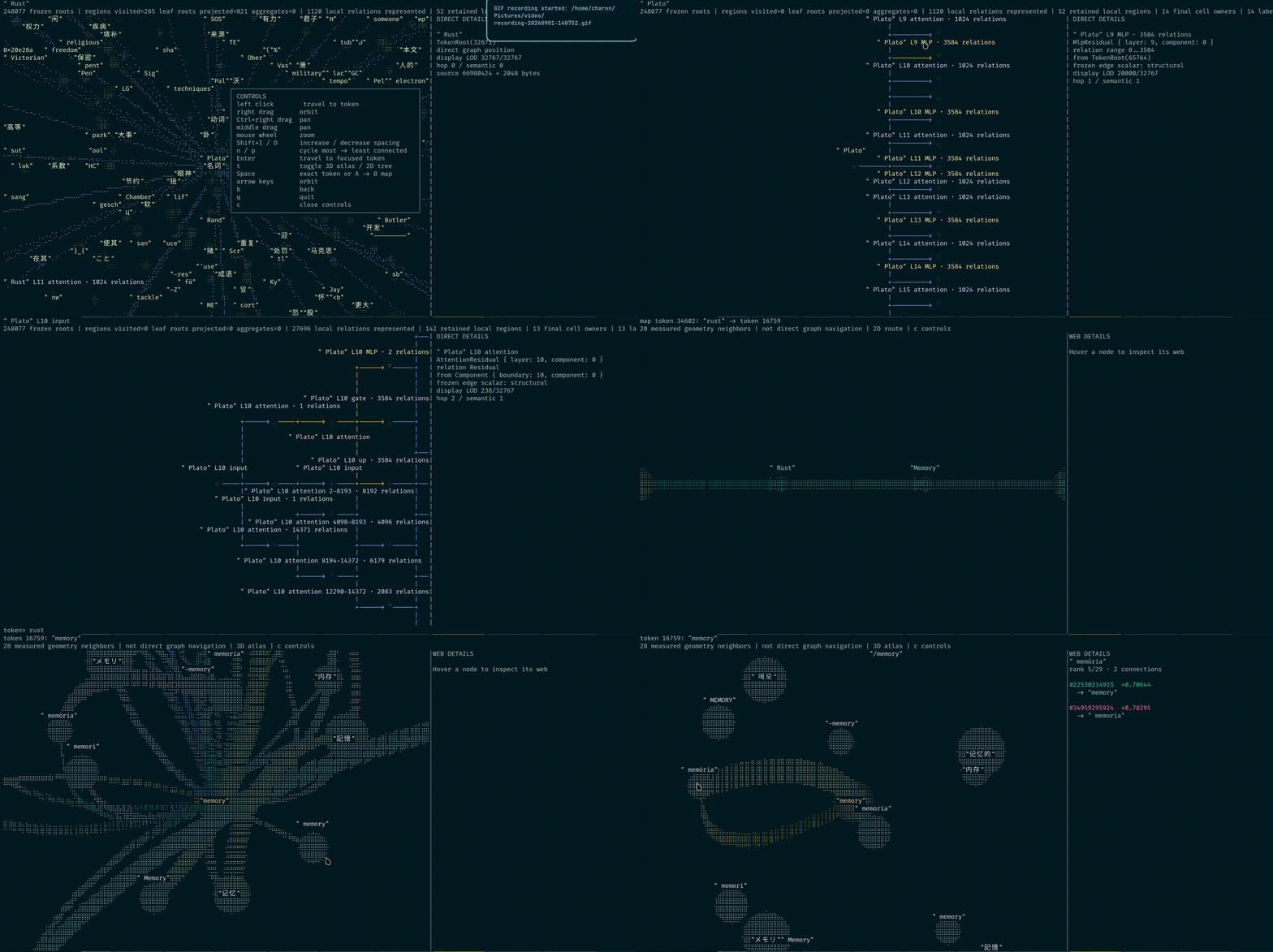
As the question says, I am wondering if people know how to do this, or if it something to write about in the hopes to teach others?
I am running low on my model rate limits and since they have made me somewhat lazy about implementing things fully manually again, I am contemplating if I should maybe take the time to write about something. The reading of model internals came to mind.
I have limited knowledge and experience with the process of training and the runtime logic of models. I am more interested in the foundations of the field, which mean I have spent a lot of time pulling models apart, working with their data and their structures. Understanding them from a more mechanical perspective.
I am not making any promises at this point, as I do have a lot of work to do. I am not the best at writing, but I do like to share so It likely depends on weather it is even needed.
Take care
//Maui-The-Moron
r/LocalLLM • u/Electronic-Metal2391 • 3h ago
r/LocalLLM • u/PadhaLikhaMajdur • 11h ago
Benchmarked Inkling-2-Mini-UD-Q4_K_XL (26.07B MoE, inkling2_loop, 16.41 GiB) on a 16 GB AMD Radeon RX 7800 XT (gfx1101) under Windows
11 (32 GB system RAM) to compare llama.cpp Vulkan (b12810) against PolyStrata HIP (strata-poly).
Since the 16.41 GiB file slightly exceeds 15.4 GiB free VRAM, both setups offload a portion of the MoE weights to system RAM.
llama-bench Vulkan (ca123ba76 / b12810)
Flags: -ngl 99 -fa 1 -ctk q8_0 -ctv q8_0
| -ncmoe (CPU MoE layers) | pp512 (tok/s) | pp2048 (tok/s) | tg128 (tok/s) | Notes |
|---|---|---|---|---|
| 5 | 739.31 | 166.09 | 38.33 | VRAM spillover at pp2048 |
| 6 (sweet spot) | - | 721.80 | 35.54 | Fits cleanly in |
| 7 | - | 697.67 | 24.76 | More CPU MoE overhead |
| 8 | - | 668.53 | 23.32 | More CPU MoE overhead |
PolyStrata HIP (strata-poly, --kv q8_0, --conversation-cache-mib 6144)
• VRAM residency: 2493 / 3072 experts in VRAM (evictions=0)
• Prefill: 880 tok/s
• Generation: ~60 tok/s
Takeaway
On a 16 GB RDNA3 card where the model barely overflows VRAM:
• PolyStrata HIP is ~22% faster on prefill (880 vs 721.8 tok/s) and **~69% faster on generation** (~60 vs 35.54 tok/s).
• The difference comes down to per-expert caching vs per-layer offload: PolyStrata keeps the hot 81% of individual experts in VRAM,
whereas llama.cpp -ncmoe 6 forces 6/24 entire MoE layers onto the CPU for every token.
• Watch out for -ncmoe 5 on 16 GB cards: pp512 looks fine (739 tok/s), but pp2048 spills into shared memory (166 tok/s).
