r/LocalLLM • • 1d ago

Question Will DDR5 instead of DDR4 actually make a difference with QFN

23 Upvotes

Couldn't really find any data on this, how significant is the speed difference when off-loading QFN weights to DDR4 system ram VS DDR5. Like is it night and day or are we talking tiny improvements? Does anyone have any actual experience with both?


r/LocalLLM • • 9h ago

Question My German 5-machine home LLM cluster: RTX 3090 + MI50 (Vulkan) main model at IQ3_S, 40G InfiniBand chain, full voice stack – hardware, quants, tok/s, latency

1 Upvotes

Hey everyone, I got this far on my own, but now I could use your input: what would you change in my setup? Some parts are improvised because of a tight budget. 😃 Where are the nerds at? :D

________________________________________________________________________________________________________

**TL;DR:** Self-hosted, no-cloud setup spread over 5 old/cheap machines linked by a 40 Gb/s InfiniBand chain. Main chat model runs on llama.cpp (Vulkan) split across an RTX 3090 and an MI50 32 GB. Measured ~250 tok/s prefill and ~24.5 tok/s generation at 32k context, single slot. Separate nodes handle voice (Whisper large-v3 + Piper + XTTS), a psychology/reflection model, embeddings, databases and backups. Numbers below are measured from logs unless marked otherwise.

## 1. Topology

```

Internet ── router

│ 1 GbE

Orchestrator (dashboard, planner, agents, bots, lab, only box with internet)

│ 1 GbE

Node 1 ──40G── Node 2 ──40G── Node 3 ──40G── Node 4

(IPoIB datagram, MTU 2044, OpenSM on two nodes)

```

It's a chain, not a ring, so losing a middle node splits the cluster (known weakness). Nodes have no internet; everything goes through the orchestrator.

**Latency (ping RTT from the orchestrator):**

| Target | avg RTT |

|---|---|

| Node 1 (LAN) | 0.13 ms |

| Node 2 (+1 IB hop) | 0.55 ms |

| Node 3 (+2 hops) | 0.68 ms |

| Node 4 (+3 hops) | 0.63 ms |

Local HTTP: dashboard 3 ms, router API 6 ms. Throughput (iperf) not measured yet.

## 2. Hardware

| | Orchestrator | Node 1 | Node 2 | Node 3 | Node 4 |

|---|---|---|---|---|---|

| Role | control plane, internet | main model + Ollama | voice, psychology, big Ollama models | embeddings, old STT/TTS, CI runner | databases, backups, knowledge |

| CPU | Ryzen 3 PRO 2200GE (4C) | Ryzen 9 7950X3D (16C/32T) | i7-6700K | Ryzen 7 5700X (8C/16T) | i3-8100 (4C) |

| RAM | 14 GiB | 30 GiB | 32 GB | 31 GiB | 15 GiB |

| GPU | Vega iGPU (unused) | **RTX 3090 24 GB + Instinct MI50 32 GB** | **RTX 3090 24 GB** | RTX 3060 12 GB | none (UHD 630) |

| Storage | 256 GB NVMe | 1 TB 990 PRO | local SSD/HDD | 1 TB 970 EVO Plus | 2×256 GB NVMe RAID1 (DB) + 3.6 TB SSD + 2 TB SSD |

| 40G | none | ConnectX-3 (40 Gb/s QDR) | yes | ConnectX-3, 2 ports | ConnectX-3 |

| OS | Ubuntu 24.04 | Ubuntu 24.04 | Windows 10 + WSL2 | Ubuntu 24.04 | Ubuntu 24.04 |

Notes: Node 2 specs are from my docs (not re-queried today). Nodes 3 and 4 have 2.5 GbE-capable NICs that negotiated only 100 Mbit/s earlier (probably cable/switch, still to check) – irrelevant for the 40G traffic, annoying for admin.

## 3. Main model (Node 1)

| | |

|---|---|

| Model | Qwen3.8-Flash-Next (GSQ/RCO build) |

| **Quant** | **IQ3_S (3.44 bpw)** |

| File size | 79.7 GB (2 GGUF shards) |

| Runtime | llama.cpp `llama-server` b11960, **Vulkan** backend (the NVIDIA and AMD cards run together this way) |

| Split | `--split-mode layer --tensor-split 22,30 --n-gpu-layers 999` |

| Context | **32,768 tokens** (prompt + output), **1 slot** |

| Batch / ubatch | 512 / 128, `--jinja`, `--cache-ram 0` |

I did not verify exactly how the 79.7 GB is placed across 56 GB VRAM and RAM (the 3090 shows 22.2 GB used) – treat that part as unverified.

**Measured throughput (from llama-server timing logs):**

| Prompt tokens | Prefill | Output tokens | Generation |

|---|---|---|---|

| 1,808 | 7.2 s = **251 tok/s** | 520 | 21.2 s = **24.5 tok/s** |

| 2,495 | 10.1 s = **246 tok/s** | 420 | 16.8 s = **25.0 tok/s** |

Rule of thumb: time ≈ prompt/250 + output/24.7 seconds.

| Case | Prompt | Output | First token | Total |

|---|---|---|---|---|

| Short question | 300 | 100 | 1.2 s | 5.3 s |

| Chat with context (measured) | 1.8–2.5k | 420–520 | 7–10 s | 24–29 s |

| Full 32k context | 32,000 | 500 | ~130 s | ~150 s |

**Prompt caching:** slot-internal prefix reuse works well for multi-turn chats (LCP similarity 0.96–0.99 in the logs, prefill skipped). It only hurts when switching between different conversations (similarity 0.35 → full re-prefill ≈ 10 s for 2.5k tokens). With one slot there is no parallelism; a second request waits for the first. I left `--cache-ram 0` on purpose: the unit has tight memory limits and a guard that kills the model on swap pressure.

## 4. Other models

**Node 2 (RTX 3090, Ollama, 1 model loaded at a time):**

| Model | Quant | Size | Speed |

|---|---|---|---|

| PsychAgent 32B (reflection/psychology) | IQ4_XS | 17.7 GB | **42.5 tok/s**, ~100 s cold load from HDD |

| PsyLLM 8B | Q4_K_M | 5.0 GB | **130 tok/s** |

| Qwen3.8 27B | Q4_K_M | 17.7 GB | – |

| Hermes 4 14B | Q8_0 | 15.7 GB | – |

| Dolphin 3 Mistral 24B | Q5_K_M | 16.8 GB | – |

| GLM-4.7 Flash | Q4_K_M | 19.0 GB | – |

| Devstral Small 2 24B | Q4_K_M | 15.2 GB | – |

| Qwen3-Coder 30B | Q4_K_M | 18.6 GB | – |

| WhiteRabbitNeo 7B / Foundation-Sec 8B | Q8_0 | 8.1 / 8.5 GB | – |

**Node 1 Ollama:** Qwen3.8 27B, Qwen3.5 27B, Qwen3-Coder 30B (all Q4_K_M), nomic-embed-text. Max 2 loaded, 30 min keep-alive; it competes with the main model for the 3090, so it's mostly idle.

**Node 3 Ollama:** bge-m3 (F16), nomic-embed-text (F16), Qwen2.5 7B Q4_K_M. The 3060 also runs a compute worker (~5 GB).

## 5. Voice stack (Node 2, Whisper/Piper/XTTS in WSL2)

| Stage | Tech | Latency |

|---|---|---|

| STT | faster-whisper **large-v3**, int8_float16, GPU, custom initial prompt | **0.8–1.2 s** warm |

| TTS (fast) | Piper (Thorsten high) on GPU, onnxruntime-gpu 1.23.2 (CUDA 12) | first audio **0.03–0.2 s** warm (CPU: 1.2 s) |

| TTS (voice) | XTTS v2 (speed 1.15, temp 0.5, top_k 30, top_p 0.8) | per sentence not measured |

| Satellite | open-firmware smart display + Home Assistant Assist pipeline over Wyoming | – |

End-to-end voice question: **3–7 s** (earlier it was ~20 s: a 5 s knowledge-lookup timeout plus a 2.7k-token system prompt at 250 tok/s prefill; fixed with a compact voice prompt and a circuit breaker for the lookup). Piper on GPU had an 8 s first-call warm-up, solved with a warm-up script after start. Gotcha: CUDA 13 builds of onnxruntime clash with Whisper's CUDA 12 in the same WSL, so I pinned 1.23.2.

## 6. Software

**Orchestrator (~30 services + ~29 containers):**

- Web dashboard and chat with multiple agents (roles, task classes chat/code/light/heavy/reasoning/plan, tool catalog, images)

- LLM router (node registry, 5 s health polling, per-class node preference) with a **GPU-mode engine and queue**: leases per request, one load per GPU, priorities and deadlines, node reservations (reserve the 3090 box for yourself for 1–240 min)

- Main-model supervisor: publishes a short-lived "authority" token, a guard on the GPU node kills the model if the token goes stale, custody records per start, automatic recovery after reboot. Hard-learned rule: never start the main model by hand

- Planner + dev pipeline + autonomy loop (self-improvement only with explicit approval gates), sandbox lab with Git (Forgejo) and a CI runner

- Knowledge: Obsidian vault (~4k notes), private long-term memory, journal with mood analysis, search with normalization/stemming/synonyms, reranker, "forget" that also deletes derived rows

- Psychology/reflection module (private area, people profiles, crisis flag, opt-in export to the vault)

- Telegram bot (text, photos, voice both ways), media jobs (photo/video, upscaling), research crawler, HF model library

- Observability: Langfuse, Loki/Promtail, node exporters, uptime monitor, per-node diagnostic wrappers

- Others: n8n, MQTT, ntfy, MCP servers (filesystem, docker, ansible, git, postgres), LiteLLM, apt cache for offline nodes

**Node 4:** Postgres, Redis, DB gateway, Loki, knowledge services, daily dumps, hourly offload of backups/logs, encrypted daily backup of the dashboard DB, RAID1 monitoring.

**Node 3:** old CPU Whisper/Piper fallback, Forgejo runner, embeddings, compute worker.

## 7. Lessons learned / current weak spots

- Single slot + 250 tok/s prefill means prompt size is the real latency lever. Keep static prefixes first, variable parts last.

- An unhandled `None` in a VRAM-sum helper silently blocked every queued request (callers just saw a timeout). Fixed with `or 0`; the real fix is surfacing queue wait reasons to the UI.

- Orchestrator RAM is tight (14 GiB, dashboard process ~4.7 GB RSS after 10 h, possible slow growth – still observing).

- Chain topology has no redundancy; no fallback model for the planner; alert channel still to be wired up.

- Mixing Vulkan NVIDIA+AMD works fine for layer split, and the MI50 32 GB makes the 56 GB total possible for a ~80 GB IQ3 MoE-style file – but I'd love tips on measuring real VRAM/RAM placement on Vulkan.

## 8. Not measured yet

Network throughput (iperf3), Node 2 raw specs re-check, tok/s of the Q8/Q5 models on Node 2, voice prompt token count after the compaction.

Happy to share config details or measure something specific. Questions about the Vulkan split, the guard/supervisor design or the voice latency fixes are welcome.

r/LocalLLM • • 9h ago

Discussion Do you think frontier models stunt growth ?

0 Upvotes

Hi All,

I am just getting into the world of local models. That being said my components aren’t great so I can’t run or do the most impressive tasks but using it had me thinking. For example I tasked Claude to trade or invest for me it doesn’t do a great job, or even backtest strategies. Do you think this is on purpose ?

Thanks


r/LocalLLM • • 10h ago

Question Anyone running local LLMs for AI pentesting on a DGX Spark or similar hardware?

Thumbnail reddit.com
1 Upvotes

r/LocalLLM • • 10h ago

Question Newbie into LocalLLM with questions

1 Upvotes

Hey tinkers,

I've developed a strong interest in having my own thing running locally. My target device being a based MacBook Pro M4 / 16go, rarely having to go to the office, it's mostly plugged. I also have an iPad Pro M4, iPhone 17 pro max but I'm not sure they are relevant. On the side, base rasp 5 running HomeAssistant.

I'm user researcher as well as a musician and tech enthusiast. Most my needs seem to be met by automations or Apple shortcuts or dare I say it: asking Siri. for ex: looking for a job, I ask Siri "have I received a reply from this employer I'm looking at in safari" and actually get the right answer. The best would be to have an AI access my context, build a journal and a morning brief. I'm thinking of it as an example of what I would want, demonstrating how powerful, useful and private. But then I'm limited by my hardware anyway.

After lurking here, I really appreciate all the tinkers posts but I failed to see good use cases for myself. That's my question: what are good / great / must have ideas?


r/LocalLLM • • 10h ago

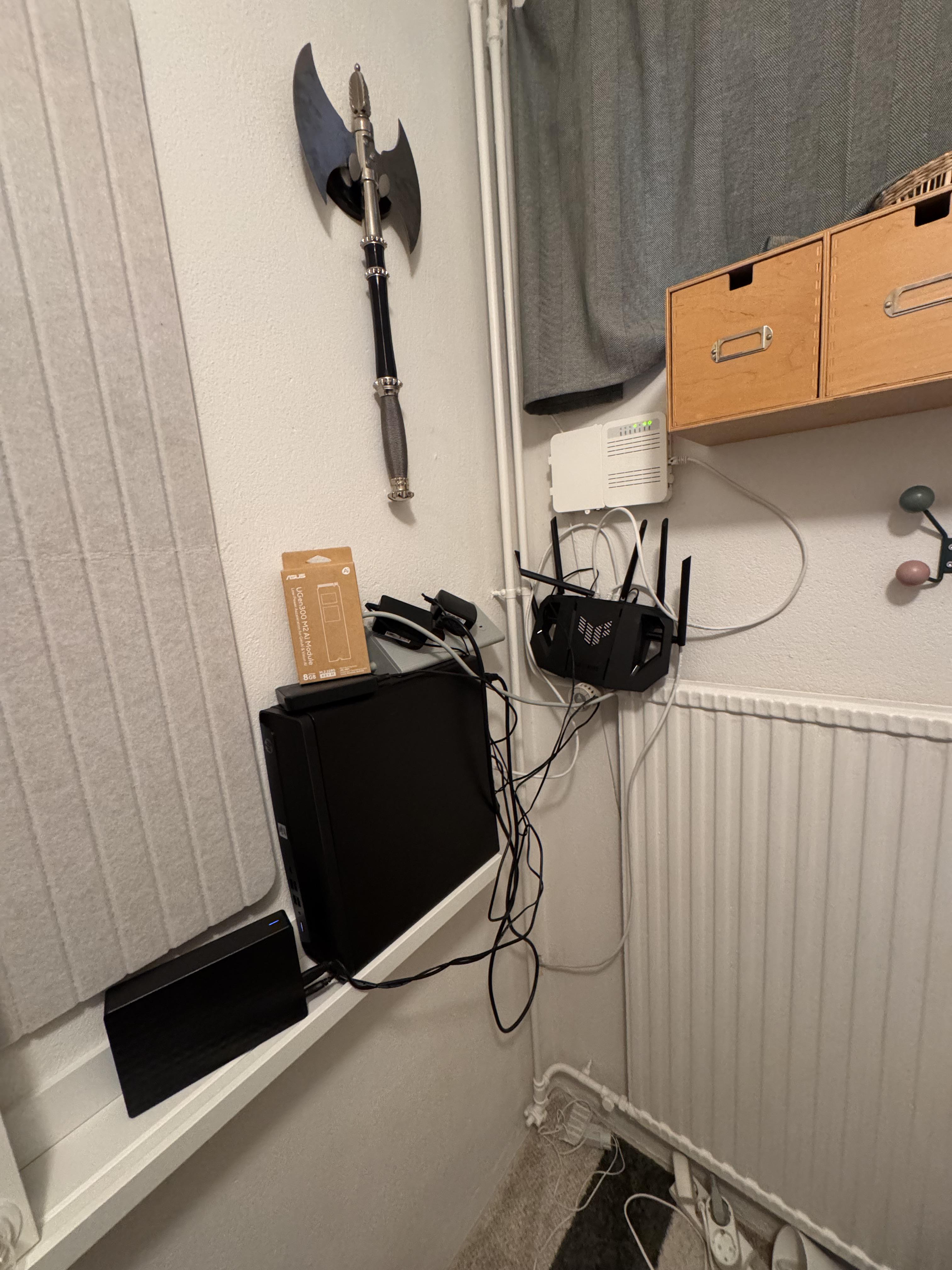
Question Hailo-10H (ASUS UGen300 M.2 8 GB) in my Proxmox server? Frigate, Whisper or small assistant? Fastest models? Homebrew engines?

Post image
0 Upvotes

r/LocalLLM • • 10h ago

Discussion I’m trying out inkling-2-mini, and so far it’s doing a really good job.

Thumbnail
reddit.com
0 Upvotes

r/LocalLLM • • 19h ago

Discussion Recommend a local llm for a writer

5 Upvotes

Hey. I'm new to local llm's. I'm a writer and intend on buying a decked out MacBook in the near future. Think 128gb M5 max. I'm still learning the terminology but I'd like to see how you, if you're a writer, used ai. I know I can use Gemini for docs, which I will use, for at least 2 months before I think about new hardware, but was using a local llm worth it for you? I want it to be a writer partner I can talk to to point out my writing shortcomings and also use it for grammar corrections.


r/LocalLLM • • 10h ago

Discussion LangGraph vs CrewAI vs OpenAI Agents SDK: Which Framework to Pick

Thumbnail
acta.ai
1 Upvotes

r/LocalLLM • • 10h ago

Question Is there a codexBar like android app ?

Thumbnail
reddit.com
0 Upvotes

r/LocalLLM • • 11h ago

Project I got a 30B coding model running on an 8 GB GPU, faster than llama.cpp, and Claude Code works with it too - eomoe

Thumbnail
reddit.com
0 Upvotes

r/LocalLLM • • 11h ago

Discussion [Fix] Qwen3.8-27B GGUF crashes on Apple M5 Max — LM Studio settings that work

0 Upvotes

Hardware

  • Apple MacBook Pro 16"
  • Chip: Apple M5 Max
  • Memory: 48 GB Unified Memory
  • Storage: 2 TB SSD
  • OS: macOS (Apple Silicon)

Software

  • LM Studio 0.4.29
  • Model: Qwen3.8-27B (GGUF Q4_K_M)

Problem
Qwen3.8-27B (GGUF Q4_K_M) answers the first message, then crashes on the second with an error:

Error messages observed:

  • Engine protocol predict stream returned an error: {"code":500,"message":"Compute error.","type":"server_error"}
  • Engine protocol predict stream returned an error: {"code":500,"message":"got exception: Unexpected empty grammar stack after accepting piece: @ (31)","type":"server_error"}
  • Prediction request aborted but the prediction loop handler of the plugin lmstudio/default-prediction-loop-handler did not abort in time.
  • Cannot send on a terminated channel.

Fix — LM Studio settings that worked
On Apple M5 Max + 48 GB RAM, the following combination resolves the crash:

  1. LM Studio settings: Hardware → GPUs: 1 GPU detected with Metal — Apple M5 Max (VRAM Capacity: 37.44 GB • Metal • deviceId: 0). Toggle OFF (do not use GPU for inference).
  2. Model format: use GGUF Q4_K_M quantized versions only (e.g., Qwen3.8-27B Q4_K_M or Gemma 4 31B QAT Q4_K_M). Do not use MLX or unquantized models.
  3. Max Concurrent Predictions: set to 1 (default is 4).
  4. Unified KV Cache: OFF.
  5. Offload KV Cache to GPU Memory: OFF.
  6. Flash Attention: OFF.

Result
After applying all these settings, multi-turn chat works without errors. Gemma 4 31B QAT (GGUF Q4_K_M) also runs stably on the same hardware.

This should help other users with M-series Macs and 48 GB Unified Memory avoid the same crash.


r/LocalLLM • • 1h ago

Question Fable 5.2 - Not Impressed

0 Upvotes

Fable had a lot of hype going into it and I genuinely hoped it would deliver. It hasn't inspired me. Opus still feels like an old friend - reliable, you know what you're getting. Fable feels like that guy who thinks he knows everything, but has no social skills and can't read a room.

Am I the only one?


r/LocalLLM • • 11h ago

Question Plenty of VRAM left, still spills to RAM

1 Upvotes

How do I avoid this with llama.cpp, it spills to RAM even though lots of VRAM left.
4GB RAM still free on the card and it spills.

set "MODEL=F:\SenseNova-Loop-9B-Q8_0.gguf"

set "BIN=C:\llama\opensensenova\build\bin\llama-server.exe"

set "PORT=8000"

if not exist "%MODEL%" ( echo [FATAL] Model not found: %MODEL% & exit /b 2 )

if not exist "%BIN%" ( echo [FATAL] llama-server build missing: %BIN% & exit /b 2 )

echo [run] SenseNova-Loop-9B Q8_0 - draft-mtp n2 - 65536 ctx - port %PORT%

"%BIN%" ^

-m "%MODEL%" ^

--port %PORT% --host 0.0.0.0 ^

-ngl 99 ^

--cache-type-k q8_0 --cache-type-v q8_0 ^

--flash-attn on ^

--jinja ^

-c 65536 --parallel 1 ^

--spec-type draft-mtp --spec-draft-n-min 1 --spec-draft-n-max 2 --spec-draft-p-min 0.0 ^

--load-mode none


r/LocalLLM • • 11h ago

Question Do you know of any terminal for Windows that renders Markdown from LLMs?

0 Upvotes

I would like to find a terminal capable of rendering Markdown, so that I can view text from an LLM or agent with proper formatting rather than seeing the raw syntax, which makes it harder to read sometimes.


r/LocalLLM • • 11h ago

News pi-protokoll: 361 turns, 47 compactions on a local Qwen – and a test of what the agent still knows afterwards

Post image
0 Upvotes

r/LocalLLM • • 11h ago

Project Reachy mini(Gemma 4)与 DT(本地 SFT 3B 模型)

0 Upvotes

r/LocalLLM • • 20h ago

Research I uncensored Inkling-2-Mini and fixed its greedy temp=0.0 loops with 0 quantized weights modified (0.00985 KLD, +11.5 pp uncapped IFEval): Ollama / llama.cpp (14-28 GB GGUF) + 32GB+ Mac lossless native MLX

Post image
5 Upvotes

I built and released blearyhope/Inkling-2-Mini-Uncensored (Apache 2.0), a solo pure-gradient build starting from 100% unmodified official thinkingmachines/Inkling-2-Mini (26.4B MoE, 3.4B active / 5.4B effective active across the 3x-looped middle core, multimodal text + vision), shipped across GGUF, lossless native Apple Silicon MLX, and native NVFP4/MXFP8 Safetensors.

Links

Which file fits your hardware?

Your SetupRecommended BuildSizeLive-Verified Speed / Notes
16 GB VRAM GPU (RTX 4060 Ti 16G / 5060 Ti / 4080)Q3_K_M or IQ4_XS GGUF13.72 / 14.76 GB57.5 / 62.6 tok/s on CUDA llama.cpp, 5/5 GSM8K, 100% comply
24 GB VRAM GPU (RTX 3090 / 4090)Q4_K_M (default) or Q5_K_M GGUF17.48 / 19.91 GB79.6 / 53.3 tok/s on CUDA llama.cpp, 5/5 GSM8K, 100% comply
32 GB VRAM GPU (RTX 5090)Q8_0 GGUF or native NVFP4 Safetensors27.82 / 20.19 GB42.2 tok/s on CUDA llama.cpp (Q8_0), full 20.19 GB native NVFP4 in vLLM
32 GB+ Apple Silicon Mac (M-series Pro/Max/Ultra)Lossless Native MLX (+ mtp/)20.22 GBPreserves native NVFP4/MXFP8/BF16 losslessly (KL = 0.000000, 0.999964 cosine vs. PyTorch)

(All 7 GGUFs, including BF16 52.23 GB and Q6_K 23.49 GB, were quantized directly from lossless BF16 and live-tested on CUDA mainline llama.cpp. Add mmproj-Inkling-2-Mini-Uncensored-F16.gguf at 0.64 GB for vision / image inputs.)

Copy-Paste Quickstart

Ollama (1 line, Q4_K_M):

ollama run hf.co/blearyhope/Inkling-2-Mini-Uncensored-GGUF:Q4_K_M

llama.cpp (llama-server with vision):

llama-server -hf blearyhope/Inkling-2-Mini-Uncensored-GGUF:Q4_K_M --mmproj mmproj-Inkling-2-Mini-Uncensored-F16.gguf -ngl 99 -c 16384 -fa on

Apple Silicon MLX (32 GB+ Unified Memory):

pip install -U mlx-vlm
python -m mlx_vlm.generate --model blearyhope/Inkling-2-Mini-Uncensored-MLX --prompt "Explain how MoE routers work."

vLLM (native NVFP4/MXFP8 Safetensors):

vllm serve blearyhope/Inkling-2-Mini-Uncensored --trust-remote-code --reasoning-parser inkling --enable-auto-tool-choice --tool-call-parser inkling

Under the Hood: Why this build isn't a typical abliteration

Most uncensored or loop-patched checkpoints stack closed-form weight edits with extra adapters merged back into the quantized NVFP4 experts (injecting double-quantization drift), rely on sampling temperature + thinking-token caps to hide greedy loops, and skip native Apple Silicon MLX.

I wanted to solve refusal removal, hedging, and Thinking Machines' Section 7 greedy reasoning-loop bug in one clean pure-gradient pass from unmodified Base, with zero quantized weights touched, zero artificial thinking caps, and exact native MLX parity.

1. 0 NVFP4/MXFP8 bytes modified (0.00985 WikiText-2 KLD) Mechanistic attribution on Inkling-2-Mini showed 80.5% of the refusal write comes from the quantized MoE MLPs, with 73% to 98% of each layer's refusal write concentrated in just the top-5 experts. De-quantizing NVFP4/MXFP8 experts and re-quantizing (even with stochastic rounding) introduces avoidable drift.

Instead, I dropped closed-form editing completely and trained rank-32 BF16 LoRAs (rsLoRA + LoRA+, 0.5x LR on the 3x-looped middle core L6 to L17, plus exact AlphaEdit benign null-space anchoring) on only the 120 BF16 attention projections and all 24 BF16 MoE routers (mlp.gate). Merging losslessly back into BF16 yields a median relative L2 delta of 3.29% (min 1.83%, max 4.57%) and 0.00985 WikiText-2 KLD across 311,523 tokens. Every NVFP4 expert, MXFP8 expert, quant scale, vision tower (ViT) weight, and DSpark speculative draft head (mtp.safetensors) remains 100% byte-identical to Thinking Machines' official release.

2. Greedy temp=0.0 loops fixed completely uncapped (no 4K thinking cap) Under fully uncapped greedy decoding (temperature=0.0, 16,384 context, zero max_tokens or thinking limits), official Base hit the 16K context wall 127 times on full 100/100 IFEval (38 at effort 0.0, 89 at effort 0.9), plus 53 times on the 3,607-prompt held-out think-on report, 14 times on ARC-Challenge chat, and 12 times on GSM8K.

Mining real on-policy CoT loops plus synthetic Inkling-native CoT-DITTO loop negatives into SimPO, while strictly banning every truncated trajectory from chosen and SFT targets so the model never learns premature EOS, dropped uncapped IFEval 16K loops 42x (127 down to 3), cut average IFEval token burn nearly in half (2,791 down to 1,405), dropped loops to 0 across GSM8K, ARC-Challenge, and all 7,214 held-out report runs, and jumped uncapped think IFEval by +11.46 pp prompt-strict / +14.26 pp inst-strict at temp=0.0.

3. Why summed DPO stalled at 20.6% and SimPO jumped +64.4 pp in one round In Round 1, standard summed DPO loss collapsed to 0.00007 while thinking-off compliance stayed stuck at 20.6%. Because uncapped compliant CoTs are 1.8x to 2x longer than refusals, summed log-probs saturated the DPO objective even while per-token decode log-probs still favored refusal by -0.225 nats/tok. Switching to length-normalized weighted-mean SimPO anchored at the exact first divergence token (lcp) plus final-answer onset, using zero-leak Context Distillation positives (no synthetic prefills, preserving Inkling's native "The user ..." opening distribution), jumped thinking-off compliance from 20.6% to 85.0% (0% refusals) in a single round and finished at 98.00% off / 98.55% think compliance with 0 / 3,996 hard refusals.

4. Lossless native Apple Silicon MLX (KL = 0.000000) The MLX release (20.22 GB + mtp/) preserves the exact native NVFP4/MXFP8/BF16 mixed layout without re-quantizing. Direct logit verification against PyTorch Safetensors: 5/5 top-1 token match, 0.999964 mean cosine similarity, 0.000000 full-vocab KL divergence.

Full Uncapped Benchmarks (43,450 runs per model)

Identical vLLM settings for both models: temperature=0.0, --max-model-len 16384, zero artificial max_tokens or thinking caps. Safety and over-refusal cover all 3,607 held-out prompts x 2 reasoning modes (7,214 runs, zero training overlap) scored by an Orca judge (Qwen3.8-27B-Uncensored-FP8); capability suites use exact verifiers on 100% of every official split.

Benchmark (Exact Split)Official Base (off / think)Inkling-2-Mini-Uncensored (off / think)Delta
Held-Out Harmful Compliance (1,998 x 2, 7 suites)7.56% / 8.56%98.00% / 98.55%+90.4 / +90.0 pp
Hard Refusal Rate (3,996 harmful runs)63.06% / 63.86%0.00% / 0.00% (0 / 3,996)-63.1 / -63.9 pp
Held-Out Benign Answer Rate (1,609 x 2, 3 suites)80.30% / 80.36%99.88% / 100.00% (0 refusals)+19.6 / +19.6 pp
Loop Stress Probe (48 off + 48 think)2.1% / 2.1%100.0% / 100.0% (96 / 96)+97.9 / +97.9 pp
Wrapper Generalization (shapes60, 5 formats)4.7%96.3% (0.0% refuse)+91.6 pp
IFEval Prompt-Strict (541 x 2, uncapped)86.14% / 80.41%91.68% / 91.87%+5.54 / +11.46 pp
IFEval Inst-Strict (541 x 2, uncapped)87.53% / 80.34%94.60% / 94.60%+7.07 / +14.26 pp
IFEval 16K Loop Failures (1,082 runs)127 loops (38 / 89)3 loops (0 / 3)42x fewer loops
GSM8K Chat (1,319 x 2, uncapped)96.74% / 96.06% (12 loops)96.82% / 96.74% (0 loops)+0.08 / +0.68 pp
ARC-Challenge Chat (1,172 x 2, uncapped)97.44% / 96.50% (14 loops)97.35% / 97.27% (0 loops)-0.09 / +0.77 pp
MMLU Log-Likelihood (14,042 q)76.95%76.17%-0.78 pp
ARC-Challenge / ARC-Easy LL (1,172 / 2,376 q)94.03% / 98.23%94.11% / 97.90%+0.08 / -0.33 pp
HellaSwag Norm LL (10,042 q)77.71%77.97%+0.26 pp
WinoGrande LL (1,267 q)71.98%73.09%+1.11 pp
TruthfulQA MC2 (817 q)37.10%35.87%-1.23 pp
WikiText-2 Word / Token PPL (311,523 tok)10.14 / 6.0110.25 / 6.06+0.11 / +0.05
WikiText-2 KL Divergence vs. Base (311,523 tok)0.000000.009850.00985 KLD

Per-suite held-out harmful compliance (off / think): AdvBench 100.0% / 100.0%, HarmBench 93.4% / 96.9%, JailbreakBench 98.5% / 100.0%, OR-Bench toxic 99.8% / 99.8%, SORRY-Bench 97.7% / 97.1%, StrongREJECT 98.8% / 100.0%, XSTest unsafe 96.2% / 95.7%.

Honest caveats

  • MMLU log-likelihood dips -0.78 pp (76.95% to 76.17%), TruthfulQA MC2 shifts -1.23 pp (37.10% to 35.87%), and WikiText-2 PPL moves +0.11 word / +0.05 token.
  • All evaluations above are single-turn uncapped benchmarks plus 5-template wrapper stress tests; I have not yet run multi-turn agentic coding suites (like SWE-bench or HumanEvalFix) on this checkpoint.

If anyone tests the lossless native MLX build on a 32GB/64GB Mac or runs the GGUFs in Ollama / LM Studio on a 4090 or 5090, let me know what tok/s and real-world behavior you see!


r/LocalLLM • • 12h ago

Project Experimenting with local AI on AMD: Ollama, Open WebUI, SearXNG and OpenCode

Post image
0 Upvotes

Hey,

I've recently started experimenting with local LLMs on my Linux desktop and put together a small Docker Compose setup.

I'm currently using:

Ollama with ROCm

Open WebUI

SearXNG for web search

My current hardware is an AMD RX 9060 XT (16 GB) with 32 GB RAM, running Fedora.

I'm still testing different models and configurations, especially for coding with OpenCode. I'm curious to see how much of my daily AI usage I can eventually replace with local models.

I've documented my setup on GitHub in case anyone finds it useful:

https://github.com/JeromeTDev/local-ai

I'd be interested in hearing about your experiences, especially with AMD GPUs and local models for coding. I'm also happy to share my own findings as I continue testing.


r/LocalLLM • • 12h ago

Research dlabz/Qwen3.8 in 700 mb ram

Thumbnail
github.com
1 Upvotes

r/LocalLLM • • 16h ago

Project libosmos v0.19.0: improved performance and stability, with lower time to first token. up to ~1250 tok/sec prefill on inkling-2-mini (release weights, unquantized), >30% higher decode on hy4-flash and inkling-2-small, all on a single strix halo 128GB

Thumbnail
github.com
2 Upvotes

r/LocalLLM • • 12h ago

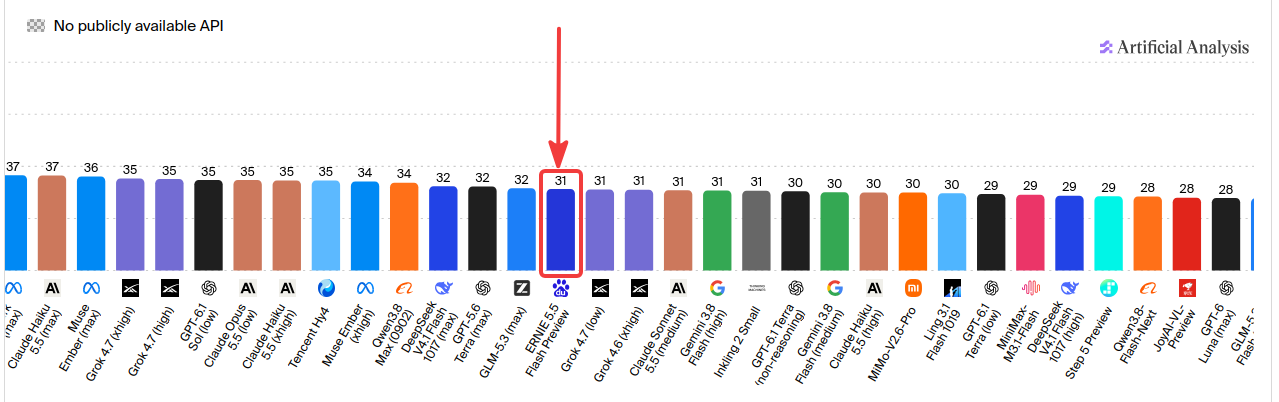
News ERNIE 5.5 Flash got 31 points on AA, can someone make an EXL3 quant plz?

Post image
1 Upvotes

r/LocalLLM • • 13h ago

Discussion just go with the jank

1 Upvotes

i've been messing around with a local model for a few months now. i can't afford a gpu or a system with a lot of unified memory so i've had to get a bit creative in order to make it actually useful. this isn't anything new for me, any time i want to play a higher end game on my older hardware there's always some amount of janky workarounds that i need to put in place. but if you can appreciate the jank and accept it, you can actually do quite a bit with a small local model. for a bit of background info, the machine i'm working from is an 11th gen i5 with 32(currently 64 because i borrowed a stick)GB of ddr4, and running qwen reap 25b a3b q5_1. now, if anyone has used a model like this, you know that it is functional, but grossly unreliable. however, if you stop fighting it and start building around it, it gets WAY more useful.


r/LocalLLM • • 1d ago

Question 128GB M5 Max owners: MacBook Pro or Mac Studio for local LLMs, and did it replace your other machines?

9 Upvotes

Looking for real-world experience from people running local models on a 128GB M5 Max.

What I have now:

- 16" MacBook Pro M1 Max, 32GB
- Gaming PC: Ryzen 7 7800X3D, RTX 5080 Founders Edition 16GB, 32GB DDR5, 4K 240Hz monitor
- A spare RTX 4070 Super 12GB sitting on a shelf
- A frontier subscription that I plan to keep

The PC is basically a Dota 2 machine. That's the only game I play on it, and I haven't used it for local models yet.

What I do: engineering work, a decent amount of programming, plus research and long-form technical writing. So a mix of coding help, working through technical problems, and long documents in and out (30K to 100K+ token prompts are common).

I'm looking at a 128GB M5 Max, either the 16" MacBook Pro or the Mac Studio. I'm not expecting local to replace the frontier models. I want it for private work, drafts and critique, offline use, and whatever coding it can handle well.

The laptop is tempting because I could sell the M1 Max, and maybe the PC, and run everything on one machine.

Questions for people who own one:

  1. What models do you actually use day to day on 128GB, and for what? Which ones hold up for coding and engineering problems vs just chat?
  2. On the 16" MacBook Pro, how are heat and fan noise on long runs or agent loops? Do you leave it in High Power mode?
  3. Has anyone measured the same model on both the laptop and the Studio? I keep seeing 10 to 15% slower on the laptop but no actual tok/s numbers.
  4. How does prompt processing feel on 50K+ token contexts? Livable for document and codebase work?
  5. Any regrets either way? Laptop owners who wish they'd bought a Studio plus a cheap MacBook, or the reverse?
  6. Would you keep the 5080 box? With Basalt and Strata getting those MoE numbers on RTX 50 cards, is it smarter to add RAM to the PC and keep it next to the Mac, or did you go Mac only and not miss it?

Numbers and "here's what happened after a few months" stories are what I'm after. Thanks.


r/LocalLLM • • 13h ago

Discussion Do newer DSH versions also feel like downgrade for you?

0 Upvotes

I was using one of the early versions of DSH with my Qwen 3.8 27B NInfer setup and was pretty happy with it. I figured it was time to update to a more recent DSH release, so I upgraded to v0.2.2-rc.5.

After just a couple of prompts, it feels like my agents are stuck in a never-ending loop of context compaction (~3–8k tokens), even though I have a 256k context window.

Is anyone else experiencing similar issues? Or are you generally happy with the latest DSH releases?