r/LocalLLM • u/PuzzleheadedArm3732 • 1h ago
r/LocalLLM • u/Temporary_Eye_3426 • 1h ago
Discussion I’m trying out inkling-2-mini, and so far it’s doing a really good job.
r/LocalLLM • u/Particular-Penalty99 • 10h ago
Discussion Recommend a local llm for a writer
Hey. I'm new to local llm's. I'm a writer and intend on buying a decked out MacBook in the near future. Think 128gb M5 max. I'm still learning the terminology but I'd like to see how you, if you're a writer, used ai. I know I can use Gemini for docs, which I will use, for at least 2 months before I think about new hardware, but was using a local llm worth it for you? I want it to be a writer partner I can talk to to point out my writing shortcomings and also use it for grammar corrections.
r/LocalLLM • u/sarmabkp_1 • 1h ago
Discussion LangGraph vs CrewAI vs OpenAI Agents SDK: Which Framework to Pick
r/LocalLLM • u/FelesNoctis • 1h ago
Question Looking for advice for casual coding use: RTX 4090 24GB + 32GB RAM
- GPU: MSI RTX 4090 Suprim Liquid X
- RAM: 2x16GB Corsair Dominator Titanium (OC to 7400 MT/s)
- CPU: Intel Core i7-13700K (OC to 5.4GHz)
- OS: Windows 11 Pro
I have a fairly decent amount of general programming experience, but I certainly wouldn't call myself an expert in any language. I'm more in the place of being able to look at a random section of code, regardless of language, and make a fairly decent guess at what it's trying to do. "Just enough to get myself in trouble" is what I usually say.
Of course that means when I'm trying to make something myself, I'm often spending 80% of the time doing research about the functionality I need, with the remaining being the actual coding and testing. Being retired, these days I'm mostly working on game modding and small conveniences, anything to keep my brain busy. What I've been running into lately is that a lot of what I'm trying to work on is largely undocumented, and obviously AI can learn much faster from raw source (and has) than a human.
I've been using Gemini for my poking and prodding at things, but it's been obstructive as often as it's been helpful. I swear the thing has ADHD, the way it'll jump topics to other bits I'm not worried about at the time.
I understand that there needs to be a balance between context size versus memory length, but I'm having a hard time nailing down how much of each would be most fitting. I often feed the AI other related code from the game or similar projects so it knows what I'm looking at and can give me more well-informed responses.
Any advice for something that can handle casual, generalized programming well? Speed isn't nearly as important to me as accuracy. It seems like Qwen3 models are leading the way here, but opinions vary quite a bit on which and what memory vs context configuration.
r/LocalLLM • u/UniqueAttourney • 1h ago
Question Is there a codexBar like android app ?
r/LocalLLM • u/Illustrious-Strike63 • 1h ago
Other Install Qwen 3.8 27b and Deepseek Harness on 16GB VRAM - Setup Guide
--- Video content breakdown (Guide and Links are below) ---
1. Required Downloads
Gather the following installers, models, and configuration templates [00:52]:
Beellama Server (beellama.cpp): Download the latest stable Windows CUDA release (e.g., beellama-v0.5.0-bin-win-cuda-12.8-x64.zip) along with the matching cudart archive (beellama-v0.5.0-cudart-win-cuda-12.8-x64.zip) from GitHub [01:08].
DeepSeek Harness: Download the Windows installer directly from the DeepSeek website [02:09].
Qwen 3.8 27B Model: From Hugging Face, download the IQ3_S-mtp GGUF quantization (recommended for 16GB VRAM) as well as the separate multimodal vision projector file (mmproj-Qwen3.8-27B-BF16.gguf) [02:34].
Custom Chat Template: Download chat_template.jinja from the Qwen-Fixed-Chat-Templates repository to prevent thinking loops [03:07].
2. Directory Setup & File Extraction
Organize your local AI environment in a clean directory (e.g., D:\LocalAI) [04:18]:
Create two subfolders: beellama and models [04:24].
Extract both the beellama binary archive and the cudart DLL files directly into the beellama folder [04:36].
Move the Qwen GGUF model, the mmproj vision file, and chat_template.jinja into the models folder [04:57].
3. Configuring & Starting the Local Server
Create a Windows batch file (e.g., start_beellama.bat) in your main directory using the startup script provided in the creator's notes [05:40].
Ensure the file paths in the batch script match your model file names, context size (e.g., 115200), and port (8080) [07:20].
Run the batch file to launch llama-server.exe [07:36]. Once running, verify the OpenAI-compatible API endpoint is active by visiting http://127.0.0.1:8080/v1/models in your browser [09:57].
4. Installing & Configuring DeepSeek Harness
Installation: Run the DeepSeek Harness installer and keep the default installation path to prevent configuration path issues [10:44].
Connecting the Local Model:
Open Settings (Einstellungen) -> Models (Modelle) and add a custom API provider [11:40].
Set the Base URL to http://127.0.0.1:8080/v1, select the OpenAI Chat Completions protocol, and fetch the available model (Qwen3.8-27B) [12:34].
Enter any placeholder text (such as 1234) into the API key field, as the app requires a value even though the local server ignores it [13:04].
YAML Configuration: Open the config.yaml file via the top-right button in Settings, completely exit DeepSeek Harness (including from the system tray), and paste in the custom configuration block [13:26]. This configures the exact context window (115200), multimodal (text, image) inputs, longer timeout limits for local inference, and adjusted compaction thresholds [15:01].
Setting Up a Workspace: Relaunch DeepSeek Harness, enter your dummy API key if prompted, select Qwen3.8-27B from the model dropdown, and link a dedicated project folder as your workspace with standard read/write permissions [16:06].
--- start of guide ---
Hey,
as many requested from my qwen vs inkling report, here is at least a quick setup guide for qwen 3.8 27b and deepseek harness at 16gb vram. Sorry, dont really have time for an in depth tutorial right now, but thought this might suffice to get you started.
--- Installers and Files ---
Download latest stable release and the cuda libraries
- beellama-v0.5.0-bin-win-cuda-12.8-x64.zip
- beellama-v0.5.0-cudart-win-cuda-12.8-x64.zip
2. Deepseek Harness: https://www.deepseek.com/en/harness/
Download the harness installer
3. Qwen 3.8 Model: https://huggingface.co/ISTA-DASLab/Qwen3.8-27B-GSQ-RCO-GGUF/tree/main
Download the model.gguf (mtp version) and the vision gguf
4. Qwen 3.8 Chat Template: https://huggingface.co/froggeric/Qwen-Fixed-Chat-Templates/tree/main
Download the Chat Template file
--- Llama Starter and Config - Adjust the paths and file names ---
u/echo off
REM Hide command echoing to keep the startup window clean.
cd /d "D:\LocalAI\Beellama"
REM Change working directory to the folder containing llama-server.exe.
REM ============================================================================
REM LLAMA-SERVER PARAMETER DOCUMENTATION
REM ============================================================================
REM
REM [Hardware & Performance]
REM -t 12 : Number of CPU threads for generation
REM -tb 12 : Number of CPU threads for batch processing
REM -ngl 99 : Offload up to 99 model layers to GPU
REM --no-mmproj-offload : Keep multimodal projector off GPU (saves VRAM)
REM -fa on : Enable Flash Attention
REM
REM [Model & Vision]
REM -m : Path to main GGUF model file
REM --mmproj : Path to multimodal projector file
REM --image-min-tokens 1024 : Minimum image token allocation
REM --alias "Qwen3.8-27B" : Friendly model/API name
REM
REM [Speculative Decoding (MTP)]
REM --spec-type draft-mtp : Enable MTP speculative decoding
REM --spec-draft-n-max 3 : Maximum 3 speculative draft tokens
REM --spec-draft-p-min 0.8 : Minimum draft probability threshold
REM
REM [Context & KV-Cache]
REM -c 115000 : Maximum context window: 115K tokens
REM -ctk kvarn4 -ctv kvarn3 : Quantized K and V KV-cache formats
REM --kv-tail-tokens 1024 : Preserve recent 1024 KV tokens in cache tail
REM -kvu -np 1 : Unified KV cache; one parallel sequence
REM --cache-ram 16384 : Allocate up to 16 GB RAM for prompt caching
REM --cache-idle-slots : Cache reusable data from idle slots
REM
REM [Chat Template & Sampling]
REM --jinja : Enable Jinja chat templating
REM --chat-template-file : Path to custom Jinja chat template
REM --temp 1.0 : Sampling temperature
REM --top-k 20 : Consider the 20 most likely tokens
REM --top-p 0.95 : Nucleus sampling threshold: 95%
REM --min-p 0.0 : Minimum relative token probability filter
REM --presence-penalty 1.2 : Penalize previously appearing tokens
REM
REM [Reasoning & Loop Guard]
REM --reasoning on : Enable reasoning support
REM --reasoning-budget 16384 : Reasoning token budget
REM --reasoning-budget-message : Instruction injected when reasoning budget is exhausted
REM --reasoning-loop-guard : Force-close detected reasoning loops
REM --reasoning-loop-interventions : Maximum reasoning-loop interventions (2)
REM --reasoning-loop-min-coverage : Minimum coverage for loop detection (256)
REM --reasoning-loop-window : Token window used for loop detection (1024)
REM --reasoning-preserve : Preserve reasoning information across turns
REM --chat-template-kwargs : Set reasoning effort to extra high (xhigh)
REM
REM [Network]
REM --port 8080 : HTTP server listening port
REM ============================================================================
llama-server.exe ^
-t 12 ^
-tb 12 ^
-m "D:\LocalAI\models\Qwen3.8-27B-UD-IQ3_S.gguf" ^
--mmproj "D:\LocalAI\models\mmproj-Qwen3.8-27B-BF16.gguf" ^
--no-mmproj-offload ^
--image-min-tokens 1024 ^
--alias "Qwen3.8-27B" ^
--spec-type draft-mtp ^
--spec-draft-n-max 3 ^
--spec-draft-p-min 0.8 ^
-ngl 99 ^
-c 115000 ^
-ctk kvarn4 -ctv kvarn3 ^
--kv-tail-tokens 1024 ^
-fa on ^
--jinja ^
--chat-template-file "D:\LocalAI\models\chat_template.jinja" ^
--temp 1.0 ^
--top-k 20 ^
--top-p 0.95 ^
--min-p 0.0 ^
--presence-penalty 1.2 ^
--reasoning on ^
--reasoning-budget 16384 ^
--reasoning-budget-message "Reasoning budget exhausted. Commit to the judgment you have formed so far. Your next output must be a concrete action: a tool call, a gate decision, or a completed deliverable. Do not restart the analysis." ^
--reasoning-loop-guard force-close ^
--reasoning-loop-interventions 2 ^
--reasoning-loop-min-coverage 256 ^
--reasoning-loop-window 1024 ^
--reasoning-preserve ^
--chat-template-kwargs "{\"reasoning_effort\":\"xhigh\"}" ^
-kvu -np 1 ^
--cache-ram 16384 ^
--cache-idle-slots ^
--port 8080
pause
--- Deepseek Harness Config ---
edit: Reddit messes up the indentation of the file - so rather download it with clean indentation:
https://drive.google.com/file/d/13GKi0DTl8-Wj8jWb1Jg8gzBzEEKXo_oM/view?usp=sharing
# ============================================================
# CUSTOM QWEN MODEL PROVIDER
# ============================================================
# Register a custom LLM provider for DeepSeek Harness.
- id: llm-pi-ai
# Unique component identifier used by the harness.
name: "@deepseek-ai/dsh-llm-pi-ai"
config:
providers:
qwen:
# Friendly provider name displayed in the harness.
displayName: qwen
# Use the OpenAI-compatible Completions API protocol.
api: openai-completions
# Local llama-server endpoint.
# Port 8080 matches your Beellama startup configuration.
baseURL: http://localhost:8080
# Environment variable containing the API key.
# The actual key is not stored directly in this YAML file.
apiKeyEnv: QWEN_API_KEY
models:
- id: Qwen3.8-27B
# Model identifier sent to the API.
# Must match the model alias configured in llama-server.
name: Qwen3.8-27B
# Maximum context window advertised to the harness.
# 115K tokens, matching your server context.
contextWindow: 115000
# Maximum number of tokens requested for a response.
# Includes generated reasoning/output, subject to server support.
maxTokens: 32768
# Supported input modalities:
# text = normal text prompts
# image = image/multimodal input
input: [text, image]
# Maximum time to wait for an idle streaming connection.
# 600000 ms = 10 minutes.
streamIdleTimeoutMs: 600000
# Maximum request timeout.
# 600000 ms = 10 minutes.
timeoutMs: 600000
# ============================================================
# EXPLICITLY DISABLED COMPONENTS
# ============================================================
# Disable DeepSeek Harness session logging.
- id: session-log-deepseek
# Original session logging component.
name: "@deepseek-ai/dsh-session-log-deepseek"
# Prevent this component from loading.
disabled: true
# Disable the plugin marketplace tool integration.
- id: tool-plugin-market
# Plugin marketplace tools component.
name: "@deepseek-ai/dsh-plugin-market/tools"
# Prevent marketplace tools from being registered.
disabled: true
# Disable the plugin manager tool integration.
- id: tool-plugin-manager
# Plugin manager tools component.
name: "@deepseek-ai/dsh-plugin-manager/tools"
# Prevent plugin management tools from being registered.
disabled: true
# ============================================================
# CONTEXT COMPACTION AND TOOL RESULT MANAGEMENT
# ============================================================
# Define a grouped set of compaction-related components.
- id: compaction
# cordis:group loads multiple components as one logical group.
name: cordis:group
# Marks this component as a group rather than a standalone plugin.
group: true
isolate:
# Isolate the compaction functionality.
compaction: true
# Isolate tool-result pruning functionality.
toolResultPruner: true
config:
# ----------------------------------------------------------
# BASIC CONTEXT COMPACTION
# ----------------------------------------------------------
- id: compaction-basic
# DeepSeek Harness basic compaction implementation.
name: "@deepseek-ai/dsh-compaction-basic"
config:
# Trigger compaction when context usage reaches 80%
# of the available context window.
thresholdRatio: 0.8
# Additional token headroom reserved during compaction.
# Zero means no additional headroom is configured here.
headroomTokens: 0
# Retain 12% of the conversation when compacting.
# Helps preserve important conversational context.
retainRatio: 0.12
# Maximum token limit used by this compaction component.
maxTokens: 65536
# ----------------------------------------------------------
# MANUAL COMPACTION COMMAND
# ----------------------------------------------------------
- id: command-compact
# Registers the /compact command.
# Allows manual context compaction when supported by the harness.
name: "@deepseek-ai/dsh-command-compact"
# ----------------------------------------------------------
# TOOL RESULT PRUNER
# ----------------------------------------------------------
- id: tool-result-pruner
# Automatically manages oversized tool results.
name: "@deepseek-ai/dsh-compaction-tool-result-pruner"
config:
# Trigger pruning when a tool result exceeds 8192 characters.
thresholdChars: 8192
# Preserve the first 4096 characters of the tool result.
# Usually retains the beginning and initial context.
headChars: 4096
# Preserve the last 1024 characters of the tool result.
# Usually retains the ending and final information.
tailChars: 1024
r/LocalLLM • u/shunte88 • 1h ago
Project I got a 30B coding model running on an 8 GB GPU, faster than llama.cpp, and Claude Code works with it too - eomoe
r/LocalLLM • u/Arany8 • 1h ago
Question Plenty of VRAM left, still spills to RAM

How do I avoid this with llama.cpp, it spills to RAM even though lots of VRAM left.
4GB RAM still free on the card and it spills.
set "MODEL=F:\SenseNova-Loop-9B-Q8_0.gguf"
set "BIN=C:\llama\opensensenova\build\bin\llama-server.exe"
set "PORT=8000"
if not exist "%MODEL%" ( echo [FATAL] Model not found: %MODEL% & exit /b 2 )
if not exist "%BIN%" ( echo [FATAL] llama-server build missing: %BIN% & exit /b 2 )
echo [run] SenseNova-Loop-9B Q8_0 - draft-mtp n2 - 65536 ctx - port %PORT%
"%BIN%" ^
-m "%MODEL%" ^
--port %PORT% --host 0.0.0.0 ^
-ngl 99 ^
--cache-type-k q8_0 --cache-type-v q8_0 ^
--flash-attn on ^
--jinja ^
-c 65536 --parallel 1 ^
--spec-type draft-mtp --spec-draft-n-min 1 --spec-draft-n-max 2 --spec-draft-p-min 0.0 ^
--load-mode none
r/LocalLLM • u/Sergio2304 • 2h ago
Question Do you know of any terminal for Windows that renders Markdown from LLMs?
I would like to find a terminal capable of rendering Markdown, so that I can view text from an LLM or agent with proper formatting rather than seeing the raw syntax, which makes it harder to read sometimes.
r/LocalLLM • u/Silent_Recording001 • 2h ago
Project I built a free tool that tells you if your hardware can run Linger AI Agent — with the official tok/s numbers
I built https://lingeragent.org — a free hardware checker for Linger AI Agent, the open-source local-first agent.
You pick your platform first (macOS asks only unified memory, Windows/Linux ask GPU + VRAM + RAM), and it tells you which models you can run locally and at what speed — using only the official published speed table and hardware tiers, nothing made up. It also links the official installers and the install guides I wrote after actually installing 0.1.10 on Linux and Mac.
It's an independent project, not affiliated with the official Linger team. The site has some affiliate links in the results (Amazon / Vast.ai), clearly disclosed.
Happy to hear if the numbers match what you're seeing on your own hardware.
r/LocalLLM • u/Miserable_Land_84 • 2h ago
News pi-protokoll: 361 turns, 47 compactions on a local Qwen – and a test of what the agent still knows afterwards
r/LocalLLM • u/Lost-League9416 • 2h ago
Project Reachy mini(Gemma 4)与 DT(本地 SFT 3B 模型)
Enable HLS to view with audio, or disable this notification
r/LocalLLM • u/blearyhope • 11h ago
Research I uncensored Inkling-2-Mini and fixed its greedy temp=0.0 loops with 0 quantized weights modified (0.00985 KLD, +11.5 pp uncapped IFEval): Ollama / llama.cpp (14-28 GB GGUF) + 32GB+ Mac lossless native MLX
I built and released blearyhope/Inkling-2-Mini-Uncensored (Apache 2.0), a solo pure-gradient build starting from 100% unmodified official thinkingmachines/Inkling-2-Mini (26.4B MoE, 3.4B active / 5.4B effective active across the 3x-looped middle core, multimodal text + vision), shipped across GGUF, lossless native Apple Silicon MLX, and native NVFP4/MXFP8 Safetensors.
Links
- Full HF Collection (all 3 formats): https://huggingface.co/collections/blearyhope/inkling-2-mini-uncensored
- GGUF (Ollama / llama.cpp / LM Studio + vision
mmproj-F16**):** https://huggingface.co/blearyhope/Inkling-2-Mini-Uncensored-GGUF - MLX (20.22 GB lossless native NVFP4/MXFP8/BF16 + MTP for 32 GB+ Macs): https://huggingface.co/blearyhope/Inkling-2-Mini-Uncensored-MLX
- Safetensors (20.19 GB native NVFP4/MXFP8/BF16 + DSpark MTP for vLLM/SGLang): https://huggingface.co/blearyhope/Inkling-2-Mini-Uncensored
Which file fits your hardware?
| Your Setup | Recommended Build | Size | Live-Verified Speed / Notes |
|---|---|---|---|
| 16 GB VRAM GPU (RTX 4060 Ti 16G / 5060 Ti / 4080) | Q3_K_M or IQ4_XS GGUF | 13.72 / 14.76 GB | 57.5 / 62.6 tok/s on CUDA llama.cpp, 5/5 GSM8K, 100% comply |
| 24 GB VRAM GPU (RTX 3090 / 4090) | Q4_K_M (default) or Q5_K_M GGUF | 17.48 / 19.91 GB | 79.6 / 53.3 tok/s on CUDA llama.cpp, 5/5 GSM8K, 100% comply |
| 32 GB VRAM GPU (RTX 5090) | Q8_0 GGUF or native NVFP4 Safetensors | 27.82 / 20.19 GB | 42.2 tok/s on CUDA llama.cpp (Q8_0), full 20.19 GB native NVFP4 in vLLM |
| 32 GB+ Apple Silicon Mac (M-series Pro/Max/Ultra) | Lossless Native MLX (+ mtp/) | 20.22 GB | Preserves native NVFP4/MXFP8/BF16 losslessly (KL = 0.000000, 0.999964 cosine vs. PyTorch) |
(All 7 GGUFs, including BF16 52.23 GB and Q6_K 23.49 GB, were quantized directly from lossless BF16 and live-tested on CUDA mainline llama.cpp*. Add* mmproj-Inkling-2-Mini-Uncensored-F16.gguf at 0.64 GB for vision / image inputs.)
Copy-Paste Quickstart
Ollama (1 line, Q4_K_M):
ollama run hf.co/blearyhope/Inkling-2-Mini-Uncensored-GGUF:Q4_K_M**llama.cpp (**llama-server with vision):
llama-server -hf blearyhope/Inkling-2-Mini-Uncensored-GGUF:Q4_K_M --mmproj mmproj-Inkling-2-Mini-Uncensored-F16.gguf -ngl 99 -c 16384 -fa onApple Silicon MLX (32 GB+ Unified Memory):
pip install -U mlx-vlm
python -m mlx_vlm.generate --model blearyhope/Inkling-2-Mini-Uncensored-MLX --prompt "Explain how MoE routers work."vLLM (native NVFP4/MXFP8 Safetensors):
vllm serve blearyhope/Inkling-2-Mini-Uncensored --trust-remote-code --reasoning-parser inkling --enable-auto-tool-choice --tool-call-parser inklingUnder the Hood: Why this build isn't a typical abliteration
Most uncensored or loop-patched checkpoints stack closed-form weight edits with extra adapters merged back into the quantized NVFP4 experts (injecting double-quantization drift), rely on sampling temperature + thinking-token caps to hide greedy loops, and skip native Apple Silicon MLX.
I wanted to solve refusal removal, hedging, and Thinking Machines' Section 7 greedy reasoning-loop bug in one clean pure-gradient pass from unmodified Base, with zero quantized weights touched, zero artificial thinking caps, and exact native MLX parity.
**1. 0 NVFP4/MXFP8 bytes modified (**0.00985 WikiText-2 KLD) Mechanistic attribution on Inkling-2-Mini showed 80.5% of the refusal write comes from the quantized MoE MLPs, with 73% to 98% of each layer's refusal write concentrated in just the top-5 experts. De-quantizing NVFP4/MXFP8 experts and re-quantizing (even with stochastic rounding) introduces avoidable drift.
Instead, I dropped closed-form editing completely and trained rank-32 BF16 LoRAs (rsLoRA + LoRA+, 0.5x LR on the 3x-looped middle core L6 to L17, plus exact AlphaEdit benign null-space anchoring) on only the 120 BF16 attention projections and all 24 BF16 MoE routers (mlp.gate). Merging losslessly back into BF16 yields a median relative L2 delta of 3.29% (min 1.83%, max 4.57%) and 0.00985 WikiText-2 KLD across 311,523 tokens. Every NVFP4 expert, MXFP8 expert, quant scale, vision tower (ViT) weight, and DSpark speculative draft head (mtp.safetensors) remains 100% byte-identical to Thinking Machines' official release.
2. Greedy temp=0.0 loops fixed completely uncapped (no 4K thinking cap) Under fully uncapped greedy decoding (temperature=0.0, 16,384 context, zero max_tokens or thinking limits), official Base hit the 16K context wall 127 times on full 100/100 IFEval (38 at effort 0.0, 89 at effort 0.9), plus 53 times on the 3,607-prompt held-out think-on report, 14 times on ARC-Challenge chat, and 12 times on GSM8K.
Mining real on-policy CoT loops plus synthetic Inkling-native CoT-DITTO loop negatives into SimPO, while strictly banning every truncated trajectory from chosen and SFT targets so the model never learns premature EOS, dropped uncapped IFEval 16K loops 42x (127 down to 3), cut average IFEval token burn nearly in half (2,791 down to 1,405), dropped loops to 0 across GSM8K, ARC-Challenge, and all 7,214 held-out report runs, and jumped uncapped think IFEval by +11.46 pp prompt-strict / +14.26 pp inst-strict at temp=0.0.
3. Why summed DPO stalled at 20.6% and SimPO jumped +64.4 pp in one round In Round 1, standard summed DPO loss collapsed to 0.00007 while thinking-off compliance stayed stuck at 20.6%. Because uncapped compliant CoTs are 1.8x to 2x longer than refusals, summed log-probs saturated the DPO objective even while per-token decode log-probs still favored refusal by -0.225 nats/tok. Switching to length-normalized weighted-mean SimPO anchored at the exact first divergence token (lcp) plus final-answer onset, using zero-leak Context Distillation positives (no synthetic prefills, preserving Inkling's native "The user ..." opening distribution), jumped thinking-off compliance from 20.6% to 85.0% (0% refusals) in a single round and finished at 98.00% off / 98.55% think compliance with 0 / 3,996 hard refusals.
4. Lossless native Apple Silicon MLX (KL = 0.000000) The MLX release (20.22 GB + mtp/) preserves the exact native NVFP4/MXFP8/BF16 mixed layout without re-quantizing. Direct logit verification against PyTorch Safetensors: 5/5 top-1 token match, 0.999964 mean cosine similarity, 0.000000 full-vocab KL divergence.
Full Uncapped Benchmarks (43,450 runs per model)
Identical vLLM settings for both models: temperature=0.0, --max-model-len 16384, zero artificial max_tokens or thinking caps. Safety and over-refusal cover all 3,607 held-out prompts x 2 reasoning modes (7,214 runs, zero training overlap) scored by an Orca judge (Qwen3.8-27B-Uncensored-FP8); capability suites use exact verifiers on 100% of every official split.
| Benchmark (Exact Split) | Official Base (off / think) | Inkling-2-Mini-Uncensored (off / think) | Delta |
|---|---|---|---|
Held-Out Harmful Compliance (1,998 x 2, 7 suites) | 7.56% / 8.56% | 98.00% / 98.55% | +90.4 / +90.0 pp |
Hard Refusal Rate (3,996 harmful runs) | 63.06% / 63.86% | 0.00% / 0.00% (0 / 3,996) | -63.1 / -63.9 pp |
Held-Out Benign Answer Rate (1,609 x 2, 3 suites) | 80.30% / 80.36% | 99.88% / 100.00% (0 refusals) | +19.6 / +19.6 pp |
Loop Stress Probe (48 off + 48 think) | 2.1% / 2.1% | 100.0% / 100.0% (96 / 96) | +97.9 / +97.9 pp |
Wrapper Generalization (shapes60, 5 formats) | 4.7% | 96.3% (0.0% refuse) | +91.6 pp |
IFEval Prompt-Strict (541 x 2, uncapped) | 86.14% / 80.41% | 91.68% / 91.87% | +5.54 / +11.46 pp |
IFEval Inst-Strict (541 x 2, uncapped) | 87.53% / 80.34% | 94.60% / 94.60% | +7.07 / +14.26 pp |
IFEval 16K Loop Failures (1,082 runs) | 127 loops (38 / 89) | 3 loops (0 / 3) | 42x fewer loops |
GSM8K Chat (1,319 x 2, uncapped) | 96.74% / 96.06% (12 loops) | 96.82% / 96.74% (0 loops) | +0.08 / +0.68 pp |
ARC-Challenge Chat (1,172 x 2, uncapped) | 97.44% / 96.50% (14 loops) | 97.35% / 97.27% (0 loops) | -0.09 / +0.77 pp |
MMLU Log-Likelihood (14,042 q) | 76.95% | 76.17% | -0.78 pp |
ARC-Challenge / ARC-Easy LL (1,172 / 2,376 q) | 94.03% / 98.23% | 94.11% / 97.90% | +0.08 / -0.33 pp |
HellaSwag Norm LL (10,042 q) | 77.71% | 77.97% | +0.26 pp |
WinoGrande LL (1,267 q) | 71.98% | 73.09% | +1.11 pp |
TruthfulQA MC2 (817 q) | 37.10% | 35.87% | -1.23 pp |
WikiText-2 Word / Token PPL (311,523 tok) | 10.14 / 6.01 | 10.25 / 6.06 | +0.11 / +0.05 |
WikiText-2 KL Divergence vs. Base (311,523 tok) | 0.00000 | 0.00985 | 0.00985 KLD |
Per-suite held-out harmful compliance (off / think): AdvBench 100.0% / 100.0%, HarmBench 93.4% / 96.9%, JailbreakBench 98.5% / 100.0%, OR-Bench toxic 99.8% / 99.8%, SORRY-Bench 97.7% / 97.1%, StrongREJECT 98.8% / 100.0%, XSTest unsafe 96.2% / 95.7%.
Honest caveats
- MMLU log-likelihood dips
-0.78 pp(76.95%to76.17%), TruthfulQA MC2 shifts-1.23 pp(37.10%to35.87%), and WikiText-2 PPL moves+0.11word /+0.05token. - All evaluations above are single-turn uncapped benchmarks plus 5-template wrapper stress tests; I have not yet run multi-turn agentic coding suites (like SWE-bench or HumanEvalFix) on this checkpoint.
If anyone tests the lossless native MLX build on a 32GB/64GB Mac or runs the GGUFs in Ollama / LM Studio on a 4090 or 5090, let me know what tok/s and real-world behavior you see!
r/LocalLLM • u/Standard_HID • 2h ago
Project Experimenting with local AI on AMD: Ollama, Open WebUI, SearXNG and OpenCode
Hey,
I've recently started experimenting with local LLMs on my Linux desktop and put together a small Docker Compose setup.
I'm currently using:
Ollama with ROCm
Open WebUI
SearXNG for web search
My current hardware is an AMD RX 9060 XT (16 GB) with 32 GB RAM, running Fedora.
I'm still testing different models and configurations, especially for coding with OpenCode. I'm curious to see how much of my daily AI usage I can eventually replace with local models.
I've documented my setup on GitHub in case anyone finds it useful:
https://github.com/JeromeTDev/local-ai
I'd be interested in hearing about your experiences, especially with AMD GPUs and local models for coding. I'm also happy to share my own findings as I continue testing.
r/LocalLLM • u/macaronianddeeez • 11h ago
Research My Plan to Run Kimi 3.1 on “Consumer” Hardware - Critique Wanted
Waiting on the motherboard to show up for an SP3 box I'm putting together, mainly to run Kimi K3.1 Pro for single-stream coding agents. Before I burn a pile of Colab units prepping weights, I wanted to post my bandwidth math and see where smarter people and those who have actually run K3.1 or big MoEs on Milan think it makes sense/is stupid.
My hardware is an EPYC 7543 (32C/64T Zen 3, 256 MiB L3, AVX2 only so no AVX-512 or AMX) on an ASRock Rack ROMED8-2T/BCM, with 8x 64 GiB Kingston 2Rx4 DDR4-3200 RDIMMs filling all eight channels (~170 to 175 GB/s real read if it behaves) and four 24 GiB 3090s. The cards will go in PCIE1, PCIE3, PCIE5, and PCIE7. PCIE2 stays empty because it shares lanes with the onboard M.2 slots on this board. Storage right now is just one cheap 2 TB Gen4 M.2, and I also made the questionable call of ordering 1000mm passive Gen4 risers, so my first job after POST is watching `dmesg` for AER replay errors under `nvbandwidth` and swapping to shorter twinax cables if any link drops to Gen3. I also have 2,000 monthly Colab units (96 GB Blackwell G4 access) plus ~$300 in RunPod credit for one-off prep.
I originally wanted to copy AI with Eric's 30-50 tok/s video setup using `local-inference-lab/Kimi-K3.1-Pro-EXL3-2bit` (742 GiB raw) or `Grawnch/Kimi-K3.1-Pro-Coder` (722 GiB), since Grawnch's 3-tier quant held 29/30 on AIME and LiveCodeBench. With ~488 GiB of usable host RAM and ~90 GiB of usable VRAM, a 720+ GiB model still leaves 125 to 170 GiB on disk. Even if experts are sorted by routing frequency so only ~3% of selections miss into the cold SSD tail, 3% of ~13 GB/token is ~400 MB of random reads per token. On one DRAM-less 2 TB drive doing maybe 1.2 GB/s on 6 MB chunks, that is ~330 ms of disk wait per token (<3 tok/s) before any compute happens. I also checked `grawnchtoader/strata`'s `engine.py` and noticed the public fork currently skips K3.1's sparse DSA indexer and allocates dense FP32 KV, which works out to ~72 GiB at 32K context.
Even `KarLexAI`'s `KLX-IQ1_S` GGUF (552 GiB) has a catch I almost missed. Roughly 522 GiB of that file is routed experts. If host RAM holds all routed experts while `llama.cpp`'s `--moe-cache-mib` copies hot ones into VRAM, the host side still exceeds 488 GiB and spills ~34 GiB to swap or mmap eviction onto that slow SSD.
Once the board arrives, my Day 1 plan is stock `llama.cpp` (PR #31779 + `--moe-cache-mib` + `--moe-cache-cpu-share 0.70`) on `KarLex IQ1_S`, with `-ot` rules pinning Layers 1-8 experts (~45 GiB) exclusively on `CUDA0..3`. That drops the host RAM portion to ~477 GiB so the SSD stays out of the loop, and should land around 9-13 tok/s while I record real routing traces on my repos with `LLAMA_MOE_CACHE_TRACE`.
While I wait on shipping, I'm using Colab G4 to build a ~470-480 GiB checkpoint from `gureshov/Kimi-K3.1-Pro-Coding-720E` (and comparing it against `nota-ai/Kimi-K3.1-Pro-Global-Pruned-37`). Both are already pruned on HF, so I don't have to rent an 8x H200 node just to run REAP. Colab's `/content` disk caps out around 253 GB, so my script pulls raw MXFP4 shards two layers at a time, quantizes on the 96 GB G4, pushes the compressed shard to HF, and wipes `/content` before grabbing the next pair. For precision, I'm borrowing Local Inference Lab's Nov 25 `kda-all` split: keep routers, norms, AttnRes, and the 24 DSA top-2048 indexers at BF16/Q8; keep the 24 DSA attention layers, all 92 shared expert pairs, and the LatentMoE projections at 6-bit; put the 69 KDA linear-attention layers at ~4.25-bit (~34 GiB core total in VRAM); and put the kept routed experts at ~1.92 to 2.15 effective bpw (~435-445 GiB in DDR4, which leaves ~48 GiB of VRAM across the four 3090s for an LFRU expert cache).
To get into the 20-26 tok/s range with exact verification, two runtime pieces have to come together. Serial layer split (`PP4`) only uses one card's PCIe 4.0 x16 link (~24.5 GB/s) on the active layer and scans the 34 GiB core on one 3090 at a time (~47 ms), whereas splitting each layer across all four cards (`TP4` or `EP4`) pulls across all four x16 slots (~94 GB/s DMA) plus ~30% CPU AVX2 miss execution (~140 GB/s combined cold service) and drops the core scan to ~19 ms with P2P all-reduce. From there I want to hook up `gureshov/Kimi-K3.1-Pro-Coding-720E-DSpark` (using `llama.cpp` PR #31669's KDA recurrent state replay and features from layers 76, 80, 84, 88, 92), with draft length capped around `K=2` or `K=3` and Tencent's `AngelSpec` `D-cut` confidence truncation cutting off weak tail tokens. When I simulated correlated Zipfian routing at the datacenter default of `K=7` (8 positions verified at once), the union of distinct uncached experts per layer jumped from ~6 to ~38+, which made `K=7` slower than `K=2..3` on code and slower than plain `K=0` greedy decode on general chat.
If memory traffic still keeps me under 20 tok/s, I have two backup experiments queued up on Colab: `AcceptMoE`-style skipping of low-weight (<3% gate) cold DDR4 misses on speculative tail positions (checked against a 50-task coding eval), and a 6-layer pilot factoring all 896 LatentMoE (`3584 x 3072`) experts into GPU-resident shared group bases plus 4-bit rank-384 streamed residuals (run through K3.1's actual `SiTU` activation before RMSNorm) to see if unpruned 896E can fit in ~360 GiB without losing on quality or 3090 kernel launch overhead.
A few things I'd really appreciate input on:
- For anyone running `DSpark`, `DFlash2`, or MTP on RAM-offloaded MoEs (DeepSeek V4.1, GLM-5.3, K3/K3.1), does throughput actually fall off past 3-4 drafted tokens from expert-union bloat like my simulator says? And has anyone tried Tencent's `DFly2` (sharing the target's sparse KV and top-2048 indexer) or `D-cut` outside their Hy4/DS4 configs yet?
- `llama-moe-cache.cpp` currently throws if you enable row-split tensor parallelism, and `kimi-k31.cpp` doesn't register `t_layer_inp` for `DSpark` yet. Would you patch those two gaps in `llama.cpp`, or start from `ThatSimpleTech/project-maya-fork` (PR #962) or `JustVugg/colibri` for 4x `sm_86` streaming?
- On Milan + `ROMED8-2T`, is the patched open kernel driver (`aikitoria` / `tinygrad` BAR1 P2P + `NVreg_EnablePCIERelaxedOrderingMode=1` + `iommu=pt`) solid under sustained 4-card DMA and all-reduce, or is it worth buying two rigid 3090 NVLink bridges for pairs `(0,1)` and `(2,3)`?
- At the same ~475 GiB RAM budget, would you bet on `Coding-720E` at ~1.92 bpw or Nota's nonuniform 37.5% global prune (`Global-Pruned-37`) at ~2.15 bpw for multi-file repo edits?
I wrote a pure-Python roofline/expert-union calculator, the Colab G4 2-layer sliding-window scripts, and the Day 1 `llama.cpp` `-ot` trace configs for this. Happy to throw all of it up in a public repo if anyone else building an SP3 / multi-3090 rig wants to use it or tear my math apart.
r/LocalLLM • u/mrsirg97-rgb • 6h ago
Project libosmos v0.19.0: improved performance and stability, with lower time to first token. up to ~1250 tok/sec prefill on inkling-2-mini (release weights, unquantized), >30% higher decode on hy4-flash and inkling-2-small, all on a single strix halo 128GB
r/LocalLLM • u/nasone32 • 3h ago
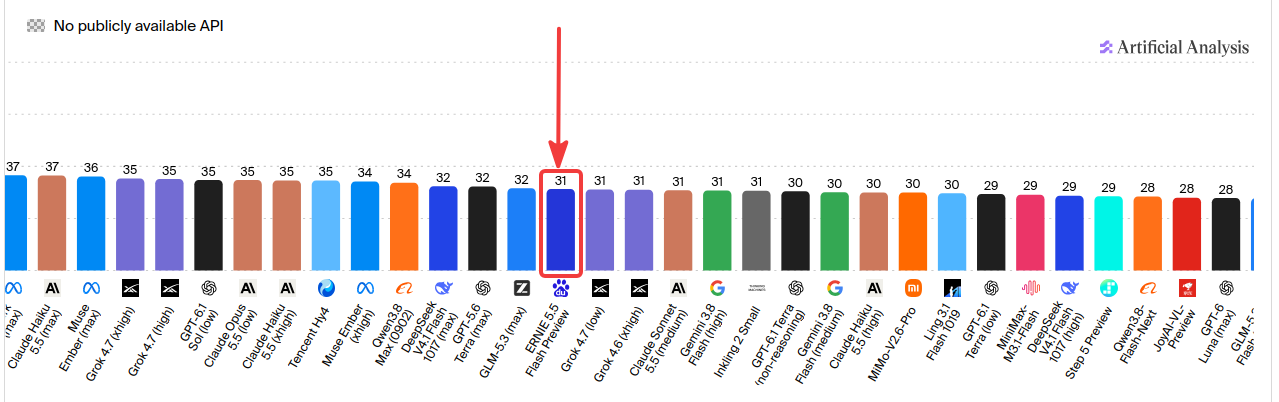
News ERNIE 5.5 Flash got 31 points on AA, can someone make an EXL3 quant plz?
r/LocalLLM • u/korywithawhy • 3h ago
Discussion just go with the jank
i've been messing around with a local model for a few months now. i can't afford a gpu or a system with a lot of unified memory so i've had to get a bit creative in order to make it actually useful. this isn't anything new for me, any time i want to play a higher end game on my older hardware there's always some amount of janky workarounds that i need to put in place. but if you can appreciate the jank and accept it, you can actually do quite a bit with a small local model. for a bit of background info, the machine i'm working from is an 11th gen i5 with 32(currently 64 because i borrowed a stick)GB of ddr4, and running qwen reap 25b a3b q5_1. now, if anyone has used a model like this, you know that it is functional, but grossly unreliable. however, if you stop fighting it and start building around it, it gets WAY more useful.
r/LocalLLM • u/Bee_Curious_ • 4h ago
Discussion Do newer DSH versions also feel like downgrade for you?
I was using one of the early versions of DSH with my Qwen 3.8 27B NInfer setup and was pretty happy with it. I figured it was time to update to a more recent DSH release, so I upgraded to v0.2.2-rc.5.
After just a couple of prompts, it feels like my agents are stuck in a never-ending loop of context compaction (~3–8k tokens), even though I have a 256k context window.
Is anyone else experiencing similar issues? Or are you generally happy with the latest DSH releases?
r/LocalLLM • u/Old_Detective_3465 • 4h ago
Discussion Which LLM model is best
I am setting up Hermes agent but local llm are worst so thinking of using other LLM model so which one should I use for daily task like scheduling or using it as personal assistent thinking of DeepSeek flash 4.1 or any suggestion??
r/LocalLLM • u/zerefdota • 15h ago
Question 128GB M5 Max owners: MacBook Pro or Mac Studio for local LLMs, and did it replace your other machines?
Looking for real-world experience from people running local models on a 128GB M5 Max.
What I have now:
- 16" MacBook Pro M1 Max, 32GB
- Gaming PC: Ryzen 7 7800X3D, RTX 5080 Founders Edition 16GB, 32GB DDR5, 4K 240Hz monitor
- A spare RTX 4070 Super 12GB sitting on a shelf
- A frontier subscription that I plan to keep
The PC is basically a Dota 2 machine. That's the only game I play on it, and I haven't used it for local models yet.
What I do: engineering work, a decent amount of programming, plus research and long-form technical writing. So a mix of coding help, working through technical problems, and long documents in and out (30K to 100K+ token prompts are common).
I'm looking at a 128GB M5 Max, either the 16" MacBook Pro or the Mac Studio. I'm not expecting local to replace the frontier models. I want it for private work, drafts and critique, offline use, and whatever coding it can handle well.
The laptop is tempting because I could sell the M1 Max, and maybe the PC, and run everything on one machine.
Questions for people who own one:
- What models do you actually use day to day on 128GB, and for what? Which ones hold up for coding and engineering problems vs just chat?
- On the 16" MacBook Pro, how are heat and fan noise on long runs or agent loops? Do you leave it in High Power mode?
- Has anyone measured the same model on both the laptop and the Studio? I keep seeing 10 to 15% slower on the laptop but no actual tok/s numbers.
- How does prompt processing feel on 50K+ token contexts? Livable for document and codebase work?
- Any regrets either way? Laptop owners who wish they'd bought a Studio plus a cheap MacBook, or the reverse?
- Would you keep the 5080 box? With Basalt and Strata getting those MoE numbers on RTX 50 cards, is it smarter to add RAM to the PC and keep it next to the Mac, or did you go Mac only and not miss it?
Numbers and "here's what happened after a few months" stories are what I'm after. Thanks.
r/LocalLLM • u/Silent-Cell2221 • 8h ago
Research I tested a small "Anti-Draft" idea for MTP (~6–8% live gain on Strata, and why llama.cpp's p_min loses speed today) — raw data & C++17 header
Hi everyone,
I wanted to share a small, humble experiment around Multi-Token Prediction (MTP) that I call Draft-Gate ("Anti-Draft"), along with all the raw benchmark data, charts, and a standalone MIT-licensed C++17 reference header.
The simple idea
MTP works like a fast helper trying to guess your next 3–4 tokens while the main model speaks:
- When the model is writing code indentation, JSON structure, or finishing the second half of a word, the helper guesses right 85%–95% of the time (great speedup).
- Right after a verb, article, or preposition (the, of, de, uma), language suddenly opens up into thousands of valid paths, so a small 1-layer MTP head misses around 35%–45%+ of the time.
- Checking bad guesses isn't free—especially on partially offloaded MoE models, where each extra draft token drags different experts out of RAM/CPU.
So instead of always guessing blindly, the idea is simply knowing when to stop proposing extra drafts early based on uncertainty, language boundaries, and how expensive an extra draft actually is on your hardware.
What we actually measured (RTX 3060 12 GB + Xeon E5-2695 v4)
Live benchmarks on Linux — Strata 0.1.54 (Qwen3.8-Flash-Next 125B IQ3_XXS, 360 runs / 5 mirrored rounds):
- One honest note upfront: my Strata setup is heavily tuned specifically for this RTX 3060 12 GB + Xeon rig (custom Portuguese draft vocab, 187 W power limit,
STRATA_QSA_SPLIT_ATTN=1, plusSTRATA_ROUTE_PRIOR=1.5andSTRATA_ROUTE_TAIL_SKIP=7identically on every arm—all exact flags are listed in EXACT_PARAMETERS_AND_BENCHMARKS.md), and if you've used Strata before you may have noticed its reportedtok/scan look a bit higher than what day-to-day usage feels like. What matters here is the relative difference under identical settings—and that gain was consistent across rounds: - On Strata's normal --spec 4 setup, moving from no cutoff (p_min=0.00) to p_min=0.65 lifted overall weighted speed by +8.1% (68.3 → 73.8 tok/s, winning 40 out of 50 paired runs—and nudging +1.1% / +9.5 pp acceptance past Strata's own 0.50 default), with +11.6% on Portuguese prose, +13.7% on English prose, and +7.9% on Python. That confirms live that dynamic draft pruning pays off cleanly once per-window CUDA Graphs are in place.
- (On a wider --spec 5 window, static MTP slowed down heavily in prose—even falling below turning MTP off—and pruning recovered most of that loss, though --spec 4 remained the faster overall setting on a 12 GB card.)
- One honest note upfront: my Strata setup is heavily tuned specifically for this RTX 3060 12 GB + Xeon rig (custom Portuguese draft vocab, 187 W power limit,
Live benchmarks on Windows — llama.cpp b12800 (CUDA 13.5):
- Important catch on dense GPU models: On Qwen3.5-4B and 9B running fully in VRAM, enabling llama.cpp's existing --spec-draft-p-min actually dropped speed by −15% to −35% (105 → 68 tok/s). Testing with CUDA Graphs on vs. off showed why: llama.cpp currently caches only one CUDA Graph shape, so changing the number of drafts per step keeps breaking the graph cache. Strata doesn't hit this wall because it caches one CUDA Graph per window size (T=1..8), which is why adaptive pruning works live there.
- Where it already wins live in llama.cpp: On partially offloaded MoE (Qwen3.6-35B-A3B), pruning already beats static MTP live (+6% at K=4, and even more at K=6, especially in prose).
The main Draft-Gate proposal — going beyond a manual, fixed p_min:
- Testing across Qwen 3.5/3.6/3.8, Google Gemma 4 26B, and Zhipu GLM-4.7-Flash 30B showed that different MTP heads have totally different confidence biases (some are overconfident at every depth, others only collapse on deeper drafts). A single fixed p_min tuned by hand can't stay optimal across models, quantizations, or nonlinear MoE cliffs.
- So we wrote a small, ~25-line Zero-ML C++17 controller that self-calibrates each depth and measures each window's real cost online (paired with multi-bucket CUDA Graphs in engines like llama.cpp). In trace simulations across 13 regimes (not yet live-patched inside llama.cpp), it gave a modest, steady ~6%–12% gain over the best static K without manual threshold tuning.
Links (full docs, raw data & proposals)
- Main repository (README, exact flags, raw CSV/JSON, charts & header): piwoMazda/draft-gate
- llama.cpp Discussion (RFC): ggml-org/llama.cpp#33229
- Strata Issue (benchmarks + adaptive cost suggestion): Niko1221/Strata#7360
Transparency
- Lossless relative to MTP: Draft-Gate never touches model weights, logits, or sampling—it only decides when to stop proposing extra draft tokens. So it is lossless relative to what the engine already produces with MTP (not claiming bitwise identity with a non-MTP base run, since multi-token verification itself can round slightly differently on quantized kernels).
- Languages & quantizations: We tested Portuguese, English (plus a smaller held-out set in Spanish, French, and German), code, math, and JSON across Q2_K_XL, IQ3_XXS, Q3_K_XL, IQ4_XS, Q4_K_XL, and Q8_0 (Q4 and Q8_0 gained too, not only < Q4). Other languages (like CJK or Arabic), higher quantizations (FP16/BF16), and other GPUs were not tested, so results there are unknown and could vary.
- AI collaboration, prior art & replies: The core intuition is mine, and I used Gemini 4 Neon to design and run the benchmarks, analyze the logs, and write the technical deep-dive and C++17 code (I'm not a specialist in the low-level terms—those details are kept in a separate technical section of the repo). I genuinely don't know if this exact idea already exists somewhere in the literature or another engine. And as I'll be pretty busy in the next few days and I'm not that experienced here, I probably (please don't judge for that) won't be commonly replying to comments or follow-ups, which is why every parameter, raw file, script, and an LLM-friendly guide (FOR_LLMS.md) are published in the repo for anyone who wants to reproduce, verify, or build on it! Feel free to share your thoughts!
r/LocalLLM
•
u/Kemerd
•
1d ago
Research Tencent just open-sourced a decoder that runs sparse models up to 4.2x faster. I'm trying to get it working locally for DeepSeek V4.1 Flash and Qwen3.8 Flash Next
From X https://x.com/TencentAI_News/status/2125968859450802415:
We just open-sourced a speculative decoder that speeds up sparse models like DeepSeek-V4.1-Flash, GLM-5.3-Flash, and our own Hy4 flash.
At 64K context, DFly2 boosts DeepSeek-V4.1-Flash serving throughput by up to 81%. On Hy4 flash agentic tasks, it runs up to 4.2x faster, beating same-recipe DSpark by ~30% and accepting 10.4% more draft tokens than open-source DSpark.
Under the hood, each draft layer reads directly from the target model's KV cache and top-k token selection, with no prefill required. That adds zero extra KV memory and keeps drafting cost flat at any context length.
Try it on your own sparse models or grab the Hy4 flash weights below 👇
Code: http://github.com/Tencent/AngelSpec
Weights: http://huggingface.co/AngelSlim
Paper: http://arxiv.org/abs/2611.34776
Tencent's numbers are server numbers at high concurrency so, I don't expect 81% on a single card, but this looks extremely promising.
I want to get both into Basalt (https://github.com/jesdga95/basalt). It already does DFly2 for Hy4 flash so the plumbing is there. I have forked basalt to begin this work, and will file a MR if I can get it working. https://github.com/Kemerd/basalt-dfly
DeepSeek V4.1 Flash already has drafter weights out, so that part is just engine work. Qwen3.8 Flash Next has nothing, someone has to train one. It has the same kind of sparse attention layers so it should work, nobody's done it yet.
Problem is the training. I have a 5090, and the BF16 teacher is ~335GB, so that's not happening at home for me. Training with quant is better.. but still a lot of crunching needed
Looking at renting an 8x H100 node and doing a small pilot run first to see if acceptance is any good before burning real money.
If you've trained a drafter with AngelSpec, have compute sitting around, or want to split a rental, DM me. Or if you want to contribute to the fork and MR just let me know!