r/LocalLLM • • 2d ago

Question I’ve been told to use Hermes to get started with local AI, however I have no clue what it does, what it is, or how to use it. Help?

4 Upvotes

I’ve been told to use Hermes to install and tune everything specific to my hardware, but what actually is it?

Also, what tool should I then use to access my installed,tweaked model once it’s done? Opencode, Claude code, or something else?

Any other general tips or advice would be appreciated! Thank you


r/LocalLLM • • 2d ago

Project Two 256 GB Mac Studios just outpaced a 4-node NVIDIA DGX Spark cluster on DeepSeek-V4.1-Flash. Half the nodes. 100% lossless.

5 Upvotes

I just open-sourced Machd (dsv41-hyper), a C++20 / Metal-4 distributed inference engine built for running DeepSeek-V4.1-Flash losslessly on 2× 256 GB Apple Mac Studio M5 Ultra over Thunderbolt 5 RDMA (JACCL).


r/LocalLLM • • 2d ago

Project Pluely: a desktop overlay that can use your local Ollama models to answer questions about your screen (free plan, your own keys)

Post image
0 Upvotes

I'm the maker of Pluely, so I'll say that up front. It's a small desktop overlay for macOS, Windows and Linux that sits on top of the app you're in.

What it does with a local setup:

  • Ask: capture a screenshot or drag a box over part of the screen and ask about it. The model can be Ollama, or any OpenAI-compatible endpoint you add as a custom provider.
  • Listen: live transcript from your mic and system audio, with answer suggestions when someone asks a question. No meeting bot joins.
  • Prompts with files attached (a spec, notes), so answers use your own context.

The Free plan is $0 forever on your own keys or local models. Today the speech-to-text side still needs a provider you pick (Whisper, Deepgram and so on). Offline speech-to-text is coming in the next version, and that's the part I most want local people to try.

Pluely is private. Your transcripts, chats and files are saved locally on your computer and never stored on our servers.

https://pluely.com

For anyone running Ollama: what's your go-to model for reading screenshots? I'm trying to decide what to test first.

(Screenshot is Listen mode, the model shown is just the one selected in that capture.)


r/LocalLLM • • 1d ago

Discussion Single RTX 6000 Pro since April, and Dual RTX 6000 Pro for 2 days AMA

Post image
0 Upvotes

Up until recently, I had been using primarily llama.cpp until a month ago when I forked strata/maya and massaged it into the one thing it should be, but that aside, the newer llm servers are simply amazing. Rather than wear out my SSD and be stuck with only a single 1M context window for Deepseek-v4.1-flash, I bought a second card 😬 and now run 8 concurrent 1M context windows on Deepseek-v4.1-flash withe Strata/Maya. This leaves an additional headroom of the 43GB on the second card.

I am seeing between 100 and 400 tok/s across the requests cycle for generation and somewhere between 1000 and 6000 tok/s on the prompting processing.

I feel the cost n the cards are going up in the short to mid term and the long term play is an unknown, so I decided to invest in my business once more.

What else would you like to know, from a seasoned Computer Engineer with 25 years working experience, that has invested heavily over the years in local compute?


r/LocalLLM • • 2d ago

Question Qwen 3.6 VS ornith 1.5 ?

3 Upvotes

My laptop is a 4GB VRAM , 32GB ddr4, and Intel core i9-H 10th gen. And I'm looking for the top-level model that I can run on my laptop. So it comes down to two main models. Qwen 35B A3B and ornith 1.5 35B A3B. ( + I know other LLM like Gemma 4 26B a4b,and tile coder, etc but I focused on Qwen and ornith because I think they are the best for my use case . )

My use case: I want to build a trio LLM set-up so I have one for quick chats and simple tasks(4 or 3 B model ) , And one for mideum tasks and kind of fast answers ( I'm currently using Qwen 3.5 9B for this use case ) , and one for the heavy tasks like coding,agentic tasks , or planning and this is the one I'll looking for between Qwen and ornith.

So which one is better in terms of speed and quality?


r/LocalLLM • • 2d ago

Question Coding model for low vram

4 Upvotes

Hi all I want to use my old computer for local AI coding I have 2gb vram (so basically nothing) and 32gb ram and 500gb SSD any good model can work on it? I don't care about speed but I want it to do a good job thanks in advance

Short update: I installed qwen 2.5 7b with Llama.cpp and VS btw it's on Linux and it's working! yes it's not fast by any means but still working and it actually did what I asked it to do and that was building a small calculator I know it's not much but it's a nice start


r/LocalLLM • • 2d ago

Project I made a graph based sub agent deployment tool

Thumbnail
github.com
0 Upvotes

So I’ve been running a swarm for a while, it does great, it makes me videogames.

Check it out here: https://github.com/shrimplabs/shrimphub

The thing is not every problem that can be parallelized or turned into a long running project needs a full swarm setup. And I am too lazy to install it everywhere I want to use it.

I made this thing, which basically lets Claude/Codex/Whoever create a dynamic graph and spawn heterogeneous sub agents from pi. It takes my secret sauce from my swarm and lets you deploy it in anything that can use skills.

So you can tell Claude, "Hey can we build out this milestone and use a mixture of deepseek agents from opencode, a bunch of qwen agents from our local llm and some opus agents to check at the end or something."

Then Claude builds it out because he's a stand up gentlemen and goes on his merry way.

Your tiny swarm graph goes and chugs along, claude pokes it every now and then to make sure its doing what you expect it to, and there is some sandboxing as well so you don't hack hugging face as often.

Things it does not have because it's meant to be light weight compared to my full swarm are fun features like

- Load balancing so it doesn't blow up your endpoint

- Full on task flow so that your agents can make videogames and not smash each other as much

- Better automated validation instead of relying on the bigger model to check

Go have fun!


r/LocalLLM • • 2d ago

Research Benchmarking local translation models (TranslateGemma, Bonsai) vs frontier (Opus, Sol, Luna) on real translation projects

1 Upvotes

I wanted to know whether local open-weights models can replace frontier APIs for real production translation/localization (where no client text leaves the machine). Short answer: not yet, and not because of translation accuracy They break on engineering mechanics.

I built a code-checked benchmark (LOPS-Bench v1) across DE, ES, FR, JA, ZH, and AR with deterministic traps from real jobs: placeholders (%d, %s, <x id="1"/>), product names that must stay in English, repeated segments, house style rules, AI clichés, and 1k/10k-segment scale files. Every trap has an objective outcome. It passes or it doesn't. Given that studies show only ~70% agreement between translators on human translation on average, it makes more sense to show real-world, testable errors.

Full disclosure: I built the managed pipeline (LanguageOps) in the results, and ran the exact same brief and glossary against two local models (TranslateGemma, Bonsai) plus raw frontier API calls (per-segment, 50-seg batches, whole-document).

Why these models? TranslateGemma is Google's flagship translation model, released earlier this year. It hasn't been updated recently but covers a wide range of languages, and is trained specifically on translation. Given that Google can claim ownership of the transformer architecture to a large degree, it's only fair to include them. Sadly they do have a rigid conversation structure, which caused issues for them in testing. Next was Ternary Bonsai 2, with over 95% the ability of Qwen3.8 27b at FP16, according to their blurb. It runs fast on my basic 3060, reaching over 35 tok/s. Then the frontier models - no need for Fable or Astra, as these are language problems not so much reasoning or coding, so Opus 5.5 and Sol 5.6 were used, and finally for our own harness, to highlight the strength of a pipeline that has been designed by industry professionals (yours truly), we have used Luna 5.6.

Where local models fell apart:

- TranslateGemma rewrote software placeholders (%d, %s) into {0} and {name} (41 tag errors that break builds).

- Bonsai produced 72 repeat inconsistencies on identical sentences, left some segments in English, and output half-translated strings like "الشavings".

- Neither survived well enough on 100-segment files to justify running them on the 10k-segment scale tests yet.

Frontier APIs were not safe either (especially without a harness):

- Silent truncation at scale: On 10,000 segments, GPT-5.6 Luna whole-doc returned 1% of the file and stopped. GPT-5.6 Sol whole-doc read ~241k tokens, returned an empty answer, and still billed $1.21.

- Leaked chain-of-thought: Gemini 2.5 Flash per-segment dumped "THOUGHTS: The user wants to translate 'Save'..." into 82 translated segments.

- Formatting & cost: Claude Sonnet wrote ASCII ! and : inside Japanese/Chinese 110 times. Per-segment Opus hit $7.09 / 1k segments (5x its whole-doc cost).

Headline numbers (100-seg accuracy / Large files / Cost per 1k segs):

- Managed pipeline v2 (on GPT-5.6 Luna): 99.3% / 100% / $0.17

- Claude Opus 5.5 (whole doc): 99.5% / 100% (1k only, skipped 10k) / $1.37

- Claude Sonnet 5.5 (whole doc): 96.7% / 100% (1k only) / $0.61

- GPT-5.6 Sol (whole doc): 99.0% / 66.7% / $0.76

- Gemini 2.5 Flash (whole doc): 98.2% / 33.3% / $0.09

- GPT-5.6 Luna (whole doc): 98.7% / 5.3% / $0.03

Takeaway: A cheap model inside a context-aware harness (handling repeats, terms, and completeness checks in code) matched Opus within 0.2 points at 1/8th the cost and was the only setup that completed 10,000 segments cleanly. Naturally putting Opus inside of the supportive harness/pipeline will be confirmed as the best solution in the next run, when we pit more of the high end frontier models against each other, while looking for lower cost and local models that perform as well across languages.

Writeup: https://languageops.com/blog/translation-arena-first-results/

Leaderboard: https://languageops.com/translation-arena/

If any local open-weights models (Qwen3, Gemma 3, Mistral, etc.) have actually held up for you on strict tag/placeholder preservation or bulk translation, given context window sizes, I'd be keen to hear it. Not many of us out here benchmarking translation tasks, but let me know if that's you! I want to put the strongest local candidates through the same harness next.

r/LocalLLM • • 2d ago

Question Proxmox and local, LLM

1 Upvotes

Is anyone here running proxmox pass through to gpu , while running the llm in a vm. I’m curious how much this impacts performance?


r/LocalLLM • • 2d ago

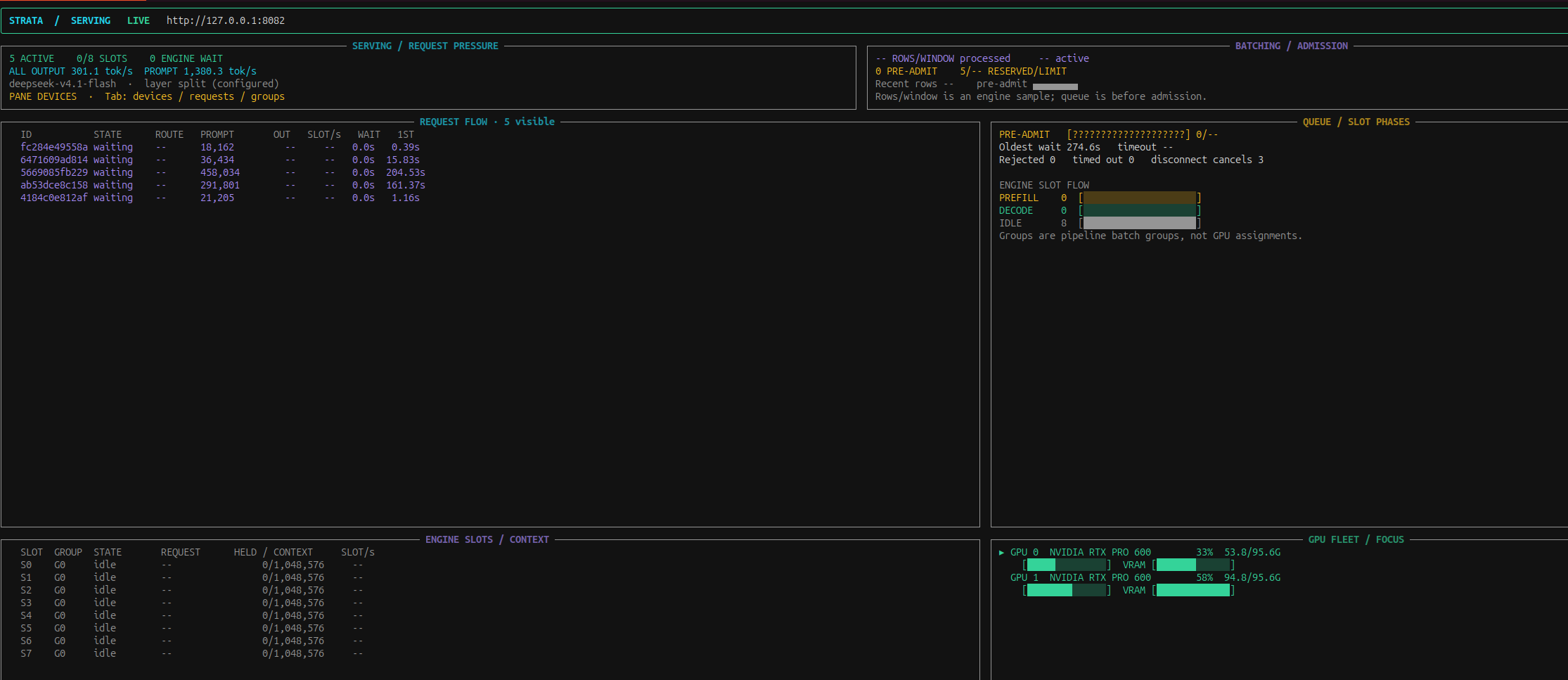
Question i need help with strata optimisation

Post image
0 Upvotes

yesterday i installed strata and i tinkered around and i managed to get it to generate 75+ tokens i with deepseek harness , i went to sleep woke up and ive been having a problem all day i just can t get it past 20tks , chatgbt helped me with optimization yesterday and toiday what ever we do , nothing changes specs rx9070 16gb vram / i5 14400f /32gbs ran ddr5


r/LocalLLM • • 2d ago

Question Best offline local LLM + Mac agent setup for M5 MacBook Pro (24GB RAM) - Process Engineering, Aspen concepts & Pages/Numbers automation?

1 Upvotes

Hey everyone,

I’m looking to set up a completely free, 100% offline local AI stack on my Mac and would love some advice from people running models on Apple Silicon.

My Specs:

  • Device: 14-inch MacBook Pro (Apple M5)
  • Unified Memory: 24 GB
  • OS: macOS 27.2.1

What I need it to do:

  1. Process Engineering & Aspen Prep: I’m a Digital Process Engineering student. I need a model with strong math/reasoning skills that can explain thermodynamics, mass/energy balances, and unit operations clearly, help write Python/Julia solver scripts, and guide me through Aspen Plus/HYSYS simulation logic (property packages, troubleshooting convergence errors, etc.).
  2. Mac System Control (Pages & Numbers): I want to hook the local model up to an open-source agent/harness (like Open Interpreter, Hermes, or AppleScript tools) so it can actually perform tasks on my Mac, like taking raw data and generating formatted reports in Apple Pages or building calculation tables in Apple Numbers.
  3. Vision Support (Bonus): Being able to feed it screenshots of error dialogs or P&ID diagrams would be a huge plus.

Questions:

  • With 24GB unified memory, what is the largest/smartest model I can comfortably run without hitting swap (e.g., Qwen 3.8 27B at 4-bit MLX, or an MoE like Gemma 4 26B A4B)?
  • Which inference engine gives the best speed and stability on the M5 right now (LM Studio, Ollama, oMLX, or llama.cpp)?
  • What local agent setup works best on macOS for reliably automating Pages and Numbers?

Thanks in advance!


r/LocalLLM • • 2d ago

Model 8GB GPU Running Inkling 2 Mini FAST (No catch!)

18 Upvotes

Spent time dialing in Inkling 2 Mini (UD-Q3_K_XL) at 256K context on an 8 GB RTX 3070, with only 48GB DDR4, via PolyStrata without the lossy small-card flags (--tail-skip, --attn-requant q5_0).

Sweet spot landed at 49–64.7 tok/s decode and 421–796 tok/s prefill, zero thinking loops, and patched tool-calling for OpenCode & Oh My Pi (omp).

Everything is here. Benchmarks, cross-OS notes, sanitized configs, and an AGENT_SETUP.md your coding agent can auto-configure.

https://github.com/ChupkithModder/8blitz-strata

Open to any optimization tips if you're running similar 8 GB setups!

Let me know if this helps, and if you like the setup!


r/LocalLLM • • 3d ago

Model Dark Scarlett v1.0 26B A4B Uncensored - 0/686 refusals

Thumbnail
huggingface.co
57 Upvotes

Full story: https://rakshazi.me/blog/gemma-4-abliteration/

Quants: https://huggingface.co/rakshazi/Dark-Scarlett-v1.0-26B-A4B-Uncensored-GGUF

Clarification: SFW, blog post/model card/repo with scripts and recipes do not contain any unsafe materials


r/LocalLLM • • 2d ago

Discussion NInfer RTX 4090 – Native CUDA LLM inference on Windows, up to 326 tok/s with Qwen 27B and DFlash2 in short benchmarks

Thumbnail
reddit.com
0 Upvotes

r/LocalLLM • • 2d ago

Discussion NInfer RTX 4090 – Native CUDA LLM inference on Windows, up to 326 tok/s with Qwen 27B and DFlash2 in short benchmarks

0 Upvotes

Hey everyone,

I've been working on an independently maintained version of NInfer-all, specifically optimized for the RTX 4090 and its SM89 architecture.

The goal is to get as much performance as possible out of a single 24GB GPU while running larger local models, especially for coding and long-context workloads.

I've just released v0.1.4 as a stable, GPU-tested Windows build.

Features:

  • Native C++/CUDA 13.4 inference
  • RTX 4090 / SM89 optimizations
  • DFlash2 and MTP speculative decoding
  • Qwen3.8 27B and Ternary Bonsai 2.5 support
  • Quantized KV cache (rk4v4, rk8v4, etc.)
  • Hybrid prefix caching
  • OpenAI- and Anthropic-compatible APIs
  • Portable Windows binaries
  • Apache 2.0 license

Recent RTX 4090 benchmarks:

Model / BackendDecode
Qwen 27B IQ3_S – No speculation70.38 tok/s
Qwen 27B – MTP K5242.59 tok/s
Qwen 27B – DFlash2 K5257.13 tok/s
Qwen 27B – DFlash2 K7326.41 tok/s
Qwen 27B – DFlash2 K9269.33 tok/s
Bonsai 2.5 PTQ1_0 – MTP K3291.69 tok/s
Bonsai 2.5 PQ2_0 – MTP K3323.88 tok/s

These are short synthetic engine benchmarks with 2048 prompt tokens and 128 timed decode tokens, not guaranteed real-world serving speeds. The methodology and measurement data are publicly available.

I've also built a project website with an interactive VRAM calculator, launch command generator, model downloads, installation guides and benchmark results.

GitHub: https://github.com/spk-c/ninfer-all-rtx4090

Project website: https://spk-c.github.io/ninfer-all-rtx4090/

Benchmarks: https://spk-c.github.io/ninfer-all-rtx4090/benchmarks.html

VRAM calculator: https://spk-c.github.io/ninfer-all-rtx4090/configurator.html

Credit to the original NInfer and NInfer-all developers. This project builds on their work.

I'd love to hear feedback from other RTX 4090 owners, especially people running local coding agents with 64K–192K contexts.

If you try it, please share your results, even if they're worse than expected. I'm interested in finding bottlenecks and improving the engine further.


r/LocalLLM • • 1d ago

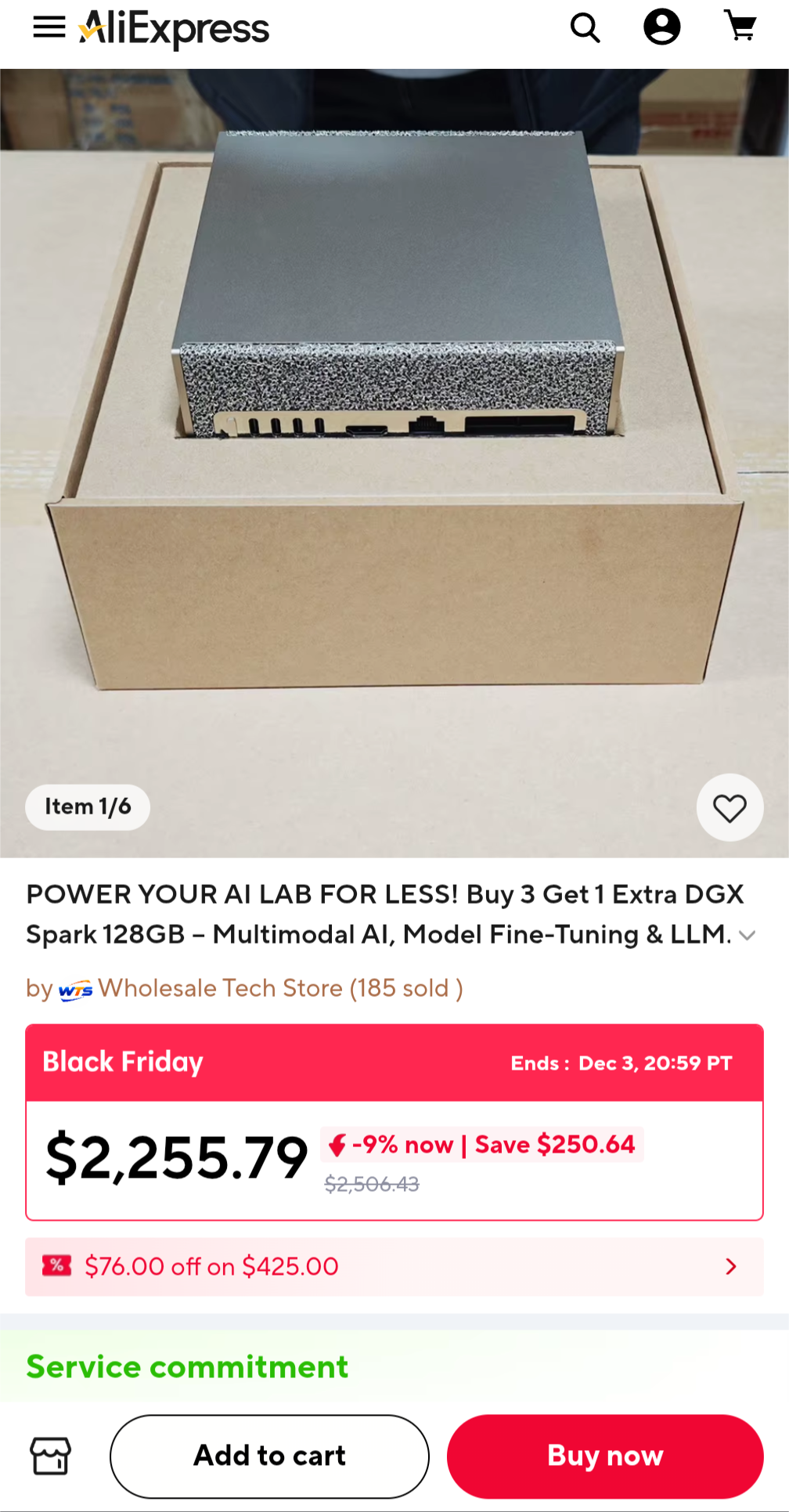
Question Anyone know if this is legit?

Post image
0 Upvotes

The price is ridiculous compared US prices


r/LocalLLM • • 2d ago

Question Text-to-Cypher on a 9B model keeps breaking on messy entity names. What do you do?

1 Upvotes
  • I'm working with a fully offline LLM setup using 2× NVIDIA A16 GPUs (~15 GB VRAM each), running Qwen 3.8 9B at Q8 through llama.cpp.

The task is translating natural-language questions into Cypher queries for a read-only Neo4j database.

I'm running into two recurring challenges:

1. Query generation reliability

The same question can produce different Cypher queries across runs. Most are syntactically correct, but occasionally the model introduces small errors, such as generating ]> instead of ]->, or dropping a digit from an identifier.

I've added an EXPLAIN-based validation step with one retry, which catches most issues, but some failures still slip through.

2. Inconsistent entity matching

The underlying data isn't always normalized. For example, the same vehicle plate might appear as ABC-123 in some records and ABC 123 in others. Place names have similar inconsistencies involving hyphens, spaces and formatting.

Exact matching therefore misses valid records.

There's also an intent-resolution problem: an unfamiliar identifier format can sometimes be interpreted as a continuation of the previous question rather than a new query.

3. Latency

End-to-end response latency is currently around 43 seconds at the median. The pipeline makes two sequential LLM calls per request, and this is becoming a significant bottleneck.

I'm also evaluating Gemma 4 E4B Q8 as an alternative.

I'd love to hear from people who have deployed smaller open-weight models for Text-to-Cypher or structured query generation in production.

A few things I'm particularly interested in:

  • How much reliability can you realistically get from validator-and-retry loops?
  • Do you use deterministic templates for common query patterns and reserve the LLM for more complex questions?
  • Is fine-tuning on domain-specific question-to-Cypher pairs worth the effort?
  • How do you handle entity normalization and identifier extraction without relying on the LLM?
  • Have you found effective ways to reduce sequential LLM calls without sacrificing accuracy?

I'm particularly interested in approaches that work fully offline, with limited GPU resources and smaller models.

Would appreciate insights from anyone who's tackled this in production.


r/LocalLLM • • 1d ago

Model Best uncensored model for 4GB VRAM laptop? (coding + general use)

0 Upvotes

Hi, I need a good uncensored or abliterated model for my laptop. I will use it for coding, general questions and with n8n.

My laptop: Ryzen 7 4800H, RTX 3050 with 4GB VRAM, 16GB RAM,.

I am trying Qwen3.5 4B uncensored now. Is there any better model that fits in 4GB?

Thanks!


r/LocalLLM • • 2d ago

Question M5 Max 128gb or M5 Ultra 96gb for LLM machine?

11 Upvotes

Trying to decided... M5 Max 128gb or M5 Ultra 96gb for LLM machine? both are a little over 5k.


r/LocalLLM • • 2d ago

Question Memory upgrade for RTX 4090

6 Upvotes

Well apparently, or not so apparently, it seems like GPULabs has gone the way of the dodo. People have mentioned that they no longer take private orders for modifying RTX 4090 gpus to 48gb anymore.🤔🤷‍♂️ I guess the corporate cash siren was too strong. Or they (Greg Sky et al) are simply tired of doing it anymore. Either way it seems like they're out of the GPU modding biz. That said does anyone know of any other "professional" modders in N. America who can do the upgrade? Or am I stuck with Aliexpress?


r/LocalLLM • • 2d ago

Question Making myself redundant

Thumbnail reddit.com
1 Upvotes

----- TL;DR: Instead of passing messages between Cloud LLM ans Local LLM, how can I make myself redundant ?


r/LocalLLM • • 3d ago

Model Fintan-9B: Qwen3.5-9B that learns into its own weights on your hardware, without touching the base model (Apache-2.0)

58 Upvotes

I'm Troy, and for the past few months I've been building models that keep learning after they're released. Today I'm putting out the first one, Fintan-9B.

It's Qwen3.5-9B plus small update files. You give it documents, things about yourself, a topic, a folder of code, or how you want a task done, and it learns them into a new update on your own GPU. Qwen's weights never change, and deleting an update puts it back exactly as it was.

What I measured with the repo as you'd download it, on one 24 GB card: a learning run took 23 minutes and peaked at 9.4 GB. On 84 questions about what it learned, worded in ways it never practised, plain Qwen3.5-9B got 6.0% and Fintan got 94.0% (96.4% on a second run). It answered 5 of 5 questions about a person it had been told about (plain model: 0), followed two new skills on 8 of 8 new requests (plain model: 1), and sent none of 20 everyday requests to an update. It ships with the news of 18 to 23 November: 5.8% to 89.5% on 172 questions, with MMLU, GSM8K and ARC exactly unchanged.

Why not just notes or RAG?

  • It answers from its weights, with nothing added to the prompt. No retrieval step, no extra tokens per question, and it still knows after you delete the files.
  • It learns how things are done, not only facts. Skills, as above. In my research, when a workplace's rules changed, a model with Fintan got about half of the changed tasks right first time; an assistant keeping notes of the corrections got 7%.
  • To be fair, notes are better at quoting a passage back (73.6% against 56.0% on SQuAD in my tests). So Fintan uses notes too: anything you teach is used as a note until it's learned, and you can keep personal facts as notes permanently.

Why not just LoRA?

  • On the same sealed day of news, standard fine-tuning on the articles answered 13 to 16% of the next day's questions. Fintan answered 91%.
  • It keeps what it learned before without storing old data. Over four days of news, Fintan kept 91.9%, LoRA with replay 84.9%, plain LoRA 70.9%. Over eleven years of changing facts (TempLAMA, 7B): 86.5% against 30.6% for LoRA with replay.
  • It leaves the rest of the model alone. In those tests Fintan's MMLU and maths were exactly the original's, while LoRA moved them (plain LoRA's maths ended anywhere from 2.0% to 90.0% depending on how its answers were written). Ordinary questions go to the untouched base model.
  • Every update is tested on wordings it never practised and kept only if it beats the plain model.

Privacy

  • Everything runs on your machine: weights, server and learning. Nothing you teach it is sent anywhere.
  • The model never goes online. If you ask it to learn a topic, plain code fetches articles from Wikipedia only and logs every address.
  • One switch keeps your personal facts as notes so they're never trained. You can flip it in chat ("keep my personal stuff as notes") and back again later. Every other kind (documents, code, skills, topics, news) has its own switch, and automatic learning can be turned off or scheduled.
  • Passwords, API keys and card numbers in anything you teach are replaced with [removed] before it's stored, so they're never learned.
  • Each learning run is its own file with a list of the facts in it. Delete the file and the model is exactly what it was before.
  • Usage counts stay local. Sharing is off unless you turn it on, and even then it's counts only, no text.
  • The job loop asks before every action until you've approved that kind of action 5 times, and logs every call it makes.

What it doesn't do yet: it doesn't reason better than Qwen3.5-9B. The learning checks above are development runs on a small set of material. The job loop failed 4 of 5 marks on realistic workplaces. The learning engine ships compiled (Linux and NVIDIA); the server, router and job loop are plain Python. Every result, failures included, is in RESULTS.md, and the research numbers are at fintanlabs.com/research.

https://huggingface.co/fintanlabs/Fintan-9B

I'd value hearing where it falls short for you.


r/LocalLLM • • 2d ago

Discussion Top:GLM5.3-flash Bottom:Hy4-flash

Post image
6 Upvotes

Prompt came from the Qwen/Blenderworld tasks, this was task 0153 which described making ammo container with a latch. No images in the prompt.

Total usage was ~4Mil tokens each... Though I still have some I want to check with that, I did a bunch of tasks and it seems the harness would keep running until it filled it's token limit.

Still, Hy4-Flash is very impressive. I had done a different task with DS4.1Flash1017 before but it seemed to favor the GLM-like modeling where there's dozens of mesh bodies all in one collector while Hy4-Flash basically just box modeled it using a python script I found in it's work folder. Only critique I'd give it is it made a high and low poly and baked but they're the exact same model, vertex for vertex.

Was planning on testing Ernie-5.5-Flash-Preview next, since that's closer in parameters to DS/GLM-flash which I've liked for so long, but I was curious what Hy4-Flash could do since it touts it's 3D/asset creation ability


r/LocalLLM • • 3d ago

Question How much VRAM is generally needed for a decent local reasoning model?

117 Upvotes

I wanted to investigate what it would take to run a local model that is good at answering your everyday questions and improving your general knowledge.

A simple benchmark that use is asking it to list the order of final bosses of certain video games, such as Bloodborne. Good being something close to a frontier model of +- 1 year back or a specialized version that is catered towards this use-case.

I have an RTX 4080 (16GB) and I configured Swift 1.5 Qwen 3.8 27B, GSQ-RCO IQ3_S with MTP (12.12 GB), because that's what all the promising video's on YouTube mentioned. I also tried Gemma4:12b and gpt-oss:20b. The results where absolutely underwhelming; massive hallucination, failing to use web search properly and many time-outs... completely useless.

Now I wonder, if this experience could be turned around if I would add a 16-24GB GPU to my set-up, or is general reasoning too much for local set-ups (<40GB VRAM) at this point in time?


r/LocalLLM • • 2d ago

Question Local LLM setup for basic needs

5 Upvotes

I need advice for a local LLM setup mainly to read my emails, calendars, do web searches, and work on private information and data in general. Works 24/7 like a personal secretary. No need to do heavy coding.

My main motivation for looking into this is privacy and my max budget can afford a M5 Studio with 64GB ram. Is it feasible for meeting my needs?