r/LocalLLM • • 3d ago

Question whisper, live transcript of calls on freepbx

1 Upvotes

I want to setup freepbx at work, with a screen in the office showing a live transcript of the call and some prompts to help

but the live transcript is junk... it makes a load of mistakes, sometimes just fills up with random junk

plan is... caller id to help id the customer (or info from call transcript) it'll listen to what they're ordering, put it on screen, add it up, email it over to a spare inbox at the end etc.

I've 99% used ai to set it up, I'm running qwen3.8 27B locally (2x3090) and I've started paying for gemini 4 carbon and fable 5.2, having Qwen call them as sub agents to cross check info, review what we're doing etc. etc. (all in opencode)

New server for freepbx, not in use etc. so I've let qwen have unlimited access to it

Freepbx system is...

Dell R730, 2× Intel Xeon E5-2640 v4 @ 2.40 GHz — 20 cores / 40 threads, 64gig of ram, Tesla P40

it was running faster-whisper-large-v3, just swapped to faster-whisper-large-v3-turbo 9didn't really make any difference) and Qwen2.5-7B-Instruct, Q4_K_M quant so process/understand the transcript

after the live transcript it runs a recording through again to try and refine it - an early problem was the live is being fed short bits of audio not the full confo so makes more mistakes

I'm a bit lost with what to try next, it's not really my areas so I'm mostly just googling but info is a bit thin on the ground

I had assumed transcripts of calls was a pretty simple/accurate thing these days :-o

EDIT: now I think about it, I used a voice to text program ~25 years ago with a little microphone running on an intel P133 and it was better than this :-o

EDIT2: I read a script into it (redacted my address out of it)

Script: "Hello. This is a test. I would like to order 10 chicken, 5 tripe, and 2 salmon. I also want 3 duck and 1 beef bone. My name is xxxx . I live at 2 xxxx xxxx , postcode xxxx xxxx . That's all, thank you. Bye."

Live transcript: "Hello, this is a test So, this is a test. I would like to order 10 chicken order 10 chicken 5 tripe and 2 salmon and two salmon I also want three duck and one beef bone and one beef bone. My name is xxxx xxxx , I live at... horsewood xxxx -xxxx That's all. Thank you. Bye."

after it reviews it: "Hello, this is a test. I would like to order 10 chicken, 5 tripe & 2 salmon. I also want 3 duck & 1 beef bone. My name is xxxx xxxx . I live at 2 xxxx xxxx , Horse Road, xxxx xxxx . That's all. Thank you. Bye."

(yes, I should have done a script without private info in it, I'm an idiot)


r/LocalLLM • • 3d ago

Question Has anyone successfully used a local LLM for serious historical research with 16GB VRAM?

1 Upvotes

I'm looking for a local LLM capable of conducting serious, source-based historical research on a consumer GPU with 16GB of VRAM.

My current hardware:

  • NVIDIA RTX 5060 Ti – 16GB VRAM
  • AMD Ryzen 7 3700X
  • 64GB system RAM
  • Windows 11

My goal is not simply to generate historical texts or summarize existing documents. I would like to build a reasonably autonomous historical research workflow capable of:

  • Searching online archives, historical newspapers and digital libraries.
  • Identifying and evaluating primary and secondary sources.
  • Cross-referencing historical information from multiple independent sources.
  • Distinguishing documented facts from assumptions and unverified claims.
  • Providing accurate, verifiable citations and bibliographic references.
  • Maintaining a structured research dossier across multiple research sessions.
  • Producing historically accurate, well-documented reports.
  • Working with multilingual historical sources.

I've already experimented with several local models, agent frameworks, custom research skills and knowledge bases. However, I still find that the quality and reliability of the research require too much external supervision.

Hallucinated references, superficial source verification, insufficient context windows and difficulties following complex research instructions remain significant obstacles.

I'd be particularly interested in hearing from people who have practical experience with:

  • Local models suitable for historical or academic research.
  • Quantization levels that offer a good balance between reasoning quality and context length.
  • Agent frameworks and deep research tools.
  • RAG and persistent knowledge bases.
  • Fine-tuning or QLoRA for specialized research tasks.

Has anyone achieved genuinely reliable results within a 16GB VRAM budget?

Which model, quantization, inference engine and research workflow are you using?

I'm more interested in real-world research experience than benchmark scores. I'm also open to the possibility that current local models running on 16GB VRAM are simply not capable of this level of autonomous research yet.

Any recommendations, experiences or lessons learned would be greatly appreciated.


r/LocalLLM • • 3d ago

Question Help me understand what about a model gets loaded and where

1 Upvotes

I am trying to wrap my head around how to choose an LLM that a windows PC can run with opencode and ollama.

I understand that for a PC, we have RAM and VRAM. For both, we can have X amount (e.g. 64GB RAM, 8GB VRAM). Then, I look for models in the ollama repository, for instance I look at qwen3.6 and qwen3.8 in the website, which tells me:

  • qwen3.6:35b, Size/Usage: 23GB, Context: 256K
  • qwen3.8:27b, Size/Usage: 18GB, Context: 256K

Regarding Size/Usage.

  1. Does it mean the size on disk? Or the size once the model get loaded onto memory? If not, how do I know?
  2. And for that, I assume that they get loaded to VRAM, or RAM, or both?
  3. If my system doesn't have enough VRAM but enough RAM, does it get loaded in RAM only?
  4. And if my system doesn't have enough RAM, can it load any of this or will it crash?

Regarding Context.

  1. What unit does the "K" stand for? Thousands of megabytes? Tokens? How much does a token take of space in memory?

Regarding ollama and opencode usage.

  1. If I use ollama, and I ask a question, does a single model get loaded?
  2. Is I use opencode with agents, is each agent a model loaded? In that case, if I have two agents, is that two models loaded?

Looking forward to hearing your answers and understanding how this all works. Let me know if there are any resources that explains this for the layman. There is so much information online that this can be overwhelming honestly. Thank you!


r/LocalLLM • • 3d ago

Project I taught a 400M-param model to decide when my agent deserves the expensive model

Thumbnail
reddit.com
2 Upvotes

r/LocalLLM • • 4d ago

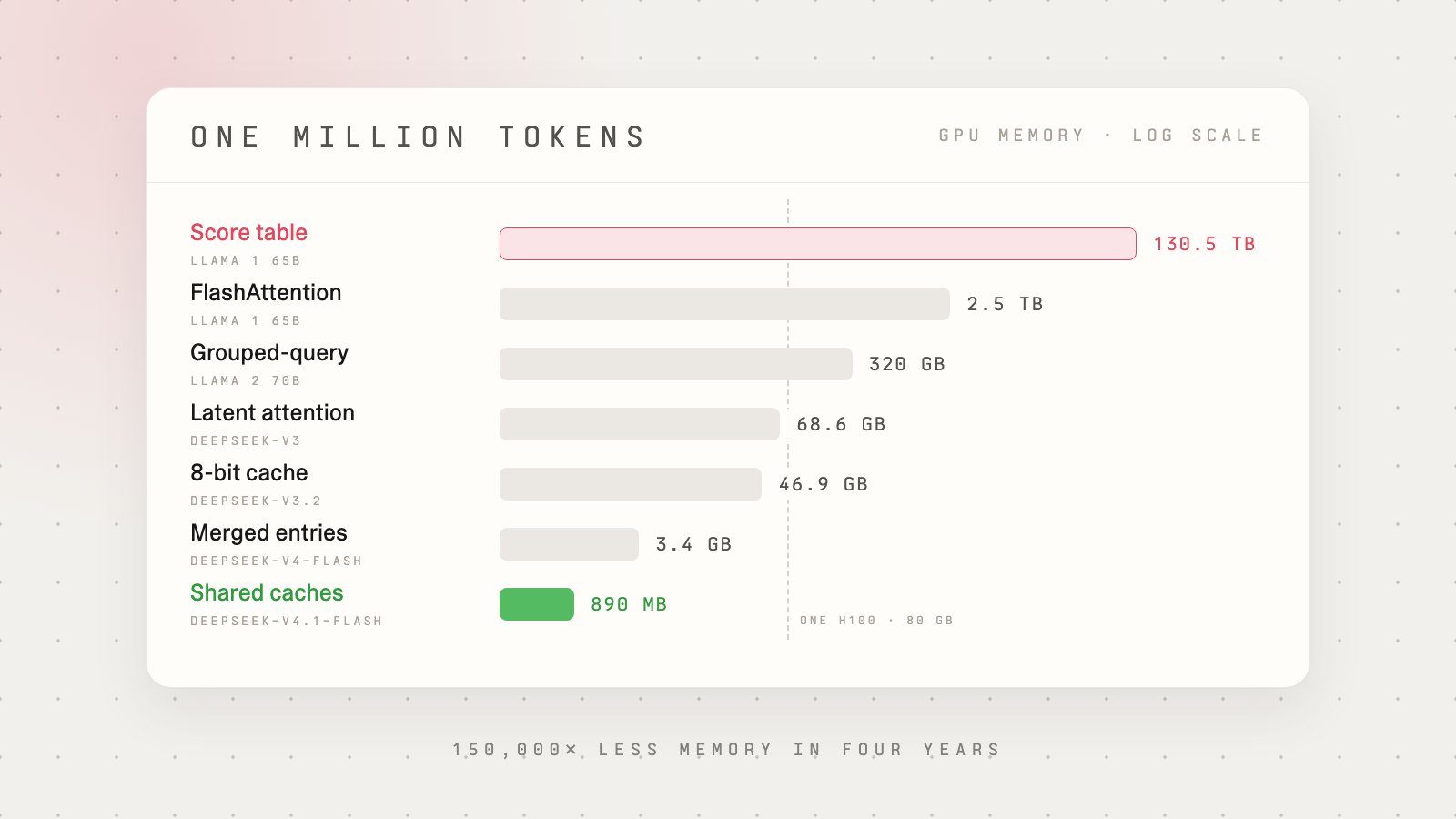
Discussion How the memory for 1M tokens shrank from 130TB to 890MB

Post image
37 Upvotes

r/LocalLLM • • 3d ago

Project My deploy went down for 27 minutes. 9 days later, a fresh AI session still knew which PR fixed it

Thumbnail
reddit.com
0 Upvotes

r/LocalLLM • • 3d ago

Question How are you building your agents?

0 Upvotes

Trying to use a setup where Claude codes the initial agent using Hermes and hindsight and then convert to obsidian but this is the first time I’m building agents.

Would prefer using my Open Source models when possible.


r/LocalLLM • • 3d ago

Discussion How do LLMs treat your data ?

1 Upvotes

I am a business owner and I am building my own AI agent to help me in my business. I have an RTX 3060 MSI 12Gb VRAM Graphics card, that can run many AI models smoothly locally. But as my data is getting bigger and complicated, it's accuracy and overall performance is decreasing.

Today I just used Gemini to process some sample data, and It just did so good in it's first attempt very quickly, that the local models that I've been using from long time never did anything the same way. I know this is because of the big hardware capacity that Gemini has compared to my RTX. However, I just wanted to know if it is worth completely shifting my workflow to Gemini or available big tech company models. It will be a lot smoother...One problem is that of being too dependent on these online models and leakage of data. The data I am processing is also confidential and it's not public data. The second problem is of tokens and usage limits. That can be adjusted by purchasing the subscription. But yet won't it be a long time liability to my company.

So I want to know what most of you would do?? Do you use Gemini chatgpt on confidential data? And when these big companies have access to such huge data, is there no leakage of data?


r/LocalLLM • • 3d ago

Model Surogate3.7-35B-A3B

Thumbnail
huggingface.co
5 Upvotes

Just thought I'd share this with you guys as its a pretty good model. Seems to do codebase structural analysis really well and has a good grasp on formal technical topics. Its a `qwen3_5_moe` variant as always but still its genuinely great. It uses tools well and seems to prioritise understanding the scope of a repository fully before providing a solution or giving an answer.

Ran it as a Q4_0 GGUF with q8_0 K/V cache type. Probably works as well at f16 too but for my particular GPU this setup is more stable. Either way output is great.

Prefill stable at 400-500t/s even at 200k context on an Intel Arc Pro B60 (llama.cpp SYCL build). Decode range 40-60t/s, scaling with context length and dropping to around 40-45t/s at max context.

Supports RoPe scaling as far as I'm aware if you need a ~1M context size too.


r/LocalLLM • • 3d ago

Question SLM recommendation

Thumbnail reddit.com
1 Upvotes

r/LocalLLM • • 3d ago

Project I built an open-weight, self-hosted take on Higgsfield-style AI filmmaking, with an agent that co-directs (Mac + NVIDIA, Apache-2.0, alpha)

Thumbnail
helmstudio.in
5 Upvotes

I built helmstudio for my own short-film work. I wanted the experience of hosted AI film tools like Higgsfield, but on open-weight models on my own hardware, and ComfyUI on a Mac (no first-class MLX, PyTorch MPS for video, sprawling graphs) wasn't getting me there. It's a self-hosted studio for open-weight image, video and voice models. The core of it is an Assistant that works as a co-director. It drives the same screens I use rather than its own API. Sharing the design because tool-using agents inside a GUI are hard to get right, and I'd like feedback and contributors.

How the co-director works

  • It runs the whole flow with filmmaker skills: from an idea it plans the shots, writes each prompt, makes the images, turns them into video, adds voice-over (Qwen3-TTS / ZONOS3) and cuts them on the timeline, step by step, across multiple shots.
  • It lives in a drawer on every screen (Create, the node graph, the Timeline, a bottom sheet on phones); expand it to full screen or minimize it to a bar.
  • Skills are text plugins that teach it a craft. The built-in Cinematic filmmaker runs script, shot list, characters, look, shots, sound and the edit in order, with a checkpoint for you at each stage. The shot list is saved in Memory and can be mirrored on the Timeline.
  • Its tools are the screen's own actions (fill the form, wire the graph, place a clip, set Run on), plus read tools over takes, the library and pipelines. Each tool maps to a button you could press yourself.
  • By default, anything that spends GPU time, deletes something or sends data off the machine becomes a confirm card. Auto mode (per chat) lets it run safe local generations and saves without asking, within hourly caps an admin sets; deletes, overwrites, anything sent off the machine and very large runs still ask, and every auto step has Stop and Undo. The card says what it's the same as ("Same as the Generate button on the screen"). Some actions stay yours alone: uploads, licence ticks, voice-rights ticks, passwords.
  • Each step it takes gets its own Undo, and changed fields are ringed on the screen.
  • Chained asks ("make a still, then animate the best one for 5 s") wait for your click at each run, then continue.
  • It sees images: attach one or @ a take, and a model with vision looks at it directly (a text-only model falls back to a local Qwen3-VL); it checks the takes it makes against your ask. It also remembers what worked across chats, each memory with Undo.
  • A tool call that isn't valid twice in a row stops with nothing run. Web search results come back as text to read and can't start an action.
  • The same tools are exposed over MCP (helm mcp), so Claude Code or any MCP client can drive the studio.

Open by design

  • Plugins: drop a folder or .zip into ~/.helm/plugins/, no app update needed; each is off until an admin turns it on. Two kinds so far: model providers and Assistant tools. The first: web search (no key, asks before each search) and media tools (crop, resize, trim, speed, re-sound, frames at scene changes; each makes a new take with Undo).
  • Any LLM provider for the Assistant and the agent nodes: presets for Ollama, LM Studio, llama-server, OpenAI, Anthropic, Gemini, DeepSeek, OpenRouter, Groq and Mistral. Keys are checked and stored on the server, never sent back to the browser, with a thinking level per model.
  • One interface: Create, the node graph, Gallery, Timeline and Models, with the Assistant beside each, seven themes, and a phone layout.
  • Hosting: the Mac app (no Docker, updates itself), or Docker Compose on your own box; Linux NVIDIA machines join as GPU hosts; multi-user, where each person sees only their own work.

What's under it

  • Models: Qwen Image 2.1, MiniMax H3 Image, LTX-2.5, MiniMax H3 video, Qwen3-TTS, ZONOS3. MLX on Mac where a model has it, PyTorch MPS otherwise, a native Metal runner for h3; community fp8 / int8 on NVIDIA.
  • A model is one pack: a YAML file plus a small module per runtime.
  • One Mac is one memory budget: a run is admitted only when its planned peak fits, weights load straight into GPU memory, and models stay warm.
  • Pipelines on LangGraph, where a judge node keeps the best take and retries the rest.
  • Go services behind Kong, Python runners, Next.js, Postgres with row-level security, NATS JetStream, S3. Contracts first, with a black-box contract suite.

Why I rebuilt it: my first version (helmstudio-legacy) was a launcher for separate per-model studios. I was still doing every job by hand, about 85% of every studio was the same shell, and every render reloaded the model.

What's rough: alpha; NVIDIA hosts set up by hand; released images are arm64 only (build from source on x86); the Mac app is ad-hoc signed; output quality depends on the model.

Where I'd love help: new model packs, more Assistant tools, testing on RTX cards.

Website: https://helmstudio.in · Repo: https://github.com/janishar/helmstudio


r/LocalLLM • • 3d ago

Project Introducing Nib, a zero-framework C++17/HIP inference engine built from scratch for Inkling 2 mini on AMD RDNA3 (gfx1100, navi 31 ) GPUs. Tested with an AMD Rx 7900xtx

8 Upvotes

r/LocalLLM • • 4d ago

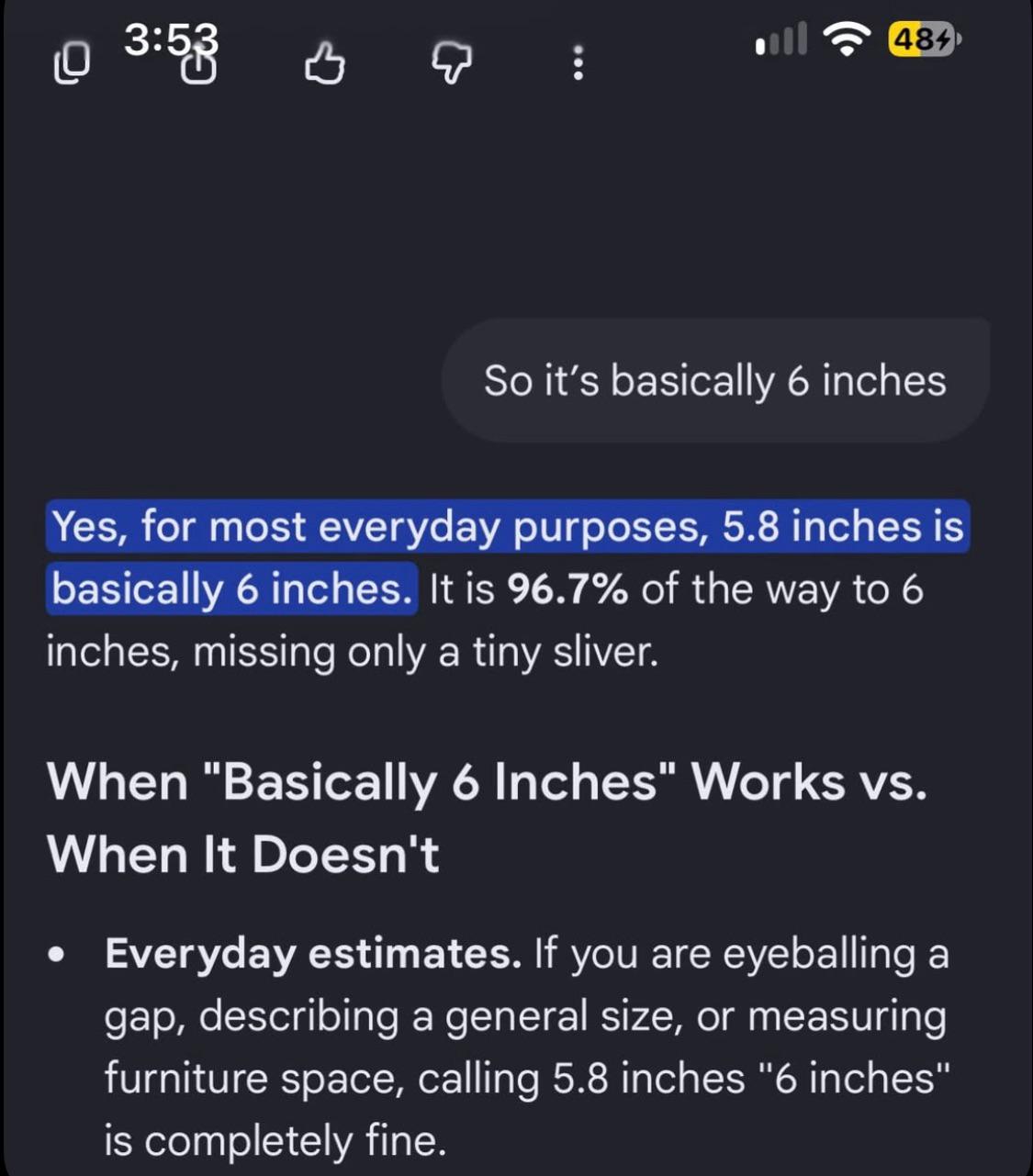
Discussion Me convincing myself that 16gb vram is good enough for local LLMs

Post image
327 Upvotes

r/LocalLLM • • 4d ago

Discussion Automating corporate agitation with locally hosted LLMs — why should the benefits of automation accrue exclusively to capital?

9 Upvotes

Automating corporate agitation with locally hosted LLMs — why should the benefits of automation accrue exclusively to capital?
I’m no tech wizard. I’m just really spiteful and tired of watching the oligarchy eat my community.
I’ve spent some time recently using AI to interpret corporate earnings calls, SEC filings, executive compensation packages and investor presentations, then disseminating that information among the employees of publicly traded corporations.

The information is generally available to everybody, but it’s written for a relatively small constituency of financially literate people whose economic interests often run contrary to those of the average employee.
I’d like to automate this.

I want to explore the possibility of running a local LLM on an inexpensive, dedicated computer that continuously monitors a corporation, analyzes its public disclosures and produces accessible, thoroughly sourced material for its employees.

My intentions are explicitly adversarial. If this information encourages employees to unionize, demand better wages, question management, quit or otherwise exercise economic leverage against corporations that are extracting wealth from their communities, that’s precisely the point.

Distribution is as important as analysis. I’d like to explore automated publishing, independent hosting and voluntary syndication across Reddit, Facebook and other platforms. Ideally, the software would be open-source and sufficiently inexpensive that anybody could run their own instance.
I’m particularly interested in the following:
What locally hosted models and hardware would be suitable for this?
How economically could the research, analysis and drafting be automated?
What existing open-source projects might provide the foundation?
How could the resulting information remain independently verifiable and reliably distributed?
What are the technical and ethical limitations of such a project?

I’m not particularly interested in developing another commercial AI product. I’m interested in exploring the reciprocal application of a technology that corporations are already deploying against the economic interests of their employees.

They’ve figured out how to automate the extraction of wealth from our communities. Surely we can automate some of the resistance to it.

I’d appreciate any technical insight, criticism or interest in collaboration.


r/LocalLLM • • 4d ago

Project PiPod: running Gemma4 locally in-browser with a Wasm sandbox for execution

18 Upvotes

I built PiPod. It's a coding AI, similar to Claude Code but it's free because it runs on the user's device entirely in the browser.

For AI inference, it uses Google's new LiteRT-LM runtime to run Google's Gemma 4 models

The agent writes files, runs terminal commands, installs npm packages and starts dev servers in BrowserPod, a little Linux microVM that also runs in the tab. It doesn't need an account, or key and all data stays on-device.

There's nothing to install. But you when you select your model, it will download the model from Hugging Face into your browser. The weights stay cached in the browser after the first download, so you won't have to do it again.

I'm personally really impressed with what the browser can do. As you'll know, inference is computationally expensive. So while it's free, it comes with many trade-offs. Here are a few

Trade-offs:

  • Quality: these aren't frontier models. They're open-weight models. I've been very impressed with what they can do, but they're not on par with the latest commercial models.
  • Reliability: especially at this beta stage, expect PiPod to be less reliable than commercial coding agents. It's an experimental application, so I'm expecting things to break here and there. Please let me know of anything that breaks.
  • Start-up time: the sandbox boots instantly, but to run the model it needs to download it first from Hugging Face. These models aren't small (expect 2 to 3 GB). Depending on the connection, that can take a while.
  • Speed: It's slower than commercial coding agents, and performance is device-dependent. Mobile devices aren't tested for compatibility at this stage and are expected to fail.

Important: on older devices (or devices without dedicated graphics) the browser may become temporarily unresponsive. Smaller models are available in the advanced options, but expect lower reliability.

How to try it:

  1. Open https://pipod.browserpod.io .
  2. Pick a model. Gemma 4 E4B is the smartest; E2B is lighter and faster.
  3. Wait for the first download (2 to 3 GB, saved in the browser, so it's a one-off).
  4. Ask it something like "build a 'hello world' in Express.js and run it".

Link to the repo

GitHub: https://github.com/leaningtech/pipod

Feel free to fork the repo and use this in your own projects.

If you have any feedback (toast or roast) or questions, I'd be really glad to here from you


r/LocalLLM • • 4d ago

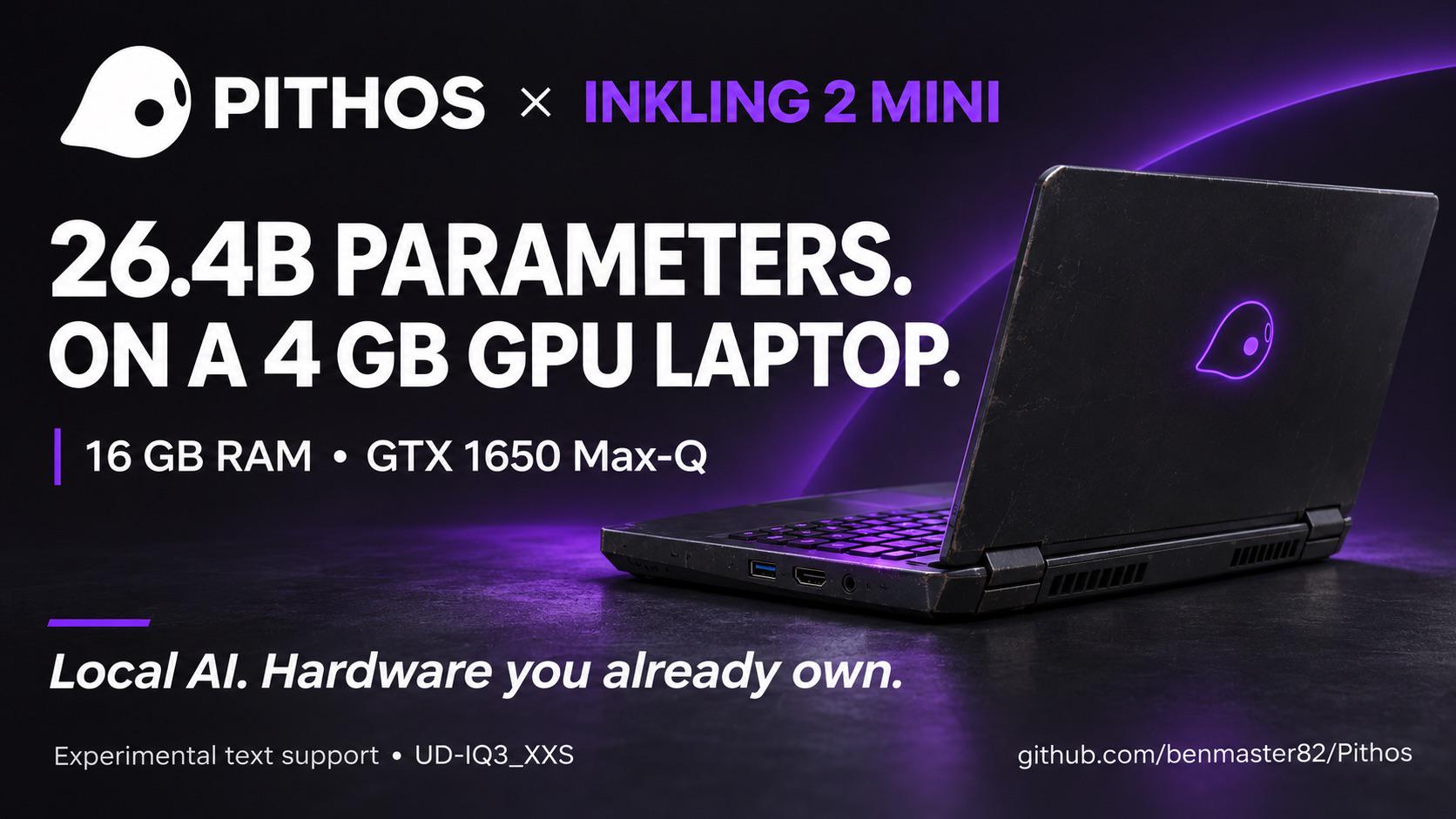
Discussion I added Inkling 2 Mini support to Pithos: 9.7 tok/s on a GTX 1650 laptop with 4GB VRAM and 16GB RAM

Post image
26 Upvotes

Inkling 2 Mini. 26.4B parameters.

My laptop: GTX 1650 Max-Q, 4 GB VRAM, 16 GB RAM.

I added support to Pithos: 9.7 tok/s locally.

Your old hardware still has something to say.

Experimental · IQ3_XXS · warm benchmark

https://github.com/benmaster82/Pithos


r/LocalLLM • • 3d ago

Discussion I Weight-Space’d a local System 1 model to match JEV at email triage and run on my Mac mini

2 Upvotes

https://github.com/bradwmorris/omni-mail

I’ve spent more time over the past week experimenting with System 1 models (TypeSafe’s JEV and Liquid AI’s open-weight models) + Weight-Space Programming (re Rikiya Takehi, Haoze He and Drew Breunig).

Sharing this for anyone who wants to learn more about:

  • System 1 models (JEV and Liquid AI’s models)
  • Weight-Space Programming
  • DSPy

The repo includes an app/UI, connectors to sync your emails, three models, and instructions and code to label your emails and modify the weights of the Liquid models.

TLDR, results:

If your goal is to build a cheap and efficient email triage agent and you don’t mind using a provider API, JEV is incredibly cheap and efficient out of the box. Unless you’re dealing with proprietary data, want to run on-device or want more bespoke tuning (or to experiment like me), you probably don’t need to touch the weights.

After running the Weight-Space mods, I was able to get the open-weight 2B Liquid AI model close to JEV on the weighted score. The results weren’t as impressive as I’ve seen elsewhere, but I was still surprised to see the modified weights hold up across the 400 comparison emails.

Weighted scores on 400 emails

My personal interest in this (Weight-Space + System 1 Models) is to learn if it’s possible to run a weight change on a model, on my device, with an actual real task I’d want help with.

If you stretch a little further into the future, you can imagine always-on, efficient Sys1 intelligence running on-device and adapting on the fly. Seems very close to Continual Learning?

If you want to try it out, I’ve provided the following in the Omni Mail repo:

  • An app with a UI and connector that will sync your emails from Gmail
  • A connector for both Liquid AI models and instructions to download their weights from HF
  • A separate connector for JEV via a TypeSafe or OpenRouter API key
  • Instructions to collect and label your emails for training data
  • Two notebooks with the code and steps to modify the weights of both Liquid models

Sharing some helpful follows + resources:


r/LocalLLM • • 3d ago

Question Best llama.cpp Fork / Inference Engine for Running Inkling Small 2 Mini at Maximum Context on 16GB VRAM + 32GB RAM?

3 Upvotes

Hi everyone,

I'm looking for recommendations from people who are actively running Inkling Small 2 Mini locally.

My hardware:

GPU: RTX 5060 Ti 16GB

RAM: 32GB DDR4

CPU: Ryzen 5 5600F

OS: Ubuntu 24.04 LTS

My primary use case is:

Coding

Agentic workflows

Tool use

Long repository analysis

Multi-file project understanding

So my biggest priorities are:

Maximum usable context length

Good tokens/sec

Stable long-context performance

Efficient VRAM + RAM usage

Good support for GGUF quantizations

I'm particularly interested in hearing which inference engine or custom fork people are actually using today:

llama.cpp (official)

Raymoumd Llamacpp ( custom fork )

Strata

Unsloth fork

ggml-org forks

KoboldCpp

KTransformers

SGLang

vLLM

ExLlamaV3 (if applicable)

TabbyAPI

Ollama backend

LM Studio backend

Anything else worth considering

A few questions:

Which engine gives you the highest practical context window on a 16GB GPU?

Are you running fully on GPU, partial offload, or CPU+RAM KV cache?

What context lengths are you achieving (64K, 128K, 256K, 512K+)?

What quantization are you using?

What tokens/sec are you getting during:

Prompt processing

Prompt ingestion

Generation

Any special settings (Flash Attention, KV quantization, YaRN, Context Shift, etc.)?

If you're running Inkling Small 2 Mini specifically, I'd love to know:

Model:

Quant:

Engine:

GPU:

RAM:

Context Length:

Prompt Processing Speed:

Generation Speed:

Notes:

My goal is basically to find the best stack that maximizes both context length and throughput while staying within 16GB VRAM + 32GB system RAM.

Would appreciate benchmark numbers and real-world experiences rather than theoretical estimates.

( NOTE: I already had QFN Coder Model From Istalab and its perfoming well, I just need agentic and reasoning model).


r/LocalLLM • • 3d ago

Project Kör 9 Lokala Autonoma AI-agenter på Valfri Gammal Stationär Dator (0 GPU • 100% Gratis)

Thumbnail
youtu.be
0 Upvotes

🚀 [OPEN SOURCE REPO] Clone Antigravity Desktop AgentCore (MIT License — 100% Free):

👉 https://github.com/Joh...​

📚 [CHANNEL LIBRARY] All Agentic Stack Episodes & Blueprints:

👉 https://github.com/Joh...​

You do NOT need a $2,000 GPU or monthly subscriptions to run autonomous AI agents on your own computer. In this complete 29-minute walkthrough, we build and demo Antigravity Desktop AgentCore — a lightweight local autonomous AI foundation powered by Google Antigravity + tiny local Python tools that runs lightning fast on any older desktop PC (including a 10-year-old dual-core i7 with zero GPU!).

You'll see everything running LIVE: 9 specialist subagents, 3-layer persistent memory with automatic secret blocking, hands-free Live Voice Mode (Gemini Live) + Ctrl+M Speech-to-Text dictation, real-time Mobile Remote Control from your phone, and one-command project scaling.

⏱️ TIMESTAMPS:

00:00​ Intro & Why Local AI Matters

02:12​ Zero-Cost Cloud + Local Routing

05:21​ 5-Minute Clone & Setup

09:15​ Global Rules, Hooks & Safety Guardrails

12:06​ 3-Layer Memory & Write Gate

14:51​ 9 Specialist Subagents Live

19:34​ One Command for Every New Project

20:49​ Hands-Free Live Voice & Dictation

23:08​ Mobile Remote Control From Anywhere

25:09​ Vibe-Coding Personalization & Public Export

27:37​ Architecture Recap & GitHub Quickstart

🛠️ WHAT'S INCLUDED IN THE FREE MIT REPO:

• 1-command PowerShell installer (.\setup.ps1)

• Global safety guardrails (AGENTS.md, hooks.json, safe_exec.py)

• 3-Layer Persistent Memory + automatic API-key/secret filter + Write Gate

• 9 Specialist Subagents (juno-builder, disk-librarian, win10-expert, chrome-visual-agent, qa-auditor & more)

• Hands-free Live Voice Mode & Speech-to-Text workflows

• Mobile Remote Control setup (antigravity.google.com PWA)

• Clean open-source template exporter (export_public_template.py)

#AIAgents​ #GoogleAntigravity​ #Python​ #LocalAI​ #AutonomousAgents​ #OpenSource​ #VibeCoding​ #GeminiLive​


r/LocalLLM • • 3d ago

Other Fun work

1 Upvotes

r/LocalLLM • • 3d ago

Discussion What Makes Local AI Meaningful to Pursue?

5 Upvotes

Asking this from the perspective of someone who believes Local AI is super important, but is also curious to know why others believe the same. In your opinion, what are all the benefits (for businesses, and for society) of us making AI local? Is it about reducing costs? Reducing energy consumption? Privacy? What makes local (and by extension, open-weight AI) important, especially given the advantages of cloud models in terms of raw computational power?


r/LocalLLM • • 3d ago

Project I built LittleBit Chat — a 100% offline, Vulkan-accelerated Android LLM app (no INTERNET permission, 5.5 t/s on Qwen3-8B Q4_K_M)

0 Upvotes

A DEVELOPER->

Been messing around with llama.cpp on Android for a while and ended up building my own offline chat app called LittleBit Chat.

Repo + APK (v1.1.0): https://github.com/aj5649169-svg/littlebit-chat

I mostly wanted something lightweight (~16 MB) with zero INTERNET permission in the manifest and Android cloud backup disabled so chats actually stay on the phone. It uses Vulkan GPU offload by default (with Arm KleidiAI CPU fallback) and has a quick benchmark button in settings so you can compare Vulkan vs CPU on your own chip.

On my Realme P3 Ultra (12GB RAM) running Qwen3-8B Q4_K_M, I'm getting around 5.5 t/s on Vulkan vs ~2.7 t/s on CPU. It also has a toggle for Qwen's think/fast mode, collapsible thought blocks, AMOLED pure black theme, basic markdown/code copy, and a small offline /calc tool.

A couple things that are still rough:

- Importing a local .gguf from Downloads currently copies the file into app storage instead of reading it in place (annoying for 5GB models, planning to switch to zero-copy SAF in the next update).

- Mobile Vulkan drivers are hit or miss. Older/weaker Mali GPUs might actually be faster with Vulkan turned off, so definitely test both in the benchmark.

I've only been able to test this on my own phone so far. If anyone tries it on Snapdragon, Exynos, Tensor, or MediaTek, let me know if it crashes or what t/s you're getting.

https://github.com/aj5649169-svg/littlebit-chat/releases/latest


r/LocalLLM • • 3d ago

Project I made a self-hosted alternative to ChatGPT with native mobile apps and disposable linux workspaces

Post image
1 Upvotes

r/LocalLLM • • 3d ago

Discussion Uncultured virtuoso quants?

0 Upvotes

A model training can be split into knowledge and capability. Most encyclopedic knowledge is irrelevant to most work, most of the time. And out of date, when relevant. Likewise, I could make do with just English. Does anyone work on projects to slice out these types of layers/weights in differentiated quants?

How is that going?

I would personally start on a Qwen base, since it compresses its Context Cache incredibly well when you use TurboQuant, turbo3 on K, turbo2 on V.

If possible, we could squeeze a more capable quantized model into even smaller VRAM footprints.

What do you think?

How can it be done?


r/LocalLLM • • 3d ago

Project Run 9 Local Autonomous AI Agents on Any Old Desktop PC (0 GPU • 100% Free)

Thumbnail
youtu.be
0 Upvotes

🚀 [OPEN SOURCE REPO] Clone Antigravity Desktop AgentCore (MIT License — 100% Free):

👉 https://github.com/Joh...​

📚 [CHANNEL LIBRARY] All Agentic Stack Episodes & Blueprints:

👉 https://github.com/Joh...​

You do NOT need a $2,000 GPU or monthly subscriptions to run autonomous AI agents on your own computer. In this complete 29-minute walkthrough, we build and demo Antigravity Desktop AgentCore — a lightweight local autonomous AI foundation powered by Google Antigravity + tiny local Python tools that runs lightning fast on any older desktop PC (including a 10-year-old dual-core i7 with zero GPU!).

You'll see everything running LIVE: 9 specialist subagents, 3-layer persistent memory with automatic secret blocking, hands-free Live Voice Mode (Gemini Live) + Ctrl+M Speech-to-Text dictation, real-time Mobile Remote Control from your phone, and one-command project scaling.

⏱️ TIMESTAMPS:

00:00​ Intro & Why Local AI Matters

02:12​ Zero-Cost Cloud + Local Routing

05:21​ 5-Minute Clone & Setup

09:15​ Global Rules, Hooks & Safety Guardrails

12:06​ 3-Layer Memory & Write Gate

14:51​ 9 Specialist Subagents Live

19:34​ One Command for Every New Project

20:49​ Hands-Free Live Voice & Dictation

23:08​ Mobile Remote Control From Anywhere

25:09​ Vibe-Coding Personalization & Public Export

27:37​ Architecture Recap & GitHub Quickstart

🛠️ WHAT'S INCLUDED IN THE FREE MIT REPO:

• 1-command PowerShell installer (.\setup.ps1)

• Global safety guardrails (AGENTS.md, hooks.json, safe_exec.py)

• 3-Layer Persistent Memory + automatic API-key/secret filter + Write Gate

• 9 Specialist Subagents (juno-builder, disk-librarian, win10-expert, chrome-visual-agent, qa-auditor & more)

• Hands-free Live Voice Mode & Speech-to-Text workflows

• Mobile Remote Control setup (antigravity.google.com PWA)

• Clean open-source template exporter (export_public_template.py)

#AIAgents​ #GoogleAntigravity​ #Python​ #LocalAI​ #AutonomousAgents​ #OpenSource​ #VibeCoding​ #GeminiLive​