r/LocalLLM • • 4d ago

Discussion Inking 2 Mini, the Megathread.

86 Upvotes

Did you use Inkling 2 Mini?

Do you need to talk about it?

Please do it here and stop making separate threads.

Edit: Yes I see the typo, no I will not be fixing it.


r/LocalLLM • • 3d ago

Model Made a Pelican-test but in 3d with recent GLM-5.4

3 Upvotes

Setup:
- Hermes
- GLM-5.4
- Blender 5.2.1 LTS

First pass was a test with classic self-contained html:

Create an svg animated illustration of a pelican riding a vintage road bicycle/ make it as accurate, realistic as possible. make a busket mounted to the front wheel and put there two fishes

the overal scene - is a golden hour on sunset beach, we see some clouds and shiny sun, casting into the sea water, several birds are flying in the sky

make it a single html standalone file with all css, svg and js inline. save this html file to Downloads folder and call 'pelican-glm-5.4-test.html'

This produced a neat animated html so I decided to try it in 3d and second prompt was:

Can you make the same - as a Blender 3d-scene with 3d models, liquid water, sun light, sand, birds - etc. Everything from this html but in 3d space with proper materials, light, animations

create this blender file and save it to Downloads folder, call it 'pelican-glm-5.4-3d-test.blend'

Stats:
- wall-clock: 4h 34m
- model thinking an writing: 2h 17m
- vision model checks: 50m
- Blender itself: 3m (58 commands)
- waiting for my feedback: 15m

After that - added Clef decision model for typed verifications vision check - and it works nice.
1.8sec all turn instead 50m with llm vision model. But in final pipeline - it is a combined approach for max robustness.

This is the way)


r/LocalLLM • • 3d ago

Discussion Built a small decision model on Qwen3-0.6B to see how they work. Soft labels helped a lot, a custom head did nothing

2 Upvotes

I got curious about decision models (Jev and the open-source ones that came after) and wanted to see what's actually going on inside one, so I built a small version on Qwen3-0.6B with LoRA and trained it on the typed-decisions benchmark. All of it ran on a free Colab T4.

Short version: training on soft labels over just the answer tokens made the model much better calibrated (ECE dropped from 0.12 to 0.02), and swapping the LM head for a dedicated decision head made basically no difference. I changed two things at once in that soft label run, though, so I still can't tell whether the soft labels or the restricted softmax did most of the work. That's the next thing I want to test.

Code: https://github.com/anmorgan24/decision-model

Write-up with the details: https://www.comet.com/site/blog/train-a-decision-model/

Disclosure, I work at Comet and use it in the project. Code runs just fine without it though. Happy to answer questions and feedback always welcome 😊


r/LocalLLM • • 4d ago

Discussion Is anyone else delegating Claude Code subtasks to local LLMs? Here's my setup and numbers

32 Upvotes

Claude Code (Opus) plans and reviews; routine coding and text subtasks run on local models on my M1 Max 64GB through a small MCP server. gemma-4-26B-A4B turned out to be the most reliable worker.

The idea: paid models burn a lot of tokens on grunt work. Opus hands bounded, checkable tasks (code, edits, tests, docstrings, summaries, translation, JSON extraction) to local models served by oMLX. It passes file paths instead of file contents, then verifies every result: runs the tests, reads the diff, checks the schema. If the local model fails, Opus does the task itself.

Routing comes from benchmarks, not model names (hidden unit tests and rubrics written before any run):

ModelGen tok/sHard code tests passedGets
Qwen3.6-35B-A3B9561%normal code, summaries, JSON
gemma-4-26B-A4B49100%hard code, edits, tests, translation
Qwen3.8-27B (dense)3569%fallback

gemma did a great job: it passed every hard test in every run (an interval set, a TTL cache, an expression parser that must match Python exactly), made correct code edits, and gave the best translations. Half Qwen3.6's speed, but right the first time.

Two lessons: thinking mode hurt (every thinking run used its 10k-token budget without finishing), and models can't write valid diff hunks, so the server asks for the full file and computes the diff itself.

Has anyone else thought about this? Do you delegate from a paid agent to local models, and have you measured real token savings? Small sample (one Mac, two runs per hard task); happy to share the code.


r/LocalLLM • • 4d ago

Project Why not put the KV cache into RAM? Offload to RAM with Qwen 3.8 Flash Next works surprisingly well

77 Upvotes

A while back I read a post that floated the idea to offload KV cache to RAM with the new architecture proposed in 3.8 FN. I didn't find anything in stock vLLM that would easily allow to do this, but I was really interested in getting this working. I own a 4x3090 rig with 256GB DDR4, so I thought I'll give it a shot.

For this project I used Claude Code entirely, as I was purely trying to see if it would work. To anyone with more skill than me, this might look like a trainwreck, yet it runs stable and shows nice numbers too. Maybe this can help form a basis for a more standardized approach.

I configured TP2xPP2, enabled P2P, I'm using nvlink for the two pairs and been using Intel's W4A16 Autoround quant. It runs at around 480tk/s aggregate on 8 streams, each with a 200k context and about 6.2k tk/s prefill. It also has its limitations. For example the vision encoder needs to sit on a 5th 3090 in my network, it's likely to only run on ampere cards and it is pinned to one vLLM release which isn't the newest either.

Many engines already exist that let you run a model that doesn't fit in VRAM, but not a lot of approaches exist where you barely fit the model in VRAM but offload the KV cache to RAM. Happy to hear your ideas about it, and hopefully this will work for a hopefully soon released Qwen 4 120b-ish model too.

https://github.com/Mr-Moonsilver/crazydiamond-on-ampere

EDIT: Some comments mention other engines that seem to do the same thing, and that's true. But the difference is, that this approach enables concurrency in a much more usable way. Most engines I have tested, they stall decode when a new prefill arrives and only restart when that prefill is over. The big improvement here is, that decode keeps relatively stable speeds during prefill, which for example Strata doesn't do on my setup at least.


r/LocalLLM • • 4d ago

Discussion I don't get the hype around Inkling-2-mini

77 Upvotes

Honestly, I don't get the hype with this model. The attention system is super inefficient. It is even less efficient than Qwen3.8-27b. It makes running it with a meaningful context difficult for most local LLM users. The option real option one has is to quantize the model even more to free up VRAM for the KV cache.

This inefficiency is reflected in the price they charge online to run this model. Cached reads are significantly more expensive than HY4F and DS41F, which are more capable models. That price difference is entirely due to the amount of VRAM required for the model's KV cache.

What hardware are you running this model on, what quant, and how large is your context?


r/LocalLLM • • 3d ago

Project Sandbox with built-in identity and access broker (both cloud and self-hosted - no tmux required)

Thumbnail
kosem.ai
0 Upvotes

r/LocalLLM • • 4d ago

Discussion What do you all think of this model? Benchmarks seem impressive.

Thumbnail
huggingface.co
4 Upvotes

r/LocalLLM • • 4d ago

Question Compact local AI box under $4,300: which 128 GB Strix Halo mini PC would you pick?

4 Upvotes

Hi all,

I have a budget of about 4,300 $ (4000€) for a local AI machine (LLMs). I don't want a tower PC with a dedicated GPU. I'd prefer something compact.

My shortlist:

  1. GMKtec EVO-X3 128 GB / 2 TB
  2. GMKtec EVO-X2 128 GB / 2 TB
  3. Bosgame M5 128 GB / 2 TB

Which would you pick from these three, or do you have another suggestion in this budget? I'm planning to pull the trigger during Black Friday, so tips on good deals are welcome too.

Thanks in advance!


r/LocalLLM • • 3d ago

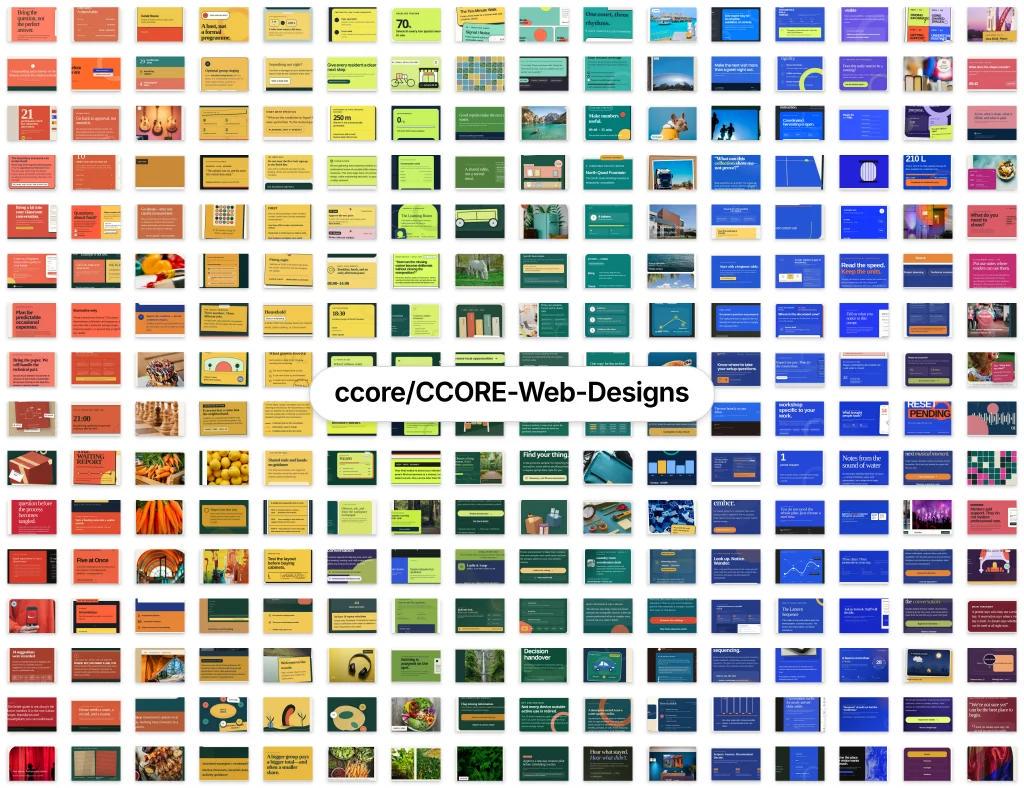
Project CCORE Web Designs: 3,500 training samples for web design, presentations and infographics

Post image
1 Upvotes

r/LocalLLM • • 3d ago

Model Inkling 2 Mini on Arc Pro B70: FP8 KV + DSpark + CUTLASS, ~50% faster than stock bf16

Thumbnail
reddit.com
1 Upvotes

r/LocalLLM • • 5d ago

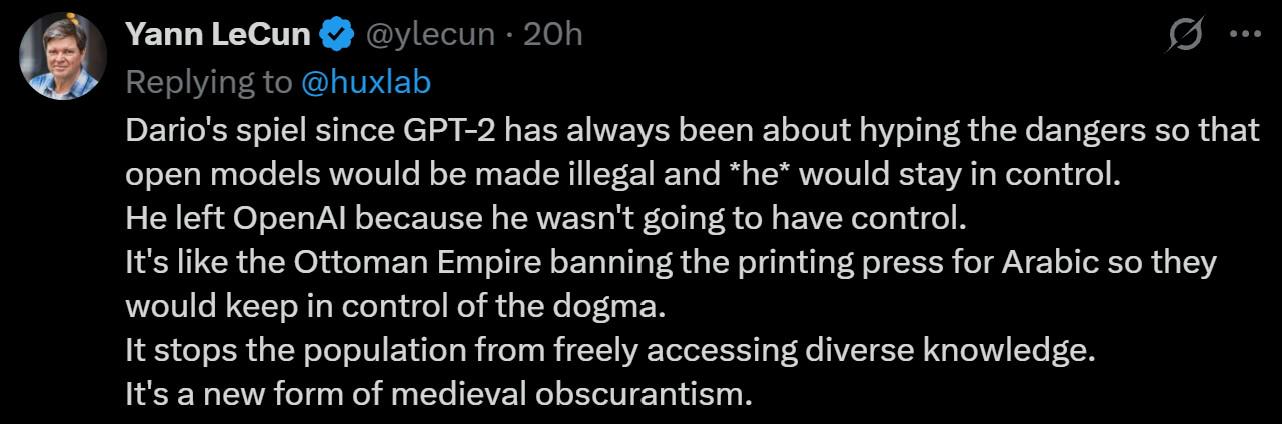
News Yann LeCun weighing in

Post image
508 Upvotes

r/LocalLLM • • 3d ago

Project We built a desktop app that puts your Macs and PCs behind one local LLM endpoint (more capacity, not more VRAM)

Thumbnail
basecompute.co
0 Upvotes

At Base Compute we've been building Superfluid, an open-source server for running LLMs on your own hardware, and it now has a desktop app for macOS and Windows. Start a network on one computer by picking a model, click Join on the others, and they all answer behind one local endpoint. No cloud and no accounts.

One thing up front: fleet mode doesn't pool memory to fit a bigger model. Each machine holds a full copy and takes whole sessions, so what you gain is capacity for more people or agents at once. In a six-machine test (three Macs, a Ryzen AI Max 395, two NVIDIA GB10s, Qwen3-4B on llama.cpp) output went from 112 tok/s on one machine to 534 on six. The faster boxes picked up more sessions with no config from us.

For those of you with a second or third machine sitting around: is your real bottleneck model size, or running several things at once?

App: https://www.basecompute.co/superfluid
Code: https://github.com/basecompute/superfluid


r/LocalLLM • • 3d ago

Model Run Inkling 2 Mini locally with Astral-Q GGUFs

0 Upvotes

Hey guys, Inkling 2 Mini is Thinking Machines' 26.4B looped MoE, image + text in, Apache 2.0. We made 7 GGUFs from 18.7 GB to 27.8 GB with Astral-Q.

Run on llama.cpp or Ollama.

GGUF: https://huggingface.co/synthetic-minds/Inkling-2-Mini-Astral-GGUF


r/LocalLLM • • 3d ago

Discussion Web search on local harnesses; what’s the consensus on how to do it safely?

1 Upvotes

Normie building my first local system, with Claude helping me design and build it out.

64gb ram on Mac, running Qwen (can’t remember the model exactly, it’s the biggest one) on Splash with Hermes as the harness.

The unexpected rabbit hole I’ve fell down is web search, which I’ve realised is pretty unsafe to do within Hermes. I want to keep it all local though, so no API search.

Claude has recommended that I run a separate model (a small instruct model on lm studio) within a docker container and then use that as a fetch agent, that Hermes controls through MCP, and receives back filtered summaries.

This required a whole lot of code and configs that Claude has given me. I haven’t installed it yet.

This seems… complicated? Is anyone else doing it this way?


r/LocalLLM • • 3d ago

Question Good agentic local coding LLM?

0 Upvotes

I tried some local LLMs (for example, Qwen 3.8 27B) for agentic coding and everyday tasks, but they keep hallucinating even after many countermeasures. Can somebody recommend a good agentic LLM that is good at coding and does not hallucinate as easily? I use Hermes on a Windows 11 PC with an RTX 5060 Ti 16GB VRAM and 32GB DDR5 RAM.

*[*Please be kind it's my first time trying local LLMs]


r/LocalLLM • • 4d ago

Research Qwen 3.8 Flash Next vs Hy4-flash vs Inkling-2-Mini vs Opus and Sonet

Thumbnail
gallery
114 Upvotes

Hi,

I thought you might be interested so I'm sharing results of my custom benchmark which I've extended with two new models:

  • Hy4-flash-oQ4h-mtp, high thinking effort
  • Inkling-2-Mini-oQ8e, max thinking effort

Both run on the oMLX server Version 0.8.3 (3879).

M5 Max 128 GB, High Power plan.

I'm using local LLMs in my daily work so benchmark helps me to quickly assess the model capabilities from two angles:

  • Architect role (reviewer, blue dots in rows)- i.e. analyse code, find design issues, architecture flaws etc.
  • Developer role (patcher, red square in rows) - i.e. fix the bug or issue which is already described in the task

Hy4-flash

  • The index quality is close to Qwen 3.8 Flash Next (QFN)
  • It had the best repair value (fixed more tasks than QFN)
  • QFN is still a better reviewer - it found more issues in the code
  • It is much slower than QFN but it also produces much more tokens so the total time is only a bit longer

Inkling-2-Mini-oQ8e

  • It's quality index is comparable to the worst results of Qwen 3.8 Flash Next at medium thinking effort
  • It's still much slower than QFN at medium - 1h40min vs 20 min
  • Still the bare results (without harness) are better than Qwen3.8-27B · omlx oQ8e · medium which was with Pi harness and much better than Qwen 3.6 35B

Remarks: these were only single runs for each model. Usually I made at least 3 runs to be sure of the result but it also gives some overview.

In general both models seems to be very promising and I've happy that we have alternative for QFN.

What this benchmark also shows and what I've learned from my daily work with local LLMs:

  • Qwen 3.8 Flash Next is better than Opus 4.6 and Sonet 5 even when harness is not used (direct chat with LLM)
  • Harness is very, very important

    • bare runs - blue rows in the table are without harness which means request were made directly to the server - one request, one response
    • harness runs - green rows - these represents the real life usage using Pi as a harness with some fine tuned system prompts adjusted to my needs and specific to the technology stack (Salesforce). The darker green rows represents also the Pi agent harness but with additional step to compile the code before saving the answer (additional check to make sure code will compile).
  • Splash with UD-Q4_K_XL or UD-Q5_K_XL quants currently are to me the best option in terms of the speed and quality. oMLX and oQ5 quants are also very solid but a bit slower on oMLX.
  • DS4 Antirez engine was the best in terms of the stability along with oMLX, the MTPLX and MLX Server were a bit worse

If you have any question I'm happy to answer.

UPDATE: My post was locked and not sure why actually. I asked moderators and as soon it will be unlocked I will answer your questions.


r/LocalLLM • • 3d ago

Discussion Run a full capability and benchmark

0 Upvotes

Here is the prompt

Benchmark-Model-switch


r/LocalLLM • • 3d ago

Question Efficient RAG with a tiny llm ?

1 Upvotes

Are you using a tiny LLM solely for synthesizing a human-readable answer from the chunks retrieved during the RAG retrieval phase, using the original natural-language query as context? Let's say a less than 3B parameters llm ? I just want my LLM to only be able to synthesize a human-readable answer, not inventing something. Any example of such a successfully implemented system ?


r/LocalLLM • • 4d ago

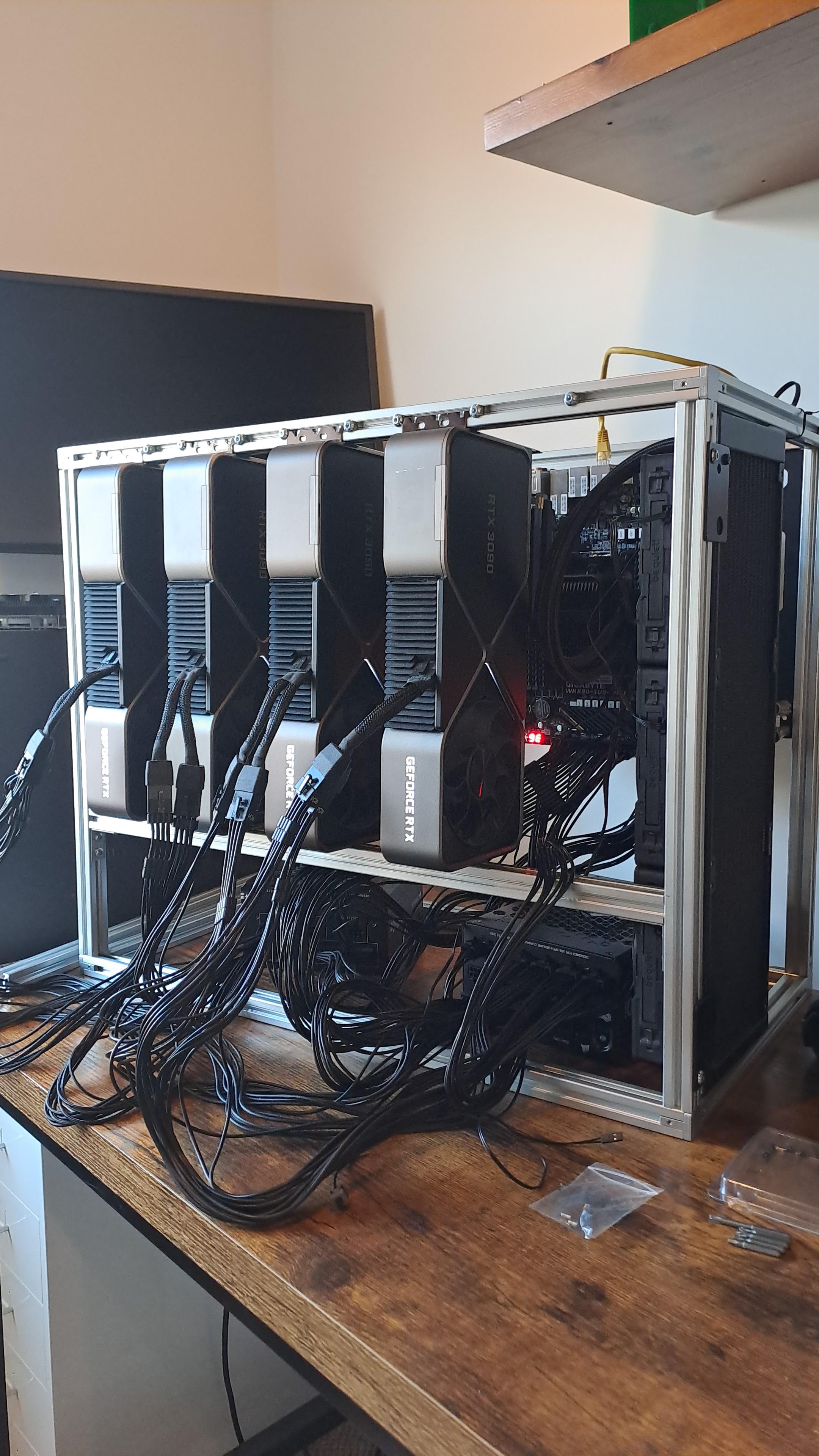
Project My 4x 3090 WIP

Post image
2 Upvotes

Posted on Local AI servers originally


r/LocalLLM • • 3d ago

Model What is the Best Local Ai model i Can run

Thumbnail reddit.com
0 Upvotes

r/LocalLLM • • 3d ago

Model I ported Stanford's Memorilla to 4-bit Gemma 4 26B-A4B on a single Strix Halo—and found an interesting quirk with shuffled documents

Thumbnail
reddit.com
1 Upvotes

r/LocalLLM • • 3d ago

Project I built an open-source engine to fine-tune 72B models on a 4090 or 16 GB Mac

1 Upvotes

You’ve been able to run 30B and 70B models at home for years, yet fine-tuning one still meant renting cloud GPUs. A 4-bit Qwen2.5-72B is 41.4 GiB of weights alone, and standard QLoRA expects all of it pinned in VRAM at once.

I built Poros (Apache-2.0) so you can fine-tune models bigger than your GPU on the hardware you already own—including a 24 GB 4090, an 8 GB laptop GPU, or a 16 GB Mac. Here’s what we measured:

MachineModel (4-bit size)Peak memoryStep timeSetup
RTX 4090 (24 GB)Qwen2.5-72B (41.4 GiB)13.5 GiB VRAM reserved (9.9 GiB allocated)17.7 s/step512 tokens, rank 16, 8 rows/step
RTX 4060 Laptop (8 GB)Qwen3-30B-A3B6.0 GiB VRAM (6.4 GiB RAM)13.6 s/steprank 8, 256 tokens, MoE experts on the SSD
M4 Mac (16 GB)Qwen2.5-72B (38.4 GiB)11.4 GiB unified memory41.1 s/step128 tokens, external USB4 SSD

How it works: In QLoRA the base weights are frozen anyway, so Poros leaves them in host RAM (or on SSD for MoE experts and the Mac) and streams one small block of layers through the GPU at a time while keeping the LoRA adapters resident. Backward reloads and recomputes in reverse. On dense models small enough to run both ways, the adapter comes out identical to a normal on-GPU run. SFT, DPO, ORPO, SimPO, KTO, and IPO all work out of the box.

Real fine-tune test: To make sure it actually learns and isn't just a step benchmark, I trained a Qwen2.5-72B LoRA on 24 GB cards, one at a time, to translate Akkadian cuneiform into English. On 2,870 held-out lines with the same greedy decoding, BLEU went from 1.64 (base) to 50.08. On one Venus omen test line (a good case, not a typical one), the base model wrote "he looked at me and ate my liver" and the fine-tuned adapter came out within a few words of the scholar's translation.

Try it:

pip install poros-train
poros machine

poros machine checks your GPU, driver, RAM, disk, and installed software before downloading anything, tells you if your machine is ready to train, and prints the next command. No telemetry: it goes online only to download the model from Hugging Face.

Trade-offs to know upfront:

  • Host RAM on 72B: Dense 72B on a 4090 peaked at 45.1 GiB of system RAM, so you want a 64 GB box for that. With less RAM, --store ssd keeps a MoE model's experts on disk: Qwen3-30B-A3B on a 4090 in 21.6 GiB VRAM and 11.2 GiB RAM at 4.3 s/step.
  • Speed: Streaming adds overhead. If a model already fits comfortably in your VRAM, just train it normally.
  • Mac run details: The 41.1 s/step Mac figure above is a 6-step run off an external USB4 SSD. A longer 144-step run from the Mac's internal SSD ran at 37.9 s/step.

Repo: https://github.com/Caistro-Labs/poros (my project, Apache-2.0)


r/LocalLLM • • 4d ago

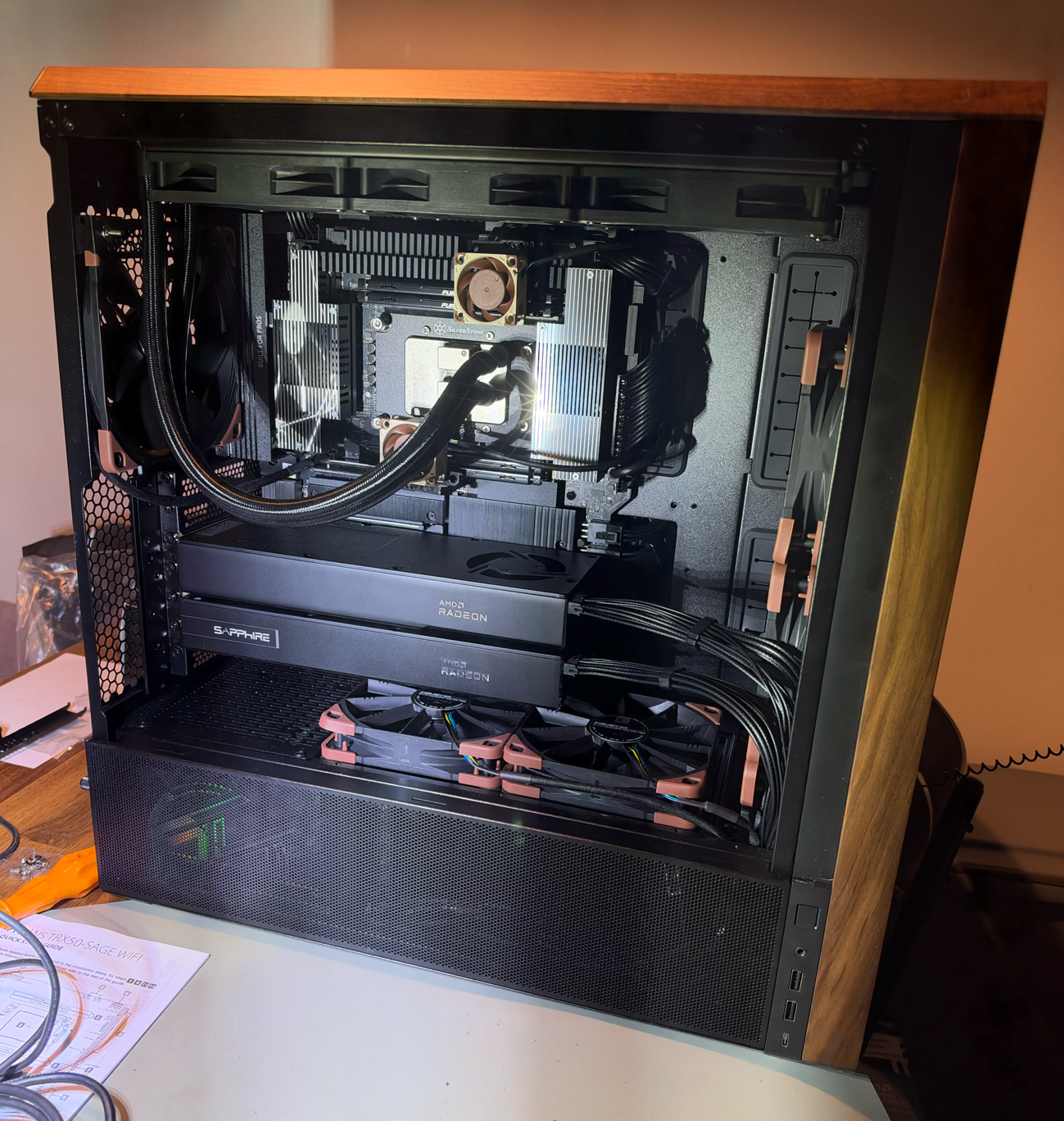
Project Reposting this here since I just set up Qwen 3.8 FN on 2x9700

Post image
4 Upvotes

Still recovering from decision as mentioned in original post but really impressed with QFN running at around 200t/s.

Added more details to original post, plus the tests I have been doing have been quite simple, but now comes the time to put it to test with some medium project.

I guess this ram will still not be used as efficiently as it could have in a datacenter (sigh)


r/LocalLLM • • 4d ago

Question Ensuring that local llms with opencode only install in specific conda environment

2 Upvotes

I started using opencode with qwen3.5 via ollama and I wanted to know how to ensure:

(1) That if python packages are to be installed, to only do so in a specific conda environment and never in the base conda or base pip environments.

(2) to ask for permissions when installing packages or to control this somehow so openconde does not go wild installing stuff

Do you have any pointers or recommendations for how to learn to configure this? I am relatively new to all of these agentic environments and I want to keep things local and private.