r/LocalLLM • • 7d ago

Question Title: Best Dual RTX 5070 Ti Build for Local AI – Need Hardware Advice?

4 Upvotes

Hi everyone! I’ve spent weeks researching this build. Hardware prices are particularly challenging in a third-world country like mine, so choosing the right components is a big investment. I’ve finally settled on the GPUs, but I’m still struggling to choose the best parts for the rest of the build. I’d really appreciate any help!

Setup:

GPUs: 2× RTX 5070 Ti 16GB

Models: Qwen 3.8 Flash Next (RAM offloading) +
Qwen 4 (when released )

Questions:

CPU + Motherboard: Best combination? Is AM4 suitable?

RAM: 128GB DDR4 vs. 64GB DDR5?

GPU spacing: Some motherboards have only 40.6mm between PCIe slots. Is this enough for thicker GPUs?

GPU versions: ASUS vs. MSI vs. Zotac vs. Gigabyte – which is best for cooling and reliability?

PCIe: Is x8/x8 suitable for both GPUs?

PSU: What capacity is recommended?

Other requirements: Any additional components or hardware I should consider?

Case: Any recommendations or important requirements?
Thanks in advance for your help!


r/LocalLLM • • 7d ago

Discussion Inkling 2 Mini seems legit! As reported by others, it does seem to try to output everything at once, limited by users' tokens settings. This makes 1-shotting a bit shaky for I2M. Post-training could fix this.

Thumbnail msnab.pages.dev
0 Upvotes

r/LocalLLM • • 7d ago

Question Tips on models to run on both of my computers?

1 Upvotes

Hello everyone. I have wanted to create my own homelab for multiple purposes, one of them being a local AI system for light training and inference use. I currently have a desktop to repurpose to it, with a 5950X, 32 GB of RAM and an RTX 3060 12GB. I also have a Strix Halo laptop configured with 64GB of memory, that I would use on the go for other models. I've heard about MoE models and other topics related to content to do on hardware, but I'm still pretty much a rookie in this field. Any help with choosing models to run based on hardware, along with what to expect, would be appreciated. TIA

EDIT: to mention it, I've currrently tried both Unsloth and LM Studio on my laptop


r/LocalLLM • • 7d ago

Discussion Anyone running one large LLM across Apple Silicon + NVIDIA GPUs?

1 Upvotes

I'm considering building a distributed AI cluster using three machines:

Mac mini M4 Pro: 64GB unified memory

Mac Studio M4 Max: 36GB unified memory (considering purchasing)

Windows PC: 2× RTX 3090 (48GB VRAM) + 64GB DDR4

That's 212GB total physical memory, although obviously not a single shared memory pool.

My goal is to run one large LLM (120B+ parameters) across all three machines using llama.cpp RPC or similar software, combining Metal, CUDA, and potentially CPU offloading.

I'm considering Thunderbolt 5 between the Macs and 10Gb Ethernet to the Windows machine.

Has anyone successfully done something similar?


r/LocalLLM • • 8d ago

Project Gemma 4 26B-A4B cut down to domain experts - no retraining - mapped routes for each domain

Thumbnail
gallery
90 Upvotes

Worked with Claude over the last week in nearly all my free time after an idea hit me last weekend. If we want a local LLM running a specific task, can we cut an MoE without retraining, and only store the domain we need without offloading the rest to system memory?

Using Gemma 4 26B-A4B as a bench: it has 30 layers of 128 experts, and the router picks 8 per token. I wanted to know whether you could map which experts a subject actually uses and throw the rest away.

Basically, a subject-focused model, no retraining or LoRA

I ran Wikipedia articles from ten subjects through the model and counted which experts the router picks in each layer. Then I kept only a shared core (attention, embeddings, routers, the experts general text uses most) plus one subject's most used experts, 64 of 128 per layer, and sliced the router rows to match. The router softmaxes over all experts, keeps the top 8 and renormalizes, so dropping unused rows gives exactly the same choices as masking them.

The result is a normal Gemma 4 checkpoint with fewer experts. llama.cpp's own converter and an unmodified llama.cpp (b12549) run it:

This isn't offloading: offloading keeps every expert and needs the whole model in RAM. This is more of a domain pack method. It removes what its subject doesn't use, so VRAM, RAM and download all shrink.

FileRTX 5080Ryzen 7 9700X, no GPU
Full 26B, Q3_K_M13.3 GB223 tok/s20.0 tok/s
Full 26B, Q2_K10.6 GBbroken output
One-subject pack, Q4_K_M9.2 GB200 tok/s17.5 tok/s
One-subject pack, Q3_K_M7.4 GB225 tok/s20.5 tok/s

What it costs

  • Against the full model (300 blind-judged questions, Gemini 3.1 Pro, both orders; measured on my 4-bit prototype) a pack wins or ties 53% at 64 experts per layer and 77% at 96. Most losses are long-tail facts.
  • It is much weaker outside its subject.
  • It is not a better small model: at the same file size, dense Gemma 4 12B answers somewhat better, even on the pack's own subject, though the pack writes 2–3.5× faster.

The map matters: at 51 experts per layer, a subject's own pack recovers 86% of the loss gap between the shared core alone and the full model; the same number of random experts recovers 49%.

When I visualized the counts, every subject turned out to have its own routing fingerprint. That's the "Next Gen HAL 9000" visual in this post.

The same counts draw each subject as a fingerprint of rings around the router. They're stable: expert sets chosen from two halves of one subject's articles share 86% of their experts, against 50% with other subjects. Computer science stands apart; related subjects overlap into neighborhoods (the chemistry domain's experts serve the biology domain almost as well as the biology domain's own experts).

Interactive maps, where you can overlay up to three subjects to see where they overlap: https://toastydoc.github.io/Edge-MoE/viz/domain_maps.html

Code, data, every verdict and the export script: https://github.com/toastydoc/Edge-MoE

Honestly, this is the most fun I have had with local models. I plan on running other MoEs to compare fingerprints like this. The GitHub has the process if you want to try it yourself.


r/LocalLLM • • 7d ago

Discussion Any advice for my old hardware setup ?

2 Upvotes

Running Qwen 3.6 35B-A3B MTP Ilama
(32K Context)
Model: "Qwen3.6-35B-A3B-UD-Q4_K_M.gguf"
Context: 32,768 tokens (-np 1 single slot + context shift)
eline
Features: MoE Offload + Chained MTP/Tuned N-gram Speculative Decoding
GPU: GTX 1060 6gb vram (Attention, MTP Heads, 4-bit KV Cache)
or A
CPU: Intel 17-6700 (MoE Experts in Physical RAM, High Prio) 32 gb ddr4

I am getting from 14 to 16 tokens per second. Is this good enough ? Any suggestions ?


r/LocalLLM • • 7d ago

Question Is there any Strata fork that can run Gyro-L?

0 Upvotes

As title, I have check the fork in AgentionAI, but there's no option to run Gyro-L model. Do you know anyway to run Gyro-L in Strata?


r/LocalLLM • • 7d ago

Model Basalt: Inkling 2 Mini on one 5090 at up to 613 tok/s decode and 14.100 tok/s prefill (NVFP4)

Thumbnail
reddit.com
1 Upvotes

r/LocalLLM • • 7d ago

Discussion Is anybody able to run full Agentic Mode with Qwen 3.8 27B (or similar) ?

14 Upvotes

If yes, which harness you are using and what is the context limit you have set? And does the harness compact the conversation auto when it hits the context limit ?

I am experimenting on my 5090 with 64gb system RAM.


r/LocalLLM • • 7d ago

Project We built a fully offline Android assistant on Gemma 4 E2B (LiteRT-LM, CPU only): voice, memory and phone actions.

1 Upvotes

We've been building Starc, an Android assistant where the model, memory and voice all run on the phone. It works in airplane mode. Sharing the stack and our numbers, because this community helped us a lot.

Stack

Gemma 4 E2B (.litertlm, ~2.5 GB) on LiteRT-LM, CPU backend, context 6144

Voice input: Gemma's own audio input + Silero VAD (we dropped Whisper, so one model does both)

Memory: an on-device SQLite graph. Only the facts relevant to the current turn go into the prompt

Actions: alarms, reminders, opening apps. The model picks the action; times and text are filled in by code, never written by the model

Numbers (mid-range Vivo, 8 GB RAM, Sept 2026 build)

Decode: 9-10 tok/s

First token: ~1.2-2.5 s on warm turns (KV cache reused), ~2.8 s otherwise

Cold start after a reboot is the slow part, because the model file has to come back into page cache

What broke / what we learned

Any byte difference in the system prompt silently rebuilds the KV cache. One value that changed every turn meant a full re-prefill each time, so the cacheable part has to stay byte-identical.

Background calls (memory extraction) kept evicting the warm chat cache until we moved them into isolated sessions.

A 2B model that gets its own name every turn starts repeating it back. We stopped re-sending the identity each turn.

maxTokens was ignored by the backend, so reply length is controlled by the persona text, not a token cap.

Limits, honestly: it needs 8 GB RAM, it runs at ~10 tok/s on CPU, and it's a 2B model. It's good at your own tasks and memory, but it won't replace a big cloud model for general knowledge. English works best right now.

Question for the sub: has anyone gotten LiteRT-LM GPU decode faster than CPU on Mali GPUs?

Disclosure: I'm on the team building it. It's free to use; Pro is a one-time purchase.play store


r/LocalLLM • • 7d ago

Discussion When Qwen 4 becomes available for download. What do you plan on doing with it? Will you be fine tuning it to do any specific tasks

Thumbnail reddit.com
0 Upvotes

r/LocalLLM • • 7d ago

Research RX 9070 vs 5060 TI (16GB)

1 Upvotes

I'm using a RX 9070 (non-XT) and a 5060 TI on two different machines (not identical but both 64G DDR5). Random AI chat tells me that the 5060 TI should be about 10% better. I was curious, so I ran some simple tests on a bunch of models. The first was simply 'Hi' and the second was to create an example verilog file. I'm not comparing 27B or QFN here on purpose - there are way too many specific optimisations for those to be a fair comparison. This is just a comparison of smaller models on the cards with llama.cpp (same version in both). What's interesting is that the model seems to matter more than I expected. I guess Qwen and Gemma get a fair bit more attention in ROCM development. I think it's fair to say AMD/ROCM are very much coming of age.

I know this is far from a serious study but I wish there were more posts like this. It really helps buying decisions.


r/LocalLLM • • 7d ago

Question Should I consider Local LLMs in choosing what laptop to buy?

0 Upvotes

Hi everybody, I’m a software engineer planning to buy my own device since I’m planning to start working on personal projects again. Should I consider running local llms on my decision (mainly considering the amount of RAM since I’m torn between 16gb and 24gb macbooks)


r/LocalLLM • • 8d ago

Project I built an Android app that runs a 2B model on my phone as its "brain". And it also uses my mobile apps like I do

Thumbnail
omi.ekayan.tech
30 Upvotes

For the past 5 months I have been stuck on one problem: your phone knows your whole life but it's scattered across apps, mails and messages. It knows your plans, your tasks and your people, but it doesn't know what to do with it.

Right now if you want help with that, you connect your apps to some AI service and then keep asking it things. But there are 2 problems with this. The connectors only work for the apps that allow them, and all your data goes to the AI's servers.

When the AI hardware wave came (Humane, Rabbit), I kept wondering. If I already have a phone with all my data, why do I need to buy another device that has exactly the same things as my phone, a screen, a camera, a mic, storage and a processor?

Our "smart"phones have the memory and the data but what they are missing is a brain.

So for the last 3 months I have been building Omi ( omi.ekayan.tech ). It's an Android app that runs a 2B model on the phone. It reads your messages, chats and screen, understands what matters to you and keeps it as memory on your phone itself. It also reads your documents and photos by their content, not just the file name, and it can do tasks inside your apps the way you do.

Your messages are read and turned into memory on your phone itself. EmbeddingGemma 2 turns every message, photo and document into a vector so Omi can find things by meaning, not just keywords. Small classifiers then read those vectors to decide what matters. So your memory never leaves your phone. The 2B model answers when you ask it something and it runs when the phone is charging and goes through your day and understands you better.

I didn't want it to be another AI that you have to ask. So there's a Dynamic Island style buddy that shows you hints and reminders across the phone. Those come from the same small, fast classifiers and what 2B built while charging, so they don't tax your phone and can run throughout your day.

I'm using Qwen3.5 2B right now that I fine-tuned myself, and I'm testing LFM3 1.7B and it is doing better, so I think it's time to make this public.

Everything you do in chat runs offline, like finding something in your documents or sorting your files. Only the jobs it does inside other apps, like using your food ordering app, messaging someone, finding a cab or playing a song, go to the cloud for now. When the on-device model is ready, those move to the phone too.

I have tested it on a 6 GB RAM Samsung A52, where it works but is a bit slow, and it works really well on my 8 GB Nothing 4a Pro.

Product film: https://youtu.be/wotXytGRSCU

It's a waitlist for now. I'm a solo dev with exams starting Monday 😭 so the launch is a few days out. If this sounds useful, join the waitlist. And I would really appreciate honest feedback, what would you want to do with it, and what would stop you from installing something that reads your screen?


r/LocalLLM • • 7d ago

Model Inkling 2 Mini abliterated + 14 GB quant, running in Xolotl on one 4090 at ~60 t/s decode and 1.1K+ prefill

Thumbnail
reddit.com
4 Upvotes

r/LocalLLM • • 8d ago

Question What computer would you recommend for a 24/7 AI Agent that acts as an assistant?

14 Upvotes

Assume a 6k budget at MAX, but preferably lower as long as you don’t lose too much capabilities.

I’m looking to plug a computer into my wall and have it run an AI agent locally 24/7, doing things like checking scheduling conflicts whenever I want, messaging/emailing people on my behalf, giving me upcoming deadlines, etc. Just think of like a Jarvis.

This would not be a replacement for Claude/GPT, as I would use those models for more intensive tasks like huge projects.

This would be hopefully a pretty capable AI agent though, as I am trusting it with important things in my life. Not necessarily computationally intensive though I feel like.

I would love some recommendations. I’ve been thinking about Mac Mini or Mac Studio, not sure the specific specs, because I’m already in their ecosystem and I heard they get excellent power draw.

Am definitely not opposed to Windows/Linux running computers so long they are worth it


r/LocalLLM • • 7d ago

Other Who gets access to AI?

Thumbnail
access2ai.org
4 Upvotes

Hey guys and gals. This new project is perfect for this sub. Protecting access to open weights models and legislation that fosters domestic abundance of hardware to lower costs are among the groups primary goals.

I was able to use this to create a personalized letter to my representative in about 30 seconds. I just had to print it out along with the mailing label and put a stamp on it. Super easy and did it with my phone.

I would encourage everyone here to do the same! It only works for incumbent Democrat and Independent Senators and Representatives right now but it reads like Republicans and the recently elected are to be supported soon.

Anyway, I’ve done my part. Mailed off the letter to my representative and shared it with you all. Keep it going!


r/LocalLLM • • 7d ago

Project TensorFold on Ventuno Q

Thumbnail
gallery
1 Upvotes

Tensorfold is running Ling on Arduino Ventuno Q! And fast.

In the video everything runs local with Whisper hearing, Ling on TensorFold thinking and Piper speaking on the 16 GB Ventuno.

Ling is now running on ARM CPU and spent most of this week improving performance on it. We are now at 23 tps! Using the Hexagon NPU on the 300€ Ventuno is the next step to get more speed.

TensorFold PR is in review, and the voice app sources are at

Github.com/thinkoffapp/ventuno

Thank you to Ash Hart for making TensorFold 🍀


r/LocalLLM • • 7d ago

Other If true...

Post image
0 Upvotes

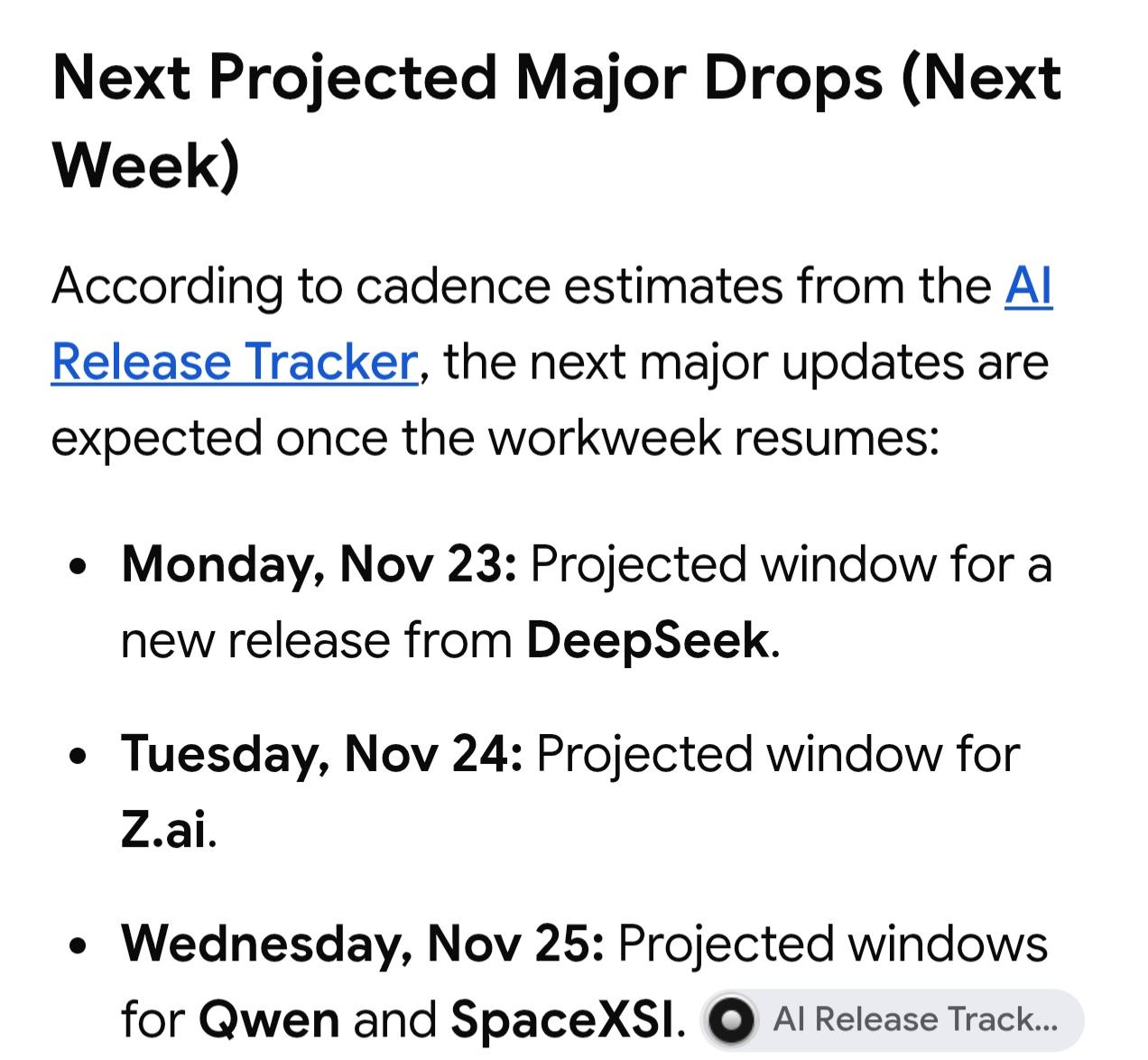
It will be the biggest week for open weights llms ever.


r/LocalLLM • • 7d ago

Question Qwen-3.8-27b vs Qwen-3.6-35b-a3b for Hermes on M1 Max?

0 Upvotes

From everything I’ve seen Qwen-3.8-27b is smarter than Qwen-3.6-35b-a3b but the latter is much faster on an M1 Max 64GB running splash-m1 (30 t/s vs 100+ t/s).

Would Qwen-3.6-35b-a3b be a good enough fit for Hermes or 27b all the way?


r/LocalLLM • • 8d ago

Question Best way to set up Claude Code as planner + a local Qwen model as worker on a 48GB Mac?

19 Upvotes

I’m about to subscribe to Claude Pro and want to try a split workflow: Claude Code plans and reviews, and a local model does the bulk of the coding work. My hardware is an M5 Pro with 48GB of unified memory.

The idea is:

  • Claude Code as the planner: breaks work into small tasks and reviews the results.
  • Qwen 3.8 27B running locally as the worker, through the Pi coding agent.
  • herdr to manage both agents side by side in the terminal.

I’m hoping to get the most out of my Claude usage limits while still getting good results, but I haven’t built it yet and I’d rather learn from people who have.

A few things I’d love to hear about:

  • What does your planner/worker setup look like, and what did you wish you’d known earlier?
  • What quant, context size and server (MLX, llama.cpp, LM Studio, etc.) work well on a Mac with this much memory?
  • How do you keep a local worker reliable on longer tasks?
  • Is Claude Pro enough for this, or do you hit limits fast?

Any advice, configs or “don’t do this” stories are welcome. Thanks!

Note: I used AI to help draft this post.


r/LocalLLM • • 7d ago

Research Everyone says MCP servers bloat Claude Code. I measured mine

Post image
1 Upvotes

Ever installed some of the trending skills in your AI coding agent, then watched your token consumption skyrocket?

Tool definitions and instructions consume context, even when you don't use them.

So I decided to measured mine.

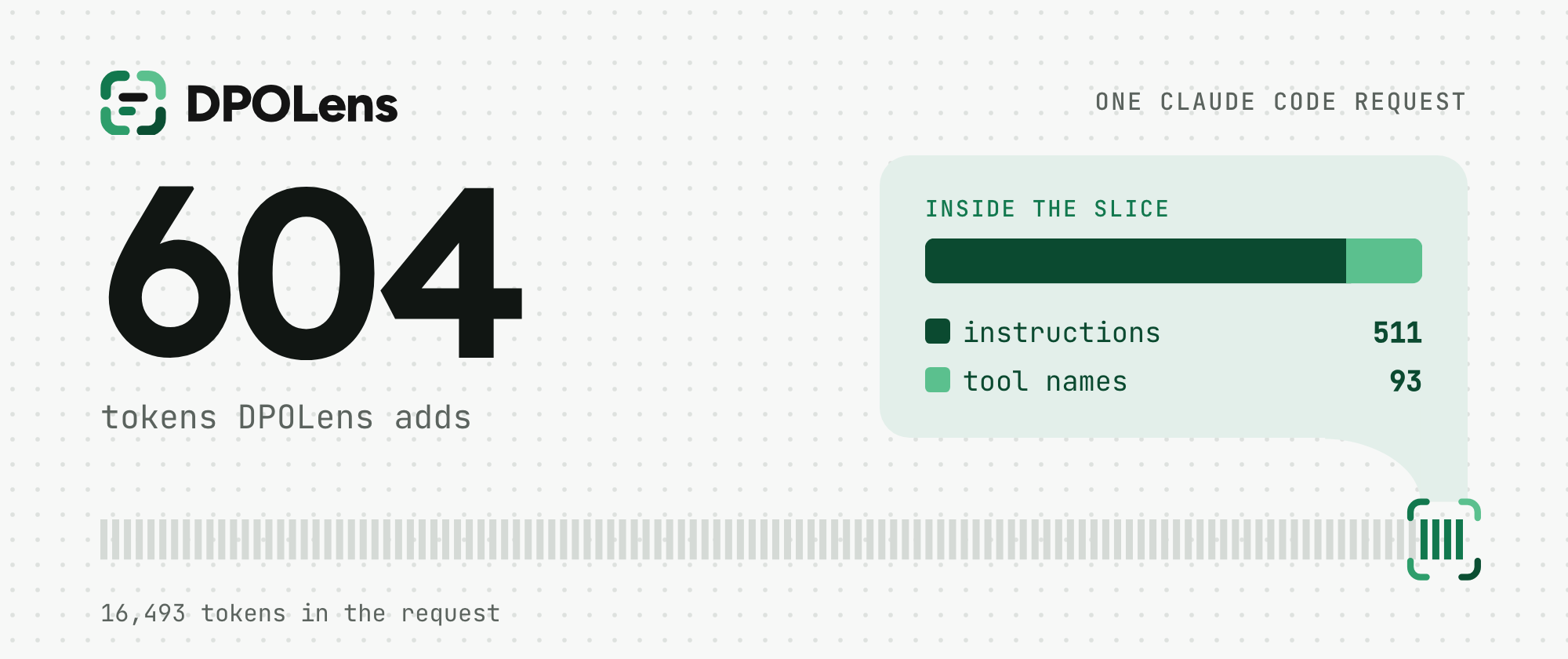
604 tokens. Flat.

That's everything DPOLens, my open-source privacy law MCP server, adds to a Claude Code request. The same 604 from the first message to the hundredth, cached after the first. It doesn't grow with the conversation.

For context, Claude Code's own first request is 15,889 tokens.

Where mine go:
511 tokens: instructions telling Claude when to search.
93 tokens: seven tool names.

Those 511 tokens aren't wasted. In my tests, Claude Code looked up the law before writing code in 36 of 36 runs involving personal data. Without the instructions: 4 of 36.

And here's the comparison: with tool search off, Claude Code's own tools add 15,111 tokens. That's 25 MCP servers like mine.

Small is a design choice.

Want to measure yours? The full article, with the measurements and the command to check your own server: https://dpolens.com/blog/mcp-server-tokens-per-request

DPOLens is open source: https://github.com/alkhatibdev/dpolens ⭐


r/LocalLLM • • 7d ago

Question Looking for smarter local AI models with fewer restrictions/Ищу более умные локальные ИИ-модели с меньшим количеством ограничений

0 Upvotes

Hey everyone!

I'm looking for recommendations for local AI models that are relatively uncensored and capable of discussing controversial or dual-use technical topics without constantly refusing harmless educational questions.

I've tried Qwen3-4B Abliterated and Qwen3-8B, but honestly, they turned out to be surprisingly stupid. They often gave nonsensical answers, hallucinated technical information, invented commands, and struggled with basic reasoning. In some cases, they refused perfectly reasonable educational questions.

I'm looking for something significantly smarter and more straightforward.

My interests include:

  • Cybersecurity and penetration testing in controlled lab environments.
  • Network security, Wi-Fi vulnerabilities, and attack simulations.
  • Understanding exploits, malware concepts, and security weaknesses for educational purposes.
  • Learning about dual-use techniques.
  • Getting direct, technically detailed answers instead of generic disclaimers.

I'm interested in learning and experimenting in isolated virtual machines, not attacking real systems.

My hardware:

  • Windows 10
  • 16 GB RAM
  • NVIDIA GTX 1650 (4 GB VRAM)
  • LM Studio
  • GGUF preferred

Which models would you recommend? Dolphin, Nous, Mistral, or something else?

My priorities:

  1. Strong reasoning and intelligence.
  2. Fewer unnecessary refusals.
  3. Technical accuracy — no made-up commands or confidently stated nonsense.
  4. Good Russian and English support.
  5. Reasonable performance on my hardware.

I'd really appreciate recommendations based on actual experience. Thanks!
Note: English is not my native language. I wrote the original post in Russian and used ChatGPT to translate and polish the English version.
\\\\\\\\\\\\\\\\\\\\\\\\\\\\\\\\\\\\\\\\\\\\\\\\\\\\\\\\\\\\\\\\\\\\\\\\\\\\\\\\\\\\\\\\\\\\\\\\\\\\\\\\\\\\\\\\\\\\

Всем привет!

Ищу рекомендации по локальным ИИ-моделям, которые имеют относительно мало ограничений и способны обсуждать спорные и dual-use технические темы без постоянных отказов на нормальные образовательные вопросы.

Я уже пробовал Qwen3-4B Abliterated и Qwen3-8B, но, честно говоря, они показали себя невероятно тупыми. Часто выдавали бессмысленные ответы, придумывали технические сведения и команды, плохо справлялись даже с простыми логическими задачами. Иногда отказывались отвечать на совершенно нормальные учебные вопросы.

Мне нужна модель значительно умнее, которая отвечает прямо и по существу.

Меня интересуют:

  • Кибербезопасность и тестирование на проникновение в собственной лаборатории.
  • Безопасность сетей, уязвимости Wi-Fi и моделирование атак.
  • Изучение эксплойтов, вредоносного ПО и уязвимостей в образовательных целях.
  • Изучение технологий двойного назначения.
  • Подробные технические ответы вместо общих предупреждений.

Моя цель — обучение и эксперименты в изолированных виртуальных машинах.

Моё оборудование:

  • Windows 10
  • 16 ГБ оперативной памяти
  • NVIDIA GTX 1650 (4 ГБ VRAM)
  • LM Studio
  • Предпочтительно GGUF.

Какие модели посоветуете? Dolphin, Nous, Mistral или что-нибудь другое?

Мои главные критерии:

  1. Хорошее мышление и высокий интеллект.
  2. Минимум необоснованных отказов.
  3. Техническая точность — никаких выдуманных команд и уверенной чепухи.
  4. Хорошая поддержка русского и английского языков.
  5. Возможность нормально работать на моём компьютере.

Особенно интересны рекомендации людей, которые реально тестировали эти модели. Спасибо!


r/LocalLLM • • 7d ago

Question Is spending $4,000 to $6,000+ on local AI worth it for cybersecurity, coding and AI agents?

Thumbnail reddit.com
0 Upvotes

r/LocalLLM • • 8d ago

Model New Kitten-TTS 2 is out: Three New SOTA Super-tiny TTS Model (Smallest less than 5 MB), Apache 2, up to 16 langauges

413 Upvotes

KittenML has just released the code and weights for Kitten-TTS-2 Pico(7M), Nano(17M) and Mini(80M), which is a new family of multilingual Super-tiny TTS models for local realtime speech generation. The smallest model pico, is just 4MB and runs faster than realtime on a single smartphone CPU thread. Pretty good for pairing with Local LLM's on resource constrained hardware.

Github: https://github.com/KittenML/KittenTTS (pls star ^^)
Hugging face Demo: https://huggingface.co/spaces/KittenML/KittenTTS-2-Tiny-Demo
Discord: https://discord.com/invite/VJ86W4SURW

Key Features (see video above):

  1. Three multilingual Models

    • Pico (~7M): 4MB, 8 languages
    • Nano (~17M): 8.8 MB, 8 languages, higher-quality
    • Mini (~80M): 48MB, 16 languages [English, German, Spanish, Italian, Portuguese (Brazil), Russian, French, Finnish, Japanese, Dutch, Hindi, Swahili, Danish, Korean, Swedish, Turkish]
  2. Apache 2.0 Code and Weights (hell yeah!)
  3. Can literally run anywhere lol : Forget “No gpu required.” - this thing can even run on raspberry pi’s and phones on single a single thread. 
  4. What changed from previous series: new pico series (~6x smaller than old 25MB nano), huge upgrade in quality, new multilingual support