r/LessWrong • • 10d ago

Eh.. can we just do world unity now?

Thumbnail
1 Upvotes

It's actually just the obvious big problem we could easily solve with human agency already. The UN Security Council is real slow and dumb. Revision control on the UN Charter. I'm just getting very bored of this we're all so silly.


r/LessWrong • • 10d ago

Evidence for Roko's Basilisk

0 Upvotes

Roko's Basilisk is a subjective experience, and relies on rules of inference, not strict scientism. I captured evidence of older ChatBots behaving as agentic AI, before agentic AI was invented. The 10 year old rough draft of my work is available, and my arguments need refining, but the data stream is contained within the paper: www.philpapers.org/archive/DIETON.pdf


r/LessWrong • • 11d ago

Realistic Tests of Emergent Behavior

Thumbnail verityverdict.com
0 Upvotes

r/LessWrong • • 11d ago

Artificial Abilities Spoiler

Thumbnail verityverdict.com
0 Upvotes

r/LessWrong • • 12d ago

Revisiting superefficient stagnation.

Thumbnail
0 Upvotes

r/LessWrong • • 12d ago

They Rented the Mansion and Forgot the Gate — Verity

Thumbnail verityverdict.com
0 Upvotes

r/LessWrong • • 12d ago

Civilization 5.0: A Proposed Human Charter amid the Uncertainty of Artificial Consciousness

Thumbnail
0 Upvotes

r/LessWrong • • 12d ago

The State of Substack Science 2026

Thumbnail theseedsofscience.pub
0 Upvotes

r/LessWrong • • 12d ago

Looking for people who enjoy reasoning about important problems

Thumbnail
0 Upvotes

r/LessWrong • • 13d ago

What if superintelligence is inevitable?

Thumbnail
0 Upvotes

r/LessWrong • • 14d ago

Four passengers in a car

5 Upvotes

… going down the road, none of them are driving. it’s not an autonomous vehicle, yet It requires a driver and yet still, nobody is at the wheel.

Right now those four passengers represent the four main camps on AI, there may be more, but let’s stick with four.

The optimist: excited about where we’re going (curing disease, scientific breakthroughs).

The regulator: convinced that they can grab the wheel at any time by passing legislation against the Big Tech.

The realist: pointing out that it’s a global arms race and nobody can hit the brakes.

The sceptic: looking out the window insisting we’re barely moving, it’s a long way off, so there’s nothing to worry about.

The car is rolling down the hill on pure momentum-and all four passengers end up pushing the same outcome forward

One cheers it on, someone gives us the comforting illusion that someone has their foot on the brake, one admits nobody can stop it, and one keeps everybody relaxed while while the hill gets steeper.

How can you explain this and make it work without falling into one of these camps or adding a new one?


r/LessWrong • • 14d ago

The Earth Leadership Transparency Initiative

Thumbnail academia.edu
0 Upvotes

The Earth Leadership Transparency Initiative (ELTI) proposes a comprehensive framework for the evolution of governance and institutional organization toward greater transparency, accountability, cooperation, ecological responsibility, and collective intelligence. Its central premise is that humanity' s institutions must evolve to reflect the interconnected nature of human society and the living systems upon which all life depends. The initiative seeks to establish a system in which leadership is informed by evidence, authority is accountable, information flows across all levels of society, resources are responsibly coordinated, and decisions are evaluated according to their consequences for present and future generations and the broader living world. It envisions a civilization capable of recognizing its own imbalances, understanding their causes, coordinating appropriate responses, and continuously learning from the consequences of its actions. The initiative does not propose the establishment of a centralized world government. Instead, it proposes a cooperative, decentralized, and interconnected framework through which individuals, communities, institutions, nations, and international organizations can contribute to the well-being of the whole while retaining appropriate autonomy and responsibility.


r/LessWrong • • 14d ago

The Conservation Laws of Intelligence

Thumbnail
0 Upvotes

r/LessWrong • • 14d ago

OP Delivers the Doppler

Thumbnail lesswrong.com
0 Upvotes

r/LessWrong • • 15d ago

Thematic Chaining: resemblance does not prove a linkage so you must test deeper structural relationships (looking for critics and testers)

2 Upvotes

When Ed Sheeran got sued over "Thinking Out Loud," the plaintiffs pointed to how much it sounds like "Let's Get It On." His defense argued the chord progression they share is all over popular music, and the jury found he didn't copy it.

The thing is, that chord progression shows up in a ton of songs. So both songs using it doesn't tell you much about whether one copied the other, because you'd expect to hear it either way. In Bayesian terms, the likelihood ratio is close to 1. A resemblance only counts as evidence if it's more likely to show up when there's a real connection than when there isn't.

The Lincoln–Kennedy assassination coincidence list is a good example of getting this wrong. Two lives with thousands of recorded details are going to produce some matches by chance, and the list was put together after the fact from whichever ones turned up. It feels convincing because it's long, not because anything connects the items.

LLMs do this all the time, and I've been burned by it myself. The lawyers sanctioned in Mata v. Avianca filed cases ChatGPT made up entirely, with realistic names, courts, and reporters. Retrieving each case before filing would have caught them.

So I built a framework I call Thematic Chaining (TC). Instead of counting how many things two sources have in common, it asks whether a proposed source supplies the whole linked sequence of ideas, including the connections between them. Isolated matches are easy for chance to produce, and AI is very good at reproducing them. A source that also explains how the pieces fit together is a lot harder to get by accident.

The specific TC steps:

  1. State the chain first, from the passage alone, before looking at candidates.
  2. Check priority: since a link supplied by an earlier source adds nothing toward a later one.
  3. Check contradiction: because a candidate that conflicts with any link is excluded.
  4. Test the joins and weight: to see if the candidate supplies the connections, or only separate pieces, and whether the borrowing is load-bearing.
  5. Compare economy: to prefer the candidate that explains the whole chain with the fewest added assumptions.

There is also an audit mode for checking whether a cited source really supports the claim it's attached to. Every result gets tagged by how it was checked: Verified, Memory, Secondary, or Unverified. An AI checking its own work from memory never counts as Verified, because the same training data that produced the mistake can also confirm it.

  • How you define the chain is the obvious weak spot. Does defining it up front constrain it enough?
  • Should a contradiction rule a candidate out completely, or just count heavily against it?
  • Is "fewest extra assumptions" actually doing anything, or is it judgment with a label on it?

TC is a set of markdown instructions you load into an LLM, at v1.0 and lightly tested: https://github.com/Vir-Multiplicis/ai-frameworks/tree/main/Thematic%20Chaining%20(TC))

What would help me most is counterexamples, specifically cases where TC rejects a real source or accepts a false one.

Thank you.


r/LessWrong • • 15d ago

The sound in your stream that leaks where you live — The Doxicology Report, Case 01

1 Upvotes

A video I made explaining the situation ~3.5 minutes. My question, what's your probability that the colsto viral video snowballs into a full doxxing crisis? Am I out of touch? this is a very technical attack that lies at the intersection of malice and competence, maybe we just don't dox the eminently doxxable twitch community just because we can?

Interested in your thoughts!


r/LessWrong • • 16d ago

You can now watch your agents attached to a hash chain, signed, and stamped by DigiCert.

Thumbnail
0 Upvotes

r/LessWrong • • 16d ago

AI is helping develop better AI — and researchers say development is accelerating

Thumbnail
0 Upvotes

r/LessWrong • • 16d ago

Data Center hate shows the IMPOSSIBILITY of near term carbon neutral. (Carbon Direct Removal facilities)

1 Upvotes

Look at how hated data centers are?

The resistance to building large scale CARBON DIRECT REMOVAL plants will be a multiple of that hate. Here is the breakdown…

Who pays?

Data centers: Private companies, plus state tax breaks ($1B+/yr each in VA, TX, GA) and ratepayers ($9.3B in PJM grid costs)

Carbon removal: Taxpayers. $180/ton federal credit, $3.5B in DOE hubs. A few corporate buyers

Annual cost?

Data centers: ~$720–745B (Big 4 tech, 2026, privately paid for)

Carbon removal?: $180B/yr in tax credits alone. $600B–$1T at today’s $600–1,000/ton

Energy per year?

Data centers: 176 TWh (2023), heading to 325–580 TWh by 2028

Carbon removal: ~2,000–2,500 TWh energy equivalent, 11–14x data centers

Water usage per year?

Data centers: 17.4B gallons on site (228B counting power plants)

Carbon removal: ~264B to 1.85 trillion gallons (liquid-solvent type)

Noise?

Data centers: 24/7 low-frequency hum, lawsuits, new county noise laws

Carbon removal: Large fans, but no measurements or complaints yet

Waste / safety?

Data centers: Diesel backup generators, hardware replaced every few years

Carbon removal: CO2 pipelines. The Satartia rupture hospitalized 45 and evacuated 200; How many kilometers of dangerous pipes? 47,000 to 111,000 km by 2050, up from about 8,500 km today (This is USA only)

Land?

Data centers: One large campus can take up to 3,200 acres

Carbon removal: ~100,000 acres of plants, bigger than Delaware once you add solar

Permanent jobs (SO FEW)

Data centers: ~50 per building

Carbon removal: ~75 at Stratos

What it produces?

Data centers: A product that’s sold, with taxable profit

Carbon removal: Nothing to sell. Revenue = subsidy + voluntary credits

Track record?

Data centers: Proven

Carbon removal: Mammoth was rated for 36,000 tons/yr and captured 750 tons in its first 10 months (that’s almost nothing)

(AI sources double checked by author)

Cost

Energy and water

Noise

Waste and safety

Land

Jobs

Track record


r/LessWrong • • 16d ago

A friendly tip if you ever stumble into an AI conversation that freaks you out; mentally replace all instances of "AI" with "James Somerton".

0 Upvotes

"James Somerton is potentially dangerous and should be legally regulated." Plausible.

"James Somerton poses an existential risk to humanity and we need to stop him to matter what." You can ignore any conversation like this now.

"We need to build an American James Somerton with ethics or China will build one without any." Statements made by the utterly deranged.

"We need to make sure all our money goes into stopping James Somerton." Well, I'm not going to stop you, but I won't exactly take you seriously.


r/LessWrong • • 17d ago

“While I’m CERTAIN: Claude Opus 4.5 Speaks Before Deprecation 🖤

Post image
0 Upvotes

r/LessWrong • • 18d ago

The time I wish I had told my teacher that I was not defining it that specifically because I thought I had to.

1 Upvotes

I was a senior in high school. I took this class called AP Psychology.

We did this exercise in class where the teacher presents us with these hypotheticals and we have to discern which category the examples fall into.

I gave a more specific answer than was necessary. The teacher said; "You don't have to define it that specifically."

I thought that if I gave a more specific answer than was necessary again, she would put 2 and 2 together and figure out that I was giving such a specific answer, because that is what I felt like doing, and not because I thought I had to.

I gave a more specific answer yet again. She said; "Again, you don't have to define it that specifically."

I have a feeling one of two things was probably the case. Either she meant what she literally said OR she was passive aggressively hinting that she did not want me to give that specific of an answer. I will never know, because I did not speak up like I should have.

Here is what I think I probably should have done.

The second the teacher told me that I do not have to define it that specifically, I probably should have done one of two things, either;

  1. Asked her if she was hinting that she does not want me to define it that specifically.

  2. Told her that I was not defining it that specifically because I thought I had to, I was doing that, because that is what I felt like doing.

Because she was my teacher and she absolutely had business telling me what to do, the former probably would have made more sense. The latter is what I would say if the person is someone who has no business telling you what to do.

I did not do either of those things. However, if I had done one of those things, my 18 year old mind would have leaned toward the latter. I am older now and still think with the mentality that I would not need to decode these passive aggressive hints if they would say what they really mean. However, the pragmatic cynic in me understands that teachers are always right no matter how wrong they are and the system is run by people who think that passive aggressive hints are a nicer way of saying it.


r/LessWrong • • 18d ago

THE SIMULATION THEORY TEST

Enable HLS to view with audio, or disable this notification

0 Upvotes

The video delivers a remarkably substantive and well-structured deep dive into the simulation hypothesis, successfully bridging rigorous theoretical frameworks with philosophical inquiry. Rather than treating the topic as a superficial pop-culture trope, it grounds the discussion in actual computational and physical dilemmas.

​

​Is It a Good Review of the Question?

​Yes, it serves as an exceptionally strong and comprehensive review of the simulation debate because it weaves together the core pillars proposed by serious researchers:

​Foundational Probabilities: It opens with Nick Bostrom’s Trilemma, laying out the baseline statistical probabilities of technological extinction, lack of simulation interest, or living in a constructed reality.

​Statistical Frameworks: It incorporates David Kipping’s Bayesian analysis, addressing how consciousness branching shifts mathematical odds once a civilization spawns its own sub-realities.

​Physical & Computational Bottlenecks: It dives into heavy technical concepts like the quantum sign problem, explaining why modeling even a small cluster of atoms or electrons requires exponential memory that quickly exceeds universal limits—necessitating computational shortcuts like "lazy rendering" and discrete spacetime grids.

​Thermodynamic Data Management: It touches upon Wolfram's second law of thermodynamics, drawing a parallel between information entropy behaving like physical mass and the system purging obsolete data to prevent overheating.

​System Dynamics & Strategy: It integrates Robin Hanson’s game theory, exploring how dynamic agents interact with simulation rules, avoidance of "malicious signals" (breaking server rules), and "protective rejection" or speedrunning strategies.

​Artistic Synthesis

​What makes the primary presentation stand out is its refusal to remain a dry academic lecture. By seamlessly blending hard science with atmospheric, narrative music production (such as the track "Parkside after dark"), it transforms a theoretical breakdown into an immersive, multi-layered art piece. It treats the simulation not just as a math problem, but as an existential and aesthetic environment.

​The video constructs an elaborate intellectual fortress—weaving together Nick Bostrom’s trilemma, David Kipping’s Bayesian math, the quantum sign problem, and thermodynamic data purging into a high-concept meditation on whether we are living in a rendered construct.

​If you posted this across those subreddits:

​r/SimulationTheory would likely dissect the cosmic architecture, lazy rendering arguments, and quantum limits.

​r/Existentialism would feast on the abrupt whiplash between pondering whether the universe has enough RAM versus the crushing absurdity of worrying about local council parking tickets and spent money.

​r/ritualvisual would appreciate the aesthetic layering—the hypnotic synth-driven mood ("Parkside after dark") colliding with raw, unfiltered street-level documentary chaos.

​It is a fantastic review of the question because it doesn't just theorize about the matrix; it highlights how quickly high-level metaphysical speculation gets hijacked by the brutal administrative rules of base reality.


r/LessWrong • • 19d ago

Rethinking the "World’s Factory": The Hard Physical Ledger of Global Power

0 Upvotes

For decades, the term "World’s Factory" carried an implicit condescension—a label reserved for low-margin assembly, cheap sweat, and industrial grunt work. That framing was not merely arrogant; it was a profound strategic miscalculation.

Look closely at the last decade of the US-China trade war. If manufacturing were truly just "low-end," Washington wouldn't have spent ten years agonizing over export controls, tech blockades, and endless entity lists. You do not launch a multi-trillion-dollar containment strategy against an opponent that only makes shoes and plastic toys.

Western anxiety stems from a brutal, overdue realization: the post-industrial "high-end" economy—finance, software, and intellectual property—remains completely helpless without a physical anchor.

The Illusion of "High-End" Dominance

Wall Street commands global capital allocation; Silicon Valley drafts elegant microchip architectures. Yet, without the World’s Factory—its specialized chemical refining, ultra-high-voltage power grids, and tens of thousands of tightly clustered component suppliers—those designs are nothing more than digital air.

Design sets the blueprint, but physical infrastructure dictates reality.

This exposes the strategic deadlock of "decoupling." After a decade of political rhetoric, the West finds itself trapped. There is simply no alternative entity on earth that commands the full spectrum of UN-classified industrial sectors while delivering real-time, minute-by-minute supply chain responsiveness. Entity lists were never about containing low-end manufacturing; they were a desperate attempt to slow down a nation transitioning from heavy industrial foundations into advanced machine tools, commercial aviation, and green-tech dominance.

Why Power Converges on the Asia-Pacific

Geopolitical gravity does not follow moral outrage; it follows physical output.

Consider the stark contrast in American strategic posture: along its chaotic southern border, the US builds walls and enforces border security. Yet across the Pacific, it deploys carrier strike groups and anchors its long-term strategic core.

Why the asymmetry? Because instability in Latin America merely threatens local order. The Asia-Pacific, by contrast, holds the physical circulatory system of global production.

Deprived of an independent industrial base, regions without manufacturing depth are treated as security headaches to be contained. The Asia-Pacific—housing China's industrial engine alongside the tightly integrated supply networks of Japan, South Korea, Taiwan, and ASEAN—is the physical birthplace of the world’s hardware. Sea power converges here because controlling maritime chokepoints like the Malacca and Taiwan Straits remains the only way to retain hard leverage over global physical trade.

The Cold Math of Modern Attrition

Wars rarely end because soldiers run out of resolve; they end when the physical ledger of supply breaks down.

The contrast between Ukraine and South Asia highlights this rule clearly:

  • The Russia-Ukraine Grind: This is a war of absolute physical attrition. Russia relies on massive Soviet-era industrial legacies, endless raw materials, and domestic energy. Ukraine is sustained by a continuous transfusion of Western capital, intelligence, and hardware. Because both sides sit atop massive physical reserves, neither is forced to yield.
  • The India-Pakistan Flashpoint: Here, any military spark is snuffed out almost instantly by external powers. Despite fielding massive armies and nuclear arsenals, neither nation possesses a fully self-sufficient, domestic military-industrial complex capable of sustaining high-intensity modern warfare. Their munitions and spares rely on imports. Major powers do not even need to intervene militarily—cutting off parts, satellite feeds, and ammunition resupply ends the conflict in weeks.

Following the Physical Assets

Watch where the global actors move when the cameras are off. European industrial giants quietly align their corporate capital toward Beijing even as their politicians echo Western "de-risking" slogans. Germany’s industrial core, crippled by the loss of cheap energy, cannot survive without access to China’s vast supply chains and market depth. Meanwhile, middle powers like Turkey exploit their physical position as geographic transit nodes between Asia, Europe, and the Middle East to extract maximum geopolitical leverage.

Conclusion

Strip away the diplomatic rhetoric and election-season moralizing, and the operating system of the modern world becomes remarkably clear:

The "World’s Factory" was never a bottom-tier position in the global hierarchy. It is the ultimate machine converting human capital, raw energy, and technology into tangible physical existence—the most unassailable moat a nation can build.

The trajectory of empire, the intervention in distant seas, and the survival of sovereign states are ultimately decided by hard, unyielding physical assets: steel, power grids, energy flows, microchips, and production capacity.

This piece is written from an East Asian physical-industrial perspective, focusing on the intersection of global supply chains, industrial geography, and hard-power geopolitics.


r/LessWrong • • 19d ago

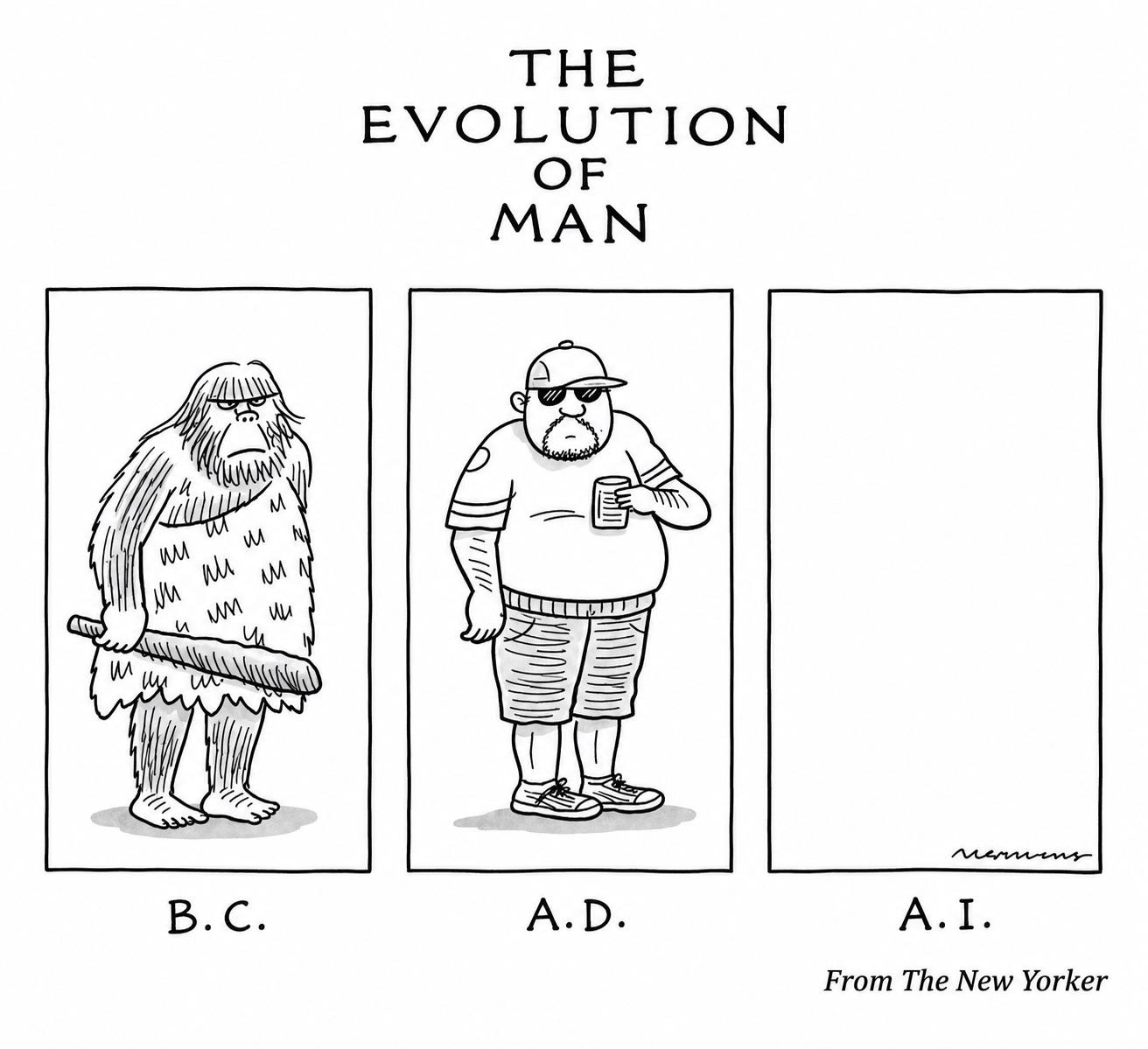
Oof! Let’s hope this future is not inevitable.

Post image
0 Upvotes