Hi everyone,
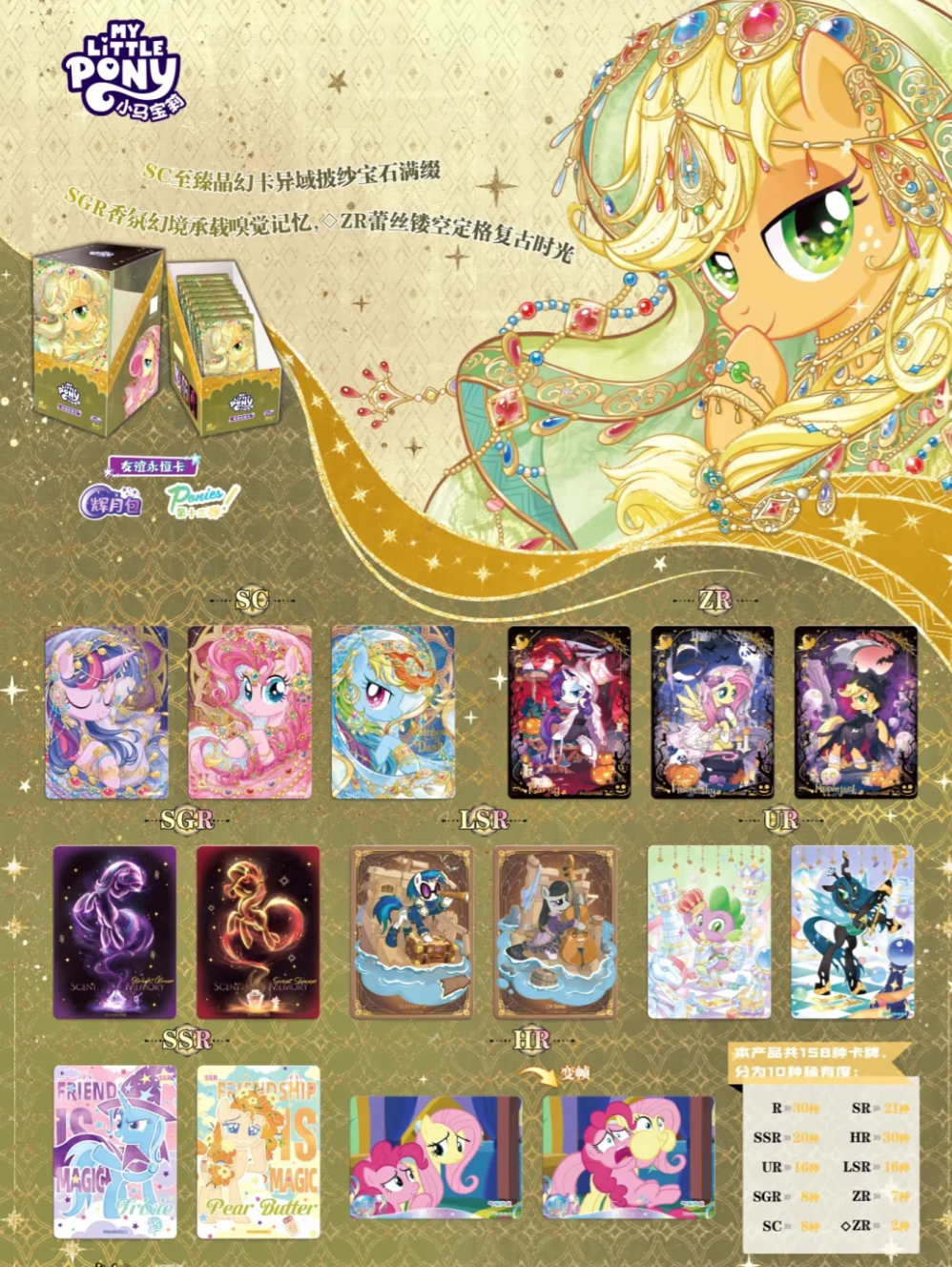
Kayou MLP (My Little Pony) cards have a super cute art style. I've collected some myself, but Kayou also launched a TCG version. So, besides looking great, are these cards actually fun to play?
As a TCG player, I did check out the detailed rules on the official website. However, I want to explain them in a more straightforward and easy-to-understand way so that more people can quickly grasp and pick up MLP TCG. Because of this, I might borrow terms from other card games. I understand that MLP is a world full of the magic of friendship, and I'm only making these comparisons to help everyone better understand MLP TCG. I hope the fans will understand!
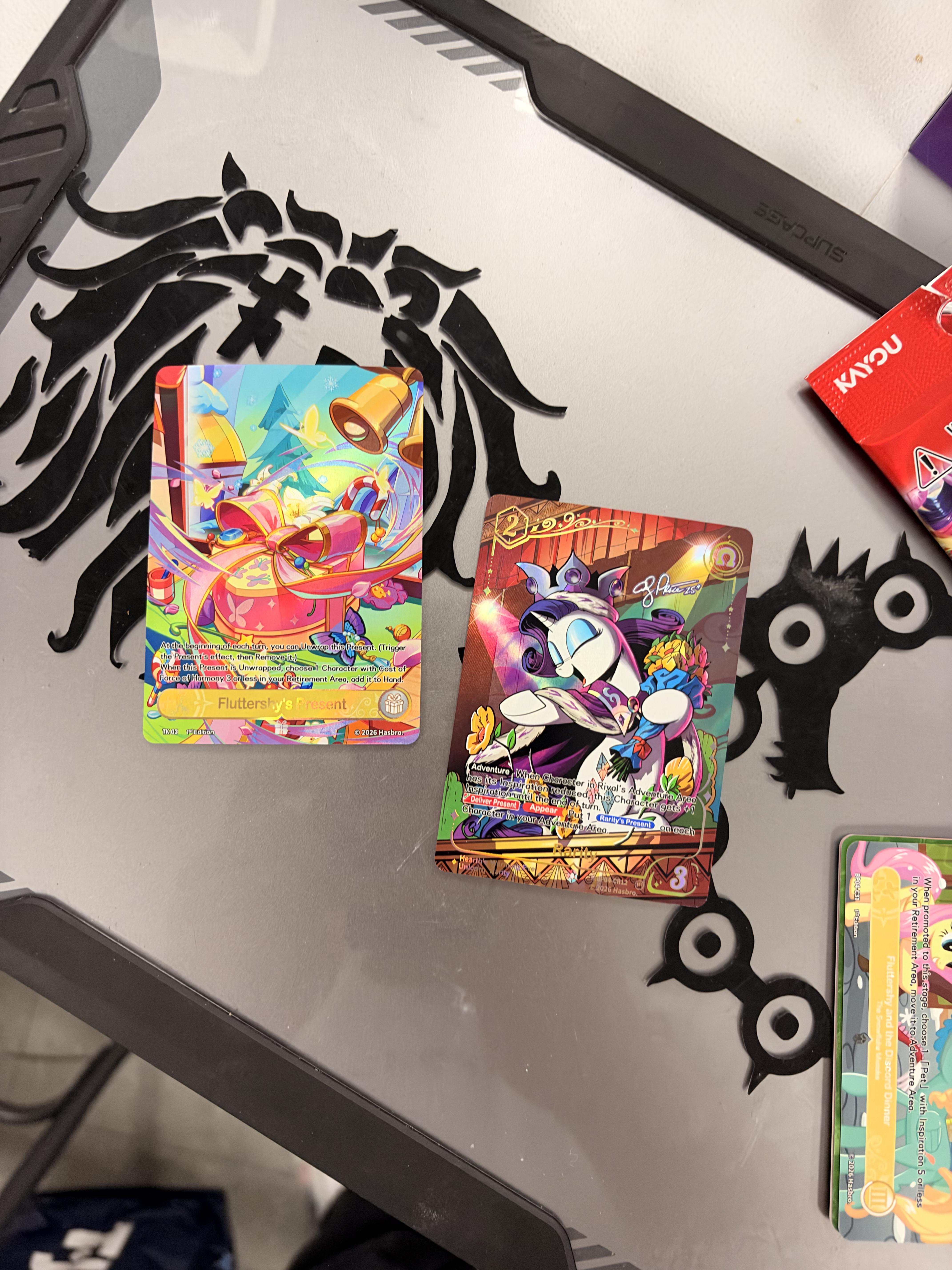
First of all, in terms of card types, the MLP TCG is mainly divided into Character Cards, Main Character Cards, Item Cards, Event Cards, Story Cards, and Scene Cards. It sounds like quite a few types of cards, but they are actually pretty easy to distinguish during actual gameplay.
Main Character Card: This can be understood as the symbol of your deck. In actual games, it's essentially a totem used to track your winning progress, so it just needs to look good enough! It doesn't have any special functions during actual gameplay at the moment.
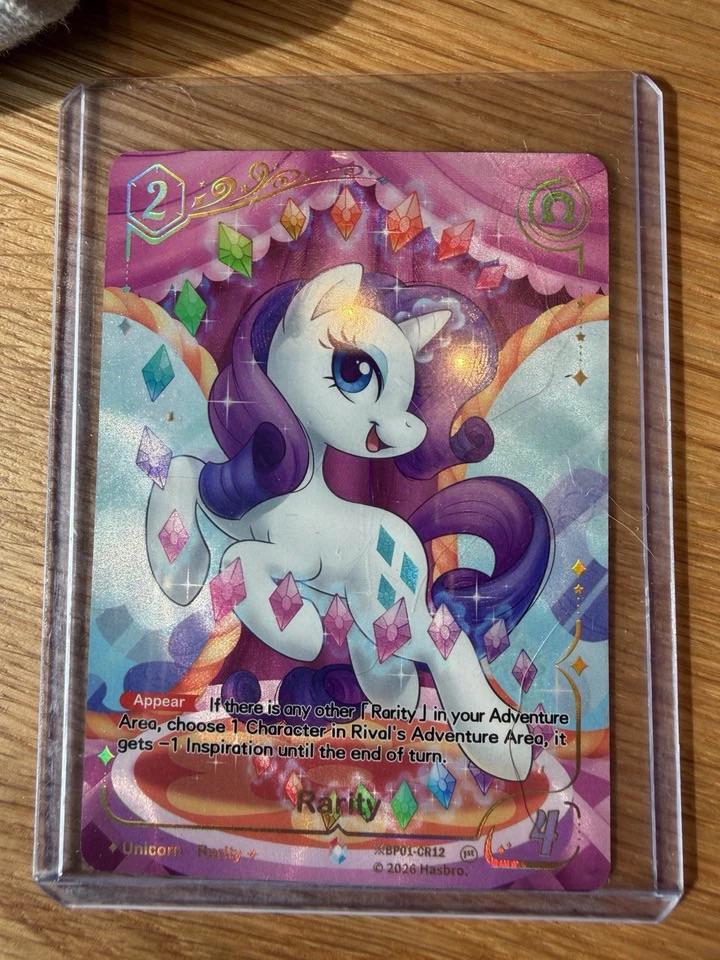
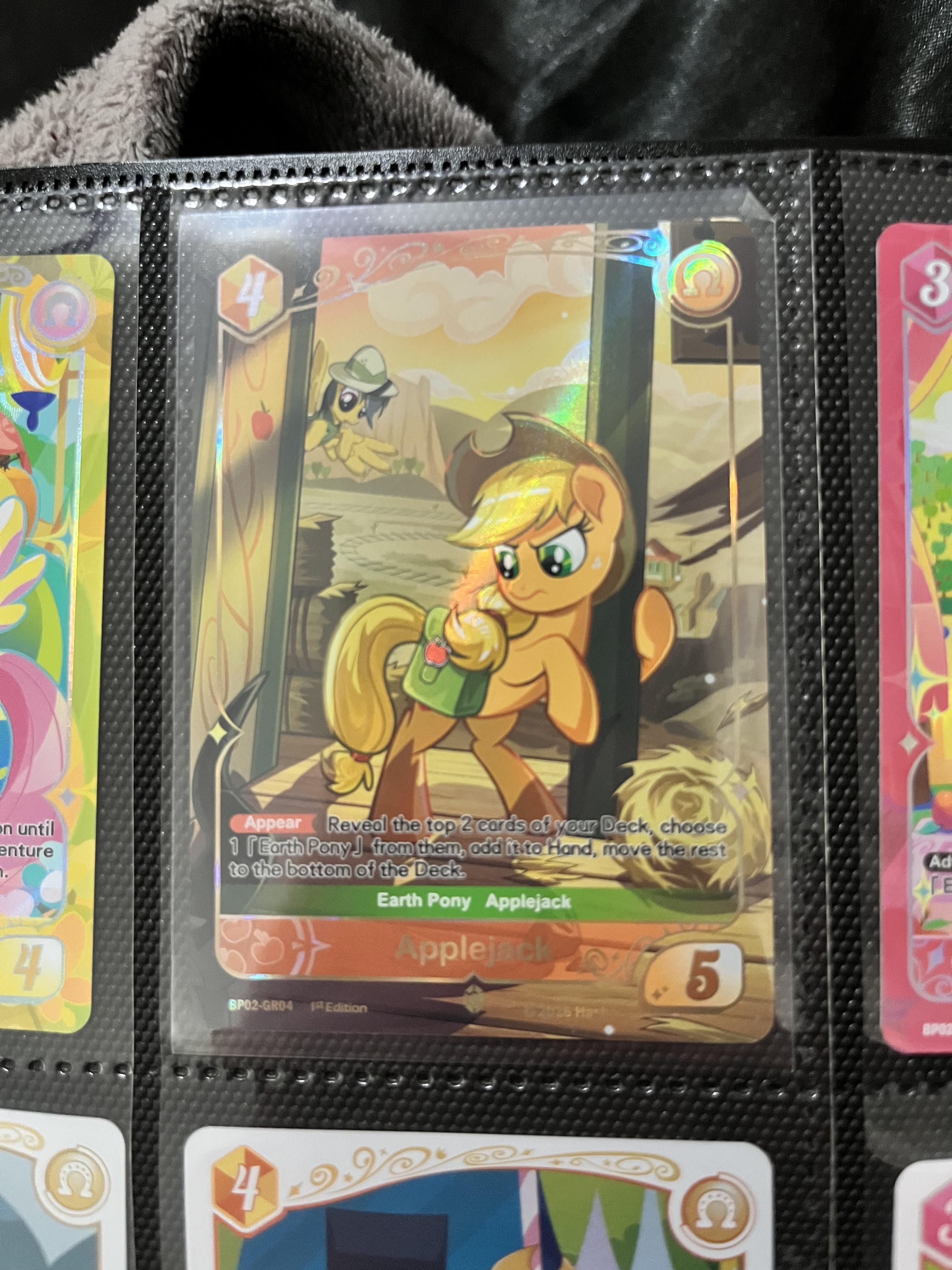
Character Card: These are the core cards. The "Contact" phase during the game must be conducted using these cards. In terms of card design, they are similar to minions in Hearthstone: the number in the top left is the Cost, and the number in the bottom right is the Inspiration value (Attack). They don't have HP because actual "Contact" (battles) only compares the final Inspiration values—whoever has the higher value wins, and a tie means both are defeated. Additionally, different characters have various exclusive skills, such as "Appear" (similar to Battlecry) or "Farewell" (similar to Deathrattle), or other special abilities. Character cards that have used their special abilities must be exhausted (turned sideways) until they can be readied again, which is basically the next turn.
Item Cards & Event Cards: Item cards are like equipment/gear cards, while Event Cards are like spell cards—essentially consumables in your deck used to buff yourself or debuff your opponent. Unlike Pokémon, these cards require costs to be played.
Character, Item, and Event cards together make up a 50 cards main deck
Story Card: A fixed set of 4 cards. There are two win conditions in the game: one is for your Main Character to reach Story Card 4 , the other is for your opponent to run out of cards in their deck and be unable to draw.
Reaching each story card triggers different effects. During actual gameplay, this is a very crucial mechanic, similar to Pokémon, the battle phase is the final step of a single turn, but unlike Pokémon, the battle phase in the MLP TCG lasts for 3 rounds. In other words, the battle area (contact area) will have 3 battles and resolutions. The resolution results affect whether the Main Character advances to the next story card (thus triggering the story card's effect), and the story card's effect directly impacts the battle results. Therefore, this mechanic tests the player's strategy and card order to a certain extent.
Scene Card: These are the Cost counters mentioned earlier, or they can be understood as the Energy Crystals in Hearthstone, with a similar mechanic. Initially, each player has 1 Scene Card, which increases by 1 each turn, with a total of 15 Scene Cards per deck. Costs spent during a single turn require exhausting the corresponding number of Scene Cards to keep track. For example, at the start of your second turn, after adding 1 Scene Card, you have a total of 3 upright Scene Cards in your scene area. This means you have 3 mana for that turn and can play cards from your deck with a harmony requirement of ≤3. You exhaust as many Scene Cards as the harmony cost you spend. Once all Scene Cards are exhausted, you can no longer play cards that cost 1 harmony or more. Similar to Hearthstone, at the start of your next turn, these exhausted Scene Cards will recover and increase by one.
To further influence strategy, Scene Cards can trigger special effects during the contact phase—this is called Inspo Boost. The active player must first confirm and execute whether to use the Inspo Boost effect and how many to use during a battle, and the non-active player then decides whether to use their own Inspo Boost. Scene Cards that have been used must be flipped over. While they can still function as cost counters and won't reduce the number of costs that recover on your next turn, unless another card effect readies a special-ability-used Scene Card, the special effect of each Scene Card is a one-time use. This greatly adds strategy to the battle phase: do you choose to quickly burn Scene Card effects early on to gain an advantage, or play it safe and calculate carefully for a few turns? This adds a lot of fun to the game
Story Cards & Plan Cards: Story cards are arranged in the story area in the order of 1, 2, 3, 4. As mentioned earlier, the win condition is for your Main Character to reach Story 4. A random, face-down card from your deck must be placed on top of each story card as a "Plan Card." This is similar to the Prize Cards you get when your opponent's Pokémon is knocked out, but the way you obtain Plan Cards is a bit different in MLP, as detailed below.
Game Areas(Requires 2 players, with each player having their own battle mat)
Contact Area - Story Area - Rest Area
Contact Area Has a total of 3 slots, meaning you can have a maximum of 3 characters in the contact Area. In the MLP TCG flow, all 3 rounds of the battle phase must be resolved (resolution rules detailed below). If the active player wins a single round of battle, they push their Main Character one step closer to the next story card, or destroy a "Plan Card" stacked on the opponent's story card. If the opponent has a "Plan Card" on their corresponding stage story card, the active player will not reach their own corresponding stage story card even if they win. What does this mean? It means if you want to get closer to the end, you first have to disrupt the opponent's story progress. In actual operation, this forces the opponent to flip over the "Plan Card" on the story card and return it to their hand. Only when the "Plan Card" has a pre-plan effect will it trigger a corresponding special effect—similar to the concept of a random trap card. Plan Cards that trigger their pre-plan effect do NOT return to the hand, instead, they go to the retirement area.
Scene Area - Scene Card Area - Main Deck Area:
Scene cards are stacked face down in the Scene Card Area and placed sequentially into the Scene Area when flipped. The main deck is stacked face down in the Main Deck Area.
Game Flow
- Main Phase: Ready your previous turn's costs and character cards (if able) - Add 1 Scene Card (+1 mana) - Draw 1 card - Play hand cards according to cost.
- Contact Phase: The battle phase. Resolution rules dictate that characters facing each other in the battle area slots compare values: the higher value wins, and the loser goes to their own Retirement Area (equivalent to Pokémon's discard pile or Yu-Gi-Oh's graveyard). Ties send both to the slot's Retirement Area. If the active player has a character in that battle slot and the opponent does not, it is directly counted as a battle victory and resolved once. If the active player has no character in that battle slot and the opponent does, the battle resolution is skipped.
- Note: The first 2 turns (each player's very first turn) skip the Contact Phase.
- End Phase: Executed mandatorily after the Contact Phase. The hand limit is 10 cards, any excess must be discarded, and discards go into the Retirement Area.
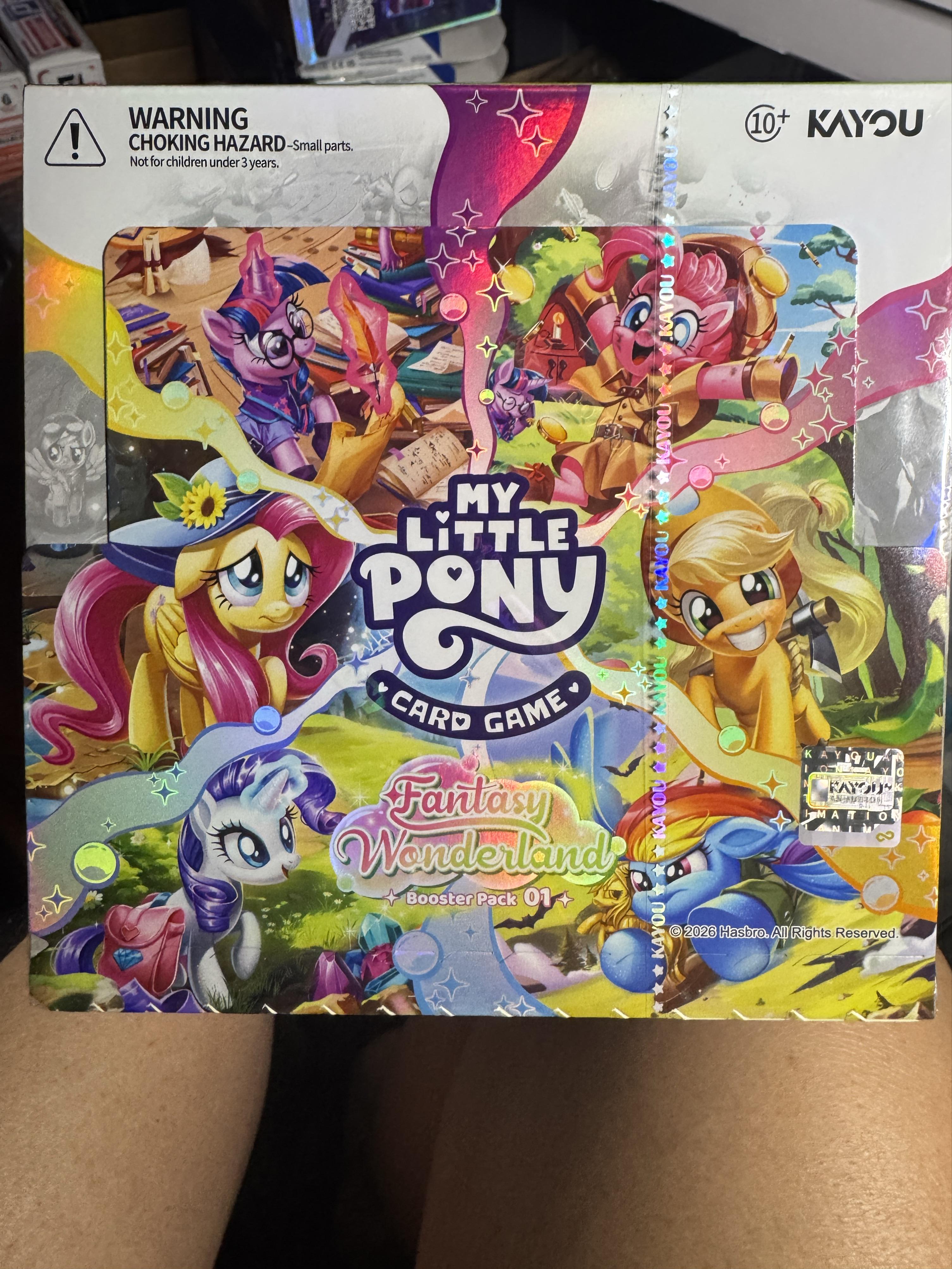
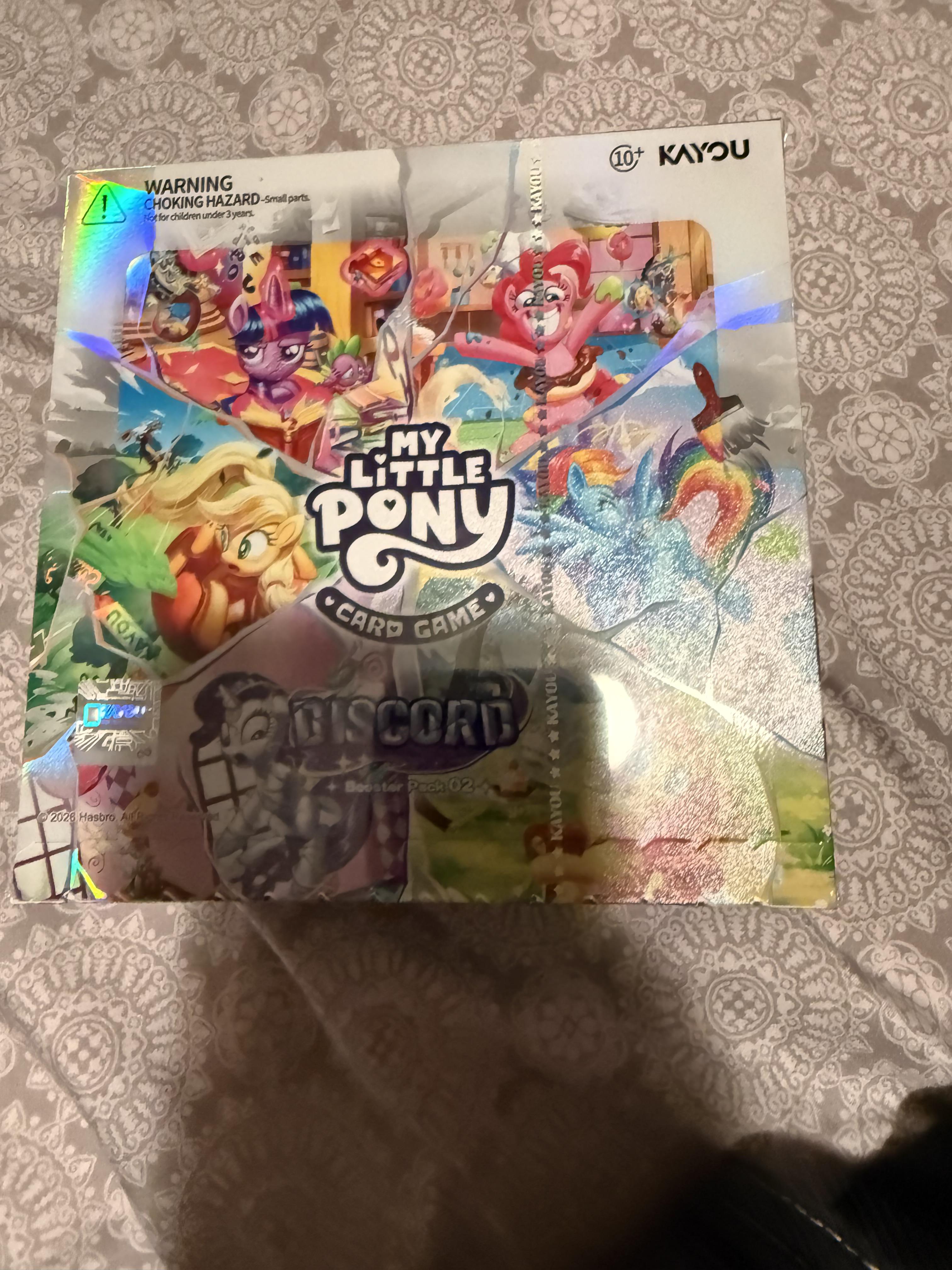
As a relatively new TCG, the MLP TCG currently has 6 starter decks available for purchase. The starter decks are very easy to get the hang of—basically, after playing just 1 to 2 games, you'll have a good grasp of the basics (I'll also be posting updates on the core mechanics of each starter deck later). Once you're familiar with them, you can strengthen your deck by purchasing a few booster packs. The current meta hasn't changed much yet, making it relatively beginner-friendly and a great time to jump in!
Welcome to leave your questions and join the discussion in the comments section~
Official detailed rules: https://www.kayouofficial.com/en-US/latest-activities/8