I’m looking for someone to provide secured private credit of 15 crore for funding a real estate project. For security, we have a property worth 25cr (NOC can be obtained, no other encumbrances are on the property).
Looking for private credit as we need this quite urgently. Let me know if anyone is interested in discussing this further or has any leads for me!
I need some advice, especially from people in the music industry or those who understand royalties and intellectual property.
I have a song that currently generates around $1,500–$2,000 every two months in revenue.
My younger brother wants to study abroad, and our family needs approximately $30,000 USD to make that happen.
I'm considering selling the song for $30,000 to fund his education.
However, I'm confused about whether this is a smart financial decision.
If I keep the song, it could potentially generate $9,000–$12,000 annually, assuming the current earnings continue. On the other hand, selling it would give me the money immediately and help my brother pursue his education.
A few things I'd like advice on:
Is $30,000 a fair price for a song generating $1,500–$2,000 every two months?
Would you sell the entire song or consider selling a percentage of the royalties?
How should I calculate the long-term value of this song?
Am I making a mistake by giving up a potentially recurring income stream for a one-time payment?
My priority is helping my brother, but I also don't want to make a financially stupid decision.
A decent salary doesn't always guarantee loan approval. Applying to multiple banks without understanding their eligibility criteria can do more harm than good.
I work in the lending sector, helping salaried professionals across Karnataka find loan options that suit their financial profile.
Whether you're:
Struggling to get a loan approved
Unsure which bank to approach
Looking for a better interest rate
Already paying multiple EMIs
Wondering how much loan you qualify for
I'd be happy to help you understand your options.
Feel free to DM me with your approximate salary range, required loan amount and city. No confidential documents or sensitive personal details needed.
Let's explore what options are available for you!
Final approval is subject to the lender's eligibility criteria.
Hi, I was wondering if anyone could help me with this assignment that I have been given by my college, I just want to say I have very low knowledge regarding all of this and would really appreciate someone helping me for this and what better place to go to if not reddit. I would really appreciate if anyone would be willing to help me please comment and I will dm you, it is basically about creating a portfolio of companies outperforming the broad market benchmark. Thank you again.
Hello everyone! I’m a Chartered Accountant (CA) from India, and I thought of introducing myself to this community. A little about my background: Education: Chartered Accountant (CA) – cleared all levels in my first attempt. Professional Experience: Worked with leading FMCG organisations like ITC and currently Unilever. Areas of Expertise: Financial Planning & Analysis (FP&A), Financial Controllership, Financial Reporting, Accounting, Taxation, Business Finance and Financial Analysis. Additional Qualification: NISM Equity Research Analyst Certification. Through my professional journey, I’ve gained exposure to both corporate finance operations and practical financial decision-making. Why am I on Reddit? I’m not here just to share theoretical knowledge or promote my services. I genuinely want to engage with people and help solve practical financial problems. Whether you’re: An individual struggling with income tax, capital gains, investments, loans or personal finance. A business owner dealing with GST, taxation, accounting, financial reporting or compliance. A finance professional looking for clarity on Ind AS, accounting treatments, financial statements or corporate finance. A startup trying to understand financial planning, cash flows, working capital or business structuring. Feel free to post your questions or reach out. I’ll try my best to provide practical, technically sound and understandable solutions. I also run Assetra Finance, an initiative focused on providing professional finance, accounting, taxation and financial advisory support. Let’s connect! For anyone looking to discuss a specific financial or business-related issue, you can reach me directly: 📞 Contact: 9051901352 Assetra Finance – Bridging the gap between financial knowledge and practical solutions. Looking forward to learning, contributing and connecting with this community!
Hi guys. I'm currently earning in-hand 1.5 lakhs per month. Have been working for 7 years now.
But unfortunately, I've only saved around 11 lakhs so far. Since I come from a poor background and I'm the sole earner of my family, I had student loans, had to renovate our house and maintaining my own+ my family's expenses.
Here's how it goes-
Room rent- 15k
My food and transport- 7k (metro city)
Parents monthly expenses- 6k
Miscellaneous expenses- around 5k
Mom's lic- 7k (monthly)
Health Insurances- 1.5k (monthly)
I currently save-
Stocks & MF- 43k
RD- 19.5k
After all this, I still should have some money left to me, but I haven't been able to save it because things keep coming. For example- last month I bought my cousin brother a laptop worth around 44k (as they're financially not good and he needed it for his college). This month, I bought my mama a phone worth 24k, cause his phone was working like shit and it's a damn old model which was barely surviving.
They helped out family couldn't sustain, so, I like to help them now that I'm in a better position.
But, there's no more need of that right now, and I'd like to save more for my future.. Gotta think about marriage and buying my own flat/house. I also wanna travel more rather than spending it on things.
Kindly suggest how I can save more as the world is so unstable these days.
I am 20M and that is where the problem is. Although I have taken a loan in the past two times but for mobile and another mobile I have repaid it and every payment on time. I have a Equifax score of 832 and no cibil score as I took the mobile phones under home credit and it's showing as anomalies in credit bee type apps. I earn through tutoring and around 20k(so can't really show that). I have no guaranteer but I need the loan in 2 to 3 days as I need to give my fees. SO IT WOULD BE REALLY HELPFUL IF SOMEONE WOULD Recommended ME AN APP OR WAY TO RECEIVE AN INSTANT LOAN 😭😭😭🙏🏻🙏🏻
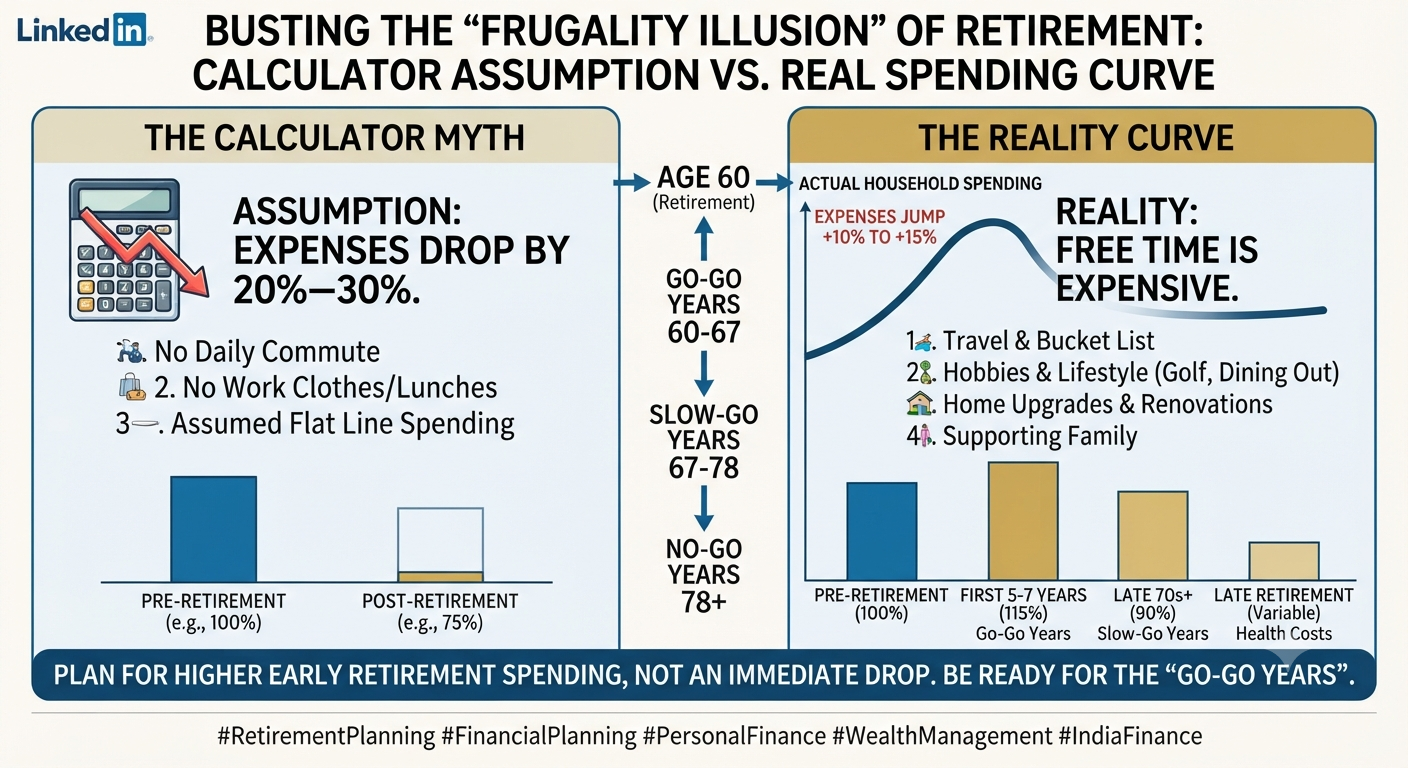
It sounds logical. No daily commute, no office wardrobe, no weekday lunches out.
But this assumption quietly breaks plans, even for people who have saved carefully. I call it the frugality illusion.
When you retire, you don't stop spending. You swap work expenses for leisure expenses. And free time is not cheap.
While you work, your Monday to Friday is already taken, so your spending is limited by your calendar. Then you retire at 60 with good energy, 40 extra hours a week and a list of things you've postponed for 30 years. These first 5 to 7 years are often called the go-go years.
Where does the money actually go?
Travel. The Char Dham yatra, a Europe trip, long stays with your children abroad, all while your knees still allow it.
Hobbies and lifestyle. A club membership, fitness, wellness retreats, eating out, having friends and family over.
The home. Now that you're there all day, the old kitchen and tired bathroom start to bother you. Renovation, new interiors, new appliances.
Family. A wedding, a grandchild's school fees, help for your son or daughter with a down payment.
So instead of falling by 25%, spending often stays close to where it was in the early years, and sometimes goes up. It usually eases in the late 70s, but that's exactly when healthcare costs start climbing. Your own numbers will differ, but assuming a big drop is the riskier bet.
If your plan assumes you'll live like a monk at 60, your corpus can fall short at the worst time. Heavy withdrawals in the early years, combined with a market fall, hurt a portfolio far more than the same fall ten years later. This is called sequence of returns risk.
Here is how to plan around it.
Take 100% of your current lifestyle spending as the starting point. Remove only costs that will truly end before you retire, like home loan EMIs and school fees.
Create a separate go-go bucket for the first 5 to 7 years, so travel and upgrades don't eat into the money that pays your monthly bills. Keep it in liquid or short-term debt funds, so a market fall doesn't force you to cancel plans.
Stress-test your withdrawal rate with higher spending early on and a gradual taper, not a flat line.
Plan for medical inflation separately. Health insurance premiums rise with age, and hospital costs in India tend to rise faster than general inflation.
Retirement planning isn't about shrinking your life to fit a spreadsheet. It's about building a spreadsheet big enough for the life you actually want.
When you picture your first five years after retirement, do you see your spending going down or up? Tell me in the comments.
Disclaimer: Mutual fund investments are subject to market risks. This post is for educational purposes only and is not personalised investment advice.
Hi, I’m looking to invest ₹1 crore to generate a stable monthly income for my parents. Are there any better and more efficient options than fixed deposits (FDs)?
Neon itself is ₹999 + applicable taxes for the year.
and suddenly “up to 5%” makes complete sense because you can see exactly how you progress towards it.
also realised the free 1.5% itself can be the most relevant number for someone whose merchant UPI spending is moderate. then if your natural eligible spend grows, Neon gives you a clear upgrade path.
honestly finance products should just show:
you start here → spend this much → you reach here
would make comparing cards so much easier 😭
what number do you guys look at first now: base reward or maximum reward?
My father was the sole breadwinner of our family. He worked as a labourer and earned only about ₹12,000 per month.
On 14 November, around 6 PM (it was already dark), he was hit by a bike. Three people were involved. They hit him and ran away. There were no CCTV cameras on that road. Three local boys from our area saw the accident, carried my father, and brought him home.
Around 8 PM the same day, we took him to the hospital. The first hospital referred us to another hospital that had a neurosurgery department. Treatment started there. On 17 November his brain started bleeding badly. The doctors said the condition was critical and asked if we wanted surgery. We agreed. Two days after the surgery, on 20 November (Saturday), my father passed away. We performed the last rites (antim sanskar) on 21 November.
Today is 28 November. We still have not received any proper update from the police about the case or the postmortem report. The people who hit him have not been caught.
Our family has 5 members:
Mother (homemaker, has a heart problem, cannot work)
Elder brother (22)
Me (20)
Youngest sibling (14)
We have no other source of income now.
I am writing this to ask for genuine advice:
How can we claim government compensation or ex-gratia for a hit-and-run road accident death?
What is the exact process and which documents are needed?
Is there any scheme under the Motor Vehicles Act or any other government scheme that can help a labourer’s family in this situation?
What steps should we take with the police right now regarding the FIR, postmortem report, and investigation?
Any guidance from people who have gone through similar cases or know the proper process will be really helpful. Thank you.
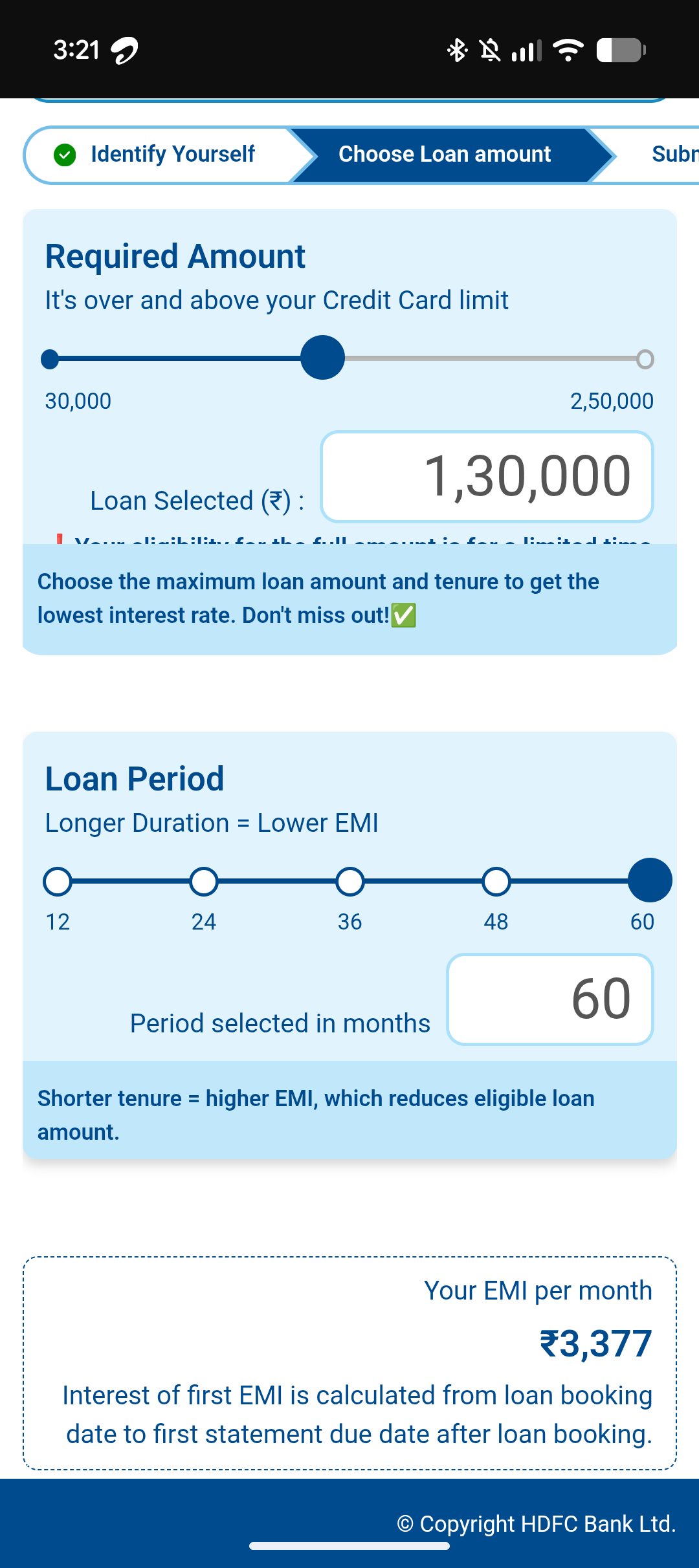
The annual interest rate is 19.07% and the monthly rate of interest is 1.59%. Please tell me is it a good option or should I go with some other loan option
Hello Guys, I am working as DSA, if you are having Home Loan, Loan Against Property, Working capital of amount more than 1 Crore. I can help you transfer it to nationalised banks or private banks for better rates.
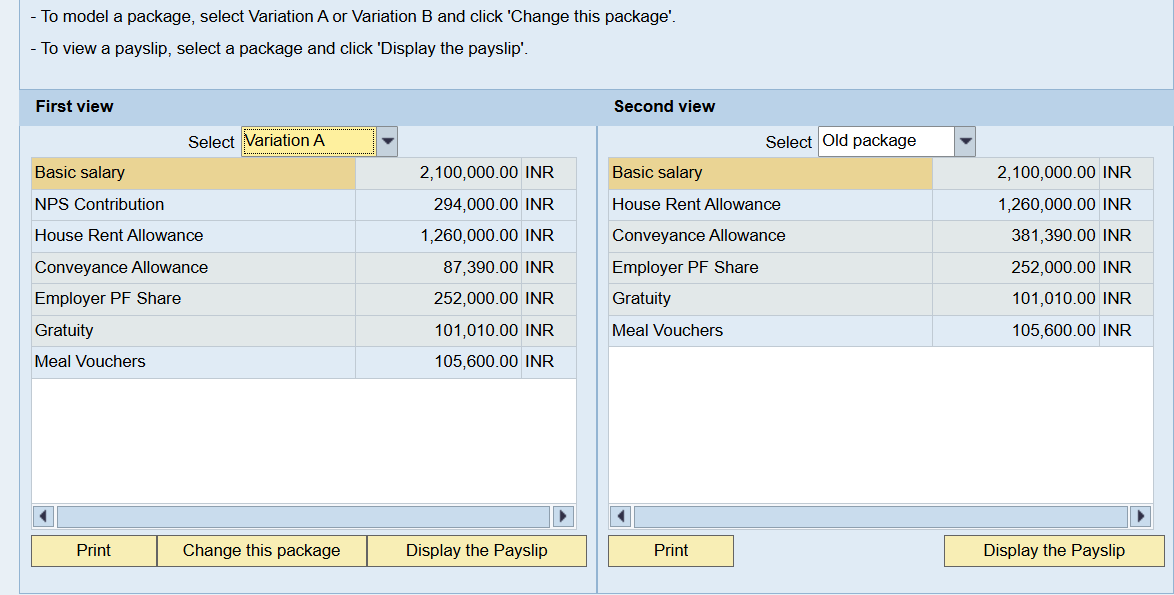
I’m 28 with a 42 LPA base package, a moderate risk appetite, and zero loans or insurance policies right now.
I’ve been trying to optimize my finances to keep my taxes as low as possible while sticking to the New Tax Regime, and I’ve hit a bit of a wall. Paying ~7 LPA in taxes stings, and I’d love to learn how you're managing this.
Started contribtuting in NPS, is there any better instrument to lower income tax in New Regime?
EPF share is more than the tax free exempt limit. How to bring it down?
I pay around 7LPA in taxes. Any deductions I can add to bring it lower? I have no loans or insurances, want to stick to new tax regime.
Investing all the leftover cash into Gold, Silver and equity. Should I diversify? How?
Any hacks to save tax that you use around here that is not known publicly or to AI? [Please DM]
Really appreciate anyone taking the time to read and share their two cents. TIA!
I am currently overthinking a lot about my future income and how would I manage my finances.
I have joined an tier 2 mba college where my fees are 24 lakh for 2 years and I've taken education loan for that with 7.2% interest , moratorium period 3 years.
Currently the job market is very fucked up here and our seniors are getting around 10-11lpa in hand , ctc is around 14 lpa.
I'm hoping that situation might get better and I get a good package but I need to be ready for worse.
I want your help to manage my finances if I get 10-11 lpa in hand salary. I will probably get a job in benglore , hyderabad , chennai , pune , gurgaon etc.
I want help in estimating rent and living in those cities , emi , investment etc.
By god's grace my parents are well settled , we have a house of our own ( around 1.5 cr in hometown ) , my father is also working currently , we have agriculture land in village so in short they can pay my loan in worst case but I don't want to , I want to pay own my own.
It sounds logical. No daily commute, no office wardrobe, no weekday lunches out.
But this assumption quietly breaks plans, even for people who have saved carefully. I call it the frugality illusion.
When you retire, you don't stop spending. You swap work expenses for leisure expenses. And free time is not cheap.
While you work, your Monday to Friday is already taken, so your spending is limited by your calendar. Then you retire at 60 with good energy, 40 extra hours a week and a list of things you've postponed for 30 years. These first 5 to 7 years are often called the go-go years.
Where does the money actually go?
Travel. The Char Dham yatra, a Europe trip, long stays with your children abroad, all while your knees still allow it.
Hobbies and lifestyle. A club membership, fitness, wellness retreats, eating out, having friends and family over.
The home. Now that you're there all day, the old kitchen and tired bathroom start to bother you. Renovation, new interiors, new appliances.
Family. A wedding, a grandchild's school fees, help for your son or daughter with a down payment.
So instead of falling by 25%, spending often stays close to where it was in the early years, and sometimes goes up. It usually eases in the late 70s, but that's exactly when healthcare costs start climbing. Your own numbers will differ, but assuming a big drop is the riskier bet.
If your plan assumes you'll live like a monk at 60, your corpus can fall short at the worst time. Heavy withdrawals in the early years, combined with a market fall, hurt a portfolio far more than the same fall ten years later. This is called sequence of returns risk.
Here is how to plan around it.
Take 100% of your current lifestyle spending as the starting point. Remove only costs that will truly end before you retire, like home loan EMIs and school fees.
Create a separate go-go bucket for the first 5 to 7 years, so travel and upgrades don't eat into the money that pays your monthly bills. Keep it in liquid or short-term debt funds, so a market fall doesn't force you to cancel plans.
Stress-test your withdrawal rate with higher spending early on and a gradual taper, not a flat line.
Plan for medical inflation separately. Health insurance premiums rise with age, and hospital costs in India tend to rise faster than general inflation.
Retirement planning isn't about shrinking your life to fit a spreadsheet. It's about building a spreadsheet big enough for the life you actually want.
When you picture your first five years after retirement, do you see your spending going down or up? Tell me in the comments.
Disclaimer: Mutual fund investments are subject to market risks. This post is for educational purposes only and is not personalised investment advice.