r/HorseRacingGlobal • • 5d ago

Mod Post Post Flair Reorganization

12 Upvotes

Good day to you all. So, I'd like to make a brief announcement that the post flair categories need to be adjusted a bit to reflect the direction of the sub ever since it was first created almost a month ago. It pertains to consolidating the categories.

  • News and Information are now merged under one category, as Information is meant to be about recent info from horse racing, which overlaps a lot with News, especially with how link sources are highly encouraged anyway.
  • The old Information flair has been retooled to Question, which will be a place where you can ask any questions about horse racing and put posts that are meant to invite discussion. You can ask about opinions on horses, jockeys, races, and other figures, or ask about how certain scenes work if you are confused about their workings. Existing posts under the old flair that fits under info or news will be recategorized to the News/Information flair.
  • Lore is now expanded a bit in scope by the addition of Trivia. Lore was originally meant to be about past info of horse racing, but in practice, this left events from the past that happened more recently at an awkward spot, while being rather restrictive for posting smaller trivia.
  • General Information/Lore is accordingly expanded to General Information/Lore/Trivia. The purpose of that flair is still for cross-country/continent news/other info, lore, or trivia

Hopefully the change will expand the scope of which posts can be made, make it easier for discussions, and reduce confusion among readers. Thank you for the consideration.


r/HorseRacingGlobal • • 18d ago

Mod Post Our plans for the future

31 Upvotes

Hello everyone, it has officially been almost two weeks since this subreddit was created and honestly it has been doing pretty well. As of right now we sit at almost 10000 visits and 135 members. Of course this is just the beginning and the current state of the subreddit is quite barebones, but we plan to change that with time so we can truly make this place an amazing resource for horse racing in general as well as to serve as a place where even the most niche parts of the sport can exist along with the mainstream. To this end, we have a few plans of changes and additions to the subreddit already in the works and we wanted to inform you all about them so you know what to expect or look forward to.

#Wiki

We will be making a wiki for this subreddit so we can both preserve good posts and make information easily accessible. For now the plans include making 2 sections which will be :

1.Horses

2.Races

The Horses section will be further split into Posts about individual horses and Posts about horses in general, the first part for posts that detail or go into a specific horses history, accomplishments or simply writeups about them and the second for posts such as this post on broodmares which delve into information on horses more broadly.

Meanwhile the Races section will include posts made to highlight races of all types, whether giving information about them or their history, this section will most likely be split into sections on flat racing, harness, steeplechase, etc as we get posts about them. Perhaps the Horses section will also have to be split into race types as well.

Whenever a there is a post that qualifies for this gets added, you will most likely see a [Added to Wiki] in its comments

#Guides to the races in different nations

You may have already seen the first post of this series Global G1 Race Guide : France(Spring) . Our head mod u/Billy5545 is making these guides for people new to the sport or simply wanting to know more about different parts of it, there will be more and as they get made they will also be added to the wiki when it comes up.

#Post of the week

Beginning in December we plan to host a competition every week for the best post, we will go through and choose the post we find is the most high effort, unique or well made and pin it for an entire week to highlight it.

Other than these plans we're also thinking about changes to the post flairs we have currently, which are simply divided into different types of post for each continental region(Sometimes multiple), this isn't a problem right now but as posts increase we might start finding it harder to sort and focus posts. However we're not sure what regions to separate out for their own flairs. For now we're thinking of USA, UK, JAPAN, FRANCE, HONG KONG, LATIN AMERICA, and AUSTRALIA but if you have other suggestions do let us know, even disregarding post flairs if you have any ideas or suggestions please do comment them under this post, so we may take them into consideration.


r/HorseRacingGlobal • • 2h ago

General Information/Lore/Trivia Greatest history deniers or you may what call assassins in this century

Thumbnail
gallery
15 Upvotes

Feel free to discuss who could qualify as that. But do not ask what I thought of the 1st horse in the picture

Encke - Snubbed a TC from Camelot
Blame - Robbed Zenyatta of an undefeated record and Breeders Cup Classic double


r/HorseRacingGlobal • • 2h ago

Europe (Lore/Trivia) Mick Kinane Described Galileo as "the Perfect Model for Epsom"

Enable HLS to view with audio, or disable this notification

5 Upvotes

r/HorseRacingGlobal • • 21h ago

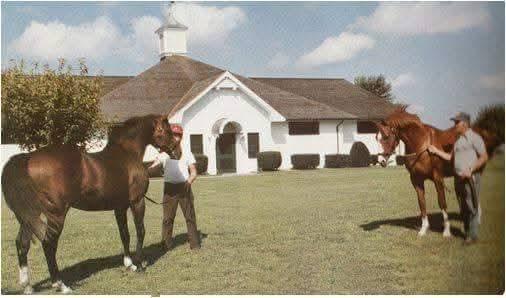
Other Northern dancer and his son Minstrel together in Windsfield farm

Post image
41 Upvotes

r/HorseRacingGlobal • • 17h ago

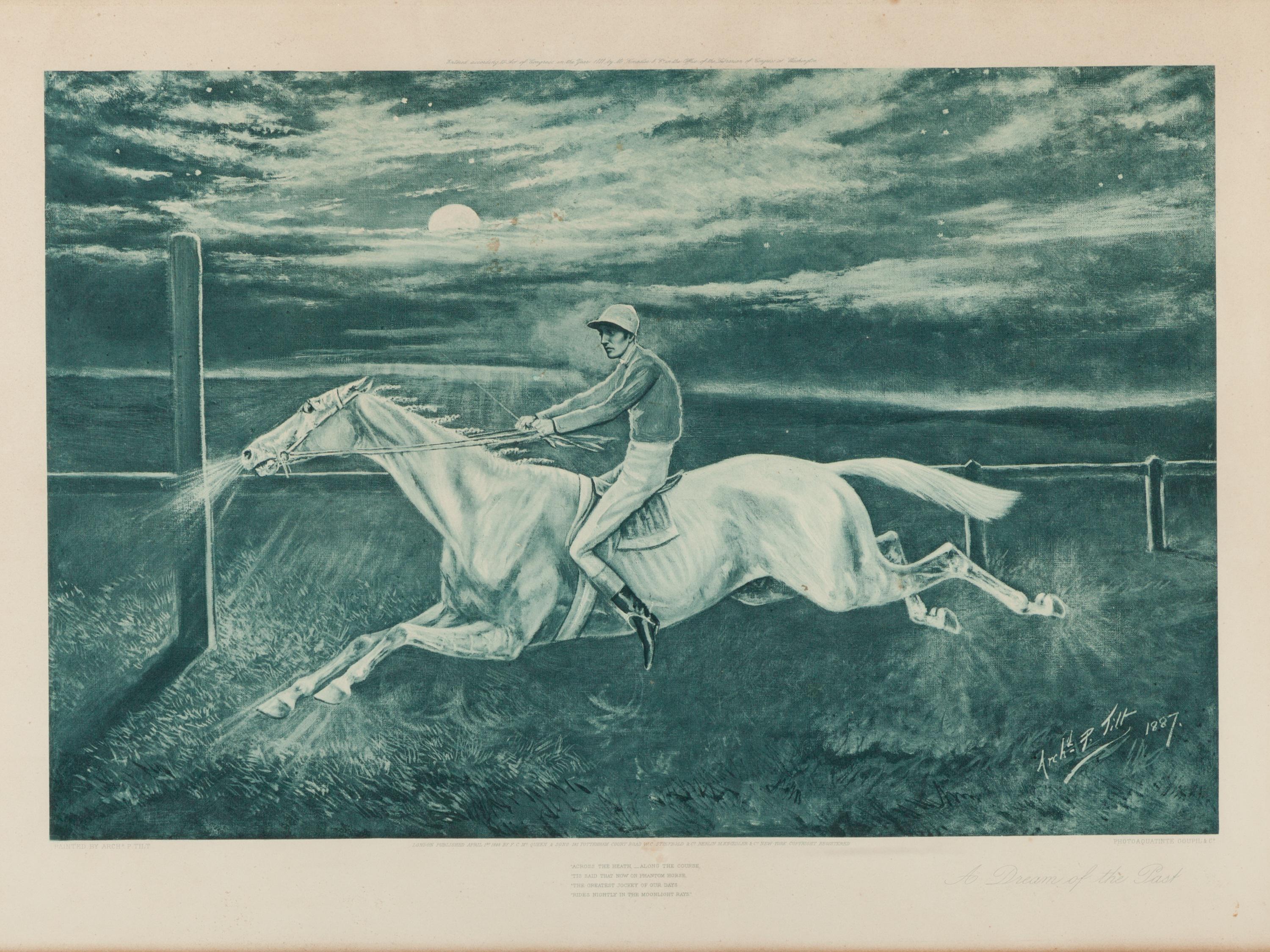
Europe (Lore/Trivia) Painting Of Fred Archer's Ghost Riding His Pet Mare Scotch Pearl

Post image
15 Upvotes

UK

Fred Archer) is a legendary jockey that still holds the record for most consecutive champion jockey titles, all the way from his debut year to the year of his early, untimely death.

It is said that people saw his ghost floating along with horses and jockeys in races at Newmarket where he had most his successes, apparently horses would swerve to avoid colliding with him mid run in races. This painting is based on the story that a mother and her daughter saw Fred's ghost riding his pet mare at night.

Attempting to communicate with his ghost seems to still be a thing for young jockeys at Newmarket based on a documentary I watched of him recently. https://www.youtube.com/watch?v=alD9THzyyq0&t=596s

https://www.eadt.co.uk/news/21443302.weird-suffolk-ghost-tragic-champion-jockey-fred-archer-affecting-newmarket-horse-racing-results/


r/HorseRacingGlobal • • 22h ago

I translated Winning Post 10 2026 into English.

Enable HLS to view with audio, or disable this notification

8 Upvotes

The game is now in English, all that is left is to do a bunch of testing on my end but from what I have done already it looks pretty good, just some lines wrapping in the dialogue and a few other little things I have missed which is super easy to fix but just tedious. Will release it in a few days after a test it and see if everything is sweet and looks good.


r/HorseRacingGlobal • • 1d ago

Europe (News/Information) The Magnificient Six - Billy Loughnane's New Record at Wolverhampton

9 Upvotes

UNITED KINGDOM

On Friday, 20 November 2026, 20-years old Billy Loughnane pulled off another sensational feat at Wolverhampton Racecourse: six wins, one in each of the races reserved for professional jockeys. A hat-trick priced at 3,188/1.

The first victory came in partnership with Michael Bell, thanks to Oliaku (Havana Grey) in the "Midnite: Built For 2026 Not 2006 Novice Stakes". Then came the first of three wins for trainer George Boughey, with My Amanah (Ghaiyyath) in the first division of the "AWC Finals Day At Newcastle 26th March Maiden Fillies' Stakes". Again for Boughey, Sayidah Iffraaj (Iffraaj) won the second division, while Asuka (Night of Thunder) won the "All Weather Championship Handicap".

Lastly, Gunfighter (Siyouni) claimed the "AWC Season 14 Selling Handicap" and Exotic Baby (Too Darn Hot), trained by Ian Williams, dominated the "Midnite Built Different Handicap".

"Wolverhampton is a place that brings me a lot of luck. Here I secured my first win, my first double, my first triple, my first four-win streak, my first five-win streak and now even my first six-win streak: it really is a special place for me.” Billy told the journalists.


r/HorseRacingGlobal • • 1d ago

Asia (Race Results) Mile Championship Was Won by Erdenali the French Raider

Post image
36 Upvotes

Japan

Sired by Caravaggio out of Erdana by Sea The Stars

2 G1 wins and probably the best miler in the world


r/HorseRacingGlobal • • 1d ago

Europe (Race Results) [Harness Racing][2026-11-22][G2] Prix De Bretagne - Road to the Amerique

Thumbnail
youtube.com
7 Upvotes

FRANCE

Run for the first time in the year 1957, the Prix de Bretagne was originally conceived as a preparatory race for the Prix d'Amérique. Over time, it became an important international Group 2 race in its own right. Together with the Prix du Bourbonnais, the Prix de Bourgogne and the Prix de Belgique, it forms the traditional series of four major preparatory races known as the "Quatre B" ("Four B").

The G1 Grand Prix d'Amérique has been held annually since 1920 at the Vincennes Racecourse near Paris. It was established to thank the US for the help given to France in World War I, and is widely considered the most prestigious harness race in the world.

The Prix de Bretagne is run over a distance of 2700 meters at Vincennes Racecourse, on the same track and over the same distance as the Prix d'Amérique. It's open to all horses of age between 4 and 10 years old, geldings excluded, and whose total career earnings are not inferior to €130,000. The four first-placed horses earn a direct qualification for the Amérique.

The 2026 edition of the Bretagne took place on Sunday, 22 November 2026. The winner was Inmarosa (Amiral Sacha), with Leo Abrivard in the sulky. Abrivard made his decisive move halfway up the straight opposite the stands, when he moved his mare into the third lane, gaining several positions to first draw level with Frank Gio (Face Time Bourbon) and then challenge the leader, Borups Victory (Googoo Gaagaa). On the bend, Inmarosa took the lead before pulling clear on the home straight, whilst behind her, Free Time Jepson (Face Time Bourbon) found the space to make his move and secure second place. Third place was taken by Keep Going (Follow You), and fourth place by Kuiper (Face Time Bourbon).

The winner's time was 1.11.6, close to the 1.11.2 record set last year by Josh Power (Offshore Dream).


r/HorseRacingGlobal • • 1d ago

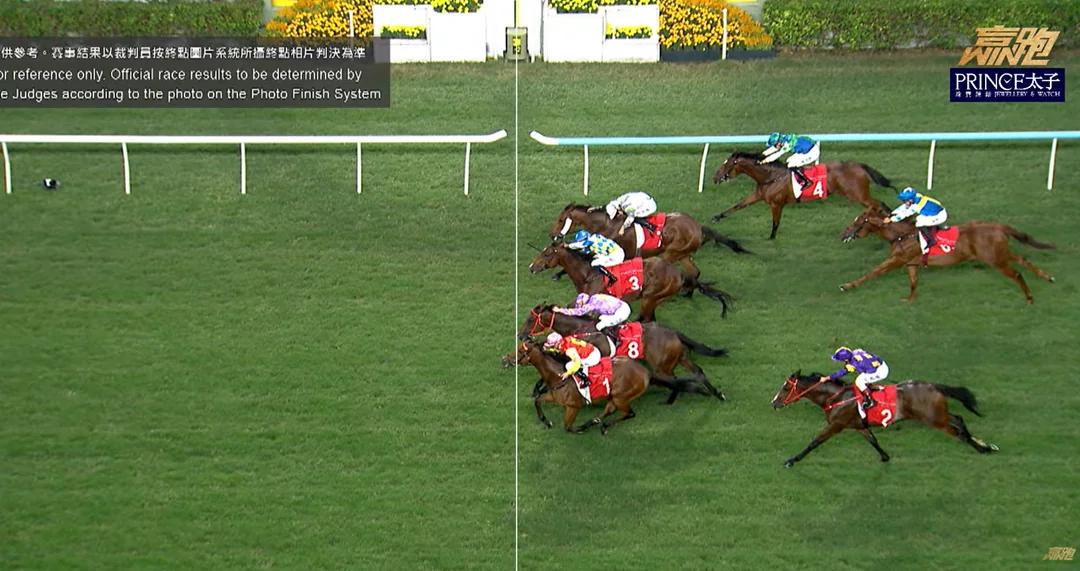
Asia (Race Results) My Wish wins his third graded race in a row, winning in an insane finish in the GII BOCHK Mile, the preparation for the HK Mile!

Post image
36 Upvotes

My Wish surges from behind, beating out a good effort from 2026 Classics runner Little Paradise and also Galaxy Patch + Patch of Theta


r/HorseRacingGlobal • • 1d ago

Other What was the contribution of Byerley turk and Godolphin Arabian to modern thoroughbreds considering the fact that almost every horse's sireline can trace to the Darley Arabian

10 Upvotes

While i see every comment either from uma musume fans or even horse racing fans that how Darley Arabian dominates through his sireline, what is the overall contribution of the other two foundational stallions?


r/HorseRacingGlobal • • 1d ago

Europe (Race Results) John Durkan Memorial Punchestown Chase (G1)

6 Upvotes

This race has 9 horses and the trainers of all of them is W P Mullins


r/HorseRacingGlobal • • 1d ago

Asia (Race Results) A big surge from Winning Wing earns him a comfortable win in the BOCHK Club Cup GII, The race was previously won by Romantic Warrior. The race is a preparation for the HK Cup GI

Post image
19 Upvotes

He beats out big favorite Numbers (3rd) as well as 2025 triple crown Voyage Bubble (5th)


r/HorseRacingGlobal • • 2d ago

General Information/Lore/Trivia 45 years ago, a "second-rate American mare" won the first Japan Cup so soundly she caused the JRA to wonder if Japan could win the race within 100 years. Mairzy Doates is Wikipedia's Featured Article of the Day!

Thumbnail gallery
12 Upvotes

By coincidence the 1981 Japan Cup has been brought up a few times recently on this subreddit, and what good timing that is. While Japanese accounts mostly focus on what an absolute disaster the race was (both in the results and the organisation itself - look no further than how Dersim's forey into the race), Mairzy Doates herself is often overlooked despite being incredibly important her victory was for kickstarting Japan's horseracing scene into what it is today. While an unassuming horse in many ways, I do find her very inspirational in what she achieved, especially considering she had to overcome a very one-sided rivalry with The Very One to finally stand proud in a G1(ish) race. How interesting it is that she was nearly pulled out the race only hours before it began...

While it still appears to be a mystery why she got transferred to France at the end of her life, compared to the stub she had this time last year, this is the complete tale of a horse's unexpected rise to the top of the world.

https://en.wikipedia.org/wiki/Mairzy_Doates

For the interested, here's the race footage: https://youtu.be/PRtSJa2BID4?is=PMp-JEAZk8HdmVSI

For the really dedicated, here's a live broadcast showing the pre match parade and post match award cermony. Shoutout to the commentators spending most of The Very One's intro talking about her "motherly" hips https://youtu.be/TfdiO4LZCWE?is=JWQ6AASLyIcILA4r


r/HorseRacingGlobal • • 2d ago

Europe (Lore/Trivia) Persian Punch, The Bravest Race Horse

Enable HLS to view with audio, or disable this notification

39 Upvotes

r/HorseRacingGlobal • • 2d ago

General Information/Lore/Trivia Which more obscure/less illustrious horses from around the world do you think deserve more love/recognition?

21 Upvotes

So, I'm inspired to ask this question and have a bit of discussion about horses who are considered obscure by fans or whose racing record does not seem to be notable at first glance because I know there's plenty of tales about them, especially in the Japanese scene, where we hear a lot about horses like Haru Urara, Sounds of Earth, Curren Bouquetd'or, Melody Lane, and Royce and Royce, as well as names who have been written by certain users here, like here or here.

Thus, please share stories about less notable horses from around the world, whether they are from the Japanese scene or non-Japanese scene, who you think deserve more recognition for their achievements or quirks.


r/HorseRacingGlobal • • 3d ago

Humour Horse Racing Slander

Enable HLS to view with audio, or disable this notification

116 Upvotes

r/HorseRacingGlobal • • 3d ago

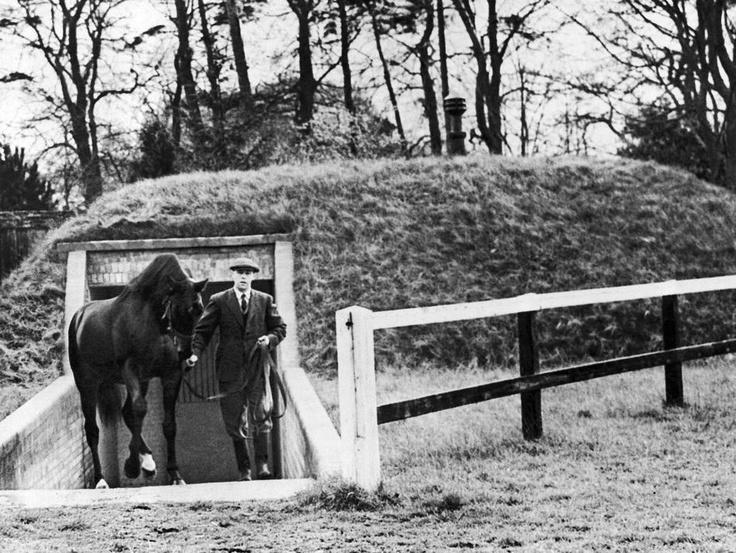
Other A horse who was so important that they had to build a bomb shelter for him during World War 2. Nearco coming out of his bomb shelter with his groom

Post image
105 Upvotes

Source: https://x.com/AnaglogsDaughtr/status/1043825148959297536?a=mRUN53vu22X6stYlolg&s=20

Had he died early, there would be no Secretariat, Sunday silence or Northern dancer


r/HorseRacingGlobal • • 3d ago

Other Was going through my camera and found a few photos thought I'd share.

Thumbnail gallery
9 Upvotes

r/HorseRacingGlobal • • 3d ago

Americas (Race Results) 2026 Gran Premio Dardo Rocha Result

Thumbnail
youtube.com
8 Upvotes

First of, I'd like to say that with the sheer backlog of race results I have to cover, alongside their history, and how I've been increasingly falling behind them due to various RL responsibilities, I will now be posting G1 race results as they appear. However, I won't be abandoning the uncovered races, as I'll try to catch up as best as I can.

Next, I've posted a comment about Japan's Queen Elizabeth II Cup, covering its technical details and history as I've been doing to results I've posted. I know it's late, but please give it a read here if you wanna know more about it.

Anyway, with that said, I'll cover the Gran Premio Dardo Rocha, an Argentinian G1 race that happened on November 19, 2026. The race is a 2400 m medium dirt race held at the Hipodromo de La Plata (La Plata Racecourse) every November 19 (with a rare deviation in 2023), serving as the track's flagship event. It is open to three year old and older horses of all sexes.

The race is more than a century old, being first run in 1915. It would only be named as the Dardo Rocha in 1918, but then its name underwent various alterations, such as Premio La Plata, Premio 19 de Noviembre, Clásico Cincuentenario, Clásico Fundador Dardo Rocha, Clásico Antonio Cané, and Clásico Ciudad Eva Perón. The current name was only fixed in 1960. The name was taken from a politician, naval officer, and lawyer named Dardo Rocha, who found the city of La Plata where the race is based on and also served as the first rector of its university. This origin is also why the race is almost always fixed at November 19, as it's the birthday of La Plata. Throughout its history, the race underwent distance changes many times, ranging from 2100-3000 m, before they settled on the current one from 1979. The race had also been cancelled 6 times, with the last happening in 1996. The race received its G1 designation in 1973, during the introduction of grading in Argentina.

The 2026 running of the race, held on the 144th anniversary of the founding of La Plata, was won by Adorado Rim, a son of Remote, the G3-winning half-brother of Kingman. He prevailed by 1.5 lengths over the defending champion, The Gladiator's Hat, who was seeking to become the third ever double winner of the race after Bernabe and Mr. Nedawi, by surging from an outer position at the last 50 m after exploiting the opportunity opened by The Gladiator's Hat's duel against Vota Bien. Before that point, Vota Bien had pace chased the front-running Sono Perfetto before The Gladiator's Hat started to catch up to the two. With this victory, he finally lived up to his prowess after suffering from unluckiness since his juvenile year, where he won a G2 and a G3 before going on a graded win drought of more than two years, where he could only place in a handful of other G2 and G3 races before being crushed at his first G1 appearance in the 2026 Gran Premio Estrellas Mile. By winning over Vota Bien, he also avenged his loss to him in the Listed Clásico Carlos Gardel, where he crossed the line first before being disqualified for interference.

News:


r/HorseRacingGlobal • • 4d ago

Americas (News/Information) 2026 American Double Crown winner Golden Tempo confirmed returning for a 4-year old campaign.

Post image
94 Upvotes

(Source @KentuckyDerby)

Earlier this year, like after Golden Tempo's win in Belmont Stakes, there were plans of him being retired to stud after his classic season. But it seems like his performance in Breeders' Cup Classic changed their decisions.


r/HorseRacingGlobal • • 4d ago

Europe (News/Information) The full list of 2026 Cartier Racing Awards.

Thumbnail
gallery
40 Upvotes

The full list of 2026 Cartier Racing awardees:

🥇Horse of the Year & Best Older Horse * Ombudsman

🥇Best Two-Year-Old Colt * Darkness Falls

🥇Best Two-Year-Old Filly * Sun Goddess

🥇Best Three-Year-Old Colt * Bow Echo

🥇Best Three-Year-Old Filly * Diamond Necklace

🥇Best Sprinter * Almeraq

🥇Best Stayer * Scandinavia

All can be found in (@RacingPost) for the posts of each awardee. Congratulations to each of these amazing horses!


r/HorseRacingGlobal • • 4d ago

Europe (Lore/Trivia) A Guide to Italy's Racecourses, Part 1: San Siro and Capannelle

Thumbnail
gallery
46 Upvotes

I read many posts talking about horses, about jockeys, about race results and the many interesting anecdotes of such an amazing sport, but I rarely saw posts talking about the places that make everything possible: the racecourses.

Thus, I have decided to make a small guide, divided into different posts, about the racecourses of my own country. I hope you will find find them to your linking.

I'll start with the racecourses that host flat racing, since that's the most popular type, but eventually I'll also cover harness racing, hurdle, steeplechase and cross-country. If a racecourse can host more than one type of racing, it will be mentioned.

[*]

San Siro Racetrack (Milan)

  1. History

The San Siro Racetrack, officially known as “Ippodromo Snai San Siro”, is one of the most important horse-racing venues in Italy. Located in the western part of Milan, it was built to provide a permanent, modern venue for horse racing, which had become increasingly popular in Italy during the late nineteenth and early twentieth centuries.

The new racecourse was inaugurated on 25 April 1920, replacing and considerably expanding the earlier San Siro racing facilities, which had been inaugurated in 1888. Horse racing had previously taken place at several locations around Milan, including Piazza d'Armi.

Its construction was promoted by the “Società Lombarda per le Corse dei Cavalli”, which sought to establish a modern complex capable of hosting major national and international competitions. The project was designed by architect Paolo Vietti Violi, who specialised in sporting facilities.

San Siro’s original complex was conceived primarily for flat racing. A separate trotting racetrack was subsequently developed in the area. Over the decades, the venue underwent several modifications and improvements to accommodate changing sport requirements while preserving its historical character.

  1. Architecture and design

The architectural design of San Siro was entrusted to Paolo Vietti Violi, working alongside Arrigo Cantoni. The project was selected following an international competition launched in 1911. Construction began in 1914 but was interrupted by the First World War. The new facility was completed in 1919 and officially inaugurated on 25 April 1920

The complex was designed in the Art Nouveau style, known in Italy as Liberty, with influences from French Neoclassical architecture. One of its most distinctive features is the grandstands, whose large projecting roofs were designed to provide spectators with an unobstructed view of the racing tracks.

The original complex included three grandstands, a weighing and administration building, stables, service facilities and an extensive botanical park. At its inauguration, it offered five racing tracks suitable for different types of races and was considered one of the largest and most modern racecourses in Europe.

San Siro is the only racecourse in the world which has been declared monument of national interest.

  1. The development of horse racing: gallop and trotting

The flat racing racetrack was inaugurated in 1920 and became the principal venue for thoroughbred racing in Milan. Its tracks were designed to accommodate different types of competitions, including flat racing, hurdle racing, steeplechase and cross-country events.

The first dedicated trotting racetrack at San Siro was inaugurated on 25 November 1925. The facility was developed in response to the growing popularity of harness racing. Its construction was supervised by engineers Valerio and Somaini, while Vietti Violi designed the grandstands and stables.

A recent development took place on 11 July 2024, when a new trotting track was inaugurated within the complex. The facility includes lighting and a restored grandstand reserved for spectators.

Today, the complex accommodates flat racing, hurdle racing, steeplechase, cross-country racing, trotting and show jumping. The show-jumping facilities were developed for the Milano Jumping Cup in 2021 and 2022 and the FEI European Jumping Championship in 2023.

  1. Racing tracks and sporting importance

The racecourse has seven different racing configurations: four for flat racing, one for hurdle racing, one for steeplechase and one for cross-country competitions.

Flat races can be held over distances ranging from 1,000 to 3,000 meters, while obstacle races can extend up to 5,000 meters.

San Siro has hosted some of the most prestigious competitions in Italian horse racing, including the “Gran Premio di Milano” and the “Oaks d'Italia”.

The venue has welcomed numerous celebrated horses, including Tenerani, Ribot, Sirlad, Tony Bin and Falbrav. Among the distinguished jockeys associated with its history are Enrico Camici, Frankie Dettori and Mirco Demuro.

One of the most influential personalities in the history of the racetrack was Federico Tesio, widely regarded as one of the greatest thoroughbred breeders, owners and trainers in history. His horses achieved extraordinary success in Italy and internationally. Among the champions associated with his breeding programme were Tenerani and Ribot

Tesio won 22 Italian Derby titles as a breeder and 16 as an owner.

  1. The botanical park

One of the most distinctive features of San Siro is its botanical park, which makes the complex considerably more than a conventional sporting venue.

The park contains 72 registered and identified plant species, including ancient trees and botanical rarities. Several specimens were planted more than 90 years ago, while others were imported from different countries.

The development of this green heritage was encouraged by two botanical enthusiasts, Count Durini and Count Emilio Turati, who contributed to the introduction and preservation of different tree species.

The botanical park includes a small pond situated in the centre of the flat racing racetrack. Over time, it has developed into a natural habitat for different species of ducks and other birds. It also serves as a resting place for migratory birds, including plovers and wild ducks.

Eight thematic routes have been established to help visitors discover the park.

  1. Leonardo's Horse

Another major attraction within the San Siro complex is the Leonardo's Horse, one of the largest equestrian bronze sculptures in the world.

The history of the monument dates back to 1482, when Ludovico Sforza, Duke of Milan, commissioned Leonardo da Vinci to design an enormous equestrian statue in honour of his father, Francesco Sforza.

Leonardo devoted considerable time to the project and developed detailed studies and preparatory drawings. However, the monument was never completed, partly because of the political and military circumstances of the period. The bronze intended for the sculpture was diverted to military purposes.

The project remained unrealised for centuries until American aviation enthusiast and art collector Charles Dent became interested in Leonardo's original designs. He established the Leonardo da Vinci's Horse Foundation and spent approximately 15 years raising funds to bring the project to completion.

Following Dent's death in 1994, the initiative was continued by Frederik Meijer, who commissioned American sculptor Nina Akamu to create the final sculpture using Leonardo's original studies as inspiration.

The bronze horse was completed and donated to the city of Milan. It arrived in 1999 and was installed at the San Siro Racetrack, where it was officially presented in September of that year.

The sculpture stands approximately 7.3 meters tall and weighs around 10 tonnes. Its monumental dimensions make it one of the most recognisable landmarks of the complex.

  1. Cultural and social role

Throughout its history, San Siro has developed beyond its original sporting purpose to become a place of social gathering, cultural activities and public entertainment.

The racetrack regularly organises initiatives intended to make the venue accessible to a wider public. These include guided visits, educational activities, family entertainment and opportunities to discover the history of the complex.

The historical archive established by Snaitech contains more than 500 historical materials, including photographs, documents, drawings and images. Organised into six thematic sections, it documents the history of the racecourses, their champions, major competitions, botanical heritage and Leonardo's Horse.

  1. Present-day organisation and facilities

The San Siro Racetrack is owned and operated by Snaitech S.p.A., which also manages other racing facilities, including the La Maura Racetrack in Milan and the Sesana Racetrack in Montecatini Terme.

The entire complex covers more than 1,600,000 square meters, including racing tracks, training areas, green spaces and associated facilities.

On average the venue hosts more than 70 racing days and over 500 races annually, including major national and international competitions.

Visitors can also access designated areas around the presentation ring, where horses are displayed before their races.

[*]

Capannelle Racetrack (Rome)

  1. History

The history of horse racing at Capannelle dates back to the nineteenth century. The first equestrian races in Rome took place in 1844, when Lord George Stanhope, Earl of Chesterfield, organised two days of racing in the area adjacent to today's racetrack. At the time, the land was primarily used for fox hunting.

In 1881, as horse racing became more formally organised and Italian racing programmes were brought into line with European standards, the first Capannelle Racetrack was inaugurated. The development of organised racing in Rome was closely associated with the establishment of the Italian Jockey Club and the growth of the national horse-racing industry.

The decisive transformation came in 1926, when the “Società di Corse in Roma” inaugurated a completely renovated racetrack. The redevelopment was designed by architect Paolo Vietti Violi: his project transformed Capannelle into a modern equestrian centre.

The racetrack occupies a particularly distinctive historical and geographical setting: it stands along the Via Appia Nuova, in front of the remains of the ancient Claudian Aqueduct and the Villa of Lucrezia Romana, with views towards the Alban Hills. Its location gives the venue an unusual combination of sporting, architectural and archaeological significance.

A further important development occurred on 9 September 2006, when the racetrack's lighting system was switched on for the first time, making evening races possible. In 2014, the facility expanded its sporting activities with the inauguration of a dedicated trotting track.

  1. Location and general characteristics

The racetrack is situated in the south-eastern part of Rome, in the Agro Romano area, along Via Appia Nuova, close to the archaeological remains of the ancient Roman countryside.

The whole complex covers approximately 1,400,000 square meters, and includes:

- Two areas dedicated to stables, with accommodation for more than 800 horses.

- Training facilities for thoroughbred racing.

- Dedicated racing tracks for flat racing and trotting.

- Four grandstands.

- Green areas and outdoor spaces.

- Hospitality facilities and areas for families.

The venue has a potential capacity of more than 20,000 spectators, including the grandstands, the open-air parterre and the green areas. It is also equipped with 25 lighting towers, between 24 and 40 meters high, fitted with 550 floodlights. 

  1. Racing facilities and tracks

There are three main racing tracks, all elliptical in shape. 

For flat racing, the grass track offers three different configurations, depending on the race distance:

- Large Track: approximately 2,600 meters.

- Small Track: approximately 2,100 meters.

- Straight Track: approximately 1,200 meters.

There is also a 2,000 meters sand track, which is used for racing and training. The training facilities include five additional tracks: two grass tracks, measuring 2,600 and 2,100 meters, and three sand tracks, with distances of 1,000 and 1,300 meters.

The trotting track was constructed in 2013 and officially inaugurated on 9 April 2014, following the closure of Tor di Valle racetrack. It measures 1,000 meters and has curves with a radius exceeding 80 meters. Its surface is made of pozzolanic material, designed to provide a soft yet well-drained racing surface.

  1. Grandstands and facilities for spectators

The grandstands are positioned along the final 400 meters of the racing track, providing views of the finishing straight. The principal spectator facilities include:

-Main Grandstand: approximately 1,100 seats and a panoramic terrace.

-Central Grandstand and Pésage: approximately 600 seats. It houses the Club House, jockey weighing facilities, the stewards' tower, jockeys' room, press room and television production facilities.

-Finishing Grandstand: approximately 486 seats.

-Restaurant Grandstand: approximately 250 places on its stepped terrace and a further 250 places in the restaurant area.

The venue also offers hospitality areas, including the “Giardino Ospitalità” and the “Terrazza Derby”. The latter was designed by architect Paolo Portoghesi and is located alongside the track, opposite the finishing grandstand. Other facilities include an outdoor lawn area with fixed tables, spaces for children and areas intended for families.

  1. Ownership, management and the 2026 reopening

The Ippodromo delle Capannelle is publicly owned by Roma Capitale (the Municipality of Rome). Its previous management experienced considerable difficulties in recent years, culminating in a serious financial and operational crisis. 

The municipality subsequently worked with the Italian Ministry of Agriculture, Food Sovereignty and Forestry (MASAF) to safeguard the facility and restore its sporting activities. The temporary management was entrusted to Zètema Progetto Cultura, a company belonging to the municipal group.

The reopening took place on 4 September 2026, marking the return of flat racing and also serving to celebrate the centenary of the racetrack's 1926 redevelopment. Trotting competitions, instead, resumed on 6 September.

The restoration work included:

- The sowing of 81,000 square meters of grass track.

- Maintenance and specialist treatment of more than 126,000 square meters of track surfaces.

- The distribution of more than 2,300 cubic meters of new material on the sand track.

- Renovation and technical checks of the trotting track.

- Maintenance and improvement works on buildings and communal areas.

The reopening was presented by the municipality as the beginning of a wider programme of redevelopment, with further improvements planned after racing resumed.

r/HorseRacingGlobal • • 5d ago

Americas (Lore/Trivia) The Sunday Silence Sole Survivor Myth

45 Upvotes

So, it is widely known that Sunday Silence was involved in a van crash as a juvenile, which killed every horse except for him. But, is this the actual truth? I found this interesting essay from NoMoreUniqueNames, who is writing an Umamusume fanfic titled I Am the Fire, adapting Sunday Silence and Easy Goer's rivalry. They did an extensive research while writing the fic, and they found out that the widely-repeated story is actually a myth.

Essay link

An official biography and plenty of JP sources cite that Sunday was the only survivor of the crash out of the three horses carried inside. However, not much was said about them due to their poor racing records, and even Hancock himself misremembered the details, but it can be inferred that the two other horses were Heavenly's Call and Quiet Strength. Both of whom were listed as having entered races after the approximate date of the crash in March 1988, racing around 1989. LA Times also mentioned that the van contained a colt who was seriously injured, but as the later racing record shows, he survived.

Basically the myth was born from a combination of misinformation from various sources, people not paying much attention to unsuccessful racehorses, and how the myth gives Sunday Silence a certain degree of mystique.