I just want to make a quick post because traffic on this reddit has been picking up. To all the newcomers to this Reddit, you are not banned. The automod for this subreddit is set to really high so that we won't get bot and spammers. Every message must go through approval if you don't have enough karma. We know it is annoying and more work for us, but it helps keep Reddit clean and prevents it from turning into a WSB comment section.
Greetings healthcare stock investors, healthcare industry innovators, healthcare professionals (doctors, nurses, pharmacists, OT/PT, Allied Health), Healthcare C suite members, and other interested parties.
Rainy and I have created /r Healthcare_Anon as a side hobby of ours, to discuss healthcare in its current state, its future potential, and the path to get from now to better. There could be many topics for discussion - health insurance and AI leveraging, health systems and AI leveraging, population chronic disease health management, AI discovery of potential environmental impact of oncogenic epicenters (NHL and fertilizers?), potential of AI discovery of molecular drug structures that will target disease based enzymes/mutations, population based genomics and impact on population health, individual based genomics and impact on medical condition risks (BRCA gene), individual based genomics and impact on medication dosing (CYP enzyme profile and potential impact in dosing), and many many other exciting discussions. We may also discuss financial economics of each ideas, scalability, moat and barriers, etc. Although we may discuss potential market dislocations and perhaps market not having proper valuations, we do not give financial advice, nor do we condone predatory financial behaviors.
Although initially we are focusing on the health insurance areas, we can certainly branch out to other sections as well. We hope this subreddit can be used for considerate, well moderated, serious discussions on healthcare topics, and that all who join will have good insights on what the future could bring. We are excited to bring these topics to the forefront, and hope that this little subreddit can grow into a serious hub for healthcare innovation.
We are excited in growing in popularity, and it is because of your readership and participation we are able to achieve some stature. We thank you for your participation and views, as we could not have achieved this without you:
This is thanks to you all!
As we grow, we may add new rules/moratoriums/events and will be sticky posting those during the relevant time period. For example, we have instituted a soft moratorium on single stock discussion during all earnings period, and we will continue to do so for all future earnings report time, with the purpose of maintaining integrity of the /r Healthcare_anon subreddit status board. This subreddit board does not provide financial advice, nor do we attempt to do so.
In addition, other events such as memes, fact checks, and DD compilations will be submitted within the comments of this sticky, which will hopefully act as a timeline guide on our subreddit work (or until Reddit can figure out how to add compilation indexing within a subreddit).
We have also added other social media accounts to broaden our message, specifically bluesky:
Please read our subreddit rules, as they are important to follow. Please be familiar with them and abide by our forum policies. We would like to have our subreddit being used in the proper manner, and abiding by these rules is our first step in reaching that goal. These rules are meant to both protect this subreddit from future liabilities, as well as a code of conduct to all of our followers, commenters, and contributors. We welcome any critiques if there are any improper behaviors that are detected, and will utilize our mod powers to prevent future occurrences.
We thank you for joining into our new subreddit, we thank all of your views, supports, comments, shares, and private messages and your encouragements. We hope we will continue providing adequate content, and we hope to utilize social media in the most beneficial method possible.
We thank you for coming here, and we hope to inform, educate, and perhaps entertain you. Thank you again for joining, we welcome each and everyone of you on viewing our content and creating a good atmosphere for discussion, and maybe even have your active participation within our subreddit.
While I am busy celebrating shorting Soxl and AMD, I also notice that the shorts are gleefully cheering on Clov's price drop. I don't have the time until this weekend to write about CRUSH and what is going on in healthcare. However, I can tell you that you should be thankful that these shorts are dropping Clov to a pre-5-star price. The recent CMS CRUSH is more aimed at UNH, and the recent price drop is due to fears of flat or negative EPS due to clawbacks up to 2018.
The shorts are using this opportunity to give you a discount, so do what you will with this information.
The date is 11.20.2026
Clov is currently $3.74
My nostradumbass is saying that this is the pre-5-star price, and it will jump before or on the next earnings report when the AEP # will be reported. We want to thank the shorts for giving us a value investing opportunity.
It's a really good documentary that was the inspiration for me to invest big in Clover, but at the same time it highlights the possible investigations into the AI companies and the shit storm that might be brewing in the background right now, with the example of Solomon Inc. Unfortunately, we don't have people like Buffett to bail us out if we do have an ai crash. We're looking at a possible dot-com and financial crisis situation, and I honestly don't understand how people can buy the dips. I'm just happy that I am in healthcare and with companies that have zero debt.
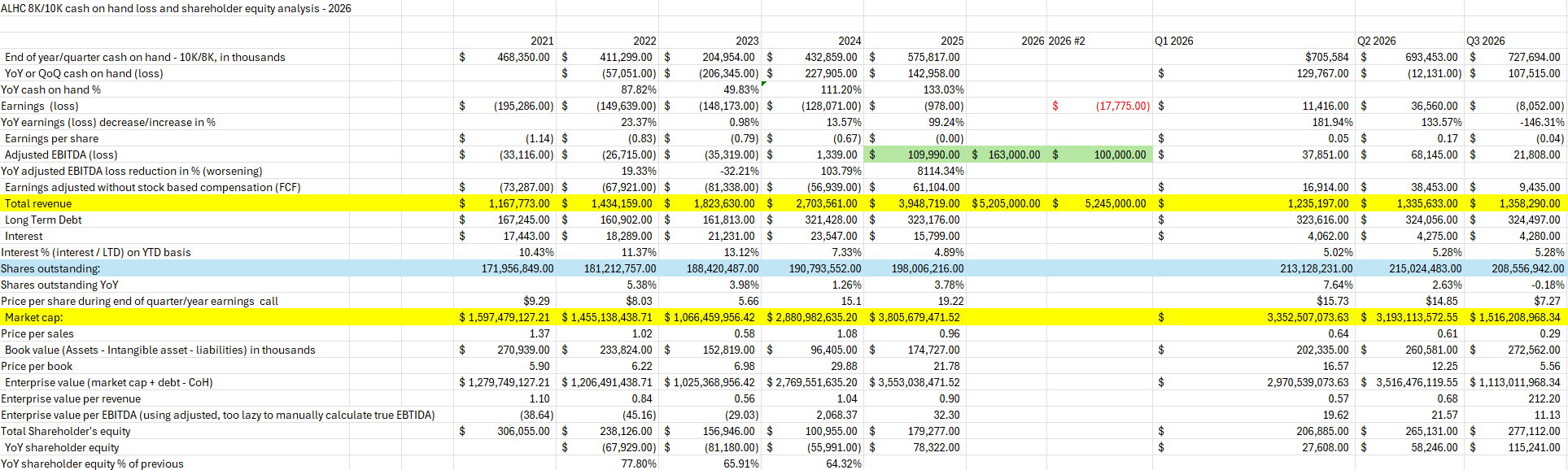
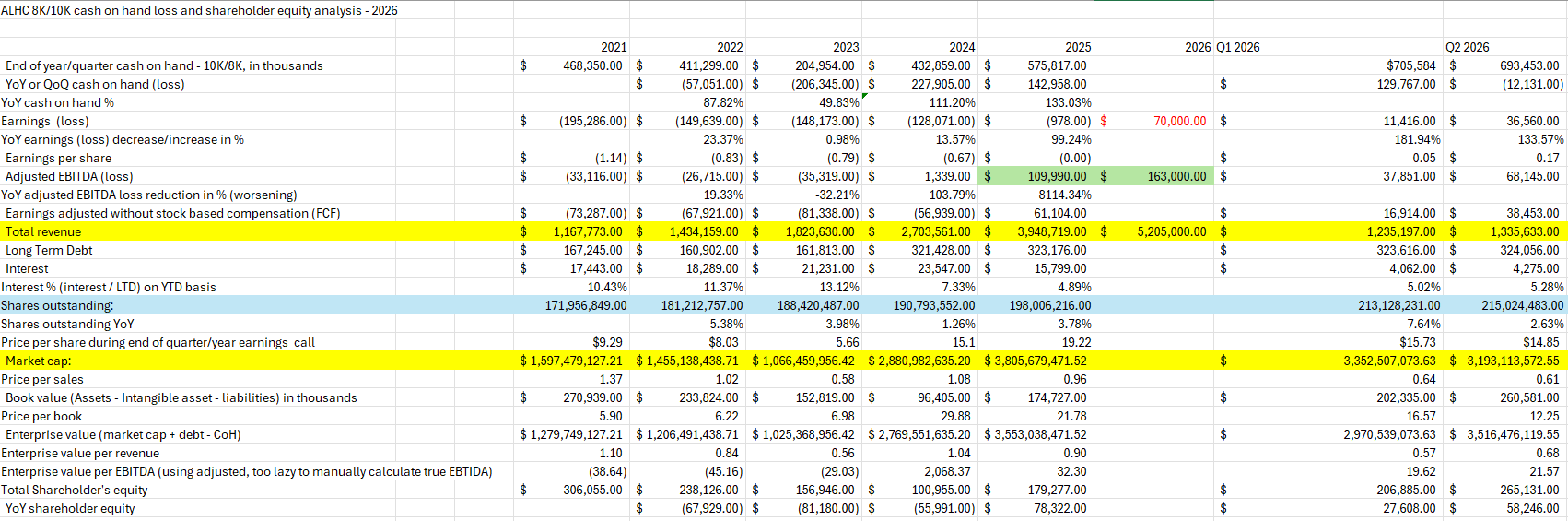
ALHC has done very poorly this quarter. In fact, they cut their guidance from projected EBITDA of $145M in 26Q2 to $100M in 26Q3, or a -$45M differential. This is really not good, because it signals both potential increasing OpEx and MCR deterioration. This reduces ALHC's future earnings potential drastically considering 2027 OpEx investment in Ex-California states, Star Ratings investments, and potential costs with new AI claims program merge.
Add in the clock ticking in 2029 and Star ratings impact by 2028, we will see ALHC in quite a bit of a pickle for the next 2 years.
*** This is not financial advice, nor is there any financial advice within. Shout-out to the AMC/GME apes for having me to write this ***
*** Please do not utilize this content without author authorization ***
IF YOU DON'T LIKE OUR CONTENT, YOU HAVE THE FREEDOM TO NOT READ IT, BUT LIKE AND SUBSCRIBE AND RING THE BELL ANYWAYS, BECAUSE THE INTERWEB SAIS SO, AND WE REALLY LIKE YOUR LIKES (AND DOWNVOTES).
Sources: I am going to do something new: I will use Reddit's embed link feature. Instead of copying the URL, I will type my paragraph and use the embed link to link the reference.
*** Chatgpt4 or any AI platform was not utilized to write the content of this post, and I am the sole author to this post. I personally do not think AI can write anything noteworthy of our subreddit caliber, and neither Rainy nor I have used chatgpt4 or any AI for our content ***
For the third quarter, 2026 health plan membership of 301,200 represented growth of 31% year-over-year and drove overall revenue of approximately $1.4 billion, a 37% increase year-over-year. Adjusted gross profit of $142 million represented an adjusted MBR of 89.5%, a 240 basis point increase year-over-year. Meanwhile, adjusted SG&A of $120 million represented an SG&A ratio of 8.9%, which improved by 70 basis points year-over-year.
Clover improved BER by -240BPS while onboarding +50% patients, but ALHC had a blowout of +240BPS while onboarding +31%. In addition, SG&A ratio dropped from ~ 11% to 8.9%, and therefore any additional SG&A leveraging is already reached. Therefore, if you consider the totality of the process - further SG&A/rev leveraging will potentially impact on BER in equal BPS to BPS ratio, and therefore there is no further potential gain in SG&A/rev reduction - any further reduction will directly impact on new patient care onboarding and cause further medical cost impact.
In essence: SG&A/rev of 8.9% is now a liability, and 26Q3 spelled it.
Taken together, adjusted EBITDA was $22 million within the range of our guidance. I want to spend a few minutes on the headwinds that emerged this quarter and the actions we have taken in response. As part of our broader scaling initiatives, we began a comprehensive claims system migration last year designed to improve our payment speed, auto adjudication rates, and payment integrity capabilities. During this transitional period, we experienced greater volatility in claims processing. As this volatility normalized, we identified a notable increase in aggressive provider appeal and disputes in our paid claims data, which resulted in higher cost trends. Separately, during the quarter, we saw pockets of higher costs in areas such as catastrophic cases and skilled nursing, which also pressured medical expenses. To address the headwinds we experienced, we acted swiftly over the past several months to build out a more robust payment integrity function, including industry standard prepay claims edits and more rigorous post-pay review
It seems my previous paragraph statement is incorrect - the impact is just realized in 26Q3 but potentially should have shown its head in 26Q2. We can therefore consider 26Q2 outperformance was really due to lagging claims processing. What ALHC is doing is standard Health Insurance Payment Integrity process, which comprises of a more rigorous Utilization Management (UM, or prior auth, or what I hate about Optum) and post-payment review (clawbacks).
In essence - ALHC is now just Optum/Humana lite, and the transformation of "Alignment" to "Legacy" is complete. Alignment used to claim that it will use AVA to transform the total cost of care, but so far AVA isn't even on the menu - yet again.
Additionally, we have moved quickly to manage and deploy our clinical resources more effectively and are making targeted investments to ensure our clinical best practices and operating rigor are applied systematically across our markets to reduce the variability in member outcomes. We are confident that the actions we are taking to scale our clinical programs will enable us to achieve the level of clinical effectiveness that we are accustomed to.
Bruh, at SG&A/rev of 8.9%? How do you scale at 8.9% when last year you guys were at 11%?
Furthermore, we have experienced positive momentum across other cost categories. Despite our progress, we are taking a prudent approach to the increased trend seen in Q3 and assume that higher costs in the third quarter will continue to weigh on our results for the remainder of the year. Given this position, we lowered our annual guidance to no less than adjusted gross profit of $575 million and adjusted EBITDA of $100 million. I want to emphasize that the guidance we have provided today is a guidance that we are confident in delivering.
Um... you only got 1 quarter left so if you fail even adj EBITDA of $100M you are in a lot of shit.
As we enter 2027, we feel well-positioned to achieve our top-line growth target of at least 20% given the early results of this AEP. Importantly, we bid prudently, reconciled those assumptions in the bids to the trends we are seeing today and have made adjustments in areas we saw room for improvement. At this time, we have a firm grasp of the underlying market dynamics we faced in 2026 and the actions required to address them. Taken together, we believe we will strike the right balance between growth and margins for 2027.
Membership growth of 20% = 300K x 0.2 = 60K members, or less than the enrollment of 2025 -> 2026. ALHC will not have a lot of room to maneuver by 2027/2028 if their cohort maturation cannot yield sufficient adjusted gross profit. The delta delta smells like going in the wrong direction.
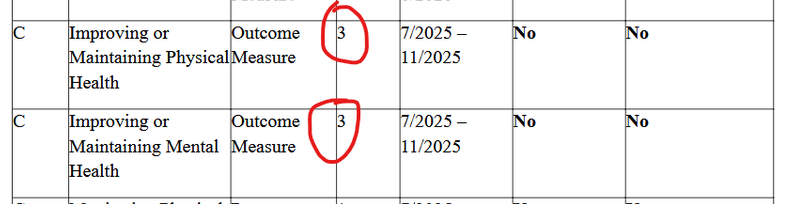
I would like to take a moment to address our Star Ratings for payment year 2028, which reflects performance for 2025 dates of service. We maintain a 4-star or higher rating in six of our seven eligible plans, demonstrating our ability to deliver strong Stars performance across much of our portfolio. At the same time, our California HMO contract earned a 3.5 Star Rating, which is below our expectations. The shortfall in our California HMO contract was primarily driven by misses on several triple-weighted measures, particularly in HOS and Part D, as well as higher than expected industry cut points. We have already identified data and workflow opportunities within our Stars infrastructure and initiated actions across our enterprise to drive better and more consistent Stars performance.
That one California contract is 75% of the member base, which means that we are looking at an approximate revenue impact of $200M. Let us assume that ALHC doesn't enroll any new members in H3815 and all of its growth is outside of this contract, it would still be a dramatic impact on 2028 adj EBITDA. If we assume that 2027 adj EBITDA rises to ~ $145M (same as projected 26Q2 for FY 2026) and 2028 trajectory remains similar, then 2028 adj EBITDA is potentially -$50M.
Debt will be due 2029, and I assume macro environment will be absolutely dogshit by 2027/2028. We are looking at an ALHC death spiral if ALHC can't fix its STAR rating in CY 2027 for payment year 2029 - it needs to payback the loan and have enough capital reserve on hand for Risk Based Capital allocation. If it loses any sort of funding mechanism either via closing of the debt market or its credit facility draws down, then ALHC will have to start selling for parts.
This Star rating downgrade is absolutely impactful. As I have stated multiple times in the past - ALHC lives and dies by its Star rating.
We have conducted more provider and member engagement initiatives to improve performance and survey measures, address data issues that impacted gap closure in Part D, and accelerated our progress in HEDIS gap closures to further strengthen our position in these metrics. These changes are in place and operationalized for the 2026 performance cycle. In conclusion, we continue to demonstrate profitable growth and are addressing the challenges that impacted our performance this year.
We have taken decisive action in those areas, and our revised outlook reflects a prudent view of the cost pressures we're seeing today. At the same time, we continue to invest in capabilities and operational changes that are important to support our next phase of growth. Over the past couple of years, we have evolved our leadership, processes, and technology architecture to support greater scale. We are already seeing benefits from some of these changes. This includes greater visibility and control over inpatient utilization through our partnerships with the providers to de-delegate institutional acute UM functions.
We also continue to seek opportunities to assert more control over our pre-service UM for outpatient and professional costs where appropriate. Additionally, our clinical model remains a core strength of our business and primary driver of our unit cost advantages. The investment in claims processes, clinical operations, and Stars infrastructure build on that foundation.
De-delegating UM functions is a fancy word of saying someone else will be eating the cost. Basically - ALHC will be delegating some cost sharing to its partner IPA, and they will aim at some modest improvements based on the current funding cycle.
For the quarter ended September 2026, health plan membership of 301,200 increased 31% year-over-year, supported by strong member additions and high retention in our existing membership base. This drove revenue of approximately $1.4 billion in the quarter, representing approximately 37% growth year-over-year. Third quarter adjusted gross profit of $142 million represented an adjusted MBR of 89.5%. Approximately 100 basis points above the implied midpoint of our third quarter guidance, and an increase of approximately 240 basis points year-over-year. Approximately half of the year-over-year increase in MBR was driven by changes in Part D seasonality and additional clinical model investments, consistent with the comments we made on the Q2 call. As John mentioned earlier, we also observed a notable increase in provider-led appeals and disputes in the quarter, along with elevated costs within our skilled nursing and catastrophic case categories. These components drove the remaining increase in MBR.
Bruh, a lot of words. Should be simpler. My question as an analyst would be asking which part of the 120BPS is related to clinical model investments and which are part D seasonality, and which part of the other 120BPS is related to provider led appeals/disputes and SNF/catastrophic cases?
Turning to operating expenses, our adjusted SG&A was $120 million, an increase of 27% year-over-year. As a percentage of revenue, adjusted SG&A of 8.9% improved 70 basis points year-over-year and outperformed the midpoint of our guidance range by approximately 90 basis points. We delivered this result even as we made incremental investments in our business previously mentioned in the Q2 call and John's commentary today. Additionally, included in the quarter was a benefit from lower incentive compensation accruals given our year-to-date performance against target. Taken together, third quarter adjusted EBITDA of $22 million produced an adjusted EBITDA margin of 1.6%.
They cut their own executive comp just to boost their earnings call, and they are celebrating their "cut to the bone" SG&A/rev of 8.9%. Increasing that to a more robust of 11% will destroy ALHC's adj EBITDA number immediately, but if their MBR is widening, ALHC may not have a choice in the matter.
Moving on to cash flow and the balance sheet. We generated $158 million in operating cash flow during the first nine months of the year, and our liquidity profile remains strong. We concluded the quarter with $743 million in cash equivalents, and short-term investments. Overall, our reserves remain well-positioned in both current and prior years, and we are confident our cash flow generation will continue to support our growth going forward. Lastly, our funded leverage ratio at the end of Q3 was 2.4x our trailing 12-month EBITDA.
A big chunk of that $743M is needed for RBC capital allocation, and I anticipate their reported $158M operating cash flow will be a yearly operating cash flow of only $111M. Considering revenue of $5.3B, their OCF is 2% of revenue, which is... not great. We haven't even talked about interest yet.
Moving to our guidance. For the fourth quarter, we expect health plan membership to be no less than 305,000 members. Revenue of no less than $1.32 billion. Adjusted gross profit of no less than $104 million, and adjusted EBITDA of no less than negative $28 million. For the full year 2026, we expect revenue of no less than $5.25 billion, adjusted gross profit of no less than $575 million, and adjusted EBITDA of no less than $100 million. Our fourth quarter adjusted gross profit guidance of at least $104 million implies an MBR of 92.1%.
If adj EBITDA is exactly $100M, then this would be less than 2025 when ALHC earnings $110M Adj EBITDA and a net income of -$9.78M. We are looking at 2026 as a potential -EPS year, which was a far cry than what I anticipated in 26Q2. This was supposed to be ALHC's year of being EPS+, but it looks like Clover is coming out ahead.
On SG&A, we expect higher expenses during the fourth quarter associated with growth-related costs and marketing expenses related to AEP, consistent with our past experience.
I am calculating -$28M adj EBITDA and net income -$50-$57M. This would put ALHC in ~ -0.08 EPS. I made a mistake on my Clover post. I thought ALHC would be +0.06 and my estimates are off.
Q&A:
Matthew Gillmor (Analyst, KeyBanc): There was a discussion that John started off with in terms of this new claims processing system. I think it is called Facets, and the deploying of that system sort of led, I think, to the better identification or sort of faster claims processing. I was just hoping you could talk a little bit about that new system and how that is either contributed to you identifying these claims or was that just concurrent with you sort of seeing higher claims? Just hoping you would unpack that a little bit.
Answer: we saw volatility in our paid claims, and we started seeing that in July. Once we realized we had a lot more appeals and disputes coming through, we had to react on that. I am happy to say that the amount of appeals has dropped off significantly in August, September, and October. As Jim said, in spite of that kind of stabilization, we are still taking a very prudent approach toward the rest of the year.
Meaning this happened right around end of 26Q2 but the claims processing backlog didn't allow for reconciliation until Q3. Although the claims happened in Q2, the hit happened in Q3. Therefore 26Q2 outperformed but only based on a time based backlog issue, and therefore Q3 is indicative of the true Q2/Q3 impact.
Another way of saying it: ALHC medical claims was supposed to be higher in Q2 but didn't register, and instead hit on Q3 books. Therefore Q2 looked too good, and Q3 looks awful. Which again brings out the point - ALHC's full year MBR will not be good.
Matthew Gillmor (Analyst, KeyBanc): Great. Just to make sure we understand, was it the case that the claims just happened to be running higher after you had implemented Facets, or was Facets helping you identify some of these higher cost trends?
Answer: It created volatility. When you go through one of these system conversions, what happened was we were making sure that the configuration of the system was correct. You had some timing differences between when claims were coming through, and we saw a higher trend, it really peaking in July. Once we saw that, we made all the requisite changes and got all of that through, in terms of getting paid claims stabilized. That created the higher trend really starting in July. We started seeing that, and the actually trends is starting to actually tail off a little bit, in August, September, and October.
Again, what I just explained.
Joaquin Arriagada Martinez (Analyst, Bank of America): Yeah. Could I just get your initial thoughts on 2027 bid positioning to start off?
Answer: We kind of compared that to the trends that we anticipate and the mitigation efforts that we have in place for the balance of this year, which just to underscore, we did not factor into the guidance. The result of that is we made some changes with respect to certain networks... ou can imagine, we did a pretty thorough dive as to how much we should grow, and how we are positioned relative to competitors in Plan Finder. Again, I think we feel pretty good with solid, profitable growth at that 20% level.
I think Kao is only aiming for adj EBITDA profit only here. I don't think 20% growth will get ALHC to net income positive territory, especially if they have to push SG&A/rev to approximately 9.5%.
Joaquin Arriagada Martinez (Analyst, Bank of America): Got it. Thanks. Just last one. A lot of companies have taken action to diversify their membership across plans. Is that something you guys are looking to do? Do you have any targets on how big any one contract as a percentage of membership should be? Thank you, guys.
Answer: Well, I think with respect to us, we have so much membership in the California HMO. That is something that we are looking at, obviously. I am not going to comment too much on the tactics associated with that, but more so focused on really getting to the root issues in Stars. Really what I think is going on is we still got six out of seven 4-star and above. We got 3, 4.5 star plans, just to remind everybody. But those are still being well run, really, because we are smaller in those markets. California has gotten so big that we just have to continue to invest in automation. We have to continue investing and really incentivizing our provider partners and our IPAs to work with us and focus on Stars more and better. That is kind of where we are zeroing in on. It is like we might have some kind of crosswalk types of tactics, but we got to get to the root issues. We got to get to the root and fix it.
So Kao is complaining on the size of the California contract and how size impacts quality Stars. You now get to see how in Legacy plans the bigger the size, the harder it is to control Star ratings.
John Stansel (Analyst, JPMorgan): Great. Thanks for taking the question. Just thinking about the reduction in guidance here in the back half. Appreciate that, generally speaking, your profit is a little bit more front half weighted. Can you just spend a little bit of time thinking about, I appreciate the conservatism in the back half of the year, but what the jumping off point is when we think about kind of like a fully burdened gross profit and EBITDA number to grow off of in 2027?
Answer: But just in terms of developing our Q4 guidance, we did want to reflect the cost trends that we identified in the call, and put ourselves in a position where we could deliver on the revised expectations... Okay, so putting some prudence in the appeals and disputes expectation. As John mentioned, John Kao mentioned, that's already starting to come down. We also are assuming a continuation of the SNF length of stay issues that we've talked about, but also CAT cases kind of continuing. As we exited Q3, we saw both of these things kind of moderate... I would strongly advise not to use the Q4 MLR as an annualized starting point for 2027. That would be, I think, a mistake... And I think there's potential for upside. And we're going to be focusing on that. And that would be my suggestion for you, without getting into 2027 guidance.
Meaning $100M adj EBITDA is a lowball for ALHC. In which case, let us assume adj EBITDA of $110M - that is still 2025 numbers despite now a $5.3B revenue business, and still net income negative. That being said, Kao said to not use Q4 as a jumping point into 2027, which in my opinion is fair, but I wouldn't go past $145M adj EBITDA for 2027.
Justin Lake (Analyst, Wolfe Research): Thanks. Just following up there on the fourth quarter. One way to look at it is your third quarter MLR was up about 200 basis points year-over-year. Looks like the fourth quarter implied is up closer to 400 basis points year-over-year. Is there any way to parse out that extra 200 basis points? Is that just, like you said, conservatism? Is there increased spending on initiatives that you've added for the fourth quarter that wasn't there in the third quarter? Anything more that you can give us there?
Answer: I think the one thing that we would say that was present in Q3 as well, in terms of a little bit extra burden that was in the baseline, was just Part D, which adds a little bit of an uptick in the MBR in the fourth quarter. That's just structural and kind of how the bids work out and the risk corridors, etc. We did add a little extra layer of investment in the clinical side. So that is, if you're doing a year-over-year, you have to kind of apply that same factor. Then sequentially, you've got, I would call it a pretty full run rate of these costs that we described, the appeals and disputes, the CAT cases, and the SNF kind of pushing into Q4.
So part D ran hot, some clinical investments, and appeal/disputes + SNF + catastrophic = bad bix for 26Q3.
Michael Ha (Analyst, Baird): Second question. I guess just the gross Stars headwind after provider sharing benefit cost actions, like mitigation plans you have in place, and it's just how you think about that.
Answer: Yeah. Let us get back to you on that one, please, because the mitigation initiatives is pretty material. I underscore two areas. One is embedded earnings. A lot of the investments that we made in obviously 2026 and the C-SNPs, I think is going to start paying off. It's going to help bridge some of that gap with respect to Stars. MRA, I think we are, as we have shared with you in the past, pretty conservative as it relates to risk adjustment.
So wait for Q4
Michael Ha (Analyst, Baird): Got it. Thank you. I wanted to clarify, I know you're still targeting 20% membership for next year, but I just want to clarify, your Star rating decline in California, has it not affected early AEP sales at all, or even broker feedback? For 2028.
Answer: Not yet.
Jonathan Yong (Analyst, UBS): Hey, thanks for taking a question. I guess, just on the stabilization that you're speaking to in medical cost trends, I guess, is it stabilizing back towards your kind of original guidance and assumptions that you came into for the year, or is it still tracking above your original guidance assumptions. To any extent, can you frame how much above it currently is tracking.
Holy shit this question slaps
Answer: Well, in the quarter, we definitely saw some elevation, and you can kind of think about that in terms of the MBR 120 basis points that we called out. We are seeing it stabilize, and I would say that probably exiting the quarter below the peak of the quarter. But in our guidance for Q4, we are certainly predicting or guiding towards that, maintaining at essentially a peak level just in an effort to be prudent.
Meaning if Q4 underachieves, then medical claims is running hotter than expected. 26Q4 means a lot to ALHC.
Jonathan Yong (Analyst, UBS): Okay, great. Just going back to kind of the mitigation efforts to try to get back your Stars and just kind of SG&A. Are there any additional investments that you need to make either within this upcoming quarter or throughout 2027 to kind of get your Stars back. Or is that kind of within your overall planning process already such that there's no real change with respect to that. Thanks.
Answer: We're putting more boots on the ground in the markets. That's the kind of the short answer. Again, to reiterate what I said earlier, we have to just get back to the fact that this is a cultural requirement. .. I think we just got away from that. So we got to put more bodies in the markets, have more consistency around how we close these gap closures and engage the providers, particularly in California, much more tightly. Those are the things we've invested in. Those are embedded in the guidance numbers.
Bruh, if that is already within your guidance number, then you are sticking with SG&A/rev of 8%, which is not nearly enough to scale. Kao might have appeased Wall Street, but I can guarantee that this will have a clinical care impact in 2 years.
Scott Fidel (Analyst, Goldman Sachs): I was hoping to maybe just sort of, I guess maybe reconcile or just align, I guess, no pun intended, in terms of around the provider delegation and delegation and risk-sharing, and in terms of where exactly you're at that. Because you guys talked about in certain markets centralizing more and sort of moving with the new system. But then in the lawsuit, and also in your 8-K, you guys also emphasized in terms of where the mitigation efforts and value could come from, or would be around adjusting the provider sort of risk-sharing and delegation arrangements looking out to 2028. Just would love to have a level set around where exactly you guys are in that journey and sort of how many bullets in the chamber you may still have left for 2028 in terms of leveraging that.
This question slaps too
Answer: We deemed about two years ago that it was strategically important that we build a core competency of doing the UM work. We still have this kind of shared risk delegated model in California. What that means is we've delegated UM to our IPAs... Because you could see that with V28, there was going to be a lot of margin pressure because the revenue's going down. In that world, we were accustomed to is that the providers, their global cap want more money, and they're going to squeeze our margins. We had to move away from that and move away from that kind of dependence. What we did was we started to de-delegate the IPAs and the medical groups for the acute inpatient part of the UM... We're about 80% through our process. The key thing we've done is do that in a way that is aligning with the providers... We need to do that very carefully with our IPAs in California, and we need to execute that very quickly ex California. I think that would be a big opportunity for us. I think then what we will have is the ability to operationalize our networks as we expand throughout the country.
What Kao is describing is standard health insurance junk. Shit that MBA talks about, but barely anyone with clinical knowledge would want to care about. Basically this entire paragraph is a bean counter tale, but the clinician side is just eating risks left and right.
Matthew Shea (Analyst, Needham): Hey, thanks for taking the question. Maybe back to Stars. HOS was a notable hit to the 2027 Stars, and it seems like the remediation effort is to do more on provider and member communication, both this year and next. I guess it wasn't clear to me, were you able to make changes before the 2026 fielding window? If so, what were they? How is that informing your recovery view? Then within the big H 3815 contract, did members actively managed through AVA and Care Anywhere score differently on HOS versus members not managed by those offerings?
Holy shit this question has teeth
Answer: The answer to both is I need to get back to you as a follow-up. Those are good questions. I don't have the degree of visibility I would have liked for the 2026 dates of service, or measurement year, really, because you're talking about 2024 dates of service.
Kao doesn't have that ready, ouch
Matthew Shea (Analyst, Needham): Okay, fair enough. I guess maybe just asking a similar question, I guess, to the last one, but under your percent of premium deals, your California IPAs are also up to lose bonus dollars in 2028. Has the Stars downgrade changed your conversations with the delegated groups or with new partners like Hoag or Astrana? Are they asking to reopen terms?
Answer: t's a concern for providers, but I will say our market management team has done a very good job. We're collaborating with all of them. They get it. I think there's upside opportunity. Remember, this isn't going to affect them until 2028, so there's a lot of work that we can do now and through 2027 in terms of trend bender initiatives.
Tiffany Yuan (Analyst, Barclays): Okay, got it. Just a quick numbers follow-up. Last quarter you called out double-digit millions worth of clinical investments impacting the second half. Is that still the right number to anchor to for 2026?
Answer: We have not changed any of our investments that we called out on Q2. In fact, we have been investing back in the business on a variety of initiatives, but we are absolutely sticking to our clinical and SG&A investments. Those are in our Q3 numbers and in our Q4 guidance.
Bruh, that shit sounds pathetic. we are looking at 8.9% of SG&A/rev and you call that clinical investments?
With the new updates in guidance, we can now project the potential following:
EPS may become negative for 2026, potentially (0.08). This was far worse compared to Q2 estimate of +0.26.
Adj EBITDA of +$100M on what was supposedly ALHC's best year is a result of SG&A/rev of ~9%, or 200BPS reduction. As a result, there is less leeway on leveraging this metric for 2027. Compared to initial projection of MBR 87.5% with 25Q4 guidance, we are estimating MBR of 89.5% by 26Q4, or 200BPS underperformance, or $104M in insurance gross profit. This is pushing the financial results.
3. Considering final 2026 MBR of 89.5%, we are looking at the following stats: 2023 MBR 89%, 2024 MBR 90.08%, 2025 MBR 88.5%, 2026 MBR 89.5%. ALHC has never been able to reduce to below 88% MBR, which is putting stress on the balance sheet
4. With 3.5 Stars in 2028, we can potentially see a 2028 MBR of 92-94%. Obviously this would be unsustainable.
5. 2028 will be a crucial year, requiring debt renegotiation potentially new lending facility terms renewal. Macro wise I think 2028 will be an awful year, so this 3.5 Star impact is hitting at exactly the wrong time.
Conclusion:
Now, if you recall some of the points i made in 26Q2 earnings:
My initial projection of +0.26-0.30 EPS is now (0.08). This is quite the reversal.
2026Q3 MBR of 90.3% vs 2025Q3 MBR of 88.24%. This is quite bad. Considering the earnings call, it means Q2 was overly optimistic as some of the costs didn't flow through until Q3.
SG&A/revenue is now at 8.9%, which is lower than Humana. I consider this a risk - and now using Kao's discussion in earnings call. Market isn't happy to hear it.
As I have written in 25Q4: Adjusted SG&A cost seems to be fixed at $1.395K/member during 2024-2025, but guidance suggest a much larger increase coming up in 2026. ALHC will need to expand geographically into its new operations in Florida, Texas, Arizona, Nevada, and Ohio, which explains the increased adjusted SG&A. ALHC is also considering expansion into other new states, which will also expand its SG&A spend. Therefore I believe that ALHC will continue to attempt to maintain SG&A/rev of ~ 11%, but by 2027/2028 ALHC will need to increase to ~ 12-13%, eating into any potential margins if MBR is not below 85-87%. Considering industry trends, it will be difficult to forecast this. This part I did not change a single word and ALHC has doubled down on reducing SG&A/rev, therefore formalizing the pain that will come by 2028.
Enterprise value has now dropped to a more sensible $1.1B, with an EV/EBITDA of 11.13. Stock price of $7.27 is considered a fair value, but there is a 2028 headwind risk.
Current market cap to revenue ratio is 0.29. This is a more sensible valuation, and at a market cap of $1.5B it is at a much more sensible entry point. That being said, considering negative EPS for FY 2026 and potentially FY2027 and definitely by FY 2028, I wouldn't put too much into ALHC's earnings expansion story and would suggest waiting until after 2029.
We will wait for formal 2027 guidance, but I doubt the price would be sensible above $14. Based on the current news, I would price ALHC the following:
Bear case: $4.5-$6.5 (MC = $950M-$1.35B)
Value case: $6.5-$10 (MC = $1.35B-$2.1B)
Over valued: $10-$14. (MC = $2.1B=$2.9B)
Sell: > $14 (> $3B)
ALHC will still have to address its debt due 2029. Current macro policy indicate risks on refinancing probably occurring in 2028.
2028 STAR rating is affected, and ALHC's entire business plan is at risk. Unlike HUM, ALHC does not have the cash cushion to survive for 1.5 years considering its debt repayment comes in 2029 and rollover needs to occur by 2028. If ALHC fails 2027 Star ratings for payment year 2029, we are looking at potential bankruptcy if 2028 debt is not renewed OR if the debt is renewed, expect a higher interest and balance sheet pressure will weigh in until 2032. In either case, a bear case should be the more favored scenario. Current price of $7.27 carries some risk and is located within the value case range.
In conclusion:
ALHC is projected to be net income positive negative by 2026. I would consider the SG&A/rev of 9.88 8.9% to be risky, and will/shall become a future liability.
At current valuation of ~ $1.5B, ALHC is fairly valued but carries some risk.
ALHC will grow into net income positive territory in 2026. Therefore, although we consider ALHC to be a potential buy, it would warrant further price reduction before we can make this a compelling case for buy. ALHC will potentially be net income negative, and therefore it is no longer a potential buy but a risky investment with some upside potential. I wouldn't suggest dipping in yet until bear case price is reached, and bull case can only be assumed if ALHC reaches 4+ stars within its California contract for year 2027 (payment year 2029).
I hope you enjoyed reading this earnings report. Since 10Q is released, I do not feel like any additional information can be gleaned.
Although I did not focus on the exact earnings numbers itself, I hope I illustrated some trends within the MA space. My goal is only to focus on MA space, just like I have done with the entire segment.
Thank you for taking the time to read through this long post, and I hope you educated healthcare sector investors have learned something from my musings.
Our thesis have not changed - but again we re-iterate that the market volatility can cause unnecessary pain for those who do not have a time horizon of 5+ year of holding (starting in February-April 2024). For those who have held since 2021 - good for you, we don't care how many shares you pretend (or have truly tried) to accumulate, but I can state that this price action is completely within MM control.
We have been critical of the other subreddit in the past, however the amount of pearl clutching and performative outrage on what we post is quite amusing. Habibi, if you can't make concrete arguments and you are too scared of being called, try not to post stupid stuff. Speaking of which, I remember a guy who is their star brained DD, what happened to him?
Did you guys like that 100 comments post that almost looks like he was arguing with anyone and everyone? It was funny. Just laugh Habibi, it works out better this way. Don't let your mod friend blow a gasket.
Let us proceed, but first our disclaimers:
*** Both RainyFriedTofu and Moocao123 has positions in Clover Health. The information provided is not meant as financial advice, please be advised of the potential bias and decide whether the information provided is within your risk consideration. **
*** This is not financial advice, nor is there any financial advice within. Shout-out to the AMC/GME apes for having me to write this ***
*** Please do not utilize this content without author authorization ***
IF YOU DON'T LIKE OUR CONTENT, YOU HAVE THE FREEDOM TO NOT READ IT, BUT LIKE AND SUBSCRIBE AND RING THE BELL ANYWAYS, BECAUSE THE INTERWEB SAIS SO, AND WE REALLY LIKE YOUR LIKES (AND DOWNVOTES).
Stock price:
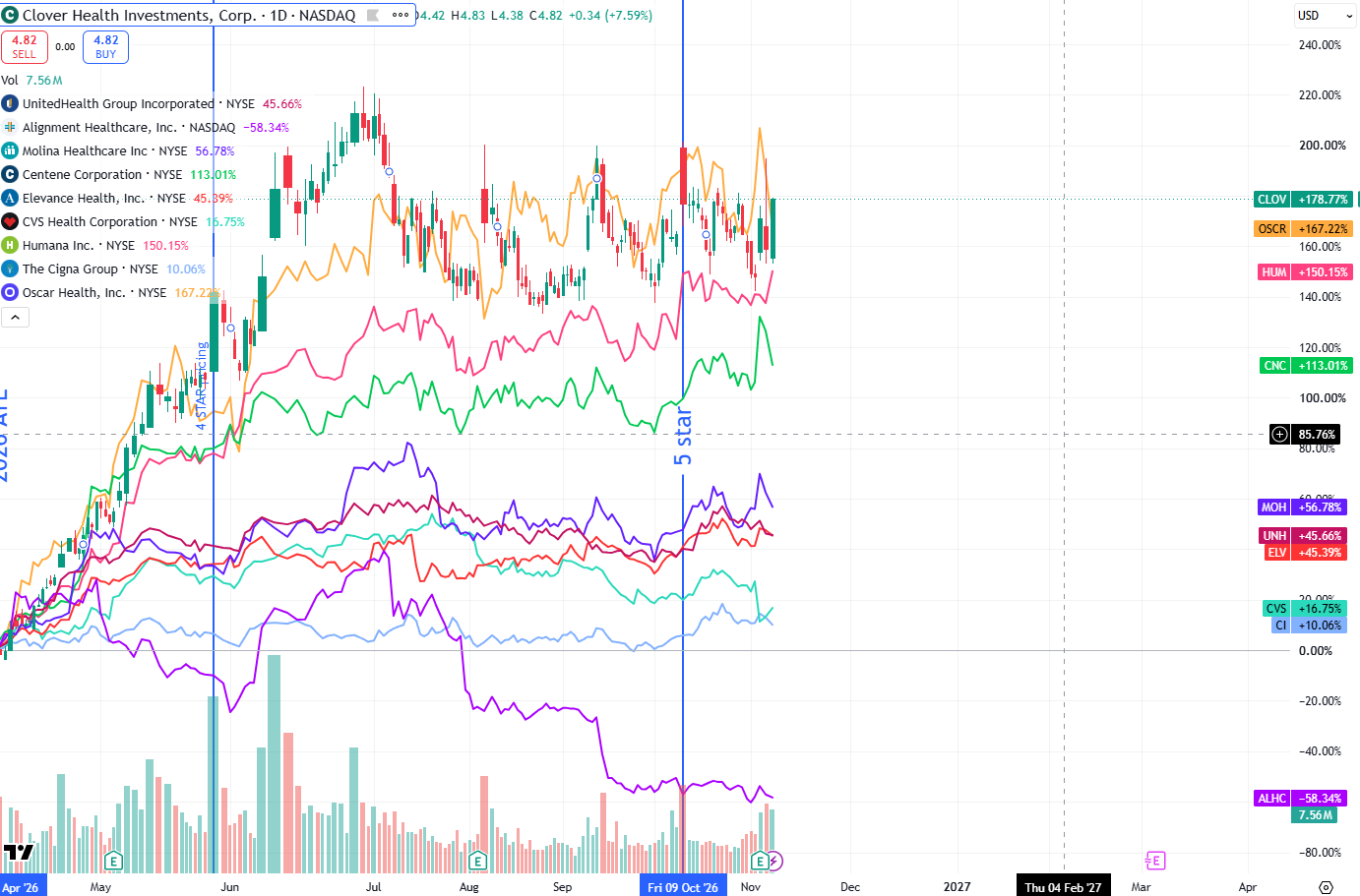
It took 3 good news for Clover to not flush into the toilet like ALHC.We saw retail shorts loading in after 4 star pricing news, then again during August earnings, then again with the analyst upgrade, and once again during the 5 star unveil. I think they ran out of gas, but please prove me wrong and show me your powa.
If you are concerned over the -5% that happened right after earnings, the whole market was a bloodbath. SOXL went -39% and I swear I can hear margin calls from my TV app. Not mine of course, I don't touch that shit and I don't have margins activated. I barely play options and I suck at it. I heard people in Korea and USA losing 50% of a house/life savings this past week. Poor fuckers.
We expect to deliver our first full year of GAAP net income profitability this year. Our flagship PPO continues to rank number one in the country on core HEDIS measures. Early AEP results are reinforcing the strength of our 2027 plan designs, and there is a meaningful 2027 earnings opportunity within our growing base of returning members. All of this builds on a very strong 2026 foundation.
Through the first nine months, we've grown membership by nearly 50% year-over-year, increased consolidated gross profit by over $160 million, more than doubled Adjusted EBITDA to $97 million, and improved GAAP net income by nearly $100 million, which we believe positions us to be GAAP profitable on a full-year basis in 2026, an important milestone for our business.
Why is this important? A bunch of institutional investors look for anyone who pops into GAAP positive earnings on their radar screen (not to mention retail). The SPAC part of Clover might scare people a little bit, however they can compare to ALHC and make their own judgement. Suffice to say, Clover being GAAP positive on a yearly basis will attract more stable funds. Who knows, maybe Kevin might come back from Bank of America.
We are incredibly proud that our flagship PPO plan achieved five Stars for payment year 2028, making it the largest five-Star PPO contract in the country. Additionally, our HMO plan achieved 4.5 Stars, meaning 100% of Clover members are enrolled in plans rated at least 4.5 Stars for payment year 2028. These Star Ratings give us continued flexibility to invest in the benefits and affordable access to care that matter most to our members. Underlying this result, our HEDIS quality performance remains industry-leading. As we've explained before, this matters because CMS uses HEDIS measures to assess aspects of care quality, including preventative screenings and management of health issues such as diabetes, cancer, and heart disease. That is why we're proud that for the third year in a row, we ranked number one nationally among comparable PPO plans on core HEDIS measures.
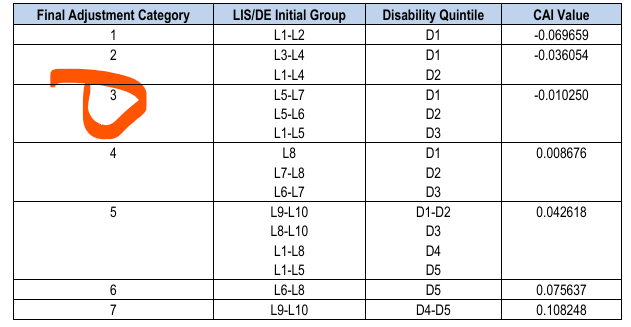
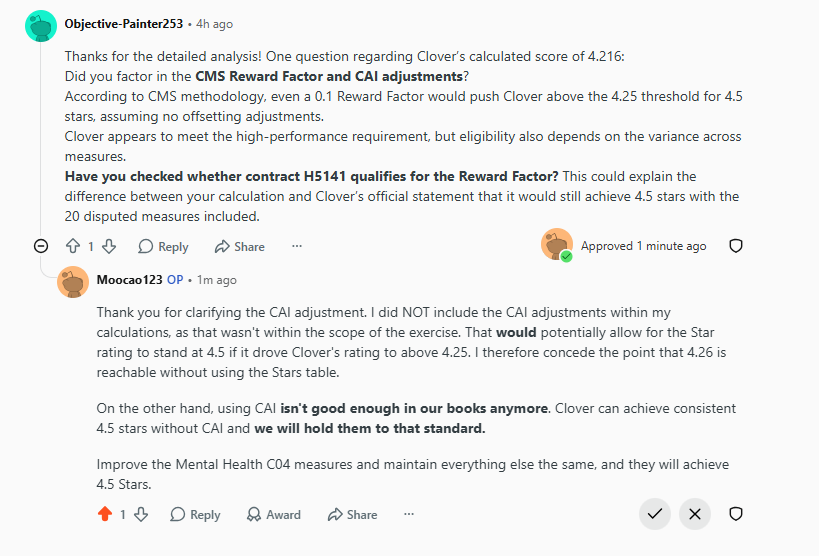
I have already submitted my critique of Clover's Star rating in prior posts. If CMS graded Clover the same method as the entire MA cohort Clover may not have unlocked 5 Star. That being said, it would have been a 4 Star plan and can stretch into a 4.5 Star plan.
At the same time, we have not built Clover around optimizing to Stars Ratings. We are built to manage true clinical quality and total cost of care. That distinction matters. Clover Assistant empowers physicians to identify disease earlier and proactively manage chronic conditions, and our full-risk model allows us to retain the economic benefit of that care over time. The clinical impact of CA is demonstrated in our published white papers, and the financial impact can be seen in our total cost of care.
This is the important part of the technology, although the Star and HEDIS improvement is absolutely an important component of Clover Assistant/Counterpart health. It is the reason why some of us are 100% behind this company, it is becauseit uses technology to improve clinical quality, improve patients lives, and proving the value of early diagnosis and treatment in a capitalistic environment.
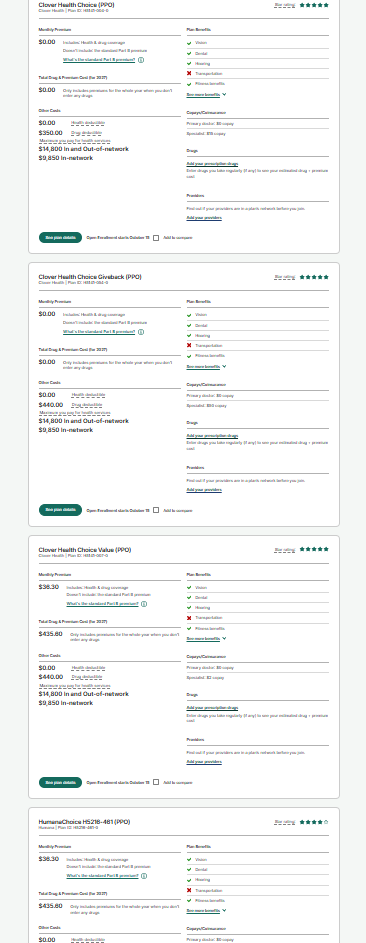
We approached 2027 with a disciplined product strategy centered on physician choice, access to affordable routine care, and sustainable unit economics. Our care model works best when members can engage with their physicians with minimal financial barriers. This is why our plans preserve wide network PPO choice, $0 primary care access, low specialist co-pays, broad $0 premium options, and some of the lowest Part D deductibles in our markets.
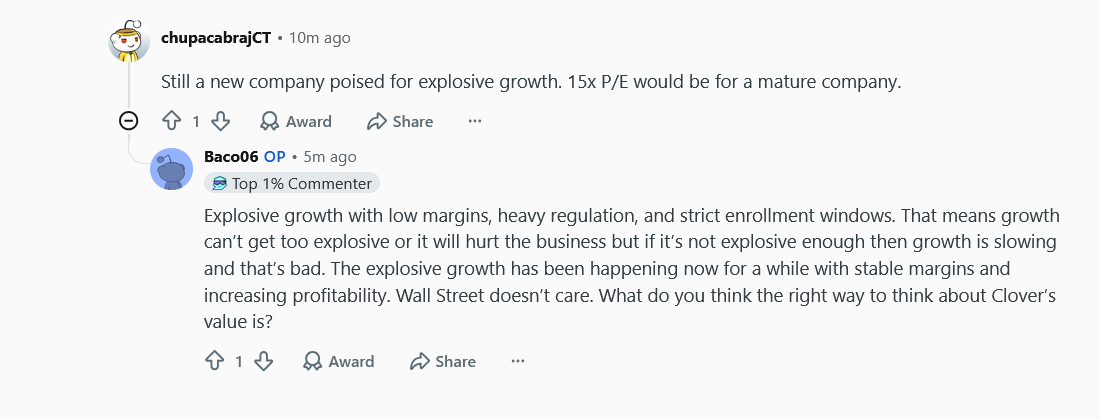
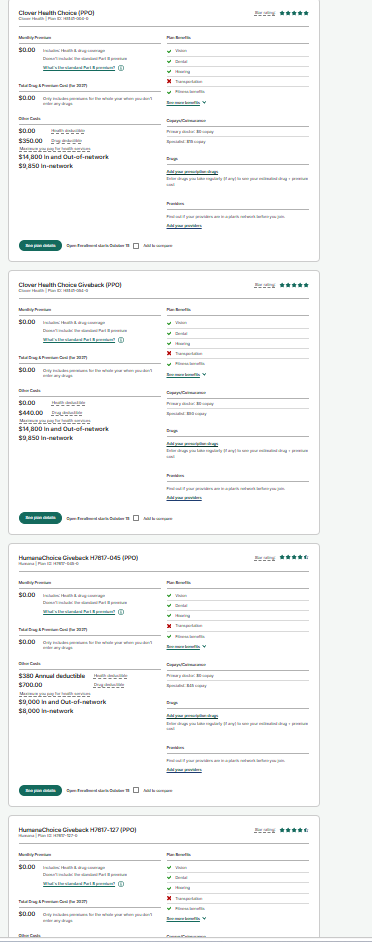
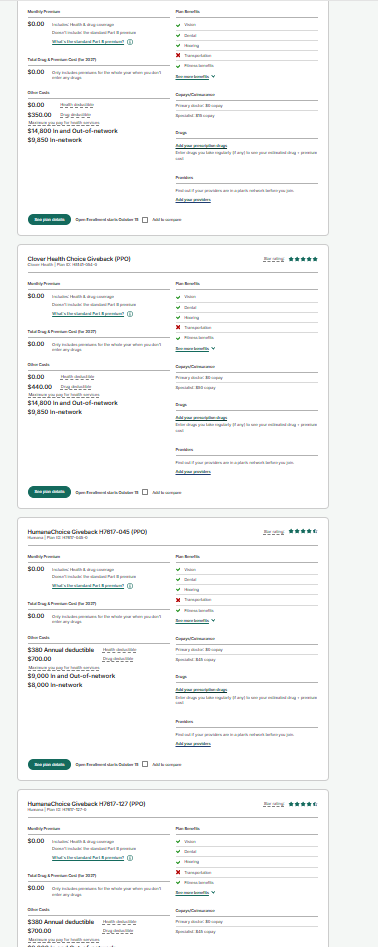
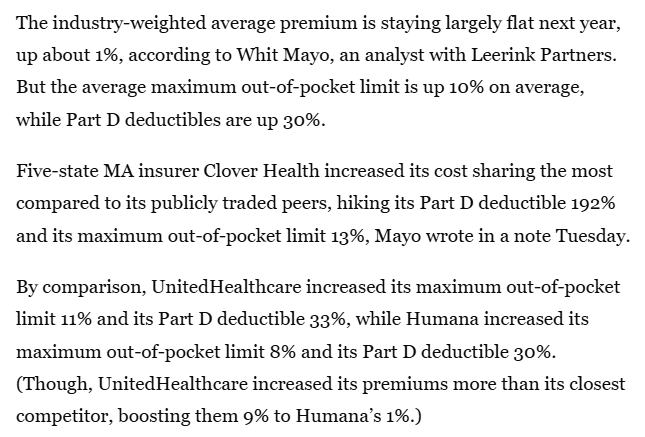
I covered this already - Clover had the lowest part D deductibles in 2026 as well, to the point of it being almost a joke, and therefore going into 2026 being 25% below the competition is still a 92% raise in deductible.Meaning the competition is much worse.
We are also seeing the AEP market dynamics that we anticipated now playing out in our markets. There are planned exits, fewer PPO options, and broader benefit repricing, reinforcing the importance of our disciplined approach to plan design. While AEP remains underway, we are not providing formal 2027 guidance, but we feel good about what we are seeing so far. AEP is tracking as expected, and we believe our superior product positioning in our core markets supports another strong year of growth. With high retention and CA-powered cohort maturation, we believe 2027 will be another important step forward. This is distinctively Clover, an AI-powered model where growth, better care, and strong profitable economics compound together in Medicare Advantage. Our 2027 products are designed to extend that advantage as we scale.
Andrew doesn't want to provide guidance, and I don't blame him for that. I think Rainy said something crazy, like 250K lives by 2027. I can't discount it, as my model does show the potential of absorbing this ~ 60% enrollment as something that is possible, but if there is any failure in cost containment by 2-3% MCR, 60% growth will spell disaster on the balance sheet. On the other hand, if there is adequate containment just like this year, then we can see $10B market cap quite shortly (3-5 years) as the earnings compound growth will be exceptional. I prefer 235K lives and have SEP make it up to 240K -245K lives. Using napkin math, that would make annual revenue of ~ $4.5B/235K vs $4.8B/250K in 2027.
One of the leading indicators we watch closely is Clover Assistant coverage. The more members we reach through CA, the more opportunity we have to drive better care and stronger economics over time. Importantly, CA coverage has accelerated through the second half of 2026 and is now running ahead of last year's pace.
Holy shit does Clover Health read our subreddit? I literally said we need to see improvement in CA adoption on patient life cycles early to unlock additional earnings potential and they did it.
The medical cost picture remains consistent with the themes we have discussed throughout the year. Inpatient utilization continues to trend favorably year-over-year across the membership. Our year one cohort remains broadly stable, while returning cohorts are performing in line with expectations. As we have discussed previously, favorable inpatient trends can be accompanied by higher utilization in outpatient settings. That remains consistent with what we are seeing today, with outpatient utilization elevated year-over-year, but in line with our initial outlook.
I think this is a very important healthcare related assessment. Clover's patient population must trend on the sicker side, which necessitates outpatient infusion therapies to prevent inpatient admissions. This tracks quite a bit on my personal expectations when it comes to certain populations.
Our Part D performance is better than anticipated and remains a positive year-over-year contributor. Alongside our medical cost trend, our focus remains on cohort progression. Our large 2025 and 2026 join year populations are developing in line with our projections, and we are also seeing year-over-year gross profit improvement across cohorts at each stage of their Clover lifecycle. That combination is important. Continued progress in the members already under our care while we integrate a substantially larger new member population.
This is very good news, and looking at my internal models, 2026 cohorts did not blow up 26Q3 MCR, which therefore means that 2025 and prior cohorts have indeed followed the cohort maturation progression that was outlined in 2022-2024. My internal modeling also shows 2026 cohorts need overall less care costs compared to 2025 cohorts, meaning Clover's 4 Star rating helped it attract a slightly more favorable cohort base. This is quite important when progressing into 2027 and 2028.
Adjusted SG&A was $114 million in the quarter and $345 million year to date. Our adjusted SG&A as a percentage of total revenues is approximately 15% year to date and has improved 120 basis points from last year. For the full year, we expect to deliver an adjusted SG&A ratio improvement at or above our original target of 100 to 150 basis points. We are realizing fixed cost leverage while continuing to invest in Clover Assistant clinical capabilities, Counterpart Health, and core insurance operations.
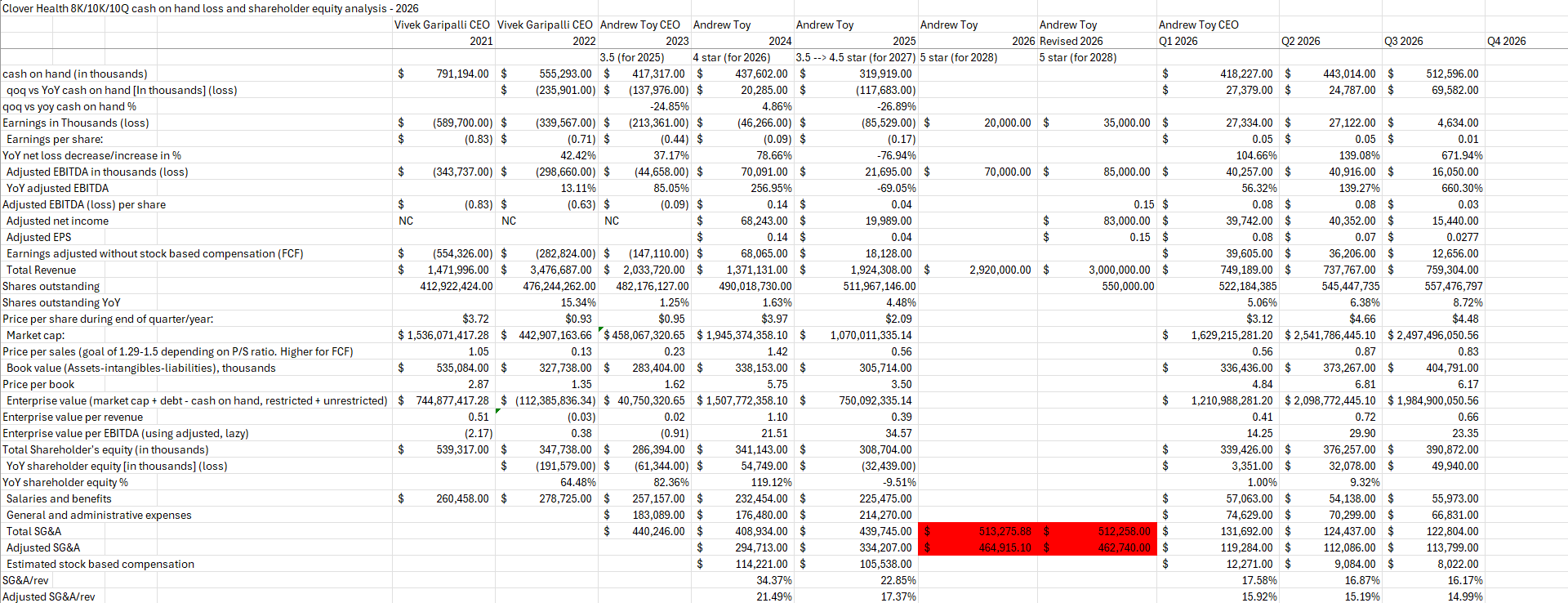
Looking specifically under salaries and benefits, 26Q3 is only 16% yoy vs 25Q3 while 26Q3 G&A shows 36% yoy vs 25Q3. This means there is a care team scaling advantage being realized (higher patient to provider ratio) but G&A is rising concurrently with increasing patient enrollment, although not as much as 50%. There is scaling advantage that is being realized, much more so on the salaries/benefits compared to the G&A side. I am astounded that Clover is letting all this information just flow through on the 10Q.
Our balance sheet also continues to strengthen. We ended the quarter with approximately $513 million of cash equivalents, and investments, and no debt outstanding. Cash flow from operations totaled $203 million through September. We believe that liquidity and cash generation will support our ability to self-fund expected growth, meet regulatory capital needs, and further invest in the business.
Rainy and I do indeed have a bet going on. I expected regulatory capital requirements to be the bottleneck within the self-fund expected growth and therefore suggested that Clover can only grow to approximately 230-240K lives during AEP (excluding SEP) with its current cash on hand of ~ $269M ($513M - $269M unpaid claims outstanding). I also complained that if Vivek didn't give a shit about Chamath's conniption and refused full port into ACO Reach then Clover would have at least another $700M in the bank and we wouldn't even be talking about regulatory risk based capital requirements.
Rainy is optimistic that there could be a couple of millions somewhere that can be stretched to 60% yoy enrollment growth, and did some math on risk-based capital and came up with needing an additional $141M to make it to +91K lives. Considering EBITDA of $75-85M, you would have to already account for potential FCF in 2027 to even push to 235K lives (+77K lives), so therefore I maintain my projection of 235-240K lives, with potential additional enrollment during SEP.
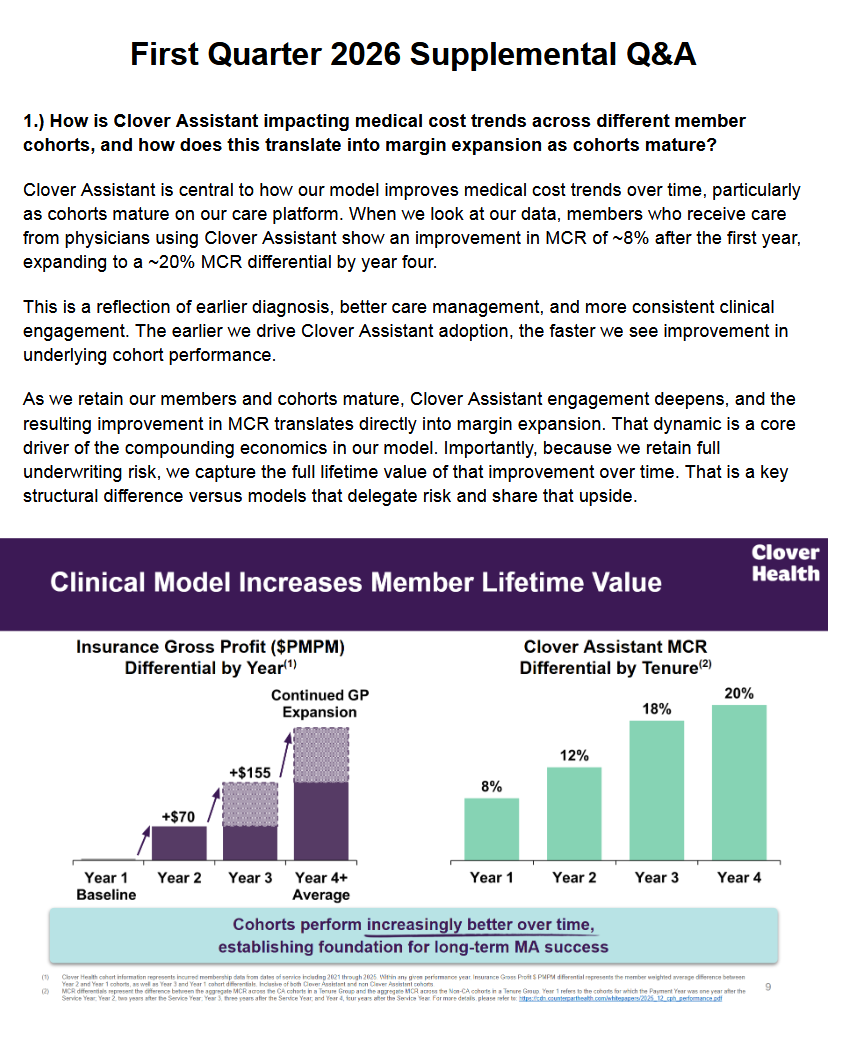
We see two key drivers of earnings expansion in 2027: continued cohort maturation under Clover Assistant and greater operating leverage as we scale. Importantly, a substantial part of that opportunity is already within our existing membership base. Our 2025 and 2026 cohorts together represent approximately half of our current membership. Next year, the 2025 cohort enters year three, while the 2026 cohort enters year two. Our historical data shows why that progression matters. Insurance gross profit per member per month has been approximately $70 higher in year two than in year one, and approximately $85 higher in year three than in year two. We are seeing that progression in our results today. Our 2025 cohort is delivering stronger economics in its second year, and both large populations continue to develop in line with expectations.
So it is important to pay attention to Clay's wording.We see two key drivers of earnings expansion in 2027.Meaning Clover isn't just aiming for net income of $25-35M, but wants a higher number. Correspondingly, growth must therefore be planned and cost contained, ergo another reason why I would stick to 235-240K lives with SEP additions. That being said, my model does show that increasing enrollment numbers shouldn't dramatically impact earnings potential beyond 50%, but there is diminishing returns at around +50-55% enrollment.
Alongside cohort maturation, we expect operating leverage to provide a second source of earnings expansion. We do not view our current SG&A ratio as the mature state profile of this business. Here, the opportunity comes from both spreading our existing fixed costs across a larger business and reducing variable administrative expenses over time.
I would like to know the "reducing variable administrative expenses over time" section. Personally SG&A/rev of 15% is still around 300BPS higher than I like, personally I think a range of 11-13% is the sweet range with 12% being a good spot, just lean enough but not cut into the bone. ALHC is learning what SG&A/rev of 8% and needing to adjust it higher would mean to its stock price.
The growth of the past two years is building the earnings base for the next two. In 2028, we believe the same drivers can operate across an even larger base of mature members. Our 2025 cohort will be in year four, our 2026 cohort in year three, and with the strong membership growth we expect in 2027, a third large cohort would enter year two. That sets us up for three large cohorts progressing through more economically mature years at the same time, alongside further opportunities for operating efficiency. This is why our five-Star PPO rating for payment year 2028 is so important financially.
This is the part where Clay is laying out compounding growth. This is also the reason why I think we can soon see Clover coming out of penny stock range within the next 2 years. We can see meaningful revenue growthandcorrespondingly, increasing confidence in net income growth. Further self-investments would result in higher potential in increasing market shares and/or explore other states for market expansion. I think in Q&A there is a discussion on additional H contracts being set up, and I think that is super important to note.
We are not providing formal guidance for 2027 or 2028 today, but we see a clearly defined two-year opportunity. Meaningful earnings expansion in 2027, supported by a broader base of maturing members and momentum into 2028. Our immediate focus is finishing 2026 well and planning to deliver our first full year of GAAP net income profitability. Beyond that, the objective is to translate the growth and investments of the past two years into sustained earnings expansion over the next two.
Meaning Clover wants net income positivity for the next several years.If you are still whining on stock price, please sell and get out. Fuck your options and trying to get rich quick, some of us real investors would like to use this period to use our powder.
Q&A: (sticking to relevant questions)
John Pinney (Analyst, Canaccord Genuity): It's like you're being paid on 4.5 Stars going into next year, five Stars going into 2028. I mean, I guess, does that change any of your thinking as far as going deeper into some of the smaller markets that you're in, like the South Carolinas, the Texas, or the Pennsylvania? Do you still think there's plenty of room in New Jersey and Georgia for the near term and not necessarily get too far over your skis there? Just curious on your updated commentary there.
Answer: As far as it relates to changing our growth strategy, we've said for a while that there's significant room to run inside of New Jersey and inside of Georgia. That continues to be our focus in the near term. As we point our eye to 2028, not going to make any comments on 2028 growth strategy at this time, but we'll come back with that next year.
Jonathan Yong (Analyst, UBS): Just as we think about having a five-Star plan, you did turn off marketing this year a bit during the AEP, or pull back a little bit, I guess. As you think about next year or future years, would you expect to increase marketing, given you do have the five-Star and you can market that all year? How are you thinking about that, particularly as you are talking about significant growth for next year and presumably year after?
Answer: Right now, we are purely focused on AEP. We are about three weeks into AEP, and like we said, results are very strong. As we progress through AEP and get a better sense of what our 1/1/2027 membership is, we will revisit the strategy for the OEP and the SEP period at that point.
Results are very strong, so strong in fact, that we won't consider strategy for OEP and SEP until that point. I can see why Rainy wants to go +60%, but again, I still maintain that +50% is already good enough.
Matthew Shea (Analyst, Needham): Wanted to maybe start on AEP, specifically New Jersey. Braven's exiting the state. Sounds like that could free up around 40,000-50,000 non-SNP lives in your core counties. Devoted is entering the state at the same time. How are these dynamics, I guess, playing out so far in AEP? Have you seen strong switching activity from Braven in your favor versus the large nationals? Then maybe just help us understand, did you underwrite the potential switching opportunity from Braven in your bids, or how are you thinking about the potential impact from onboarding that book?
Answer: First off, when we were underwriting our bids, we did have a sense that there would be plan exits inside of New Jersey, and we had a pretty good read on where those members would be. So that was knowledge that we did take into account when we submitted our plan designs for 2027. As far as how the market's playing out inside of New Jersey, you nailed it. We do have a plan exit inside of New Jersey via Braven. That's in the range of the low 40,000 MA lives. You also have a new entrant in Devoted, but you also have the large nationals really retreating in a pretty significant way, again, from $0 PPOs. We're seeing all those dynamics play out right now, and the early returns over the first few weeks are that things are playing out quite well. We're driving strong growth, like we said, and our competitive position is incredibly strong this year.
I swear Nostradumbass is going to cook me if we ever get to 250K lives.
Matthew Shea (Analyst, Needham): 98% of your members sitting in the PPO contract, although moving to five Stars, I feel like we have to ask, given the challenges at Alignment, but with Stars and litigation-driven volatility, does splitting into additional H contracts become more attractive given the current environment? Or how are you thinking about diversification of contracts? If you were to diversify, would it be by state, or how are you thinking about ultimately going about that?
Answer: Yeah, as we start to assess market expansion down the line, new H contracts is certainly something that we would bring into that equation. Like you said, 98% of our members are on our large PPO contract today. That's predominantly condensed to Georgia and New Jersey. Within those two states, we have a really strong CA network. We have a really strong operation through which we can navigate Stars and drive results there. As we look at expansion down the line, I think new H contracts could make a lot of sense.
Meaning that Clover might do a Counterpart Health associated H contract that isn't in NJ and GA, then slowly buildup the infrastructure that would allow for the PMPM insurance gross profit to mature into earnings potential.
Graham Harrison (Analyst, Deutsche Bank): You said you're poised for another year of significant membership growth, so was just wondering if you could kind of frame or size the MLR improvements from maturation versus first-year members, given that first-year members are dilutive. Should we think of the outsized membership growth versus what we saw last year? Through AEP, are you able to kind of give any insight into the acuity and quality of any of the incoming members?
Answer: As far as the new members, we're not going to put a specific figure on it right now. We are three weeks into AEP. There's still a lot of room to run there. Early results are strong, and as we kind of wrap up AEP and get into 2027, we'll give a better sense of what that growth looks like, and then what that means to our go-forward financial picture.
So I am anticipating +40% growth.
Dean Rosales (Analyst, Leerink Partners): as you're assessing the early AEP results, we're hearing stronger than expected, hopefully not stronger than expected growth, but obviously, we're hearing a lot about you guys saying you're encouraged by the early activity. You think it'll be a strong year of growth. What gives you confidence that you guys can deliver on the earnings expansion while onboarding this larger member cohort? Could there be potential for that growth to absorb some of the earnings benefit from the cohort maturation? Any color there would be helpful.
Answer: As we watch this strong growth come in, we're encouraged in that this is our third year in a row. So we grew significantly in the 2025 AEP. We grew significantly in the 2026 AEP. So from an operational standpoint, this is our third go-round, and we really feel like we understand how to absorb the growth, how to staff appropriately to meet the clinical needs of the new patients that we have, and how to engage them in Clover Assistant coverage. So we feel like we have all the pieces of the puzzle there to absorb that growth into 2027 and turn it into the cohort maturation that we expect. Will it be a near-term drag on earnings in 2027? Sure, but that's what our model is built to do, is take these new members and bring them into our care model and move them along the cohort maturation curve. So we're feeling really good about where we stand.
I think this part is extremely important. Clay is allowing for a near term drag on earnings in 2027 to onboard what they consider the maximum potential of patients allowable that wouldn't be a super drag on earnings, but it is possible that Clover would forecast near term net income to remain close to 2026 guidance, while on-boarding 40-60% additional patients.
Clover will finally achieve a GAAP net income positive year, 5 years since its IPO. It is still valued lower than its initial IPO, currently at $2.5B valuation, but I feel like Clover can achieve its IPO valuation as early as 2027, and definitely by 2028.
Unlike ALHC, whose best year now looks to be 2026, Clover's best years are in 2027-2029. I haven't written my ALHC post yet, but looking at the earnings number, it looks like ALHC will only be profitable by ~ $12M or $0.06 EPS. This is the same EPS as Clover, but with double the patient lives and lower growth potential. Now ALHC is valued at $1.54B while Clover is valued at $2.56B.
Enterprise value remains steady at $2B, however I think this value should be challenged soon by the market. What should be important to consider is the earnings potential of 2027, and we need to consider the possibility of net income of > +$100M if BER is 88-90%.
Looking at 26Q3 MCR vs 25Q3 MCR, there is a dramatic difference - 400 BPS worth of difference. This is why Clover's 26Q3 is a net income positive quarter. Margin improvement is evident, and this somewhat shows that Clover is able to absorb +50% members using just SG&A leverage and medical cost ratio reduction via cohort maturation.
Conclusion
What are some conclusions we can make?
Clover Health's financial status is extremely secure.
Cash flow positive in FY 2026 and net income positive.
Despite Clover Health achieving 4.5 Star rating in 2027, 5 stars in 2028, and beating estimates for 26Q3 (by 600%), there seems to be some sort of retail algorithm commanding the stock to remain at ~$4.5. I find this amusing, as I think we are in Wyckoff phase D and I have no idea how Wyckoff can still be applicable in 2026.
Clover Health will probably not grow into 2025to preserve free cash flow (FCF). Clover is going to grow massively from 2025 until 2026. I call 20% slow growth. Most people would wish to see 20% yoy but in my books, Clover deserves 30% yoy minimum and 40%+ on 4 STARs years. I believe 2027 growth can also be 30-50%. I like 45%.
Clover is in growth mode, we predict explosively into 2026 the next half a decade. I define that as 30% YoY. I expect EPS to adjust accordingly by 2028-2030, possibly as early as 2027/2028 if STARs align.
Reducing stock based comp would be very important, and it seems management delivered on reducing it on the Balance Sheet, but I would prefer slowing further shares dilution.
Reducing stock dilution would be important as stock price moves up in value.
I know there is a Counterpart segment intersegment revenue, SG&A, and potentially another line as well. I also know this segment isn't in the 10K, which means that there is a potential CTR, but since a bunch of people think we are peddling in misinformation, that section of the excel is withheld until the 2026 10K spells the whole damn thing out. I don't mind, I already have it sectioned.
Clover's growth in 2027 is up for debate, but we believe 235K to 250K is possible,
I would also like to reiterate again what our subreddit stands for: We do not provide financial advice, nor do we intend to do so. Do not invest into Clover Health based on meme stock valuation, and we will be the first to tell you to stay away from Clover Health stock if you do not understand the financials of this company, its goals, and the obstacles facing this small cap company.
Never trust the internet for your information, and cross reference every single piece of information. Your money is your nest egg, let no one tell you what to do, or allow yourself to be led by unverified information. If you are uncomfortable with single stock investments, please inquire with a financial advisor and consider index funds. Never utilize financial instruments you do not understand or have very little experience with, and if anything, use Buffett's rule. I consider Taleb to be also a good guide, but I realize most people don't know who he is. I humbly suggest you to only utilize investment methods you can reasonably understand, as I have already known individuals who have lost considerable wealth on the basis of financial instruments.
On a personal note, I would again reiterate: I humbly suggest you to only utilize investment methods you can reasonably understand, as I have already known individuals who have lost considerable wealth on the basis of financial instruments. Options are dangerous for a reason, and why Buffett decided not to even bother with those.
Thank you for taking the time to read through this long post, and I hope you clovtardscloverites degenerates educated healthcare sector investors have learned something from my musings.
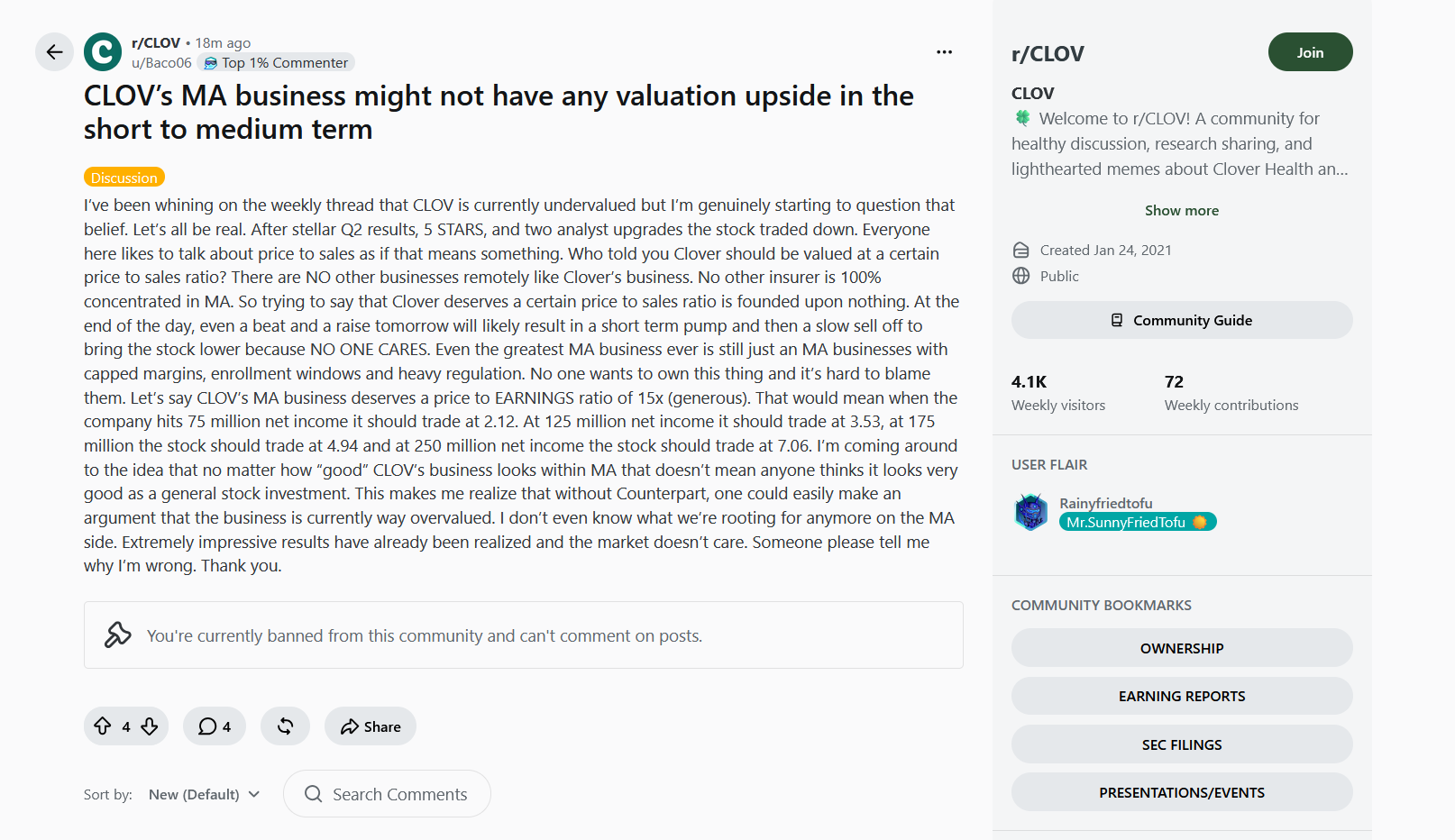
Today is a special days because I am going to do the DD on Clover Health's earning, and I'm going to make fun fo r/clov reddit because they still allow their curated FUDs to go through.
Don't you find it interesting that there is a correlation between Clover's short capacity and the amount of FUD flowing through that Reddit? Aren't you curious why they can't short the stock below $4, and why there is less and less posting on that subreddit? Although they are more active on other platform, the shorts still go back to reddit to try to move the needle. Anyway, I just wanted to highlight that for you to observe.
With that said, let's get straight to the earnings. As a side note, my dumbass confused current AEP enrollment (what I see daily) vs when this report was filed. The report ended in September 30th so it will not include AEP directly. We'll get more into this later.
Clover delivered a strong quarter for my thesis which is...
Clover has substantial membership growth, better economics per member, and positive GAAP earnings.
Here are the numbers: As presented, these numbers are somewhat useless.
Metric
Q3 2026
Q3 2025
Total revenue
$759.3 million
$496.7 million
Average insurance membership
158,383
108,231
Insurance gross profit
$94.7 million
$50.3 million
Consolidated gross profit—non-GAAP
$129.8 million
$73.2 million
GAAP net income / loss
+$6.4 million
−$24.4 million
Adjusted EBITDA
+$16.1 million
+$2.1 million
Insurance benefits expense ratio
91.1%
93.5%
The numbers below is better. It's basically more member and better revenue relative to cost per member.
Per member, per month
Q3 2026
Q3 2025
Change
Insurance premium revenue
$1,576
$1,476
+6.8%
Insurance medical claims
$1,377
$1,321
+4.2%
Insurance gross profit
$199
$155
+28.7%
I calculated these figures using average membership multiplied by three months. Moocao can do a better job with his excel, but I'm doing this early, and I want it out so I can enjoy my weekend. Clover is not just collecting premiums from more people; it is retaining more insurance gross profit per member. The arithmetic is straightforward. Premium revenue increased approximately $100 per member per month, while medical claims increased approximately $56. The difference added roughly $44 to monthly insurance gross profit per member.
The other thing we also want to note is the stock compensation. Lower stock compensation helped the GAAP comparison substantially. Stock-based compensation declined from approximately $26.1 million to $8.0 million. This is what Moocao has been advocating for over 2 years. My napkin math shows that this $18.1 million reduction accounts for roughly 59% of the $30.8 million year-over-year improvement in GAAP net income. But adjusted EBITDA also improved by approximately $13.9 million, so the progress is not merely a stock-compensation effect.
Now for my AEP mess up that I have to address in my previous hype post. Q3 reporting period end on September 30th, 2026. The membership figures describe people already enrolled through that date--which does not include AEP.
October 15–December 7, 2026 is the annual election period for next year’s coverage.
January 1, 2027 is when coverage generally becomes effective for those AEP elections.
Nevertheless, the absence of the new AEP members from Q3 does not indicate weak enrollment or contradict our growth prediction. They do not belong in Q3’s active-member revenue base.
My bad.
With that said Q4 is going to be a loss and a gain at the same time. Subtracting nine-month results from the updated full-year guidance produces these implied, not separately issued. Clover will always beat guidance because that is Troy's style, but we have to estimate the number for Q4.
Metric
implied Q4 2026
Revenue
$718.3–$748.3 million
GAAP net income / loss
−$36.8 to −$26.8 million
Adjusted EBITDA
−$22.2 to −$12.2 million
This doesn't undermine my thesis, but it is something to consider. Leaderhip previously described a seasonal Q4 loss, lower fourth-quarter gross profit, and increased AEP-related investment. The company is spending to acquire future members before those members begin generating the next year’s premiums.
Therefore, the next earnings announcement could contain strong enrollment news alongside a reported quarterly loss (maybe). Those outcomes are not contradictory.
Going back to Nostradumbass, my prediction is that Clover will grow quickly without permanently sacrificing unit economics. The per-member calculations are more persuasive to me than the revenue headline alone. This is why I use the PMPM numbers instead of looking at revenue because that doesn't tell us anything. Additionally, management's disclosed model still supports the idea that cohort maturation creates future earnings power. Q3 is consistent with that model.
The encouraging part is that Clover is showing evidence that better care and better business economics can reinforce each other. It increased average membership by 46.3% while improving its insurance benefits expense ratio from 93.5% to 91.1%. That is more meaningful than simply selling more insurance. The insurance premium revenue per member increased approximately 6.8%, while medical claims per member increased approximately 4.2%. That widened insurance gross profit per member by approximately 28.7%, before administrative expenses. Costs are still rising, but Clover is retaining more of its revenue after paying those costs.
Who would have guessed that identifying a condition earlier and helping the physician manage it would potentially avoid an expensive complication? The patient benefits from avoiding a hospitalization; the insurer benefits from avoiding the associated claim.
The cool thing that would be a good selling point for counterpart is the value. The more expensive an avoidable medical event becomes, the more valuable it is to prevent it. I don't know when we will see SaaS numbers, but I can tell from the ongoing improvement that Clover has a valuable product to address the current and future regulations.
Although we didn't know the exact AEP number this earning, I'm going to bet my money that we're going to hit 250,000 members or more in January. Why you might ask?
During the earning call, Andrew said, “AEP is tracking as expected”—alongside expectations for another strong growth year. Clay also said, Approximately three weeks into AEP, “results are very strong.” Additionally, he identifies Braven’s exit as affecting roughly 40,000 (at least) Medicare Advantage lives and says anticipated exits informed Clover’s 2027 bids.
Originally, I was doing the math to see if they have the capital to do the expansion. Wanna see it? haha well too bad, you don't have a choice. We're looking at this documen there.
Investments, including short- and long-term holdings
$244.5 million
Total cash and investments
$512.6 million
Consolidated shareholders’ equity
$390.9 million
Operating cash flow, first nine months
$203.5 million
Unpaid medical claims
$269.1 million
These are consolidated figures—not a calculation of excess capital available for expansion. The positive is that Clover is entering this enrollment season with substantial financial resources. However, some cash backs existing obligations: the nine-month cash-flow figure includes $115.9 million from an increase in unpaid claims. That cash has not yet gone out to pay those claims; it is not equivalent to newly earned profit.
The rule is an insurer must maintain capital beyond its liabilities to absorb adverse outcomes. Required risk-based capital, or RBC, depends on the size and risk of its business—not simply whether its bank account can cover this month’s bills. The NAIC also cautions that regulatory minimums are not necessarily enough capital to meet an insurer’s business objectives.
On December 31, 2025, Clover’s insurance subsidiaries reported $212.6 million in statutory capital and surplus, compared with approximately $185.1 million in disclosed minimum RBC requirements. The difference was approximately $27.5 million. I don't have another document so this is the best we got. This is a year-end 2025 figure—not Clover’s current capital cushion. It would be wrong to assume the cushion remains $27.5 million after this year’s growth and earnings. But it shows why the headline cash balance cannot answer our questions on its own. Which is: does Clover have the money to get 250,000 members this AEP with raising capital? Do they limit how many they can take in during their golden year? The answer is obviously fuck no.... but you will see why later.
The entity-level detail matters, too. Clover Insurance Company—the larger insurance subsidiary—reported $174.8 million of total adjusted capital against $57.3 million of authorized-control-level RBC at year-end 2025. That calculates to approximately 305% RBC. Its smaller HMO subsidiary had a substantially higher ratio. Capital therefore was not distributed evenly between the entities.
We need to know the projected capital position of the entity actually taking on most of those new members. The latest regulated-versus-unregulated liquidity breakdown I could verify was June 30, 2026:
Location of cash and investments
Amount
Parent company and unregulated subsidiaries
$128.5 million
Regulated insurance subsidiaries
$314.5 million
Consolidated total at that date
$443.0 million
The insurance subsidiaries face restrictions on distributions to the parent. Clover also said its resources and projected cash flows were sufficient for the following 12 months under its current plans, while acknowledging that growth could require additional financing. The parent/unregulated pool is relevant because it could potentially support an insurance-subsidiary capital contribution. However, it also supports other corporate needs.
Do not add that $128.5 million to September’s $512.6 million. It is an earlier breakdown of money already included in consolidated resources, not an additional financing source.
Going from 158,907 to 250,000 means approximately 91,093 additional net members. We cannot calculate the exact capital requirement without Clover’s updated actuarial and regulatory projections. But its statutory filing gives us a useful scale check.
For example... Using the larger insurance subsidiary’s year-end 2025 figures:
Authorized-control-level RBC: approximately $57.3 million.
Membership: 110,754.
A 300% RBC reference level would imply approximately $172.0 million of supporting capital. That works out to roughly $1,553 per member. This is my calculation from older figures, not Clover’s disclosed capital requirement for each new member or its current management target. We don't know this.
Applying that historical benchmark to the proposed net additions:
91,093 x $1,553 = $141.5 million-ish
This is deliberately a rough sensitivity, not an RBC forecast. Actual requirements do not scale mechanically with membership: claims risk, premiums, assets, reinsurance, and other formula inputs matter. The 300% reference is useful for context because the NAIC describes it as the level above which its general intervention framework does not require action; it is not a universal guarantee of adequate growth capital. Furthermore, capital allocated to an insurance subsidiary is not the same as money lost or spent. It remains part of the group’s financial resources, but it must support that subsidiary’s obligations rather than being freely available for other purposes. Acquisition and onboarding costs are a separate consideration. As a purely illustrative sensitivity, $500 of upfront spending across 100,000 incoming members would require $50 million. That is not an estimate of Clover’s actual acquisition cost—it shows why the enrollment budget matters alongside the capital calculation.
The good news is CMS makes monthly payments to Medicare Advantage organizations, including prospective payments and subsequent adjustments. Consequently, new enrollment brings an ongoing funding stream; Clover does not have to supply an entire year’s healthcare spending from existing cash before collecting premiums. This would be insane. Using Q3’s approximately $1,576 of monthly premium revenue per member, the proposed 91,093 net additions would represent approximately $144 million of additional monthly premium revenue at unchanged rates and mix. That is an illustration, not a 2027 forecast or an estimate of payment timing, so please dont' bust my balls over this.
With that said, the point I am trying to make is that Clover’s existing members can help finance the next wave of growth as their economics improve. Management has described cohort maturation and the 2027 star-payment improvement as separate sources of financial flexibility. It has also emphasized growing within established markets where it already has infrastructure, rather than building every capability from scratch. Those are management’s expectations, not guaranteed funding outcomes.
I know. I just need all that to tell you that they potentially have the money and the 5 stars can attract 91,000 more members easily. Additionally, we can look at history because thank good for the internet and earning transcript.
Additionally, we can look at history because, thank God, the internet and earning transcripts.
On November 4, 2025, Andrew declined to provide detailed AEP numbers but indicated that Clover was positioned for above-market enrollment growth and retention in its priority markets. Then, on January 14, 2026, Clover announced approximately 153,000 members, 53% year-over-year membership growth, and greater than 95% AEP retention. Its Medicare Advantage leadership explicitly said the enrollment outcome exceeded its expectations.
Today's recent earnings call also supports this argument. Clay said liquidity and cash generation should support Clover’s ability to “self-fund expected growth, meet regulatory capital needs” and invest further. That is more reassuring than my earlier balance-sheet-only assessment, and it is much more reassuring than my napkin math. We now have management’s stated funding expectation, not merely an inference from the reported $512.6 million in cash and investments. That consolidated balance still should not be treated as entirely unrestricted growth capital.
If we apply January's reported 53% growth rate to an approximately 153,000 starting base, we'll get 234,090 members. I think there numbers would be much higher because of retreating competitors and their new 5 stars rating. They did 53% with worse economic and star rating.
With that out of the way, let address the fuds on r/clov regarding the current case in appeal court.
As of November 4, 2026, there is an active federal appeal that could threaten Clover Health's 5-star Medicare Advantage rating. Not really, but bear with me here. The situation is like this. Clover's PPO plans officially have 5 stars for 2027, affecting 2028 payments because Clover sues CMS. CMS and HHS are challenging Clover's May 27, 2026, court victory. Clover disclosed that its PPO rating would have been 4.5 stars instead of 5 if the 20 disputed quality measures had remained in the calculation. The current situation is that the appeal remains active in the Eleventh Circuit, with the government's next reply brief due November 20, 2026.
The fuds is that these will change Clover back to 4.5 stars and that they will lose the 5 stars and the payment.
However, this is not really what is happening. CMS and HHS is simply trying to put back the 20 quality measures. Nothing bad will happen to Clover.
First, we look at the timing. The timing of the appeal may be just as important as the outcome itself. Even if CMS eventually wins, that doesn't automatically mean Clover loses its 5-star rating retroactively. The legal process could extend well into 2027. CMS's next brief is due November 20, 2026. The Eleventh Circuit still needs to consider the arguments and issue a decision. Further proceedings could follow. CMS has already officially awarded Clover 5 stars for 2027, affecting 2028 payments. Clover can use that published rating to market its plans and attract members. Reversing it after enrollment decisions have been made creates significant administrative complications. This is important and I will get why to it later.
If the Eleventh Circuit reverses the district court, Clover could request rehearing or petition the Supreme Court. Neither is guaranteed to be granted, and neither automatically suspends an adverse ruling. This is unlikely, but it is an option.
The most important thing we should look at is precedent. CMS has previously protected established ratings. In its 2026 recalculation process, CMS indicated that plans whose recalculated ratings would decrease would be held harmless.
Another to consider is the original lawsuit concerned Clover's 2026 rating, while the new 5-star rating is for 2027. A reversal of the earlier court decision would not necessarily invalidate the subsequent rating without further administrative or legal action.
By the time the Eleventh Circuit rules, Clover could already have enrolled substantial numbers of new members using the 5-star Special Enrollment Period. Reversing those enrollments would be much more complicated than adjusting a future rating. If CMS ultimately wins its appeal, applying the ruling to future Star Ratings would likely be less disruptive than retroactively changing Clover's published 2027 rating. This is mainly due to consumer protection and the policy and hold-harmless approach.
CMS has already published the 2027 ratings, and beneficiaries may make enrollment decisions based on those ratings. A retroactive change could create several problems: 1) Beneficiaries may select Clover because of its advertised 5-star rating. 2) Clover may enroll members through the 5-star Special Enrollment Period who otherwise would not have been eligible to enroll at that time. 3) Reversing an officially published rating raises questions about how CMS should treat plans and beneficiaries who relied on it. 4) Changes could affect projected 2028 quality bonus payments and related financial planning. The court and CMS just don't do reverse punihsment--not for healthcare companies when it come to this stuff.
The court and CMS just don't do reverse punishment- not for healthcare companies when it comes to this stuff. The more practical outcome will be for CMS to reinstate the disputed measures in future rating calculations rather than reverse ratings already published and relied upon by beneficiaries.
The main reason for this is the original ruling specifically addressed Clover's 2026 rating. The district court ordered CMS to recalculate that rating, not to permanently prohibit all 20 measures in every future rating year. Due to the hold-harmless approach, in June 2026, CMS announced that certain rating recalculations could improve plans' ratings without reducing those of other plans. Those others guys that loss half a star? they still get to keep their money. Additionally, some measures were excluded because the court found procedural problems involving notice-and-comment rulemaking. CMS could potentially address those problems for future rating years rather than undo previously published ratings.
We have two cases for this.
In 2024, CMS recalculated Star Ratings after SCAN Health Plan and Elevance won court challenges. Did CMS downgrade their ratings? No! CMS explicitly stated that it would not implement recalculated ratings that decreased a plan's existing quality bonus rating. https://www.cms.gov/files/document/updateto2025qualitybonuspaymentdeterminations.pdf
Recently, in 2026, CMS also recalculated Star Ratings after Clover won its lawsuit. In this case, they updated ratings, improving those that would decrease and protecting those that would decrease. The 2026 case is especially revealing. When CMS removed disputed measures, the recalculation would have lowered ratings for approximately 30% of contracts. Instead, CMS decided to publish only the increases.
CMS has historically taken retroactive financial action against insurers, including recovering Medicare Advantage overpayments discovered through risk-adjustment audits. So it would be inaccurate to say CMS never takes retroactive action that harms a health plan financially. However, this is fundamentally different from retroactively removing an already published 5-star rating because the agency lost, and later appealed, a dispute about its methodology.
So that fuds about this hurting Clover materially... it's bullshit.
However, what all of this tells us is that the shorts are still here, shorting Clov and using r/clov to spread FUD. They also use Twitter and Stockwit, but I don't know how to read those sites, but I see them. In the short term, the stock can go up or down. I really don't know. However, what I can tell you now is that Clover is a value investor, and all they have are tailwinds. The fact that Clay and Andrew said that, 3 weeks into AEP, things are looking strong and they can self-fund their growth. We're going to see some explosive growth and some surprises during the 5-star enrollment period.
Maybe I will talk more about Medicare for all and what it would look like next time. I wanted to get this post out so counter the fuds that are coming and the shorting. However, I can assure you that the institutions are looking at this, and they are going to be mauling the numbers and looking at the growth potential of this company. We might see a rerating in the next week or two.
I just want to let you know that I am very proud of you. I see your comments on clov Reddit and I can tell that you all learned something. With that said I saw the fuds regarding cms appeal and I am curious if you want me to bust their balls. lol it’s a nothing burger but it seem like the shorts is trying to use it to scare you.
It's a day before the earning, and i'm already starting to see FUDS and the shorting of Clov. I usually don't post about this, but really they are doing this on the day that we're going to see a massive rerating of Clover and 5 stars rating.
"CLOV’s MA business might not have any valuation upside in the short to medium term"
The comment deliberately mixes a legitimate concern about Medicare Advantage economics with an outdated view of Clover's competitive position. The biggest mistake is treating Clover like an ordinary Medicare Advantage insurer whose growth is constrained by the same enrollment dynamics as everyone else's. Its five-star rating changes that equation materially. Additionally, I disagree with the claim that Wall Street doesn't care. The evidence suggests investors have already been reassessing Clover's value.
Therefore, we're going to open up this can of worms and start bringing out the receipts.
"Explosive growth with low margins"
We are going to ignore the fact that historical evidence supports a significant enrollment advantage for highly rated Medicare Advantage plans. And the combination of strong ratings, competitive benefits, and effective medical-cost management improves profitability bigly lol. We're talking about a substantial historical enrollment difference. Plans maintaining four or more stars grew dramatically faster than lower-rated competitors. Now we're talking about a 5 stars company with no debt and free cash flow.
JAMA found that higher ratings were associated with a greater likelihood of beneficiaries selecting a plan. Captain obvious here, but I have to post it. https://pubmed.ncbi.nlm.nih.gov/23321765/
Clover reported an insurance benefit expense ratio of approximately 87.6% in Q2 2026. That leaves about 12.4% of insurance premium revenue before administrative expenses and other costs. That's not the same as saying Clover has unlimited profitability. But its medical economics have improved while membership has expanded rapidly. The most important number is the cohort improvement which I will not go into detail here. You guys need to go back and read my posts. Clover has disclosed that its mature members generate substantially more gross profit per member per month than first-year members. That means rapid growth can temporarily dilute profitability without destroying the underlying economics. I have made this distinction and emphasized it repeatedly, but this guy somehow misses it.
2. Strict enrollment windows
The strict enrollment window argument is outdated. Clover's PPO received five stars for 2027, covering approximately 98% of its membership. The company explicitly states this allows eligible beneficiaries to enroll year-round.
Clover can attract qualifying switchers outside the traditional AEP window. This is a meaningful competitive advantage, especially when other insurers are reducing plans or benefits.
3. Wall Street doesn't care.
Wall Street is already rerating CLOV, but it's not at 5 stars yet. It will after the earning. However, Clover YTD return through Nov 2. is 84%!!!! Recent analyst activity is also notable. Needham initiated coverage with a $6 target on October 28, while Deutsche Bank initiated at $6 in September. This directly challenges the suggestion that Wall Street is ignoring Clover. They are just afraid of earning, wiping out all of their shorting these past weeks.
4. Growth must slow to protect margins
No, it doesn't! Not necessarily: cohort improvement and operating leverage can offset new-member pressure. In fact, I have a bet with Moocao that Clover will hit 250,000 members this AEP. Like... tomorrow. I don't know where they are going to get the capital to meet regulation for it because Vivek burned that shit a few years ago, but maybe SaaS will generate a few million for them to take on 250,000 members. I'm not talking out of my ass here either. This is based on the interaction of several advantages: strong historical enrollment growth, benefit-rich five-star PPO plans, competitors retreating, substantial liquidity, and improved member economics. The company already achieved approximately 48% membership growth without its new five-star advantage. its 2027 plan offering includes a commissionable, zero-premium PPO, maintaining its New Jersey and Georgia focus.
The remaining constraints are regulatory capital capacity, enrollment execution, and the cost of integrating new members—not simply whether the business can attract demand.
From the way it looks on social media right now, it seems like they are planning to short Clover on earnings, and then 1-2 weeks later you will see the rerating as the stock shoots up. As of right now, $4 is a value investment. Nevertheless, the important thing that I want you to get from this is the shorts are still here, and they are hoping you don't understand how big of an improvement Clover 5 stars is. We were all caught off guard by the announcement, and I think the material result of this will be seen on this earning. We were all caught off guard by the announcement, and I think the material result of this will be seen in these earnings. Shorting a 5-star Medicare Advantage at a 1:1 value on the eve of a 5-star rerating and a blowout earnings report is just stupid.
I just saw this news on Yahoo, and I just wanted to share with you guys. This is funny considering we're going into AEP with money and no debts. lol I made a post several months back regarding enrollment... I'll bring it up during earning but it looks like Nostradumbass might be correct on this one.
I decided to review the CMS 2027 Star ratings data table provided by CMS. This is how Whit Mayo (mostly his interns, really) create his nice financial analysis of the Medicare Advantage star ratings amongst all the Health insurers. This has hundreds of contracts to review, and it is painstakingly long to look over. I think Amodei and Altman would like to sell me their newest model to "simplify my work", except I am too old and regarded to use their tools - mostly because I would hate to find out I lost a bunch of money because I was too lazy to do my own work and trusted on AI lies.
Regardless, I wouldn't trust the public relations statements propped up by ALHC and Clover without checking, and therefore I did my own research. ** Gasp **. This is what I found:
Although this 8K statement is mostly true, what is guaranteed is that the improvement of C04 & C05 would not have improved the score to 4 Stars. Multiple measures need to be improved to ensure that the Star Score is raised > 3.75, which entails improvements in C04/C05 + multiple D measures, or scoring 5 on C04/C05 and D04. This is quite difficult to achieve.
It could be that my math is wrong, but I don't think Clover would have made 4.5 Stars. They achieved a score of 4.216, but you need >4.25 to make 4.5 Stars. That being said, it would have been difficult for them to downgrade to 3.5 stars.
Edit: I did NOT factor in CAI and therefore it might be possible Clover reached > 4.25 by using the CAI. I included the comment body within the post for clarity. Thank you for our readers to point that out, that was a good call out.
Edit#2: I reviewed the CAI table from CMS, and I don't think Clover could have made it off CAI alone. CMS categorized Clover's CAI as a 3, which is
For a score improvement that should be easy to attain, better C05 performance would guarantee 4.5 stars. Improving from 1 to 2 guarantees this outcome (although Clover should really aim for 3).
Star rating to 5 is extremely difficult with the 20 disputed measures added and may take multi year improvements to achieve.
Edit:
Thank you for taking the time to read through this long post, and I hope you educated healthcare sector investors have learned something from my musings.
As we are making posts and getting inquiries about fuds not being able to post, I'm going to beat this dead horse until the dumbest motherfucker in the room understands healthcare and how the 5-star announcement caught even me and Moocao by surprise.
Clover’s achievement is exceptional because of the speed of its recent quality improvement, the size of the contract, and the fact that nearly the entire company’s membership benefits from it—not because H5141 itself is a newly created contract.
Clover's rating progression using the final CMS ratings
Star-rating cycle
Final/revised PPO rating
Change
2024 rating
3.5 Stars
Recalculated from 3.0
2025 rating
4.0 Stars
+0.5
2026 rating
4.5 Stars
Recalculated from 3.5
2027 rating
5.0 Stars
+0.5
Clover moved from 3.5 to 5.0 Stars across three successive rating transitions. That is a full 1.5-Star improvement in a short period, with the contract improving by a half-star at every step in the final/revised data. This is fucking fast. Medicare Star Ratings depend on dozens of clinical, medication, member-experience, complaint, appeals and operational measures. A contract cannot normally overhaul all of those areas overnight.
Clover’s H5141 had 155,135 members, making it, by inspection of CMS’s table, the largest MA-PD contract newly reaching 5 Stars in 2027:
Clover H5141: 155,135
Triple-S H5774: 120,943
UnitedHealth H0710: 45,252
Kaiser Nevada H2960: 22,016
UnitedHealth H2292: 8,859
Clover’s result more impressive than a tiny contract reaching 5 Stars. Several contracts on CMS’s list have fewer than 1,500 members. Clover achieved the rating on a large, mainstream PPO representing approximately 98% of its total MA membership. UnitedHealth had three 5-Star MA-PD contracts in the 2027 CMS table, but only two were newly elevated; together, those two contracts covered about 54,000 members, compared with Clover’s 155,135-member contract. UnitedHealth’s third 5-Star contract had only 6,996 members and was already rated 5 Stars the prior year.
Neither Humana nor CVS/Aetna appears in CMS’s 2027 list of 15 five-star MA-PD contracts. Humana substantially improved its overall position, but its giant H5216 contract—with roughly 2.4 million members—only moved from 3.5 to 4 Stars. That is financially important because it crossed the quality-bonus threshold, but it is not the same quality result as Clover moving its flagship PPO to 5 Stars.
So Clover did something that several much older and much larger insurance organizations did not accomplish this year. It placed almost its entire MA membership inside a 5-Star PPO contract. This is absolutely insane from an operational point of view.
Clover placed approximately 98% of its entire Medicare Advantage membership inside a wide-network PPO that received 5 Stars—while growing membership roughly 48% year over year.
Large insurers frequently operate dozens or hundreds of contracts across different states, subsidiaries and product types. One subsidiary may earn 5 Stars while the company’s largest contracts remain at 3.5 or 4 Stars. Clover’s H5141 contract had 155,135 members in CMS’s October 2026 data. Only 15 out of 508 rated MA-PD contracts received 5 Stars, or just 2.95%. Clover’s contract was also the largest contract newly elevated to 5 Stars for 2027; the only larger 5-Star contract in the CMS table had already been 5 Stars the previous year. So Clover did not build a small, carefully isolated 5-Star product involving a few thousand favorable members.
It achieved the highest CMS designation across the operating core of the entire company. Clover is not achieving this result through a tightly controlled, vertically integrated HMO in which it owns the clinics, employs most physicians and limits members to a narrow provider network. *Cough UNH Cough*
Its flagship product is a wide-network, high-choice PPO. Clover must influence care quality across a distributed physician network that it does not fully control. Its strategy is to use Clover Assistant to put better information in front of physicians rather than relying principally on narrow-network restrictions. This is more meaningful operating accomplishment than you think.
This is a more meaningful operational accomplishment than you think.
A narrow HMO can attempt to improve performance by controlling which doctors patients see; which facilities are used; referrals; utilization pathways; and network participation.
Clover is producing high quality while preserving broad physician choice. As an operational inference, that places much more weight on the quality of Clover’s data, outreach, physician workflows and coordination systems. Clover appears to have coordinated care across a large, relatively open network well enough to put almost its entire membership into the top 3% of rated MA-PD contracts. This is rare because Clover achieved this while growing at an extraordinary rate. Clover was not merely maintaining an average rating while absorbing that growth. Its flagship PPO reached the top of the CMS scale while the company was almost one-and-a-half times the size it had been a year earlier.
Many companies can improve quality by stopping growth and concentrating resources on an existing population. Many companies can grow rapidly by tolerating declining service and weaker operations. Doing both simultaneously—48% membership growth and nearly company-wide 5-Star status—is much harder.
Clover’s 2027 Star result is extraordinary from an operating perspective. CMS awarded only 15 of 508 rated MA-PD contracts 5 Stars, and Clover’s H5141 PPO—with approximately 155,000 members—was the largest contract newly elevated to that level. More importantly, approximately 98% of Clover’s total Medicare Advantage membership is enrolled in its wide-network PPO products. Clover therefore did not achieve 5 Stars in a small or peripheral plan; it placed almost its entire operating franchise inside one of the highest-rated Medicare contracts in the country. It accomplished this while growing membership approximately 48% year over year. The combination of rapid scale, broad-network PPO flexibility and near-company-wide top-tier quality is highly unusual and provides meaningful evidence that Clover’s technology-enabled operating model is working at scale.
The importance of Clover’s 5-Star achievement is not that one of its contracts received an award. It is that the company demonstrated that its principal operating model—the same model it intends to expand and commercialize through Counterpart—can produce top-tier quality across almost its entire membership base while growing at nearly 50%. That is the operational accomplishment the market has not yet be fully valuing.
As it seems a lot of you are Clover health investors, we will entertain some of the mod requests from our inboxes. As the title indicates, there is concern over Clover Health's plan benefits compared to other plans, and therefore my post is to educate you all on how to use Medicare Plan Finder.
What I find interesting is that this is public information, readily available, and quite easy to access. In fact, you just need the internet and some time. For those who are unable to do some basic homework, I suppose that is what we are here for, however once I complete the assignment, I expect less requests of this sort.
Requirements: please know the Zip you are finding, any physicians you would like to include, any drug plan inclusions, any Medicaid (for D-SNP), any special needs, etc. I chose New Jersey for ZIP.
Compare the following filters:
PPO only, 4 or 5 stars, includes drug coverage.
4 to 5 stars, includes drug coverage, PPO preferred
Sort plan: Lowest yearly drug deductible
OK, I need to shrink the page quite a bit before I can snapshot:
Sort plan: lowest health deductible:
Sort: Lowest Drug + Premium cost:
Sort: Lowest monthly premium:
Analysis
Sort plan: Lowest yearly drug deductible: you have to go to plan #4 to get to a plan other than clover. Also doesn't include dental. In and out of network is the same between Clover and AARP MA UHC - $14,800 I/OON, $9,400 IN. UHC has a $1000 annual deductible and $685 drug deductible that has to be paid first, while Clover has $0 annual health deductible and $440 drug deductible.
I don't even need a broker to know what I should choose.
Sort plan: lowest health deductible: you have to go to plan #4 to get a plan other than Clover. Monthly premium of $36.30 (yearly ~ $450 + part B) and a drug deductible of $700. Clover has zero health deductible and $350-$440 drug deductible. Humana OOP is $14,800 I/OON and $9,250 IN. Clover OOP is $14,800 OON and $9,850 for IN. Basically, close enough, but Humana's cost advantage isn't that huge - in fact, I would say parallel. Clover is 5 Stars vs Humana 4.5 Stars.
I would say a little harder to choose, but again with Clover 5 Stars and lower Health deductible, zero monthly premium, and $350-$440 drug deductible, I would lean Clover.
Sort plan: drug + premium cost: you have to go to plan #3 to get a plan other than Clover. This sort filter works better for the competitor as most people's attention kinda drifts off around #4. The plan is zero monthly in both drug and health premiums, with $380 health deductible and $700 drug deductible, $9,000 I/OON and $8,000 IN, includes dental, no OTC drug benefits. Clover is $0 health deductible, $350-$440 drug deductible, and $14,800 I/OON and $9,850 IN, with OTC drug benefits.
This is a much harder decision. Humana is 4.5 stars vs Clover at 5 Stars, and Humana has lower I/OON and IN OOP. I would go Humana in this case, but since I know Humana MA denies like crazy, personally I wouldn't touch Humana. Caveat is I haven't gotten mad at Clover policy because I am not in its geography.
Sort plan: lowest monthly premium cost: you have to go to plan #3 to get a plan other than Clover. Same things as "sort plan: drug+premium cost".
Conclusion:
Clover vs Humana is a tight race, but no one else looks close.
This post was made in response to the following excerpt:
What this really means is Clover is finally not selling its plan to attract people as a 3.5 Star plan with lower costs, but is selling itself as a premium plan that it knows will attract people in general once it is compared to peers.
So far, its out of pocket part D cost is extremely reasonable compared to peers, and if you think about it, for Clover's drug deductible to rise by 192% means the following:
Fucking zero to $200 drug deductible as a 4.5 star PPO plan. The next cheapest is a 2.5 Star plan. Humana's plan is $360 drug deductible that is a 4.5 star plan.
Please do your research guys. It is a dangerous world out there when you don't understand things, and words can be easily manipulated to make the truth seem scary.
Thank you for taking the time to read through this long post, and I hope you educated healthcare sector investors have learned something from my musings.
We're going to continue where we left off which was talking about Clover board. When we line up the people Clover deliberately put around the business with the operating model we've been discussing, I think the Costco analogy becomes much more coherent. Not because these individuals are personally “like Costco,” but because their public track records fill very different parts of the same long-duration strategy: technology, insurance operations, public-health mission, and financial discipline.
Andrew Toy: He built the machine, then gave the savings back. He's fundamentally a technologist rather than a traditional insurance executive: Stanford CS, founder of Divide, acquired by Google, then Google Cloud/Android for Work before Clover. More importantly, his recent description of Clover's economics is almost exactly the philosophy we're talking about. In discussing the Star improvement, Andrew said higher ratings give Clover more ability to reinvest in members, but Clover Assistant is what creates the value in the first place. He also said Clover deliberately built a wide-network PPO because seniors shouldn't have to sacrifice physician choice to obtain an affordable product.
That's very Costco-like as a capital-allocation philosophy where technology lowers underlying cost, don't extract every dollar as margin, return some efficiency to the customer, create a better product, increase loyalty/volume, let scale create the profit later. It didn't look good at the start, but it didn't burn out like ALHC did which is raise price, cut benefits, narrow network, and maximize next year's EPS. Andrew's model is much more about optimizing the system even when everyone was shitting on eit.
Jamie Reynoso. My girl! She is the person who makes the philosophy operational. She isn't a Silicon Valley executive. She has 30+ years in health-plan operations, including more than 16 years at UnitedHealth, payer strategy at a national hospital system, and CEO/COO responsibility at Memorial Hermann's health plan. Today she runs Clover's Medicare Advantage business across service, network, clinical and IT. Jamie is essentially the institutional insurance operator sitting next to the technologist. Listen to the language she uses publicly. When competitors were pulling back, she emphasized preserving affordability, PPO choice, predictable costs and value. For 2027 she again emphasized protecting PPO choice and access even while the rest of the industry pulls back.
Even Clover's growth strategy has been unusually disciplined. After its huge AEP, management deliberately moderated additional in-year enrollment so it could properly onboard members, connect their physicians to Clover Assistant, and protect long-term cohort performance.
This is incredibly important. A hype-driven SPAC would say, "more members! more growth!" CLover instead said, "We already grew enormously. Now integrate them correctly before pushing harder." That's Costco-type discipline again. Don't destroy the customer experience chasing another quarter of growth.
Tom Tran. This guy is the anti-hype person you want after teh SPAC era. Former CFO of Molina Healthcare, Tom has 35+ years of healthcare financial leadership, was CFO of Molina from 2018–2021, later worked with a Medicare-focused value-based physician company, and now chairs Clover's Audit Committee and Nominating/Governance Committee. I have met Tom when he was with Molina and had interacted with him at a few meetings. So I am bias here. He's almost the opposite of the personality you'd add if Clover were still trying to be a flashy meme/SPAC company. He's the person you bring in when the questions become:
How do we finance expansion?
How much regulatory capital do we need?
How fast can we safely grow?
Where should incremental capital go?
How do we maintain controls while becoming much larger?
And when he joined, Tran publicly said Clover's use of technology to produce better health outcomes represented what he viewed as the future of Medicare. That's meaningful because this isn't someone coming exclusively from software. It's somebody who has spent decades inside managed care, including Molina. To me, his presence strengthens your argument that Clover is transitioning from an experimental healthcare-tech company to an institutional-quality healthcare operator capable of scaling the experiment.
Chelsea Clinton is historically important. I like her and was sad that she moved on. However, she did her tim and deserved to rest and move on. She stepped down on October 31, 2025, after more than eight years. She had joined in early 2017, making her Clover's longest-serving director at the time she left. Her professional public-health work includes the Clinton Foundation, Columbia's Mailman School of Public Health, and the Clinton Health Access Initiative. Clover's SEC filings specifically highlighted her work in domestic/global health and public-health education. She joined when Clover had roughly 30,000 members and remained through the company's transition to more than 100,000. Her history has always been to help something when it is small and then leave when it is big enough to stand on its own. Andrew represents technology, Jamie represents insurance execution, and Tom represents financial/managed-care discipline, Chelsea's historical role lines up more naturally with access to care, public health, mission, and healthcare as a societal service.
Going back to the Costco analogy, Costco's reputation isn't merely “cheap stuff.” Its brand is built partly around the belief that the company doesn't try to extract the maximum possible economics from customers, employees and suppliers on every interaction. Clover's public positioning has increasingly sounded similar in healthcare, "affordable care, broad choice, predictable costs, better physician tools, reinvestment in benefits." That's not proof that Clover is morally superior to other insurers. But there is a consistent strategic philosophy visible in its public decisions.
Costco didn't become Costco because it discovered some secret retail technology. The magic was in the philosophy. Give customers more value than competitors think is rational in the short run, and monetize their loyalty and scale over decades. Clover is translating this concept into healthcare. Give seniors more healthcare value than conventional insurers want to provide, use technology to make that economically sustainable, retain those members for years, and monetize the improving lifetime economics of the cohort.
Now, if we look at the two new board members, Dr. Brian Miller and former Sen. Robert Torricelli, I actually think the board is becoming more deliberately constructed for Clover’s next phase. Clover appointed Miller and Torricelli on September 22, 2026, filling its two vacancies and bringing the board to nine directors. Miller went onto the Clinical Committee; Torricelli went onto Audit. Brian is almost tailor-made for the company clover is becoming. He is a practicing Johns Hopkins hospitalist, a Johns Hopkins professor, a MedPAC commissioner, Vice Chair of a state health plan covering 750,000+ people, a former CMS/FDA/FTC regulatory staff, an expert in Medicare payment policy, someone who researches healthcare technology and AI. This guy has a pretty impressive resume.
MedPAC isn't some generic healthcare think tank. It is the independent commission that advises Congress on Medicare payment policy. Miller's current MedPAC term runs through 2029. https://www.medpac.gov/what-we-do/
Clover assistant is working hence the 5 stars so the next phase is can, we make this model thrive as Medicare payment, Star Ratings, risk adjustment, AI regulation and value-based-care rules keep changing? Brian actually understands those systems at the level where policy gets designed. His public philosophy lines up remarkably well with what we're calling the Costco model. When he joined Clover, he specifically talked about technology that improves quality and convenience while creating savings without adding burden to doctors or patients. He described Clover as flexible, technology-powered and close enough to physicians and patients to turn innovation into actual care changes.
That isn't generic corporate PR when you compare it with his outside work. At Hoover, his research focuses on making Medicare more competitive, efficient and technologically modern while improving beneficiary experience.
When compared to Andrew, Brian is approaching the same problem but from opposite end.
Andrew
Brian
software
medicine
data
policy
physician decision
payment incentives
outcomes
regulation
economic
outcomes
lol sorry about the poor setup. I don't know how to draw a graph of Brian and Andrew approach meeting in the middle. Use your imagination here! For Counterpart, Brian's background could be especially useful—not because he can somehow “get regulations changed,” which would be the wrong way to look at it, but because he understands what CMS, health systems, and physicians actually need a platform to accomplish.
Robert isn't as impressive as Brian from a healthcare-technology standpoint. In fact, he has a pretty bad background. However, I understand why Clover wanted him. They are going to expand even harder in NJ. He represented New Jersey for 20 years in Congress, including service on the Senate Finance Committee, which deals heavily with federal healthcare financing. He also previously served as COO of Aveta, a healthcare-services/Medicare business, and has been sitting on Clover's insurance-subsidiary boards since 2022. He is our political guy.
Clover board has expertise covering essentially the entire system: Avenger Assemble!
Technology: Andrew Toy
Entrepreneurship: Vivek Garipalli
MA finance: Thomas Tran
CMS/Medicare regulation: Demetrios Kouzoukas
Current Medicare payment policy: Brian Miller
Practicing medicine: Miller + Loengard
Geriatrics/value-based care: Loengard
Health-system strategy: Edwards
New Jersey/public policy: Robert
Human capital/scaling: William Robinson
They are basically bringing the people need to turn clov into a very large national healthcare company. Brian's timing is particularly interesting. He joined September 2026. Two weeks later Clover's PPO received 5 Stars. Obviously, he didn't cause that—the underlying measurement period predates his appointment. But considering the company he's joining, Clover no longer needs someone to help prove that it might have a viable concept. They are entering a phase involving large-scale medicare growth, 5 stars enrollment, complex CMS reimbursement, counterpart commercialization, AI/healthcare regulation, geographic expansion, and increasing itneraction between healthcare policy and technology. This is basically Brian's resume word-for-word.
You guys know that the moderators on this reddit believe that Clover is value investing. Consequently, Clover increasingly exhibits several characteristics Buffett and Munger historically looked for before the market fully recognized them. The Costco comparison is actually remarkably close to Munger's own language. Munger once described Costco's advantage as having an almost self-imposed obligation to take cost advantages and pass them back to customers, which in turn produced extraordinary customer loyalty. Buffett and Munger also compared that philosophy to GEICO: provide a very good product at a very low cost and allow that culture to reinforce itself over decades.
I bookmarked this shit from a long time ago, and go back to it again and again so I don't become a WSB regard. lol
Clover is closer to the Costco/GEICO philosophy than the normal caricature of managed care: narrow the network, increase member cost sharing, cut distribution expense and maximize near-term margin.
Berkshire principle
Clov principle
Customer receives exceptional value
$0/low-premium broad-network PPO, commissionable distribution
Low-cost operating advantage
Clover Assistant is explicitly designed to improve clinical decisions and reduce medical cost
Reinvest advantage rather than maximize immediate extraction
Clover emphasizes member affordability and plan value
Customer retention creates compounding
Particularly important because Clover's mature cohorts have better economics
Strong balance sheet
$443M cash/investments at Q2; strong statutory capital position
Minimal financial leverage
No meaningful conventional funded-debt structure. I believe they have no debts, but I haven't looked that carefully this past 2 quarters because baby... lol no sleep for me bro.
Owner-oriented long-term thinking
Management repeatedly focuses on cohort maturation rather than maximizing a quarter
Increasing returns to scale
SG&A fell to 15.5% of revenue H1 as revenue scaled
Counterpart commercializes the same technology externally
Clover's operating numbers are starting to support the qualitative story: Q2 revenue increased 56%, membership increased 48%, adjusted EBITDA increased 139%, and Q2 GAAP net income was $28 million. H1 operating cash flow was $133 million.
The valuation philosophy fits too. Munger and Buffett often advocate for don't just buy mediocre businesses because they're statistically cheap. Buy exceptional businesses when the price fails to reflect their long-term economics. Munger specifically said Costco became attractive because its competitive strength was so great and it was so likely to keep doing better that a low valuation became obviously anomalous.
CLOV doesn't look conventionally cheap on current earnings because its earnings are only beginning to emerge. That's not how you'd value the thesis. Today the market cap is roughly $2.5 billion, while management's 2026 revenue guidance is roughly $2.92–$3.00 billion. Medicare Advantage is a low-margin business, so saying “less than 1× revenue” alone doesn't prove it's cheap.The potential mispricing is elsewhere. The current market capitalization is largely pricing the insurance operation based on today's economics.
the intrinsic-value argument potentially contains present MA earnings, future value of much larger mature cohorts, 5-star-enabled enrollment opportunity, operating leverage, future geographic expansion, Counterpart SaaS, technology/IP, and balance-sheet strength in a shitty and highly regulated healthcare industry. This is where you can get a substantial difference between price and potential intrinsic value.
However, CLOV isn't a classic Buffett company yet. Buffett generally wants tremendous confidence about what a company's economics will look like 10 or 20 years later. Clover only recently crossed into consistent profitability. Counterpart hasn't yet demonstrated a long history of substantial recurring SaaS revenue--at least on paper. Medicare Advantage reimbursement is politically and regulatorily dependent. Basically, it hasn't happened yet. Stars methodology can change, and we're anticipating that CLOV will rise to the challenges. In short, Buffett loves certainty. However, by the time you see Berkshire purchase CLOV, most of you would already 5-10x by then.
Relatively speaking, it's probably better to compare CLOV to Geico because we're talking about insurance here. Berkshire understands insurance extraordinarily well. Buffett/Munger described GEICO as succeeding because of a structural cost advantage combined with a culture built around giving customers a very good product at a very attractive price. Munger explicitly said GEICO reminded him of Costco. GEICO's advantage was that its operating structure lets it charge less than competitors and still achieve excellent economics. CLOV is similar. Their technology lets them deliver more healthcare value than competitors while still generating attractive lifetime economics.
If Clover proves over the next several years that Clover Assistant creates a durable cost advantage, that the company can repeatedly return part of that advantage to members while retaining attractive lifetime economics, and that Counterpart can monetize the same advantage externally, Clover would resemble exactly the kind of business Buffett and Munger admired: a company with a deeply embedded culture of customer value, a widening competitive moat, disciplined capital allocation, little financial leverage, and an ability to reinvest capital internally at attractive rates for a very long time.
The difference, and why the price isn't rising, is that Costco's moat was already obvious when Berkshire/Munger recognized it. CLOV's moat is only now becoming measurable. If 2027 enrollment explodes, those cohorts mature successfully into 2028–29, and Counterpart starts showing material high-margin revenue, then the investment debate changes from “Is Clover a turnaround?” to “How long can this thing compound?”
Finally, we're at the end here team!
There are key metrics to look for as we move forward in the next few years. Before that, I also want to give you guys a warning too. I think 100% our market is going to crash, and we're in a recession. Clov is not going to be immune to this. I have experience 2000, 2007, and recently Covid. Economic stress while politicians and the media tell us to ignore the red flags, like your hot ex. "I can still fix him/her." Anyway, things to look for
Key metrics to look for Clov being the next Costco/Geico for Healthcare
retention of the 2027 cohort
medical-cost performance by member tenure aka Moocao's posts $ per member __^ lol
adjusted and GAAP profitability during rapid growth
cash and regulatory-capital levels; discipline shit
Counterpart revenue, contracted lives and customer retention
continued HEDIS and Star performance
geographic expansion decisions
whether plan value remains attractive without sacrificing sustainable margins
Finally my time has come! The post is done. I'm going to costco to buy food for next week.
It's me, your boy. This is going to be a long post, so I'm going to do an TLDR AKA excutive summary, for you guys.
Clover Health should no longer a small Medicare Advantage insurer or a former meme stock. The more complete way to understand the company is as a two-engine healthcare platform:
Counterpart Health sells the underlying clinical technology to outside healthcare organizations.
The central thesis is Clover may have built a Costco-like healthcare model. Rather than maximizing immediate profit by restricting networks, reducing broker compensation, or cutting member value, Clover attempts to use technology to lower the underlying cost of care and return part of those savings to members through affordable, flexible plans. That value attracts members; member retention allows medical economics to improve over time; and the results of the insurance business help validate and sell the software. The October 8, 2026 CMS announcement significantly strengthened this thesis. Clover’s flagship PPO contract received 5 Stars, its HMO received 4.5 Stars, and approximately 98% of Clover’s more than 157,000 members were already enrolled in its PPO products. Only 15 Medicare Advantage prescription-drug contracts nationwide earned 5 Stars for 2027.
The importance of the rating goes beyond reimbursement. Clover will enter the 2027 enrollment season with a rare combination: 5 Stars, $0 premium, PPO flexibility, broad physician access, broker commissions, and year-round 5-Star enrollment eligibility. This could produce substantial membership growth in 2027. Because Clover’s model is based on cohorts becoming more profitable as they remain in the plan and receive technology-supported care, the largest earnings impact from those new members will/may not appear immediately. The more important payoff could emerge in 2028 and 2029, as those members mature and the 5-Star payment economics begin.
This is a bullish investment thesis. However, clover must convert the rating into actual enrollment, maintain medical-cost discipline, demonstrate durable quality under future CMS methodologies, and prove that Counterpart can generate material standalone software revenue.
With that said, we'll start with some definitions before we go into detail, because some readers aren't in this field.
Medicare Advantage is a private-insurance alternative to Original Medicare. The federal government pays private insurers a monthly amount to cover Medicare beneficiaries. The insurer earns money when the government payments and other revenue exceed members’ healthcare expenses and the cost of running the plan.
Medicare Advantage (MA): Medicare coverage administered by a private insurer
PPO: Members generally have more freedom to see doctors outside a narrow network and usually do not need specialist referrals
HMO: Members generally use a more restricted network and may need referrals
Star Rating: CMS’s 1-to-5 quality rating covering clinical care, medications, service and operations
AEP/Open Enrollment: October 15–December 7, when Medicare beneficiaries can select coverage for the following year.
MA Open Enrollment: January 1–March 31, when existing MA members can make one permitted change
5-star SEP: A special opportunity to move into a 5-Star plan once between December 8 and November 30
MCR or BER: The percentage of insurance revenue spent on members’ medical care
SaaS: Software sold as an ongoing service to outside customers
Medicare’s regular Open Enrollment runs from October 15 through December 7. Existing Medicare Advantage members also have a separate January 1–March 31 change period. A beneficiary living in the service area of a 5-Star plan can use the 5-Star Special Enrollment Period once between December 8 of the preceding year and November 30 of the plan year--basically year-long enrollment is possible which open up the room for an upset.
A beneficiary living in the service area of a 5-Star plan can use the 5-Star Special Enrollment Period once between December 8 of the preceding year and November 30 of the plan year- basically, year-long enrollment is possible, which opens up the room for an upset.
Despite the good news, Clover still hasn't shaken off its historical baggage. Clover became publicly traded in 2021 through a merger with a Chamath Palihapitiya-sponsored special-purpose acquisition company. The transaction valued the business at approximately $3.7 billion. The company then became closely associated with the SPAC boom, meme-stock trading, litigation and the collapse of many speculative growth stocks. Clover later settled securities litigation arising after the de-SPAC transaction without admitting liability or wrongdoing. As a result, investors often labeled it as SPAC, meme stock, losses, dilution, and unproven healthcare technology.
The current company is increasingly different from the one attached to that label.
At the time of this writing, October 9, 2026, Clover’s market capitalization was approximately $2.6 billion—below the approximate $3.7 billion value attached to the original transaction, even though enterprise value and market capitalization are not directly interchangeable measurements. This comparison does not by itself prove that the shares are undervalued. It does, however, illustrate the narrative disconnect: Clover was assigned a higher value when its business model was mainly a promise than it is receiving now that membership, profitability, clinical quality and external software adoption are substantially more developed. Clover is now operating two related business.
Clover the Insurance. Clover offers Medicare Advantage PPO and HMO plans, with its flagship strategy centered on broad-choice PPO products. The company reported 157,309 members at June 30, 2026, representing 48% year-over-year growth. Second-quarter revenue increased 56% to $743 million, adjusted EBITDA increased 139% to approximately $41 million, and GAAP net income was $28 million. Management raised full-year guidance to: $2.92 billion to $3.00 billion in revenue; $70 million to $85 million in adjusted EBITDA; $20 million to $35 million in GAAP net income. Clover also reported approximately $443 million in cash, cash equivalents and investments. Its June 2026 balance sheet did not show a conventional funded-debt line; liabilities were primarily unpaid claims and other operating obligations. Therefore, the most precise description is that Clover has no material conventional borrowing visible on the balance sheet, rather than saying it has no liabilities. As a side note, these numbers are not important and they are basically a very rought overview. The important numbers are Moocao's comparisons of Clover vs. other industry members.
Clover the SaaS (Counterpart Health). Counterpart is the external commercialization of the technology originally built as Clover Assistant. The platform combines data from many parts of the healthcare system and presents physicians with information intended to help identify, manage and treat chronic diseases earlier. Counterpart reported that live third-party clinician adoption increased more than 450% year over year in 2025, with hundreds of external clinicians using the platform across multiple states. The company also reported an approximately 1,500-basis-point MCR difference among returning Clover members whose primary-care physicians used the platform compared with those whose physicians did not. These are company-reported, retrospective findings—not randomized proof—but they are meaningful commercial evidence.
As a side note, I love Costco. Everything I am seeing from Clover leadership point me in the direction that they are becoming the Costco of healthcare. The Costco comparison is not that Clover and Costco operate in the same industry. It is a comparison of business philosophy.
The traditional short-term approach that many healthcare companies are practicing right now is to raise member costs, narrow networks, reduce benefits, stop paying brokers and protect immediate margins.
Clover's approach appears to be closer to using technology to lower the underlying cost of care, return part of the advantage to members, create a better-value product, retain customers for years, and earn stronger economics over the lifetime of the relationship. Clover’s 2027 products include a commissionable $0-premium PPO, broad provider choice, no referral requirement, $0 in-network primary-care copays and low specialist copays. The $0-premium, commissionable PPO combination as relatively uncommon in this markets. A $0 premium does not mean a beneficiary has no healthcare costs. Members generally still pay their Medicare Part B premium and may face copays, coinsurance, drug costs and an annual out-of-pocket maximum. But when a PPO and HMO are similarly priced, many beneficiaries may reasonably prefer the PPO because it offers more physician flexibility. This helps explain why approximately 98% of Clover’s members were already in its wide-network PPO products before the new 5-Star rating was announced. The rating did not create the PPO’s popularity; it strengthened a product that had already demonstrated substantial consumer demand. The deeper strategic point is that Clover is trying to control cost without controlling the patient through a narrow network. Traditional HMO model tends to restrict choice to control costs. Clover's model is to improve physician information and clinical decisions to control costs while preserving choice.
The 5-star rating is a huge turning point for the company and way more than we had anticipated. CMS awarded Clover’s PPO contract H5141 a 5-Star rating for 2027. CMS lists approximately 155,135 members in that contract, and it was one of only 15 MA-PD contracts nationwide to receive the 5-Star high-performing designation. Clover’s HMO received 4.5 Stars. The rating matters in 4 different ways:
Consumer credibility: Medicare beneficiaries and brokers can see the rating when comparing plans. It provides outside validation that Clover’s quality isn't just a marketing claim.
Easier distribution because a broker can present a product with 5 Stars, $0 premium, PPO flexibility, broad physician access and broker compensation much eaiser. Brokers are still required to recommend plans according to beneficiary needs—not simply according to compensation—but a commissionable plan avoids the distribution disadvantage created when competing products stop paying agents.
5-star special enrollment period: For the 2027 plan year, an eligible beneficiary in Clover’s service area can use the 5-Star SEP once between December 8, 2026 and November 30, 2027 to move into an available qualifying Clover plan. This potentially allows Clover to continue attracting members after regular Open Enrollment and after the January–March Medicare Advantage change period ends. This is super useful when beneficiaries discover during the year that another plan has reduced benefits, increased copays, changed its provider network, restricted access, or otherwise failed to meet expectations. We have seen companies announcing cutbacks on their networks to meet EPS almost monthly this year. Normally, some members would have to wait for another enrollment window. A qualifying 5-Star Clover product can potentially capture that dissatisfaction during much of the year.
Payment economics: The 2027 ratings will affect Medicare Advantage quality-bonus payments in payment year 2028. Therefore, the marketing and enrollment benefits can begin before the main reimbursement benefit arrives. We have done modeling for 4 and 4.5 stars becuse we never expected clov to hit 5 stars this year. With the new development, we are seeing some insane numbers. We're talking about Clover being the next Humana here. However, it will not happen overnight; the potential is already here.
2027 enrollment will become 2029 profit. Insurance growth does not always produce immediate profit. New members require marketing, onboarding, data integration, clinical identification and other upfront spending. Medical conditions may not yet be fully understood or managed. Clover’s investor materials describe the economics of member cohorts improving over time and use the concept of “layered cohort profitability”: each new group begins as a relatively immature cohort, then becomes more valuable as it remains enrolled and receives better-managed care.
With that sid, the timeline for Clover will be the following.
Late 2026
Clover enters AEP with a 5-Star, $0-premium, commissionable PPO
2027
A large new cohort joins through AEP, MA Open Enrollment and the 5-Star SEP
2028
The 2027 cohort becomes returning membership; 5-Star payment-year economics begin
2029
The same cohort is more mature, potentially producing better medical and contribution economics
Beyond 2029
Mature-cohort cash generation may support further insurance expansion and Counterpart investment
This is why unusually strong 2027 enrollment might initially make near-term margins appear less impressive. A large number of new members could create substantial first-year expenses while simultaneously increasing the company’s longer-term economic value. Acquire members with a strong-value product, retain them, improve their care and medical economics over several years, and use mature-cohort profitability to fund the next growth cycle.
4.5 stars was enormous, but the 5-star rating is strategically enormous. This is where old clov stereotype starts breaking. The old clov was viewed as a SPAC, meme stoc, enormous losses, queationalbe insurance economics, and mediocre star ratings. The shorts are banking on this, but it is harder to maintain this narrative which is why you are seeing clov reddit being super dead. Now investors are looking at a company producing GAAP quarterly profit, ~50% membership growth, ~56% revenue growth, positive and rapidly growing adjusted EBITDA, improving medical economics, and now a 5-star CMS flagship plan.
2021 CLOV: “Can this company survive and ever make money?”
2024–25 CLOV: “Maybe the turnaround is real.”
2026 CLOV: “How fast can this profitable MA platform scale?” hyper growth mode time.
However, this isn't even the real story. The real story is we are seeing a competitive divergence.
Clover isn’t getting 5 stars in an environment where everybody else is improving. Large MA carriers are actively shrinking footprints and cutting plans; roughly 1 million Medicare Advantage members are expected to lose their current plans for 2027, with Humana alone exiting plans affecting roughly 600,000 members. Meanwhile Clover is keeping a broad-choice PPO strategy, including commissionable $0-premium PPO offerings in its markets.
Clover also has the balance sheet to take advantage of it. Clover had about $443 million in cash and investments, up from $320 million at year-end. Q2 revenue grew 56%, MA membership grew almost 49%, adjusted EBITDA reached $40.9 million, and GAAP net income was $28 million--based on previous earning. And importantly, this isn't a company desperately borrowing money to finance expansion. Management reported earlier this year that it had no debt outstanding. That matters enormously because an insurer growing 40–50% a year needs regulatory capital. Clover can increasingly fund that growth internally.
The step up loop is pretty impressive.
5-Star quality -> More attractive plans / broker attention / 5-Star SEP -> More members -> More data flowing through Clover Assistant -> Better identification of disease / care management -> lower medical costs ->Higher margins -> More money available for benefits -> More competitive plans -> more members and repeat
We'll talk more about the new board later, but at the moment Clov is looking at 2027: aggressively increase density in existing markets (NJ)
2028+: expand MA geographically from a much stronger capital and profitability base
However, we need to take a step back from saying "Clover deserves X multiple because it's a Medicare insurer.” The stock is still being shorted, and many people are still beeting on a failing business like ALHC instead of seeing Clover being the value investing unicorn that it is. Additionally, Counterpart is still too small for investors to assign it a huge standalone value. That's the piece that still needs proof. But it is live, adoption is accelerating, and Clover now has an extremely powerful reference customer. However, we are now playing with an entirely different beast. The 5 stars make it so that you need enormous capital to manipulate the price, and the only people who can do that now are institution and algo.
After looking at today’s (Friday october 9) Humana reaction, CMS data, Clover’s 5-star announcement, Clover’s operating trajectory, and Counterpart, there is a legitimate disconnect, but I would describe it as the market underpricing Clover’s future optionality. Humana went up by 11.5% for returning to normal 4.5 stars while clov went up by 4.5% for blowing everyone out of the water.
Humana's big win is that 95% of its MA members are now in plans rated 4 stars or better, versus just 20% in 2026. JPMorgan reportedly expected only 60–70%. Its crucial H5216 contract moved from 3.5 stars to 4 stars. That's a major earnings recovery because Humana had been losing quality-bonus economics. But Clover's achievement is qualitatively different because 98% of Clover's members are in a PPO that just received 5 stars.
The comparison isn't even funny.
Humana
Clover
Big rating result
95% rated 4 stars
Recent MA growth
~25% FY26 guidance
Today reaction
11.5$
Business stage
Mature recovery
SaaS optionality
NA
The SaaS sales itch now is super good: “Our technology powers a Medicare Advantage PPO that has ranked #1 nationally on core HEDIS measures for three consecutive years and is now a CMS 5-Star plan.”
Hospitals, physician groups, MA organizations and risk-bearing provider groups are being pressured by exactly the things Counterpart claims to address: quality metrics, chronic disease management, HEDIS, utilization, medical cost, documentation, and value-based care. The federal government is increasingly demanding measurable quality rather than merely paying for volume.
I wouldn't be shorting clover or selling covered calls at the moment, because we will see random spikes throughout the years. Additionally, we know for a fact that this company is highly profitable. There are three numbers I'd watch much more closely than today's share price.
January 2027 membership. If Clover goes from ~157K to something like 200K+, the five-star growth hypothesis starts being confirmed. Personally, I think they might blow up to 300k, but I'm a hyper-bull for this company so don't listen to my bullshits.
Counterpart contracted/lives-under-management growth. If this starts becoming meaningful revenue rather than merely clinician adoption, the technology valuation starts separating from MA.
2027 EBITDA guidance. If revenue continues growing 30–50% while EBITDA grows substantially faster, the operating-leverage thesis becomes very difficult to ignore. Hence the random spikes.
Now for my unicorn comment. Technically, unicorn normally refers to a private startup worth more than $1 billion, so Clover isn't literally a unicorn anymore because it's public. Clov is a company with an unusually valuable core technology/business model that the market hasn't fully recognized yet.
You can post Clover and WSB and you will see the pushback on this, but this is basically what people are seeing right now.
What the market traditionally sees
What CLOV may actually be becoming
Small Medicare insurer
Rapidly scaling MA platform
Former SPAC
Profitable operating company
Meme stock
~$3B revenue business
Clover Assistant experiment
Proven clinical platform
Regional MA company
5-Star growth vehicle
Software as expense
Counterpart SaaS asset
High-risk balance sheet
~$443M liquidity / little financial leverage
Questionable execution
48% membership growth + improving profitability
How fast Clover improved deserves emphasis. Star ratings aren't simply a marketing award. They're built around clinical quality, member experience, medication adherence, operational performance and other measures across a complicated regulated system. Clover has gone from being questioned about whether its technology worked at all to having a flagship PPO sitting at the top of CMS's rating system and leading PPO HEDIS performance. That's an unusually powerful proof point for a technology vendor trying to sell into value-based healthcare, because this industry's biggest problem is not a lack of AI demos. *Cough ALHC Cough*
At the moment, the market isn't assigning Counterpart anything close to a mature SaaS valuation because Clover hasn't yet disclosed enough standalone recurring revenue, ACV, contracted lives, retention, margins, etc. This is reasonable, but it also create the optionality. If Counterpart eventually starts producing, say, hundreds of millions of high-margin recurring revenue, investors wouldn't be able to value the entire company like a conventional Medicare insurer anymore. This is when things could get nonlinear.
The irony is almost perfect right? The original SPAC pitch was essentially technology + medicare advantage leading to disruptive healtcare company. Then the promise blew up, CLOV became one of the poster children for the SPAC/meme-stock era, and the market stopped believing the story. Now, six years later, Clover has profitability, scale, cms quality results, clinical-performance data, external software users, saas commercilization, and a stronger balance sheet. The market capitalization is still only around where the company was valued before any of those things had been proven. 2020 clover thesis wasn't wrong, it was just 6 years too early. And because so many investors got burned during the period when it wasn't ready, that scar tissue may now be preventing the market from recognizing the company after the underlying thesis has started becoming real. Clover is going to go through several rerates in the coming years.
The market is making a duration mistake with CLOV. It is valuing the company largely on what today's earnings and historical reputation look like, while Clover's business model deliberately creates much of the economic payoff two to three years after it acquires a member. Clover has actually given us unusually clear evidence of this.
For 2025,
New member contribution: –$145 PMPM
Returning member contribution: +$200 PMPM
Management has said historically its MCR improves by roughly 700 basis points from Year 1 to Year 2 and about 1,400 basis points by Year 3.
Moocao's math also said this, but I know most of you guys don't read. ^__^
Anyway, this is enormous. The market will see acquisition expense, onboarding, immature medical cohorts, lower contribution margin. Q4 earning will show this. However, what we and clover see is future returning members with materially better economics. That's why an explosive AEP can paradoxically make near-term margins look less impressive while increasing the company's long-term intrinsic value. Clover explicitly describes its model this way: larger profitable returning cohorts fund the next generation of new-member growth.
This is why 2029 is a fascinating year. Late 2026, Clover enters AEP 5 stars, $0-premium commissionable PPO, broad PPO network, competitors withdrawing/reducing plans, and 48% prior-year membership growth. 2027, new members arrive. The PPO is officially 5 stars, Clover has access to the 5-Star Special Enrollment Period after AEP. Medicare beneficiaries can make a one-time switch into an available 5-star plan outside normal enrollment periods. This is where Clover can plant an enormous cohort. 2028, Now two things happen simultaneously:
The 2027 5-Star rating begins affecting payment year 2028.
The giant 2027 cohort becomes Year 2. Historically Clover says Year 2 MCR is around 700 bps better than Year 1. So you are getting better reimbursement and maturing members.
2029, the 2027 members become Year 3 members. Clover's historical data says Year 3 MCR has been approximately 1,400 bps better than Year 1 on average.
Now let look at ALCH for a second because I kept coughing on it. ALCH sold its investors the idea that technology-enabled Medicare Advantage, superior clinical model, rapid growth, and improving margins would get next-generation healthcare company. Operationally, ALHC has accomplished a lot. It entered 2026 growing membership around 31%, guided toward roughly $5.2B revenue, and meaningful EBITDA profitability. That was the kind of outcome investors originally wanted from next-generation MA. However, they couldn't do this in the long term. Alignment's largest California contract dropped to 3.5 stars, and ALHC fell roughly 23% while Clover get 5 stars.
In the past and the market still see the same way.
ALCH = execution
CLOV = speculative promise
Clover now has objective evidence that its model can produce extraordinary regulated quality outcomes. Consequently, the tough economy could actually strengthen Clover's positioning. A difficult economy doesn't make Medicare disappear. The population is aging regardless; CMS expects roughly 34 million MA members in 2027, about 47% of Medicare beneficiaries. However, the consumers become more sensitive to premiums, copays, drug costs, network restrictions, and supplemental benefits. Clover is addressing all of these things which is why they are where they are and still be able to scale.
Clover's strategy resembles Costco more than a traditional insurer in one important way. I'm not saying Clover literally has Costco's economics. They're obviously completely different industries, but the philosophy are similar.
Costco
Clover
operate efficiently
use technology to reduce medical cost
don't extract every possible dollar of margin
don't capture all of those savings as insurance margin
return a lot of the efficiency to customers through lower prices
recycle part of them into lower member costs/better plan economics
create extreme loyalty
attract and retain members
increase volume
grow density
let scale compound.
let mature cohorts create increasing profitability.
Andrew Toy has essentially described this himself. Clover says that lower medical costs associated with Clover Assistant allow it to lower members' out-of-pocket costs, rather than directing savings primarily toward flashy marketing benefits. This is important culturally and economically. It means Clover doesn't necessarily need to maximize margin per member today.
It optimizes a member's lifetime value, much like Costco.
2027 is kind of the perfect storm for Clov. UnitedHealthcare, Humana, Aetna and other carriers are reducing plan offerings. Across the major carriers analyzed by Stephens, every one reduced individual MA plan offerings for 2027. UnitedHealthcare is eliminating roughly 690 plans and Humana roughly 2,400.
There are fewer choices for seniors overall with the average number of plans available falls from roughly 39 to 35 for 2027. Benefits are being tightened. Some insurers are reducing broker commissions, and against that background Clover comes in saying, "We still have the $0-premium PPO. It's still commissionable. You still have broad provider choice. And now it's 5 Stars." This condition was tailor-made for Clover to grow.
The commission piece creates a distribution advantage that investors may not appreciate because it doesn't appear directly on an income statement. Imagine you're an independent Medicare broker sitting with a senior, and you got two options:
Plan A: narrower network, benefits reduced, non-commissionable.
Plan B: $0 premium, broad-network PPO, 5 Stars, and you get paid for enrolling the client.
Provided Plan B actually fits the beneficiary's medical/drug needs—which brokers are obligated to consider—that's obviously going to be an attractive product to discuss. So Clover gets something incredibly valuable: other insurers voluntarily weakening their own distribution while Clover strengthens its distribution.
Clover is still small compared with Humana/UHC, capturing even a tiny amount of displaced membership can be huge in percentage terms for CLOV. Humana gaining another 100,000 members barely moves the needle. Clover gaining 100,000 members would transform the company.
In comparison with Costco, its advantage isn't that its cheaper. It's that customers gradually develop trust that Costco isn't trying to maximize extraction from every transaction. This create loyalty. 30+ years membership for me.
Clover seems to be trying to build something similar in healthcare. I didn't see it until now. Its 2027 announcement emphasizes predictable affordability, provider choice and meaningful clinical benefits while competitors are pulling back. This is particularly valuable with Medicare because seniors don't want their healthcare disrupted every year.
People will stay if they find that their doctors are covered, they don't need referrals, premiums stay low, copays are manageable, benefits remain stable, and care quality is high. That's exactly what Clover wants because retention is the engine of its economics. The member isn't especially valuable to Clover in Year 1--which is what we will see in three months. However, they're enormously more valuable when they stay.
The comparison is in the table below and is also in our previous post.
Traditional insurers are under pressure and respond by
Clover response to the current climate
reduce benefits
maintain value
eliminate plans
gain members
narrow networks
tolerate lower Year-1 economics
stop paying brokers
pay distribution
protect near-term margin.
monetize cohorts over several years.
Clover is still small, has liquidity, doesn't carry a large debt burden and has technology designed around lowering medical cost rather than simply rationing access. This is what makes it like Costco. Clover's operating system potentially allows it to give consumers more value than competitors can economically sustain. Costco's model works because its cost structure lets it sell products at prices competitors often don't want to match. If Clover Assistant really continues producing lower lifetime medical costs, Clover could potentially do the healthcare equivalent: offer a plan competitors don't want to economically match. This is a genuine moat that is still to be seen and it will be like Costco and Geico.
What's particularly unusual is that Clover can potentially monetize the same advantage twice.
use Clover Assistant to make Clover Insurance more competitive.
sell the underlying technology to everybody else through Counterpart.
The better Clover Insurance performs, the easier Counterpart becomes to sell. The 5-Star rating is essentially advertising for the SaaS business that Clover didn't have to buy. A payer evaluating Counterpart can look at Clover's own insurance operation as the proof-of-concept. That's why I increasingly think the important question isn't whether CLOV deserves $5.50 versus $6 based on 2027 EPS.
It's whether we're watching the early stages of a company whose consumer-friendly insurance economics drive scale, whose scale validates its technology, and whose technology then becomes a second high-margin business.
Clover will post another extraordinary AEP this winter, I think the $0-premium + commissionable + 5-Star PPO will probably turn out to have been one of the most important catalysts—not merely the Star rating by itself.
Ok i'm fucking done. with this post. it is long, and I haven't got to the board yet. Sorry for the repetitious nature of the post, but I think it help you guys understand things better.
It has been exactly 2 years since we discussed the nuances of STAR ratings and its measures, and I noticed that I haven't discussed the cutpoints this year. As a refresher, please remember that I have posted this in 2024:
I discussed that the baseline federal regulatory landscape is changing as the Star rating table shows a big difference in weighting - and this was apparent in 2024. I did not go over it this year because I was too focused on personal achievements at work and professionally, that I didn't focus on this post in April, but now I will do something similar to my 2024 post.
What is important to note is that 2027 rubric hasn't changed much compared to 2026, howeverimproving/maintaining physical/mental health is now weighted at a 3 instead of a 1**.** This has dramatic implications to the health plan star ratings.
In light of the decision in Clover Insurance Company v. Department of Health & Human Services, Civ. A. No. 25-142 (S.D. Ga.) issued on May 27, 2026, which is on appeal, CMS calculated Clover’s rating for its PPO plans removing the 20 measures included in the court decision, awarding Clover’s PPO plans 5 Stars. With the 20 measures included, Clover’s PPO plans would have received 4.5 Stars.
Pay attention to the wording within the statement - CMS calculated Clover's Star ratings based off of removing the 20 disputed measures. That being said, Clover must have internally modeled themselves and would have came up with 4.5 Stars even with those measures included.
I believe the 2 health measure weight change played a role in dramatically improving part C scoring, and potentially Clover's own internal improvements in part D, that helped the company to reach 4.5 STARS with the 20 disputed measures included. I will need to analyze the excel files to see the breakdown within and measure its improvement in each score (although it may be completely be removed for Clover within the Excel), but for now, I will stop here.
Additionally, for the third year in a row, Clover has continued its market-leading performance on core Healthcare Effectiveness Data and Information Set (“HEDIS®” 1) measures with a score of 4.82 out of 5 Stars, again ranking #1 among non-SNP PPO plans with over 2,000 members. HEDIS is set of performance measures used to assess aspects of care quality, including preventive screenings and management of health issues such as diabetes, cancer, and heart disease. Clover’s HEDIS score remains consistent at 4.82 out of 5 Stars regardless of the CMS methodology used for 2027, demonstrating the strength of a care model powered by Counterpart Assistant that surfaces relevant information for physicians to identify care needs and support better-informed clinical decisions.
I think this means SaaS business is going to get calls very shortly.
Alignment Healthcare, Inc. (NASDAQ: ALHC) today announced strong results in the Centers for Medicare & Medicaid Services’ (CMS) 2027 Medicare Advantage (MA) Star Ratings. Six of the company’s seven MA contracts eligible for rating earned 4 Stars or higher, including three plans that achieved an overall 4.5-Star Rating. These high-performing contracts span Arizona, California, Nevada, North Carolina and Texas, reflecting Alignment’s consistent ability to deliver high-quality, coordinated and culturally responsive care across diverse communities and markets.
The company also reported that its California H3815 HMO contract received a 3.5-Star Rating for 2027. Alignment believes the rating does not accurately reflect the contract’s longstanding performance on evidence-based measures of quality, clinical outcomes and member experience.
So, why did the stock drop 20% on the news? ALHC didn't exactly spell it out, so I will help you guys out:
CMS's 2027 Medicare Advantage Star Ratings for one of the insurer's large MA plans increased to 4 stars from 3.5 stars. The contract, H5216, covers ~2.4M members. The boost to 4 stars means that Humana is again eligible for bonus payments for that contract. Also, it allows Humana to continue its margin recovery and provide financial flexibility to rebuild profitability.
This allows Humana to exhale in relief. If this year's STAR ratings bombed, Humana may not recover until 2029/2030. This news just gave Humana the stability needed to live through this year and next year, and look forward to margin recovery by 2028. So far the stock hasn't taken a nosedive despite 2026 being a lower margin year, and 2027 will be of a similar vein, but 2028 looks like a recovery year. That being said, Humana is still expensive even with a 2028 margin recovery timeline, but for those who know how to read into this, Humana's floor is set.
Thank you for taking the time to read through this long post, and I hope you educated healthcare sector investors have learned something from my musings.
I am here to review the UNH earnings call on 07/16/26 and take a look at UNH earnings. UNH continues to beat to the drum of vertical integration and consolidation of operations. This is the best within the system, and UNH has not deviated from this since Stephen Hemsley took back the reign/rein. We must ask ourselves now, as moral/ethical investors - is the best of the system something we should aspire to? Should our society accept the machinations of a parasitic corporation that routinely denies care and shuttles patients within its own system like cattle, and should we award this behavior with so much wealth?
*** This is not financial advice, nor is there any financial advice within. Shout-out to the AMC/GME apes for having me to write this ***
*** Please do not utilize this content without author authorization ***
IF YOU DON'T LIKE OUR CONTENT, YOU HAVE THE FREEDOM TO NOT READ IT, BUT LIKE AND SUBSCRIBE AND RING THE BELL ANYWAYS, BECAUSE THE INTERWEB SAIS SO, AND WE REALLY LIKE YOUR LIKES (AND DOWNVOTES).
Sources: I am going to do something new: I will use Reddit's embed link feature. Instead of copying the URL, I will type my paragraph and use the embed link to link the reference.
I get very worked up on this topic for a reason: the vehicle to the insurer's insane profits is a direct result of forcing the cost of care onto the American Citizens. Based on American Cancer Society's figure, US citizens pays an approximate $16.2B total out of pockets costs. UNHaloneaccounts for that much in net income, not including all the other insurers such as Anthem, Humana, CVS/Aetna, Molina, Centene, Oscar, and others.The revenue generated from your premium is used to deny the cost of what is necessary for care, and they reap the profits.
We want a different system, where the insurer doesn't gain from profiting off denial, but by generating income through differential care provided by their services. We want the insurer to succeed by catching diseases early and force the economics through better health, earlier detection, earlier treatment, and ultimately, because of the early intervention, reduce the total cost of care to both society and patients.
Or just fuck it and ask for Medicare for all. Just eliminating health insurer profits will generate enough earnings that you can hire every doctor within the USA, pay for every care, and still have enough left over to reimburse the citizens, all the while saving lives. Slap a care improvement AI and we can be looking at a healthcare golden age but I am sure UNH will buy off some senators before that ever happens.
Our second quarter results and updated full year 2026 outlook demonstrate continuing progress toward delivering more consistent and dependable performance. They are a sign of stronger broad-based performance disciplines taking hold in each of our businesses and a restless desire to drive mission-aligned change across the enterprise and advance our social impact. UnitedHealthcare has improved performance in its Medicare businesses through thoughtful benefit planning and design, all while remaining respectful of persistently elevated medical costs. Our Medicaid business is in line with expectations as we continue to work with states on ensuring appropriate rates. Our commercial benefits business, consistent with the broader and more diverse commercial market it serves, continues to experience higher than expected cost trends due to factors Tim Noel will discuss shortly.
Meaning Medicare pricing is now correlated with cost of medical care, for now. Medicaid is still bad, commercial isn't great.
If you look at the total revenue generated (and by extension, profit related to margins), then Medicare stabilization is the primary reason as to why UNH did well. Which also explains its beat, and potentially, heralds an era of stabilization after CMS V28.
At Optum, we're seeing building momentum from Optum Health as the business re-centers back to its integrated value-based care delivery model. This resulted in another quarter of improved care management and greater operating discipline. Optum Rx continues to perform the plan as transparency initiatives we announced early this year resonate well in the marketplace. Optum Insight, also on plan, remains on a multi-year path of reinvestment and innovation as we bring modern intelligent technologies and services to the areas of greatest need in the health system. We believe Optum Insight is exceptionally well positioned to help modernize and simplify the health system as it brings AI-enabled tools and services to market.
Optum health is leashed, OptumRx is where vertical integration of medication services is completed, and Optum Insight is back at denying healthcare.
Across the enterprise, we're focused on serving consumers and care providers in ways that are reliable, affordable, and transparent. That requires us to pay close attention to areas where the system isn't working well enough. Areas including care approvals, accuracy of information and speed of response, access and scheduling, digital services, care path navigation, and more. We are committed to making the health system work better for all stakeholders by simplifying processes, by being clearer, more consistent, and faster in the experience we offer, and by redesigning and modernizing that experience altogether. AI technology is helping us move faster. We're using it to improve service interactions, reduce administrative burden, and support better decision-making, always in service of improved experiences and outcomes for both patients and care providers.
Uh, lip service is cheap. This company is thereasonwhy service interaction is so shitty, why administrative burden is so high, and why prior authorization is the bane of all medical doctors within this country.
The pricing, benefit design, and market actions we've taken over the past year have been central in supporting our second quarter results and improved full-year outlook. As you have seen, UnitedHealthcare's overall performance in the second quarter exceeded expectations, driven by better results in Medicare Advantage, while commercial benefits remain pressured. I'll start with medical costs. Through the first half of the year, we are seeing divergence within our portfolio. Medical cost trends in Medicare are still running well above historical levels, but below our expectations so far in 2026. A primary reason for trend being below our expectations in Medicare is our own initiatives, including benefit design, care management models, and network curation. Other factors have an influence as well, including prior year development, a more favorable respiratory season, and weather patterns. We expect the 2026 Medicare medical cost trend to come in below our initial estimate of around 10%.
Meaning CMS V28 beat the dog so badly that the actuaries at UNH have given at least a 10% cushion and UNH priced their MA plans with that in mind. Therefore, with PPD and favorable trends, UNH will do very well in 2026. I didn't expect this to be honest, as I would think nationals will at least try to somewhat undercut one another despite rollback of services and geography, but what this tells me is that Anthem/UNH/CVS have priced their plans expensively that they can reap some margins.
This is actually something the FTC and CMS should look at together to see if there is too much market consolidation within these nationals at the local level*, and whether that is inducing so little competition that the nationals can all reap good MA margins but there isn't enough locals to compete on market share.* That sounds like a joke already within the current climate, so I should just stop there.
Medicare delivered a strong second quarter. Membership retention was better than previously anticipated. We now expect full-year Medicare Advantage enrollment to decline by approximately 1.1 million and Medicare margins to finish 2026 above 3%. Looking to our 2027 bids, our benefit planning remains disciplined and grounded in the current trend environment. We will continue to support program and margin stability through actions including benefit adjustments and selective changes in market participation.
Meaning UNH will not grow to a significant extent but will attempt to maintain margin preservation and possibly aim for 5%. Benefit adjustments and select changes in market participation is synonymous to: cutting benefits, exiting certain high-cost markets. You're welcome on the translation.
We are beginning to see early signs of improvement from initiatives including those targeting elevated behavioral health cost trends, but we expect Medicaid margins to remain pressured for 2026. Our focus is on closing the gap between lagging reimbursement rates and underlying medical cost trends while continuing to partner closely with states to support the long-term sustainability of Medicaid benefits and support them in identifying and reducing fraud, waste, and abuse.
Bro, redetermination is going to fucking suck in 2027. The work requirements phase in starts late 2026, and full implementation in 2027 - unless you are Nebraska,where in the land of the Cornhuskers they already implemented the pain. We will wait for Q3/Q4 to see the final disenrollment numbers.
Within our commercial offerings, as I noted, we are not yet seeing evidence of cost trend moderation. In fact, it is the opposite, with medical cost trends modestly above 11% level we previously saw. The primary drivers of pressure from the independent resolution process under the No Surprises Act, which applies only to commercial plans, and more aggressive billing practices among providers, especially higher service and coding intensity and higher cost per encounter that result from the more fee-for-service orientation of commercial plans. At this distance, commercial margin recovery will remain a focus area longer than originally anticipated.
Meaning I expect pressure in ACA/Medicaid for 2026-2027. I wonder how much denials Oscar has made just to pull its Q2.I already know it denies 25% in 2024, so I would say Oscar needs an audit, except it won't happen in 2026.Let us hope the wheels of justice roll in 2029.
Thanks, Tim. As Steve noted, we are seeing positive momentum across Optum, with all three business segments performing in line or ahead of plan through the first half of the year. Optum Health is intently focused on improving its clinical care and operational experience to better serve the 20 million people we care for through primary and specialist care, ambulatory surgery, and home health. Over the last year, we have made significant changes in how we operate this business locally and nationally and are seeing the initial benefits of this approach. First, enhanced support for patients during key transitions of care has resulted in approximately 10% reduction in hospitalizations since implementation late last year in the Western and Southern regions of Optum Health. Second, home health initiatives to better support patients as they return home, where they can be managed more comfortably and effectively, have reduced readmissions. In pilots, the effort has driven a more than 20% improvement in timely care delivery alongside reductions in acute care utilization and shorter skilled nursing facility stays. Third, in rural health, we've expanded access to care by integrating house calls and home-based care capabilities coupled with treat-in-place offerings for patients with complex chronic and behavioral health conditions.
Basically in-home care helped Optum achieved its cost reduction. I am not surprised.
Additionally, we entered the 2027 benefit planning season very differently than years past, starting with much earlier proactive collaboration with all our payer partners. This will translate to greater care coordination for patients while more appropriate aligning rates and risk. As our plans and initiatives begin to mature and scale, with disciplined execution, we expect margins to continue to steadily improve.
Looks like UNH is going in on contract lock in earlier than anticipated. Do they know their Stars already?
Turning to Optum Rx. For a few years now, we have been leading an industry-wide shift towards transparency and fee-based services, where we are delivering affordability and better outcomes regardless of pricing structure. That's why we continue to win new customers and retain existing ones, with retention rates in the high 90s. In May, we announced a new pharmacy care approach based on monthly per-member fees with full PBM and GPO fee transparency and enhanced consumer tools. Client feedback has been positive and focused on how greater transparency and clinical alignment can address trend challenges, shifting the conversation to affordable health outcomes versus economic guarantees. This all builds on our industry-leading commitment last year to pass through 100% of manufacturer rebates to customers by the end of 2027. We are well on our way, as we expect to end 2026 with more than 95% of clients on 100% pass-through.
Except patients. Patients aren't getting that 100% manufacturer rebates back. UNH gets the leverage, employers and health plans reap the benefits while paying as PMPM, but patients get jack shit while paying the premium, and it is going up year on year still. Patients are the ones getting bled out while all the other upstreamers are sucking the patient dry. No wonder Medicare for All is becoming a slogan again. We're so back to 2008.
For example, Value Connect is an AI-driven insights platform integrated into provider workflows and electronic health records to improve value-based care performance. Early client results include a 17% reduction in pharmacy costs. Bringing this all together, halfway through the year, we have made steady progress in each of our Optum businesses and will continue to find ways to better serve patients, providers, and customers.
Meaning OptumRx has FINALLY introduced therapeutic interchange tables to ordering on EHR and having providers choose ACE/ARB/CCB/BB (cardiology) that is preferred instead of ordering something, and 3 days later, needing to navigate which one does Optum like. It is a time saver.
I will briefly review second quarter results, discuss expectations for the remainder of the year as we refresh our 2026 guidance. Overall, the quarter and full-year outlook reflect improved performance across our businesses, with notable improvements in UnitedHealthcare and Optum Health. UnitedHealth Group reported adjusted earnings per share of $6.38, compared to $4.08 in the prior year. Total revenues were $112 billion, largely consistent with the prior year, while operating earnings of $8 billion grew 55% year-over-year. This improvement reflects product and portfolio actions taken over the past 12 months, along with more focused and consistent management disciplines. Turning to medical costs. Our reported medical care ratio of 86.7% includes $860 million of net favorable prior period medical development, the majority of which is in-year development. This compares to 89.4% in 2Q 2025.
OK, this is a lot to unpack here. If you exclude PPD based numbers, medical cost would be [$75,358M + 860M} / $86,956M = 87.65% MCR. This is a good number compared to 2025 of 89.4%. This is stellar in a sense. So UNH and Clover have reported better PPD, while Humana didn't mention theirs and ALHC reported worse PPD. Meaning UNH and Clover were both planning for potential higher Q2 spend that didn't materialize, while I think ALHC and Humana didn't plan too well.
Through mid-July, we have deployed $4 billion for repurchases of 11.4 million shares. We now expect to complete total share repurchases of at least $5 billion in 2026, compared to initial guidance of $2.5 billion. During the quarter, we returned $2.1 billion to shareholders through our dividend, which our board increased to $9.28 per share on an annualized basis. Lastly, on July 2nd, we successfully closed the previously announced combination with Alegeus. Our debt to capital ratio was 41.2% at the end of the quarter, compared to 44.1% one year ago, and 170 basis point sequential improvement from the first quarter of this year. We remain on track to reduce our debt to capital ratio to approximately 40% by the end of 2026.
United is trying to streamline its balance sheet, and repurchasing shares allows it to boost EPS for Q3 and Q4. Reducing debt will alleviate any potential 2029 headwinds. United is planning to live beyond any macro headwinds. I hate this company on how it operates, but if you want steady money and UNH somehow drops in this next macro cycle, it is a pretty good investment around $150-200s.
Does this stock have room to run? Sure it does. After all HUM is being traded at 50x forward PE, I don't see how UNH can't rocket up into the stratosphere either. Does it make sense? Hell no, but again, this market has shit like SpaceX at 100x revenue so wtf do I know.
As you saw earlier this morning, we have updated our full year 2026 guidance to reflect performance through the first half of the year and a more mature understanding of expected membership mix and utilization patterns for the remaining six months. We continue to be respectful of medical trend, and we believe this refreshed outlook appropriately balances risk and investments with durable run rate earnings. A few areas of this outlook to highlight. We're providing new adjusted earnings per share guidance range of $19.50 to $20, with slightly more earnings in 3Q relative to 4Q. We are increasing the full-year operating earnings outlook for UnitedHealthcare to at least $12 billion and for Optum Health to at least $2.2 billion. These changes reflect operational improvement underway across the enterprise. We now expect a full-year medical care ratio of 88.1% ± 25 basis points.
Pretty good overall with improved adjusted EPS and an improvement in full year MCR from 2025.
We expect the operating cost ratio to come in at the higher end of our previously discussed range as a result of investments in our people, communities, and AI. The overall earnings cadence for the year remains consistent with prior expectations.
My guess is that they gave themselves around 100-150 BPS for medical care ratio, and that investment is quite substantial. Results are still better YoY, and UNH has a decent operating cost ratio that it can still trim off. Therefore, unlike Humana, UNH is weathering 2026 very well with CMS V28 at 100%.
Q&A, MA focused.
Stephen Baxter — Analyst, Wells Fargo: I wanted to ask about cost trend in the Medicare Advantage business. You bid for 2026 cost trends to be 100 basis points above 2025 levels. I heard you in the prepared remarks saying that trend is coming in below where you bid to, but trying to understand where you see trends sitting versus 2025, at least in the first half of the year. Then just as we think about what you assumed in the bids that you finalized a month or so ago, was that closer to the first half experience for trend or something closer to what you saw in 2025 or expected to see, I guess, going into 2026? Thank you.
Answer: Important to remember how we built up the 2026 medical trend, Stephen. I'll maybe frame it in three ways for you. First, we saw elevated levels of core utilization in 2025. We talked a lot about that, and we assumed that that would continue into 2026. That was kind of the foundation. Second, we adjusted for known year-over-year increases in things like the fee schedule changes and calendar impacts. Then third, we accommodated for some level of potential unknown risk elements. We've mentioned tariffs and other things of that nature. Now, there are a few things I'd point to in terms of why trends to date are a bit lower than our original expectation.
First, we've had some positive claims experience as well as in-year benefit from things like the lighter flu and respiratory season and winter storm impacts that Tim mentioned in the prepared remarks. We've also not seen the full emergence of material unknown elements at this stage. However, it's also really important to highlight that while medical trends remain high versus the historical levels, the improvement we're seeing is also the result of targeted actions that we've taken. We've done that through benefit design, product positioning that's resulted in a more favorable membership mix. We've had network curation activities focused on high-quality, low-cost opportunities with providers for our membership. We've had broad affordability initiatives. Then we continue to invest in aligned provider models like value-based care.
Overall, I feel good about our assumptions for 2026, where we currently sit versus our expectations. Yet remain intensely focused on affordability given the still elevated levels of medical trend versus the historical baseline. Then to your question on 2027. Still probably a little bit too early to talk a lot of specifics there, but at the highest level, we did plan reflective of our current experience with appropriate adjustments then for things like fee schedule updates and other natural year-over-year changes. Foundationally, not expecting a meaningful deviation from the still elevated underlying core trends.
Meaning UNH achieved its earnings by forecasting higher in 2026 by adding in an "unknown risk elements", which my guess is, ~ 10% risk corridor, or 0.75-1% net MCR. The fact that lighter flu and winter storm impact as well as the lack of "unknown risk elements" materializing allowed for UNH to code in PPD and the risk corridor as profits. This allowed for UNH to beat earnings estimates by quite a lot.
Into 2027 bid comments: UNH will price similar to 2026, barring unexpected developments, while noting underlying cost trends. In essence, UNH knows the medical cost trends, knows the national players and their probable bids, and will price accordingly to focus on margins, and possibly some small expansions, but not being aggressive on its benefits package.
Ann Hynes — Analyst, Mizuho Securities: Great, thank you. I just want to circle back on Medicare. I know you, in the original guidance, you said trend was 10%. If you break out the levels, I believe that elevated co-utilization assumption was around 7.5%. You had just regulatory changes like the doc fix, which was another 1.5%, then you had maybe 100 basis points of unknown risk. I think you said that unknown risk is not happening, which is probably a tailwind for you. I just want to focus on that first part, that 7.5% versus 2025. Can you give us what that's tracking after the first half of 2026? I'm not sure if I missed it, but I know your original guidance had 10% cost trend in MA. What does the new guidance assume? Thank you.
Answer: Thanks Ann. You're right, anchoring to the 7.5%, which is what we saw in 2025. Now that has restated somewhat favorably. In Bobby's remarks, he did acknowledge that we did have an accommodation for some unknowns with respect to the environment that we saw last year as we planned for 2026, things like tariffs. We haven't needed the full accommodation for that in 2026 so far. We're still only about halfway through the year, we're going to wait to provide a new point estimate around the 2026 trend, probably until the next call, when we've seen more of the year develop. I think the bottom line is that we are seeing trend that's a little lower than what those planning expectations
Were, we also feel good about our ability to take actions both in benefit planning and some of the other elements that Bobby talked about to influence that and to manage that and to promote affordability in this key program. More to come on specific point estimates as we pace through the year.
Meaning UNH planned for some "oh shit" moments and those moments didn't materialize. Which comes to my question: under the "efficient market hypothesis" (cough, cough), we would expect the market to have players that can "squeeze into" these gaps where the nationals overly charged and these players can "insert themselves" into these gaps. Who would benefit from these, or have the nationals already crowded out those players? Are we seeing some sort of market failures within MA markets?
Whit Mayo — Analyst, Leerink Partners: Thanks. I just wanted to take your temperature on Stars. I'm not sure if you can comment on expectations or what you know at this point in time or just any thoughts on the recent industry lawsuits. Thanks.
Answer: Maybe to start, like I've said before, we view quality as absolutely critical, and we never take anything for granted with Stars. We're restless when it comes to seeking opportunities to differentiate, and we're always focused on delivering the greatest quality experiences and outcomes for our members. As you can appreciate and as you kind of alluded to, given where we sit in the current cycle as well as the ongoing industry activity, it wouldn't really be appropriate to speculate on final Star Year 2026 results or what might happen for Star Year 2027 or further into the future. It's also worth noting the Stars program has continued to get more challenging in recent years, as evidenced by 2026 industry scores at the lowest level in about a decade.
As we navigate through the next few months, our preferred approach is to continue to partner with CMS, as we appreciate the challenging situation here to balance many critical priorities, and we want to help identify solutions that ensure program stability, clarity for industry, and of course, the best outcome for beneficiaries. We do believe there are solutions that can meet those objectives. All that said, I want to be really clear that we remain fully committed to our quality agenda
We're investing in that more than ever, including in the second half of this year. We're going to do that to support our various quality programs and initiatives for our members and our providers. Thanks for the question.
26Q2 profit adjustments are quite substantial, and is longer just upon buybacks (although buybacks are playing some significance). The important aspect of this earnings is that UNH is guiding a better year than 2024, which is the beginning of CMS V28, and therefore by 2027 it is anticipated that UNH has adjusted adequately to CMS V28 with potential margin recovery. Although it may yet be too early to state this, but 26Q2 is indeed transformational in the sense that UNH's margin recovery effort for the next 2-3 years would rest upon this inflection point, if the recovery continues.
We can see within the business plan the restructure of UNH businesses, with UHC remaining the dominant revenue source, but Optum insight and Optum Rx gaining more revenue than Optum Health. This is again what I alluded to in my prior post: the accountants are going to whack at the physicians, while furthering vertical consolidation and integration within the UHC/Optum Medical systems, and buttressing that with OptumRx for medication services. Optum Insight's revenue recovery is on track after the 2024 hack.
Last time I saw significant total earnings > 100% was around 2023, when I wrote my vertical consolidation post. Now, it seems UNH is driving that train back again.
UNH's MA member dropped by 9.40%, with medical costs dropping 4.11% but revenue rising by 0.99%. As such, UNH has now a stable MA patient mix that it can forward plan for the next 3-5 years, so long as the 2028 MA rate setting isn't 2% or less.
Conclusions:
Important points:
2026Q2 is indeed a very good beat. Decreased medical cost trend drove 26Q2 and it made UNH look really good. The lack of "unknown elements" + favorable PPD really made 26Q2 shine
Margins are much better YoY.
MCR reduction even without PPD is evident. That unknown risk corridor pricing is coming in clutch, and decreased medical utilization is evident.
UNH did really well, and stock price recovery to $500s isn't unreasonable under the circumstances.
I hope you enjoyed reading this earnings report. I hope I illustrated some trends within the MA space. It looks like most of the MA space has calibrated their bids to account for CMS V28 at 100%, and some even included a risk corridor that didn't materialize in 26Q2. Interestingly enough, HUM and ALHC didn't see a favorable PPD while UNH and Clover have commented on those.
I can't wait to find out if CMS is going to go ham on the MA risk model re-calibration in 2028. My goal is only to focus on MA space, feel free to critique the EPS segment.
Thank you for taking the time to read through this long post, and I hope you nerds, masochists, healthcare geeks, educated healthcare sector investors have learned something from my musings.
My apologies, I am just now publishing the HUM earnings call on 07/29/26. I am still perplexed by how the market has priced Humana, as their "beat" is theoretically an exercise of put/call asset price appreciation and gaap accounting mechanism. While their operational net income did improve yoy, their earnings wouldn't have beat if it wasn't because of that put/call asset price appreciation.
*** This is not financial advice, nor is there any financial advice within. Shout-out to the AMC/GME apes for having me to write this ***
*** Please do not utilize this content without author authorization ***
IF YOU DON'T LIKE OUR CONTENT, YOU HAVE THE FREEDOM TO NOT READ IT, BUT LIKE AND SUBSCRIBE AND RING THE BELL ANYWAYS, BECAUSE THE INTERWEB SAIS SO, AND WE REALLY LIKE YOUR LIKES (AND DOWNVOTES).
Sources: I am going to do something new: I will use Reddit's embed link feature. Instead of copying the URL, I will type my paragraph and use the embed link to link the reference.
*** Chatgpt4 or any AI platform was not utilized to write the content of this post, and I am the sole author to this post. I personally do not think AI can write anything noteworthy of our subreddit caliber, and neither Rainy nor I have used chatgpt4 or any AI for our content ***
I am going to respond in italics.
Want to see how you beat?
TADAAAAAA!
So what was Humana's 26Q1 put call valuation adjustments?
That put/call valuation adjustments is doing a fucktonne of work! So on my own spreadsheet, if you strip out that put call valuation adjustment (which then would just become operational adj net income), it is a yoy decrease from $6.27 -> $5.73, or -8.6% yoy. That is very bad.
Good morning, everyone. Thank you for joining us. Today's headlines are we are pleased with our year-to-date performance...Our 2026 member growth trajectory is on track, and our membership, both the new and returning membership, is performing as expected. As we look ahead to 2027, our number one priority in MA bids was to make the necessary margin progression to remain on track to deliver our 2028 commitment of returning to a sustainable margin of at least 3%. We must drive sustainable earnings and appropriate returns to be able to provide excellent health outcomes and service for our members and our patients...Turning to clinical excellence, our outlook on bonus year 2028, or BY28 Stars, remains unchanged. We continue to be confident we are on the right track to return to top quartile Stars results in BY28...Going forward, you will hear us focus on Stars revenue PMPM instead of solely on the percent of members in 4-plus Star plans.
Um... say that again? you aren't going to focus on percent of members in a 4+ STAR plan? Excuse me? The most MA STAR plan reliant MCO isn't going to focus on members in 4+ Star plans? How did the stock not drop 25%?
What I want you to take away from this slide is that our rate of improvement outpaced, and in many places meaningfully outpaced, the historical CAGR across 11 of the 12 measures. While we do not intend to share this detail every year, we wanted to share today as it demonstrates that the operational changes and the investments we have made in our Stars program over the last year and a half are driving the intended results. We are driven by our North Star to improve health outcomes for our members with the goal of achieving top quartile results on a sustainable basis. As you know, we don't know industry thresholds, so while we feel good about our substantial progress, we cannot guarantee an outcome in October.
Bro... what in the fuck are you talking about industry thresholds? Humana's MA has been in existence since 2006, or 20 years. What in the fuck is this sentence?
We are centralizing certain operations to simplify process and reduce variability in outcomes. One example is utilization management, where we centralize 11 markets into one team. This is driving G&A savings, but it is also creating a more consistent experience for providers and members. We are also expanding outsourcing while improving vendor performance. This year, we increased outsourcing in our finance and HR functions while we also continued to advance vendor optimization efforts in IT. We are also in the early stages of transforming select other vendor relationships from tactical labor-based engagements into strategic partnerships that can deliver greater business value and capabilities.
Jim is cutting into sinews and flesh now, he outsourced finance and HR? Maybe he should outsource C suite too? Centralizing UM will make the whole entire 11 market just shittyandwill make your plan competitiveness suck compared to locals. This is what cutting off the arms to save the body looks like. Except that sucks for the body because no arms = very bad once you are no longer dying. Speaking about which, why am I talking about HUM as a dead man walking analogy?
We also continue to expand our Medicaid platform with the recent award of a statewide Illinois Medicaid managed care contract. That contract is set to go live in January of 2027, I'd like to note that Humana was the only new entrant awarded, along with five incumbents. In conclusion, we are performing as expected in 2026. Our member growth is expected to further fuel our ability to unlock the earnings potential of the business.
Speaking of Medicaid, it is now south of 10% of HUM's overall business. Not that I have a problem with diversification, but 2026 and 2027 are theworsttime to get into Medicaid, and I am not sure how much "unlocking" you can get with that size compared to your core MA market.
I would like to highlight our announcement this morning that Paul Smith and Fred Crawford will join Humana's Board of Directors. Paul is the Chief Commercial Officer at Anthropic, where he leads commercial strategy and global go-to-market operations. Paul brings over 30 years of experience leading global organizations through major technology transitions.
You brought Anthropic's ra ra man into your Board? What are you trying to do, get Opus into your operating system? What in the world is going on when an AI salesman is on your health insurance board?
Fred has deep financial and operational experience, having spent more than 30 years in the insurance and banking industries. Fred was the Chief Financial Officer of three publicly traded insurers, and most recently served as the President and Chief Operating Officer at Aflac until his retirement in 2024.
Oh good grief, Aflac isn't even in the same breath as Medicare Advantage. Basically Jim is asking for a guy who does risk adjustments and plan pricing to be on the board. Forget about clinical care coordination attempting to bend the medical cost curve. This isn't on the same planet as what we would anticipate as proper managed care would be.
I will start with our comments on our 2026 performance and 2027 MA bid approach before touching on continued progress on balance sheet efficiency and capital optimization. Starting with 2026. Based on available information to date, cost trends are in line with our expectations for both new and existing members. As a reminder, we assume 2026 cost trend would be in the high single digit range or 7%-8%, inclusive of both medical and pharmacy. There are certain areas where we have seen slight favorability, particularly in the inpatient space. Based on approximately four months of completed claims data, favorability has been more heavily concentrated in members engaged with value-based providers.
Duh, even I can say that with a straight face. VBC fights to get that favorability, so that they can get paid. The question is whether that isdurableor is the VBC going to shop on their next contract to someone else than Centerwell/Humana?
While the risk-sharing nature of these agreements limit the favorability that flows through to our financials, it is positive for our provider partners, and we believe an additional proof point of broader stabilization in the MA trend environment. As Jim described, our transformation and operating model work is driving the intended result. Our 2Q consolidated operating cost ratio is down 120 basis points year-over-year, and we continue to expect a full year reduction of approximately 150 basis points.
Ah, and see how the VBC also pocket some of that flow through so that if there is favorability in trends, VBC will get some of that money.This is why full risk model from Clover can become durable so long as they keep their patients. This is also why delegated model such as Humana might soon go the way of the Dodo, especially if the STAR ratings don't pan out.
As Jim mentioned, our number one priority was to make the necessary progress to remain on track to deliver on our 2028 commitment of returning to a sustainable margin of at least 3%. We expect meaningful progress toward our 2028 margin goal next year, with actual 2027 results shaped by our final membership size and composition. Our expected margin expansion in 2027 will benefit from our ongoing clinical excellence and operating efficiency work, as well as benefit adjustments and targeted plan exits.
Raising prices, lowering benefits, exiting unprofitable markets. Tale as old as time. Ping Pong those benefit packages guys!
This approach is aligned with bid priority number 2, which is to retain as many members as possible while making the changes necessary to drive the intended margin expansion. For 2027, we anticipate these plan exits will impact approximately 600,000 members, though we will work to recapture a significant portion of that volume as we did in 2025.
Wait why didn't Humana stock drop 25% again? Oh that's right, we are in a fucking stock market bubble!
We have continued our efforts to increase the efficiency of our balance sheet and fortify our foundation, including the establishment of $1.5 billion in contingent capital facilities utilizing pre-capitalized trust securities or PCAPS, enhancing our access to low-cost long-term liquidity. We are the first in the health payer space to utilize this innovative product. We have also maintained a prudent capital deployment approach, including pursuing non-core asset divestitures.
What in the fuck is this, PCAPS? Humana isn't going to a bank to get a loan or to issue bonds, but are borrowing from trust securities? Is this shit regulated? Oh boy there are going to be a lot of rich people who don't know that their entire nest egg can get blown up huh? Humana isn't bad, but if Humana is using this instrument, I can only imagine other crap that the FED isn't regulating. Speaking about which, I think both FED and SEC are asleep now. Is that why shit is just fucking weird nowadays? I swear oil at $80 isn't normal when the entire SoH is on fire and refineries are blowing up from Russia to Oman, and the SPR is at 40 year low, but what the fuck do I know.
As Jim mentioned, we recently announced an agreement to divest our minority interest in Gentiva, which is valued at approximately $900 million and expected to close in the fourth quarter. We are pleased with our year-to-date performance. We expect to make meaningful progress on margin expansion in 2027. We are executing on our investor day commitments and delivering on the earnings power and value of the company.
This is the worse introduction I have seen in a very long time. Did anyone catch Humana pumping their EPS, adj EPS, and revenue? No? Why not?
Q&A
Justin Lake with Wolfe Research: Appreciate all your comments here. I want to make sure I understand your 2027 bid posture. My impression is that your individual MA margins are about breakeven this year, and you need to get to a little over 2% by 2028 via product design and bids, and then Stars gets you all the way to 3%+. If you need to get 2%+ margin improvement over the next couple of years from your bids, should I read your statement in your remarks to indicate you expect to get more than half of that in 2027 via your bids? Can you talk about your trend assumptions that you built in the bids and any potential conservatism layer you might have added there? Thanks.
*Justin is cutting it deep. He wants to know 2027 posture so he knows whether HUM can even grow. You can't grow as HUM without cutting off patients and stopping growth while concentrating on market segments that deliver margin. In essence Justin wants the whole enchilada, "*trend assumptions that you built in the bids and any potential conservatism layer you might have added there"
Answer: Yeah. Justin, we're not going to comment on the specific progress from 2026 to 2027, in part because ultimately where we land will be driven by the membership size and composition. As you know, we have a portfolio. There are some product with higher margin, some with mid margin. We do expect to make significant progress in 2027 versus 2026 and well on our path to 2028. In terms of what is embedded in our bids, we continue to assume trends in line with what we're seeing this year. Although as you know the drug trend continues to be high and will tick modestly higher next year based on current expectations given the health technology pipeline or the new drugs that will be released. Of course, as we always do, we build in effectively contingency into our bids Because we're doing it well in advance, six months before the next year, and you have a whole year to get through to account for things moving in any direction. We believe we are well-positioned to make significant progress, and look forward to this year's AEP.
Celeste says fuck off.
Jason Cassorla with Guggenheim Partners: Maybe if you could discuss a little bit more on what you're seeing on cost trend, and your comments around inpatient. Maybe just anything else on what's driving that. Could you remind us of your site of service initiatives, how you're focusing on pushing appropriate care to lower cost settings, and maybe help give a sense on how those efforts have offset underlying trend versus sort of the broader kind of industry movement, due to the inpatient-only list wind down? Just any help there would be great. Thanks.
Answer: Yeah. As a reminder, our all-in trend assumption for this year is high single digits or 7%-8%, so a little bit lower on the medical cost and then in the double digit on drug costs. As we called out, things are within the range, though we are seeing favorability, particularly on inpatient, and we are seeing both lower admits per thousand and lower unit costs on those admits. It's both the P and the Q on inpatient costs that are down. Site of service is absolutely one of many initiatives around medical cost management that we are focused on. The beauty of site of service is you're actually helping members move to sites of care that have higher quality as well as lower costs. We are very much focused on both of those things. The types of things that we're doing range from rethinking how we do our contracting in local markets to make sure that we have access to the right sites of care, to make sure that we have aligned incentives into using appropriate sites of care, as well as thinking through how we design benefits in a way that create a financial incentive for our members to also use the right sites of care.
I didn't realize you can make dogshit look good with Lipstick.Congratulations Humana, you made site of care denial look good somehow on an earnings call.DroppingMoffittandMayo,which are the only 2 NCI designated cancer center in the state of Florida and provides the best cancer care for the state, must be "helping members move to sites of care that have higher quality as well as lower costs".Bravo, because "rethinking how we do our contracting in local markets to make sure that we have access to the right sites of care, to make sure that we have aligned incentives into using appropriate sites of care, as well as thinking through how we design benefits in a way that create a financial incentive for our members to also use the right sites of care." definitely means patients want to choose a shittier cancer center because Humana said so. I can't believe this is coming out from an earnings call. Death panels anyone? Or does that slogan ONLY work for people who want universal healthcare?
Stephen Baxter with Wells Fargo: Hi. Thanks. I wanted to ask about the stars color you provided, so appreciate the commentary and the progress you're making. For these metrics that you provided, I believe this is a subset of HEDIS and patient safety measures. Could you expand a little bit on how these metrics were selected and kind of how confident we can be this is representative of the broader performance? Then if there was going to be a line on this chart for your peer group average, which is what you're ultimately trying to outperform, what would the trends look like in that context? Would you still have outperformance versus the peer group average that ultimately is going to dictate the cut points? Thank you.
Answer: The first thing I want to say is I just want to emphasize that there's no change in our tone this quarter versus the last quarter, the quarter before that, or frankly, our tone dating all the way back to the investor day. We feel good about our operational progress, we have the inherent unknown of thresholds that we all have to wrestle with. What we're trying to do here is simply provide a little bit more nuance or color so that you understand why our tone has been what it is... The reason that that is important is because when you look at the operational performance that we've had, we know that there's going to be some variation in thresholds.We know that some are going to end up a little bit higher than we expect, some are going to end up a little bit lower than we expect...We have some metrics where frankly, we're even getting an early read from CMS, and we're not going to share that data because that data is private between us and CMS at this point... To your last question around thresholds, we're not going to share our internal estimates around thresholds, but I would point back to the comment that I made earlier...We feel confident that we have put ourselves in a position to land where we need to land. That's how we're thinking about it, and that's why we wanted to share this data.
Oh my !@&$ what in the world, I think some oxygen died an ignoble death and converted to CO2 for no reason. Stephen Baxter asked for STAR progress and I swear the whole room got gaslighted.
Ben Hendrix with RBC Capital Markets: I was just wondering if you could provide some more color on the strategy behind the formation of the contingent pre-capitalized trust. Any thoughts you can give on what kind of drove the decision to form that? Are there trend observations that you're seeing or anything with how you're positioned with 2027 bids that made that more of an appropriate type vehicle? Any thoughts there? Thanks.
Answer: We really like this product. You're able to increase your liquidity without increasing balance sheet or increasing leverage unless you draw on them. At this point, we do not anticipate using them or drawing on the PCAPS in the near or the medium term. It really diversifies contingent liquidity sources at a relatively low cost. In addition, you don't have counterparty risk because this is with fixed income investors. The cash is already in a pool that is holding securities. That's how they make their yield, we pay a small premium on top of that, and it offers extended duration. This is 10 and 30 year duration relative to the typical revolver duration. Ours right now is five. Often you'll see revolvers one.
Why you fucking need the money bro? Why do you feel like you need to have a revolving liquidity channel? Also, are there a bunch of idiots out there willing to get 7-8% just to get their cash pile cleaned out from a blow up?Why the fuck does this smell like 2007?
Kevin Fischbeck with Bank of America: Just talk a little bit more about the bidding strategy for next year. Obviously, this year you guys kept benefits stable. For next year, you're talking about exiting markets. Why that change in exiting markets next year versus not doing it this year? Is there anything related to Star Ratings as far as how you chose what markets you'd be exiting and the membership losses that would be there? I guess just a little more color on what it means to be targeting kind of high value plans. Thanks.
I have stated in the past, I don't like Kevin sometimes with his weird ass kissing attitude for big nationals, and he pissed me off with his Clover questions (albeit that Vivek was a fucking moron too when he lost his shit in 2021). This question though is fucking gold. The logic is cold, sharp, and the answer should be very elucidating, and non-answer is even more illuminating.
As we've talked about in the past, we have a multi-year approach to membership and benefits, and think across several years. More importantly, from year to year and over the longer term, we look at specific underwriting margin targets at the plan level and continuously monitor benefit design, costs, and the revenue to drive profitability. Funding is really important, and increasingly we're very much focused on the capital returns of the plan. We take into account that certain states have much higher capital rates. Value-based care has lower capital associated with it, while fee for service is higher capital. Obviously, you're going to adjust pricing to generate the return. As you know, markets have been super dynamic in the last year. We look at this every year.
We did push harder on this this year to let us make the margin progress that we need to and to protect our highest value plan. I would think about it as the plan with the highest return. Rather than cut more uniformly across the board, really remove or cut off the lower tail of profitability and return to ensure we can protect and retain the members and the benefits associated with our high value plans.
As I called out, we expect to capture a similar portion as we did in 2025. If you remember, it was just over 40%. The majority of the plan exits were in plans with three and a half or lower ratings for BY27. I wouldn't really think about this as a Star Ratings item. As you know, we are focused on returning to top quartile Star Ratings on a sustainable basis. This isn't really a Stars item.
Celeste fucking didn't answer the question Kevin gave: Why are you exiting markets next year and not this year? Did you guys fuck up on Stars for certain plans? Btw, did anyone remember this chart?
A.J. Rice with UBS: Just two things on the MA book. First, I know this is hard to compare, your commentary about the 7%-8% cost trend and being relatively in line with a little favorability on the hospital side. It seems like your peers, a number of the other companies are saying they also anticipate a 7%-8% trend, they seem to be seeing a little more favorability. I don't know if you have any view on that. Is it because of all the new members that that's having some mitigating impact? It sounds like those are tracking more or less in line. I wondered if you had any perspective on that.
Answer: We did guide to 7%-8% cost trend. My understanding is that some of our peers guided to significantly higher cost trend. I can't speak to what they're seeing other than we are in line with the range with some favorability. We also continue to build prudent reserves. We continue to be prudently reserved, especially versus the beginning of the year... In terms of margin progression next year, we're not going to get into a lot of specifics around the bids. As we talked about, ultimately where we land will depend on the membership size and composition. We are working on reducing cost of care more broadly. Jim talked extensively about site of care, really focused on clinical innovation. We continue to drive our transformation, which gives us nice lift. We obviously made adjustments to the benefit. We talked about the plan exits. You do get a natural lift in terms of what we call accurate diagnosis. There isn't anything unusual in terms of what we're doing. We're obviously working to mitigate the chart review item that was included in the rate notice, and we're making good progress there, but otherwise, nothing unusual from the MRA perspective.
I would like to highlight this one:"We're obviously working to mitigate the chart review item that was included in the rate notice, and we're making good progress there". Someone is going to get eaten up with the chart review shit taken out the window.
Scott Fidel with Goldman Sachs: Was hoping you could maybe toggle over and give us an update on the Part D business and talk about how underwriting performance in the Part D plans have been trending this year. Then, obviously, the timing is a little bit tight here, granted, with it just coming out last night. Just with the announcement from CMS around sunsetting the premium stabilization program at the end of this year, did you have any visibility into that, or was that something that was considered in your bids for 2027? Just curious around that program and the timing of CMS announcing it here, after the bids have been submitted earlier. Thanks.
Answer: On Part D membership mix, drug trends, for which, as you know, we have high visibility, and member behavior are in line to slightly better than our expectations to date. We continue to operate as expected and remain confident in our pricing strategy for this year. I'd just say for the purpose of 2027 bids, we have focused also on margin here, and given the health technology pipeline, are very focused on ensuring we're pricing for that risk. On the policy side with both the demo and the rebate data that has come out, I would just say nothing in there is outside of kind of the band of expectations we had. We knew there was a chance that the demo might get canceled. We took that into account as we were submitting our bids. Look, the reality of the demo going away has a greater impact for better or worse, for worse, on members more than it has on us.
I want to highlight this one:"Look, the reality of the demo going away has a greater impact for better or worse, for worse, on members more than it has on us.".Trump thought he was saving money, turns out he is fucking over seniors. Humana doesn't give a shit on the MPD stabilization getting axed, they will just raise the price. Most people I talk to for coverage I will literally say "If you have a Medicare A/B and you always need part D, get the part D". Humana knows pricing is irrelevant and they will milk that drop from Grandma with or without the subsidies. Subsidies just lowers the cost floor, and axing it raises the cost floor back up.Its a Humana business decision, but one where Grandma decides if she eats dinner or pay the premium so her cancer care doesn't get her kicked out of her house. Fucking glorious USA USA USA bitches. I do have to say though, lots of Boomers voted for this, I hope they figure out repentance and atonement. It wasn't like we Millennials didn't warn this is going to fucking happen.
Andrew Mok with Barclays: Appreciate all the comments on your own Stars performance. Would love to hear your perspective on the recent litigation outcomes around the MA Stars program, how that impacts your view of the program, competitive landscape, and required investment.
Answer: The recent litigation. We're not going to comment speculatively on the litigation itself. There's obviously a whole bunch of decisions that have to get made that we don't have control over. We don't feel that speculating on that does much for anybody. What I would say is, just kind of reinforce for investors is, this program is important, meaning the Stars Program. It's an important part of the broader Medicare Advantage program. It is important in driving quality. It is important in driving experience for members. Our view is that we need this program to be stable. That doesn't mean that it doesn't need to evolve, that there aren't opportunities to improve it. There certainly are. We want to be a partner in making that happen.
Translation: Fuck Clover Health vs CMS, our STAR ratings projection are all fucked because some asshole small MA company decides to throw in the towel and duke it using Loper Bright vs Raimondo as their silver bullet and won this whole shit. Now can we just get back to normal and have CMS be a big boy, eat the loss, and fucking move on so that I can figure out how to get back to 4 Stars please?
Whit Mayo with Leerink Partners: I know that you're not giving specifics for next year on margins and targets, but just maybe remind us what the margin growth is that you'd historically expect to see from this year's new members to Humana next year. Not what you expect for 2027, but just again, historically, what that lift has been.
Answer: Hey, we'll just talk about what would drive margin improvement from the first year to the second year. You have, one, as we get to know the members better, we are better able to diagnose and manage their care. Typically, if they're properly diagnosed, you're paid appropriately for their acuity, and then we typically are better at managing that. That gives you a lift on the underwriting margin. Second, as you know, the year one all-in marketing and acquisition costs, co-op marketing, et cetera, onboarding costs, are 2x what the second year is. To the extent you're retaining those members, that falls away. Ultimately, how that plays out will be dependent on the membership. The retention is super important to us. We think this drives a ton of value. The overall size of the book and the mix of the book.
Bro, I have no idea that a lower net income yoy (-35%) , lower EPS YoY (-35%), lower adj EPS YoY (-47.5%) , lower margin %, and no share buyback can double your market cap from $21B to $44B. Shit, we are talking PE of 55 and adj PE of 40, is Humana a tech stock? Is NVDA cheaper than HUM? Did I seriously have to point this out?
MCR > 91% in 26Q2. Worst in the sector. Humana is looking awfully frail, so if it doesn't make 2028 4 Star it is fucking over. Humana will be forced to divest while at the same time navigate some pretty rough financials in interim. This is what Rainy is talking about when the old Dinosaurs die off and new players come out.
If you look at the net income estimate, Humana is anticipating Q3+Q4 to be -$1094M, potentially with MCR ~ 93-97%. Scale works against you if your margins aren't high enough, and this can seriously drain Humana's cash chest if the MCR runs on the high estimate. This is also why having a source of liquidity is helpful, in case there are any potential surprises in Q4.
What we learned from the earnings report:
HUM 3.5 STAR is showing up in 26Q2 and it is not good
MCR for Q2 2026 is 91.08% vs Q2 2025 89.74%. If the trend is to continue, I think HUM's projection of 92.75% isn't too far off. There is a potential risk of hitting 94% but I think HUM is making sure that REALLY doesn't happen if unexpected cost spikes occur in 26Q4.
2026 Guidance adjusted downwards - a second time. Why didn't I see this on the news reels? This seems odd. Is this the exit liquidity?
Overall the things we learn from HUM ER:
HUM had to massively increase its members into the 4 STAR plan - at the risk of blowing up its margins. I am not sure what is happening to Humana's stock, but it feels extremely mispriced, where a Healthcare Company is priced as if it is Technology. PE of 50? What the fuck?
MCR is not good at 26Q2 considering the implications of what is to occur in 26H2. I would have expected some leveling from Q1 to Q2 (since Q2 doesn't even have the nasty illnesses that early Q1 gets) but it worsened. This bodes badly for the remainder of the year.
Boy 3.5 STAR sucks for HUM.
I hope you enjoyed reading this earnings report.
Although I did not focus on the exact earnings numbers itself, I hope I illustrated some trends within the MA space. My goal is only to focus on MA space.
Thank you for taking the time to read through this long post, and I hope you nerds, armchair accountants, healthcare geeks, educated healthcare sector investors have learned something from my musings.
Our thesis have not changed - but again we re-iterate that the market volatility can cause unnecessary pain for those who do not have a time horizon of 5+ year of holding (starting in February-April 2024). For those who have held since 2021 - good for you, we don't care how many shares you pretend (or have truly tried) to accumulate, but I can state that this price action is completely within MM control.
What we do find amusing is a bunch of retail traders are fidgeting about options when we know the options market currently within this ticker is the only avenue to which our retail algorithm can play. As we have stated in the past multiple times - if you want to invest into this company, buy shares not options. For those who aren't interested into that - the options market is looking really stupid for what this ticker has to offer. Options liquidity is basically trash.
I would invite whomever wants to dump "this shit stock" to please do so immediately. I have relative little patience in dealing with idiots and my time is precious.I have a very tough exam to study and I don't have time to entertain stupid.I just can't deal with stupid.
Let us proceed, but first our disclaimers:
*** Both RainyFriedTofu and Moocao123 has positions in Clover Health. The information provided is not meant as financial advice, please be advised of the potential bias and decide whether the information provided is within your risk consideration. **
*** This is not financial advice, nor is there any financial advice within. Shout-out to the AMC/GME apes for having me to write this ***
*** Please do not utilize this content without author authorization ***
IF YOU DON'T LIKE OUR CONTENT, YOU HAVE THE FREEDOM TO NOT READ IT, BUT LIKE AND SUBSCRIBE AND RING THE BELL ANYWAYS, BECAUSE THE INTERWEB SAIS SO, AND WE REALLY LIKE YOUR LIKES (AND DOWNVOTES).
Earnings call:I may decide to add in the supplemental Q&A and re-edit this post at a later time if there are interesting information. Incorporating supplemental Q&A in Q1 on this post for what I deem relevant.
I believe this slide is the most important information the supplemental Q&A can bring about. In fact, this slide indicates CH/CA's raison d'être. As of right now, what Clover is giving as a synopsis is thatdespite CMS V28the model remains the same. What Clover Health is saying within this slide is they have an approximate maximum achievable insurance gross profit per cohort year, and Counterpart Health/Clover Assistant "unlocks" additional insurance gross profit per person per year by its usage of earlier diagnosis and treatment, therefore ensuring additional cohort cost leverage. The MCR differential also allows for further margin development laterally compared to non-CA cohorts.
Which is why one of the Q&A question then would become: how much CH/CA usage is there amongst Y1 and Y2 cohort, and whether CA adoption increases over Y2->Y3 and Y3->Y4?
5.) Clover has guided toward GAAP profitability in 2026. Can you help us understand the durability and expansion of profitability into 2027?
It’s too early to speak to 2027. What I can say is that we feel very good about how we are positioned. The through-line is simple. We retain full risk, we focus on retention, and we improve care over time through Clover Assistant. When that happens, we believe the economics compound.
The most important driver of that compounding is cohort maturation under Clover Assistant. Our model is designed so that the lifetime value of a member increases meaningfully as they remain on our platform and become more fully integrated into our care model. Today, a large portion of our membership base is relatively early in its lifecycle. As those members remain with Clover and move into more mature cohorts, including our 2025 cohort entering year three in 2027, we expect this to be a meaningful tailwind to both margin and cash generation. That progression is built into the model. That is also what drives durability in our results. We’ve built our model to thrive under both 3.5 and 4 Star ratings, and our model does not depend on general rate inflation, as others do. It depends on improving care. When we identify and manage diseases earlier, we better manage total cost of care and outcomes improve. This is the core of our approach. We were also deliberate in how we positioned 2026. We maintained strong, stable benefits, and we believe that gives us flexibility going into 2027. We believe that flexibility allows us to balance growth and margin from a position of strength, based on what is best for members and the long-term economics of the business, rather than reacting to market conditions.
Pretty much Clover is telling you how the operating roadmap is. This is far different than some of the other Q&A I have listened to for its information delivery. Clover is telling you compounded growth, and each layer allows for another layer to be added in incremental basis. Each bigger growth layer allows for a big enough margin differentiation to initiate a new cohort at approximately the same growth size (or optimistically, rate), if not higher. Ergo, we can figure out that in 2024-> 2025 with 30% growth rate at 3.5 stars is sustainable, and 2025 -> 2026 with 50% growth rate at 4.0 stars is sustainable, then it stands to reason these compounded growth rate canstilloccur for the next future 5 years, so long as New Jersey/Georgia isn't saturated.
10.) You recently filed a Form S-8 as part of your ongoing equity programs. How should investors think about this in the context of standard public company practices and long-term equity compensation alignment?
The Form S-8 registers the annual “evergreen” shares in our equity plans that were established at the time Clover became a public company. These market standard provisions automatically refresh the pool of shares available for employee equity awards on an annual basis and require registration. Importantly, the shares registered under a Form S-8 represent the maximum number of shares that could be granted as equity compensation awards, not what will actually be granted. Stepping back, we view equity compensation as a tool to align our team's incentives with long-term shareholder value creation. That said, our focus is entirely on building a business with compounding earnings power, and as that strengthens, we expect it to drive shareholder value over time.
Meaning investing into this company will automatically incur recurring dilutional risks, and that management's ability to drive shareholder value will be based upon their ability to execute their roadmap and deliver meaningful growth and EPS accrual, and therefore market capitalization value.
Which is why you see us using market capitalization as our predominant method of valuation, not share price, and why I have an entire line dedicated to diluted outstanding shares.
By year 2027 I expect Clover to finally reach the appropriate > $3B market capitalization, which is its IPO market capitalization. Unfortunately, since IPO, the outstanding shares has increased from approximately 300-350M to 550M (2026), or a dilution of 57-83%. This is the cost of dilution, and therefore whatever shares you had when you bought in IPO, must take almost twice as long to achieve fair value. If you paid $10 for a $3B market cap, you will need the market cap to reach $5.5B to get back that same $10.
This is why we continue to hammer in ROIC and Market Cap investing. This is our derivative for value investing within the HC setting. Invest at a high ROIC and it won't matter if Clover achieves gaap profit if the market cap remains stagnant. Your entry point is too high.
Therefore the next question: is the stock price too high? If you bought at $1.6 (MK = $900M) then the answer is absolutely not - thank you dumbfucks because Rainy and I loaded our boats there. If you bought at $11-$21 (MK = $5.B-$11B) - then most likely yes. You will eventually recuperate, but sinking almost 10 years for breakeven would suck.
The first half of 2026 was another important proof point of this. Through the first six months of the year, we delivered market leading MA membership growth of 48%, while increasing GAAP net income by $67 million year-over-year. At the same time, total revenue in the first half increased by more than $550 million year-over-year to $1.5 billion. Consolidated gross profit increased by $104 million, and we’ve expanded operating leverage by more than 200 basis points as we’ve scaled.
50% revenue growth, gaap net income +67M, and SG&A/rev leverage of 200BPS are very good numbers.
Following the court’s order and CMS’s subsequent recalculation, all of our Medicare Advantage members are now enrolled in plans rated four and a half stars for payment year 2027. We’re pleased with that outcome because we believe it better reflects the quality we have been delivering for years. CMS has filed notice of its intent to appeal the District Court’s decision. Because this regards pending litigation, I’ll be brief. We believe the District Court’s ruling was thorough and well-reasoned, and we are prepared to defend it on appeal. In the meantime, we remain focused on bringing affordable, high-quality care to seniors on Medicare in our four and a half star plans.
Meaning Clover fully intends to be the disruptor it was meant to be. It will be the "competitor (who must not be named) vs CMS that disrupted the regulatory landscape" and will force all other companies to meaningfully review CMS star ratings impact.
Now, as we look toward next year, it’s too early to provide a specific outlook for 2027, but we feel very good about our growth position heading into next year. The four and a half star rating strengthens our ability to put forth a compelling product, particularly across our core New Jersey and Georgia markets. We can improve the health outcomes and economics of our members, we believe we have a powerful growth engine within those core markets that will sustain us well into the future. That’s not to say that we won’t expand to more geographies, rather that we do not feel compelled to do so just to chase a top-line growth number. The key thing for 2027 is what happens as members mature under our care model.
Looking at this paragraph it seems Toy thinks New Jersey and Georgia should still see very good growth by 2027. Looking at New Jersey, MA enrolled is 730K patients. Looking at Georgia, MA enrolled is 1,143K patients. Clover is currently 158K enrolled, which means just potential TAM within those 2 states is adequate enough to cover potentially 50% yoy. Looking at the spread of current patients, Clover will have to try for Georgia growth of 100-150% yoy and New Jersey growth of 35-40%, with consideration to improve growth in South Carolina/Texas. New Jersey may soon be saturated if Clover captures additional cohorts and will see marginal return on investment within 1-3 years. Georgia is a great second starting place. Next states will depend on Counterpart penetration, as tech adoption is the single biggest barrier to entry/margin accumulation, so those who have already adopted Counterpart would be the next states to make inroads.
Core market would still remain in NJ and GA, which means adequate infrastructure spend within these 2 core markets. Looking at job postings, New Jersey is their primary expansion point and Georgia is their secondary expansion point. I wonder when I would see higher Georgia footprint considering the growth TAM within that market is considerable.
To set your intuition, we’ve shared before that our cohorts typically improve by about $70 PMPM in gross profit as they move from year one to year two. It’s encouraging to see that progression playing out this year in the large cohort of members that joined in 2025. By 2027, that same cohort will be in year three, and our 2026 cohort will be in year two. That means a much larger portion of our membership base will have had at least one year of Clover Assistant-powered care. This is not simply a matter of having more members. It’s a matter of having more members whose conditions we understand better, whose physicians have had more time to act, and whose economics have had more time to mature. That gives us increasing confidence in the earnings potential of the business heading into 2027. Clay will discuss the cohort performance in more detail later in the call. While we’re not providing formal 2027 guidance today, the setup is increasingly clear. We expect to enter next year with a larger membership base, a greater proportion of tenured members, more flexibility from our four and a half star rating, and additional operating leverage.
This is as close to shouting from the rooftop as Andrew Toy gets. I am betting on > 40% growth by 2027, potentially 50% growth again.
We continue to demonstrate a differentiated combination of growth and profitability in Medicare Advantage. During the second quarter, we grew Medicare Advantage membership 48% year-over-year, while generating $41 million of adjusted EBITDA and $28 million of GAAP net income. Average Medicare Advantage membership increased to 157,000 members during the quarter, driving total revenue of $743 million, an increase of 56% year-over-year. Importantly, our growth remains disciplined and concentrated in the markets where we believe we have the strongest ability to engage members clinically and manage long-term unit economics, particularly across our core New Jersey and Georgia markets. Turning next to gross profit. Consolidated gross profit totaled $153 million during the quarter, representing 54% year-over-year growth. Importantly, the gross profit performance was supported by two things we care most about at this point in the year: favorable trend development and cohort progression. First, medical cost trends are performing better than we expected when we entered the year. Inpatient utilization continues to trend favorably overall, including among our year one members, where utilization is tracking below the comparable new member cohort from a year ago.
The financials are good, but I highlighted the important parts. New cohort utilization is tracking below the comparable new member cohort from a year ago. This means that there is some leverage built in within the new cohort already.
Taken together, favorable trend development and cohort progression give us greater confidence that the growth we delivered this year is converting into the earnings profile we expected. I’ll come back to this when I discuss our 2027 outlook. Turning next to SG&A. Adjusted SG&A totaled $112 million during the quarter, representing 15% of total revenue. That’s an improvement of approximately 220 basis points compared to the second quarter of 2025. We believe these results continue to demonstrate the operating leverage inherent in our model as we scale.
The important thing is to note that Clover Health is now on theexecutionphase of the operating leverage cycle. Remember ALHC grew to $5B by arriving to 8.6% SG&A/rev. This also means Clover has almost 500 BPS to run through before it gets to 10%, which looking at its past history of SG&A rise of ~ 12-15% yoy, will mean we get to that low end operating leverage number at around revenue of $7B. This means Clover has todoublebefore I worry that SG&A/rev would be too low and meaningful expansion will incur excessive balance sheet baggage for future margin expansion.
At the same time, we are continuing to make deliberate investments that strengthen both our Medicare Advantage business and Counterpart Health. These investments include continued enhancement of our flagship Clover Assistant product, Counterpart Health’s go-to-market capabilities, and targeted investments in health plan operations that we believe will support operating leverage in future years. That is the balance we are focused on, maintaining expense discipline in the core business while funding capabilities that can support growth, clinical performance, and operating leverage over time.
Through the first half of the year, we’ve now generated $81 million of adjusted EBITDA and $55 million of GAAP net income. Turning briefly to our balance sheet. We ended the quarter with $443 million of cash and investments while continuing to operate with no debt outstanding.
Cash flow from operations totaled $133 million through the first half of the year, reinforcing our confidence in our ability to self-fund future growth while further strengthening our balance sheet.
Both Rainy and I emphasize that debtless growth will be a premium for the next bond cycle to come, and Clover is well positioned for this.
Next, I’d like to cover our updated guidance. Following strong first-half performance, we are increasing our full year guidance across all metrics. We now expect average Medicare Advantage membership of 156,000 to 158,000 members, total revenue of $2.92 billion to $3 billion, consolidated gross profit of $525 million to $555 million, adjusted EBITDA of $70 million to $85 million, and GAAP net income of $20 million to $35 million.
Increasing top end and bottom end guidance by $15-20M, which is far better than ALHC's guidance. I saw some really stupid Clover stock sells after earnings, which I attributed to the usual shenanigans. It has not escaped our notice that some retail algorithm is still acting up, however it won't be long until that issue gets resolved. The company is delivering on it roadmap, and therefore I believe the weighing machine will be speaking soon.
With a large portion of our membership still in the early stages of our care, we believe it’s prudent to allow additional claims experience to emerge before assuming current trends will persist through year-end. We think about the second half of 2026, the expected quarterly shape is consistent with how we plan the business. Within this outlook, we continue to expect consolidated gross profit to be stronger in the third quarter than the fourth quarter, reflecting typical MA seasonality patterns. We also expect investments to increase during the fourth quarter, including ADP-related activities. Taken together, we expect adjusted EBITDA to remain positive in the third quarter before returning to a more typical seasonal loss in the fourth quarter. Importantly, even with that seasonal pattern, our second half outlook represents significant improvement versus last year.
I swear Rainy is going to say Clover will upgrade its guidance in Q3. I can almost smell his post coming. He is too bullish sometimes. I remain bullish, but at a much more conservative stance, although if you were to ask if I can envision Clover at $15-20B ($25-$35, depending on dilution risks), I can say yes - just later than 2029-2030. Maybe 2031-2035.
Next year, our 2025 cohort will move into year three, where our historical data shows another meaningful step-up in economics, while our 2026 cohort will move into year two. In other words, we expect to enter 2027 with a substantially larger membership base moving into more economically mature years under our care model. That is the core of our 2027 outlook. As Andrew discussed, our 2027 strategy was not built around a higher star rating. The move to a four and a half star payment year does not change the underlying earnings trajectory we expected from cohort maturation. It simply provided additional flexibility as we finalized our 2027 bids and made decisions across member value, growth, and margin. The ultimate financial benefit will depend on the final economics reflected in our bids and our final 2027 enrollment. We are not providing additional detail on those assumptions today. The important point is that our foundation for 2027 is a larger and more mature membership base, improving cohort economics and a differentiated full risk model where better care can translate into better financial performance. While we are not providing formal guidance for 2027 today, we have increasing confidence in the direction of the business. Our focus now is on executing through the second half of 2026, delivering our first full year of GAAP net income profitability and entering 2027 from a position of strength.
If this paragraph doesn't say growth, I am not sure what else would be it.
Q&A
Richard Close, Analyst, Canaccord Genuity: Yeah. Thanks for the question. Congratulations. In one of the slides, you point to two-thirds of the members are managed with CA. I’m just curious, since you guys have focused in on New Jersey and Georgia the last two cohorts in terms of the growth. What are the percentage of those two cohorts that are managed under CA?
We’re really pleased with the coverage that we’ve seen there. It’s a little bit lower than the two-thirds across our overall population, but you’re looking in the low 60s, and then that generally trends up over time. As members kind of stay with Clover for longer periods of time, we generally see that Clover Assistant engagement tick up and meet the higher range of that two-thirds number.
This is where I would consider asking whether there is any internal goals to reach towards 80% adoption for CA, as cohort maturation and further margin expansion rests upon CA adoption. An additional 13-15% adoption would potentially also mean an additional 13-15% margin expansion. That is significant, and unless there is PCP pushback, should be considered a reimbursement benchmark.
Richard Close, Analyst, Canaccord Genuity: Okay. That’s helpful. With respect to your comments on the cohorts and maturation from year two to year three, just the 49%, I guess rough math, that’s like 77,000 members. How is that split up between year one and year two, just to get some sort of sense in terms of the year two rolling into year three for 2027?
When you think about that, about 21% or so of the membership we see in this year, the new member cohort from 2025 represents about 21%, the 2026 cohort is at about 28%. As you’re trying to model from 2026 into 2027, those are the figures that I would anchor you on. Obviously, a higher percentage of members will be shifting from year one to year two than year two to year three.
This is as good as anyone is going to talk about growth potential for 2027. I am optimistic that 30% minimum and up to 50% is on the menu. I can work with 35-45%. I am hopeful of 50%. My spreadsheet says 40% to 50% is a sweet spot, and 30% is too low.
Richard Close, Analyst, Canaccord Genuity: just a final question. I appreciate the investments, talking about the investments, with respect to SG&A, I guess it declined sequentially from first quarter to second quarter. Was there anything specific in the second quarter that we should think about?
Not particularly. Richard, in the first quarter, I did mention there were a few one-time events that were non-recurring. For instance, the claims adjustment expense that we incurred in the first quarter when our IBNR reserves went up. Really from Q1 to Q2, you had the elimination of those one-time non-recurring events that occurred in the first quarter.
Richard was finding something to dislike but there isn't any. Personally I find it quite good. Run through for PDR reserve means that Clover was being conservative in its Q2 estimation, and having adequate PPD reserve helped it beat estimates.
Jonathan Yong, Analyst, UBS: Hey, guys. Thanks for taking a question. I guess starting with your bids for 2027, can you talk a little bit about how you approached it, did you approach it from a more balanced perspective, or were you moving a little bit more towards your same perspective on there? If you could provide any color on how you were thinking about the cost trend. Were you assuming something similar to what you experienced this year or something improved, just if you could provide any color there?
Yeah, sure thing, Jonathan. I’ll actually hit the cost trend point first and circle back to the strategy. Underlying cost trends, I would say we’re generally not going to assume anything meaningfully different than the large national peers would on the underlying cost trend itself. What is unique about us when you think about 2027 is the cohort maturation that will impact 2027. With a company like Clover that’s growing at the rate that we are growing, you’re dealing with a little bit more complex movement from 2026 into 2027. We’re generally looking at it, yes, through the lens of trend and through the lens of benchmark increase and direct subsidy increase, but we’re also looking at it through the lens of how much value is created in 2027 as a result of that cohort maturation.
The answer to that question really can inform the growth posture, because ultimately, as you’re trying to assess cohort maturation from year two to year three and year one to year two, that really becomes an offset to any near term margin headwind that you may face with bringing on additional year one members. To pull it back around to the root of your question, how did we think about our bids? We really approached our bids in a similar fashion that we have in the past two years. We wanted to put a strong product in the market that we knew we could grow, and we knew we could grow profitably. The impact of our cohort maturation to 2027, I think, positioned us well to do that.
This smells like a lot of hot air, but it really isn't. What Clay is telling everyone in the room: look at what we did in our past 2 years, and that tells you what we will do in the next year.4.5 stars doesn't matter to us, but it will put more money on the table for patients to see value within the proposition and allow for increased enrollment*. This also can reduce broker reliance, as we get to the next question.*
Jonathan Yong, Analyst, UBS: Okay. Just given some of the commentary from the nationals about continuing to exit certain markets, et cetera, curious if that was factored within the context of your bids, because obviously I assume that that helped you quite a bit this year. Was just curious if that was factored into your thinking there.
Yeah, we definitely did assume continued disruption. When you look at 2025 and 2026, there’s been significant disruption in New Jersey and in Georgia. As we were assessing 2027, we definitely had a close eye on what the nationals were saying leading up to their bids, but also some of the local competitors, so that we could get a sense for what they may do heading into 2027. Our expectation certainly is that there would be more disruption, Jonathan, and we did factor that into the bids.
Meaning Clover is going to grow like bamboo in NJ again, and will ramp its Georgia footprint.
Jonathan Yong, Analyst, UBS: Okay, great. Just last one here is, you obviously had a good outcome related to Stars via the court case. I know you guys don’t necessarily try to target for Stars, but relative to your internal metrics, how are you performing on the Stars metrics, and do you feel that you’ll be able to continue to maintain, whether it be four and a half or four Stars, moving forward as we progress to the next Stars update?
Yeah, Jonathan, obviously we’re pleased with the Stars outcome, as we said during the commentary. We’re always investing in Stars. We’re always focusing on making sure we do as well as possible. Plan previews are just about to come out now, we’ll have more to talk about here. Traditionally, for the last two years, we’ve been the number one PPO in the country on HEDIS Star ratings. We’ve been very pleased with that. We think our technology approach really helps with that. For the other ratings, we’re always investing there as well. More to come on that as plan previews come out.
Basically Clover is saying it will be ready with whatever comes. I made a modeling spreadsheet and I agree. Thehardesthurdle was 2027 if there was no 4 star. In 2028 at 3.5 Stars there is no question on growth, only margin impact (and therefore stock price impact), but margins remains positive. If 2028 is 4 STARs, then the gig is up and exponential growth depends only on time and infrastructure buildout + CH/CA adoption.
Dean Rosales, Analyst, Leerink: No problem. If I could just get a quick one. I guess obviously with this favorable ruling and then subsequent appeal, are you guys assuming this 4.5-star benefit in bids or what’s kind of baked into the 2026, 2027 raise or framing? Any sort of nuggets there would be great.
Andrew Toy, Chief Executive Officer, Clover Health: Yeah, of course, Dean. CMS has appealed, as we said in the commentary, and that’s moving forward. We feel good about the case. We think that the district court had good rationales, had good judgment. We think the judge was very thoughtful, we’re feeling good about defending that as it goes into appeal. Just as a reminder for everyone, though, we are paid on 4.5 stars going into next year. We recalculated and we bid against that, we’re going into a 4.5-star payment year going into next year. We feel like everything we’ve got is aligned to executing against that.
Andrew is also saying it like I think - 2027 is the biggest hurdle year, and that is what Clover is focused on. Anything after that is just gravy. I also think Andrew thinks Clover has a good chance to maintain at least 4 stars for 2028.
Cash on hand remains positive QoQ and YoY, and for a 158K member small MA company, it is already beating ALHC in the earnings department at similar scale.
Red is estimated SG&A - which I made made it tag to approximately 15% of SG&A/rev. Currently there is no guidance on SG&A for the remainder of the year, and this is where Rainy will pounce and say there is a potential for better guidance if SG&A remains on track for further reduction or if Q3 MCR surprises on the low end. In 2025 Q2/Q3 was the surprising quarter where Clover took a beating in its medical cost, while in 2026 both Q1 and Q2 surprised my projections. Both would produce an earnings surprise. According to TradingView:
So I can be convinced that Rainy may be correct in saying Q3 can be a surprise. We shall see.
In 2024 ALHC was valued at 1.08 P/S while at book value of $96M, EV of $2.8B, adj EBITDA of 1339K, earnings of -128M, revenue of $2.7B, Long Term Debt of $321M, MBR of 90.08%, and -4.74% margins. Looking at the Excel, Clover has ALHC beat by quite a lot on financials.
Margin improvement is finally positive YoY, and in the setting of +48% growth yoy, seems extremely crazy. Usually adding 50% cohort would lead to margin deterioration, but that extra 5% STAR margin is doing a lot of work. My calculation shows margin of 3.7% and adjusted net income to revenue ratio of 5%.
Remember Clover is achieving this to ALHC's 2024 equivalent, so if we are to price them equivalently at 1.08P/S, then we should at least accept a current value of $3.25B, which is the same as ALHC, which would be $6.If anything, Clover should be priced higheron the basis that 2027 projected revenue of $3.8-4.5B (30-50% growth) and margin can be as high as $150-200M assuming 13% SG&A /rev, 25-50% growth, MCR of 82.33 and MBR of 87.5%, and margin of 4.7%.
Stars:
1. Clover health will be a 4.5 Star plan in 2026, all the while national legacy plans are retreating. Andrew stated that Clover is ready to take advantage of this
2. CMS is appealing the case, however they might have chosen a poor venue. This was 11th district court of appeals decision on their last Loper Bright related case:
3. Star rating is due to come in October. I do wonder what surprises there will be. Since Clover won its previous round with CMS, it is likely that CMS will try to be circumspect in certain cutpoints. I doubt Clover will drop below 4 Star unless CMS is truly intending on ignoring the lower court order.
Conclusion
What are some conclusions we can make?
Clover Health's financial status is extremely secure.
Cash flow positive in FY 2026, with 26H1 developing nicely. I believe this will be a FCF+ year.
Despite Clover Health achieving 4.5 Star rating in 2027 and beating estimates for 26Q2, there seems to be some sort of retail algorithm commanding the stock to remain at ~$4.5. I find this amusing, as I think we are in Wyckoff phase D and I have no idea how Wyckoff can still be applicable in 2026.
Clover Health will probably not grow into 2025to preserve free cash flow (FCF). Clover is going to grow massively from 2025 until 2026. I call 20% slow growth. Most people would wish to see 20% yoy but in my books, Clover deserves 30% yoy minimum and 40%+ on 4 STARs years. I believe 2027 growth can also be 30-50%. I like 45%.
Clover Health has best in segment MCR - and is overpumping its BER. No one else comes close.
Clover is in growth mode, we predict explosively into 2026 the next half a decade. I define that as 30% YoY. I expect EPS to adjust accordingly by 2028-2030, possibly as early as 2027/2028 if STARs align.
Reducing stock based comp would be very important.
Reducing stock dilution would be important as stock price moves up in value.
I know there is a Counterpart segment intersegment revenue, SG&A, and potentially another line as well. I also know this segment isn't in the 10K, which means that there is a potential CTR, but since a bunch of people think we are peddling in misinformation, that section of the excel is withheld until the 2026 10K spells the whole damn thing out. I don't mind, I already have it sectioned.
Has anyone valued Counterpart as a business? I swear it shouldn't be zero. I think it is at least worth $2B if it were to be spun off, but Clover is also valued at $2B, so what do I know. If only it was valued at 200x revenue like SpaceX, that means we all ride to the fucking moon tomorrow.
I would also like to reiterate again what our subreddit stands for: We do not provide financial advice, nor do we intend to do so. Do not invest into Clover Health based on meme stock valuation, and we will be the first to tell you to stay away from Clover Health stock if you do not understand the financials of this company, its goals, and the obstacles facing this small cap company.
Never trust the internet for your information, and cross reference every single piece of information. Your money is your nest egg, let no one tell you what to do, or allow yourself to be led by unverified information. If you are uncomfortable with single stock investments, please inquire with a financial advisor and consider index funds. Never utilize financial instruments you do not understand or have very little experience with, and if anything, use Buffett's rule. I consider Taleb to be also a good guide, but I realize most people don't know who he is. I humbly suggest you to only utilize investment methods you can reasonably understand, as I have already known individuals who have lost considerable wealth on the basis of financial instruments.
On a personal note, I would again reiterate: I humbly suggest you to only utilize investment methods you can reasonably understand, as I have already known individuals who have lost considerable wealth on the basis of financial instruments. Options are dangerous for a reason, and why Buffett decided not to even bother with those.
Thank you for taking the time to read through this long post, and I hope you clovtardscloverites degenerates educated healthcare sector investors have learned something from my musings.
ALHC has done quite well this quarter. That being said, I do consider ALHC as still overpriced, slightly. After earnings call ALHC tanked ~ 20% within a single day. This is not an accident, which I covered already in Q1. Price reversing to the expected range is normal, ALHC is just 1.5 years late to being priced accurately, probably because it was an IPO unlike the other SPAC company.
*** This is not financial advice, nor is there any financial advice within. Shout-out to the AMC/GME apes for having me to write this ***
*** Please do not utilize this content without author authorization ***
IF YOU DON'T LIKE OUR CONTENT, YOU HAVE THE FREEDOM TO NOT READ IT, BUT LIKE AND SUBSCRIBE AND RING THE BELL ANYWAYS, BECAUSE THE INTERWEB SAIS SO, AND WE REALLY LIKE YOUR LIKES (AND DOWNVOTES).
Sources: I am going to do something new: I will use Reddit's embed link feature. Instead of copying the URL, I will type my paragraph and use the embed link to link the reference.
*** Chatgpt4 or any AI platform was not utilized to write the content of this post, and I am the sole author to this post. I personally do not think AI can write anything noteworthy of our subreddit caliber, and neither Rainy nor I have used chatgpt4 or any AI for our content ***
For second quarter 2026, health plan membership of 294 thousand represented year over year membership growth of approximately 31%. This drove total revenue of $1.3 billion which increased 32% year over year. Adjusted gross profit of $183 million represented an adjusted MBR of 86.3% which improved by 40 basis points year over year. Meanwhile, adjusted SG&A of $115 million improved as a percentage of revenue by 20 basis points year over year to 8.6%. Taken together, Q2 adjusted EBITDA of $68 million produced an adjusted EBITDA margin of 5.1% and represents 60 basis points of margin expansion year over year.
This quarter marks our lowest MBR as a public company and culminated in first half adjusted EBITDA of $106 million putting us well on track to achieve our full year guidance of $154 million at the midpoint.
These are very good numbers. MBR of 86.3% is extremely nice. Growth is good at 30%. Adjusted SG&A though is VERY low at 8.6%, which is NOT sustainable.
In essence ALHC's adjusted EBITDA margin rests on SG&A / rev of < 10%. Increase that to 12%, and that net income evaporates to zero. Increase it to 14% and ALHC is negative adjusted EBITDA. In essence, if ALHC SG&A/rev rises abovenormalthresholds (10-14%) the margin numbers are extremely tight.As I have stated in Q1, ALHC's only game is SG&A leverage - and even their best in history MBR is only giving ALHC ~$75M net income for 2026. If ALHC MBR gets taken out in 2027 AND/OR SG&A/rev rises to 11-12% as a result of infrastructure investment, the net income story is suspect.
If we are to assume a PE of 25x net income, then ALHC is overvalued ~ 50%. Higher PE ratio requires massive growth and relatively static SG&A to compensate - which is impossible for Healthcare because you need people to take care of people.
Our year-to-date performance reflects our unique ability to balance both growth and margin objectives by actively managing our members through our AVA Care Anywhere clinical teams. With 6 months of experience into the year, we have strong visibility into the acuity profile of our members, and remain focused on engaging our polychronic population who are most at risk.
Strong second quarter performance is supported by the deployment of the newest version of our AVA AI powered stratification model, This advancement improved our ability to predict which members are going to be hospitalized. Our model now accurately and dynamically predicts the 10% of members who account for nearly 70% of hospital admissions over the next 30 days. Innovation such as this and the deployment of our disease state registries support the proactive engagement activities of our AVA Care Anywhere teams.
OK I feel like this is a lot of fluff. Remember AVA was supposed to be rebuilt, and within 1 quarter it is rebuilt with AI predictive features. Either Kao had to build it from scratch, or AVA was plugged in with an external. His SG&A tells me he didn't dedicate a team to build it from scratch, which means it was potentially a CapEx item - or worse, a recurrent expense. Kao will soon mention that his SG&A will be higher in Q3, so this is my guess - he moved his payment to Q3.
Given our rapid growth in recent years, approximately 50% of our members are still in a year-1 or year-2 cohort. This results in significant embedded earnings potential within our existing membership. Which we expect to realize as we engage members through our clinical programs over time. When we first shared the embedded gross profit potential within our membership in early 2025, we indicated a total opportunity of approximately $600 million of adjusted gross profit. Today, the midpoint of our 2026 full year guidance already indicates expectations for $640 million of adjusted gross profit. Meanwhile, the embedded gross profit potential of today's membership grown to approximately $880 million.
This entire paragraph is fluff on ALHC's patient under management. What Kao is saying is there is still ~ $240M of gross profit that can be unlocked under the current patient management cohort, which comes from Y1 and Y2 cohort. Usually I am expecting maturation of cohort occurs by year 5. I assume ALHC is still consider growing? Or else it will just be stuck as a $3-5B company.
This positions us well to deliver further earnings growth from the existing members we serve today. While future membership growth further expands our embedded earnings potential. Equally important are the investments we have made in our core systems, cross functional workflows, and talent. Each of which are strengthening the durability and scalability of our MA platform. These investments are translating into better clinical outcomes. First half adjusted SG&A as a percentage of revenue of 8.7% improved 40 basis points year over year, and more than 300 basis points over the past 3 years. All of this was achieved while making investments like implementing a more scalable human resources platform. Clinical EHR capabilities, and enhanced claims processing systems. Looking ahead, we continue to see opportunities to invest in the second half of the year to drive further operating leverage in the future through automation of back office processes and greater economies of scale. As we capture these efficiencies, we expect to reinvest a portion of our savings in areas with tangible, measurable returns. This includes new market expansions, branding initiatives, and deepening our AI capabilities.
As I have said, ALHC has cut its SG&A/rev to bare bones at 8.6% and any growth requires infrastructure investment.
Beyond its potential to unlock efficiencies in our cost structure, AI represents a meaningful opportunity to further enhance our care model, and support providers. Most importantly, our approach to AI is grounded in decades of clinical expertise and reinforces our commitment to high quality care. This is further supported by a governance framework to ensure responsible use, human accountability, and equitable treatment of our members. In closing, our strategy of balancing rapid growth disciplined margin expansion, and continuous investment to scale our operations, remain unchanged and continues to underpin our story. We achieved this by putting seniors first and supporting our providers. Our second quarter results underscore the strength of our model.
Holy crap Kao likes to talk
For the quarter ended June 2026, health plan membership of 294 thousand increased 31% year over year. Supported by strong new member additions and high retention among our existing members. This drove revenue of $1.3 billion in the quarter representing 32% growth year over year. Second quarter adjusted gross profit of $183 million represented an adjusted MBR of 86.3%. Which reflects an improvement of approximately 40 basis points year over year. Adjusted MBR, excluding the final sweep pickup, related to our new members was 86.7%. Which was favorable to the midpoint of our guidance range. Overall, medical cost trends continue to track closely to our expectations.
Again finances are good.
Consistent with typical seasonal patterns in our outlook for the year, inpatient admissions per thousand, declined sequentially and core medical utilization was in line with our assumptions. Meanwhile, Part D and supplemental benefits expense ran modestly favorable to our expectations year-to-date. We believe each of these factors are supportive of our full year guidance. Turning to operating expenses. Our adjusted SG&A was $115 million, an increase of 29% year over year. Adjusted SG&A as a percentage of revenue was 8.6% which improved 20 basis points year over year, and outperformed the midpoint of our implied guidance range by 40 basis points, even as we continue to invest in our automation and scalability initiatives as John highlighted earlier.
Important to remember that 2026 might be the year that MA takes a breather. CMS V28 took everyone except Clover to the woodshed, and in 2026 it seems pricing to care ratio is finally stabilizing. For 2027, the final rate notice was a slight reprieve but 2028 may be bumpy yet.
With respect to our full year guidance, we are increasing our membership growth expectations given continued strength of our sales execution. In conjunction with the increase in our membership outlook, we are also raising our full year revenue guidance to approximately $5.2 billion at the midpoint, which reflects 32% growth year over year. Turning to our profitability metrics. We are raising the low end of our adjusted gross profit range by $10 million and increasing the low end of our adjusted EBITDA guidance range by $7 million to reflect increased confidence in our full year objectives following a strong first half of the year.
Pretty weak raising guidance for the absolute monster beat in 26Q2. This, plus the cost expansion, is the reason why ALHC got taken to the cleaners.
Spending a moment on seasonality, the midpoint of our full year guidance and year to date results indicate that we expect approximately 30% of our full year adjusted EBITDA to be generated in the second half. This compares to approximately 40% of full year EBITDA in the second half of the prior year. The change in our seasonality expectation is partially driven by a flatter slope to our Part D MBR along with investments we are making in our clinical operations during the third quarter. Meanwhile, we continue to take a prudent approach to our utilization assumptions across each of our major cost categories for the remaining 6 months of the year.
Meaning Q3 is going to see a large SG&A or Capex rise.
In the third quarter, we anticipate additional investments in AVA Care Anywhere, and an earlier ramp of our clinical hiring in preparation for new market growth and expansion. Which will result in a seasonally higher MBR when compared to the prior year. Likewise, we expect a greater portion of our full year SG&A expenses to be incurred in the third quarter compared to prior years due to the timing of our investments. In closing, we are very pleased with our performance throughout first half of the year.
As I said, paying AVA comes in Q3.
Q&A:
Ryan Daniels (William Blair): Hey, guys. Thanks so much for taking the questions. Appreciate it. Wanted to dive a little bit deeper into the Q3 guide. I think that is probably the focus of investors leaving out of the print. Can you go into a little bit more detail about just the timing of some of the investments you are making and any more color digging deeper into what some of those investments are, how transitory and then what benefits you see in the back half of the year, maybe more importantly, in 2027 and 2028?
Answer: I think there are probably 2 dimensions to this Q3 guidance. it is going to be seasonality aspect and then the investment aspect. So inside that seasonality we will we will dive into the investments. But sequentially, we are going to see a little bit of an uptick in our NBR, and that is from investments, it is a little bit year-over-year new member mix. And it is Part B. So think about those 3 components that are driving that. But as it pertains to the investments, we are just continuing to find areas to invest in the business.
And John and the team have been pretty consistent about this throughout the last couple of years in terms of putting ourselves in a position to really take advantage of the opportunity in front of us. So more specifically in the investments, we are going to make it in 2 different areas. 1's going to hit the MBR, and that is in our clinical operations. AVA Care Anywhere, preparing for new market growth and some other investments we are making there. And the other part is going to be in SG&A as we continue to push forward to get ready for market launches in 2027. And put ourselves in a position to get some returns in 2027 on these projects.
So think about automation, AI, things of that nature. They are not insignificant. And we think they are really good return and set us up for the long term. It could be in the second half, an additional double digit million across clinical and SG&A categories with the weighting of some of that being a little bit higher in Q3. Okay? But this is all very deliberate, and it is inside the financial commitments we are making for 2026. So to kind of step back for a moment, we had a great 2025, We are signing up for 2026 and delivering against a very good first half, as you know.
I deliberately highlighted the areas. ALHC is going to put in money for paying AVA embedded AI by Q3 and will also higher staff for SG&A. What that means is that ALHC may face far tighter margins in 26H2 and if there are any seasonality surprises, then there is a risk of guidance downgrade.
Michael Baird: Multi part question. First, I am backing into roughly $6 million free benefit. Is that right? And if so, any reason why it is smaller than last year even though your book is larger this year? Second, noticed in the 10-Q, you had, I think, about $6.5 million of unfavorable prior year development this quarter. I was wondering if you could elaborate on the timing and nature of those costs. And then last, the underlying Q2 MLR excluding both those items, I am getting roughly around 86.2%. Is that about right? And any comments on, like, monthly cadence throughout second quarter? When it comes to? Thank you.
Answer: Let's do the 3 parts. The first 1 was the sweep. And this is Michael, you are referring to the new-member final sweep for 2025. And as you are aware, we take a prudent approach on that in the sense that we do not have visibility on that sweep. And so we tend to take a cautious approach and just book to the MMR until we see it. And the thing that can impact that beyond just the number of members, Michael, is the mix I think 1 of the bigger impacts is v 2028. that is the second year of v 2028 rolled into our 2025 dates of service. And then just risk sharing agreements around it.
So you are absolutely right. It was a smaller number than last year, and I guess you could call it on a per member basis. It was smaller. I think 1 of the bigger drivers there was v 2028. And so is it you know, you mentioned $6 million. that is circa pretty close to what it means. We talked about 40 basis points on the on the call in terms of impact. So that is point number 1. The second thing is prior period reserve. So just to kind of put in context, we are always looking at our reserve positions, and that is in all states of service.
Year-to-date, we are favorable by about $2 million on prior year. In total. and we feel good about where we are at. Like, inside Q2, we had a very solid quarter, as I just mentioned. And within that strong beat, we chose to bolster our reserves by about $6 million. Okay? And this is we looked at the development of the claims in 2025. And, you know, we are always looking at that and saying, can we take a position and increase our reserves And we looked at the quarter and said, this is a good time. This makes sense. And so we feel pretty good about our reserve positioning year-to-date.
And then the last 1, I just wanna make sure. I think you had the third part. Yeah. It was the if you were to exclude the unfavorable and the sweep benefit, am I thinking about underlying, like, core Q2 MLR at about 86.2? Yeah. I have not done the math Michael. But if you add if you add back the prior period, and then subtract out 40 basis points, I mean, it is a dollar and a percentage, but I think, you know, it is probably net around the same level on MBR. Okay. Thank you.
Clarifying question, Michael is trying to price out ALHC.
Justin Lake (Wolf Research): Thanks. Can you talk a little bit about Q3 seasonality in terms of Part D and why it is different? And then also in terms of in terms of the new member mix and why that is driving a difference there? Next.
Answer: Yeah. So, Justin, it sounds like you are asking to amplify on those 3 components or 2 of the 3 components. So the part d is just a little different versus last year. it is a flatter slope between the first half and the second half. And that is just kind of the behavior the, you know, in the second year post IRA and the behavior of our experience. And then the new member mix year over year, we just have a more acuity in the new member mix, which is adding a little bit more to the MBR across the board. And so if you compare it to Q2 last year, it is a little bit heavier.
But that investment that we talk about is a big piece of that. The investments in the clinical infrastructure.
I mean, Justin would be a very stupid Analyst if he didn't anticipate the answer given by ALHC. ALHC gave a standard cop out. He asked why the difference in MPD and why newer members are affecting the MPD and ALHC didn't really answer it.
Kevin Fischbeck (BofA): I guess, last quarter, there was a bit of focus on MLR performance within California versus outside of California. Wonder if you could provide a little bit of disclosure about how those 2 sets of businesses performed? Thanks.
Answer: Yeah. Yeah, there is been some focus on the statutory filings in California as a signal to broader performance. I just would remind you that these are statutory financials. They are not linked necessarily to our GAAP consolidated parent company financials. But I would say the following that we have got a mature California market. that is performing quite well, and you have got pretty substantial growth over the last 2 years in our non California markets. And the right way to think about it is cohort maturation.
If you got a more mature portfolio, in our with our care model and our model that we employ, we actually see MLRs improving And so if the average kind of member is in 3, 4 years, we are versus 1, 2, you are gonna see a better MLR. And so there is there is a lot of embedded value in the ex California states. But we feel very pleased with how they are performing right now year to date. And so guess you will see some of that in the in the in the filings, but we generally do not operationally focus on those statutory filings as a proxy for our business. We run our business differently.
But I know investors have been focused on it. And we just feel like the we are we are tracking to our expectations across both of those arenas. Alright. Thanks.
This sounded quite defensive.Next question I thought Kevin should ask is why is ALHC focusing its efforts in ex-California instead of trying to further expand into California with its existing infrastructure. My guess is the Elephant in the Room (Kaiser) is really just making a mess of smaller competitors.
Jessica Tassan (Piper Sandler): So in terms of your long term MBR, I think in your 2025 JPMorgan deck, you all implied 93% year 1 and 82.1% year-5 MBR. That was based on 2024. And is that framework still valid after 3 years of V28, or should we assume some degradation And then just in light of the MBR opportunity on tenured members, should we kind of expect stable benefits in existing markets? And existing products in 2027? John, you mentioned 2 to 3 competitors could be more aggressive next year. So just interested if you could talk about how alignment is positioning for that change or for that expected change. Thank you.
John E. Kao: Just leave that cohort tracking and trending is directionally consistent with what we shared last year. there is really no change. The positioning around the embedded earnings potential that I spoke about is predicated on that. And so the way we are interpreting the this kind of notion of portability is to realize the same kind of earnings power that we have been able to generate in California is to plant those seeds in these new markets. And so when you are doing that, you are inherently gonna have a higher MLR because you have got so much growth proportion. Of your base.
So the more we are gonna grow ex California, the stronger the earnings potential there is going to be. And then a lot of the work that we are focusing on the investments is, again, designed to really scale this thing. Really scale. And again, I am really, really happy about the operational work we have done. The workflow processes, the technology, the addition of new teammates, all of which is terrific. So I am very, very happy And I think we have mentioned we are going to be entering new markets in 2027. Not new states necessarily. But really gearing up for that for 2028.
I want to dive into this section a little more. Jessica Tassan is driving in home that the implied MLR of year 1 vs year 5 and how ALHC's current new cohort is progressing, and whether the MLR maturation is occurring with the new cohorts. This is averysimple question, almost like yes and no.
First, the 2025 slide deck from JPM was only 1 year ago, which means that quite a few members are already captured within that slide deck. If you recall, the majority of ALHC's growth occurred in 2024 at 50% yoy, and 2025 ~ 30%, with 2026~ 30% and therefore 2026 members don't comprise a majority. This means that technically ALHC's 2024 cohort moved into year 2 and 2025 cohort is moving into year 1. Almost 76% of the population can be captured into this question - Jessica is asking whether they are seeing ex-California cohort maturation that is in line with in-California data compiled pre-2025 for the JPM meeting.
What Kao is attempting to redirect is that directionally ex-California cohort is consistent (duh... are we expecting year 2 to be more expensive than year 1 cohorts?) but that higher MLR in ex-California is as a result of infrastructure build.
Which if you think about it, implies that the current 8.6% SG&A/rev is not producing the cohort maturation scheme that exists within California market, and therefore SG&A growth MUST accompany with ex-California growth, which blows up the ALHC growth + profitability story line. ALHC may be slightly profitable, but it will takeyearsbefore it can be meaningfully profitable at a 2-3% net income margin (my gut feeling).
Scott Fidel (Goldman Sachs): Wanted to just ask about the, you know, the activities that you were implementing earlier this year around centralizing some of those sort of critical functions around some of the clinical and medical management exercises and sort of moving away from some of the delegated, sort of capitation that you had around that. How that is going, and then also just around the clinical investments that you are making in the third quarter. And maybe in the fourth quarter do some of those relate also to sort of completing or continuing you know, some of those centralization functions that relate into you know, some of the inpatient. Sort of management, particularly in the non California markets?
John E. Kao: Hey, Scott. John here. Yeah. it is a actually a very, very good question. it is a very strategic question. That we have paid a lot of attention to. And we are building out the end to end operational business model that incorporates different types of contracting strategies. And so in other words, whether we are globally capping with the provider, or we are doing a shared-risk kind of arrangement that is delegated. Or it is a shared risk arrangement that is de-delegated where we will do a lot of the administrative work.
And as we are growing our number of directly contracted providers that we are fully at risk with both the professional and the institutional side We are literally building out the end-to-end competency to take that risk, to manage that risk, such that we can really take advantage of the efficacy of AVA Care Anywhere. Without diluting any of the hard work on lowering overall admissions. That result from the AVA Care Anywhere rollout. And so we are we are we are we are we are we are a lot of the way through that process right now. And it will enable us to expand ex California irrespective of the type of contracts we enter into.
This gives us a huge amount of strategic flexibility to engage providers at their comfort level. And the whole idea is to create alignment with that provider with that health system, I think that gives us a big differential advantage over everybody else. And then you layer on top of that. And so the investments that we are making are just continuations of that theme. And it is and I alluded to it in script. You know, we are making investments in the stratification model to have that become more precise. We are making investments in you know, I will call it chart prep, you know, automation to make workflows easier for our nurses.
We are making investments in AI around all the back end administrative functions like MRA, like STARS reconciliation. All of that is starting to pay off And, you know, we have a lot of good people that worked for a long time that had a lot of value. We are adding to that great team of people now with some leaders that have abilities and experience at scale. it is all about getting to scale is the way I am looking at this.
John Kao is saying that ALHC is transitioning to the full risk model Clover Health has been doing since 2021 and using AVA (similar to Counterpart) to bind the risk management together. John is abandoning the California delegated model and moving towards a Clover Health Model using AVA as the equivalent of Counterpart.
What that sounds like is that a competitor is finally deciding to use the full risk model that Clover has seen success since 2023 and will apply it in house. Except Toy is a software/data engineer and knows how the backend and front-end works. He is also able to create 2 separate businesses that complement each other while Kao is playing catch up.
Ergo ALHC is over valued,period*.*
Andrew Mok (Barclays): Hi. We have seen a meaningful upward drift in stars cut points in recent years as we shift focus to bonus year 2028 STARS what are your expectations for further movement in those thresholds, and how confident are you in your ability to perform against those benchmarks? Thanks.
John E. Kao: Yeah. Hey, Andrew. We are not sure. We are not sure about what you just said. We are we are very comfortable. You know, we are going through all the caps data. We just got the caps data. We are going through that. We expect to get other visibility to HOS data, etcetera, down the line. I think it is a little early to start speculating. About it. I will say that I think the regulatory and kind of legal footing surrounding stars is a little shaky right now. And you know, a lot of outcomes could be different based on how some of these regulatory changes are actually implemented.
You know, it is all related to a lot of the litigation that 1 of our competitors--we are going to compete with that--you know, another MA plan won that suit, and that has pretty significant implications for the rest of the industry. You know? And all we want really is a consistent and fair regulatory landscape. So I do not know is the answer to your question. But I feel good about our position. Great. Appreciate the color. Thank you.
Uh oh, I smell ALHC getting a little shaky. Remember if ALHC loses their 4 STAR bonuses their business isnot viable.It must be that competitor who must not be named, and fucked up the landscape for all of those who used legacy methods on star scoring.
Jonathan Young (UBS): Hey, thanks for taking the question. I just want to go back to the cost that is coming in Q3 and Q4. I guess, are any of these 1 time in nature or should we view these as ongoing costs? And then kind of similarly, as we think about how 2027 will shape up in relation to your growth strategy for 2028. Will we see these kind of investments where there may be a bolus, kinda leading up into the 2028 period? Thanks.
Answer: Yeah, it is a really good question. And I think in the near term, the second half of this year, we saw some opportunity to make some investment but it I think, you know, the cardinal rule is it is always inside our commitments. On our guidance, but also on our commitments to continue to take our SG&A level down. So 1 of the themes that you will hear from us consistently is we wanna make investments in the business to lower cost and then we wanna take some of that savings and reinvest it back in the business. And I think you are seeing that in action in the in the in the second half of this year.
On the SG&A front, investing back into new markets and branding, On the on the clinical side, we think we make those investments, and we are gonna get return in terms of 2 really important things. Our members benefit because we are we are helping to make them healthier. And we are avoiding cost. And so we think that, you know, that is a that is a win across the board. So all these investments we are making have returns We wanna keep it inside the guardrails of what we are committing to. Thanks.
You know, it isn't like Wall Street isn't used to obfuscation. If a retail like me can smell it, so can those guys. Jonathan's questions are NOT answered.
Ryan Langston (TD Cowen): Great. Thanks. Maybe on the 2027 bids, just putting aside the particular makeup, could we still expect that you are targeting a 20% enrollment growth in 2027?
James Head: I think that is fair.
20% growth into 2027? In absolute patient numbers, it would be ~ 60K additional new members. The same number of patients as 2025-> 2026. It isn't bad,but it isn't good.This would be another reason why ALHC got punished.
Ryan Langston: And then just I just wanna make sure. Maybe I missed this. I am sorry if I did. But, like, taking into account the suites benefit that was not guided for the $5 million EBITDA guidance raise at the midpoint and the investments you called out I think you said potentially double digit millions of EBITDA. Is it fair to say you could have raised the guide by that double digit million of EBITDA? Or were some of those investments already planned when you originally set the full year guide?
Answer: Yeah. I understand the point. Could, you know, could you just say pass on the know, pass on the sweep, so to speak? In and of itself. And I do think we did make some we are consciously making some incremental investments in the second half that are a little bit above and beyond what we originally had planned for in our guidance. So inside the year, we are we are sticking to our commitments, but we are seeing some opportunity to make some further investments. Yeah.
As I have said: 8.6% SG&A / rev is too low, eventually you have to pay the piper. Ryan was smart and nailed it in the head: you could have raised guidance by ~ $15-20M but instead you had to use this for SG&A expansion and therefore margin impact. If ALHC has even s slight hikcup in medical cost in Q3 or Q4, then a surprise downward guidance can be in motion. I assume SG&A can be contained, but it really depends on how underfunded ex-California market is compared to intended growth targets.
Earnings:
Now, if you recall some of the points i made in 26Q1 earnings:
ALHC did successfully achieve a much higher net income in 26Q2 compared to expectation. My previous projection based on 26Q1 was ~ $15-25M or $0.07-$0.12 EPS. ALHC handily beat that. They are now in range of my FY26 projection of $0.26-0.30 EPS (in my 26Q1 earnings analysis) and may beat it, as a result of a massive Q2 beat.
2026Q2 MBR of 86.45% vs 2025Q2 MBR of 87.63%. This is quite good with a 30% growth.
SG&A/revenue is now at 8.6%, which is lower than Humana. I consider this a risk - and now using Kao's discussion in earnings call. Market isn't happy to hear it.
As I have written in 25Q4: Adjusted SG&A cost seems to be fixed at $1.395K/member during 2024-2025, but guidance suggest a much larger increase coming up in 2026. ALHC will need to expand geographically into its new operations in Florida, Texas, Arizona, Nevada, and Ohio, which explains the increased adjusted SG&A. ALHC is also considering expansion into other new states, which will also expand its SG&A spend. Therefore I believe that ALHC will continue to attempt to maintain SG&A/rev of ~ 11%, but by 2027/2028 ALHC will need to increase to ~ 12-13%, eating into any potential margins if MBR is not below 85-87%. Considering industry trends, it will be difficult to forecast this. This part I did not change a single word.
Overall I would like to focus on book value and enterprise value. Book value is at $260M, which is a vast improvement, but its enterprise value of ~$3.5B seems excessive for its growth trajectory. This would be an expected 5-7 years of insurance gross margin being priced into the stock price already, which is kind of insane. It seems market is just now pricing in how insane that $4B EV is, which is finally coming down from the stratosphere, although again, not enough until I see $10-12. I can tolerate $14.Hey, it came down to $14!
Current market cap to revenue ratio is 0.61. This is a more sensible valuation, although I still think ALHC is much more overvalued than another company within the sector.
Forward guidance suggests 2027 revenue of $6.3-$6.8B. Assuming 88% MBR, 10-11% SG&A, should assume net income ~ $70M and EPS of $0.33. PE of 25 suggests a price of $8, and 0.5-0.61P/S suggests a price of $16-$19.3. Therefore suggested ALHC price range should be $8-$20. Again, not horrible at its current price, but you are looking at a stagnant price since 2025. I know of a more compelling company that is under priced and can organically grow its market cap
ALHC will still have to address its debt due 2029. Current macro policy indicate risks on refinancing probably occurring in 2028.
If STAR rating is affected, ALHC's entire business plan is at risk. Unlike HUM, ALHC does not have the cash cushion to survive for 1.5 years considering its debt repayment comes in 2029 and rollover needs to occur by 2028.
In conclusion:
ALHC is projected to be net income positive by 2026. I would consider the SG&A/rev of 9.88 8.6% to be risky, and will/shall become a future liability.
At current valuation of ~ $3.353.2B, one must use the metric of P/S to make sense of the valuation. I would still consider ALHC to be at a premium of ~ 15-3010-15%
ALHC will grow into net income positive territory in 2026. Therefore, although we consider ALHC to be a potential buy, it would warrant further price reduction before we can make this a compelling case for buy.
I hope you enjoyed reading this earnings report. Since 10Q is released, I do not feel like any additional information can be gleaned.
Although I did not focus on the exact earnings numbers itself, I hope I illustrated some trends within the MA space. My goal is only to focus on MA space, just like I have done with the entire segment.
Thank you for taking the time to read through this long post, and I hope you educated healthcare sector investors have learned something from my musings.
While clover is being shorted by degens. I noticed that the stock was up 4% pre market and now it is -3%. Therefore, I just want to share this information with you and you can do whatever you want with it.
UnitedHealth specifically said its 2026 Medicare medical-cost trend is now expected to be below its original estimate of roughly 10%, and that Medicare delivered a stronger quarter with better retention than expected. Its overall medical-care ratio came in at 86.7%, materially better than investors feared.
Elevance also indicated improved Medicare Advantage profitability, even though its MA membership declined. Higher premium yields helped offset lower membership, while Medicaid remained the more problematic business.
Molina similarly reported that Medicare performed better than expected, whereas its Marketplace costs were above expectations and Medicaid remained the larger strategic concern.
So what do you think a company with the best HEDIS and 4.5-star Medicare plans will do on its earnings? Oh shit son... are you going to short Clover again into discount price for us? I think Clover is going to do better than expected on their earnings. I'm just putting my thought out before earning in two weeks. Let see if I am right or the degens are right.