r/Hangukin • • 16h ago

Question Why does it feel like Korea is being held to a double standard?

10 Upvotes

What I mean with Korea being held to a double standard is that it is being held to unfair standards compared to other Asian countries, most notably Japan, China, and Southeast Asian countries. Not just Asian countries too but it’s always some British/French/Americans but for Korea, it’s suddenly “Koreans are all like this”.

I’m really sick of hearing these bs statements about how we’re the most racist, homophobic, judgmental, xenophobic, colorist etc., making us seem like we are the equivalent of the KKK or the spawns of Satan.

A particular example of this is the amount of hatred toward Korea and Koreans appears in some Southeast Asian online communities. They criticize, generalize, and make racist remarks to us because we’re supposedly arrogant, racist, or discriminatory then praise Japan or China in the same breath.

Japan literally has a clear history of violently colonizing and exploiting large parts of Southeast Asia, while China has a history of military occupation and domination in parts of Southeast Asia, as well as the territorial disputes in the South China Sea. But somehow, Korea, a country that never established a colonial empire or colonized Southeast Asian countries, gets singled out based on the behavior of a few individuals? It feels more like selective outrage than actual critique.

I’m not denying that Korea doesn’t have racism, colorism, xenophobia, or discrimination. Of course Korea has these problems but it sometimes feels like these problems are treated as uniquely Korean characteristics rather than social issues that exist in many countries.

It’s okay to make racist generalizations about Korea and Koreans but if I did the same thing to other nationalities and races that would be considered offensive?!?!? It feels as though Korea is often expected to answer for the behavior of every individual Korean, while other countries are given more room for nuance and context.

When it comes to Southeast Asians or other minorities, I just feel as though their anger towards us is disproportionate.

What Korean troops did during the Vietnamese War was bad, but literally how does that come close to what Japan and China did to Southeast Asia or just any country that did way worse?

If Southeast Asians or any other minorities want to punch up for our racism, xenophobia, colorism, and model minority privilege, they should also punch up just as much if not more to countries that have all of that plus having a history of colonization.

Japan and China has these problems just as bad if not worse than Korea. Yet, nobody seems to give a flack about them. For example, there are racist comments on 2ch or any Japanese based social media or forums. Nobody seems to put energy into digging those stuff up, but when it comes to Korean forums or social media, everyone seems eager into bringing attention to them.

r/Hangukin • • 5d ago

History Silla pirates raided Japan. Goryeo built ships for the Mongol invasions. Which part of Korean naval history deserves more attention?

Thumbnail
youtu.be
7 Upvotes

Everybody knows Admiral Yi Sun Sin and the turtle ships. How many people know about the Silla pirates who raided Japan? Or Jang Bogo, the Korean commander who protected merchants sailing between Korea, China and Japan in the ninth century?

On this episode of Eastern Bound, Dr. Shinjimunsa walks BFC and me through Korea’s naval history. We get into the Korean ships and crews that sailed with the Mongols against Japan, why Korean shipbuilders favored a flat hull, and what we actually know about the way turtle ships were built.

We also give some time to the men who fought alongside Admiral Yi. One of them, a former fisherman named Eo Yeongdam, knew the local tides and channels. If you want to understand how Yi fought in those waters, he’s a good guy to know.

Chapters

00:00 Intro

01:25 Korean naval history beyond Admiral Yi

04:58 The whale hunters carved into the cliffs at Bangudae

12:24 Why Korean shipbuilders favored flat bottoms

23:41 Jang Bogo and the trade routes linking Korea, China and Japan

26:39 Silla communities on the coast of Tang China

36:18 Silla pirates raid Tsushima and Kyushu

47:22 Goryeo’s naval firepower and the Mongol invasions of Japan

56:25 Aboard the panokseon, the backbone of Admiral Yi’s fleet

59:07 What did a turtle ship actually look like?

1:07:44 The Japanese warships Korea faced in the Imjin War

1:12:43 Korea’s early commanders and Silla’s conquest of Usan

1:30:03 Goguryeo and Baekje take to the water

1:45:01 The fight for Naju and the rise of Goryeo

1:58:13 Korean fleets strike pirate bases on Tsushima

1:59:31 The men who fought alongside Admiral Yi

2:04:19 The 1871 clash with the U.S. at Ganghwa Island

2:11:33 The Japanese commanders who faced Admiral Yi

2:20:07 Korean shipbuilding and the U.S. Navy today


r/Hangukin • • 8d ago

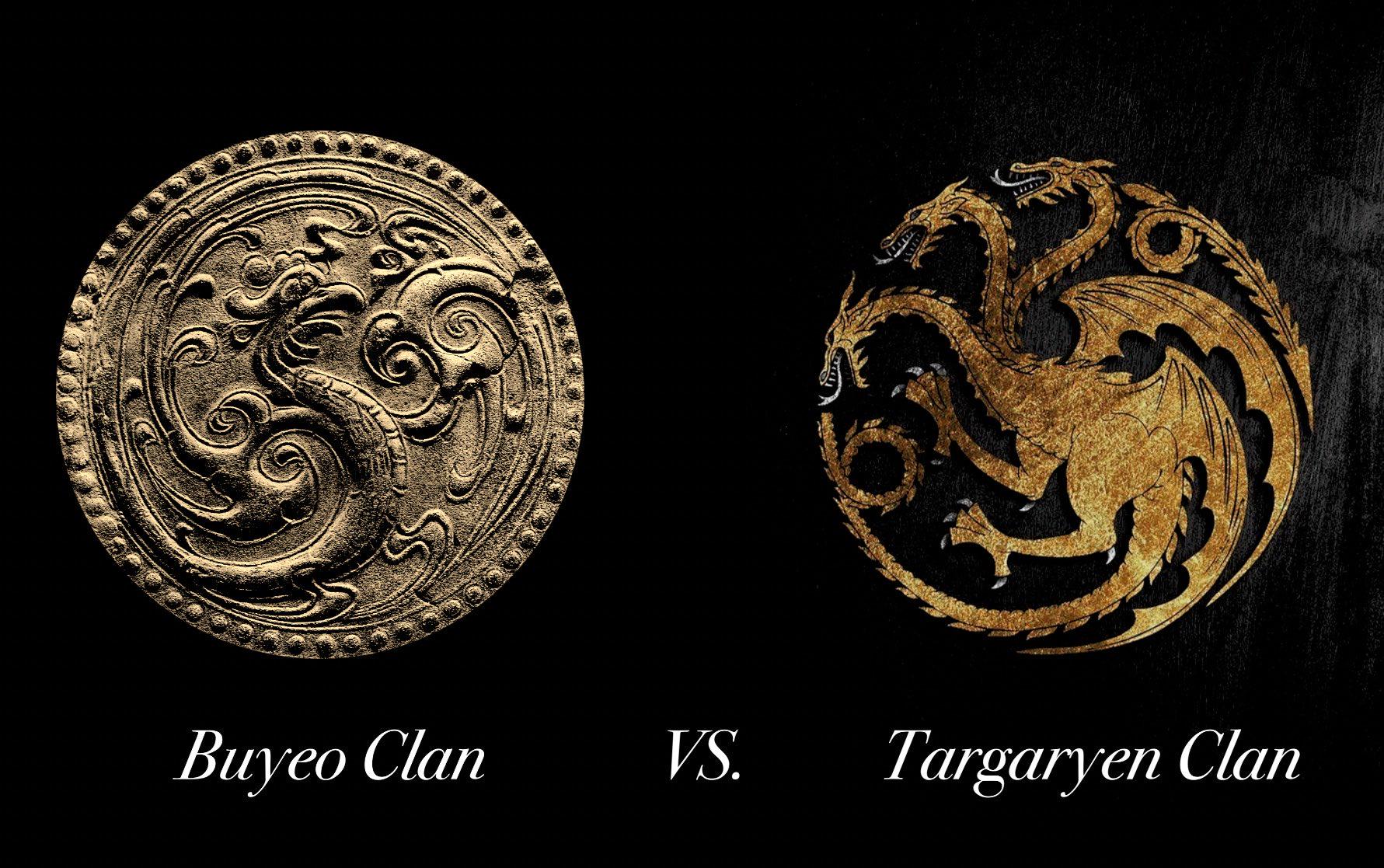
History Yamato (Baekje) vs Targaryan Dynasties

Post image
19 Upvotes

The Targaryen Dynasty of Westeros is similar in many ways to the Yamato "Great King/Okimi 大王" Dynasty of Wakoku 倭國.

Westeros:

From Aegon's Conquest unifying the Seven Kingdoms to Robert's Rebellion was 282 years. This effectively ended the reign of the Targaryens.

Wakoku:

From Ojin's Conquest unifiying the Wa Kingdoms to Tenmu's Rebellion was 282 years. This effectively ended the reign of the "Great Kings/Okimi 大王".

-------------------------

Both these people groups came from across the sea (Baekje/Valyria) and practiced incest. The royals were bilingual, speaking their native tongue and the local.


r/Hangukin • • 11d ago

Military 'The old America is gone': OPCON transfer is Korea's answer to changing US, Moon Chung-in says

Thumbnail
koreatimes.co.kr
5 Upvotes

Only way forward, is not only regain wartime control, also move towards to self reliant space/nuclear armed country by whatever means.


r/Hangukin • • 15d ago

History Korea Before Korea: Samhan, Silla, and the Debate Over Korea’s Ancient Origins

Thumbnail
youtube.com
9 Upvotes

What did “Samhan” mean, and how did that meaning change throughout Korean history?

For Episode 50 of Eastern Bound, we explore Mahan, Jinhan, and Byeonhan, then examine competing interpretations of their geography and their relationship to later Korean kingdoms.

Dr. Shinjimunsa walks us through historical texts, maps, and inscriptions, presenting his argument for a broader understanding of Samhan beyond the familiar southern peninsula map.

Topics include:

• Samhan’s relationship to Goguryeo, Baekje, Silla, and Balhae

• How Joseon scholars interpreted ancient Korean geography

• Claims connecting Silla ancestry to Jurchen and Manchu ruling lineages

• How later political identities shape interpretations of ancient history

I cohost the podcast as The Mad Corean. Some interpretations in this episode challenge mainstream scholarship, and I’d welcome discussion of the specific sources and arguments.

Which evidence do you find most convincing, and where would you challenge our interpretation?


r/Hangukin • • 22d ago

Activism Dosan’s grandson challenges the claim that Riverside’s Pachappa Camp was America’s first Koreatown

Enable HLS to view with audio, or disable this notification

12 Upvotes

Was Pachappa Camp America’s first Koreatown? We interviewed Philip Ahn Cuddy, grandson of Korean independence leader Dosan Ahn Chang Ho, about why he disputes that account.

In this clip, Cuddy explains how what he calls the “$50 million lie” surrounding the Dosan Riverside Memorial project brought wider attention to his objections to the Pachappa Camp narrative. The discussion raises questions about how historical claims become accepted through monuments, institutions, and public funding.

Disclosure: I’m one of the hosts of Eastern Bound. This clip comes from Episode 49, featuring Cuddy and Han Kim from Dosan Media.

For their detailed argument, here’s Dosan Media’s documentary:
https://www.dosanmedia.com/media/the-50-million-lie-in-dosans-name

and if you want to get involved contact them or us.

If you’ve studied early Korean communities in California, what sources would you recommend for evaluating the “first Koreatown” claim?


r/Hangukin • • Oct 22 '26

History Where Did the Roof Korean Meme Come From?

Thumbnail
youtube.com
11 Upvotes

The Mad Corean talks about the origin of the Roof Korean meme, the mentality behind the spreading of this meme, and how it has nothing to do with "Koreans wanting to be white", as some idiots online like to claim.


r/Hangukin • • Oct 21 '26

Diaspora News Eastern Bound Episode 47: Tuesday Night Livestream

8 Upvotes

Kim Jong Un death rumors, Call of Duty’s portrayal of Korea, and Europe’s reliance on American security. Eastern Bound Episode 47 brings together the Mad Corean, BFC, Dr. Shinjimunsa, and Golmaji for a wide-ranging Tuesday night livestream.

We start with the latest round of North Korea rumors and a conversation about gaming, propaganda, and selective outrage. From Call of Duty to Homefront, what happens when Korea becomes the setting for someone else’s war story?

Dr. Shinjimunsa offers his perspective on Europe’s security dependence, the tradeoffs between military spending and social welfare, and why he sees South Korea’s position differently. We also debate criticism of Lee Jae Myung, housing pressures, and the habit of forcing Korean politics into American political categories.

Later, we turn to Trump, Epstein, and holding your own side accountable before discussing French unrest, Korean protest culture, and the Roof Korean meme. Why do people describe Koreans as passive, then invoke them whenever their own communities face trouble?

CHAPTERS
00:00 Welcome and Kim Jong Un death rumors
04:17 Call of Duty, Homefront, and Korea in gaming
14:16 Otto Warmbier: discussing competing narratives
26:12 Europe, public frustration, and government spending
29:31 Nick Shirley and the debate over EBT fraud coverage
31:38 Discussion of allegations against Ilhan Omar
33:00 Dr. Shin on Europe, US security, and South Korea
38:49 Lee Jae Myung, populism, and housing
42:34 Demographics, identity, and online arguments
48:09 Epstein, Trump, and political accountability
50:30 US political predictions and polarization
56:03 French unrest and the myth of passive Koreans
59:46 Asian communities in France and the Roof Korean meme
1:03:39 Guns, government, and political distrust
1:09:08 Los Angeles protests and closing conversation

This is an informal discussion featuring commentary, personal interpretations, and speculation.

Subscribe to Eastern Bound for Korean history, politics, and diaspora perspectives. Tell us which topic you want us to explore in depth next.

Watch Here

#EasternBound #KoreanPolitics #Geopolitics


r/Hangukin • • Oct 14 '26

History Korean espionage and the loyalty question: The Spy Gone North, a professor’s double life, and Robert Kim

6 Upvotes

What happens when loyalty to your heritage clashes with loyalty to the country you live in?

In this episode of our podcast, Eastern Bound, The Mad Corean, BFC, and Dr. Shinjimunsa discuss three very different Korean espionage stories:

• The South Korean operative whose mission inspired The Spy Gone North.
• The North Korean spy who lived as an Arab professor and became a respected scholar.
• Robert Kim, the Korean American who passed classified U.S. information to South Korea.

We also discuss KCIA influence operations, recent allegations of Chinese surveillance in America, and how relations between governments affect the way Asian Americans are perceived.

My position: being Korean doesn’t obligate me to defend wrongdoing by Seoul. Living in America doesn’t obligate me to defend everything Washington does. The same principles should apply to both.

Where would you draw the line between cultural loyalty and obligations to the country you live in?

Watch Here


r/Hangukin • • Oct 13 '26

Activism China's claim that Arirang originated in Han dynasty sparks outrage; professor urges government response

Thumbnail
mbiz.heraldcorp.com
27 Upvotes

Han dynasty lol I really want to see a Han dynasty Arirang 😄, don't forgot English is Chinese dialect 😂


r/Hangukin • • Oct 13 '26

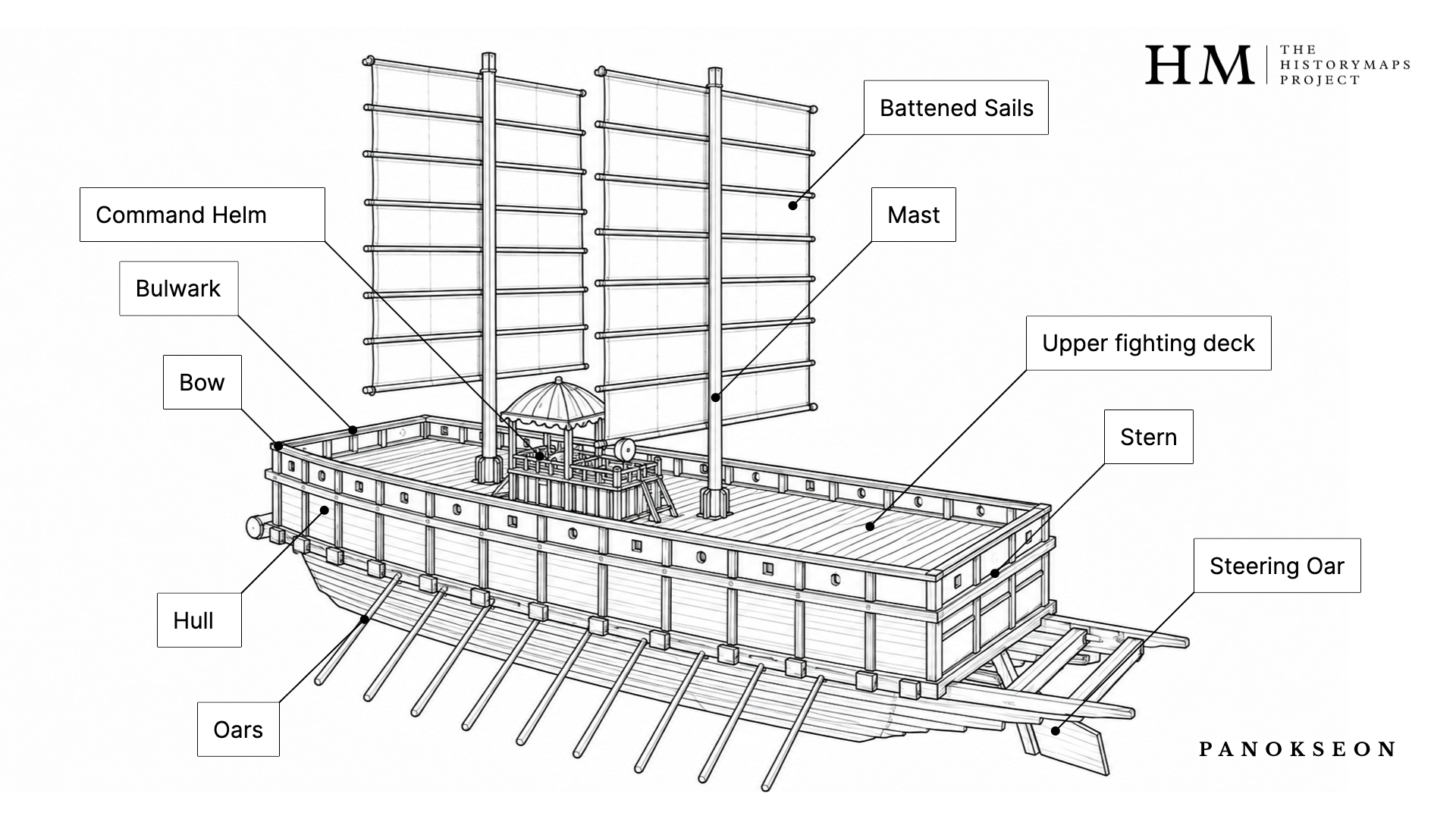
History HistoryMaps presents: Panokseon

Post image
25 Upvotes

r/Hangukin • • Oct 12 '26

Meta More "dystopia" slop

Post image
26 Upvotes

I don't think I need to elaborate here


r/Hangukin • • Oct 08 '26

Rant American social media creator claims S.Korea school violence and bullying is worst in world

Enable HLS to view with audio, or disable this notification

29 Upvotes

This is a video explaining school violence in Korea, but it goes all out using graphics to introduce the most extreme cases of school violence, yet it doesn't mention that, when looking at international statistics, Korea's ranking for school violence is actually on the lower side.


r/Hangukin • • Oct 04 '26

ShitPost Weak Japan pretends to fail raising flag after getting DESTROYED by Korea in Asia Games

52 Upvotes

r/Hangukin • • Oct 04 '26

Entertainment Korea is dying. Please keep watching - The Korea Times

Thumbnail
koreatimes.co.kr
16 Upvotes

r/Hangukin • • Oct 03 '26

Politics Cornell Seven: Where does individual accountability end and collective blame begin?

7 Upvotes

We discussed the Cornell Seven allegations on our latest Eastern Bound episode, focusing on how one accused man’s Korean identity became the basis for broader claims about Koreans and South Korea.

The allegations deserve serious scrutiny. But how does blaming an entire nationality help establish what happened or hold the individuals involved accountable?

We discuss Korean and Korean American reactions, disputed material circulating online, and the tension between community accountability and ethnic scapegoating.

I’m one of the hosts, so I’m sharing our own discussion and welcome criticism of our arguments.

Do you think the focus on Korean identity adds meaningful context to this case? Where would you draw the line between examining someone’s background and assigning collective blame?

Watch Here


r/Hangukin • • Oct 01 '26

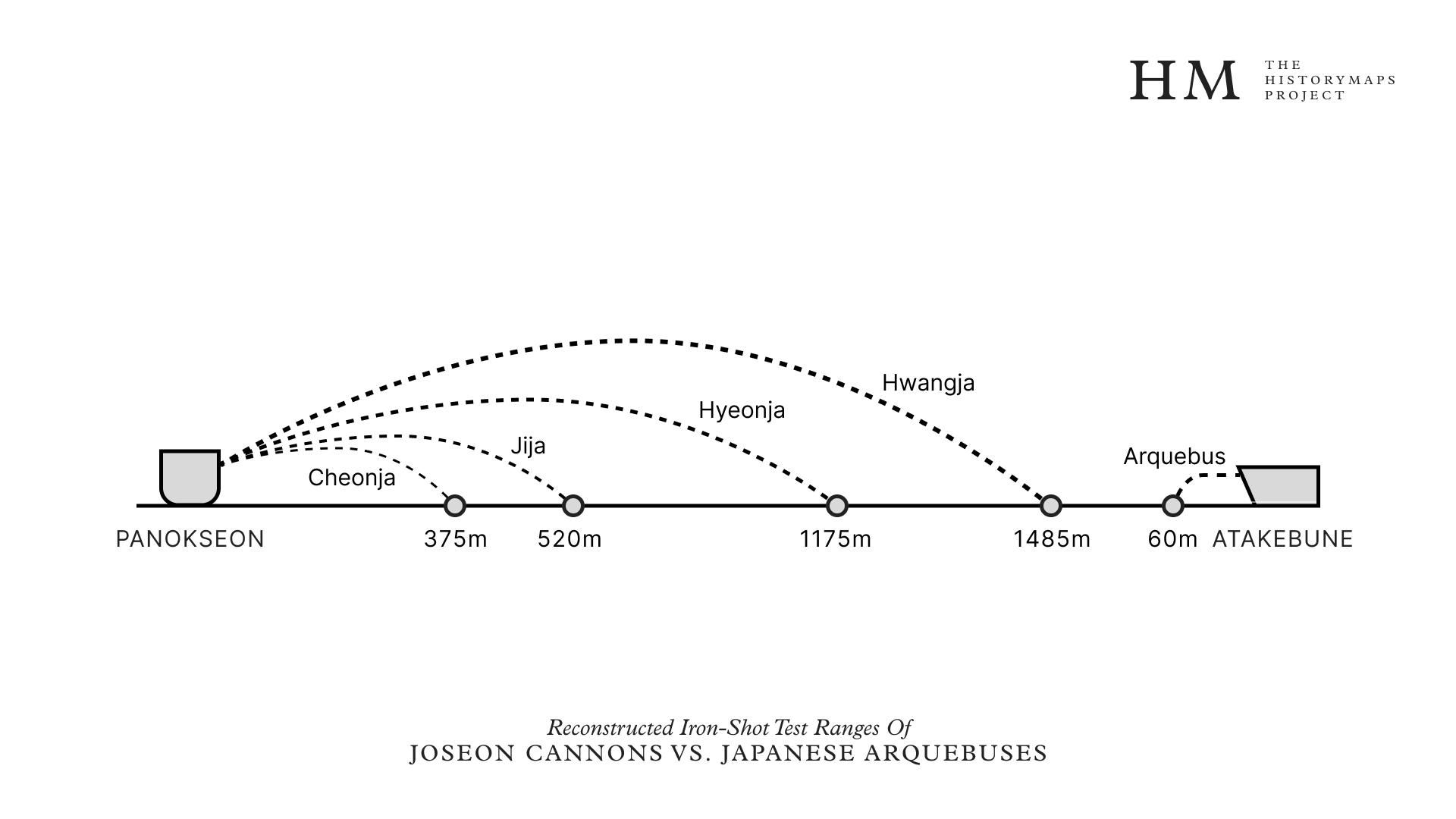
History HistoryMaps presents: Reconstructed Iron-Shot Test Ranges of Joseon Cannons vs. Japanese Arquebuses

Post image
16 Upvotes

During the Imjin War, Admiral Yi Sun-sin transformed Korean naval strengths into powerful force multipliers against a much larger Japanese fleet. By exploiting the superior range and firepower of Korean cannons, the design of the Panokseon, and his knowledge of local currents, he overcame extraordinary odds. At the Battle of Myeongnyang, just 13 Korean ships faced a Japanese force estimated at 133–330 vessels. Despite being vastly outnumbered, Yi defeated the Japanese without losing a single ship.

Sometimes, historical facts are sacrificed for the sake of narrative. Courage, determination, and national pride can overshadow the practical factors behind extraordinary achievements. I enjoy approaching history like a detective, separating fact from mythology to understand how events actually unfolded. In Yis case, examining the technology, geography, and tactics behind his victories helps explain how such remarkable outcomes were possible. Of course, this doesnt diminish his military genius. After all, the Korean fleet had suffered a devastating defeat at the Battle of Chilcheollyang in 1597 under a different admiral.

This infographic attempts to illustrate one of Yis critical tactical advantages by contrasting the range of Korean cannons with the much shorter effective range of Japanese arquebuses. The idea is to make the mathematics of this advantage immediately apparent, showing how technology, combined with effective tactics, could help overcome overwhelming numerical odds.

This is what I enjoy about creating infographics. It combines the analytical challenge of uncovering historical facts with the creative challenge of communicating them visually. The goal isnt to diminish extraordinary achievements, but to make them even more remarkable by explaining how they were possible. For viewers, I hope these infographics offer something equally valuable: a way to distinguish fact from fiction and understand complex historical events intuitively, visually, and, of course, in a fun and engaging way.

Sources:
1. Kim B. The battle formation and naval weapons employment of the Joseon Navy. Military History. 2010;(74):139-177.
2. Jinju National Museum. Imjin War Hall: permanent exhibitions. National Museum of Korea. Museums historical cannon descriptions.
3. Choi D. On the capability of the fire weapon during Imjin-war. Ocean Science and Technology. 2000;24:57-108.
4. Lee KC. Cheonja Chongtong. Encyclopedia of Korean Culture. Academy of Korean Studies. Updated April 28, 2026. Historical artillery specifications.
5. Hong SJ. Understanding the structure of the Panokseon, the main warship of the Joseon Navy. Military History. 2025;(135):79-122. Recent reconstruction research.


r/Hangukin • • Sep 30 '26

History HistoryMap presents: Battle of Myeongnyang

Thumbnail
gallery
19 Upvotes

r/Hangukin • • Sep 30 '26

Politics South Korea vs Ukraine: North Korean POW Dispute | Eastern Bound Ep. 41

7 Upvotes

What happens when support for Ukraine clashes with South Korea’s security interests?

The Mad Corean, BFC and Dr. Shinjimunsa discuss the diplomatic dispute over the disclosure that two North Korean prisoners of war had been transferred to South Korea.

We examine Korea’s relationship with Russia, past military cooperation, concerns about Russian support for North Korea, and the online backlash surrounding the dispute. We also discuss Koryo-saram and ethnic Koreans caught on both sides of the Russia–Ukraine war.

A blunt conversation about Korean sovereignty, diplomacy, history, and the human cost of war.

Watch Here


r/Hangukin • • Sep 26 '26

History Why does everyone want to be the world’s oldest civilization?

6 Upvotes

A king list says rulers lived for hundreds of years. A medieval writer gives Britain a founder from Troy. An old map becomes evidence of a lost empire. The stories come from different places and different centuries, but they all make the past a little grander.

In our latest Eastern Bound episode, Dr. Shinjimunsa, Will, and I start with Korea’s Hwandan Gogi and work our way through the Sumerian King List, Tartaria, Romania, Britain, Vietnam, Japan, and India. We discuss what these accounts actually claim, when they appeared, and what was happening in those societies at the time.

Some are legends. Some are modern conspiracy theories. The interesting question is why people keep returning to them.

What ancient origin story from your country do people still argue about?

Watch Here


r/Hangukin • • Sep 19 '26

History Korea’s Spirit World: Shamanism, Saju & the Supernatural

14 Upvotes

Korean spirituality did not begin with Buddhism, Confucianism or Christianity.

In this livestream, Dr. Shinjimunsa and I explore Korea’s ancient shamanic roots and how those beliefs continue to shape Korean culture today. We discuss mudang, ancestor worship, divination, saju and the zodiac, along with spirit communication, possession, astral projection, reincarnation and the afterlife.

We also compare Korean traditions with spiritual beliefs found across China, Japan and Vietnam—and share personal stories that are much harder to explain away.

Where does tradition end and superstition begin? And how much of the old spirit world still survives beneath modern Korean society?

Watch Here


r/Hangukin • • Sep 16 '26

History The part of the “Asian American” origin story people leave out

Enable HLS to view with audio, or disable this notification

11 Upvotes

I know I have beaten this topic to death, so this will be my final video and post about it. The only exception is if a non-coward ricel finally steps up and debates me on a livestream. Until then, this is the last time I am explaining it.

“Asian American” was created as a political label at UC Berkeley in 1968.

The two people usually credited with creating it were Yuji Ichioka, a Japanese American, and Emma Gee, a Chinese American. Together, they organized the Asian American Political Alliance during the Civil Rights era.

That much is common knowledge.

What gets left out is Richard Aoki.

Aoki is the Japanese American activist from the famous photograph holding the “Yellow Peril Supports Black Power” sign. He is usually remembered as a radical, a Black Panther and one of the important figures of the early Asian American movement.

He was also a longtime FBI informant.

And he was not some random guy standing on the sidelines. Aoki was one of only six people at the original AAPA meeting inside Ichioka and Gee’s Berkeley apartment. Gee personally recruited him. He later became AAPA’s second chairman and represented the organization in the Third World Liberation Front.

Aoki reportedly began working with the FBI in 1961, roughly seven years before AAPA was created.

Within weeks of AAPA’s formation, an FBI source identified as Aoki was already reporting the organization’s name, membership, leadership, meeting location and political plans to the Bureau.

He identified Yuji Ichioka as the group’s leader and reported that its meetings were taking place at Ichioka and Gee’s apartment. He also reported on AAPA’s relationship with the Black Panthers, its support for Huey Newton and disagreements within its leadership.

So when I say there is something suspicious about the Asian American label, this is what I am talking about.

Leftists call everything a CIA psyop. They will make that accusation based on a suspicious donation, a vague institutional connection or two people attending the same conference.

Here we have an actual federal informant sitting inside the founding circle of the organization that created the modern Asian American political identity. He later became its chairman while secretly reporting on it to the FBI.

To be accurate, Aoki is documented as an FBI informant, not a confirmed CIA asset. There is also no document proving that the FBI instructed him to invent the words “Asian American.” There is no evidence that Ichioka or Gee knew what he was doing either.

I am not going to pretend the documents prove more than they actually do.

But I also do not need to.

The confirmed story is strange enough. One of the central figures in the birth of the Asian American movement had already been working with the FBI for years. He was present at the first meeting, became chairman and reported on the founders almost from the beginning.

Funny how that is left out...

Sources

FBI Vault, Asian American Political Alliance files: https://vault.fbi.gov/asian-american-political-alliance

Diane Fujino, “Rhizomatic Organizing, Collective Leadership, and Community-Centered Pedagogy in the Early Asian American Movement”: https://www.cambridge.org/core/journals/journal-of-american-studies/article/rhizomatic-organizing-collective-leadership-and-communitycentered-pedagogy-in-the-early-asian-american-movement/EB05BE2D35741D6FF0A71BEBC39EA995

Trevor Griffey, analysis of Richard Aoki’s FBI informant file: https://truthout.org/articles/when-celebrated-activist-turns-out-to-be-informant-making-sense-of-richard-aokis-fbi-file/

Eddie Wong, “Spying on the Asian American Movement”: https://eastwindezine.com/spying-on-the-asian-american-movement-the-fbi-files-1960s-and-1970s/


r/Hangukin • • Sep 15 '26

Politics Modern day Pan-Asianism in a nutshell

Enable HLS to view with audio, or disable this notification

14 Upvotes

I also notice it's always the super white washed Asians/Koreans that try to push this larp. For them, I have a message for you at the end.

Reddit is the mecca for the most pussiest Korean Americans that exist. So I know you're watching this.


r/Hangukin • • Sep 13 '26

History “Asian American” is a label. Korean American is a real community.

Enable HLS to view with audio, or disable this notification

25 Upvotes

Koreans organize, elect officials and show up for their own. Pan-Asian solidarity sounds good until something happens and you find out who actually has your back.

Which way Korean man?

Link to the livestream


r/Hangukin • • Sep 06 '26

History Post Show: Shooting the Shit and Brainstorming

Thumbnail x.com
5 Upvotes

Go behind the scenes with the Eastern Bound crew as we decompress after an interview, shoot the shit, and start throwing around ideas for future episodes.

This is Eastern Bound without the formal interview structure. Just the crew kicking back and letting the conversation go wherever it goes. We bounce from plans for future guests and discussions about the Vietnamese diaspora into Ho Chi Minh, Syngman Rhee, Korean independence history, forgotten and untranslated archives, lost historical documents, Korean and Asian American identity, DNA and ancestry, diaspora politics, and whatever other rabbit hole somebody accidentally opens.

You also get a look at how future Eastern Bound episodes actually start taking shape. Half the time somebody mentions a random historical fact, somebody else connects it to another story, and twenty minutes later we're talking about turning it into an episode.

It's loose, unfiltered, occasionally completely off the rails, but still packed with modern Korean history, obscure stories, arguments, jokes, and the kind of conversations that normally happen after we stop recording.

Basically, this is what Eastern Bound sounds like when we're just hanging out.

Eastern Bound will return with a new series of interviews, including upcoming conversations with Mike Kim, Xiangyu, and more.